박지나, 율리우스 호프만, 루카스 카이저, 틸로 바움게르텔
Jina Park, Julius Hofmann, Lucas Kaiser, Tilo Baumgärtel
26 Aug-2 Oct 2026
ThisWeekendRoom
Artists
Jina Park →
Julius Hofmann
Lucas Kaiser →
Tilo Baumgärtel
Credit
참여작가ㅣ박지나, 율리우스 호프만, 루카스 카이저, 틸로 바움게르텔
기획ㅣ디스위켄드룸
글ㅣ이유진
사진ㅣ양이언
협력ㅣ갤러리 클라인딘스트
ArtistsㅣJina Park, Julius Hofmann, Lucas Kaiser, Tilo Baumgärtel
Curated by ThisWeekendRoom
TextㅣYoojin Lee
PhotographsㅣIan Yang
Collaborated with Galerie Kleindienst

Exhibition Text
《오스트라네니1》에 참여하는 틸로 바움게르텔(Tilo Baumgärtel, b.1972), 박지나(b.1980), 율리우스 호프만(Julius Hofmann, b.1983), 루카스 카이저(Lucas Kaiser, b.1994)는 라이프치히라는 회화적 기반을 공유하는 반면 서로 다른 세대와 문화를 통과한다. 주지하다시피 회화는 오랜 역사 동안 여러 기호 체계와 충돌하며 스스로 조건을 바꾸어 왔다. 이에 전시는 특정 미술사적 계보를 훑거나 연대기를 나열하는 대신 하나의 매체가 복수의 방향으로 분기된 모습을 살핀다. 네 작가가 구축한 세계에서 일상과 판타지, 과거와 현재, 평면과 깊이는 서로 맞물리지만 어딘가 낯선 분위기를 자아낸다. 예컨대 사회주의 리얼리즘 서사는 게임과 만화의 내러티브로 번역되고, 고전적인 도상과 밈이 위계 없이 혼재한다. 그렇게 조립된 결과물은 현실의 외관을 유지하면서도 원근, 비례, 상황의 인과를 어긋나게 하며 단일한 시간 내에 포섭되지 않는 인식의 틈을 형성한다.
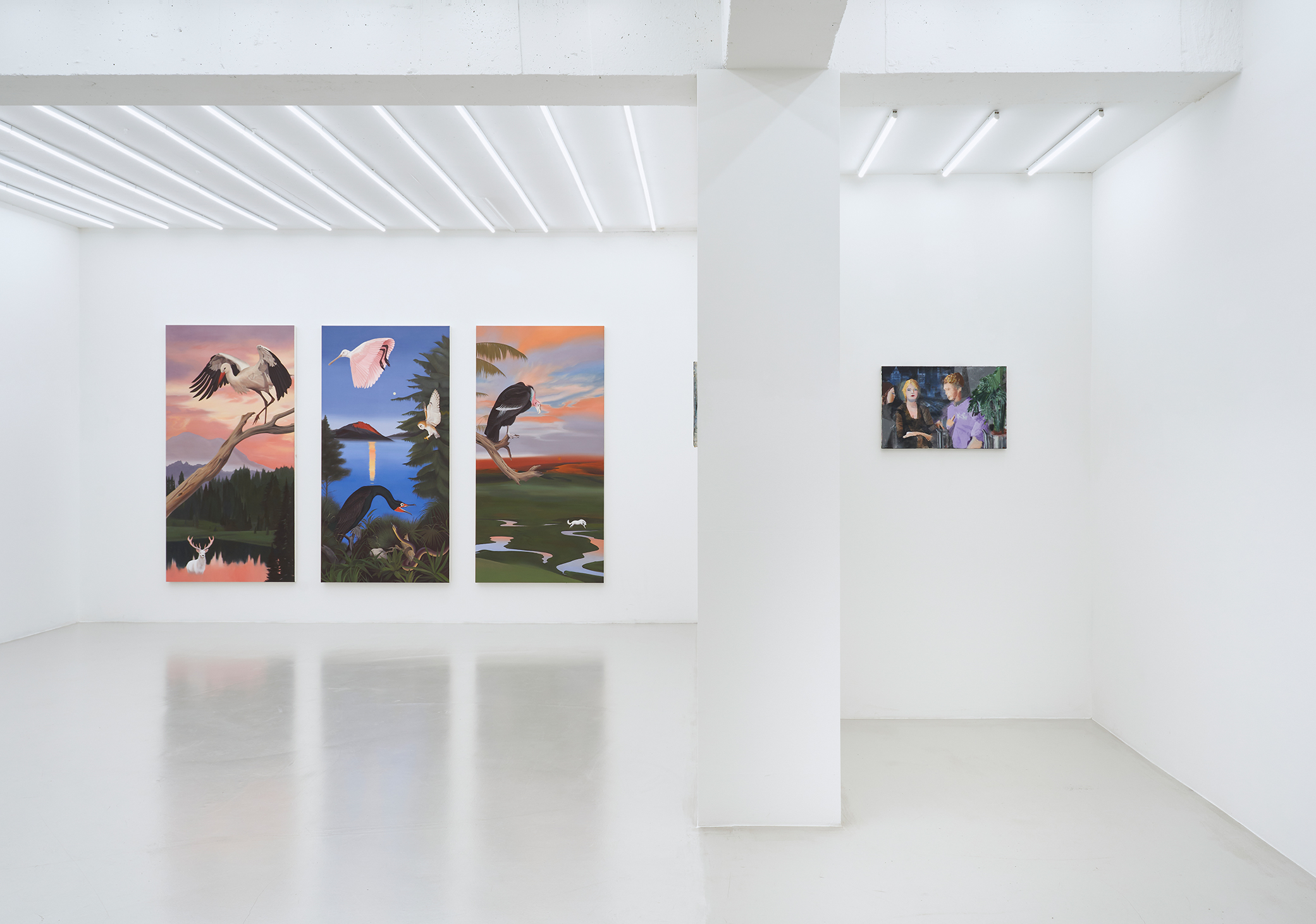
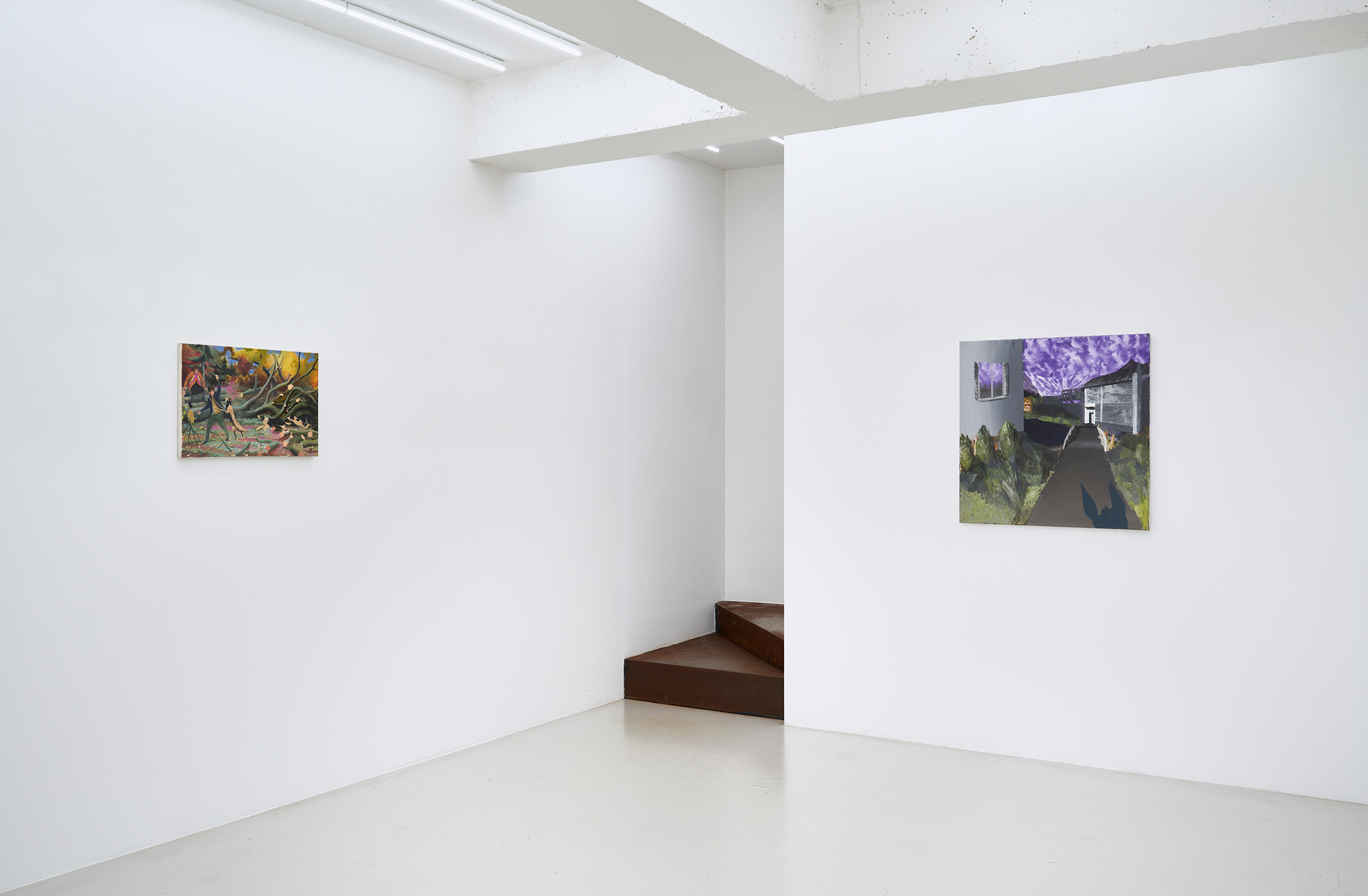
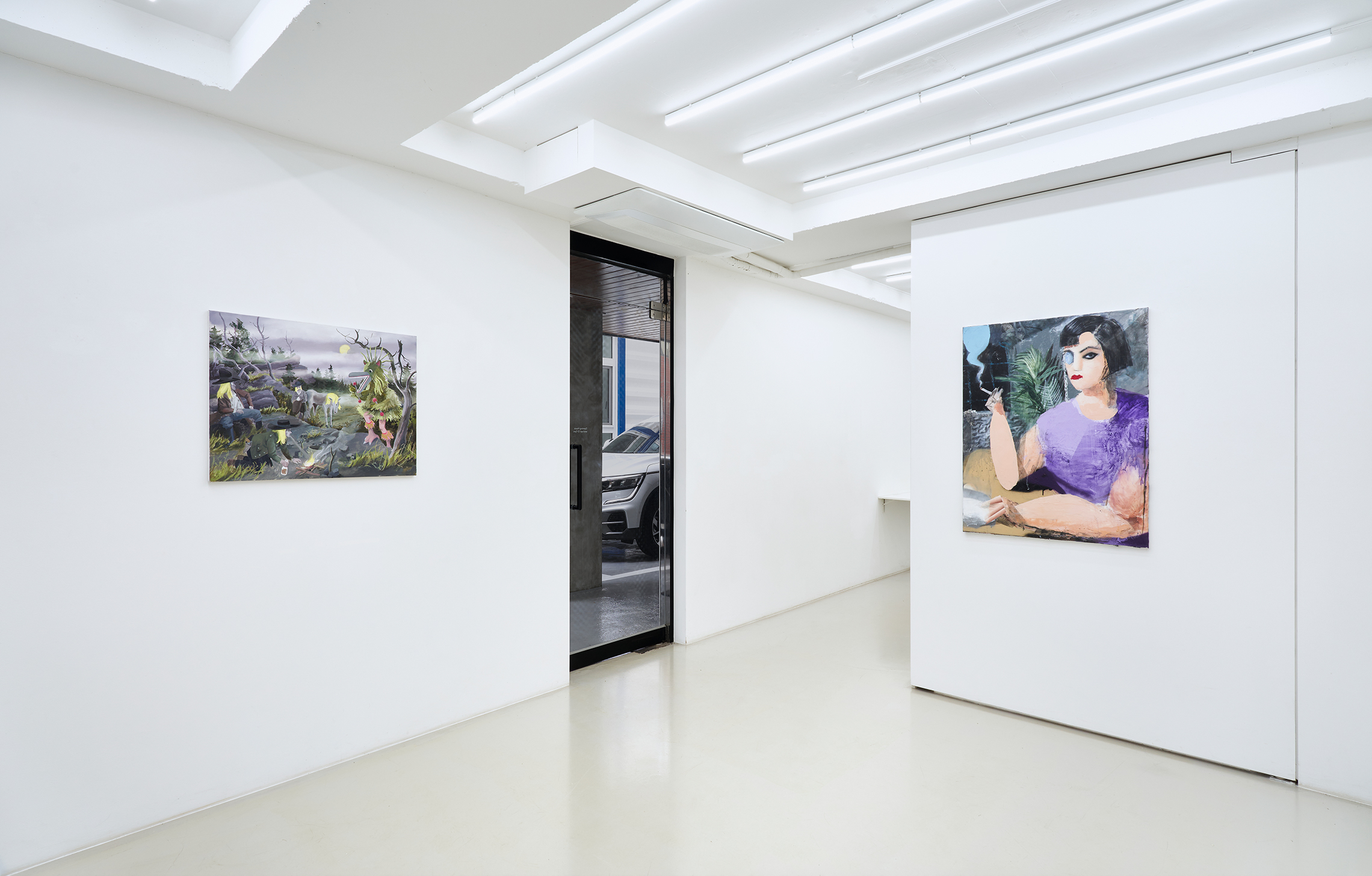
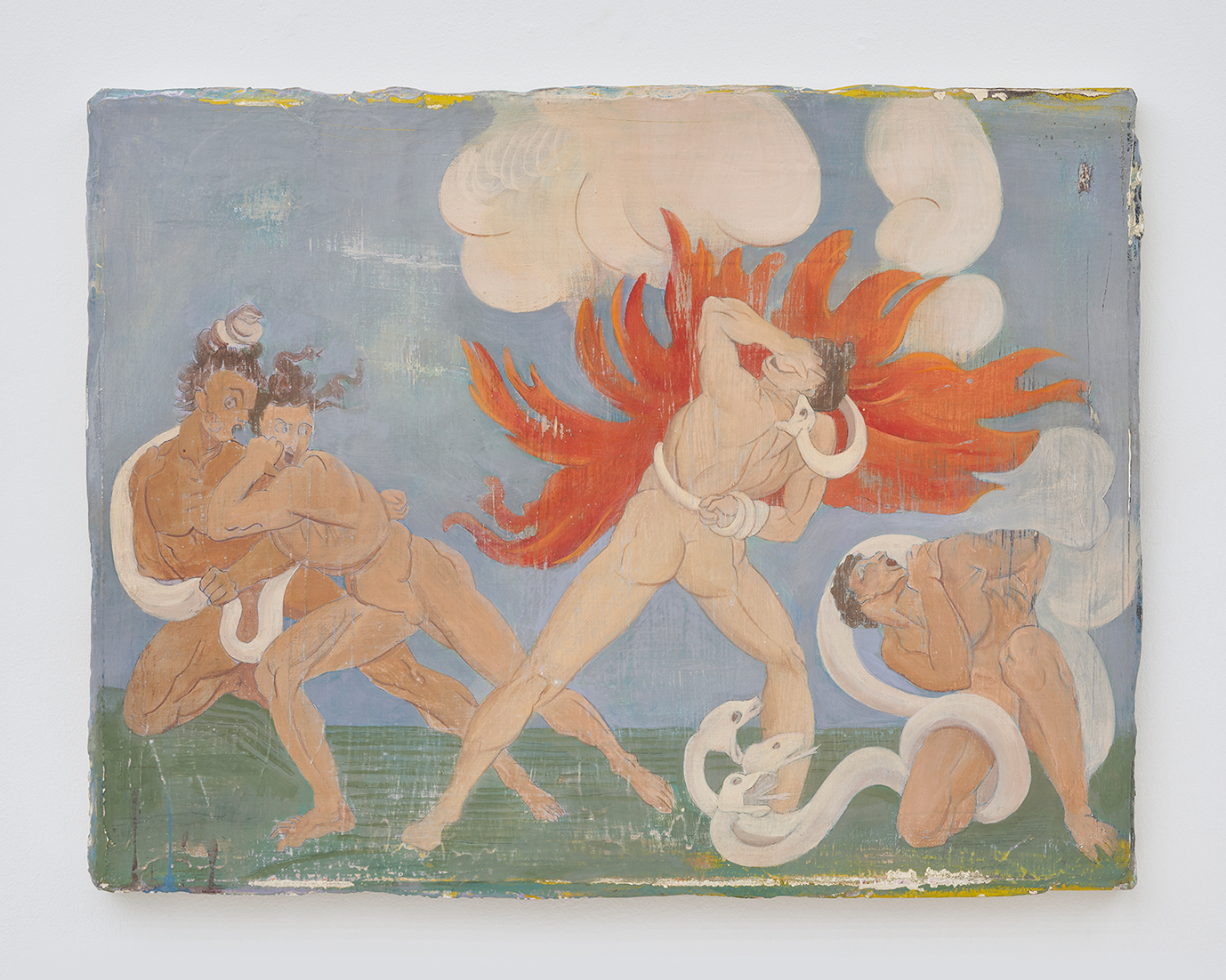
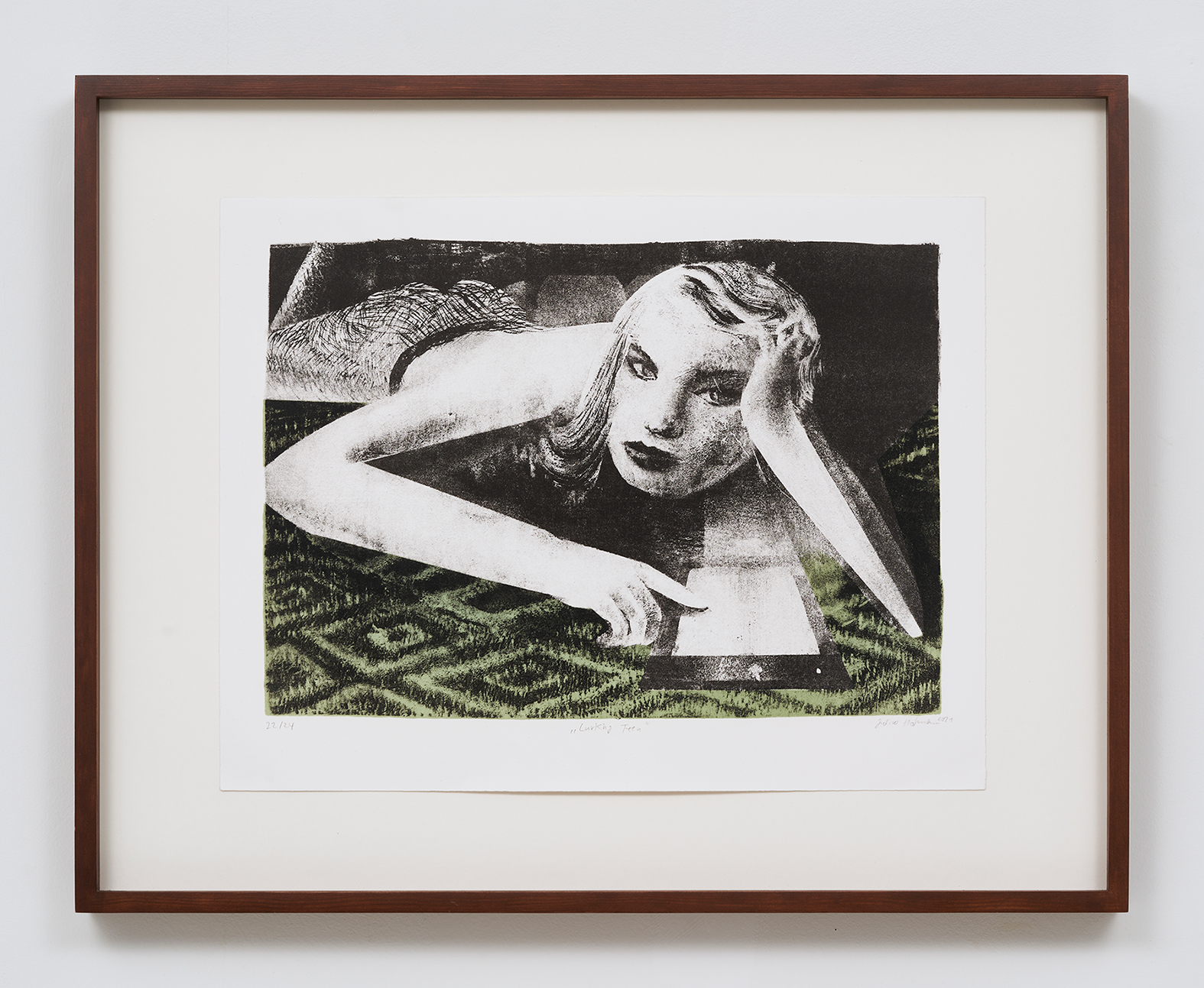
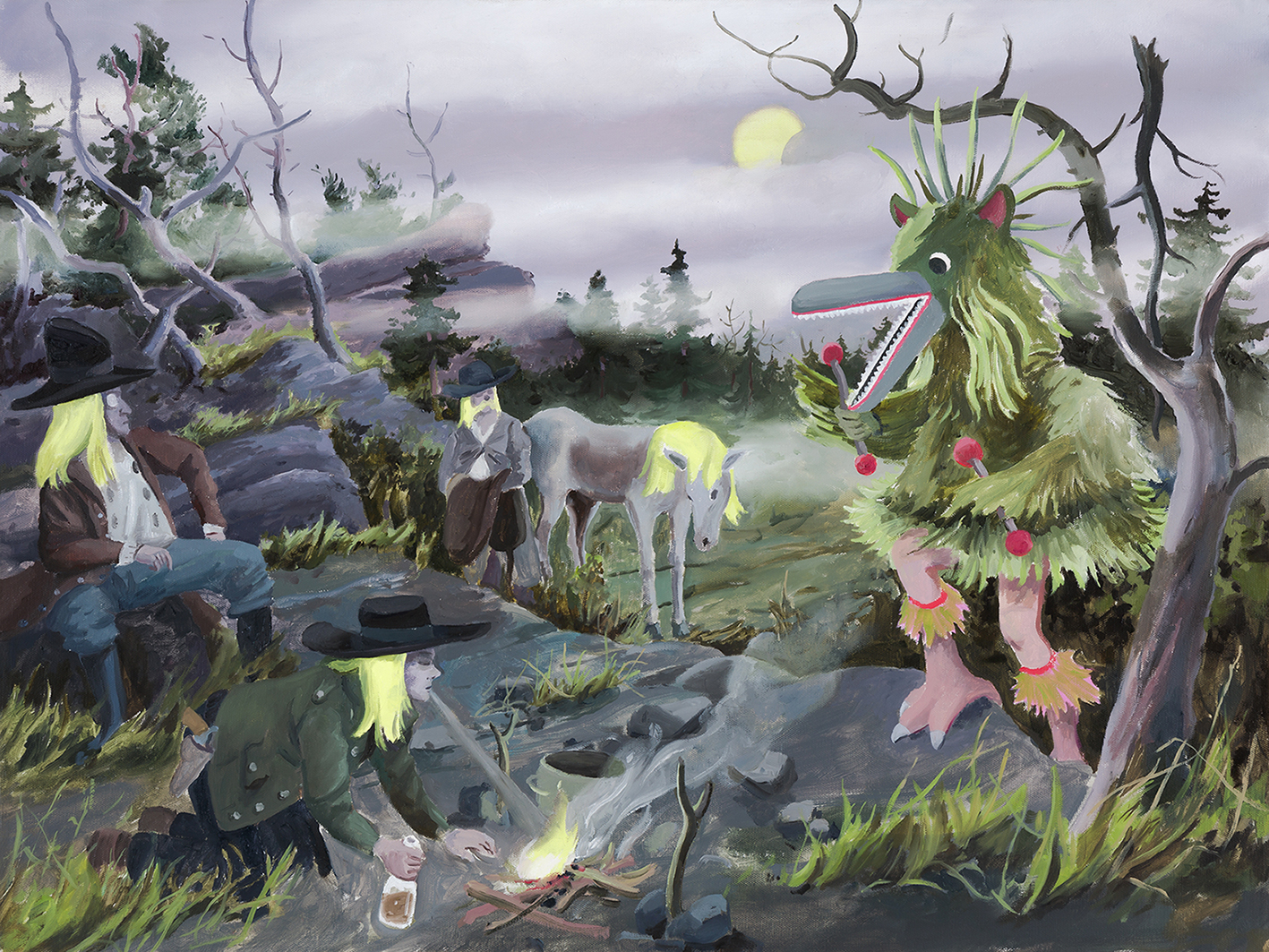
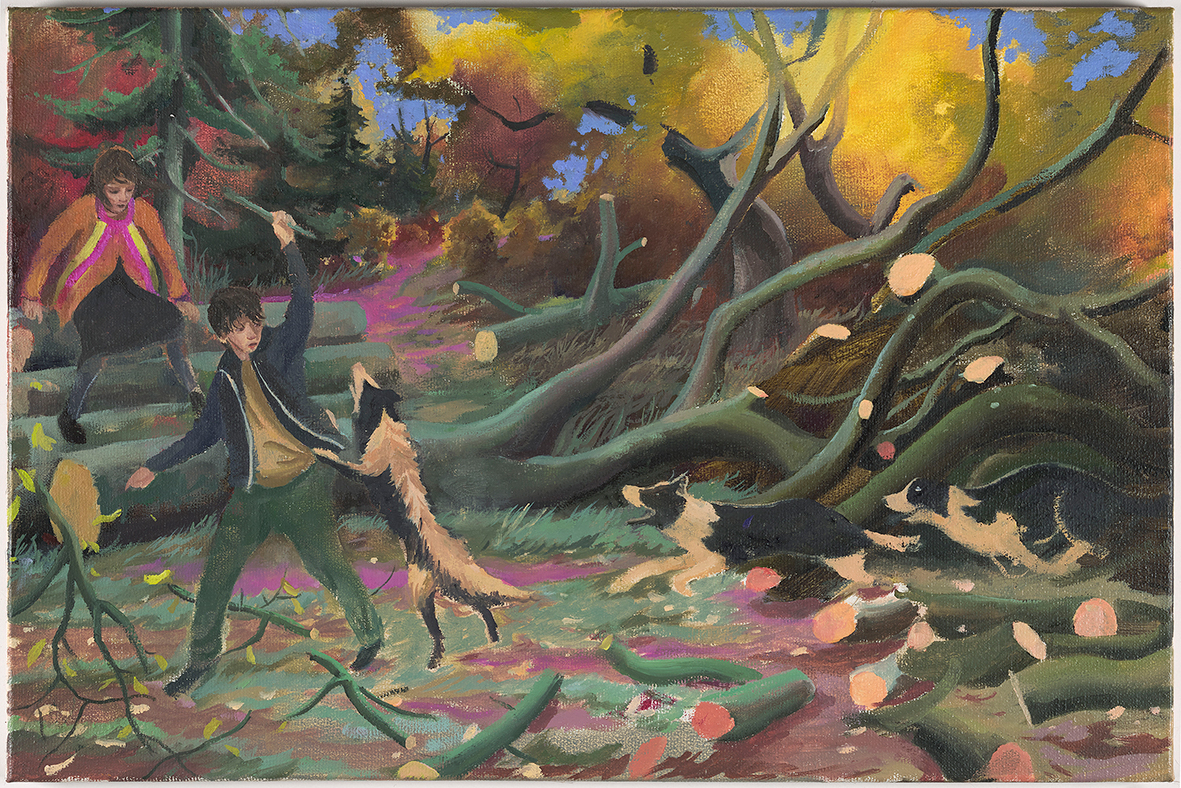
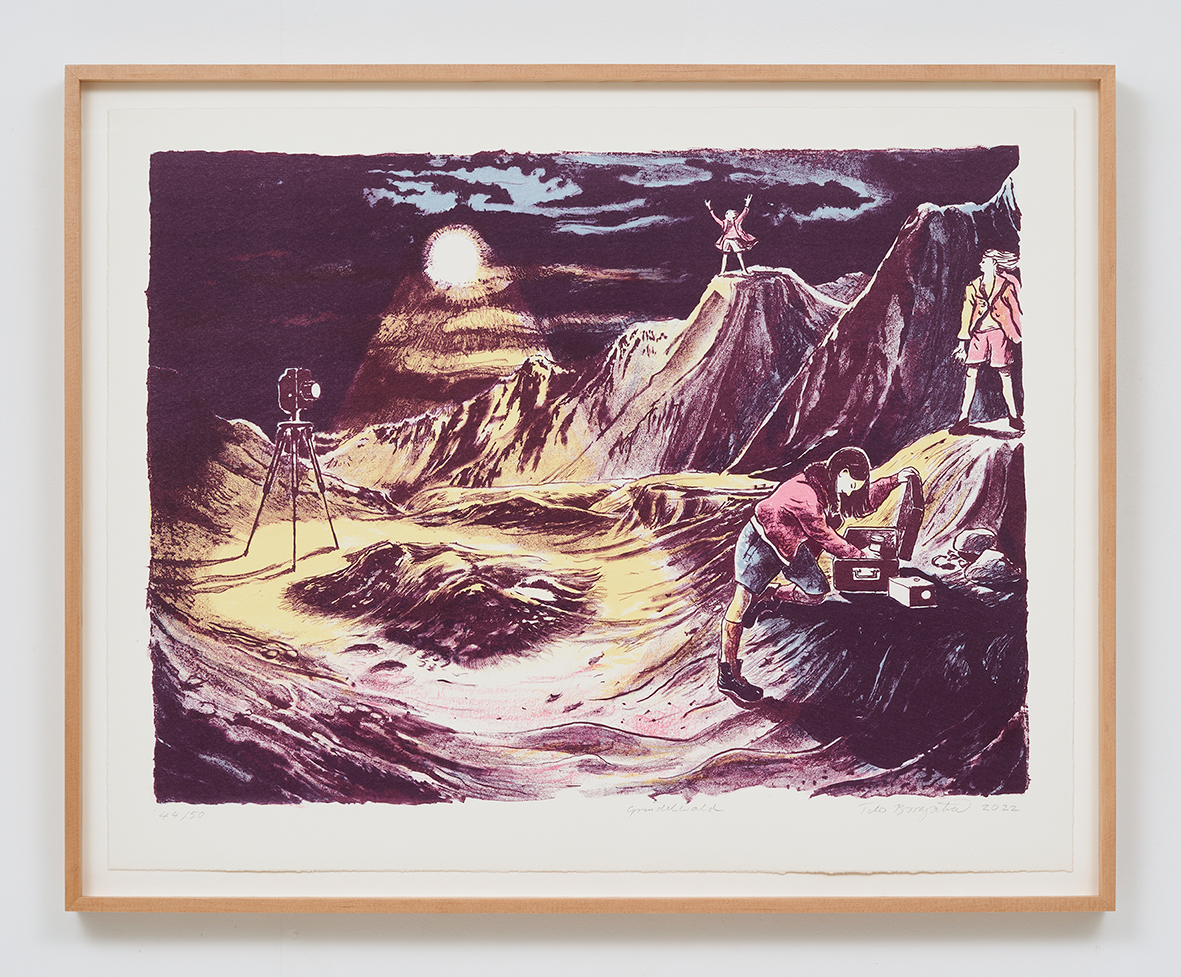
틸로 바움게르텔은 마티아스 바이셔(Matthias Weischer), 크리스토프 루크헤베를레(Christoph Ruckhäberle), 네오 라우흐(Neo Rauch) 등과 함께 신라이프치히 화파를 대표하는 주요 작가로, 당대 서구의 개념미술 흐름 속에서도 아날로그 회화의 전통과 구상성을 고수하였다. 1940년대 만화와 팝아트, 2차대전 시기 선전 포스터를 기반으로 삽화적 형식을 발전시켜 온 바움게르텔의 작품에는 구동독이라는 역사적 배경이 저변에 놓여 있다. 장면은 종종 영화나 애니메이션의 스틸컷처럼 정지되며 멜랑콜리한 정서와 잔혹한 동화 같은 풍취를 띤다. 주목할 것은 전혀 다른 장르의 존재들이 하나의 차원에서 조우한다는 점이다. 이를테면 야영지의 인물들은 곁에 등장한 녹색 괴수에 별다른 반응을 보이지 않은 채 휴식을 이어 나간다. 그의 회화가 자주 꿈에 비유되는 까닭도 공상적 소재 자체보다 이질적 사건과 캐릭터들이 공존하는 상태에 있다. 이와 같은 수수께끼는 제목에서도 이어진다. <Four Blondes>에서 세 사람과 말 한 마리가 동일한 금발로 지칭되고, 삼두마차를 뜻하는 <Troyka> 속 개들 역시 목줄에서 풀려나 마구잡이로 내달리는 식이다.
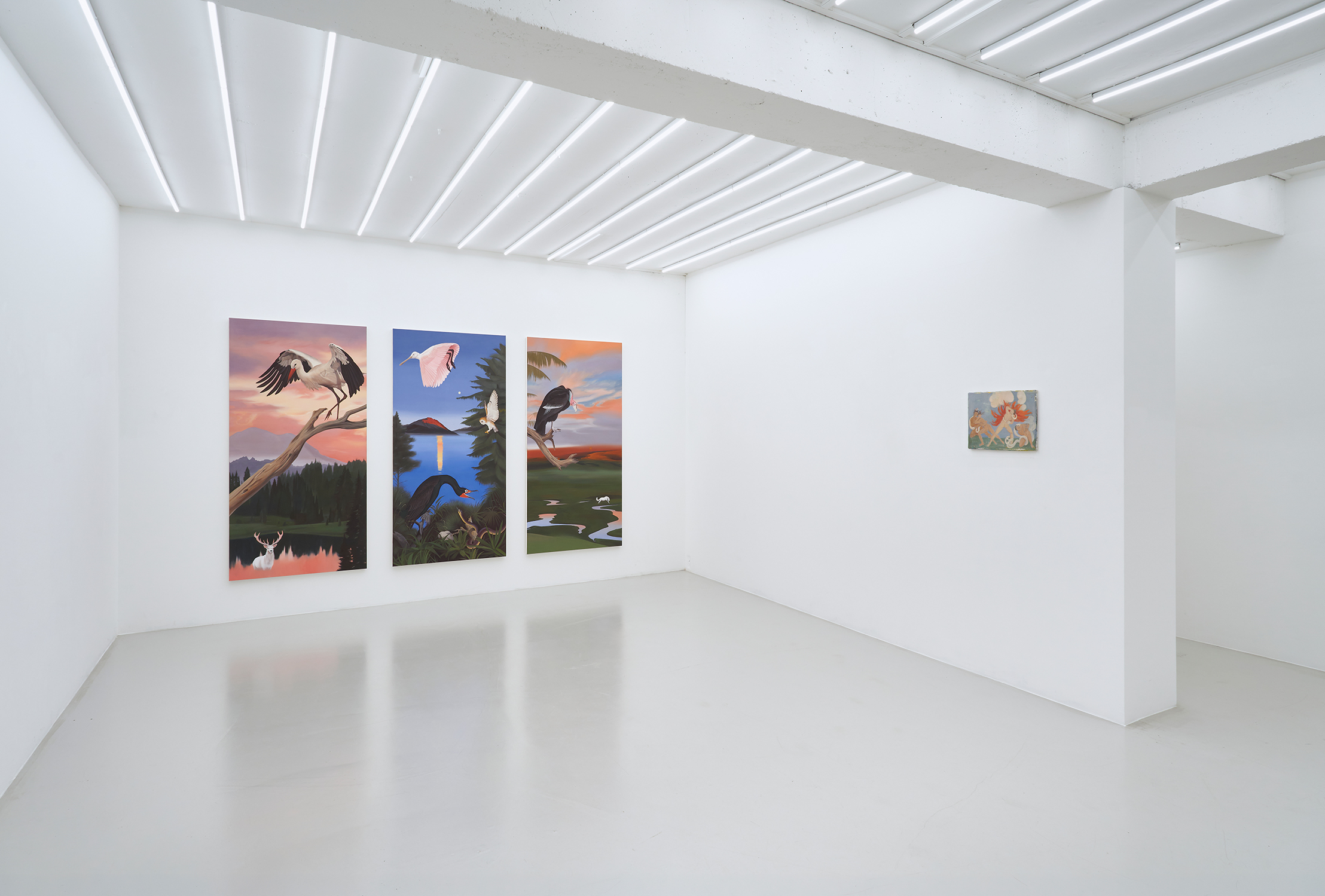
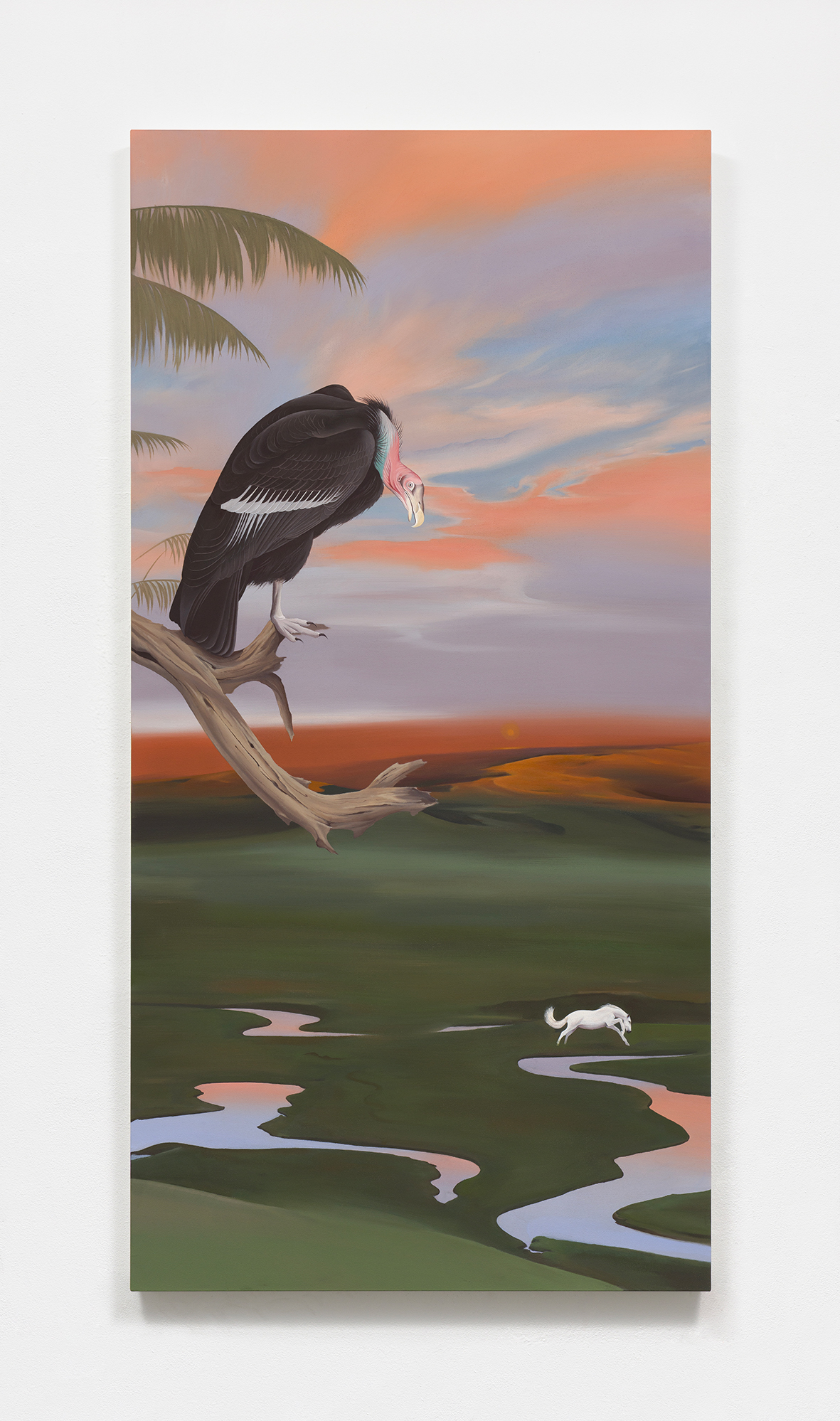
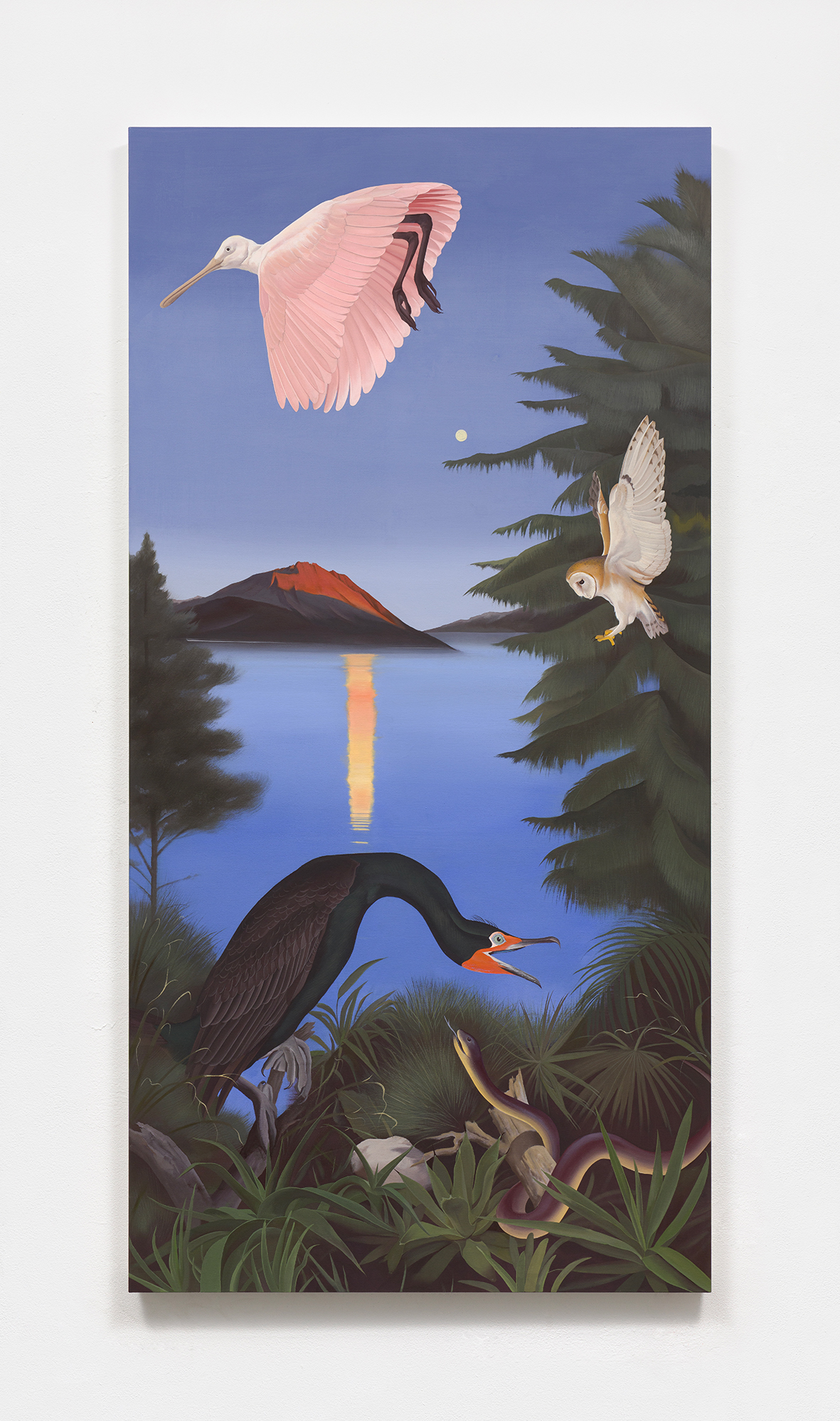
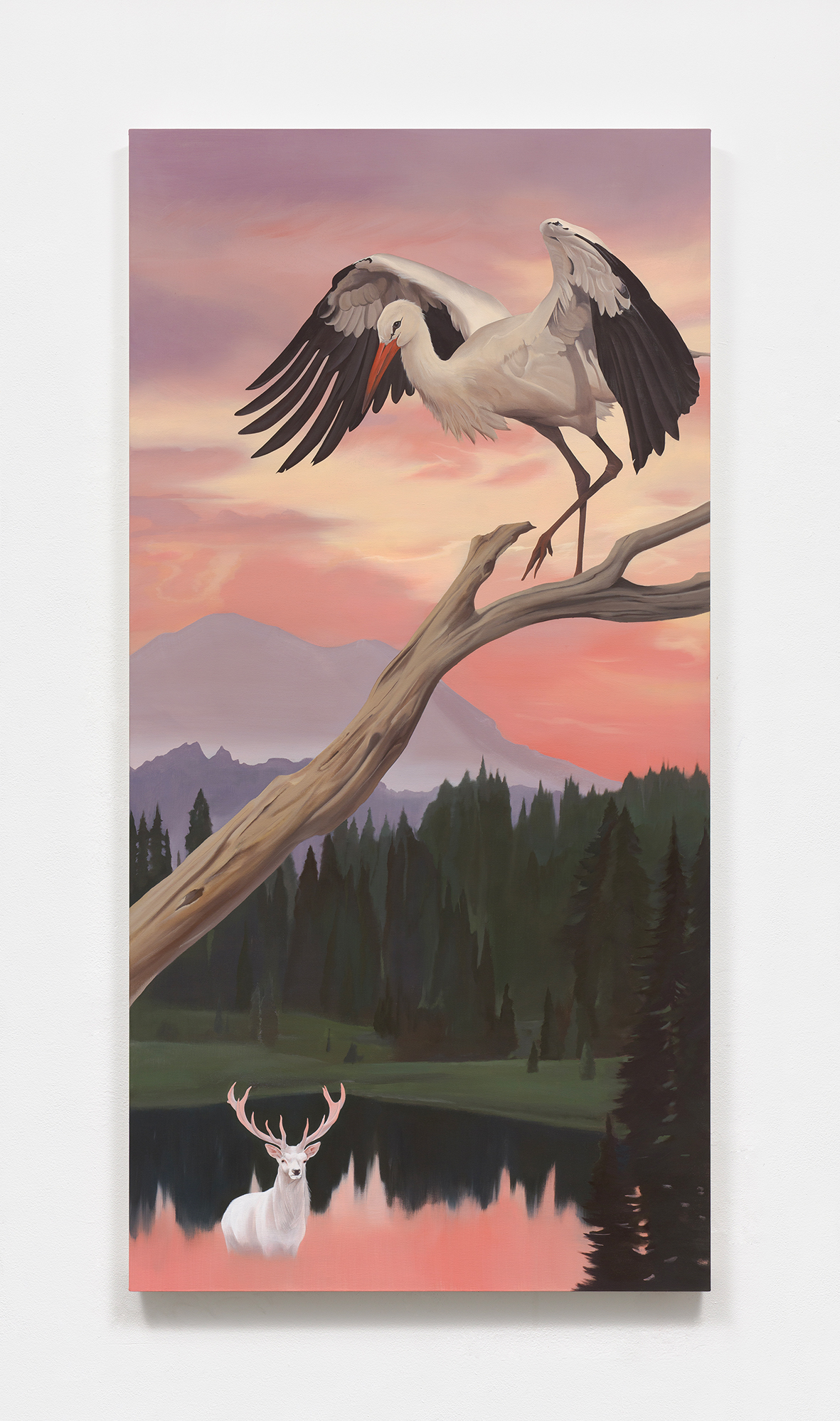
박지나는 미술사, 박물학, 대중문화 등에서 추출한 이미지를 본래의 맥락에서 분리해 새로운 관계 속에 놓는다. 이는 미적 보편성을 자임하는 분류 체계를 답습하기보다 누가 무엇을 선택하고 더 나은 것으로 승인해 왔는지 질문하는 일이다. 이번 전시에 선보이는 삼면화 <Cabinet of Birds> 연작에서는 이러한 관심사가 실내를 넘어 바깥 풍경으로 확장된다. 유명 조류 도판에서 본뜬 새들을 비롯하여 열대 식물, 침엽수림, 호수, 산맥이 뒤엉킨 전경은 실제 생태계가 아닌 거대한 디오라마로 기능한다. 한편, 이 인위적인 무대는 특정 대상을 타자화하거나 신비롭게 여기는 시선의 방향을 지적한다. 작가에게 영화나 광고, 여행 책자에서 마주한 이국적인 낙원이란 미디어에 의해 투사된 허상의 껍질과 같기 때문이다. 즉, 이국성은 동양과 서양 어느 한쪽에 고정된 듯하지만 실상 타자의 것을 욕망의 목적물로 여기는 태도에 기인한다. 이에 서로 다른 기원을 암시하는 동식물은 한데 뒤섞이고, 토착과 외래, 실제와 상상의 경계 역시 아득해진다. 나아가 인터넷과 대중매체를 통해 유통되는 형상들은 느리고 반복적인 에그 템페라의 층위를 거치며 물질성을 얻는다. 이는 단순한 재현을 넘어 그것을 선택하고 이동시킴으로써 다시 가치 매김 하는 플레이가 된다.
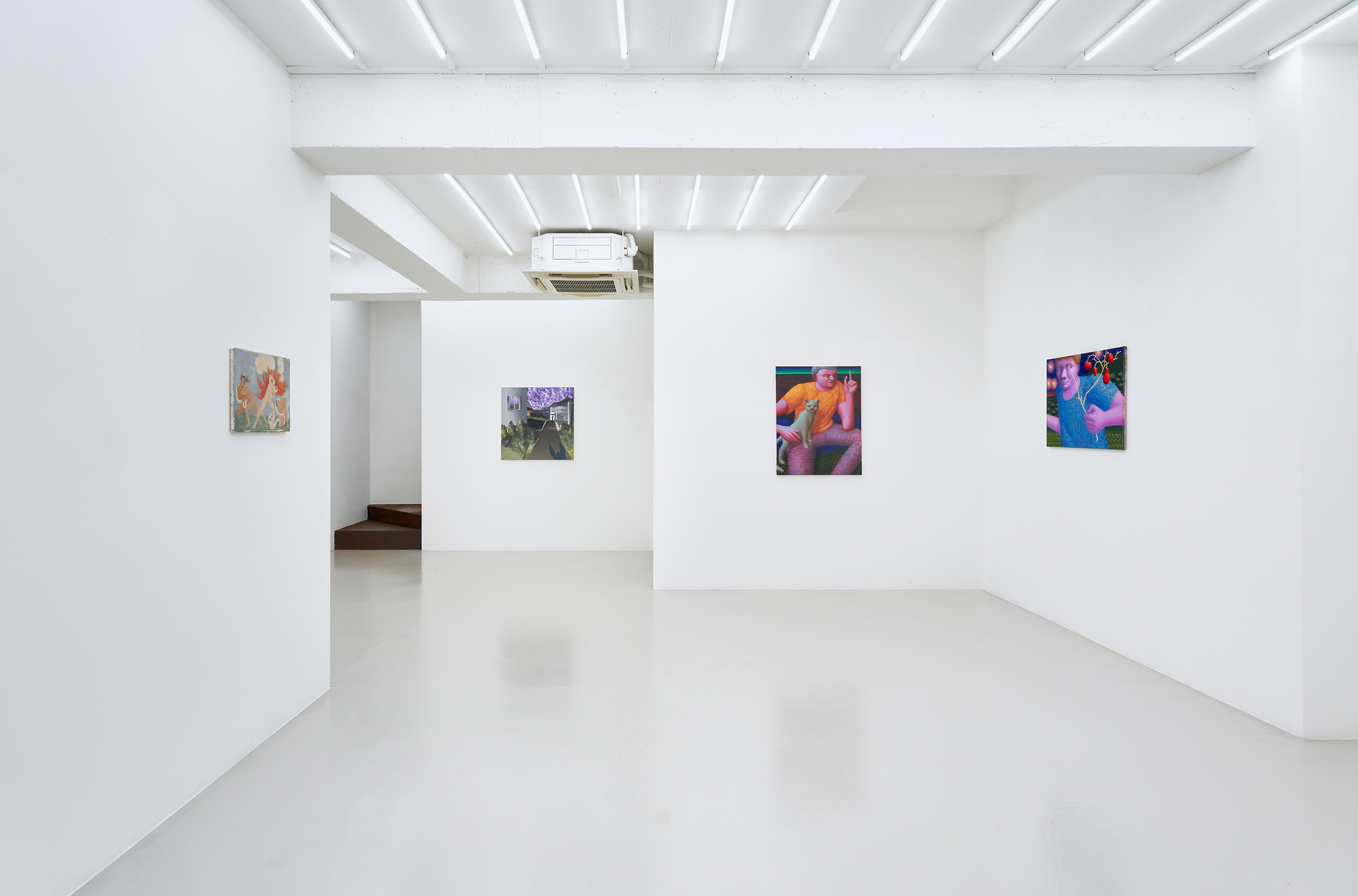
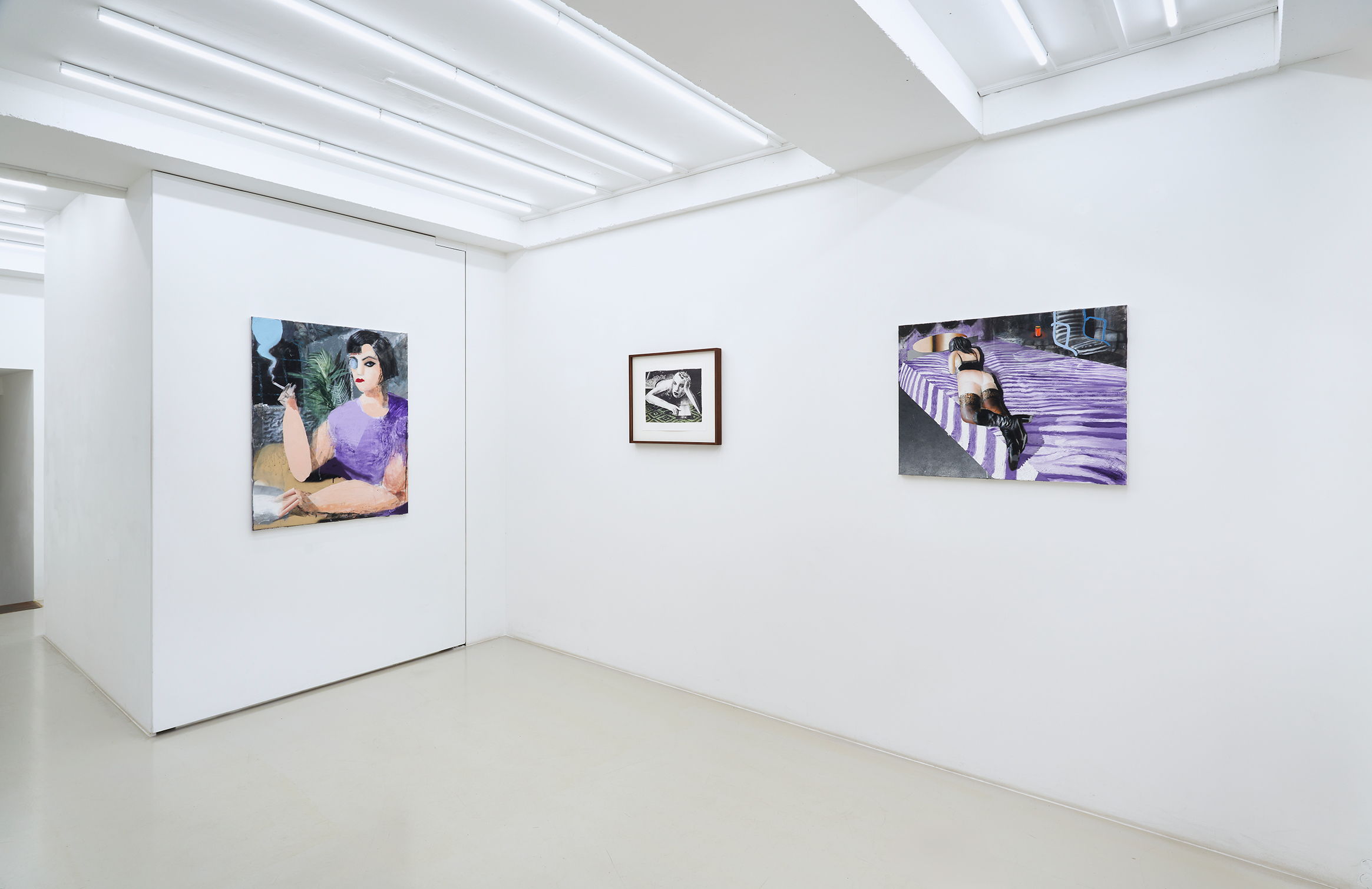
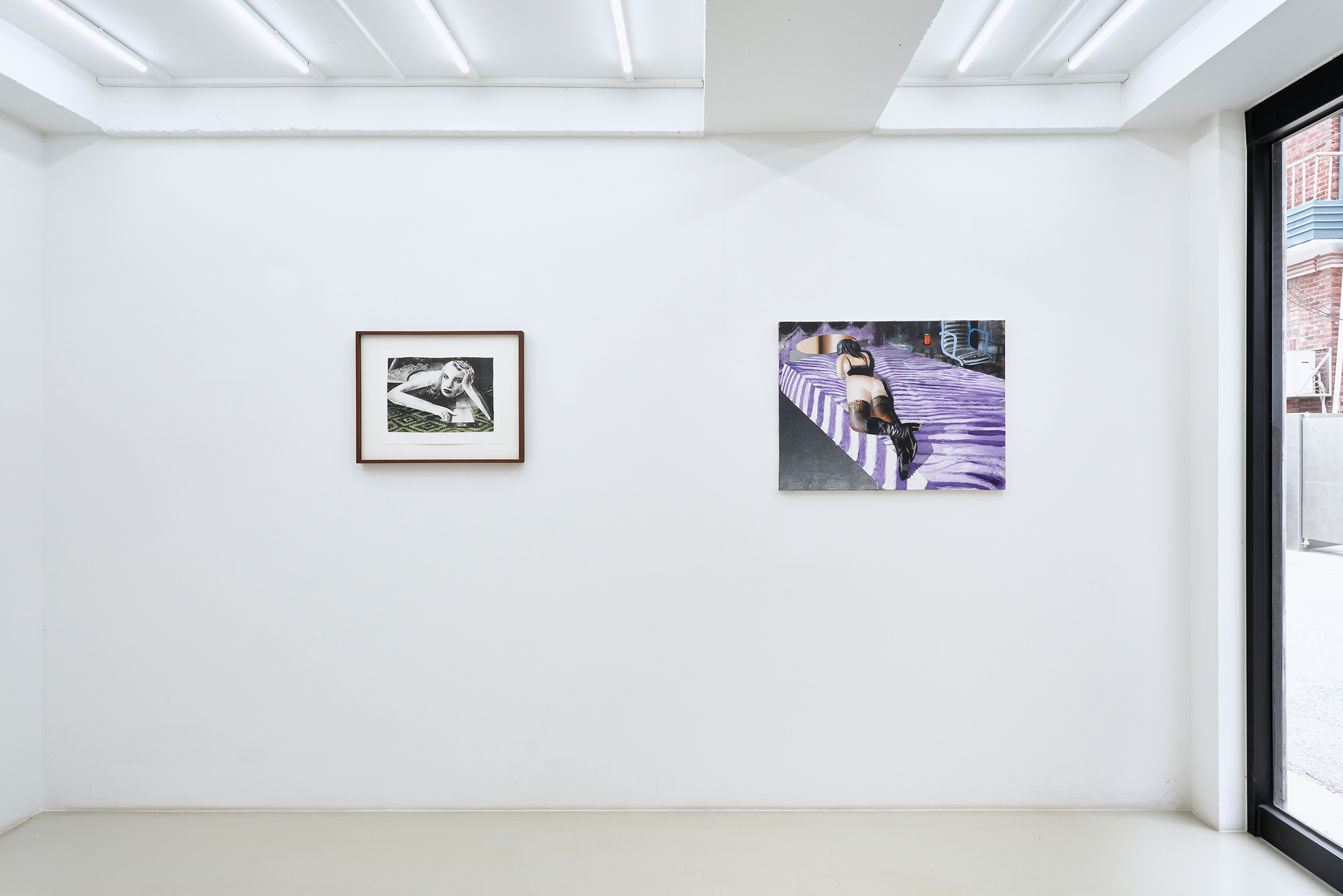
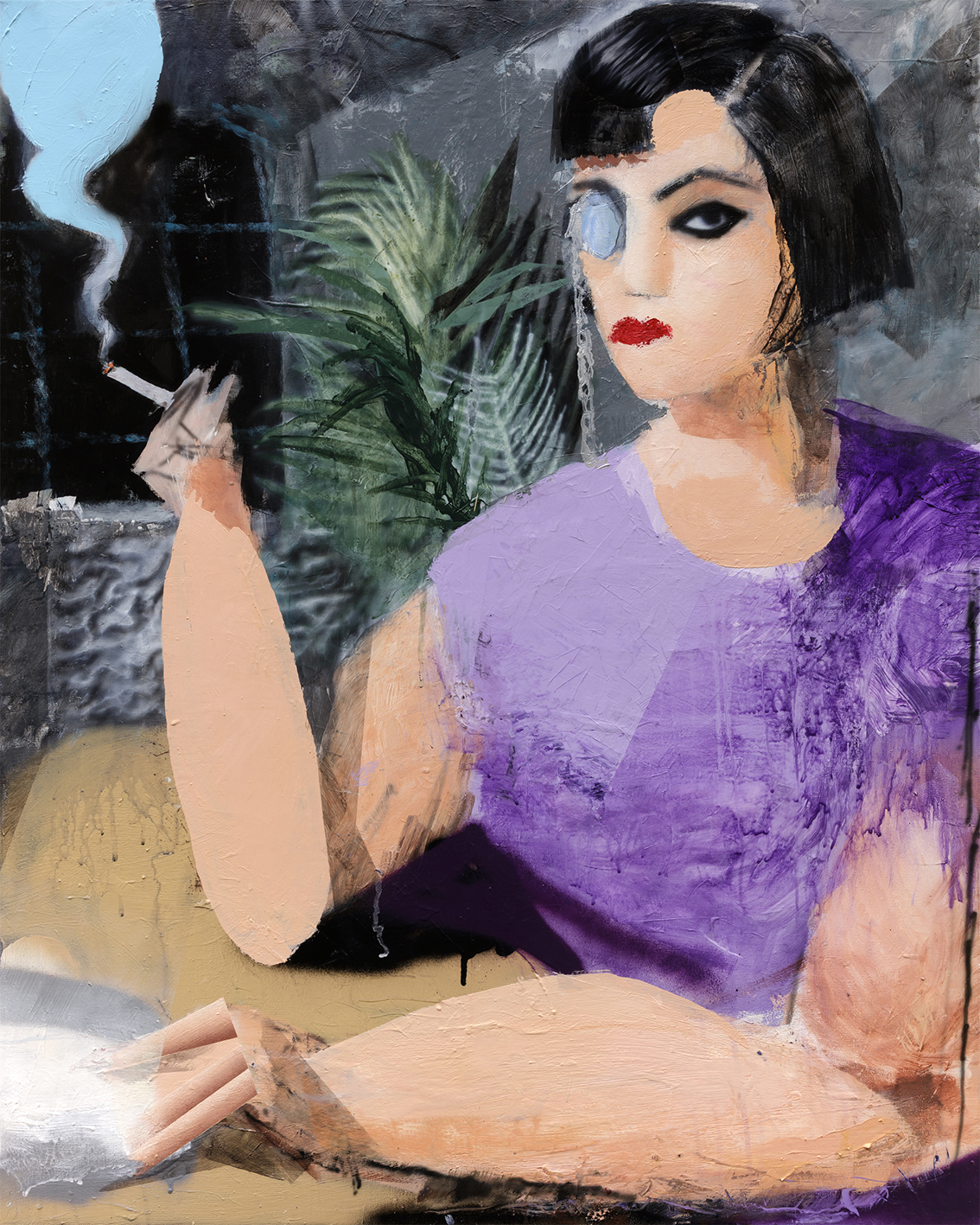
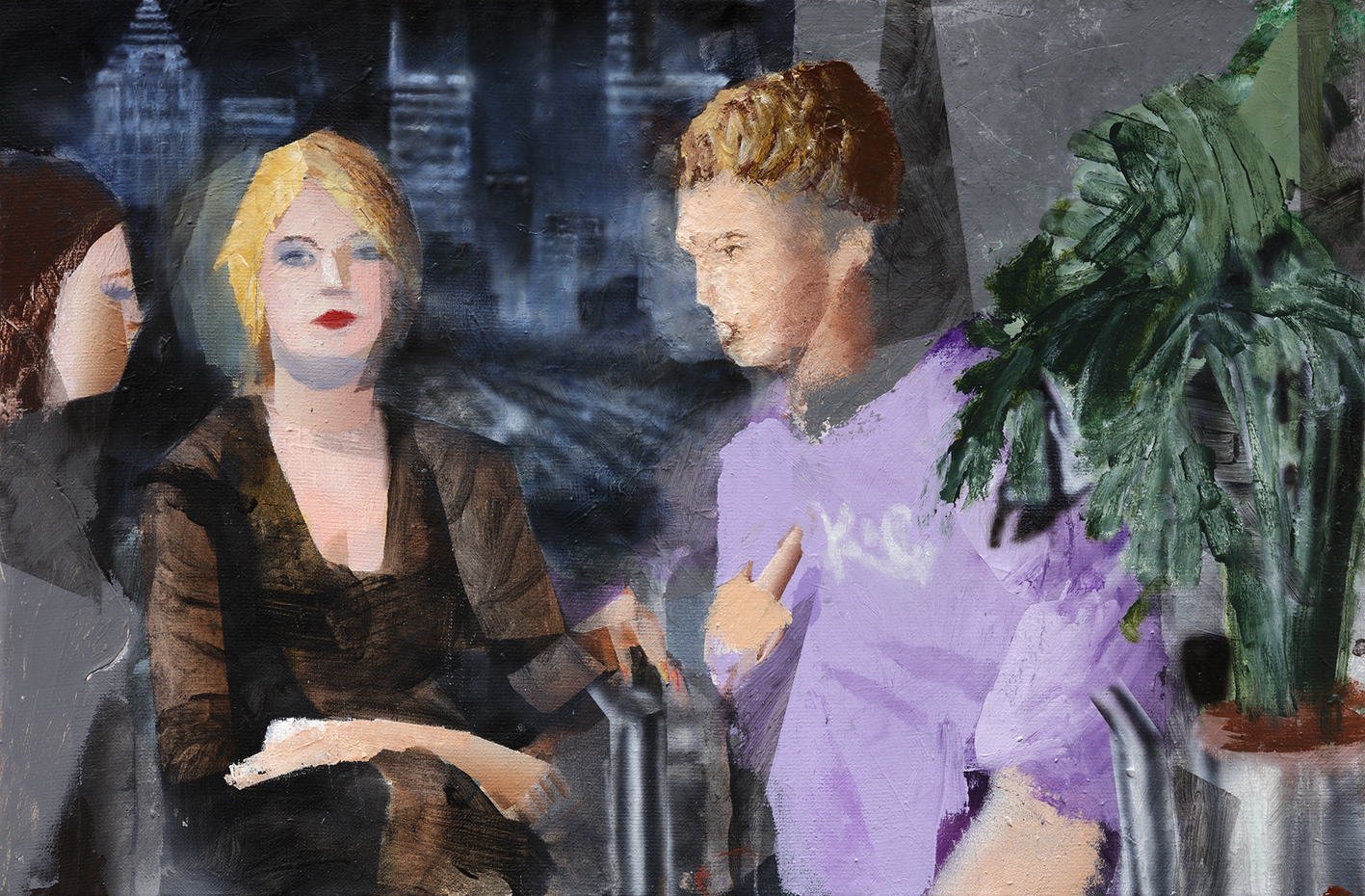
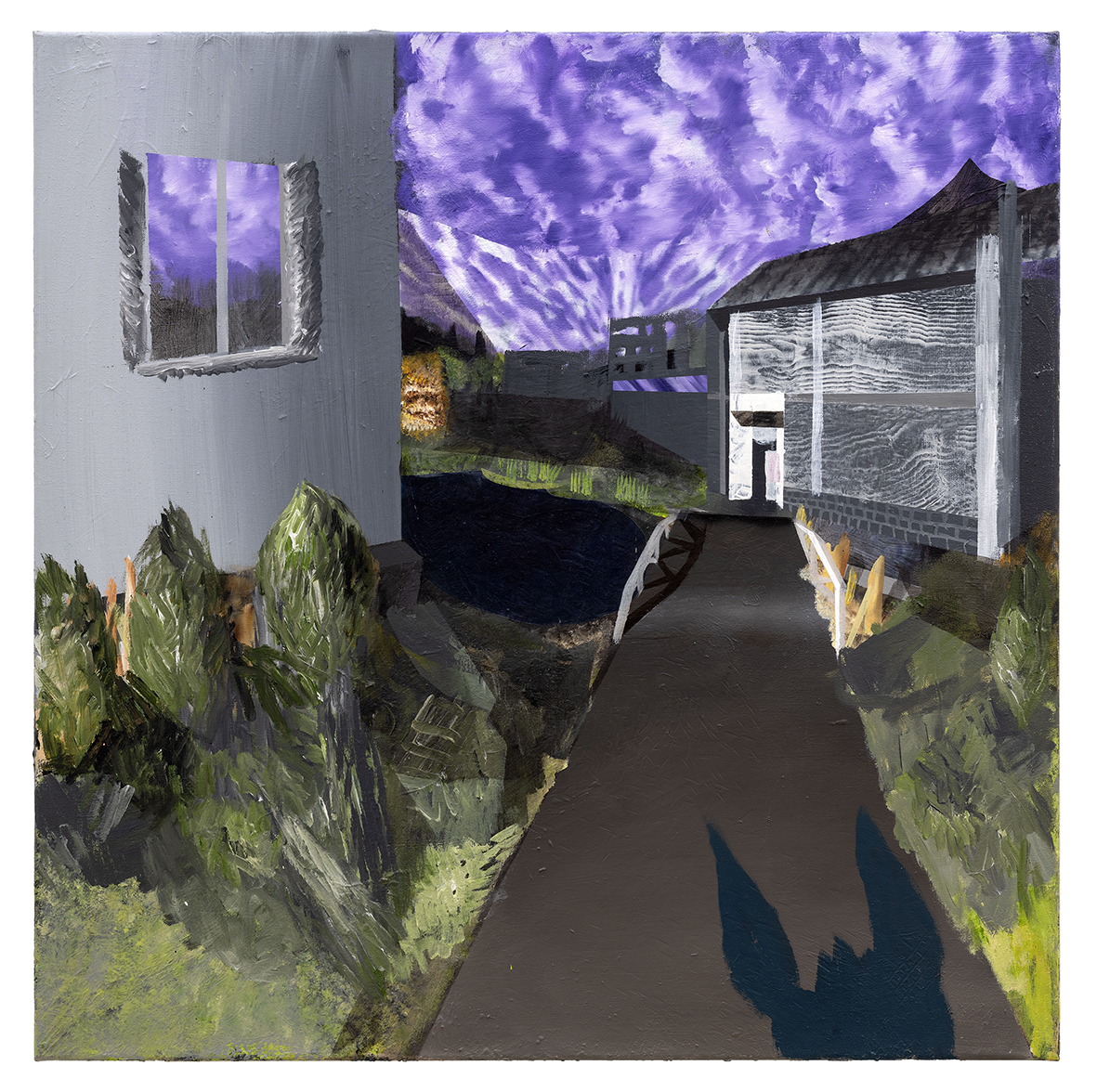
율리우스 호프만은 1990년대 비디오 게임과 초기 컴퓨터 그래픽, 3D 모델링 기술을 모방한다. 스크린을 사이에 두고 넘나드는 세계 간 변칙, 다시 말해 인터페이스의 오류와 해상도의 격차 등은 거친 물감의 레이어를 따라 의도적으로 구현된다. 다만 그의 회화는 디지털 이미지의 특이성을 흉내 내는 데 그치지 않고 비물질적 외피를 가시화하는 장치가 된다. 예를 들어, 도로에 드리운 동물 그림자는 화면 바깥의 일인칭 플레이어를 전제로 작동하고(Foreverglade), 부여받은 대사만을 내뱉는 게임 캐릭터의 기능은 텔레비전 토크쇼 진행자들의 모습에 투영된다(Shell). 또한 작가는 만화 영화, 누아르, 호러 장르에서 주로 쓰이는 관음적 연출에 빗대어 현대인이 자극을 소비하는 방식과 가상 공간에서의 경험을 포착한다. 이와 덧붙여 각지고 과장된 신체, 인공적인 보랏빛 도시는 각각 신즉물주의적 초상, 포스트모던 건축 양식과 겹친다. 어쩌면 작가는 이 불완전한 접합을 빌어 인간의 몸과 감정마저 규격화되는 세태를 묘사하려는 듯하다. 미루어 짐작건대 호프만의 작업은 데이터베이스의 복제와 저장을 매개로 삼아 계속해서 생성될 시각 언어의 운명을 냉소적으로 예견하는 것처럼 보인다.
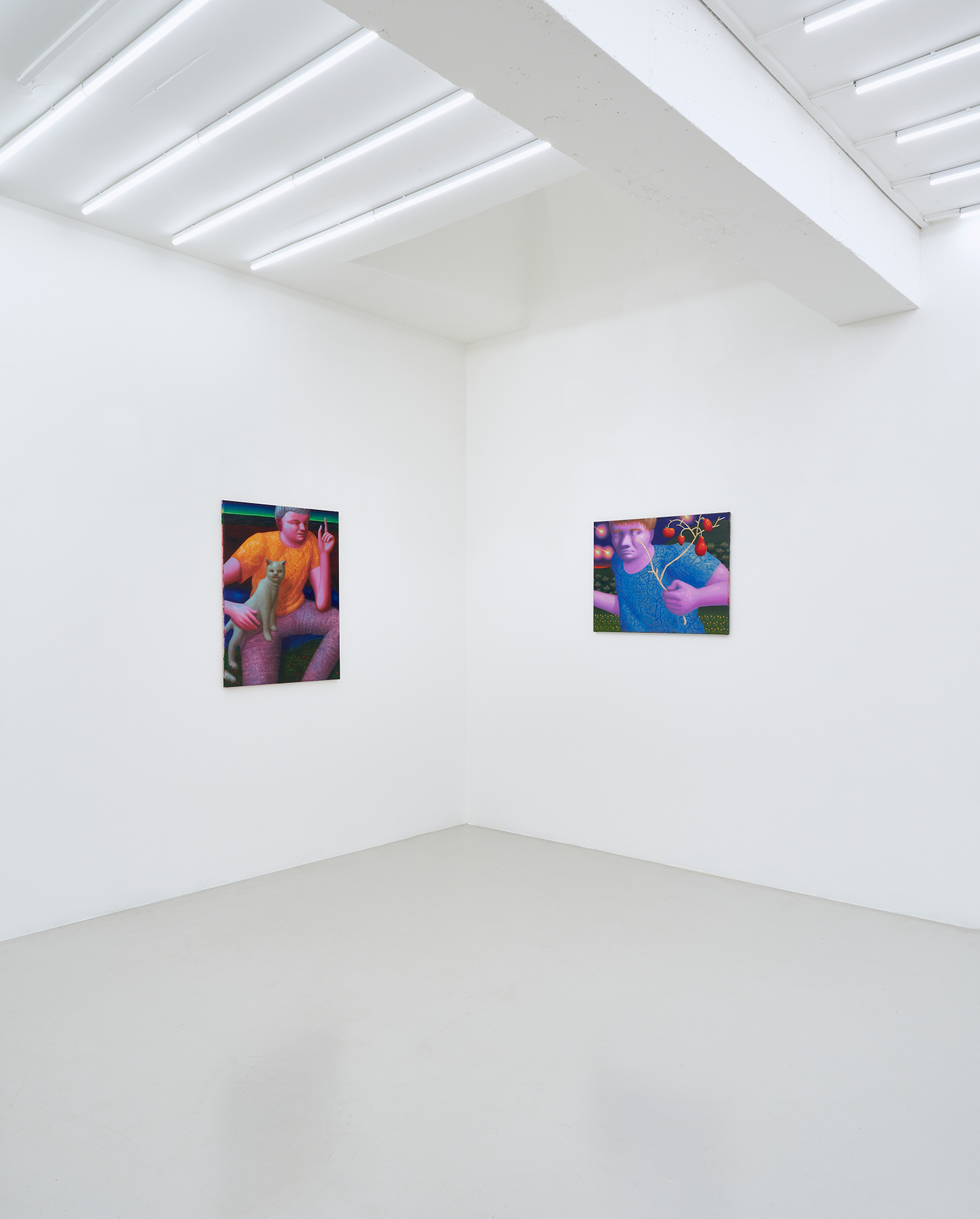
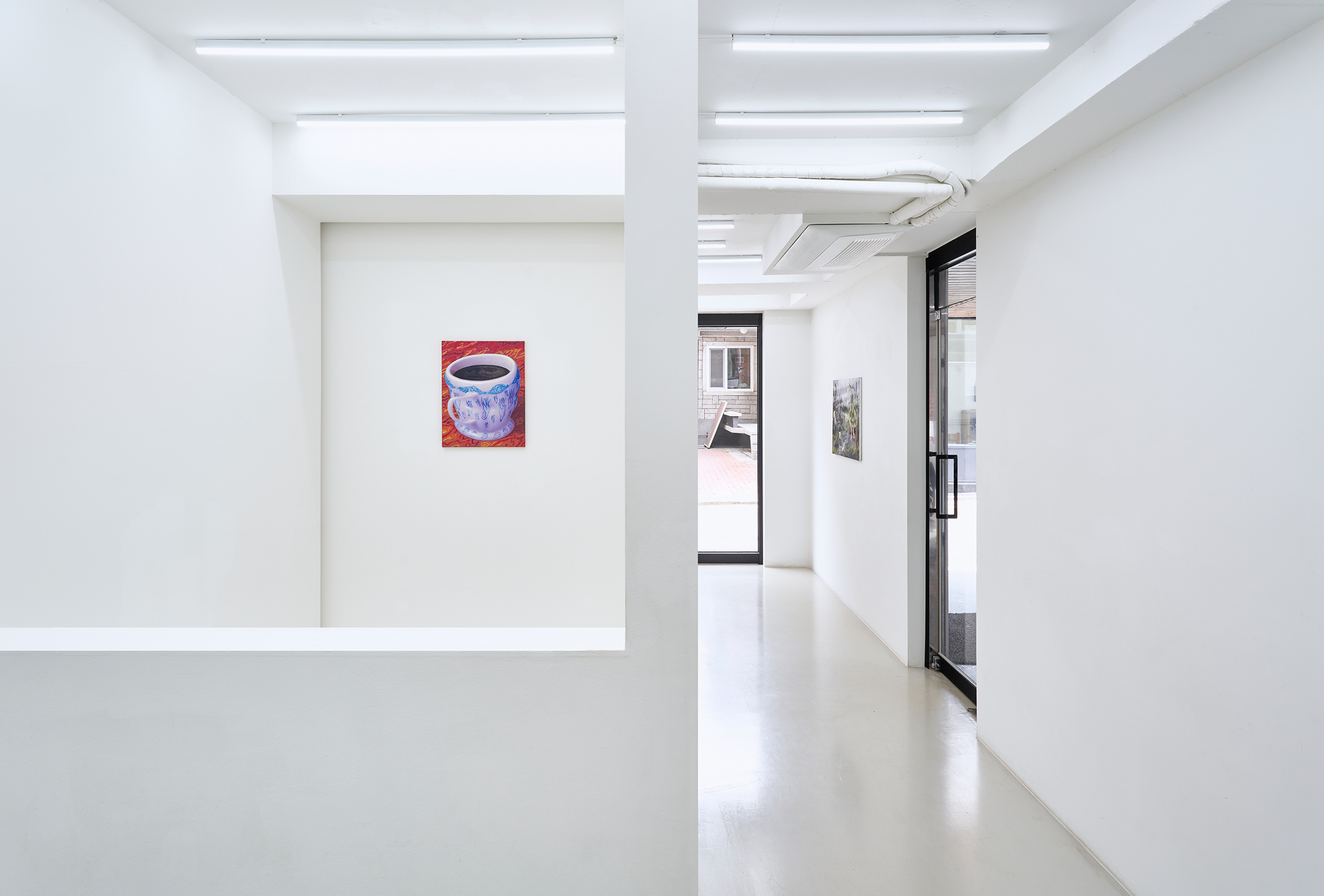
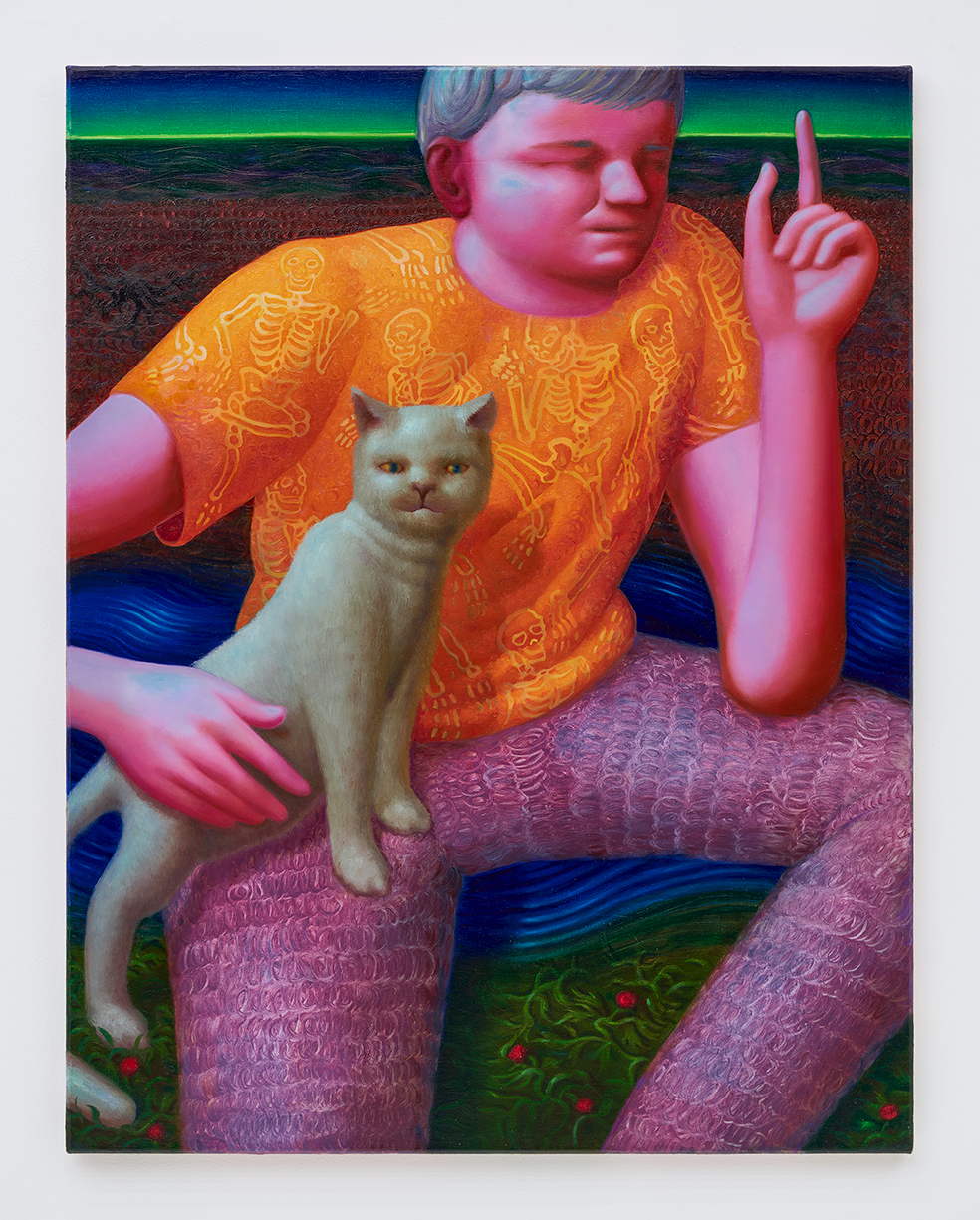
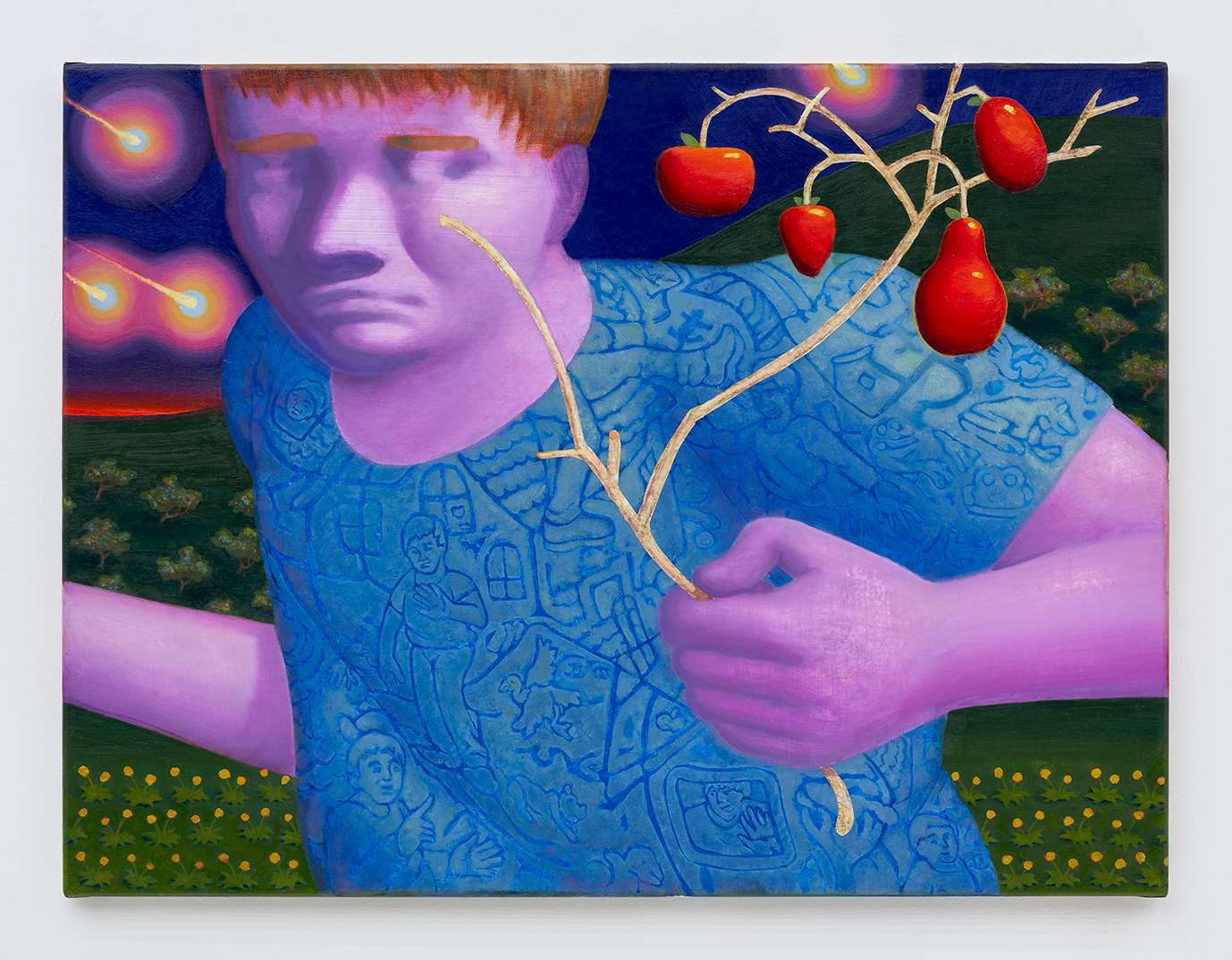
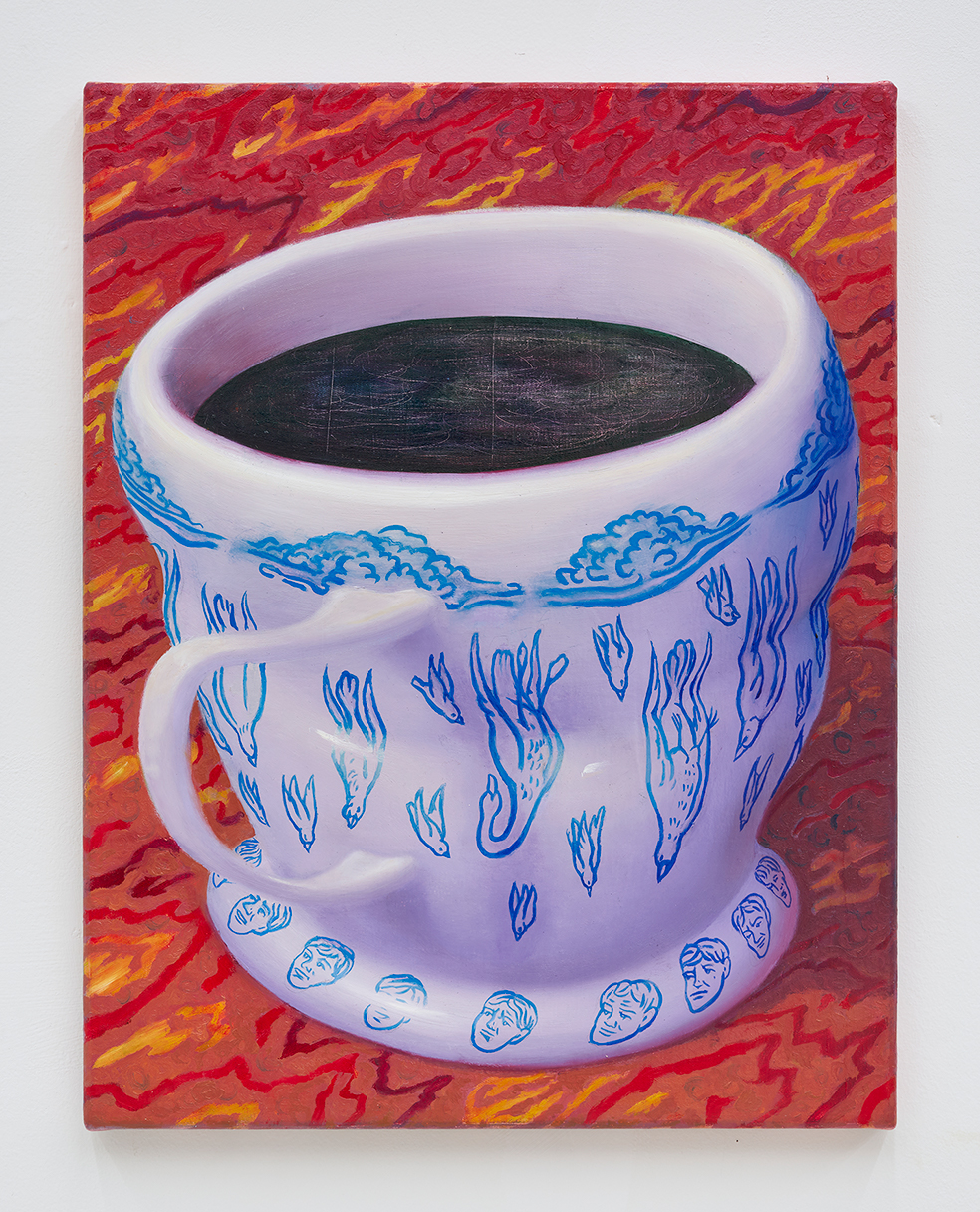
루카스 카이저에게 화면은 여러 영역으로 분할되면서도 각 부분이 하나로 조응할 수 있는 것이다. 그는 최근 중앙 원근법이 배제된 초기 르네상스 회화를 참조해 시선이 공평하게 머무는 구성을 시도하였다. 다양한 패턴과 명암, 그리고 질감으로 직조된 요소들은 선형적 배치에서 벗어나 무엇이든 담아낼 수 있는 빈 그릇의 상태가 된다. 가령 머그잔, 인물의 티셔츠, 하늘과 초원에 새겨진 무늬들은 저마다 다른 이야기를 품고 있다. 이러한 조형 방식의 기저엔 작가가 말하는 ‘반어적 유희를 동반한 종말론적 낭만주의(Apocalyptic Romanticism)’가 자리한다. 카이저에게 낭만주의란 기술과 효율이 지배하는 현실 너머를 향한 충동이면서도, 그것을 초월한 세계에 결코 도달할 수 없음을 자각하게 만드는 양가적 개념이다. 따라서 그의 그림은 정치적 폭력과 기후 위기, 기술의 압도감으로부터 달아나는 피난처가 아니라 애써 마주하기 위해 돌아가는 우회로가 된다. 세상의 모든 것이 점점 더 어두운 방향으로 흘러갈 때, 어떻게 아름다운 것을 창조할 수 있을까?2 지극히 일상적인 장면에 비극 한 스푼 더하기. 매혹적인 동시에 혐오스러운 이미지를 탐구하기. 회화가 세계를 구원할 수 있다고 믿지 않음에도 멈추지 않기. 이것이 붓을 쥔 이의 응답일 것이다.
글ㅣ이유진 (디스위켄드룸 큐레이터)
1 오스트라네니(остранение, Ostranenie, 통상 ‘낯설게 하기’ 또는 ‘defamiliarization’)는 러시아 형식주의 비평가 빅토르 슈클롭스키가 「기법으로서의 예술」(1917)에서 언급한 개념으로, 익숙한 대상을 낯선 방식으로 제시해 이미 아는 것으로 인식하는 데 그치지 않고 새롭게 보게 하는 예술적 장치를 뜻한다.
2 루카스 카이저 작가 노트 중.
Ostranenie1 brings together Tilo Baumgärtel (b. 1972), Jina Park (b. 1980), Julius Hofmann (b. 1983), and Lucas Kaiser (b. 1994). While the four artists share a painterly foundation rooted in Leipzig, they come from different generations and cultural contexts. Throughout its long history, painting has continually transformed its own conditions through encounters with different systems of signs and representation. Rather than tracing a particular art historical lineage or presenting a linear chronology, the exhibition looks at how a single medium can unfold in multiple directions. In the worlds constructed by the four artists, the everyday and the fantastic, past and present, surface and depth intersect in ways that feel familiar yet subtly strange. Narratives associated with Socialist Realism are translated through the languages of video games and comics, while classical iconography and memes coexist without hierarchy. The resulting compositions retain the appearance of reality while disrupting perspective, proportion, and the logic of cause and effect. In doing so, they open up perceptual gaps that resist being contained within a single temporal framework.
Tilo Baumgärtel, along with Matthias Weischer, Christoph Ruckhäberle, and Neo Rauch, is regarded as one of the leading figures of the New Leipzig School. Even as conceptual art gained prominence in the West, he remained committed to the tradition and figurative language of analogue painting. Drawing on 1940s comics, Pop Art, and propaganda posters from the Second World War, Baumgärtel developed an illustrative language shaped by the historical context of the former East Germany. His scenes often appear suspended like stills from a film or animation, carrying a melancholic mood and the unsettling quality of a dark fairy tale. One notable aspect is the way figures and creatures from entirely different genres inhabit the same pictorial world. At a campsite, for instance, the figures continue to rest, seemingly indifferent to the green monster beside them. His paintings are often compared to dreams, not so much because of their fantastical subject matter, but because disparate events and characters coexist so naturally. This sense of enigma extends to the titles. In Four Blondes, three people and a horse are all described as blonde, while in Troyka, a title referring to a three horse drawn carriage, the dogs slip free of their leashes and run wildly.
Jina Park extracts images from art history, natural history, and popular culture, removing them from their original contexts and placing them in new relationships. Rather than following systems of classification that claim aesthetic universality, her work asks who has determined what is selected and what is deemed more valuable. In the triptych series Cabinet of Birds presented in this exhibition, this inquiry expands beyond the interior into the landscape. Birds drawn from well known ornithological illustrations appear alongside tropical plants, coniferous forests, lakes, and mountain ranges, forming a vast diorama rather than an actual ecosystem. This artificial stage also draws attention to the gaze through which certain subjects are othered or exoticized. For Park, the exotic paradises encountered in films, advertisements, and travel brochures are projections shaped by the media rather than realities in themselves. In this sense, exoticism, though often associated with either East or West, stems from the desire to perceive what belongs to the other as an object of longing. Plants and animals suggesting different origins are therefore brought together, blurring the boundaries between native and foreign, real and imagined. At the same time, images circulated through the internet and mass media acquire material presence through the slow, repetitive layering of egg tempera. Beyond simple representation, this process becomes a way of assigning new value to images through acts of selection and displacement.
Julius Hofmann’s paintings draw on the visual language of 1990s video games, early computer graphics, and 3D modeling. Anomalies between worlds on either side of the screen, such as interface glitches and differences in resolution, are deliberately recreated through rough layers of paint. Yet his work goes beyond imitating the distinctive qualities of digital imagery, instead making its immaterial surfaces visible. In Foreverglade, for example, the shadow of an animal cast across the road suggests the presence of a player beyond the frame. In Shell, game characters programmed to repeat assigned lines find their counterparts in television talk show hosts. Drawing on voyeuristic modes of staging associated with animation, noir, and horror, Hofmann also reflects on how contemporary viewers consume stimulation and experience virtual spaces. At the same time, his angular, exaggerated bodies and artificial purple cities evoke New Objectivity portraiture and Postmodern architecture. Through these uneasy combinations, he seems to suggest a world in which even human bodies and emotions are becoming standardized. Hofmann’s practice ultimately offers a cynical view of the fate of visual language, endlessly generated through the replication and storage of images in digital databases.
For Lucas Kaiser, the canvas can be divided into multiple areas while still allowing its individual parts to form a coherent whole. Recently, drawing on early Renaissance painting before the development of central perspective, he has explored compositions in which the gaze can move freely across the surface without settling on a single focal point. Woven from varied patterns, contrasts, and textures, the elements move beyond linear arrangements and become like empty vessels, open to different narratives. The patterns inscribed on a mug, a figure’s T-shirt, the sky, and a meadow, for instance, each carry a story of their own. Underlying this approach is what Kaiser calls “Apocalyptic Romanticism,” accompanied by a sense of ironic play. For him, Romanticism is an ambivalent concept: an impulse to look beyond a reality dominated by technology and efficiency, coupled with the awareness that such a world can never truly be reached. His paintings, then, are not a refuge from political violence, the climate crisis, or the overwhelming presence of technology, but a detour through which to confront them. How can one create something beautiful when everything in the world seems to be moving in a darker direction?2 Add a spoonful of tragedy to an ordinary scene. Explore images that are both captivating and repulsive. Keep painting, even without believing that painting can save the world. Perhaps this is the painter’s response.
TextㅣYoojin Lee (Curator, ThisWeekendRoom)
1 Ostranenie (остранение, commonly translated as “making strange” or “defamiliarization”) is a concept introduced by the Russian Formalist critic Viktor Shklovsky in his essay “Art as Technique” (1917). It refers to an artistic device that presents familiar objects in unfamiliar ways, allowing them to be perceived anew rather than simply recognized.
2 Artist’s Note of Lucas Kaiser.