
에밀 우르바넥
Emil Urbanek
17 Oct-21 Nov 2026
ThisWeekendRoom
Artists
Emil Urbanek →
Credit
참여 작가ㅣ에밀 우르바넥
기획ㅣ디스위켄드룸
글ㅣ이유진
사진ㅣ이정우
ArtistㅣEmil Urbanek
Curated by ThisWeekendRoom
TextㅣYoojin Lee
PhotographsㅣJungwoo Lee
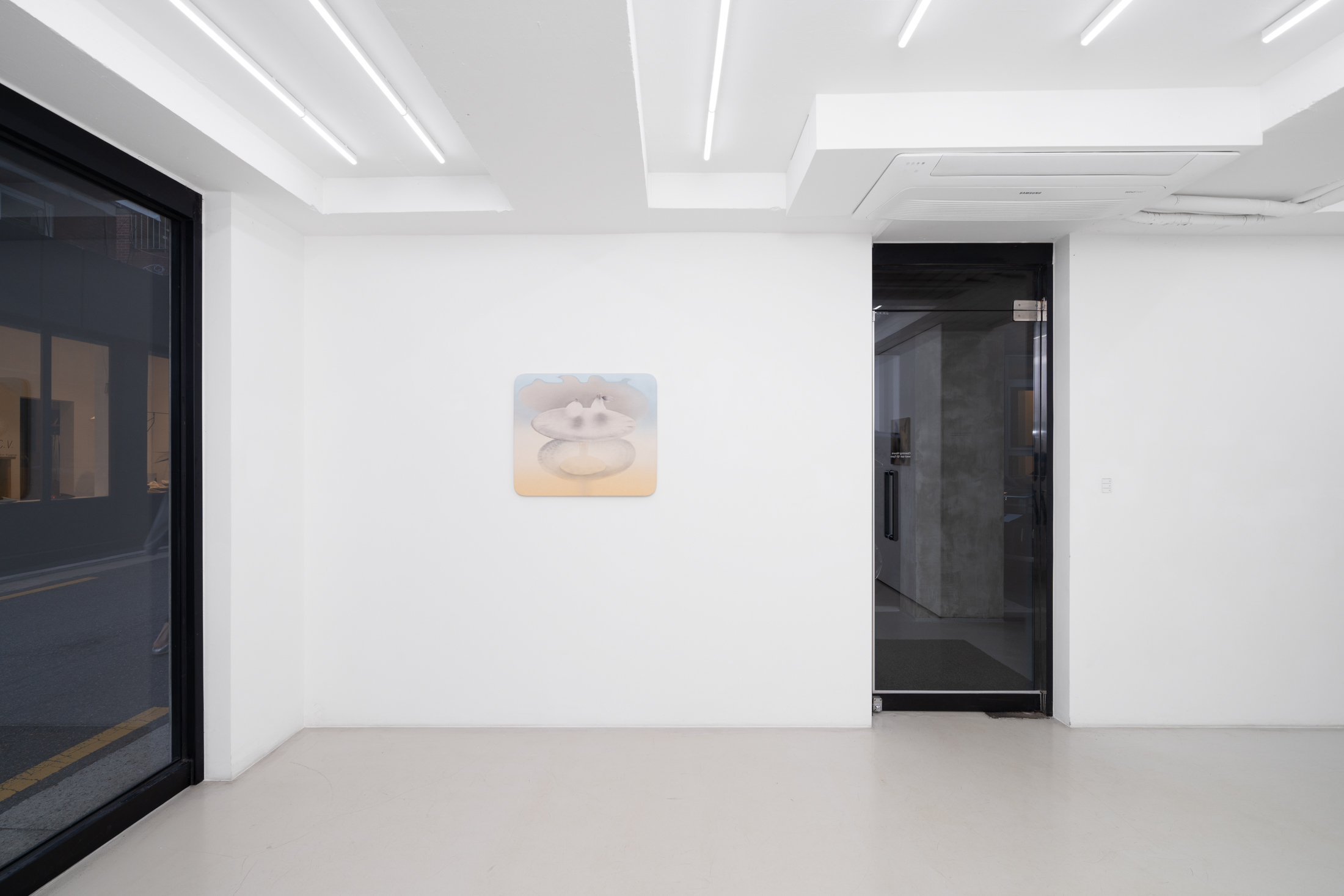
Exhibition Text
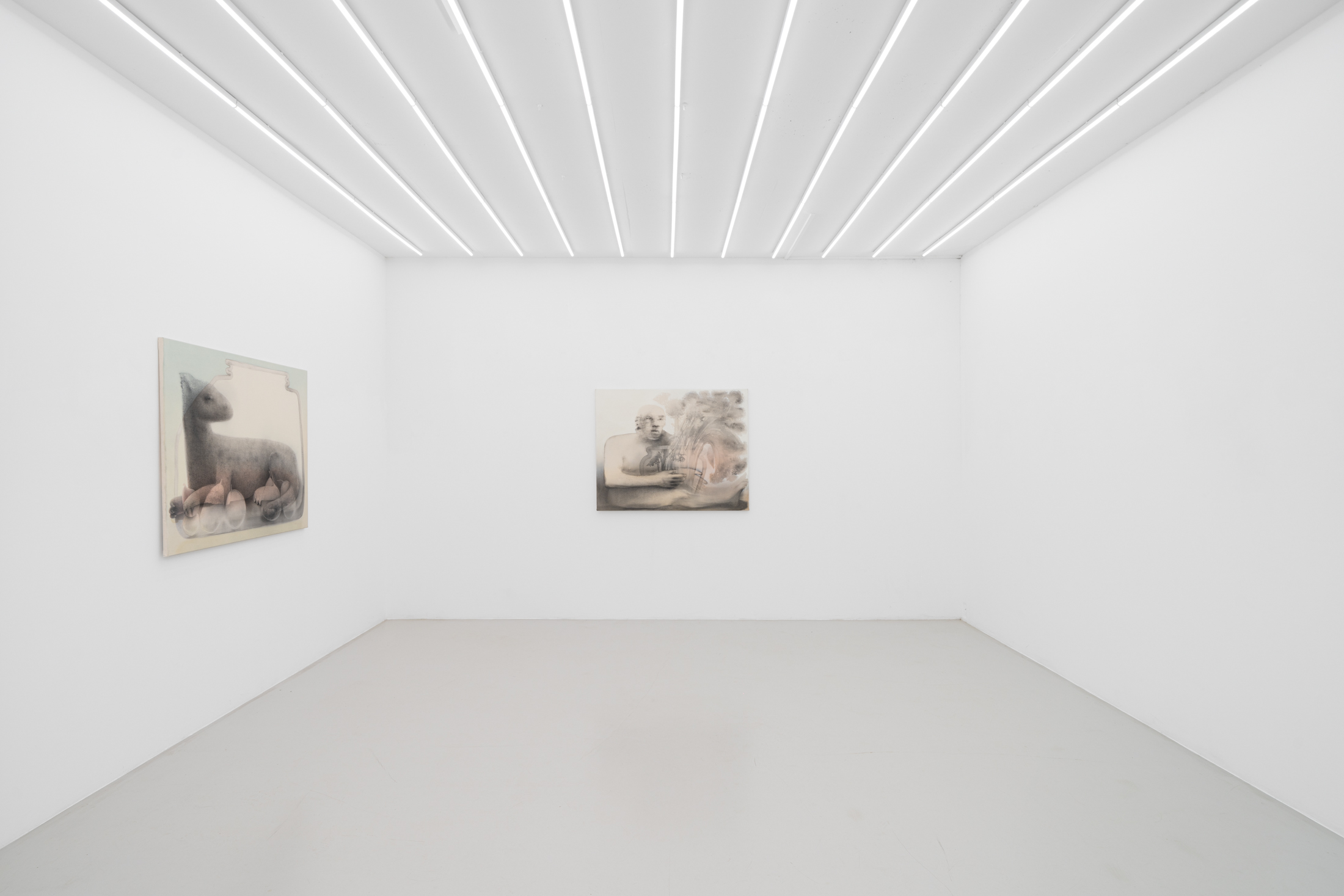
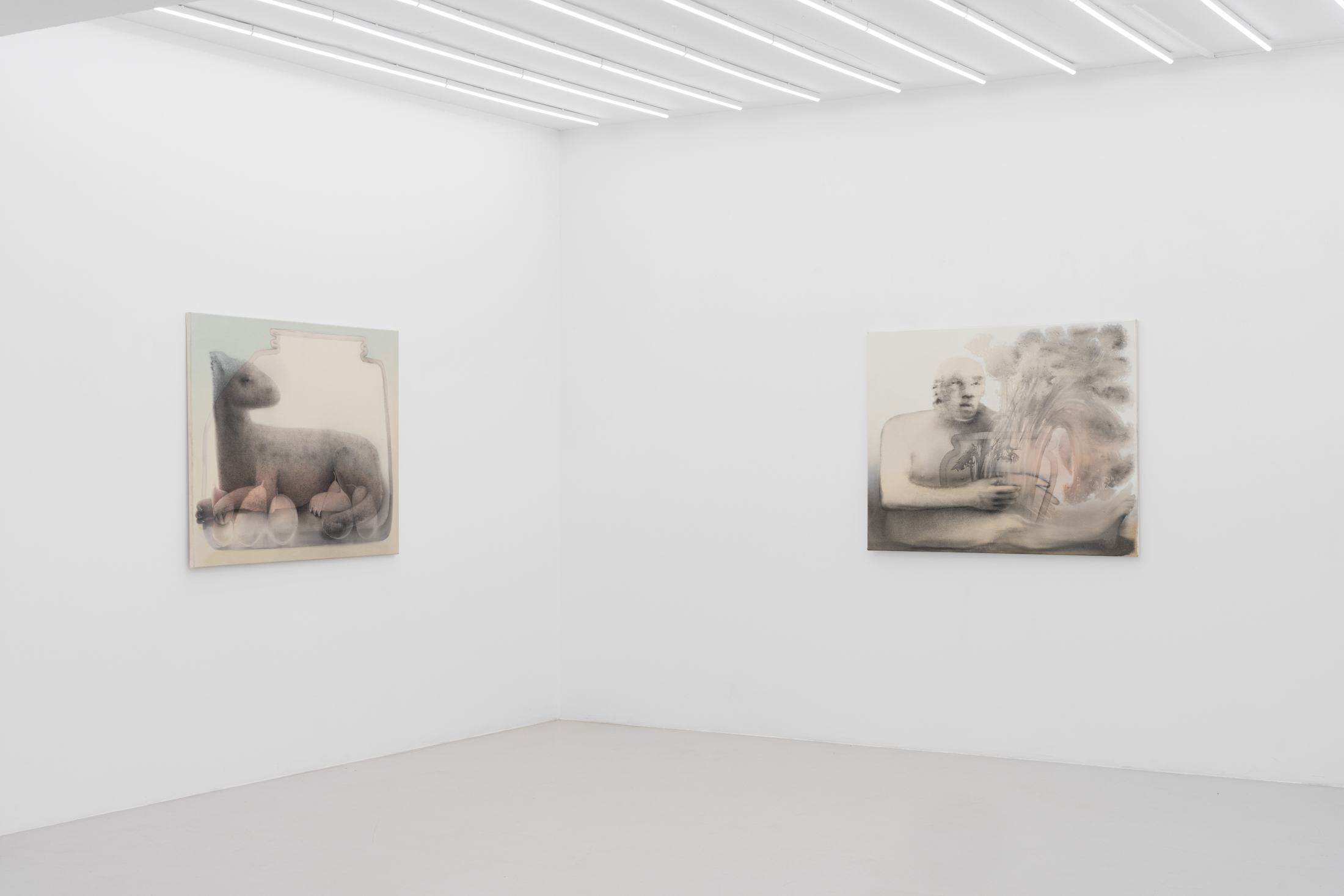
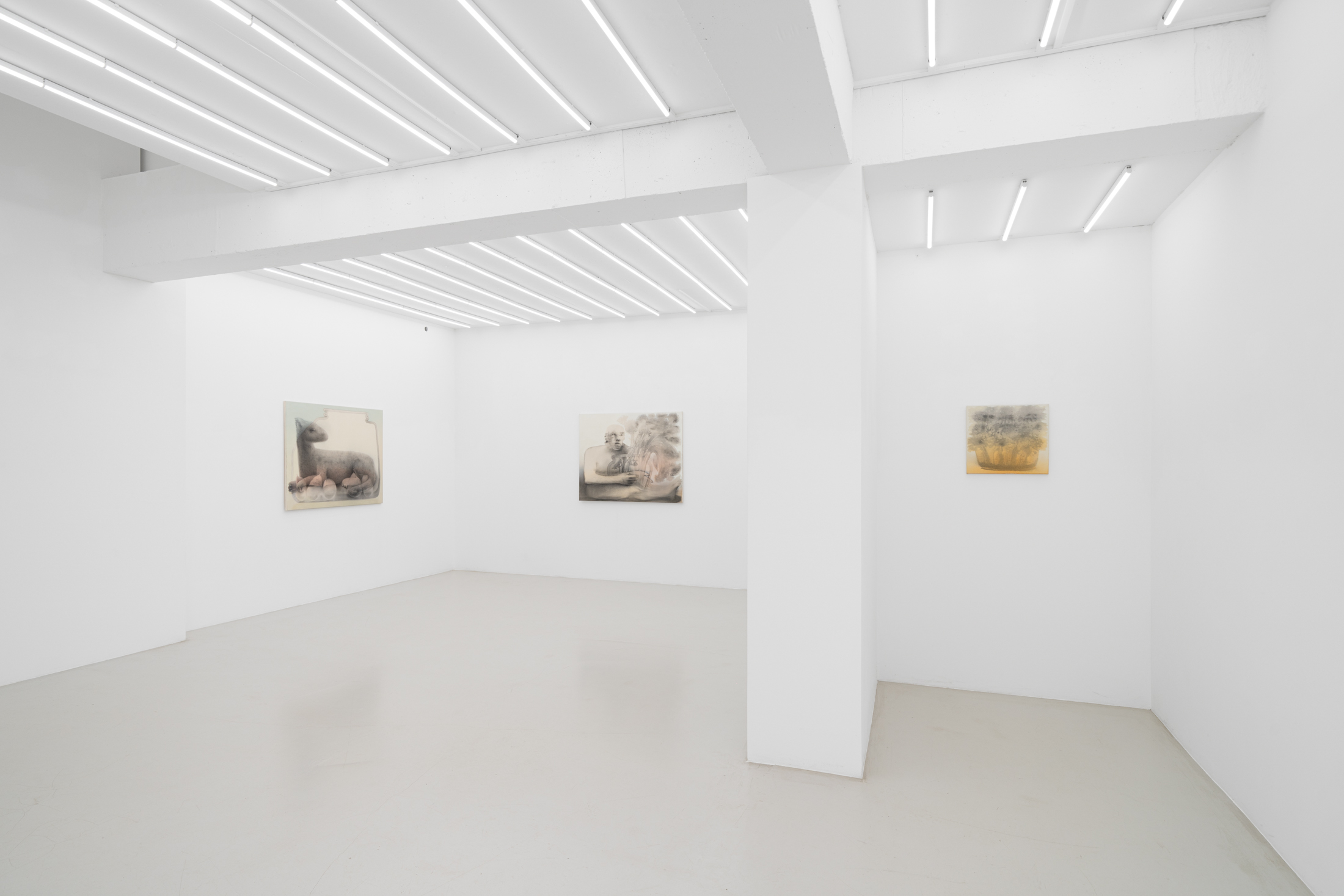
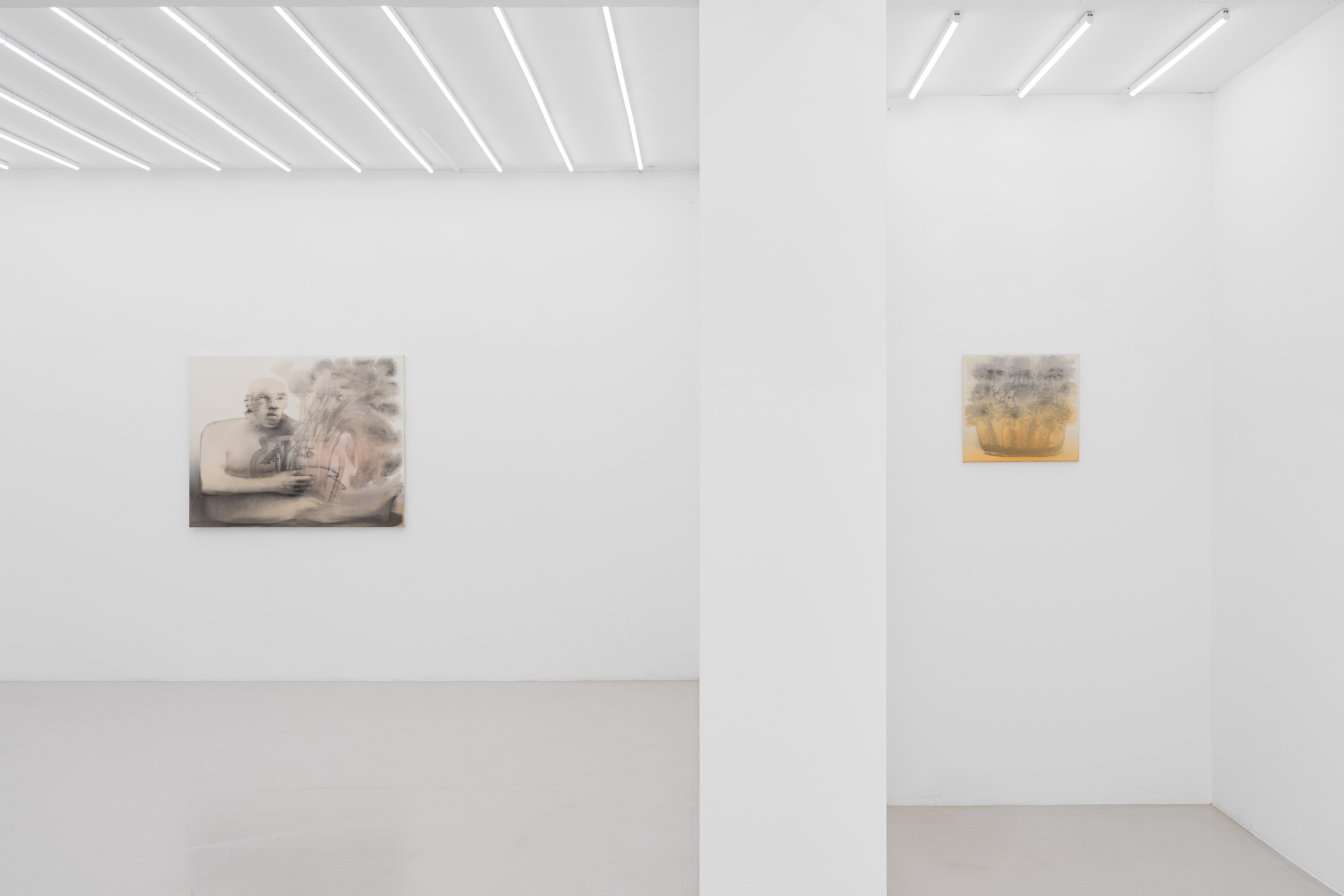
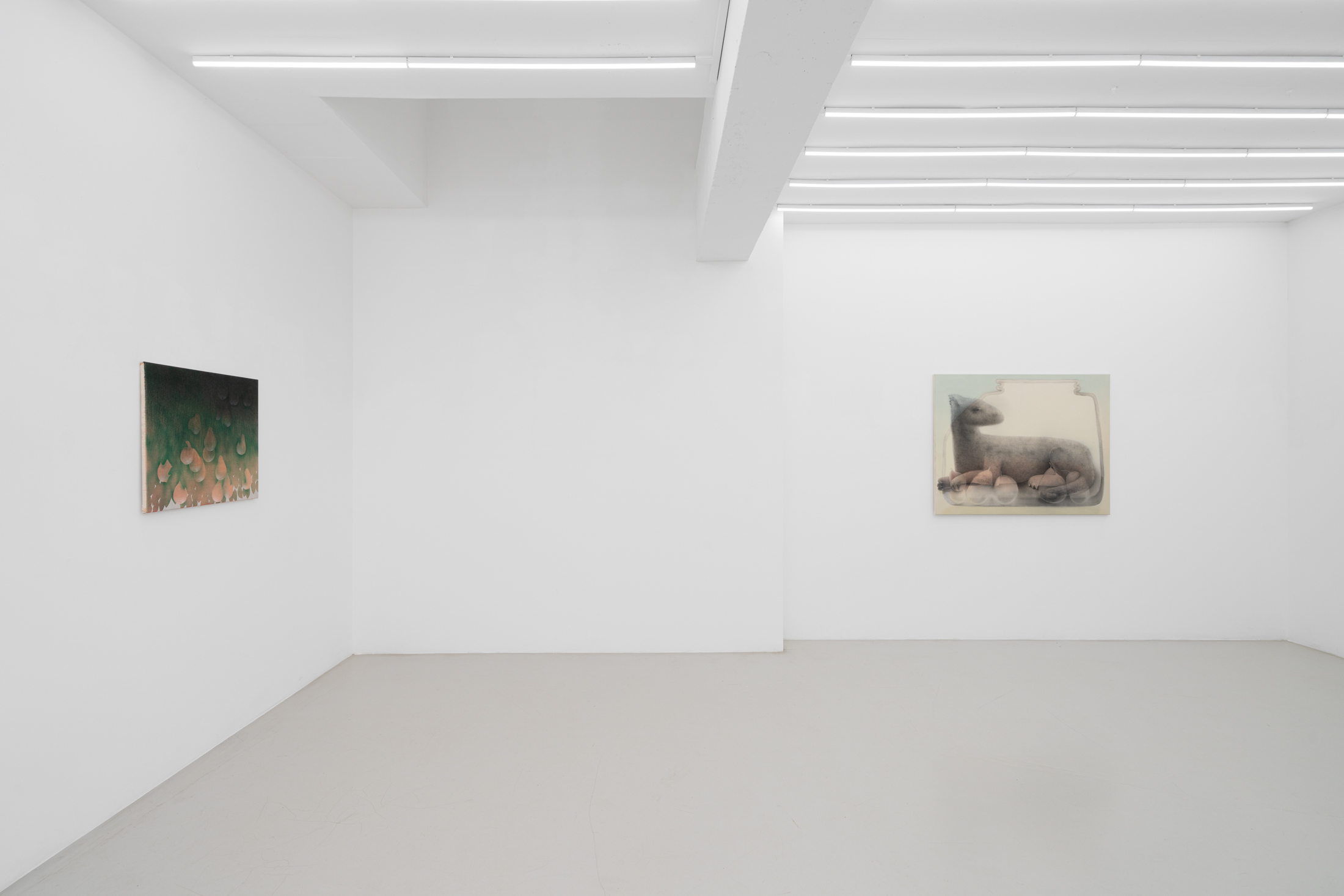
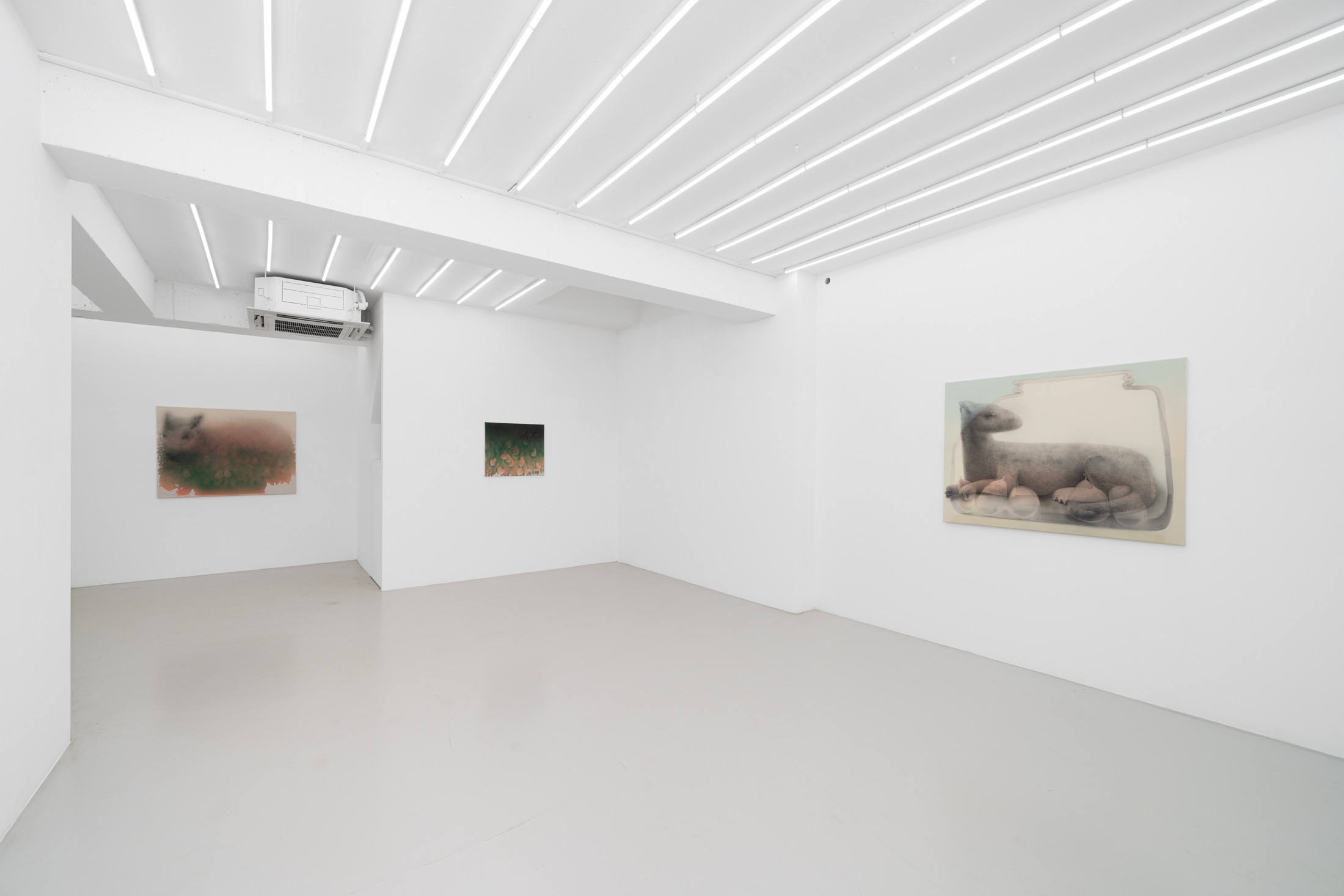
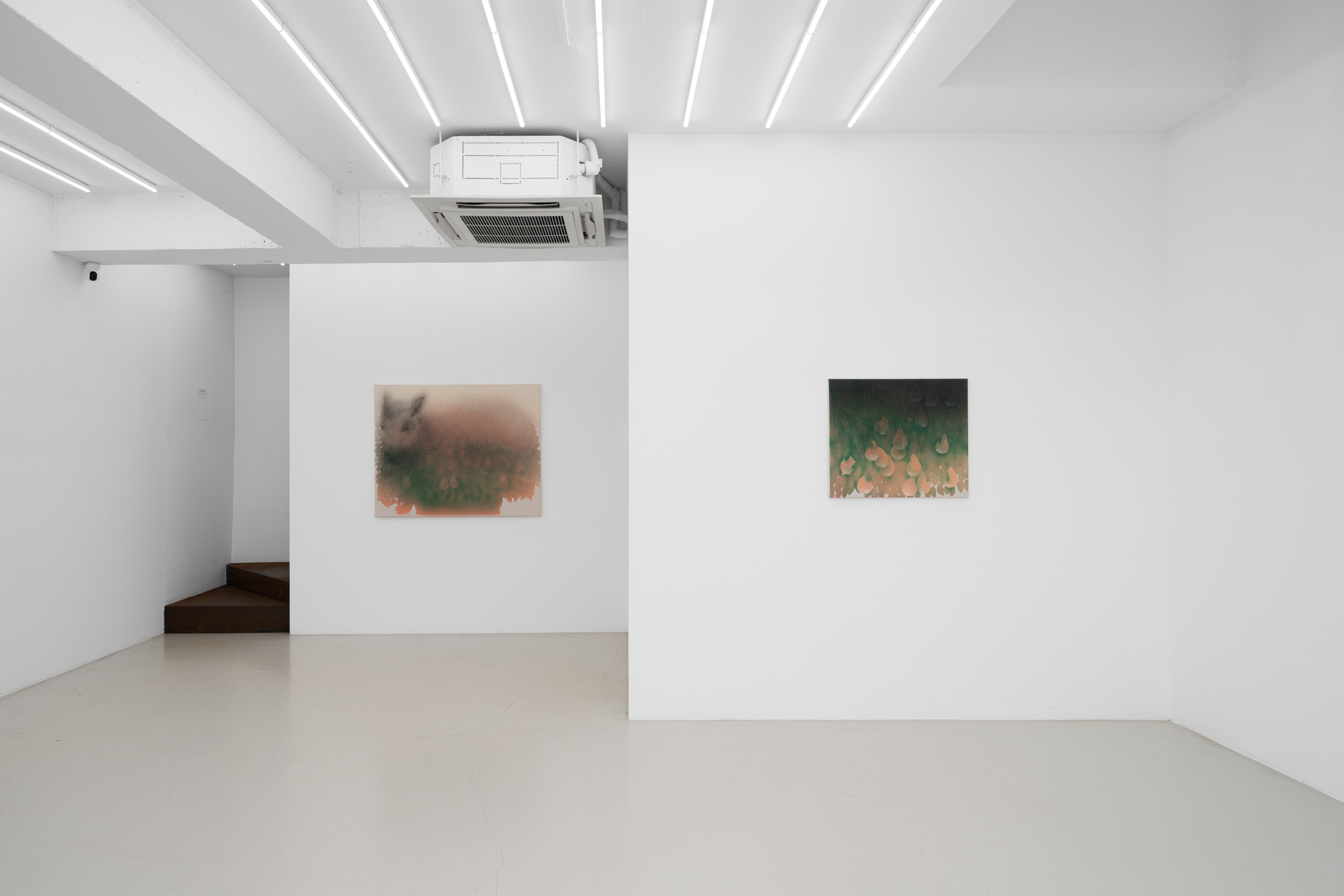
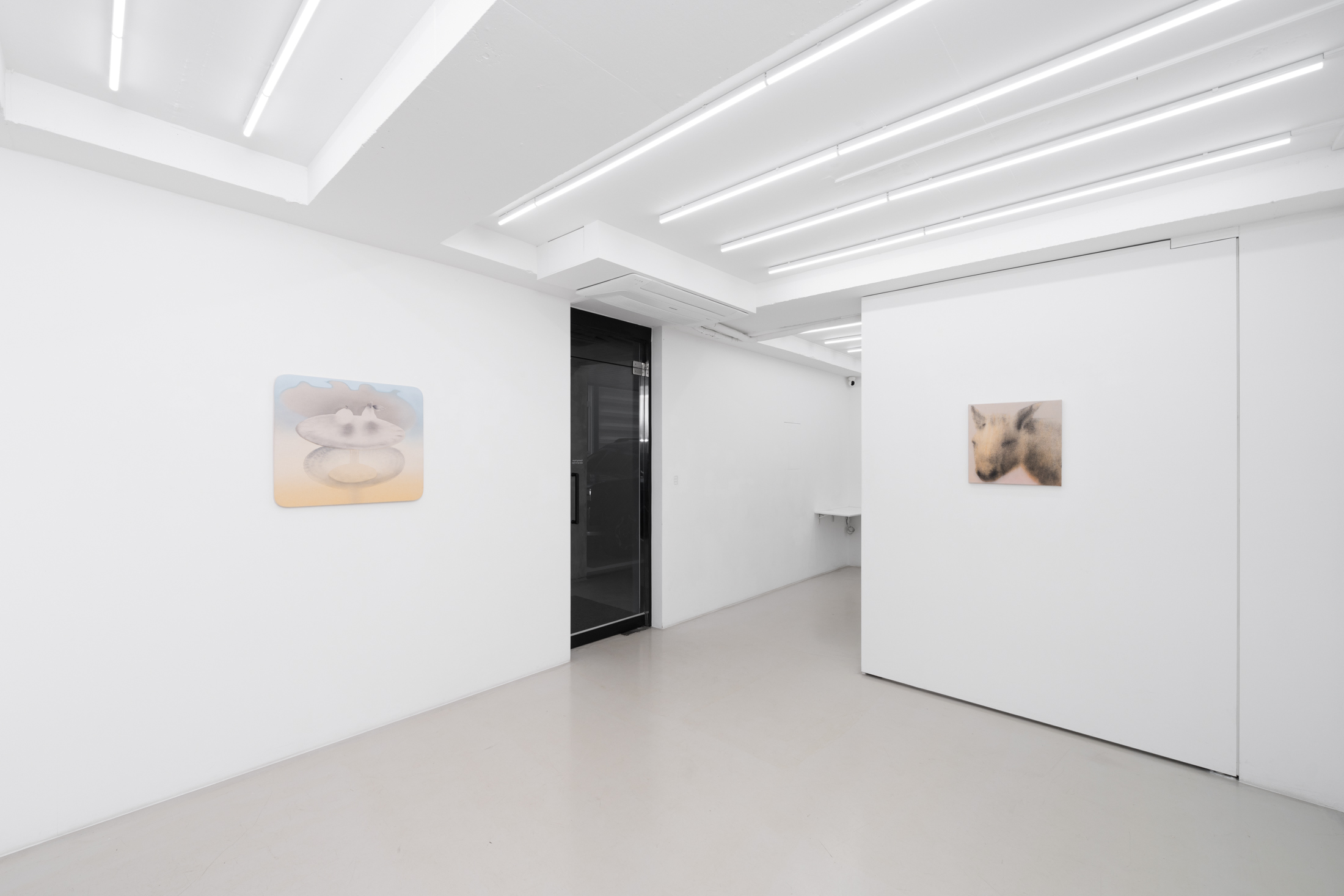
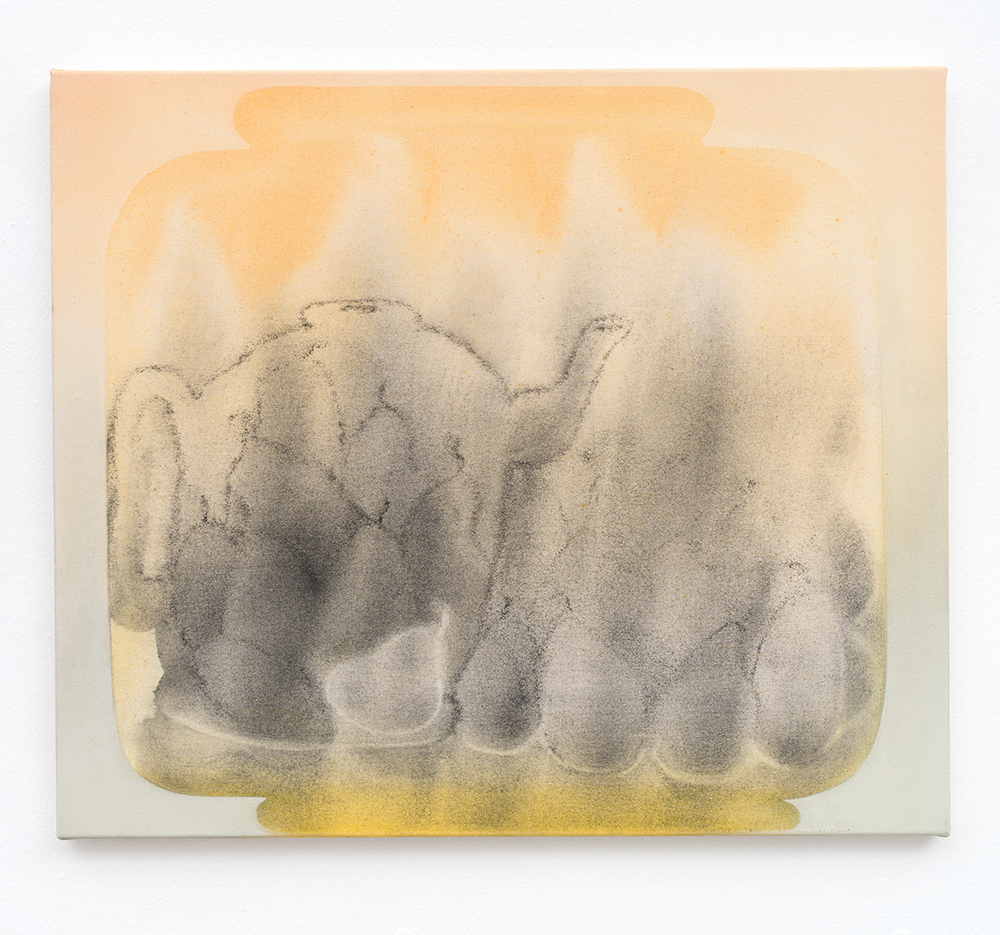
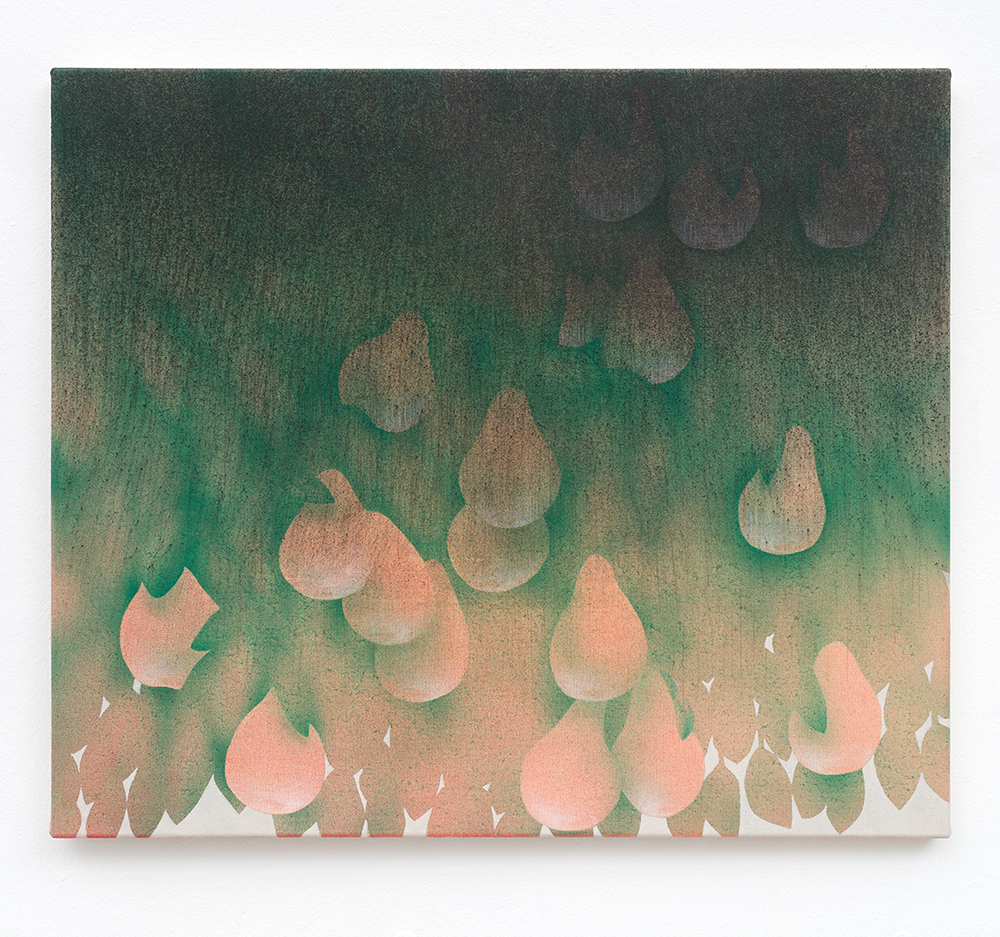
무언가를 본다는 것은 그것을 완전히 이해한다는 뜻일까. 어떤 경험은 분명 눈앞을 지나갔음에도 정확한 언어로 되짚기 어렵고, 시간이 흐른 뒤에는 다소 희미한 감각으로 남는다. 꿈에서 막 빠져나온 찰나, 평소와 조금 다른 신체의 변화, 우연히 마주친 동물, 문득 발견한 길가의 들풀까지. 에밀 우르바넥(Emil Urbanek)은 일상의 주변부에서 수집한 순간들을 짧은 문장으로 기록하고, 때로 그중 한 구절을 작품의 제목으로 옮긴다. 그러나 메모와 회화는 특정 단어와 그를 설명하는 삽화처럼 일대일로 대응하지 않는다. 오히려 둘은 같은 사연을 서로 다른 방향으로 더듬는 두 개의 경로와 다름없다. 이에 작가의 화면은 이미 알고 있는 것을 재현하기보다 아직 명확한 의미를 갖지 않은 상태에 조금 더 오래 머무르는 장소가 된다. 그렇게 바라본다는 행위는 대상을 규정하는 일에서 벗어나 도리어 그 가장자리를 헤매는 일에 가까워진다.
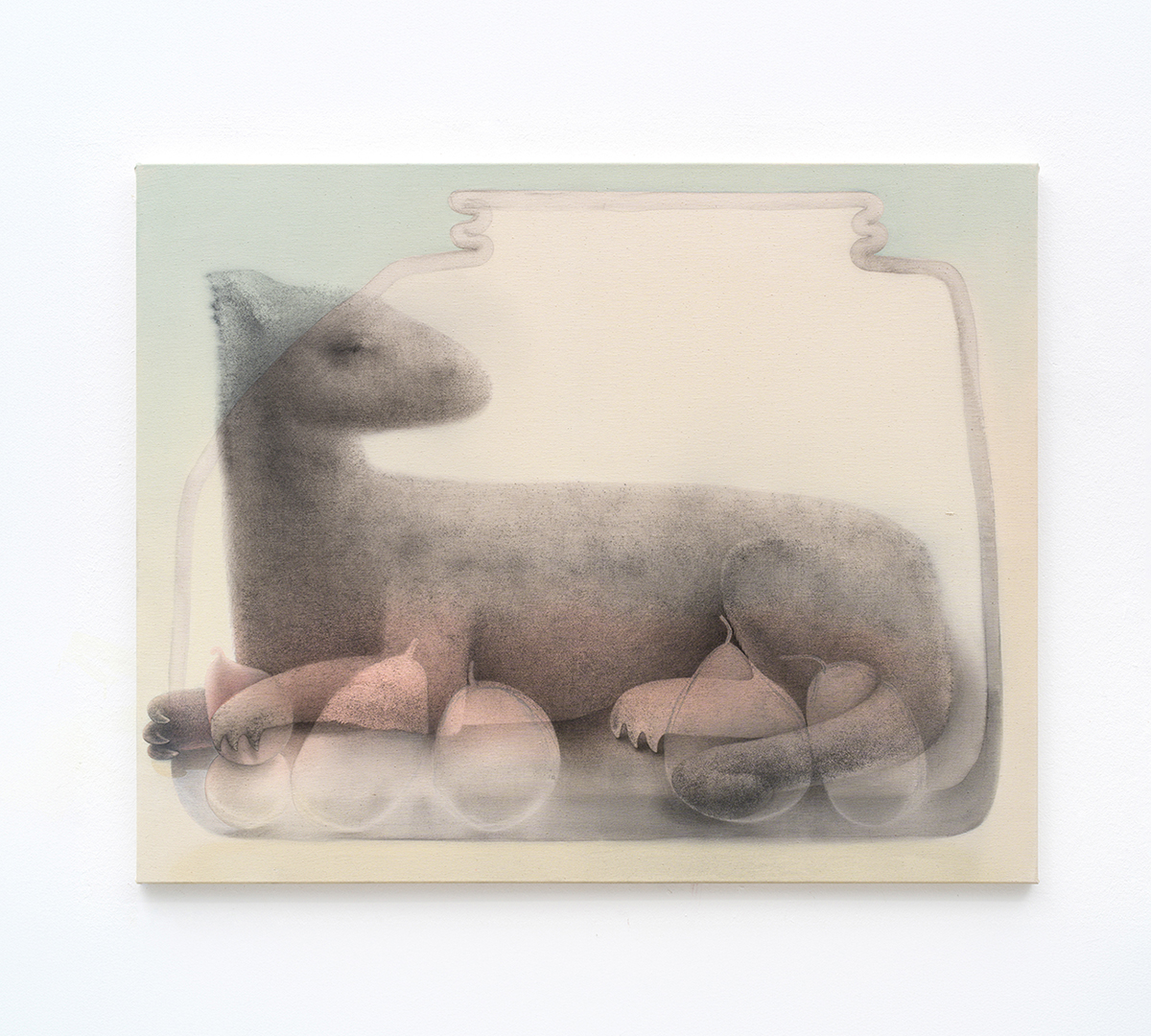
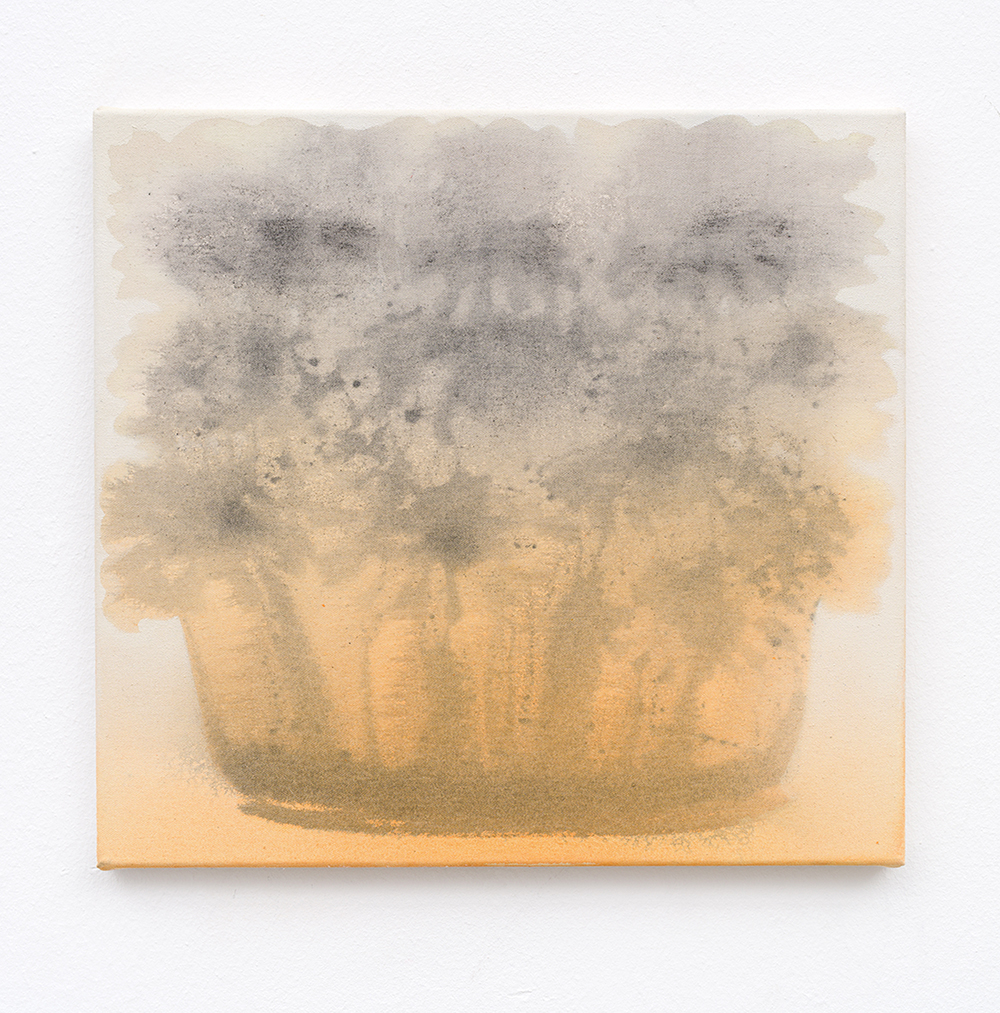
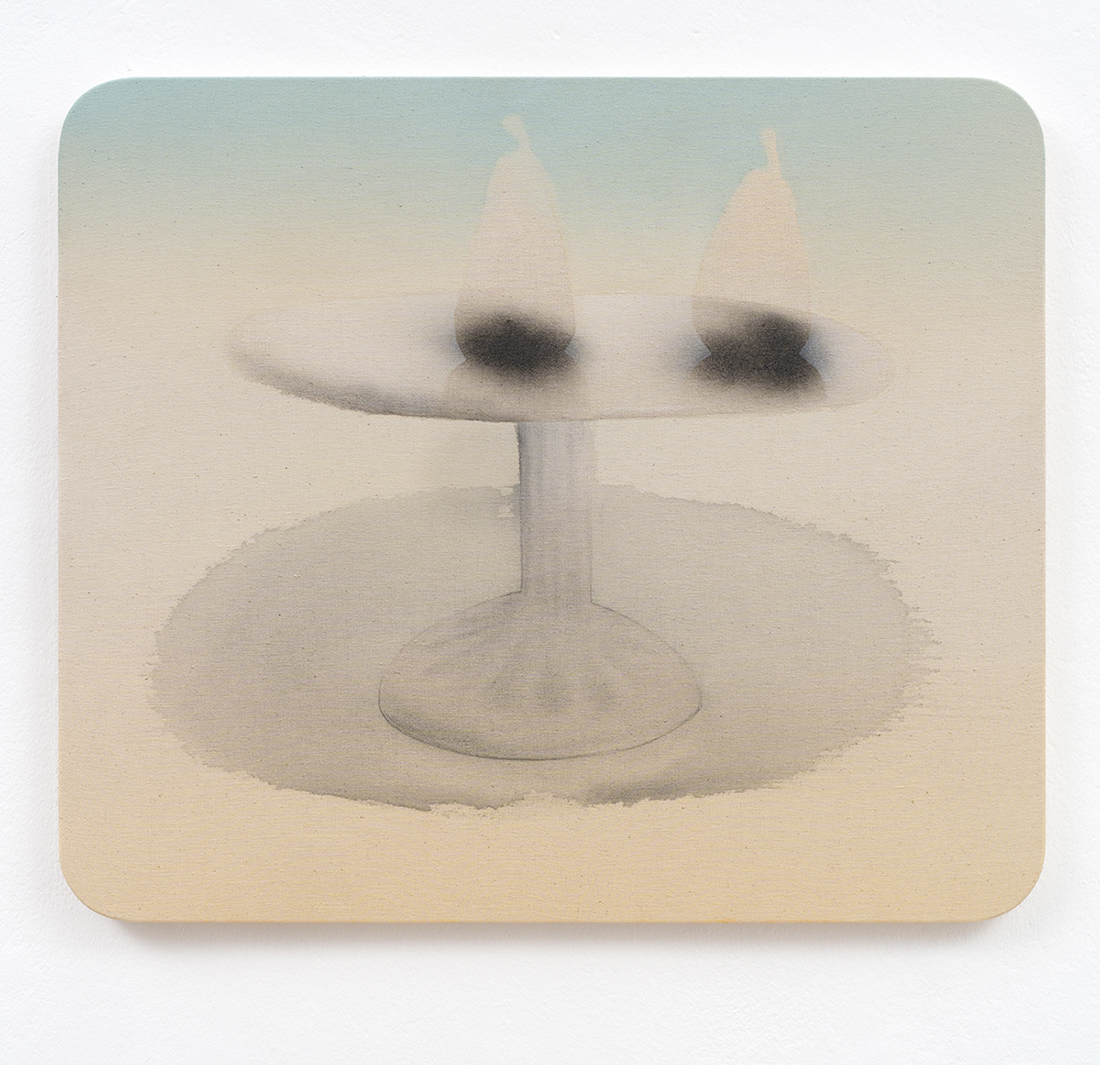
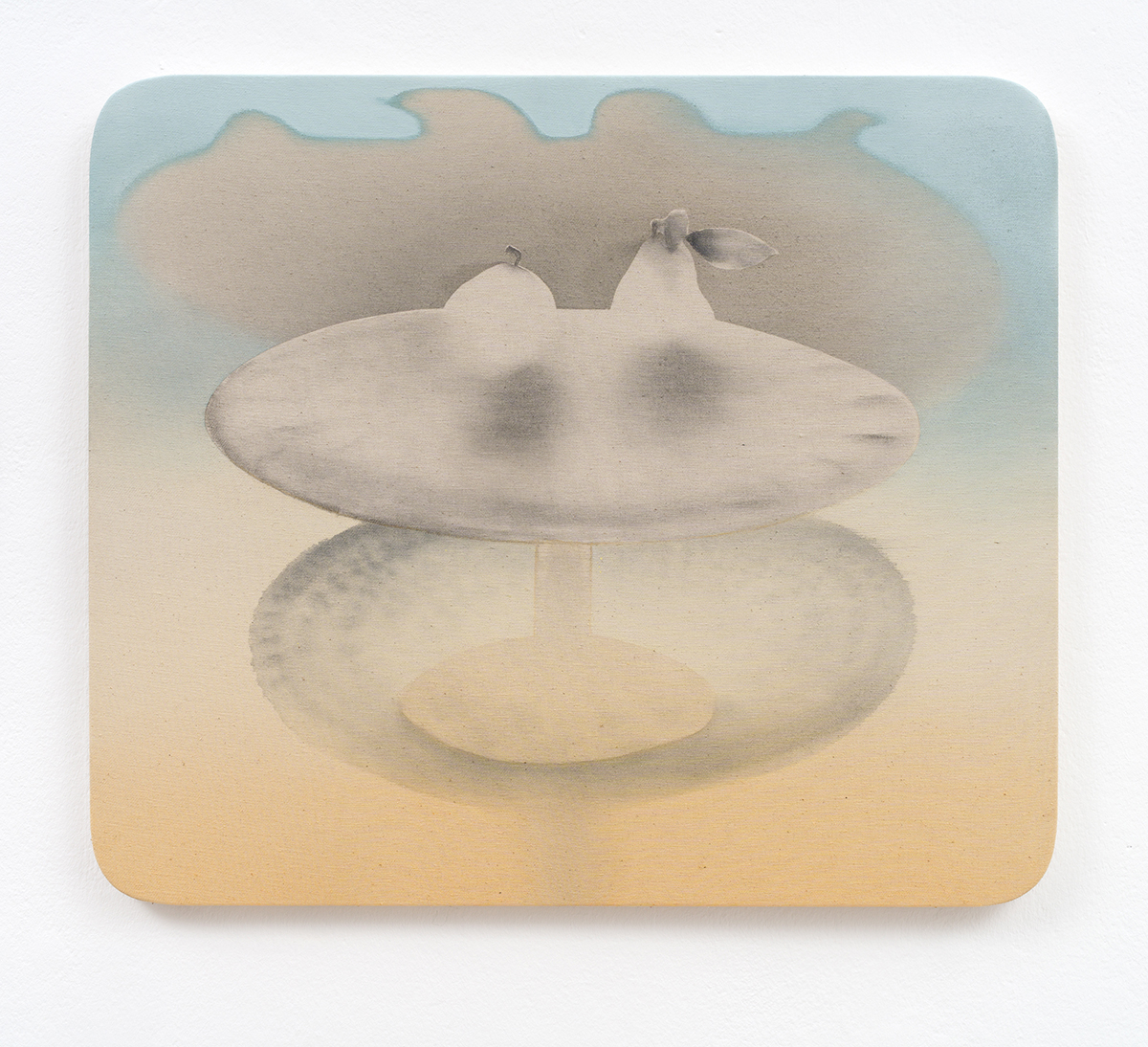
이러한 여정은 무언가를 담는 형식을 통해 구체화된다. 화병과 유리잔, 그릇 등은 보관의 쓰임새와 더불어 무엇을 그 안에 속한 것으로 받아들일지 정하는 역할을 지닌다. 한편, 작가는 이를 쉼터나 서식지, 아카이브, 또는 정신에 비유하면서도 단일한 의미로 고정하지 않는다. 그의 화면에서 모든 경계는 좀처럼 견고하게 유지되지 못하는데, 말하자면 용기는 제대로 밀폐되지 않고 불분명한 테두리 안팎으로 내부와 외부가 끊임없이 교차한다. 요컨대 갖은 기물들은 일종의 저장소라기보다 그 안에 놓인 것을 관계 맺게 하고, 때로는 드러난 것과 숨겨진 것 사이의 균형을 조율하는 느슨한 막과 같다. 그 안팎에서 주체와 배경은 한데 포개지고 자취를 감추었던 형상이 다른 자리에서 모습을 드러내기도 한다.
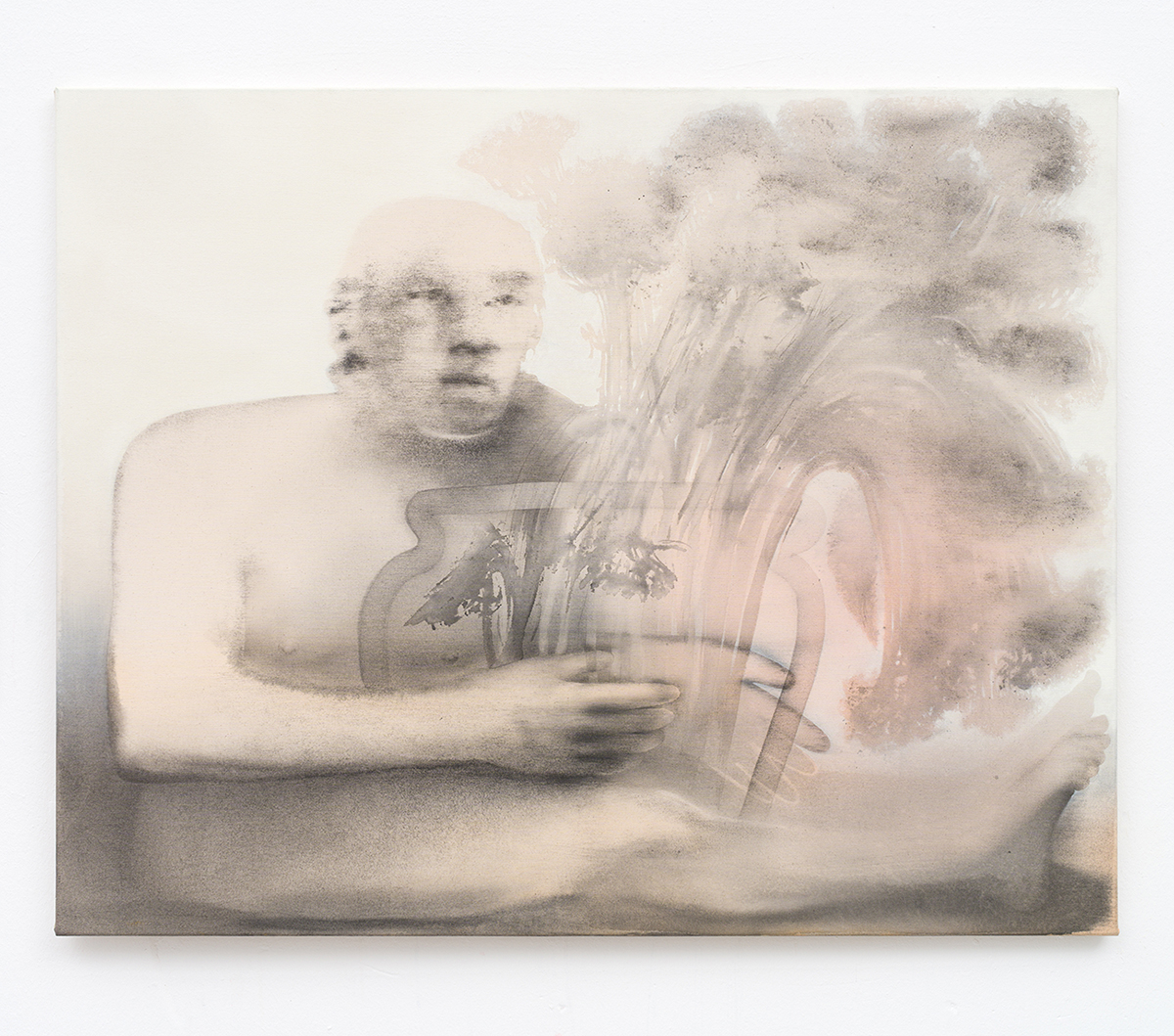
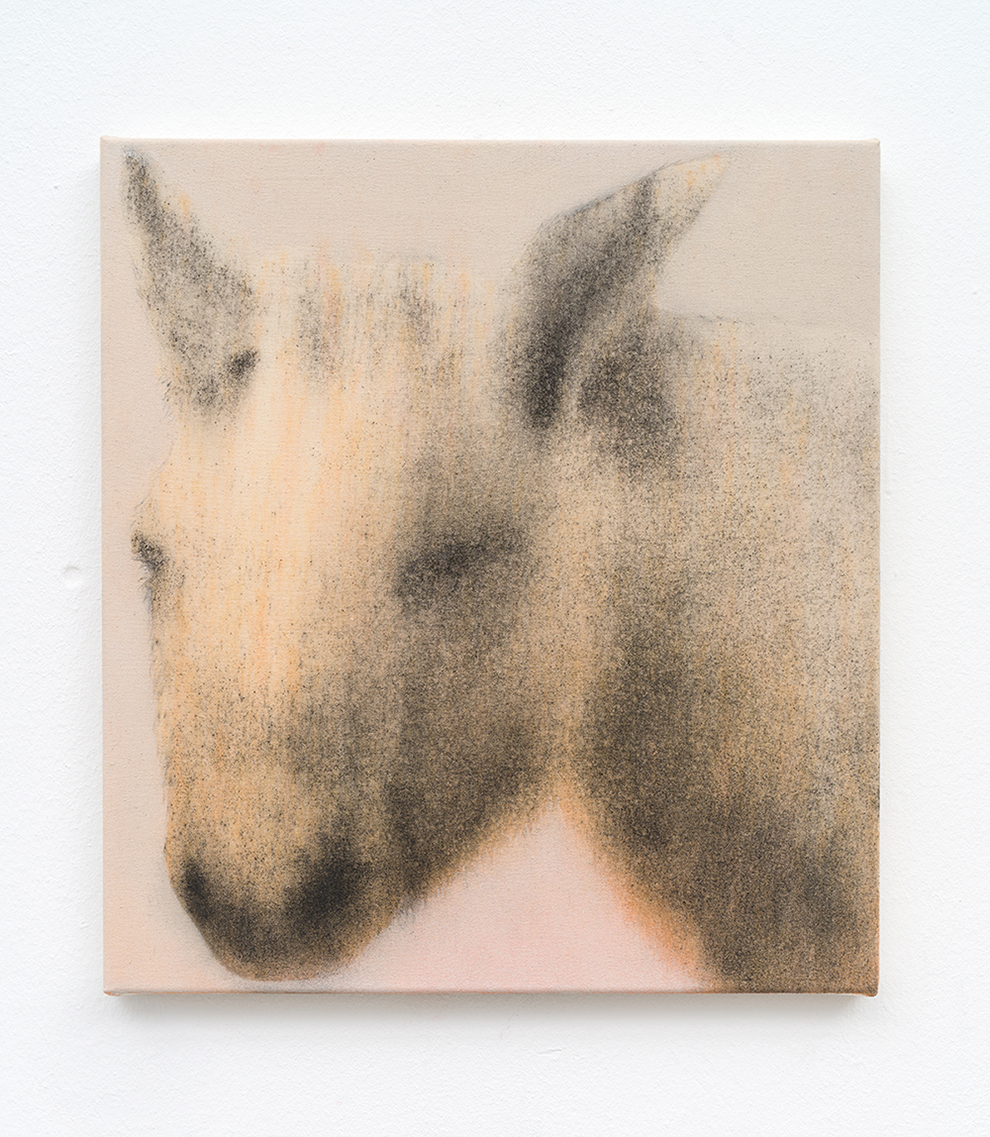
작품 속 인물과 동물은 종종 기대어 쉬거나 어딘가에 몸을 숨긴 채 기다리는 듯하다. 여기서 휴식과 기다림은 변화가 멎은 시간이 아니라 몸의 윤곽이 다시 조정되는 능동적인 상태다. 더구나 여러 실루엣이 뒤섞여 어느 쪽이 몸이며 어느 쪽이 은신처인지조차 분간하기 어렵다. 한 형상이 어디에서 끝나고 시작되는지 알 수 없듯, 하나의 생각이 다음 생각으로 넘어가는 지점 또한 선명하지 않다. 이러한 혼성은 자연적인 몸과 그렇지 않은 몸을 가르려는 관습적 구분을 거슬러 세계 자체를 유동적이고 퀴어한 영역으로 바라보는 작가의 태도와 맞닿는다. 우르바넥은 선명함과 흐릿함의 차이를 단순히 공간적 깊이를 만드는 방법으로 사용하는 대신 온전한 형태에 대한 기대를 흔드는 장치로 삼는다. 즉, 누군가 자기 자신으로 고정되기 이전, 혹은 다른 존재와의 관계 속에서 다시 정의되는 순간을 지속시키는 것이다. 저들은 나타나는 동시에 사라지며, 잠시 다른 존재와 상황을 공유한다. 어느 하나로 확정할 수 없을 때 그의 그림은 비로소 가장 활발히 동요한다.
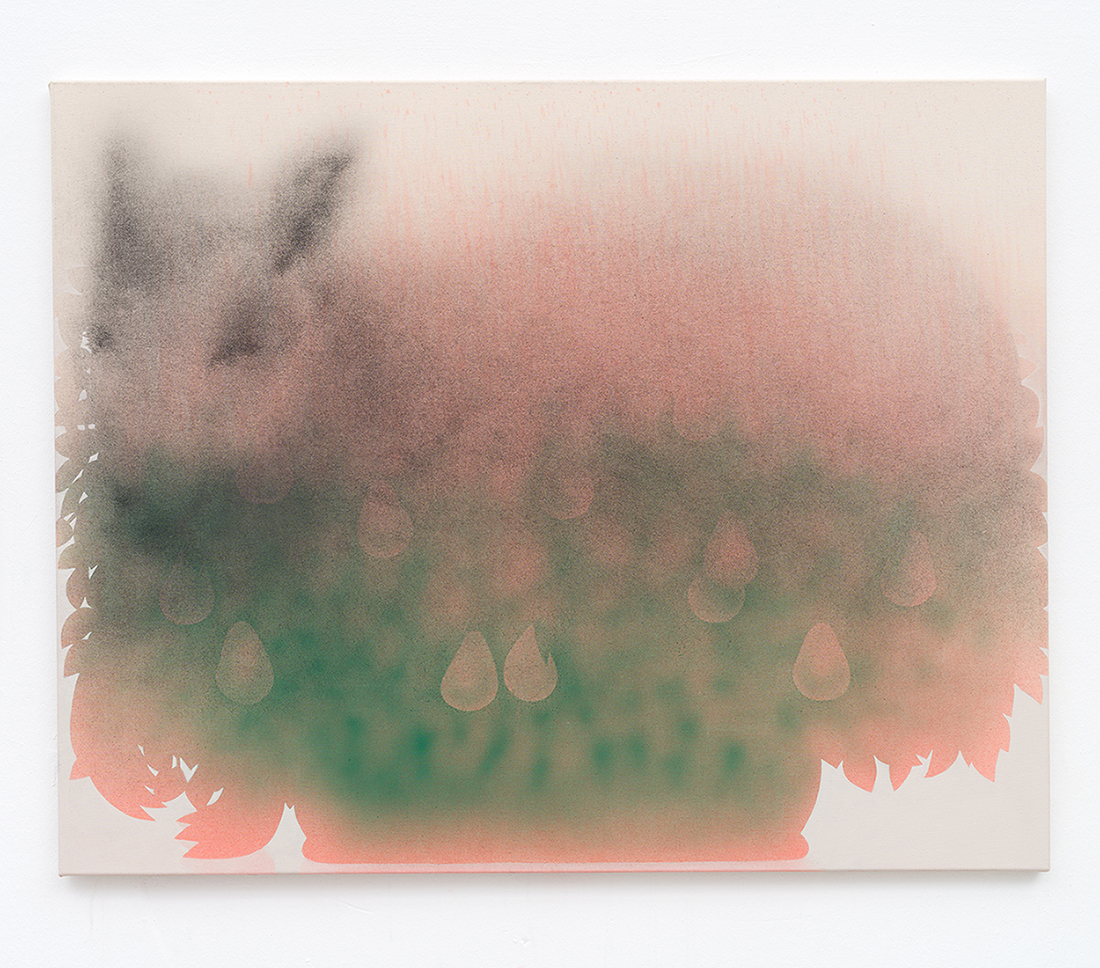
이와 같은 움직임은 이미지의 내용뿐 아니라 그림이 만들어지는 과정에서 되풀이된다. 작가는 대개 흑연 덩어리를 체에 문질러 미세한 가루를 흩뿌리는 동작으로 작업을 시작한다. 기류를 따라 내려앉은 입자를 매만지고, 그 위에 투명한 색층과 불투명한 색층을 번갈아 쌓는다. 먼저 자리한 흔적은 완전히 지워지지 않은 채 새로운 층 아래로 비쳐 나오거나 다시금 가려진다. 더욱이 흑연 가루는 공기와 습도에 민감하게 반응하며, 작가의 통제를 부분적으로 벗어나 계획과 우연 사이에서 서서히 모양을 얻는다. 일련의 과정은 대상을 붙잡아 두기보다 그것이 아직 다른 것이 될 수 있는 여지를 마련한다. 결국 어디까지가 한 몸이고 어디서부터 다른 형체가 시작되는지에 관한 판단은 끝내 유예된다. 어쩌면 가변의 세계에서 중요한 것은 분명히 알아보는 일이 아니라, 하나의 존재가 아직 경계를 조정하는 시간을 기다리는 일일 것이다.
글ㅣ이유진 (디스위켄드룸 큐레이터)
Does seeing something mean fully understanding it? Some experiences pass clearly before our eyes, yet remain difficult to recall in precise words, lingering instead as faint sensations over time. These include the moment just after waking from a dream, a subtle change in one’s body, an unexpected encounter with an animal, or a patch of wild grass noticed along the roadside. Emil Urbanek records such fleeting moments from the margins of everyday life in short sentences, occasionally drawing a phrase from these notes to use as the title of a painting. Yet their notes and paintings do not share a direct relationship, as a word might with an illustration intended to explain it. Urbanek’s paintings thus become spaces in which to linger with what has yet to take on a definite meaning, rather than simply representing what is already known. In this sense, seeing becomes less an act of defining something than of wandering along its edges.
This exploration takes shape through objects that serve as containers. Vases, glasses, and bowls not only serve as receptacles but also define what may belong within them. Urbanek likens these forms to shelters, habitats, archives, or even the mind, without assigning them any single, fixed meaning. In their paintings, however, boundaries rarely remain intact. The vessels are never fully sealed, allowing a constant exchange between inside and outside across their indistinct edges. Rather than functioning simply as containers, these objects act more like permeable membranes, bringing what they hold into relation and at times negotiating the balance between what is revealed and what remains concealed. Across these shifting boundaries, subject and background overlap, while forms that had disappeared from view may reappear elsewhere.
The figures and animals in the paintings often appear to be resting against something or waiting while concealed in a hiding place. Here, rest and waiting do not signify a suspension of change, but rather an active state in which the contours of the body are being recalibrated. At times, multiple silhouettes become so entangled that it is difficult to tell which is the body and which is the shelter. Just as it is impossible to determine precisely where one form begins or ends, the point at which one thought passes into another also remains indistinct. Such hybridity resists conventional distinctions between natural and unnatural bodies, reflecting Urbanek’s view of the world itself as a fluid and queer terrain. Rather than using the contrast between clarity and blur simply as a means of producing spatial depth, the artist turns it into a device that unsettles our expectations of complete forms. In doing so, they sustain the moment before a figure becomes fixed as itself, or the moment in which it is redefined through its relationship with another being. It is precisely when these forms cannot be defined as any one thing that Urbanek’s paintings become most alive with movement.
This same movement is reflected not only in the imagery itself, but also in the process of making the paintings. Urbanek typically begins by rubbing a block of graphite against a sieve, scattering fine powder across the surface. They gently manipulate the particles that settle with the movement of air, then build up alternating layers of transparent and opaque color. Earlier marks are never completely erased, appearing faintly beneath new layers or becoming concealed once again. Graphite powder also responds sensitively to air currents and humidity, allowing the image to gradually take shape somewhere between intention and chance, partly beyond the artist’s control. Rather than fixing the subject in place, this process leaves open the possibility of its becoming something else. In the end, the question of where one body ends and another form begins remains unresolved. Perhaps, in a world of constant change, what matters is not recognizing something with absolute clarity, but waiting as a being continues to adjust its boundaries.
TextㅣYoojin Lee (Curator, ThisWeekendRoom)


