박신영
Shinyoung Park
17 Sep-25 Oct 2025
ThisWeekendRoom
Artist
Shinyoung Park
Credit
참여작가ㅣ박신영
기획ㅣ디스위켄드룸
글ㅣ이유진
사진ㅣ고정균
ArtistㅣShinyoung Park
Curated by ThisWeekendRoom
TextㅣYoojin Lee
PhotographsㅣJungkyun Goh
Exhibition Text
사하라 사막의 모래를 밟으며 걸어가다가 낙타 두 마리의 사체를 발견했다. 서로 마주 본 채 요새처럼 누운 낙타들을 바라보며 그는 아마도 수컷끼리 싸우다 죽은 것 같다고 말했다. 나는 햇볕 아래 모래 속에서 파리하고 하얗게 풍화되어 빛나던 뼈들을 물끄러미 바라보다가 한 조각을 집어 들어 그에게 가져가고 싶다고 얘기했다. 그는 약간 난감한 표정을 지으며 허락해 주었다. 나는 숙소로 그 뼈를 가지고 돌아와 죽음을 목도하는 공포와 아름다운 형태에 대한 소유욕 사이의 기이한 관계를 생각했다. 그리고 문득 내가 어떠한 암묵적 질서를 어긴 것은 아닐지 생각이 들었다. 고민 끝에 다음 날 그 뼈를 다시 그에게 돌려주었더니 그는 웃으며 이렇게 말했다. “좋은 결정이야. 내가 이 뼈를 제자리에 돌려놓을게. 모든 것은 사막에서 태어나 사막으로 돌아가니까.”
– 박신영 작가 노트 중
기억은 선택적인 동시에 불가항력적이다. 개인의 의지와 관계없이 인식의 기저에 가라앉았다가 불시에 떠오르기도 한다. 실상 기억은 무수한 자극 현상에 응답한 반응 중 일부만을 수집한 것에 지나지 않는다. 그러나 스쳐 간 파동이 표면을 다시 뚫고 나올 때, 이들은 종종 주체의 사유와 주관에 따라 편집되어 특정 언어나 형상으로 체현된다.
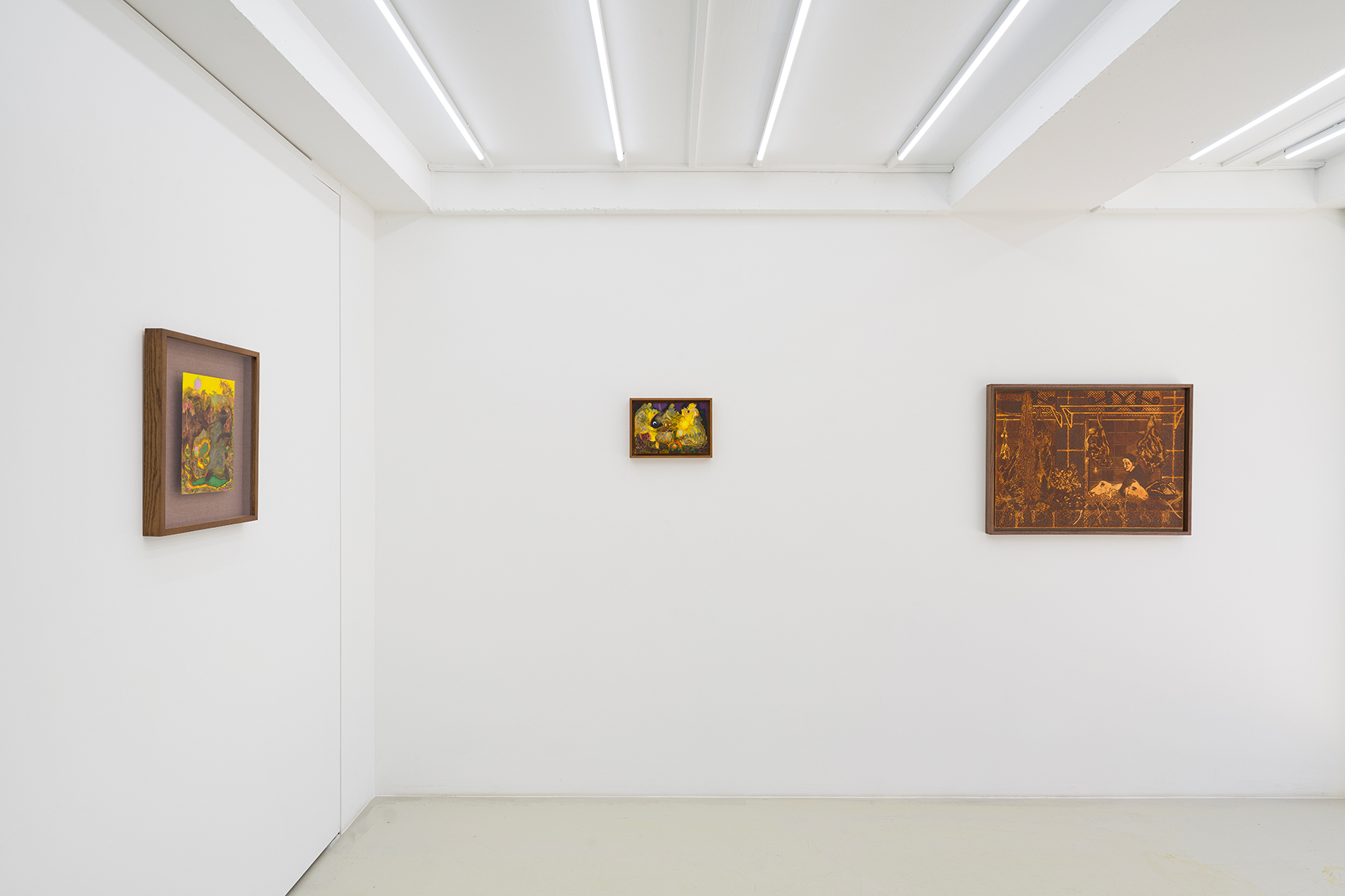
박신영은 여러 지역을 이동하며 경험한 낯선 환경의 사회 문화적 특성을 주관적 기록으로 재구성한다. 그는 주로 인간과 동물, 문명과 자연, 현실과 상상의 경계를 살피고 각자가 발 디딘 시공 너머에서 벌어지는 사건을 새롭게 조망하도록 이끈다. 다양한 장소에서 수집한 파편들은 종이, 나무, 스테인드글라스 같은 다양한 매체를 활용한 판화, 드로잉, 입체로 기록된다. 이번 전시는 작가의 과거 모로코 기행을 바탕으로 그가 몇 년간 소화하지 못했던 기억과 감정의 잔여물을 살핀다. 소화의 과정에서 걸러진 흔적들이 작가의 조형적 규칙에 따라 시각화되고, 단순한 회상을 넘어 현재와 미래의 경험 속에서 그에게 작동하는 방식을 드러낸다.
사하라 사막, 아틀라스산맥, 대서양과 지중해 연안 등 다양한 지형으로 이루어진 모로코는 아랍, 아프리카, 유럽의 요소가 어우러진 독특한 정체성을 지닌다. 전통 의례와 축제가 살아 있고 목축과 농업이 여전히 삶의 근간을 차지하는 곳. 기원의 형태가 남아 있는 지역을 방문한 작가는 과거를 세련화하고 지양하며 대체해 나가고 있는 인류의 현주소를 확인할 수 있었을 것이다. 이는 동시적 감각의 한계를 넘어서고자 하는 그에게 자연의 섭리와 더불어 지나온, 혹은 앞으로 마주할 이데올로기적 층위에 대해 자문하게 했을 사건으로 짐작된다. 그러한 맥락에서 서두에 인용한 사하라 사막 일화는 생명의 기원과 순환, 나아가 투쟁과 전복, 길들임의 과정을 암시한다.
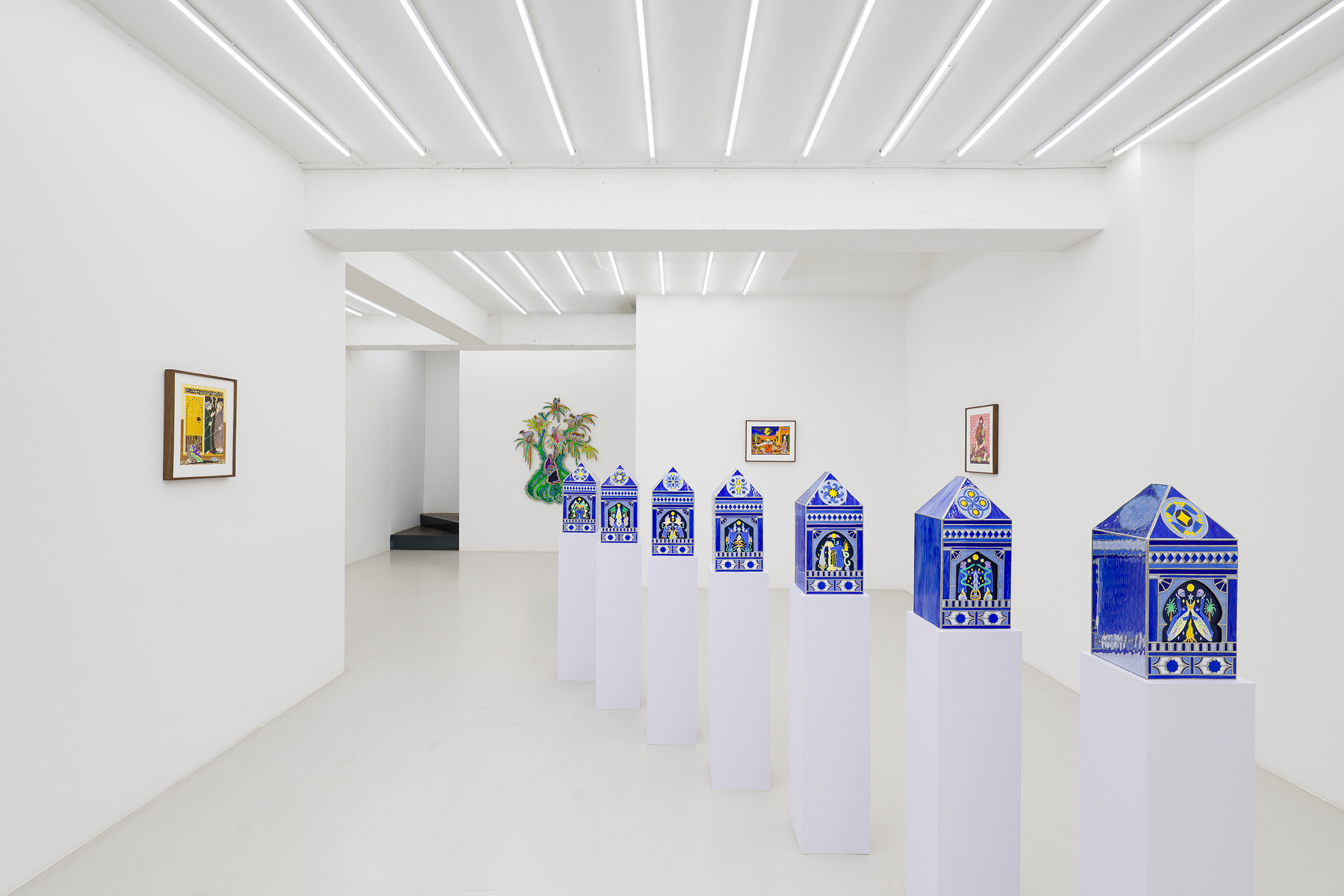
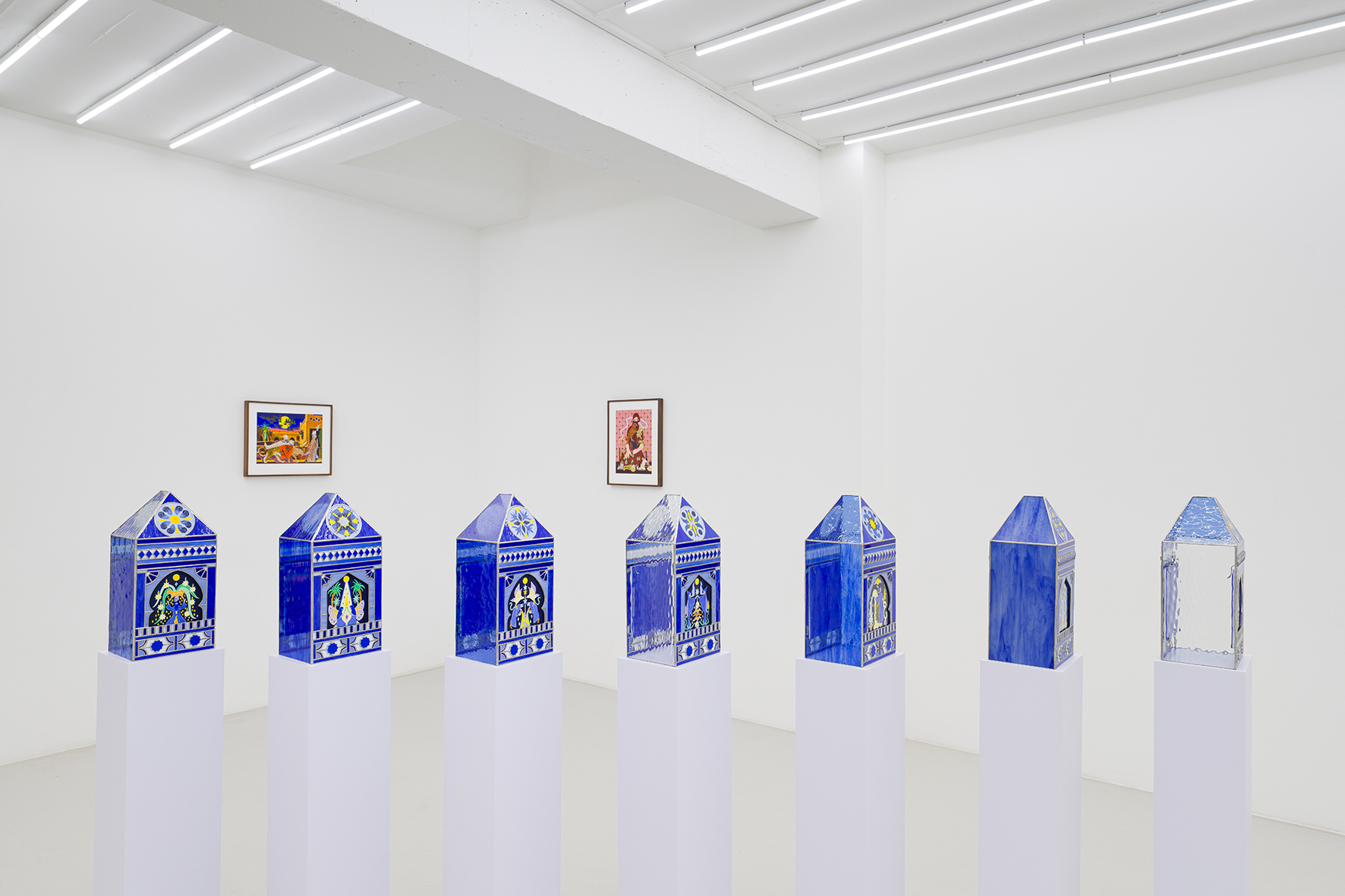
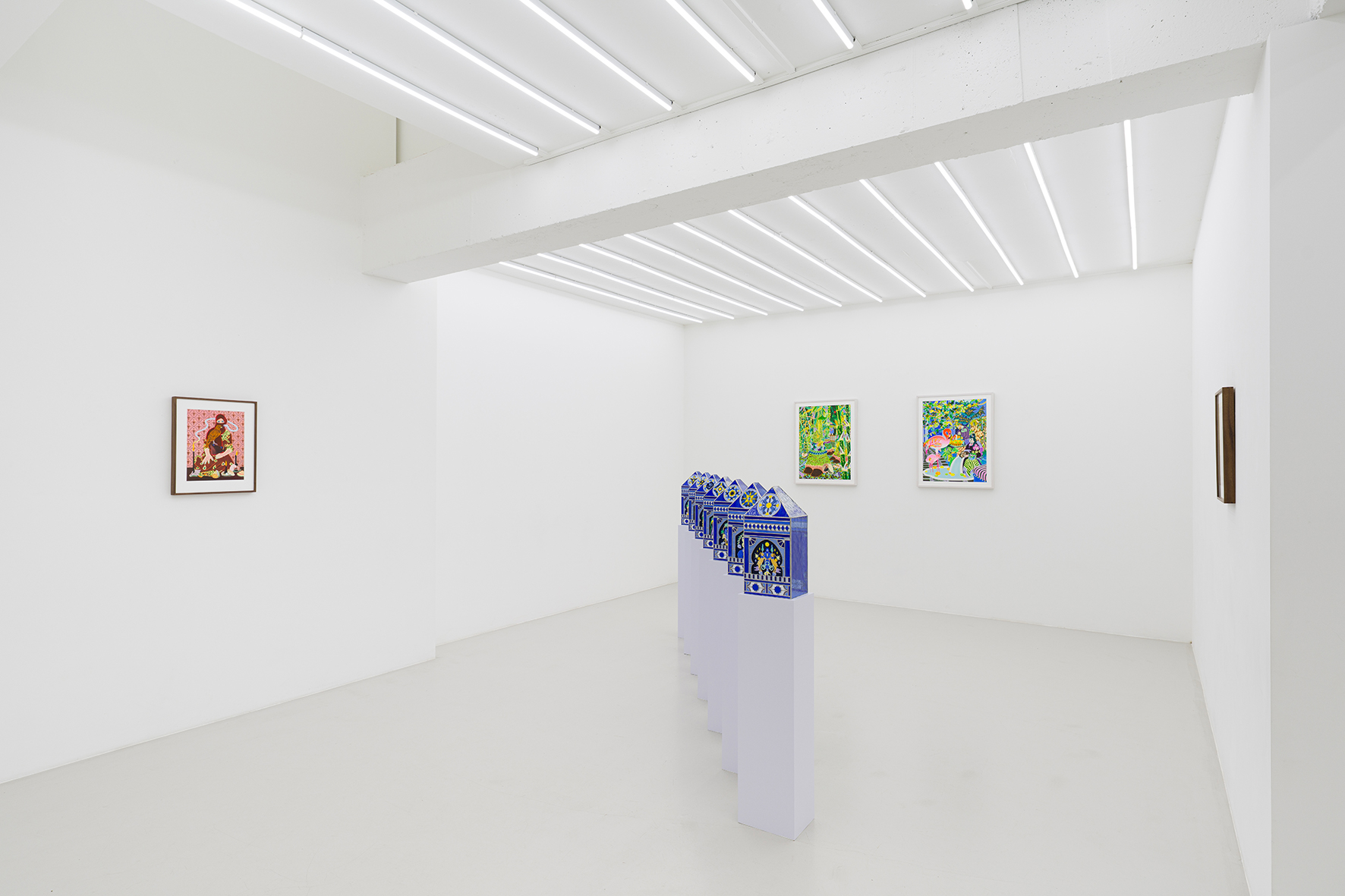
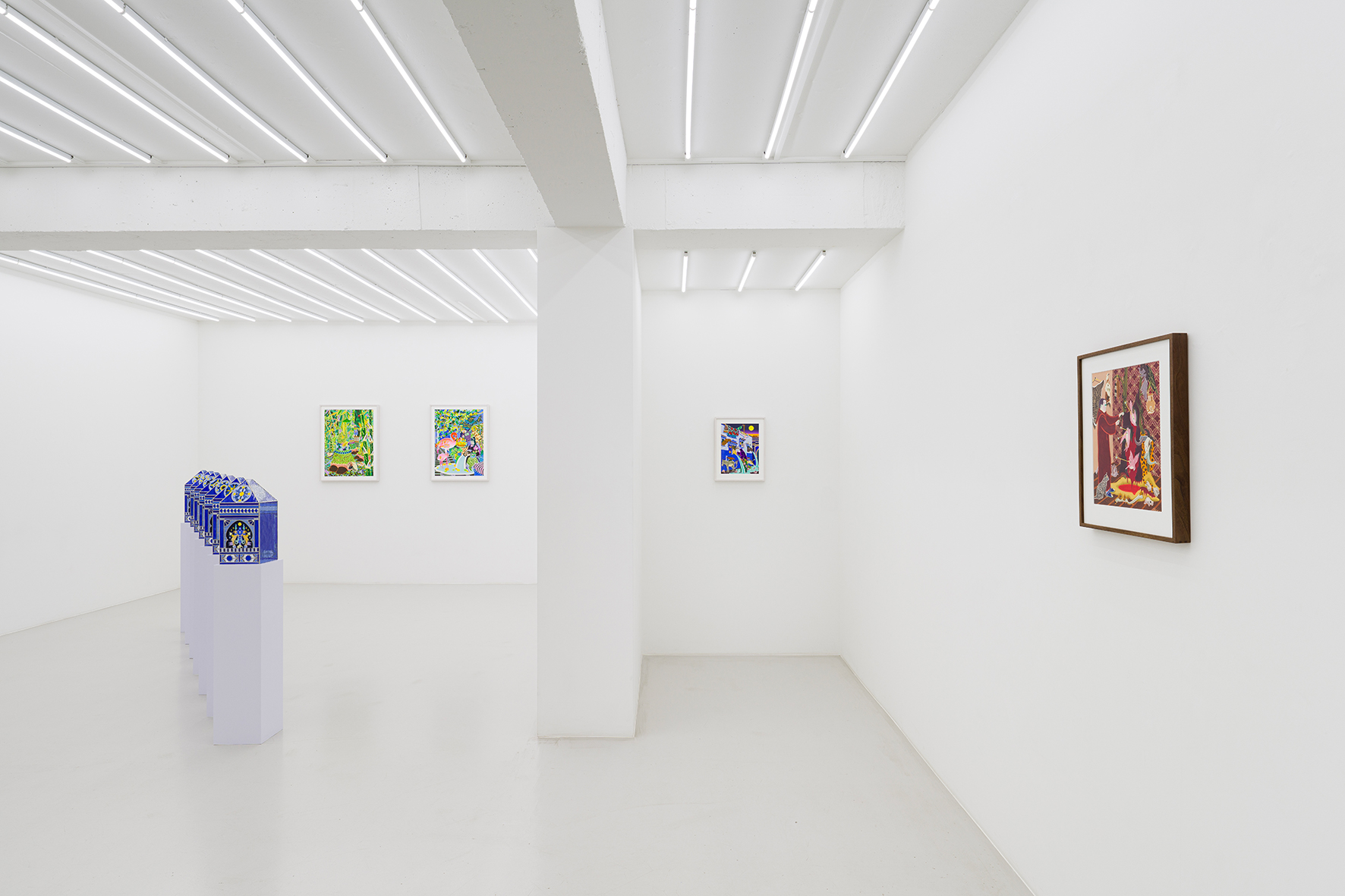
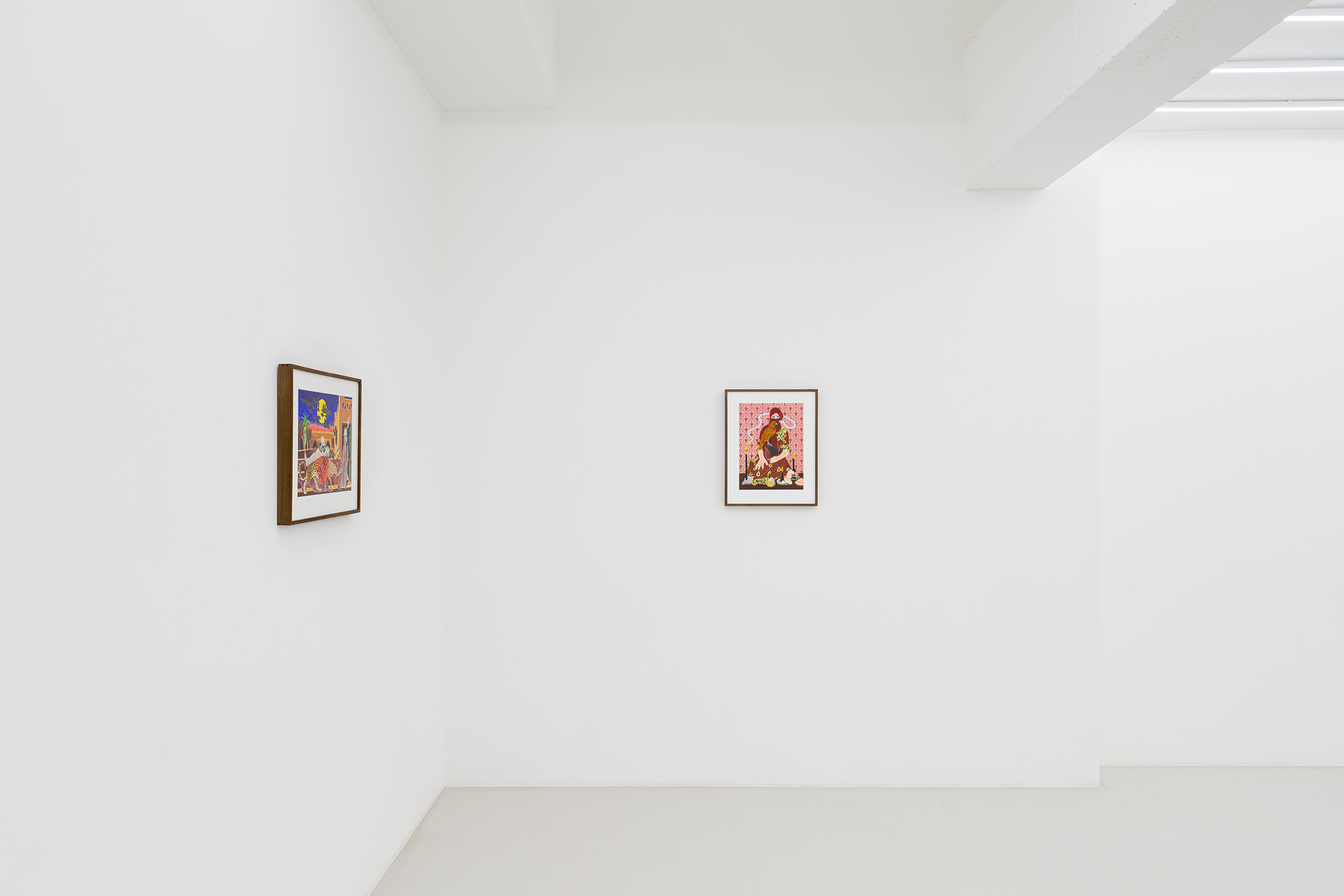
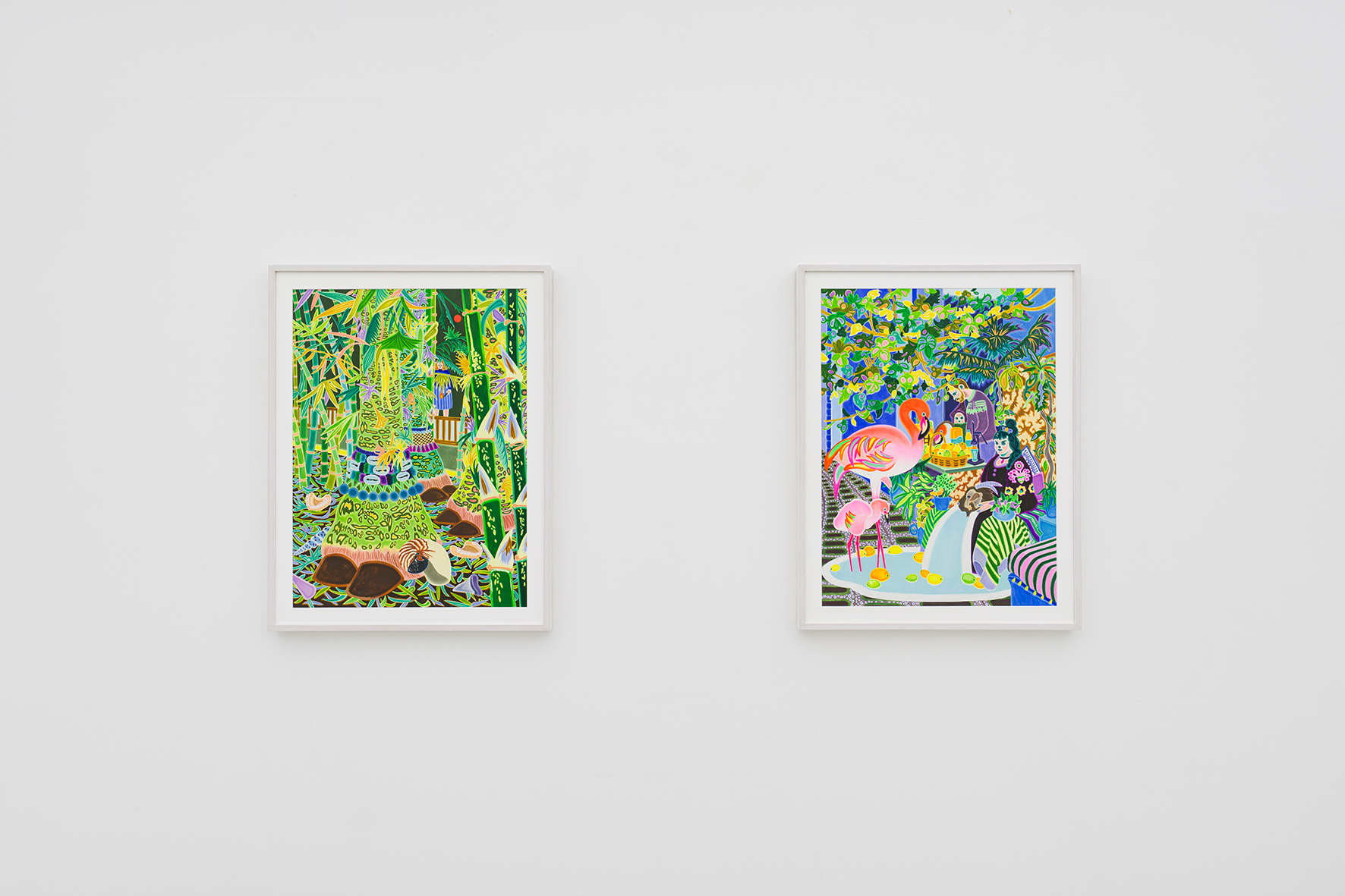
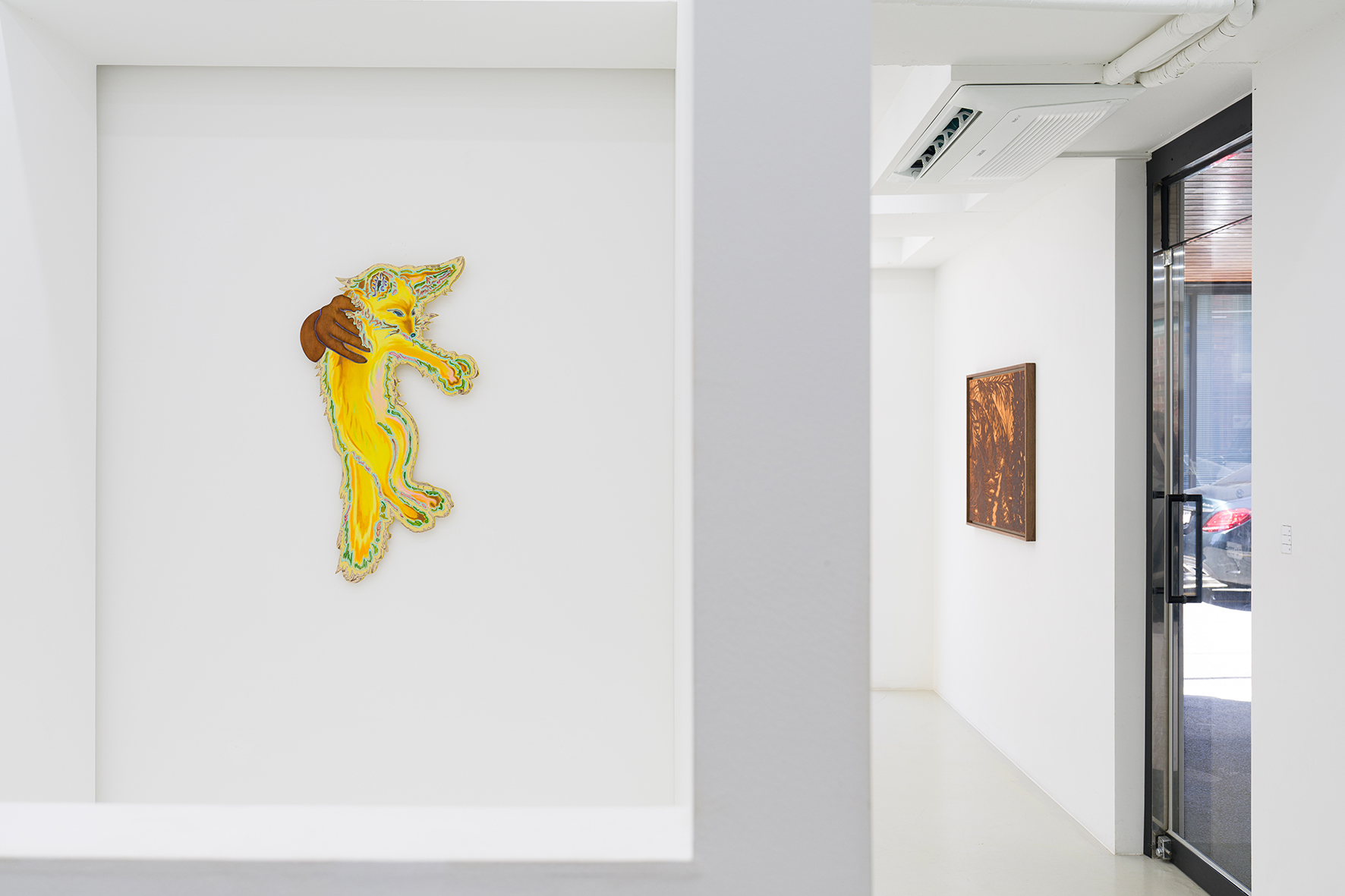
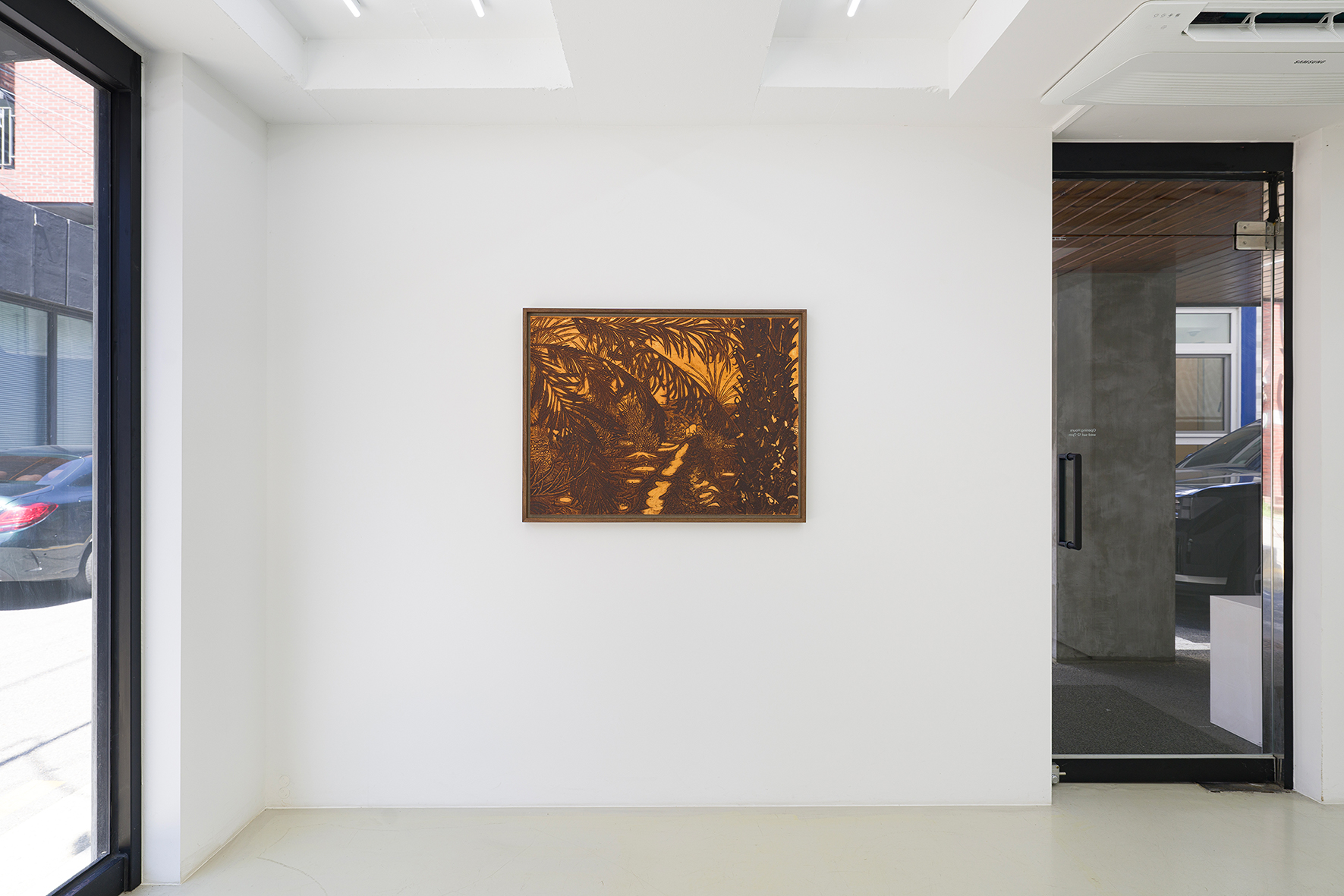
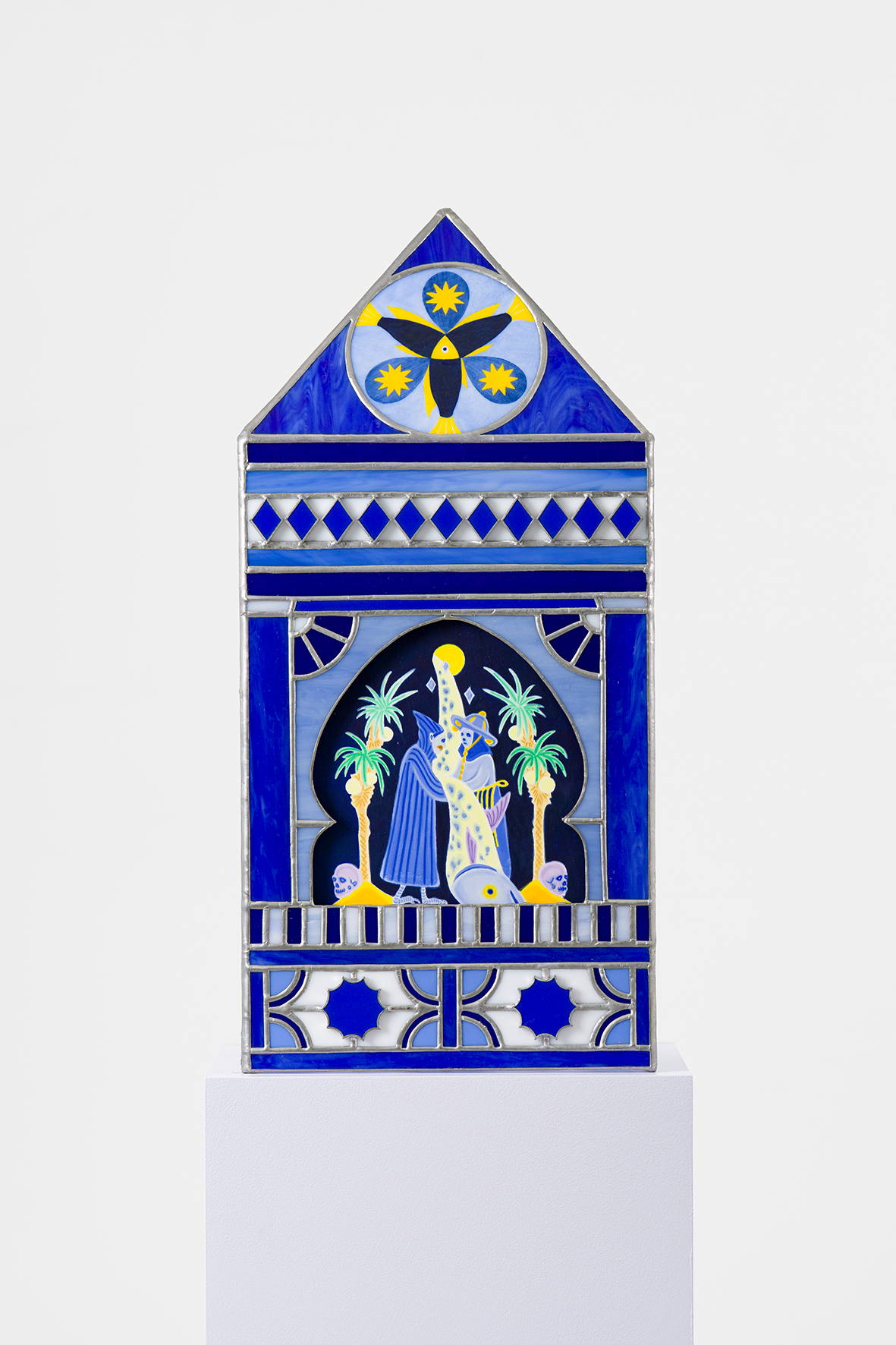
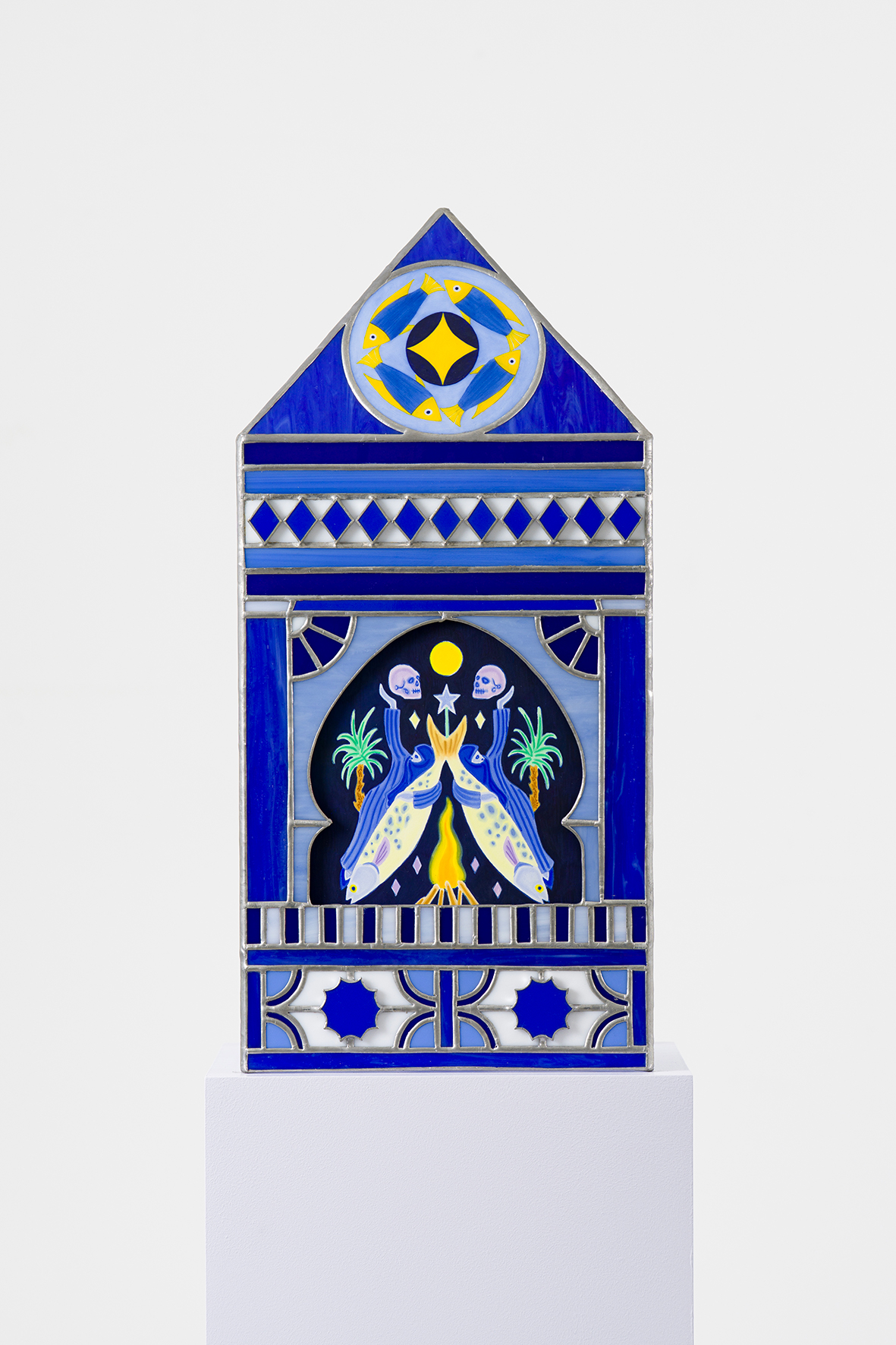
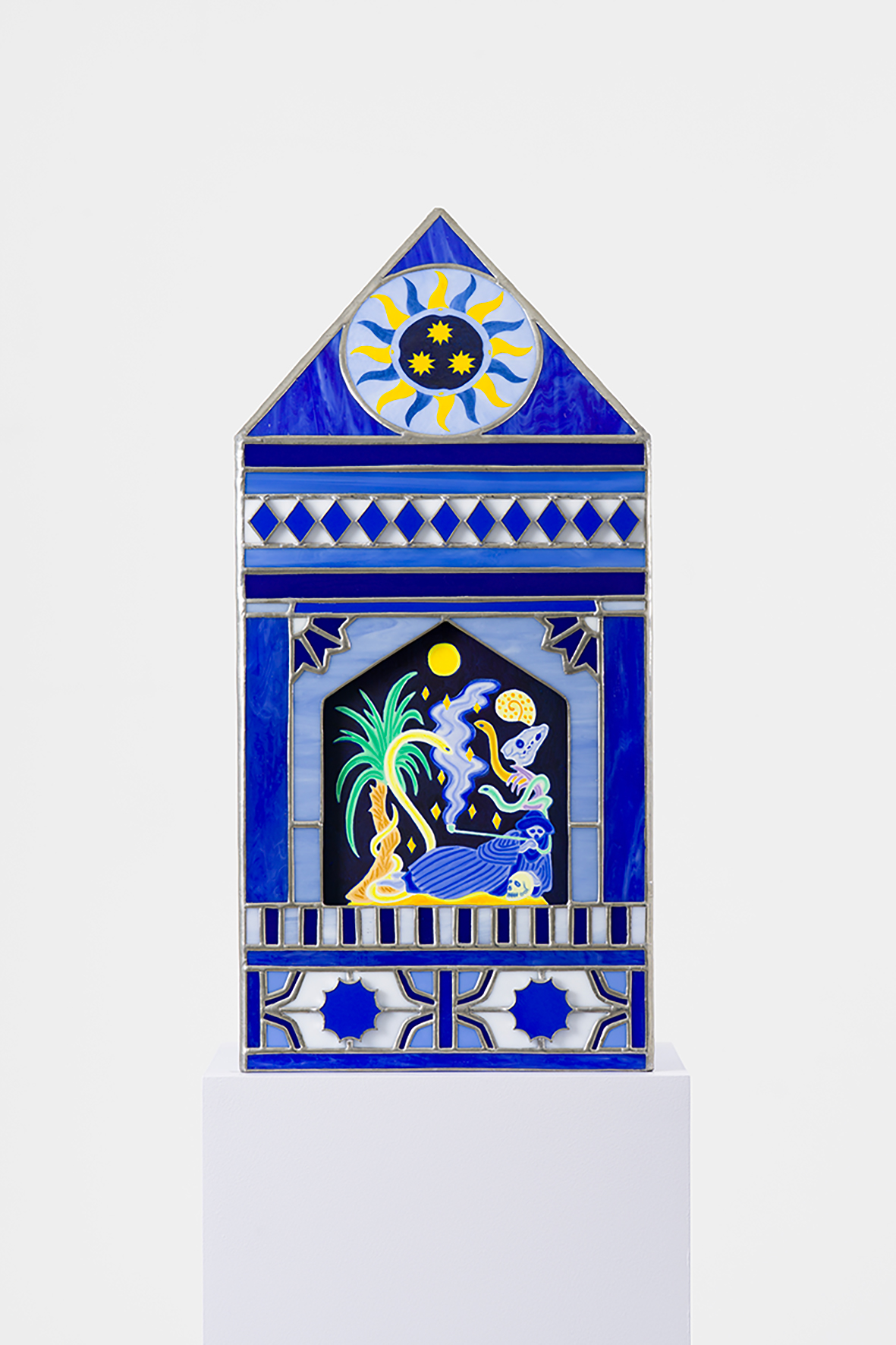
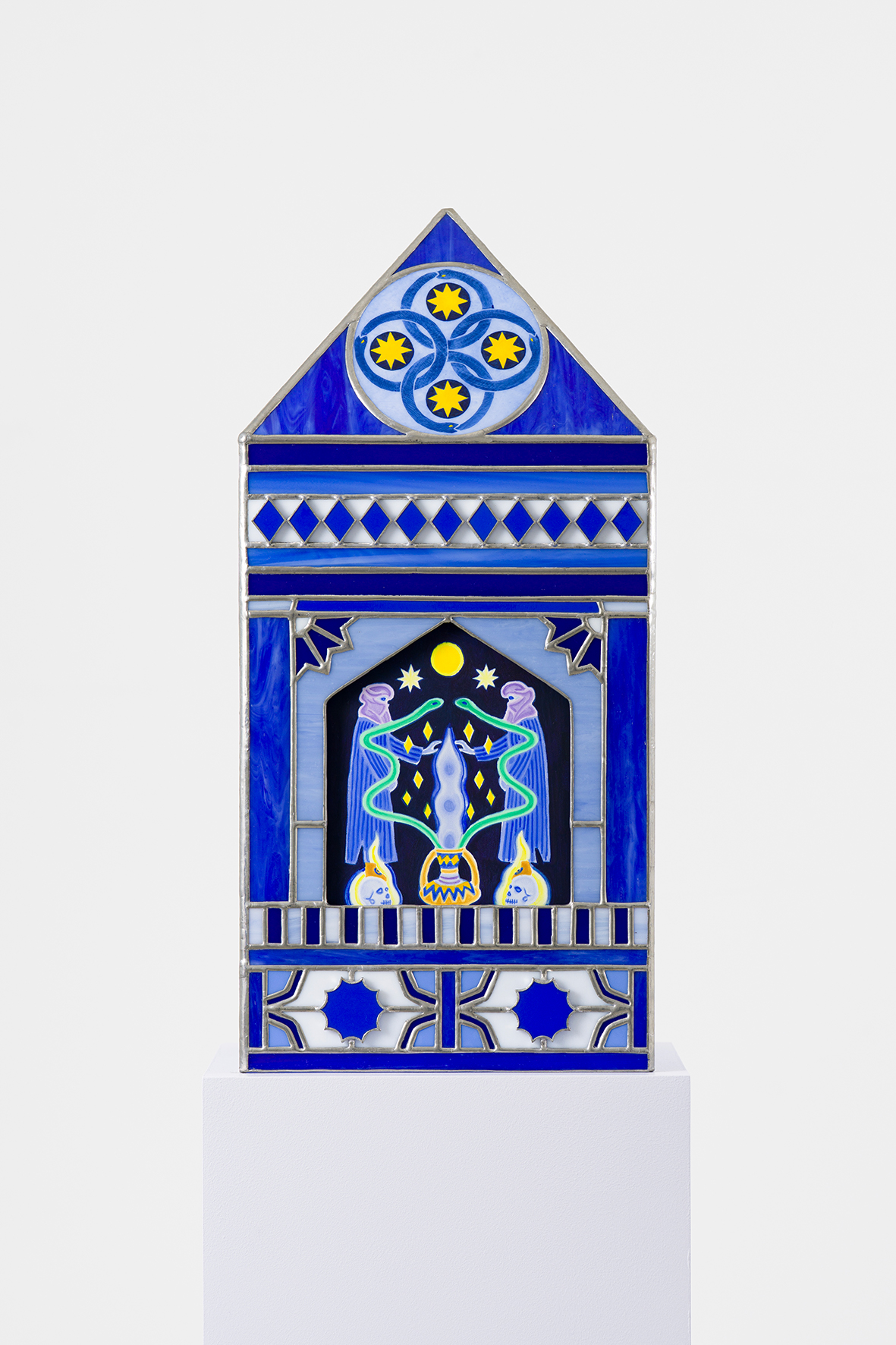
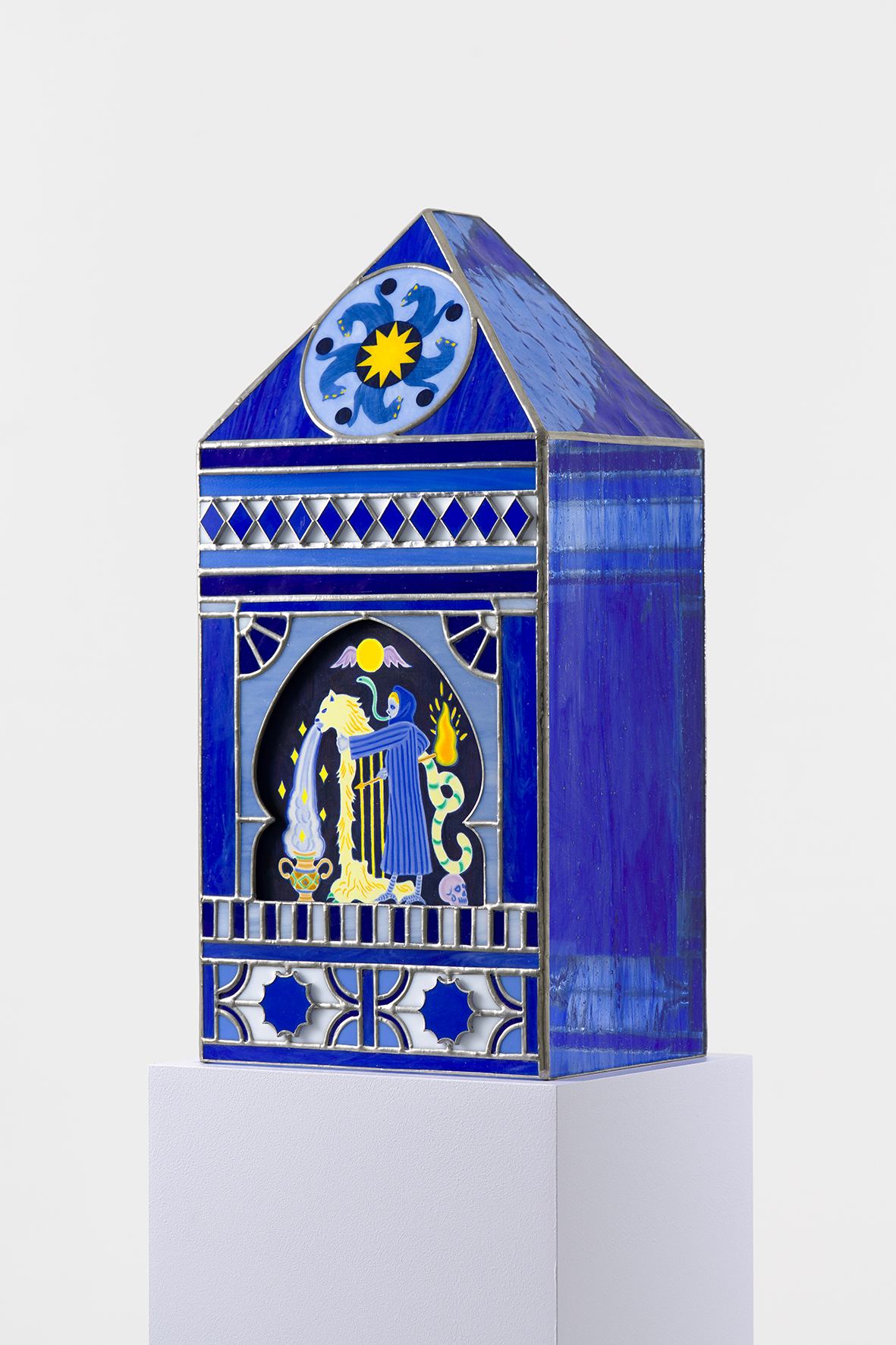
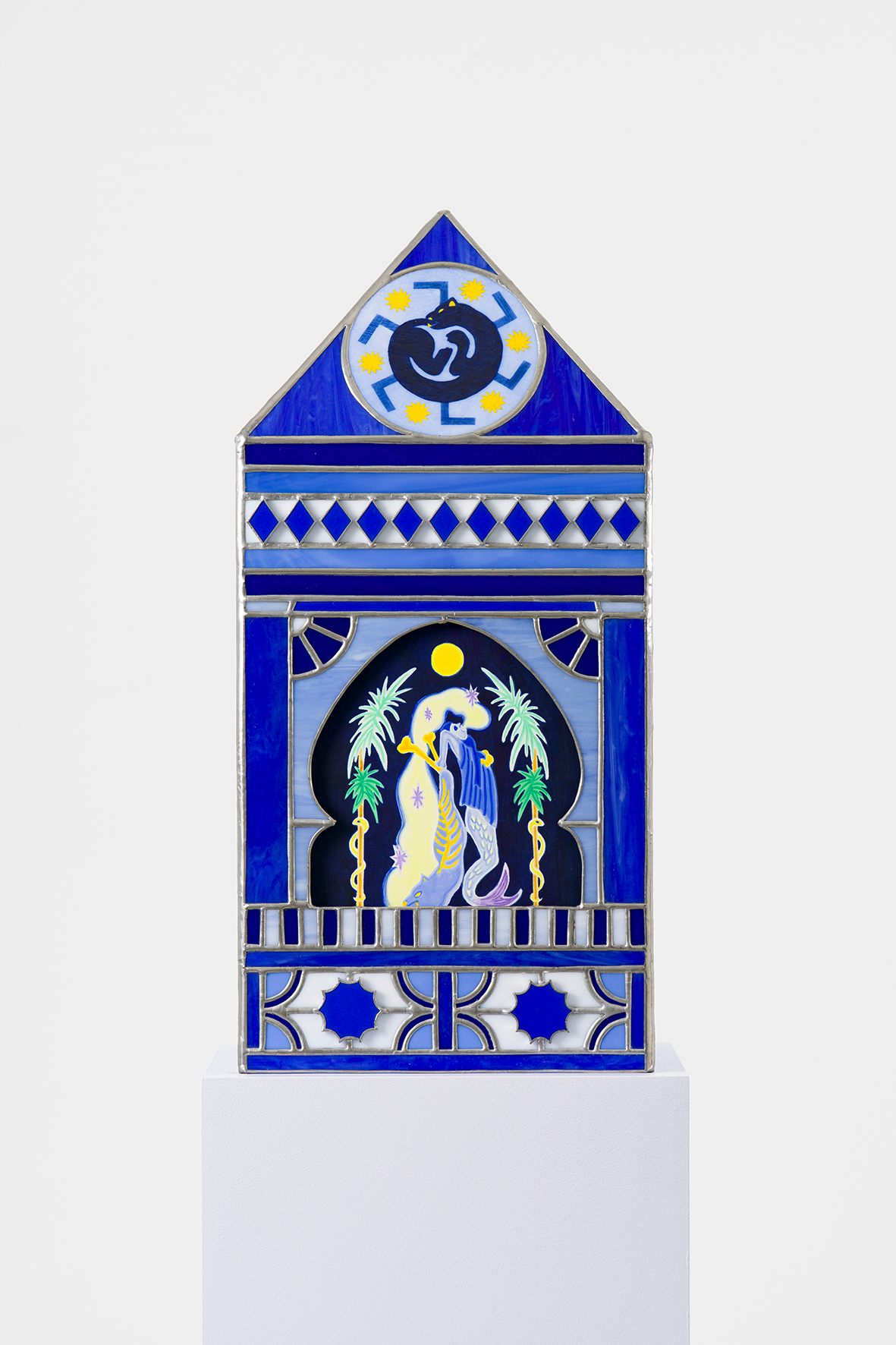
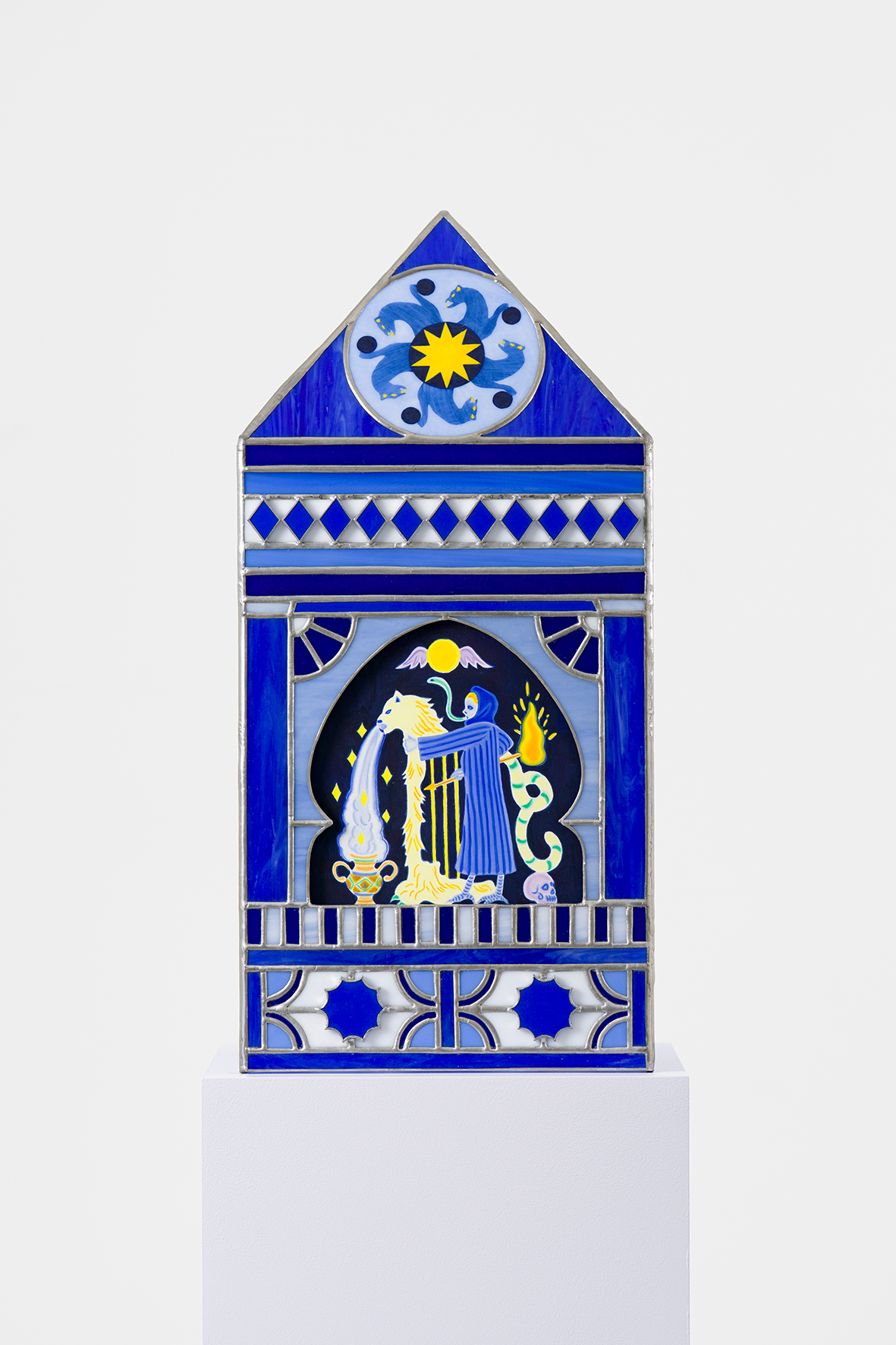
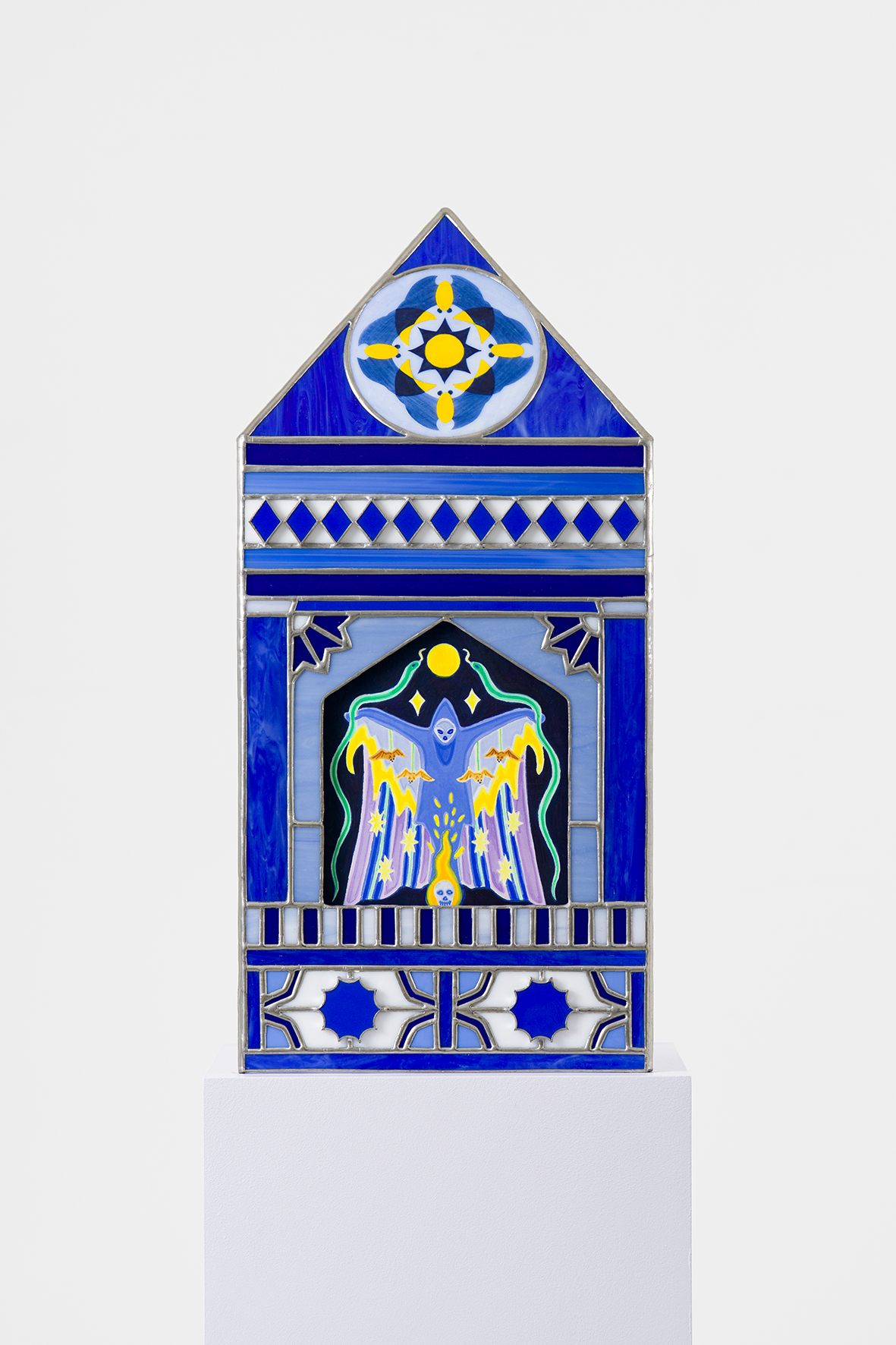
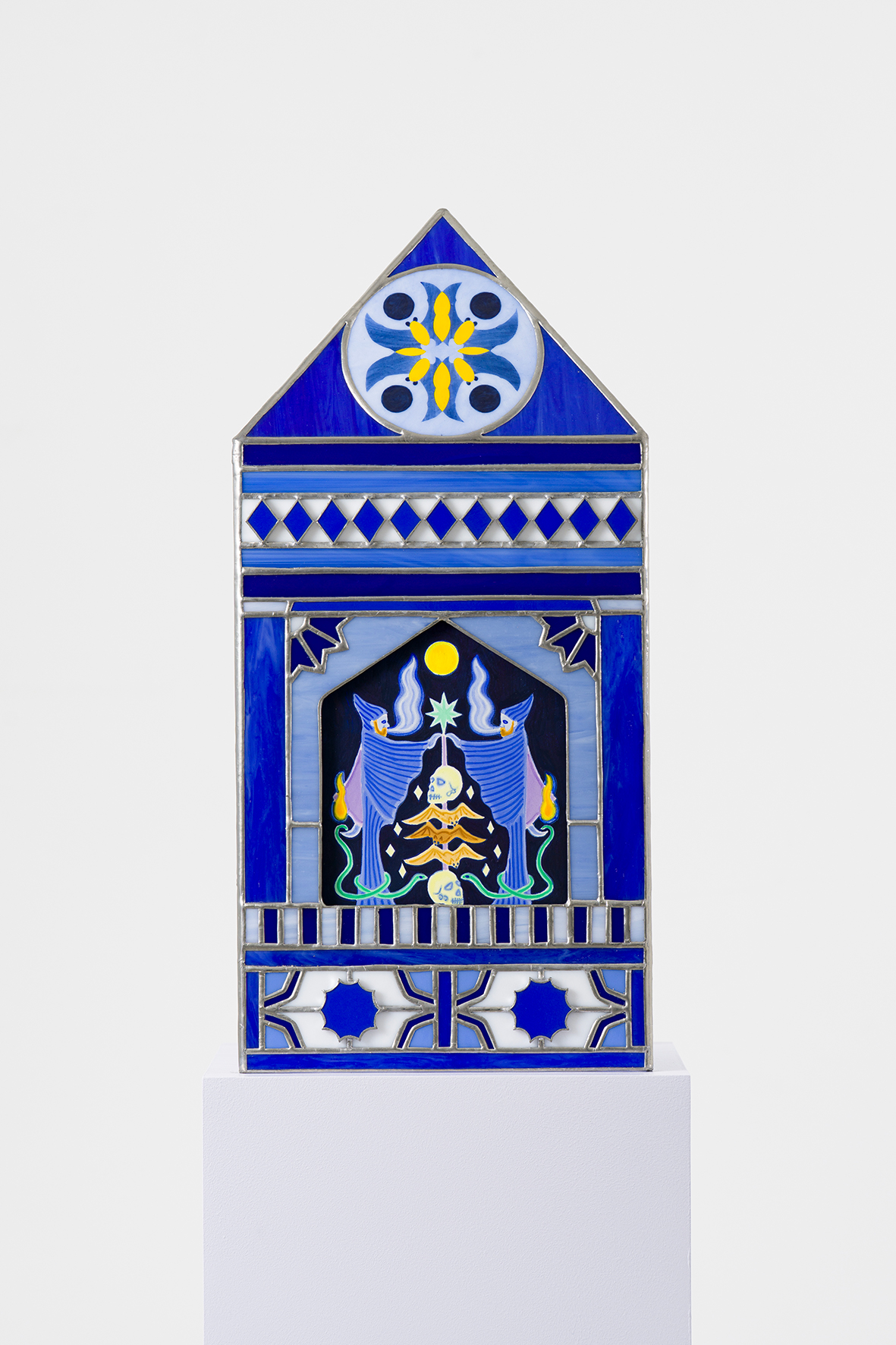
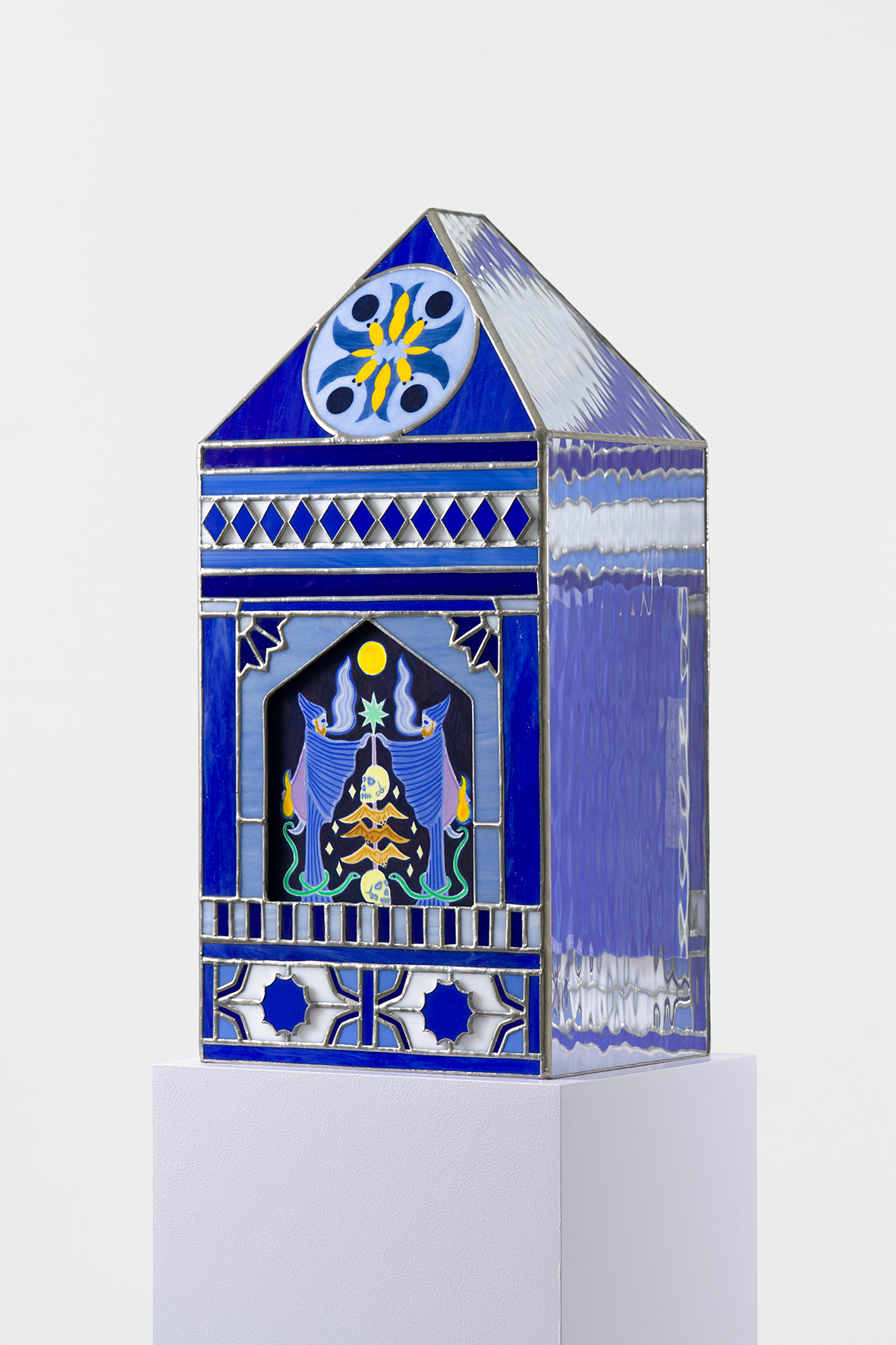
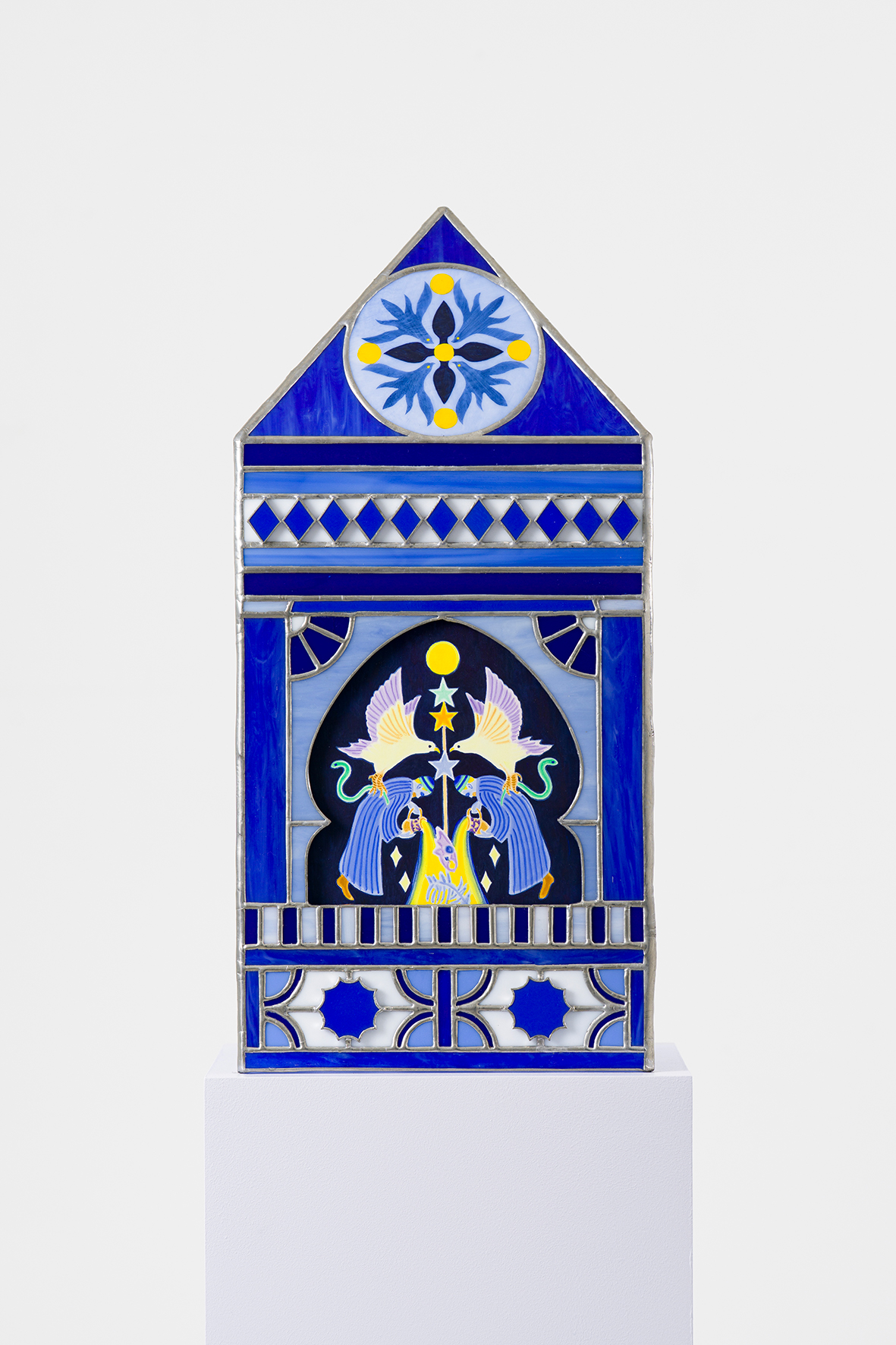
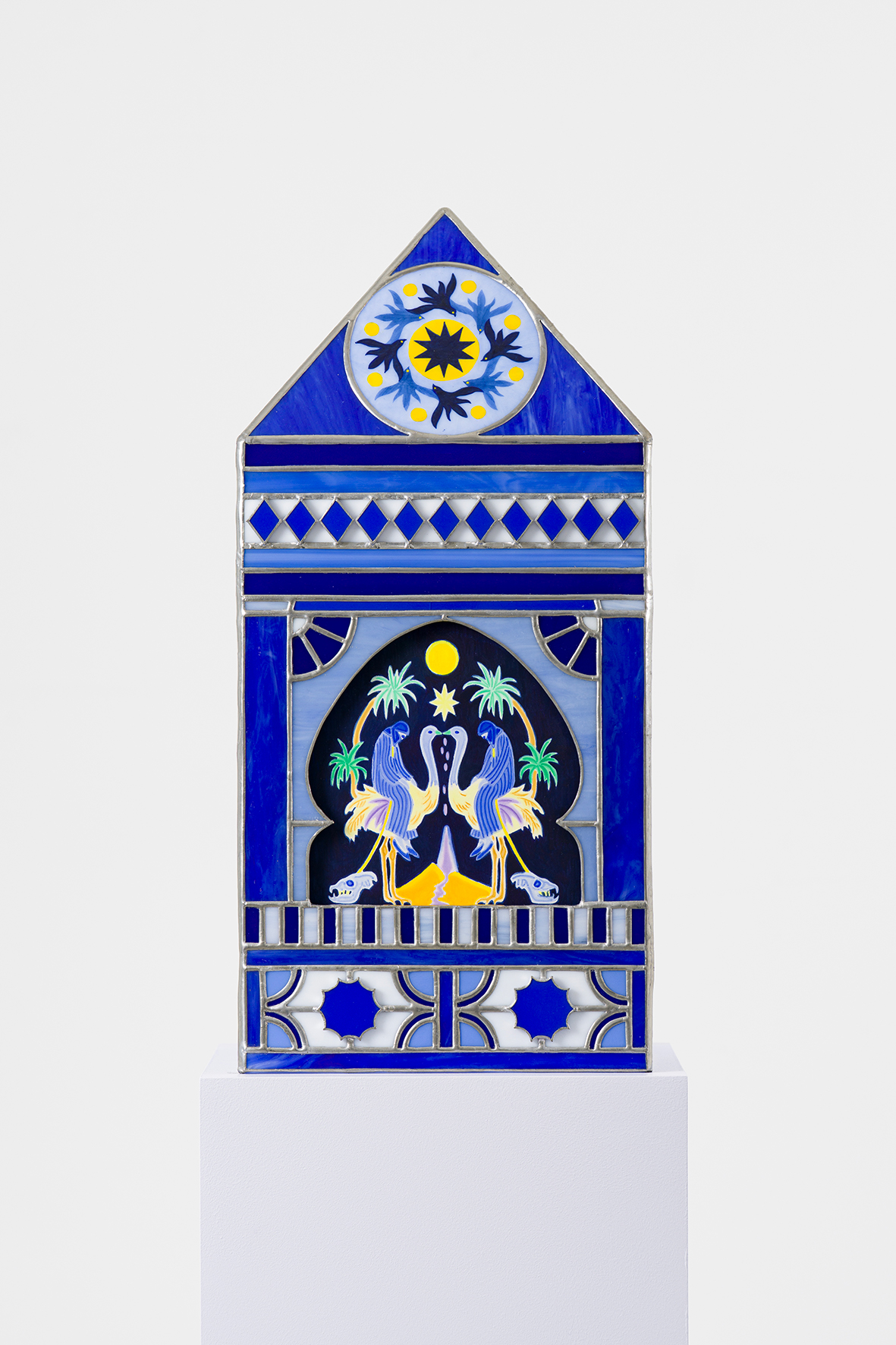
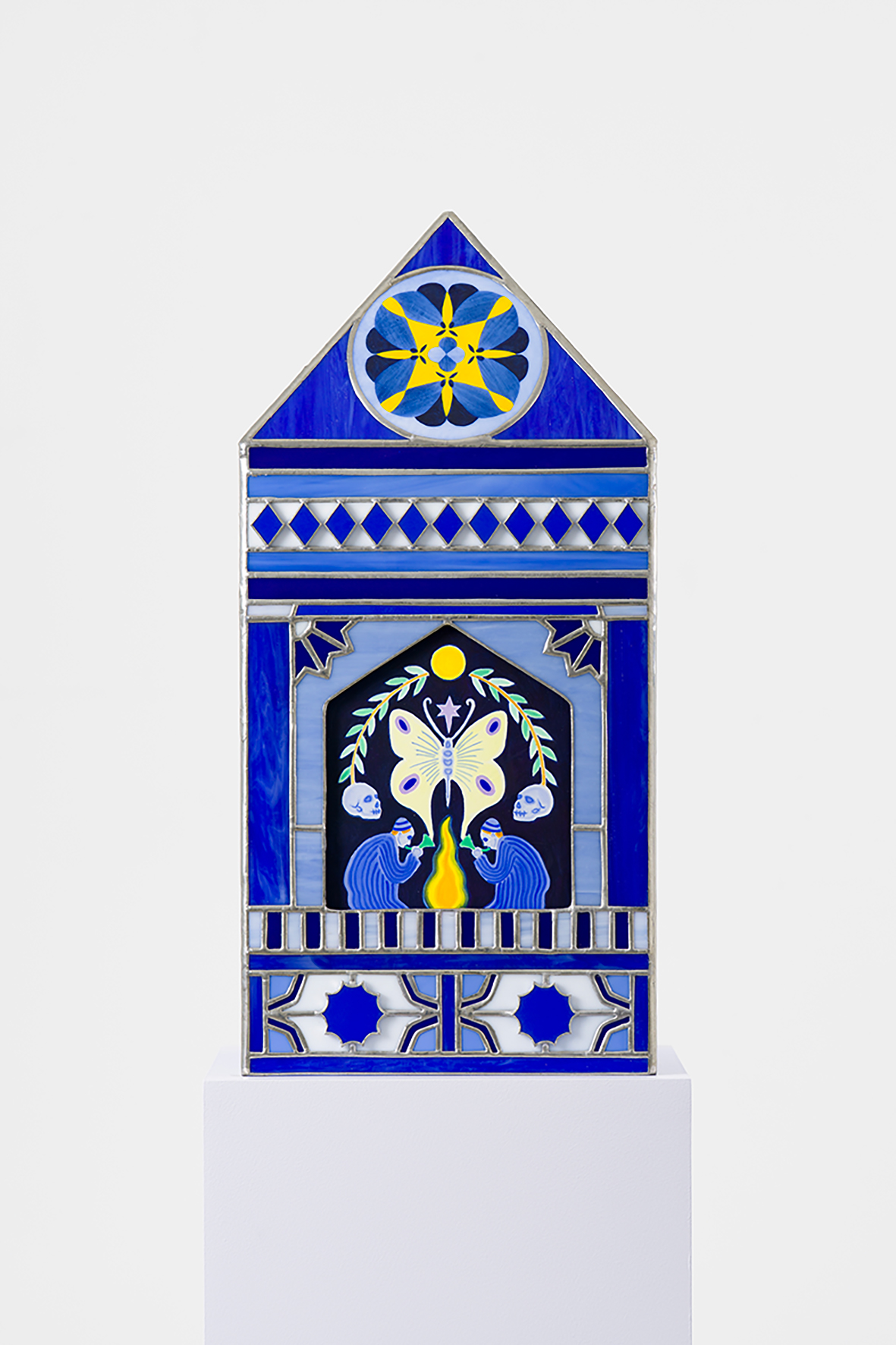
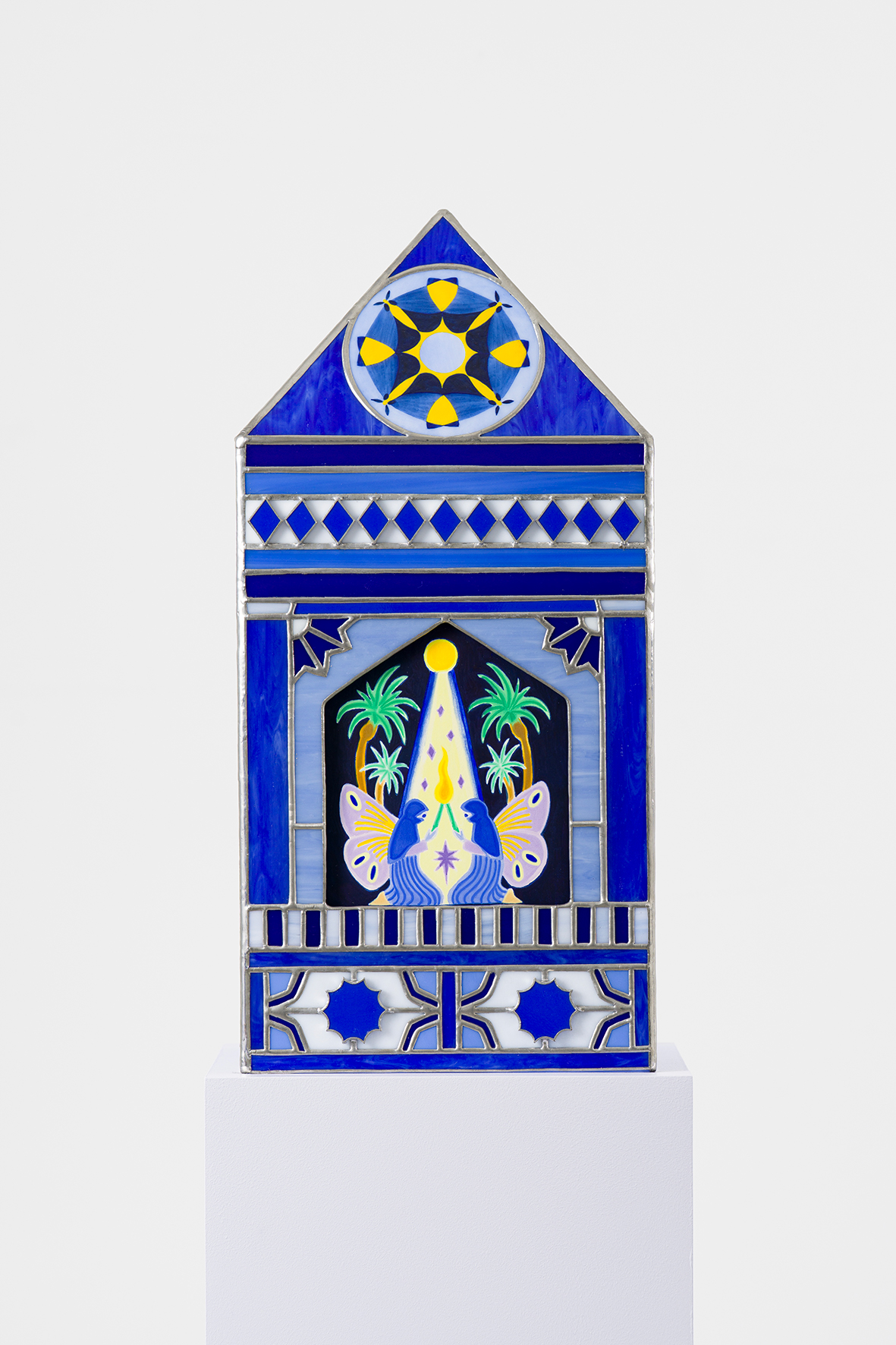
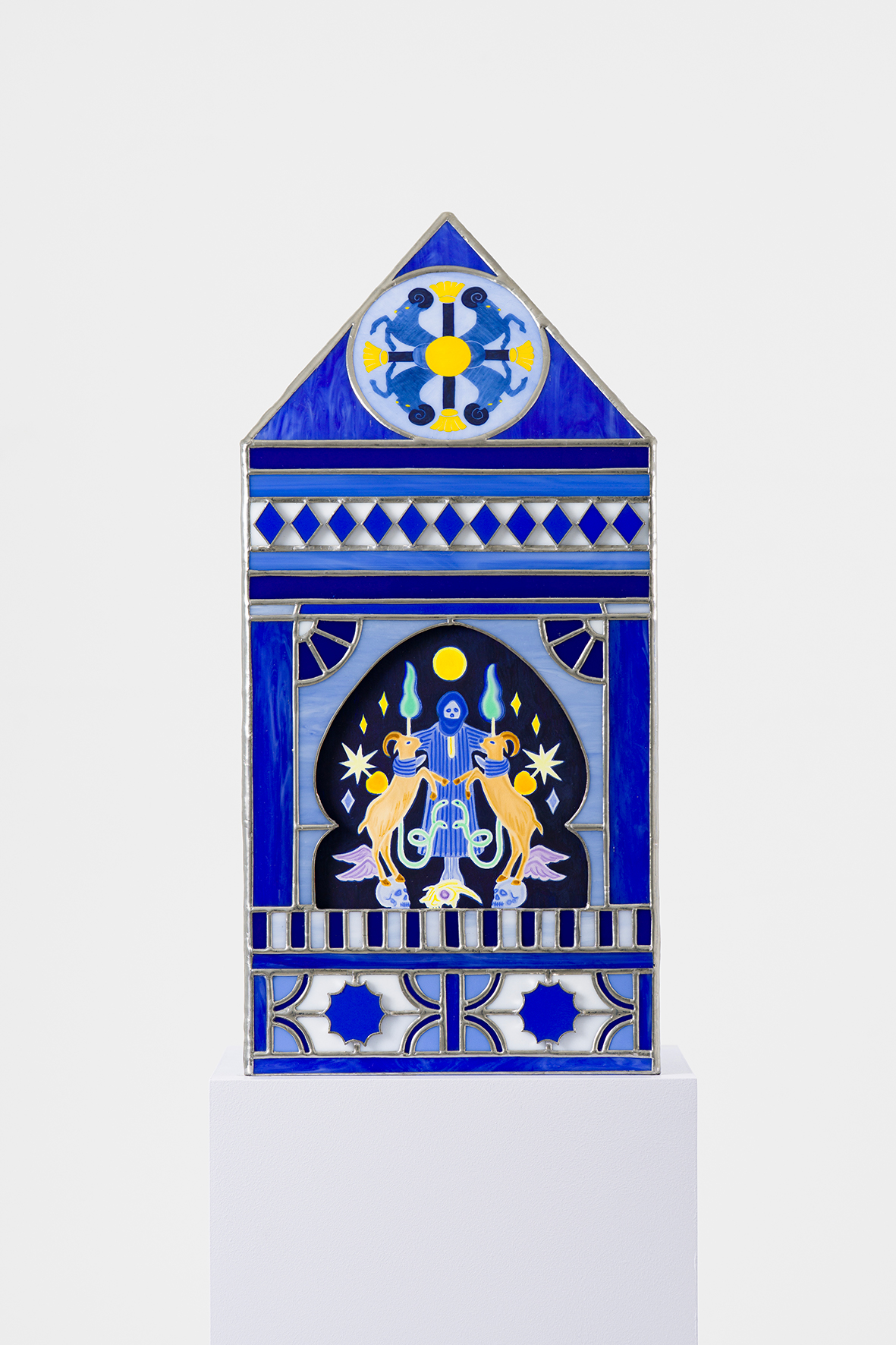
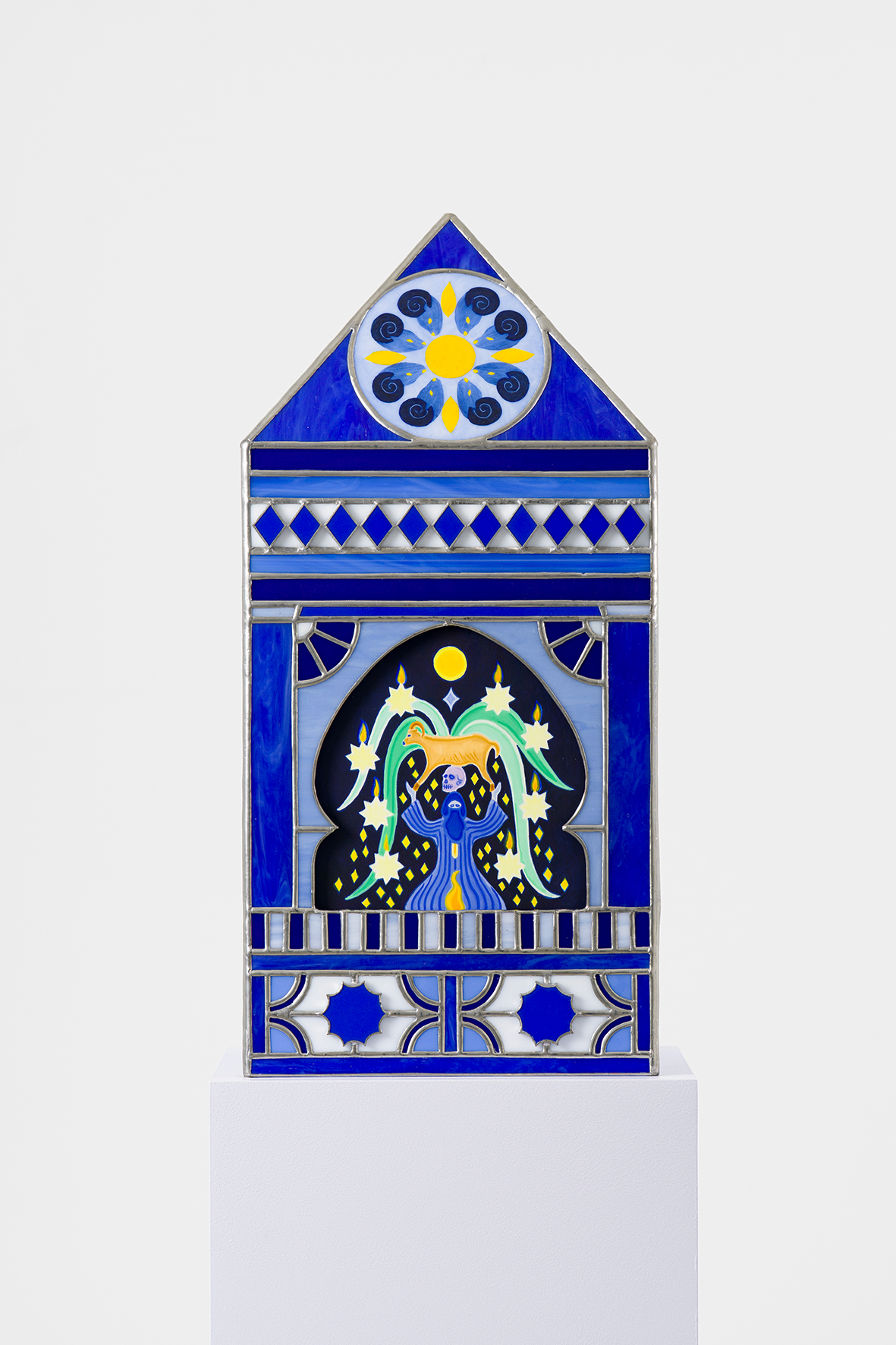
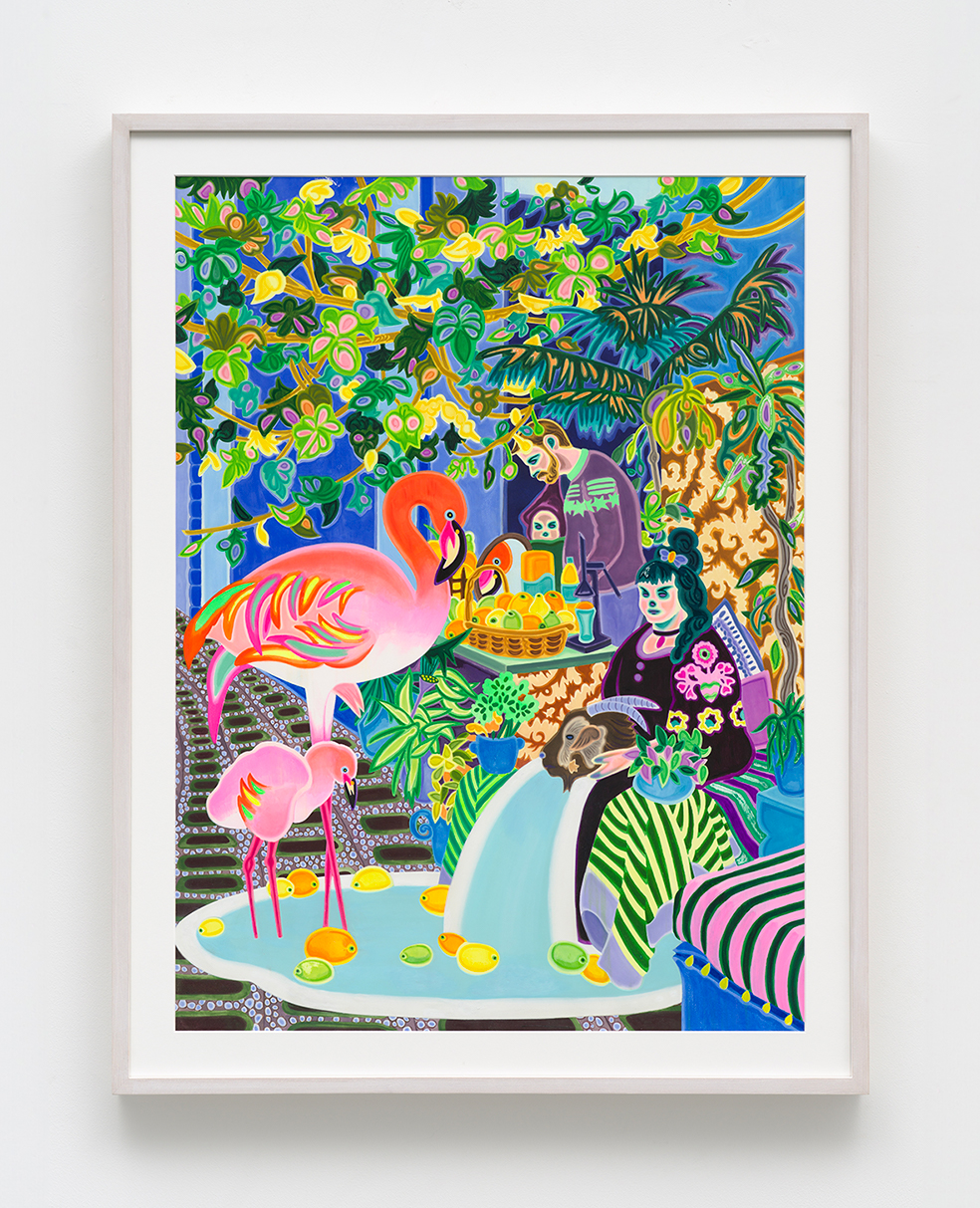
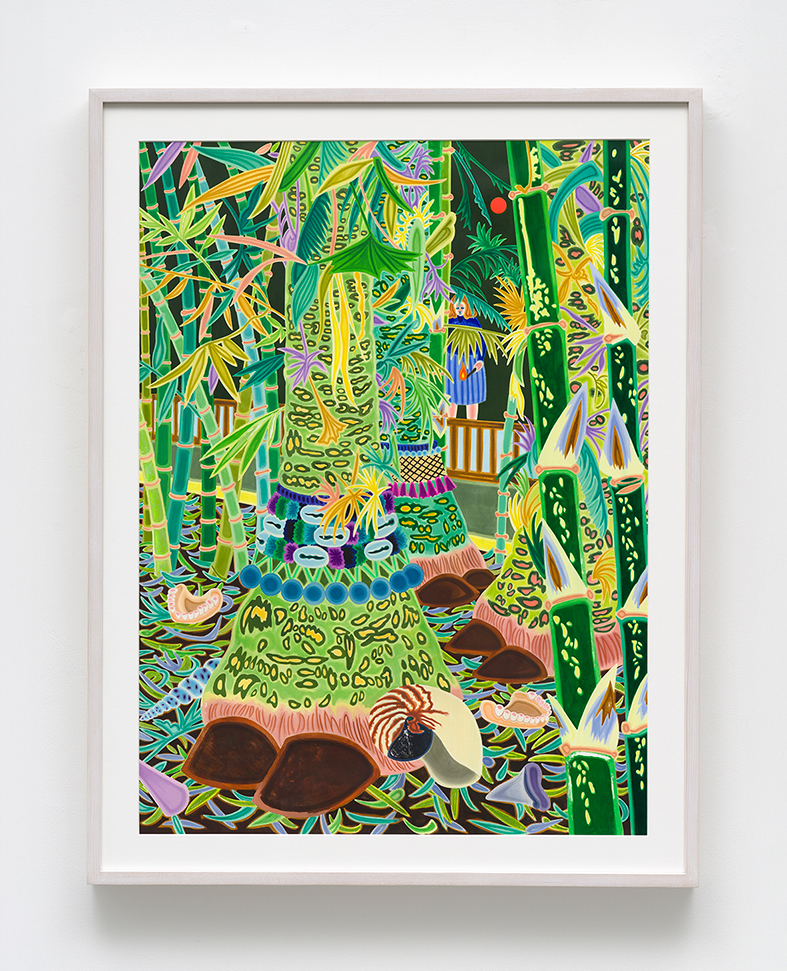
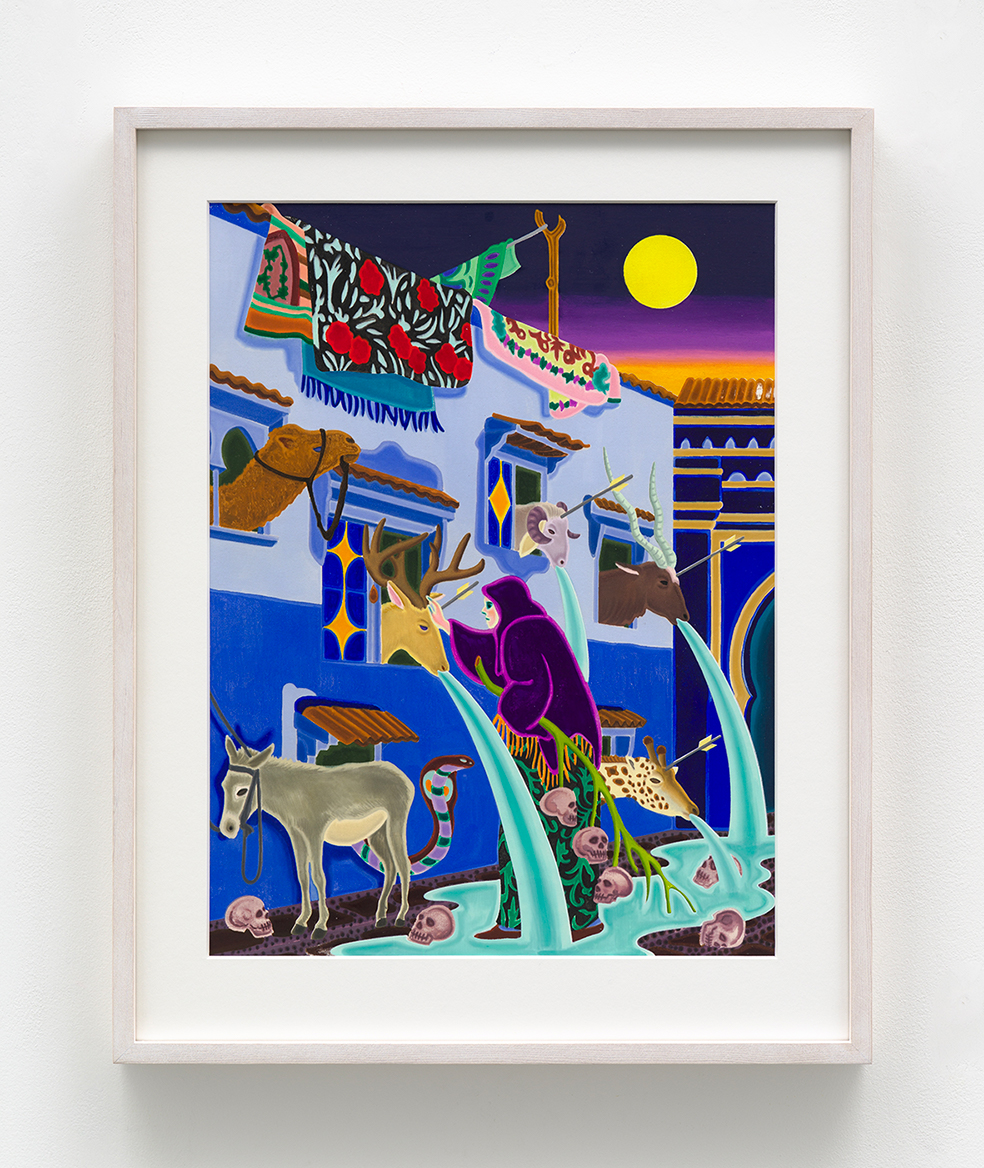
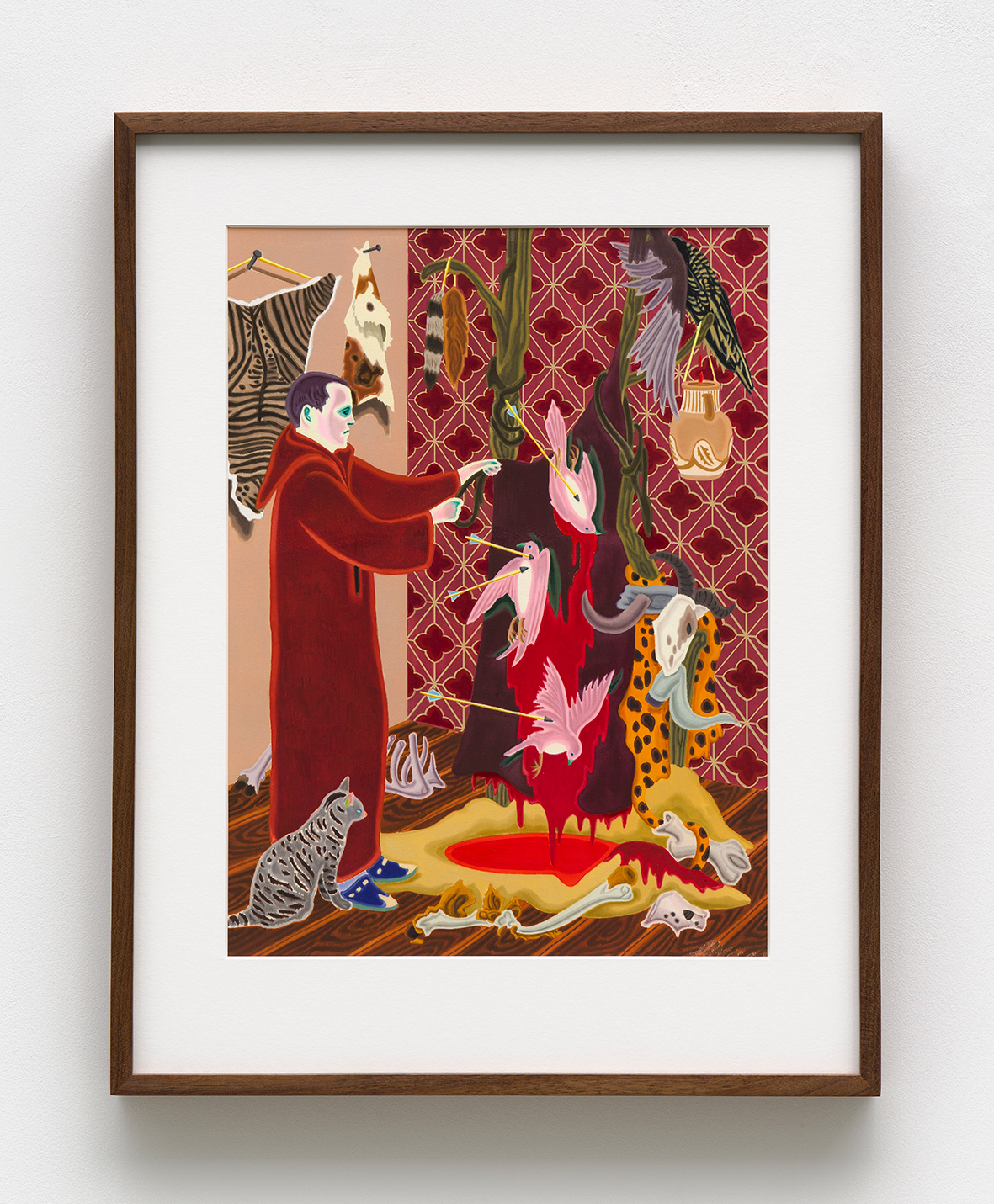
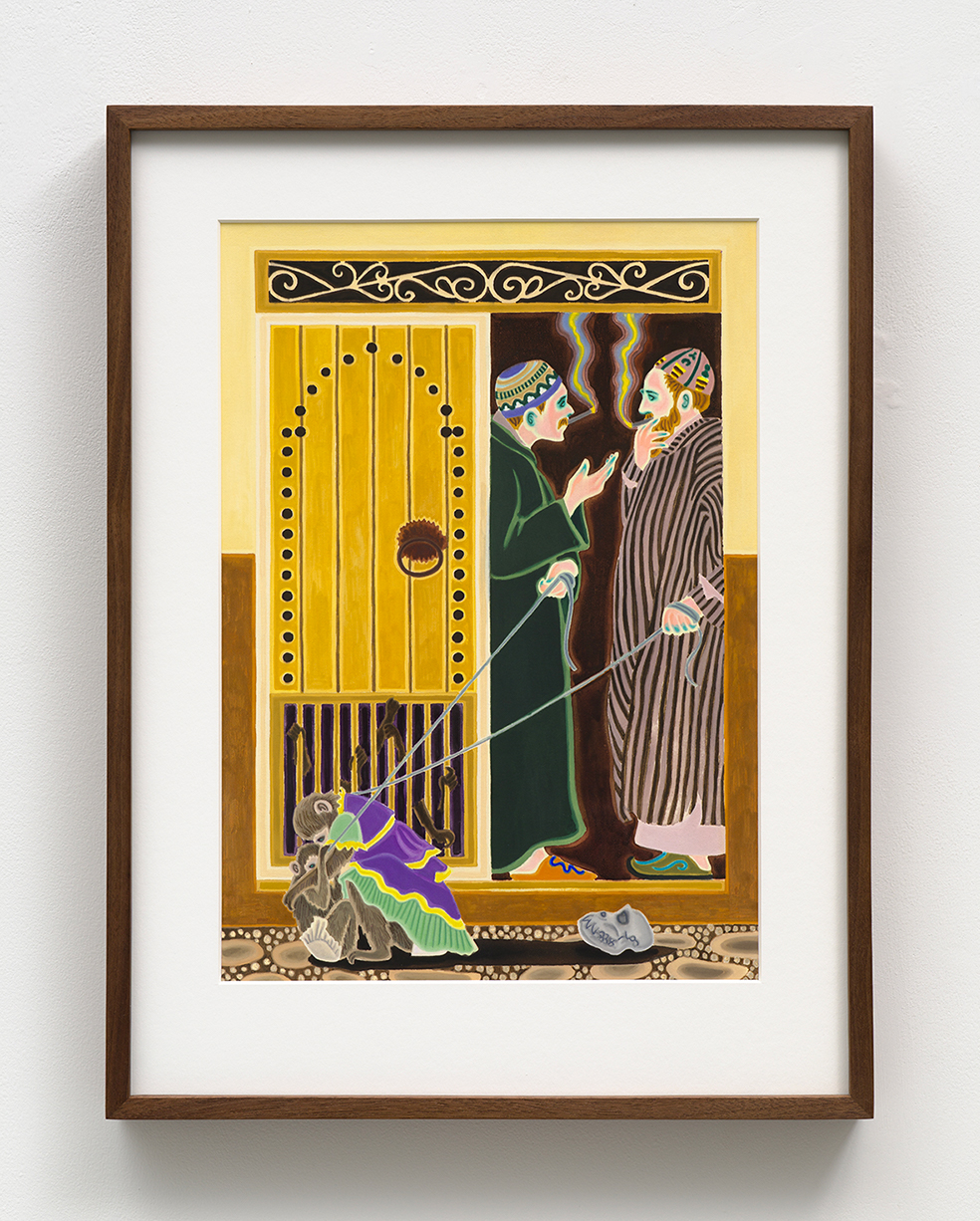
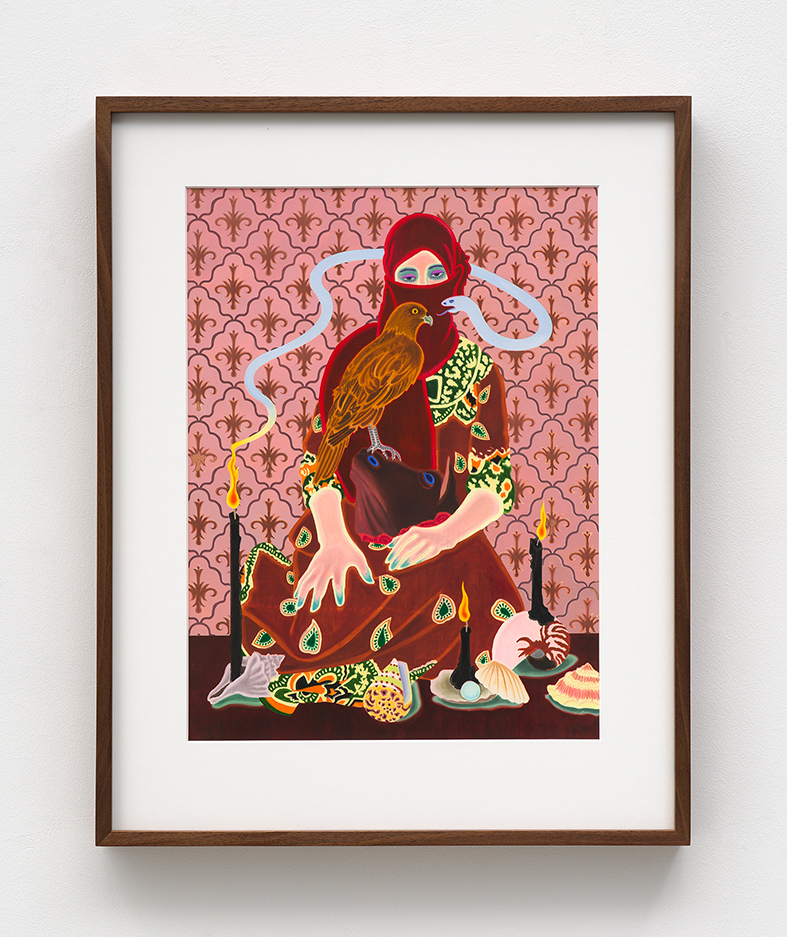
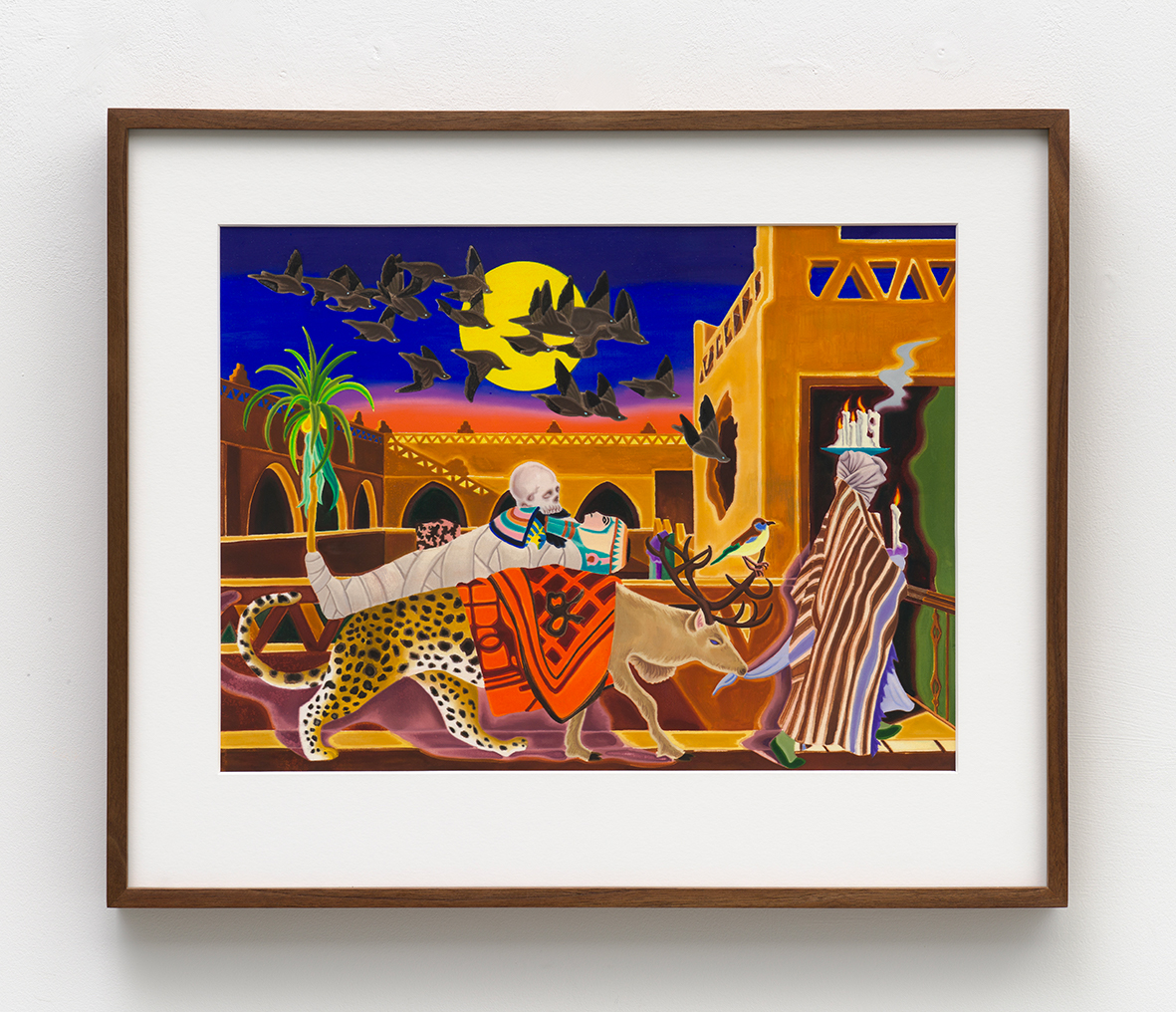
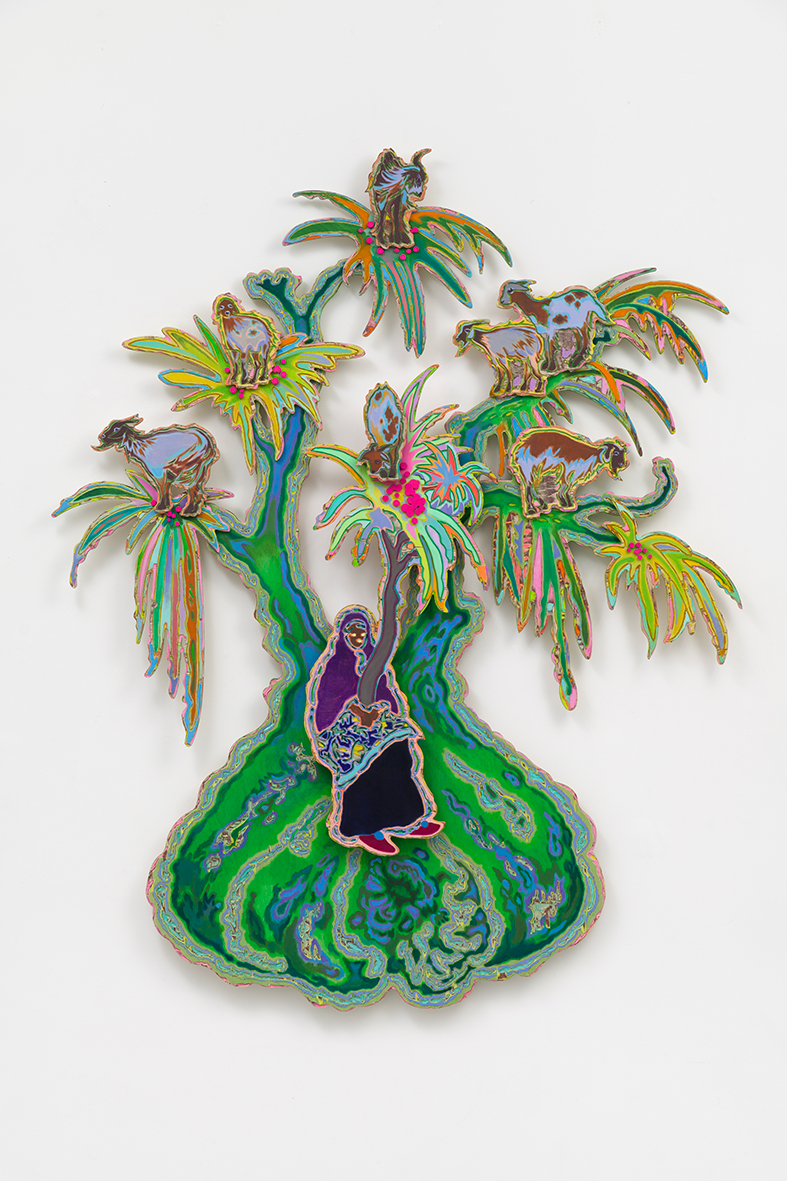
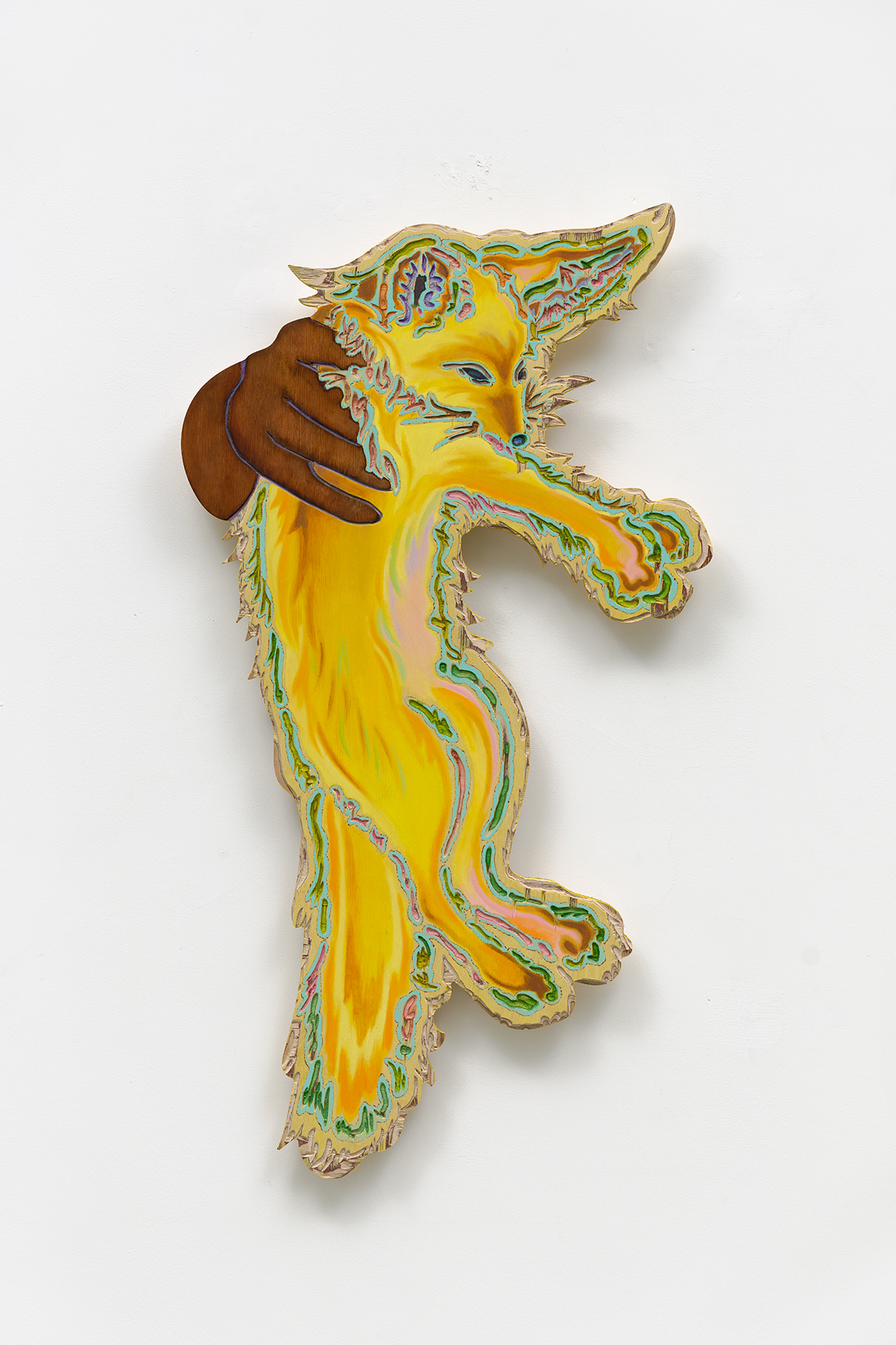
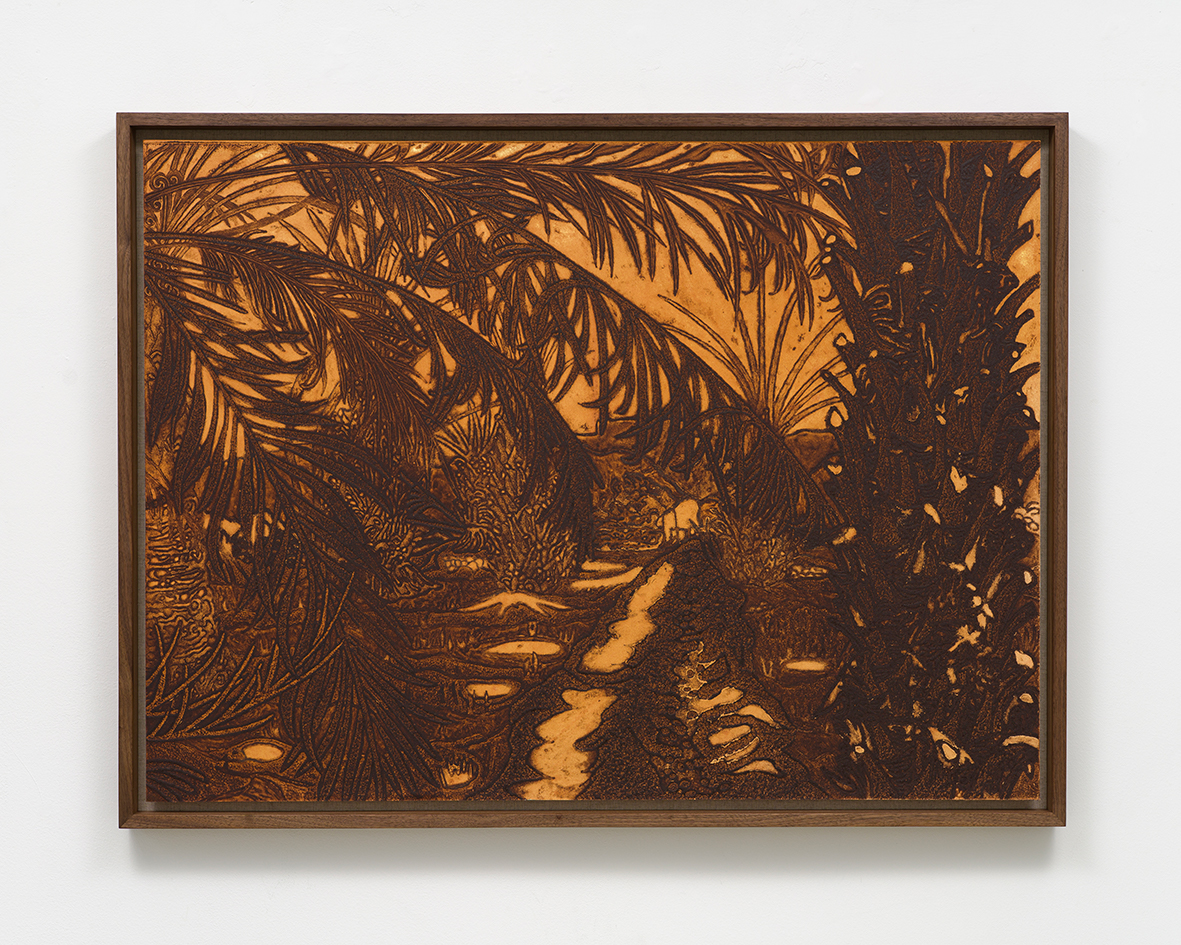
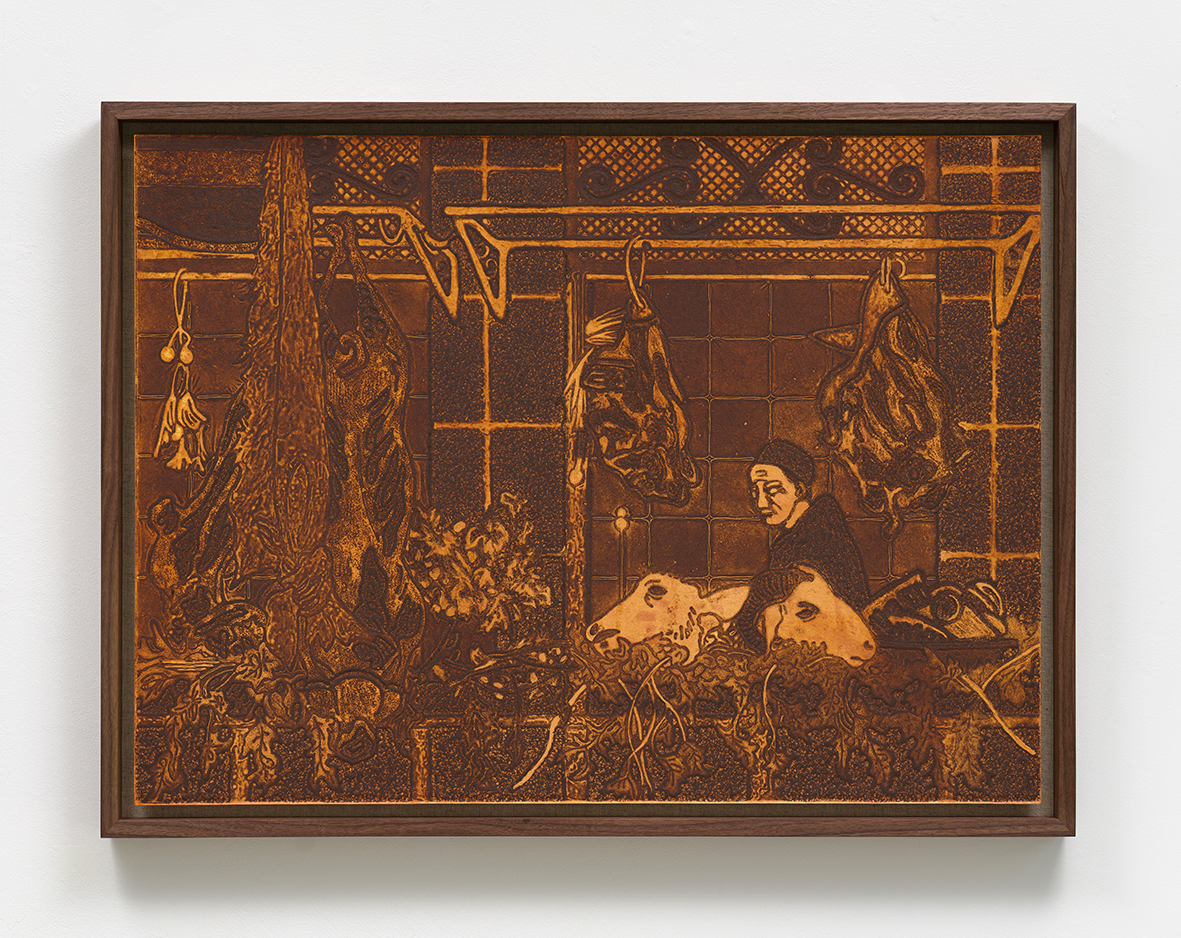
작품에 등장하는 눈병 걸린 고양이, 원피스를 입은 원숭이, 밧줄에 묶인 매와 뱀, 우리에 갇힌 사막여우 등은 작가가 여행 중 목격한 대상들이다. 오직 수단으로써 이용되는 이들로부터 어린 시절 보았던 동물원의 물개, 교문 앞 장수가 팔던 형형색색의 병아리를 떠올렸다고 한다. 목적지 곳곳에서 촉발된 마음의 동요는 쉬이 휘발되지 않은 채 계속해서 그의 개인적 장면들과 연결되었다. 화면 속 대립하기도, 화합하기도 하는 인간과 동물의 모습은 기억의 퇴적층으로부터 꺼내어지는 과정에서 작가에 의해 번안된 결과물과도 같다. 그밖에 모로코 페즈(Fes) 천연 가죽 염색공장의 가죽 빛깔을 흉내 낸 카보런덤 판화(빛과 모래의 노동, 살과 숨)와 ‘블루 시티‘라 불리는 셰프샤오엔(Chefchaouen) 건물 양식에 착안한 입체(The shelters) 작품은 실제 이미지와 유사한 모습으로 재현된다.
한편 박신영은 계속해서 윤리적으로 배제되고 가리어지는 소재들의 근원을 살피며, 운명의 불가해성과 그로 인해 유지되는 암묵적 질서에 관해 생각한다. 그의 작업은 추억이나 헌사를 위한 것이기보다 관찰한 이들의 개체성을 변신시킴으로써 도무지 얻어낼 수 없으리라 여겨지는 무언가를 자연으로부터 도출하려는 것이다. 요컨대 이는 현대 문명이 거세하고 자연 과학적 설명이 말소시킨 감각들을 소환한다. 원시 문화에서는 서로를 공격하거나 보호하려는 인간 또는 동물의 성질이 관계를 지배하며, 이 점에서 기계 문명과 구별된다. 보다 앞서 있기에 원시적이라 부를 수 있을 태도를 담지하여 주체와 대상 사이를 붙잡아 보는 것. 이제 무수한 생의 여정을 품은 사막 한 가운데서 모래로 되돌아온 이를 그대로 내버려두기로 한다.
글ㅣ이유진 (디스위켄드룸 큐레이터)
Walking across the sands of the Sahara Desert, I came upon the bodies of two camels lying opposite each other like fortresses. Looking at them, he said they had probably fought to death. Under the blazing sun, I gazed at the bones, bleached white and glistening in the sand, and picked up a fragment, telling him I wished to keep it. He looked slightly uneasy, but allowed me to take it. Back at the lodge, holding the bone, I reflected on the strange tension between the fear of witnessing death and the desire to possess a beautiful form.Then it struck me, perhaps I had violated some implicit order. After much hesitation, I returned the bone to him the next day. Smiling, he said, “A good decision. I’ll return this bone to its place. Everything is born of the desert and returns to the desert.”
– from the artist note
Memory is at once selective and beyond our control. It settles deep beneath consciousness, surfacing without warning, indifferent to intention. In fact, memory is nothing more than a partial collection of responses to countless stimuli. Yet when these fleeting waves break through once more, they are reshaped by the subject’s thought and perception, emerging into language or form that renders them tangible.
Shinyoung Park reconstructs the sociocultural characteristics of unfamiliar environments encountered while traveling across different regions into subjective records. Her work often explores the boundaries between humans and animals, civilization and nature, reality and imagination—inviting viewers to reconsider events unfolding beyond the spatiotemporal positions they inhabit. Fragments collected from various places are recorded through printmaking, drawing, and sculptural works using materials such as paper, wood, and stained glass. This exhibition draws on the artist’s past journey to Morocco, examining the lingering residues of memories and emotions she had long been unable to process. The traces filtered through this process of digestion are visualized according to her own formal principles, revealing how they operate in her present and future experience beyond mere recollection.
Morocco, with its vast geography spanning the Sahara Desert, the Atlas Mountains, and the Mediterranean and Atlantic coasts, bears a unique identity shaped by the convergence of Arab, African, and European elements. It remains a land where traditional rituals persist, where pastoral and agricultural life still form the basis of survival, and where echoes of origin endure. For the artist, visiting such places meant confronting humanity’s current condition, one that continuously refines, suppresses, and replaces its past. These experiences became a lens through which she could question the limits of simultaneous perception, reflect on the laws of nature, and speculate on the ideological strata that connect what has been with what is yet to come. In this sense, the anecdote of the camels encountered in the Sahara speaks to the origins and cycles of life, to struggle, reversal, and domestication.
The cat with an eye infection, the monkey in a dress, the hawk and snake bound by rope, and the caged fennec fox are figures the artist encountered during her travels. They stirred memories of her childhood – seals in a zoo, or brightly dyed chicks sold near school gates. These emotional disturbances did not easily dissipate but continued to connect with her personal memories. The images of humans and animals, sometimes in conflict and sometimes in harmony, are the results of a process in which memory’s sedimentary layers are retrieved and translated through the artist’s hand. In addition, works such as the carborundum print(Toil of Light And Sand, Flesh and Breath), inspired by the colors of leather from the traditional tanneries in Fez, and the sculpture(The Shelters), modeled after the architectural forms of Chefchaouen, the “Blue City,” are reappeared in ways that closely resemble real images.
At the same time, Park continues to probe materials and motifs that are ethically obscured or excluded, reflecting on the opacity of fate and the implicit orders it sustains. Her practice does not seek to offer nostalgia or homage but to extract, through transformation, something from nature that seems otherwise unattainable. In summoning the senses dulled by modern civilization and silenced by scientific explanation, she points toward a state of perception that is both primal and ahead of itself. In early cultures, aggression and protection defined the terms of relation between human and animal, and it is this posture, primitive yet prescient, that she seeks to capture between subject and object. Thus, within the desert that holds the journeys of countless lives, she chooses to leave what has returned to sand undisturbed.
TextㅣYoojin Lee (Curator, ThisWeekendRoom)