이채원
Chaewon Lee
6 Dec 2024-16 Jan 2025
ThisWeekendRoom
Artist
Chaewon Lee →
Credit
참여작가ㅣ이채원
기획ㅣ디스위켄드룸
글ㅣ박지형
사진ㅣ이정우
ArtistsㅣChaewon Lee
Curated by ThisWeekendRoom
TextㅣJihyung Park
PhotographsㅣJungwoo Lee




Exhibition Text
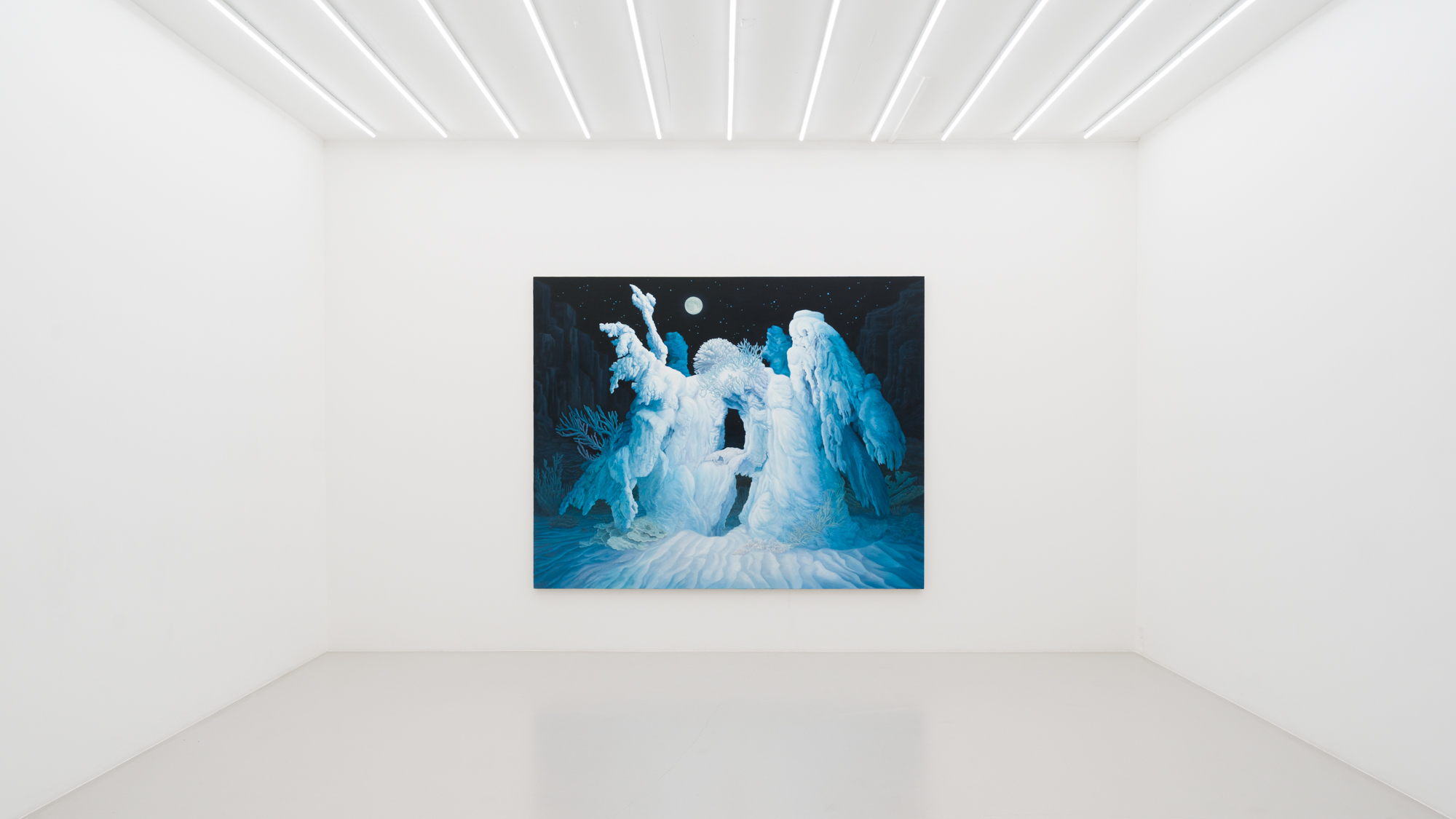
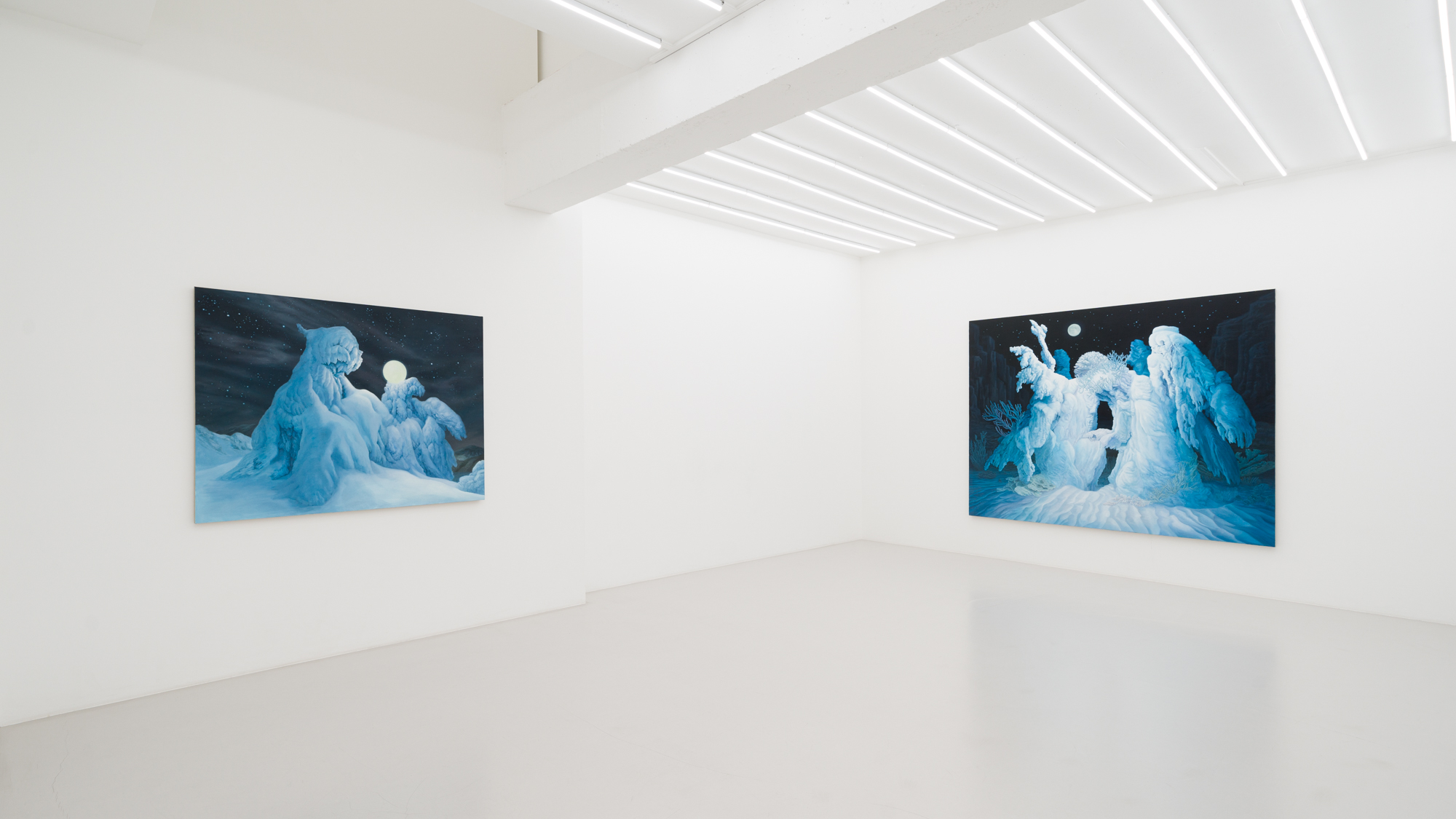
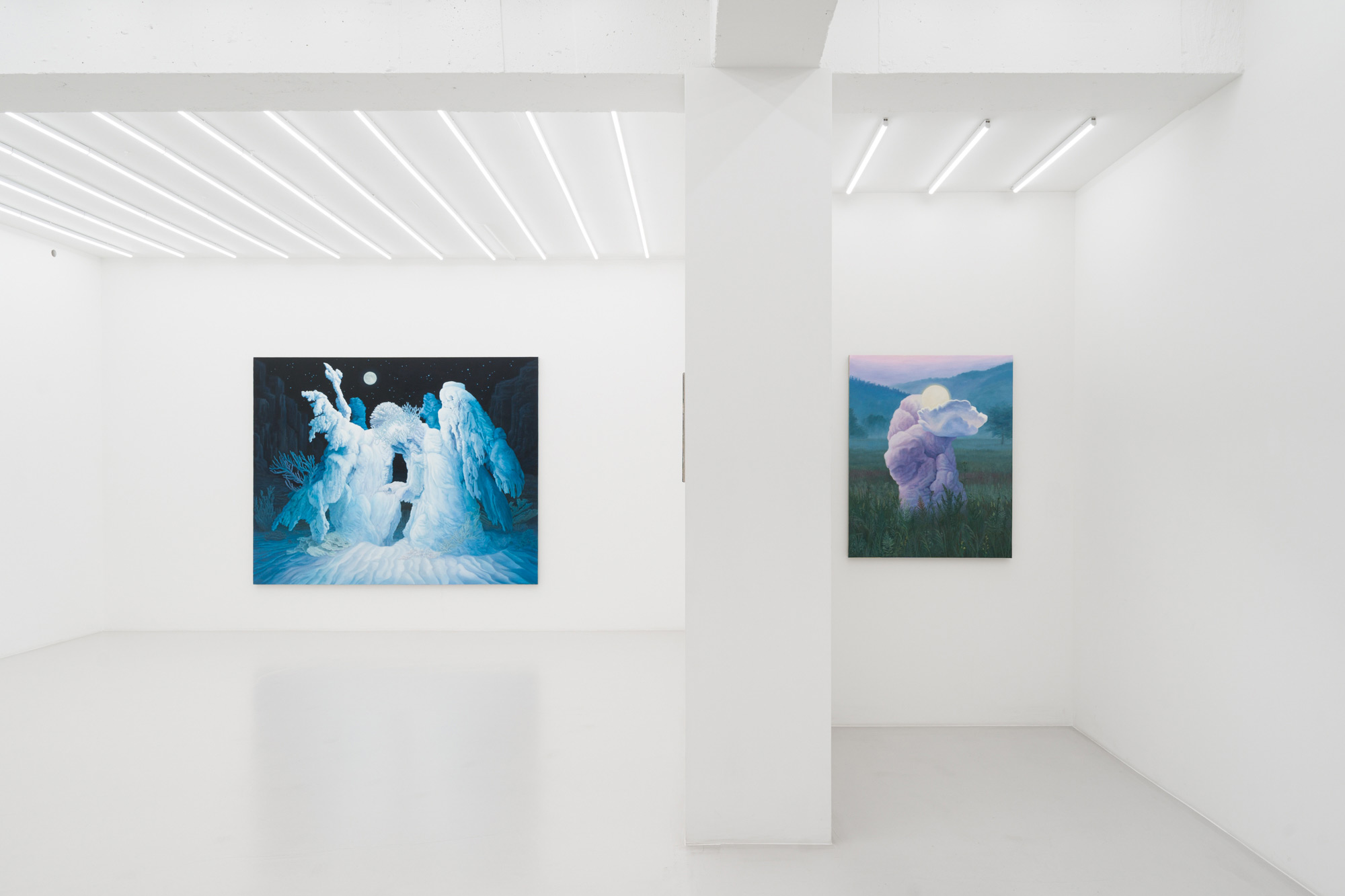
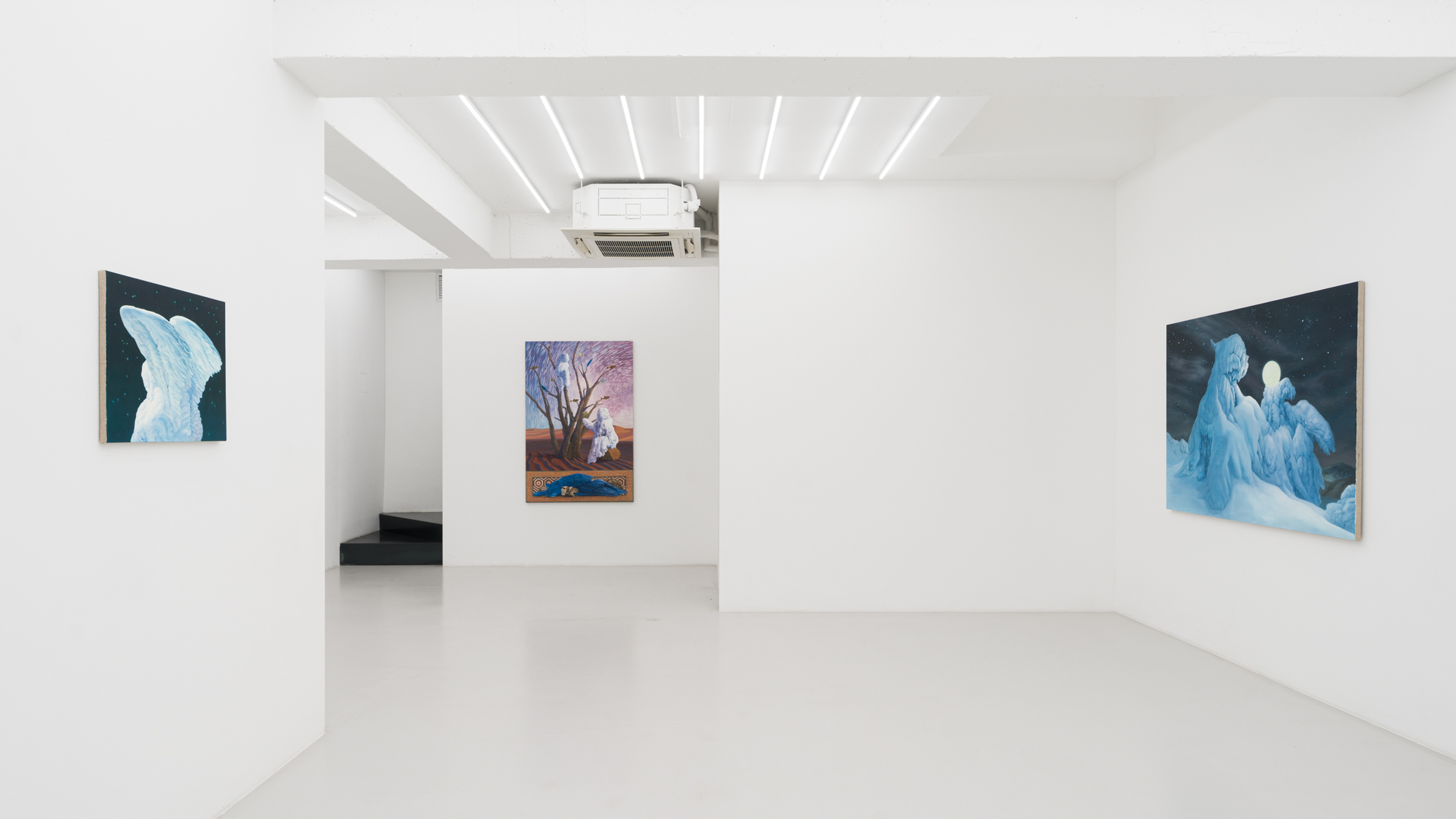
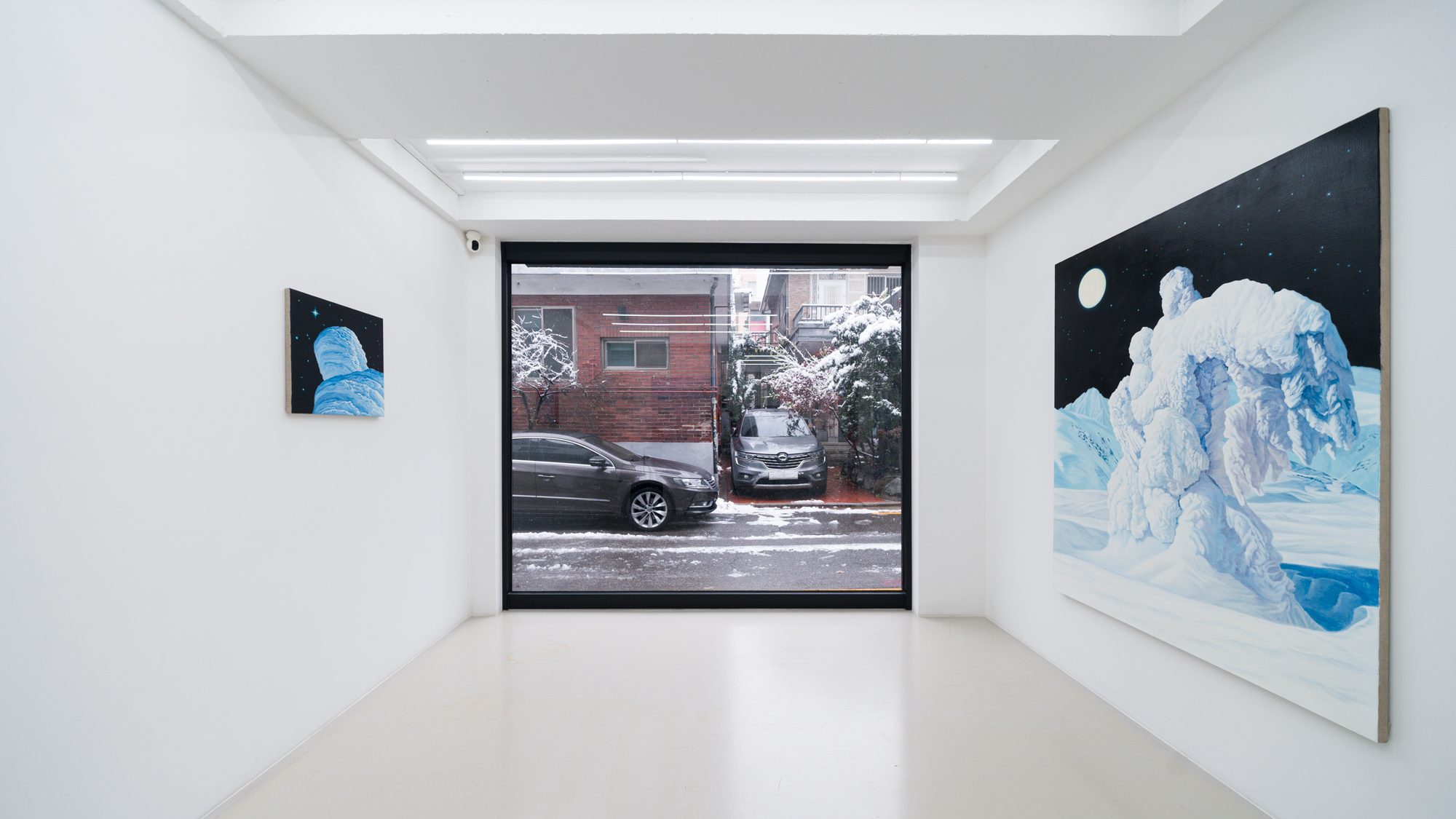
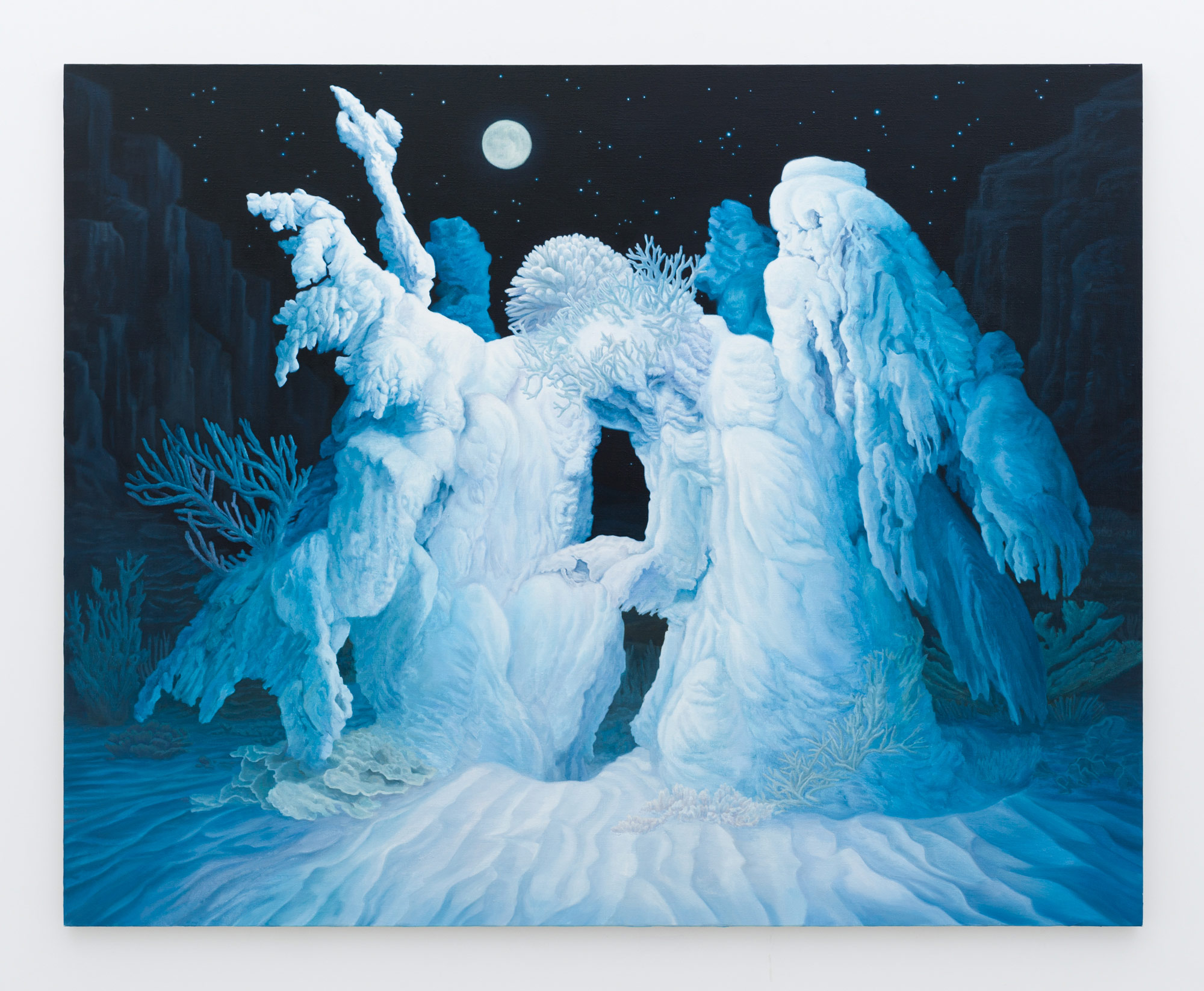
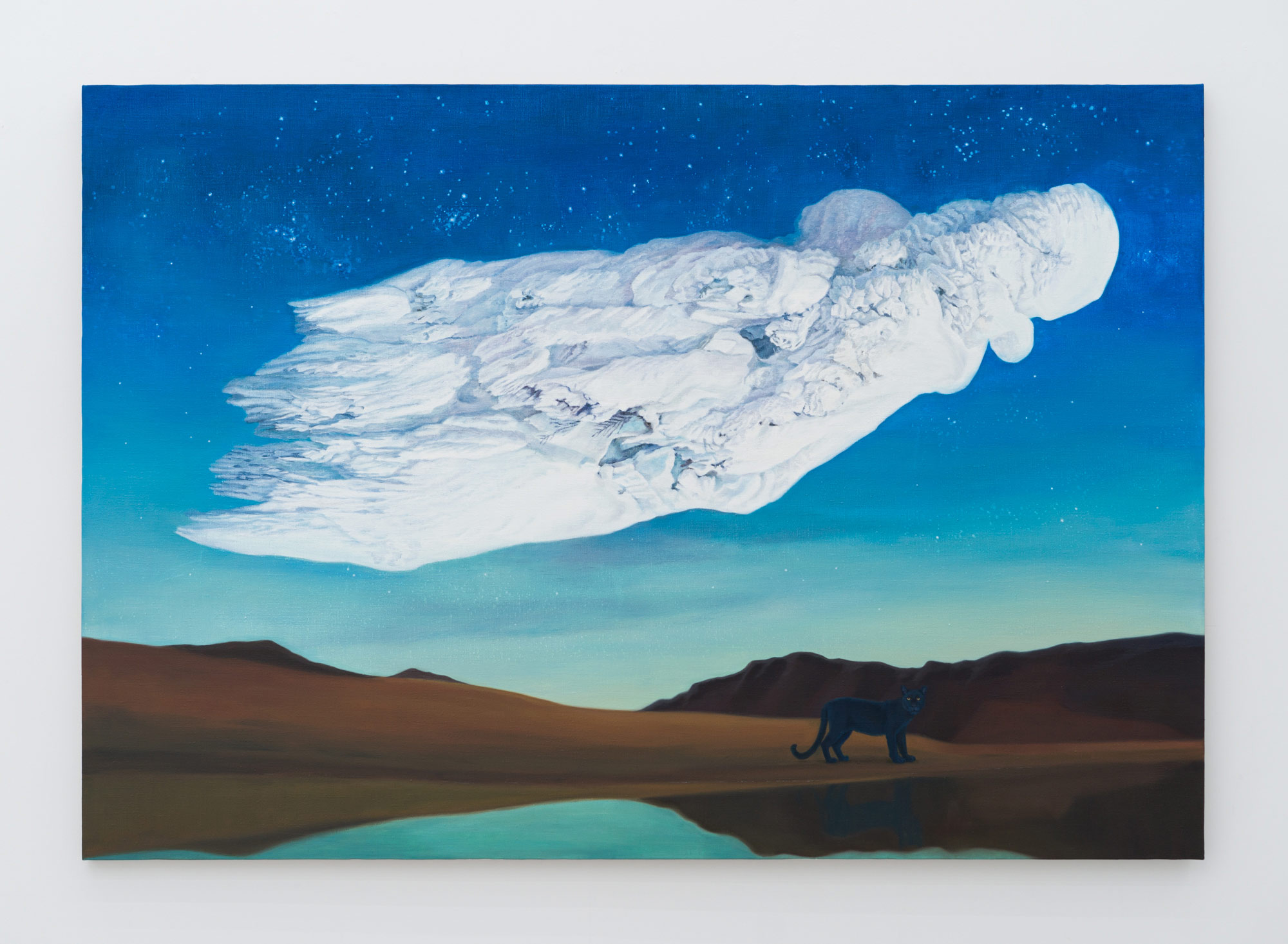
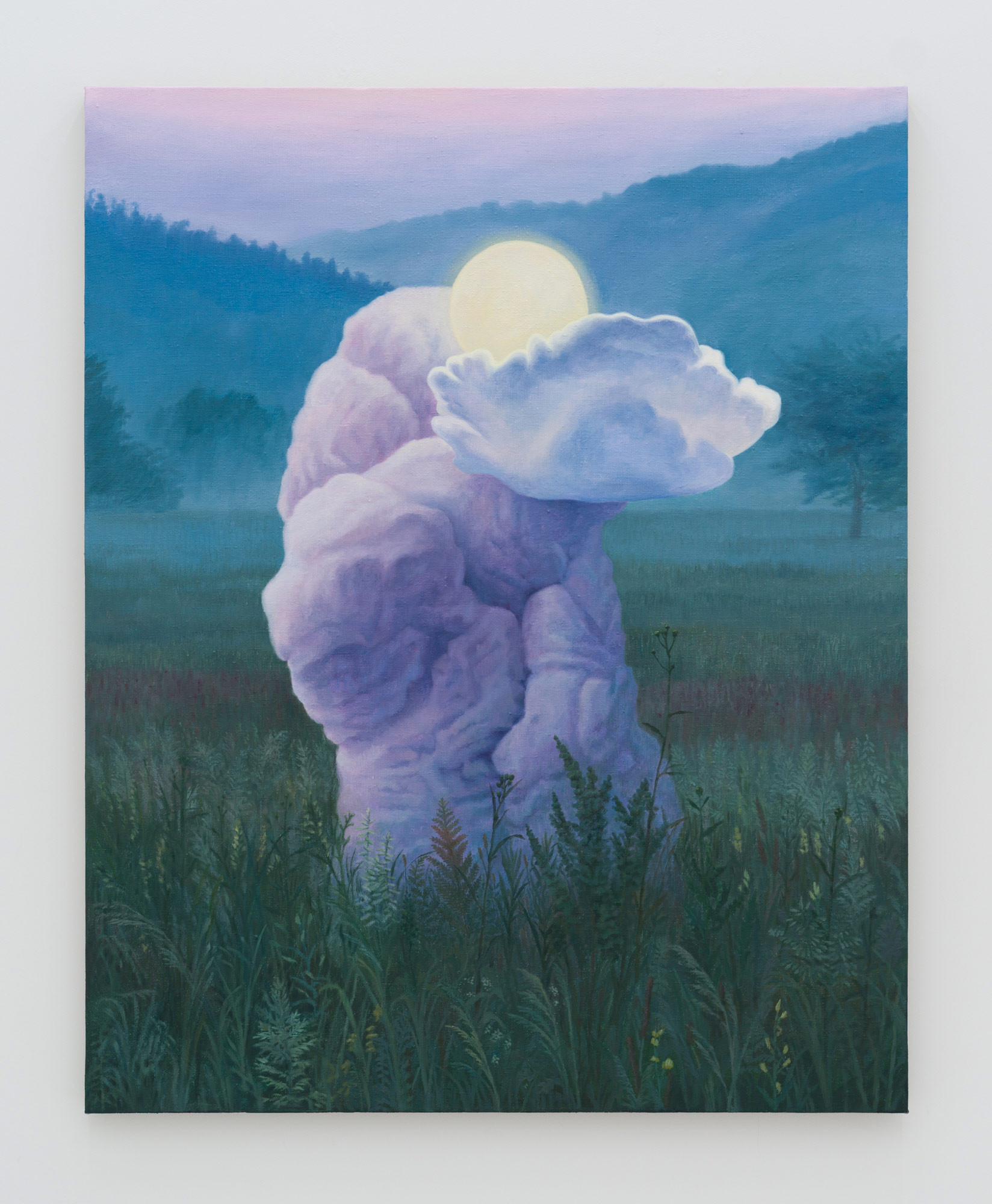
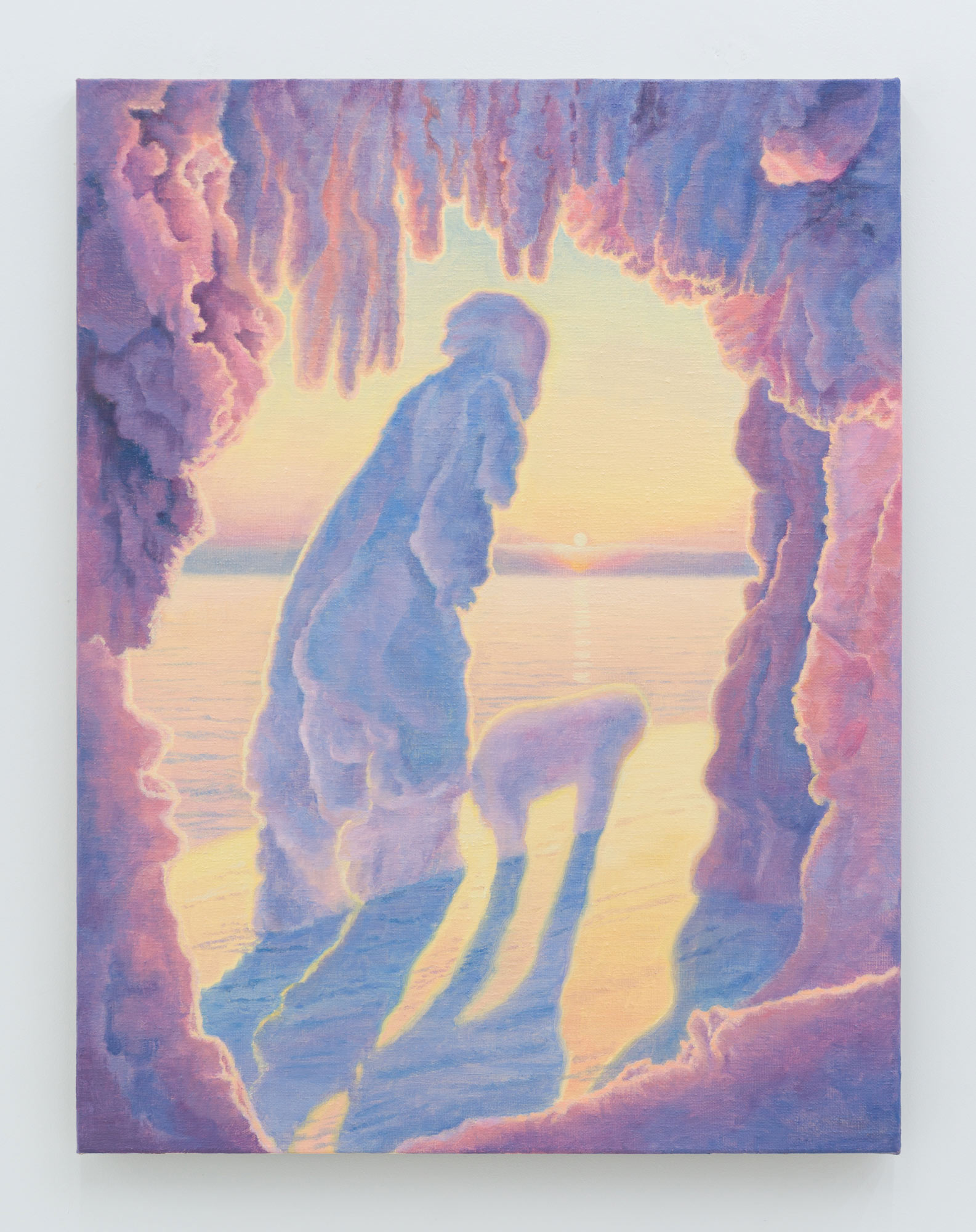
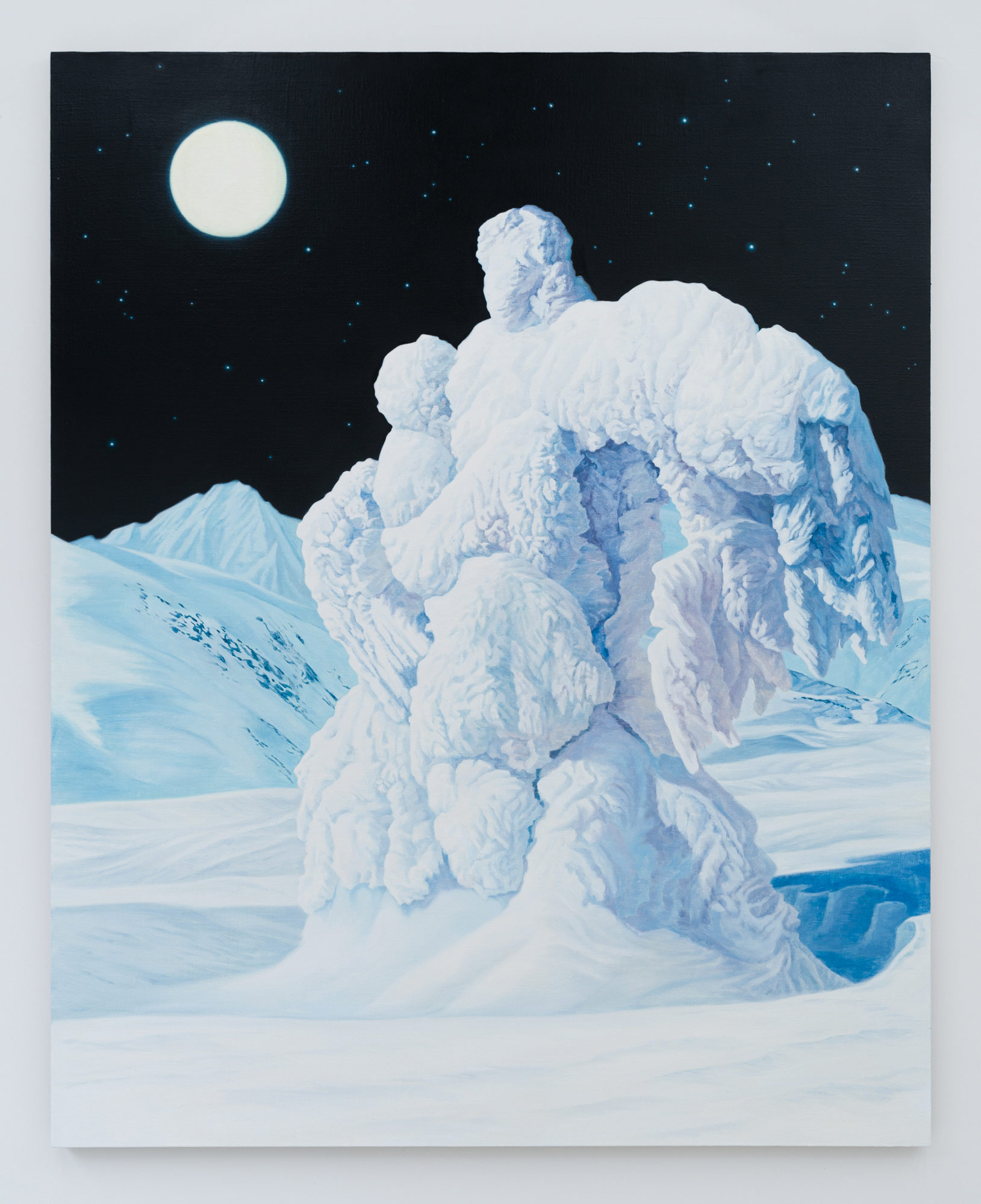
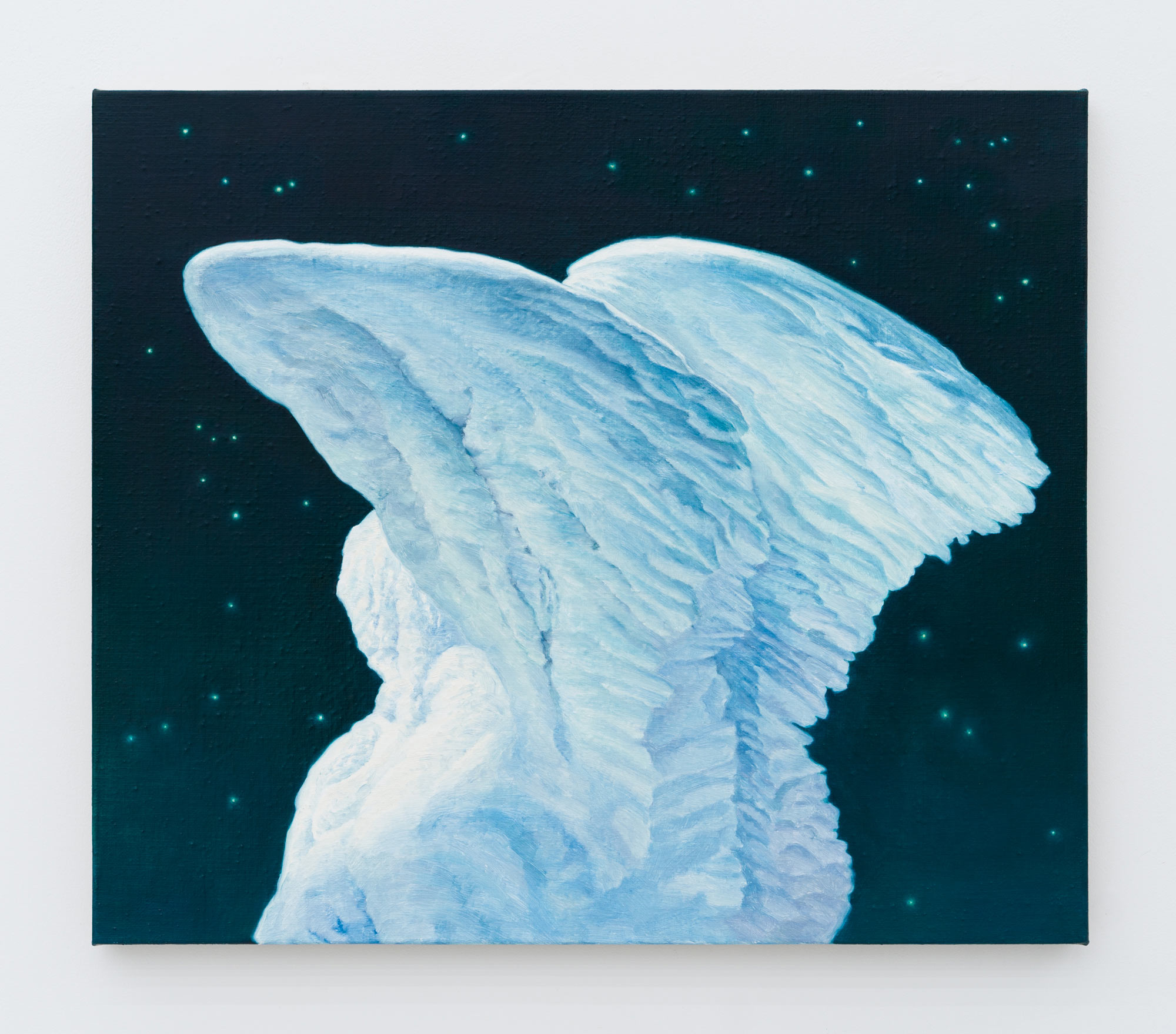
운무가 낀 호수, 빛의 장막 밑으로 잠긴 바닷속, 별 조각이 반짝이는 하늘 아래 펼쳐진 눈밭. 그곳에 새하얗게 백화되고 풍화된 것들이 있다. 꿈에서도 만나기 힘들 것 같은 신비하고도 처연한 풍광은 이채원이 세계를 응시하는 감각을 대변한다. 그는 유년 시절부터 자연의 섭리와 변화에 관심을 가졌고 이로부터 얻는 호기심과 위안, 경외감을 그림에 담아왔다. 전시 제목인 《모든 숨》은 그가 몸과 마음으로 껴안는 수많은 유기체의 삶을 떠올리게 한다. 실제로 그의 작품 제목에는 ‘숨’, ‘마음’, ‘얼굴’, ‘호흡’ 등의 단어가 자주 사용되는데, 이는 작가가 그려내는 존재를 저마다의 맥박과 체온, 감정을 가진 오롯한 주체로서 대하고 있음을 뜻한다. 최근 그의 시각은 사적인 감상의 측면에서 공적인 대화의 방향으로 확장되고 있으며, 이번 전시는 그가 빚어낸 화폭을 경유하여 우주 생태계를 향한 인간의 시각을 고찰해 보려는 시도이다.
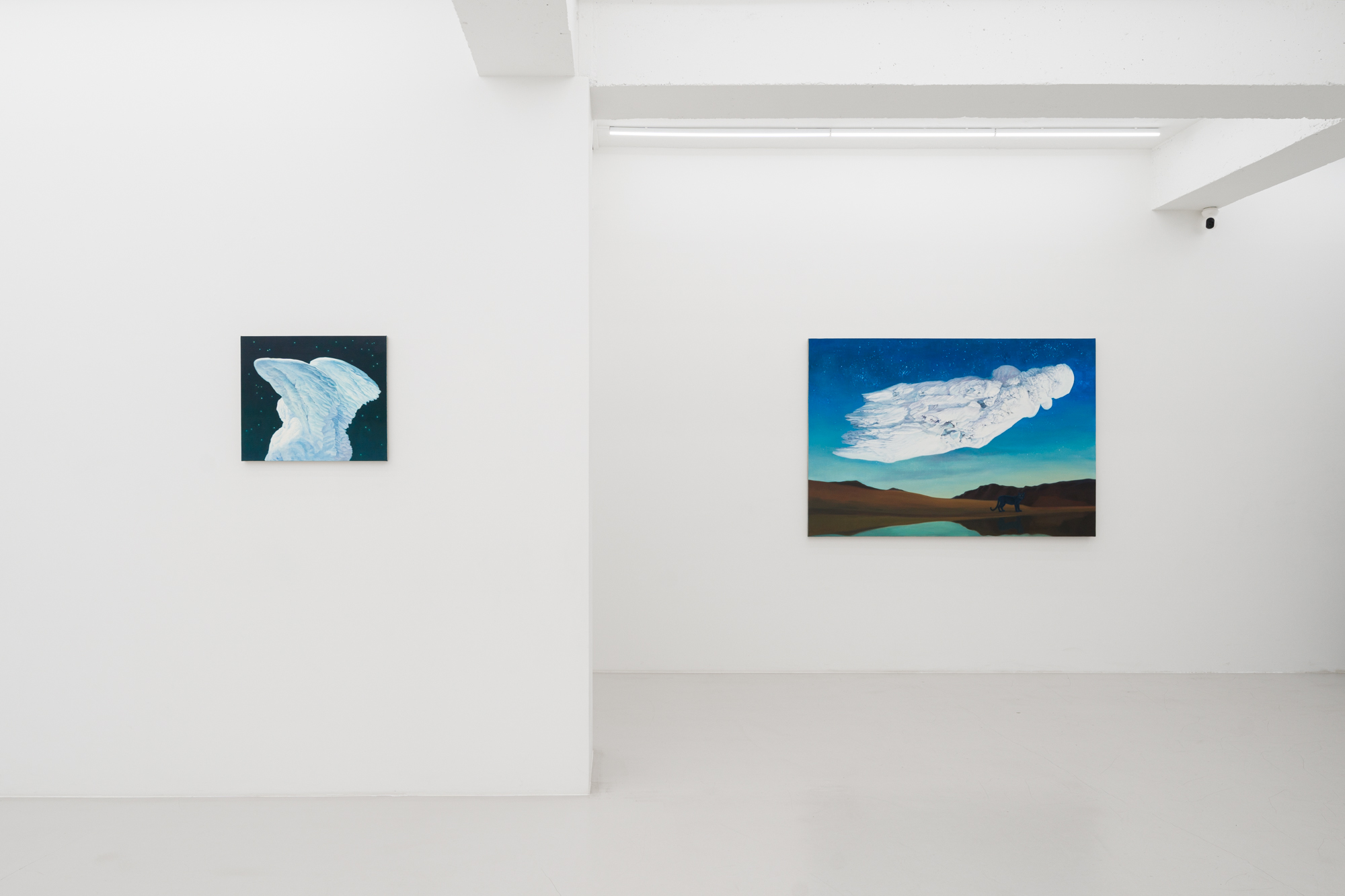
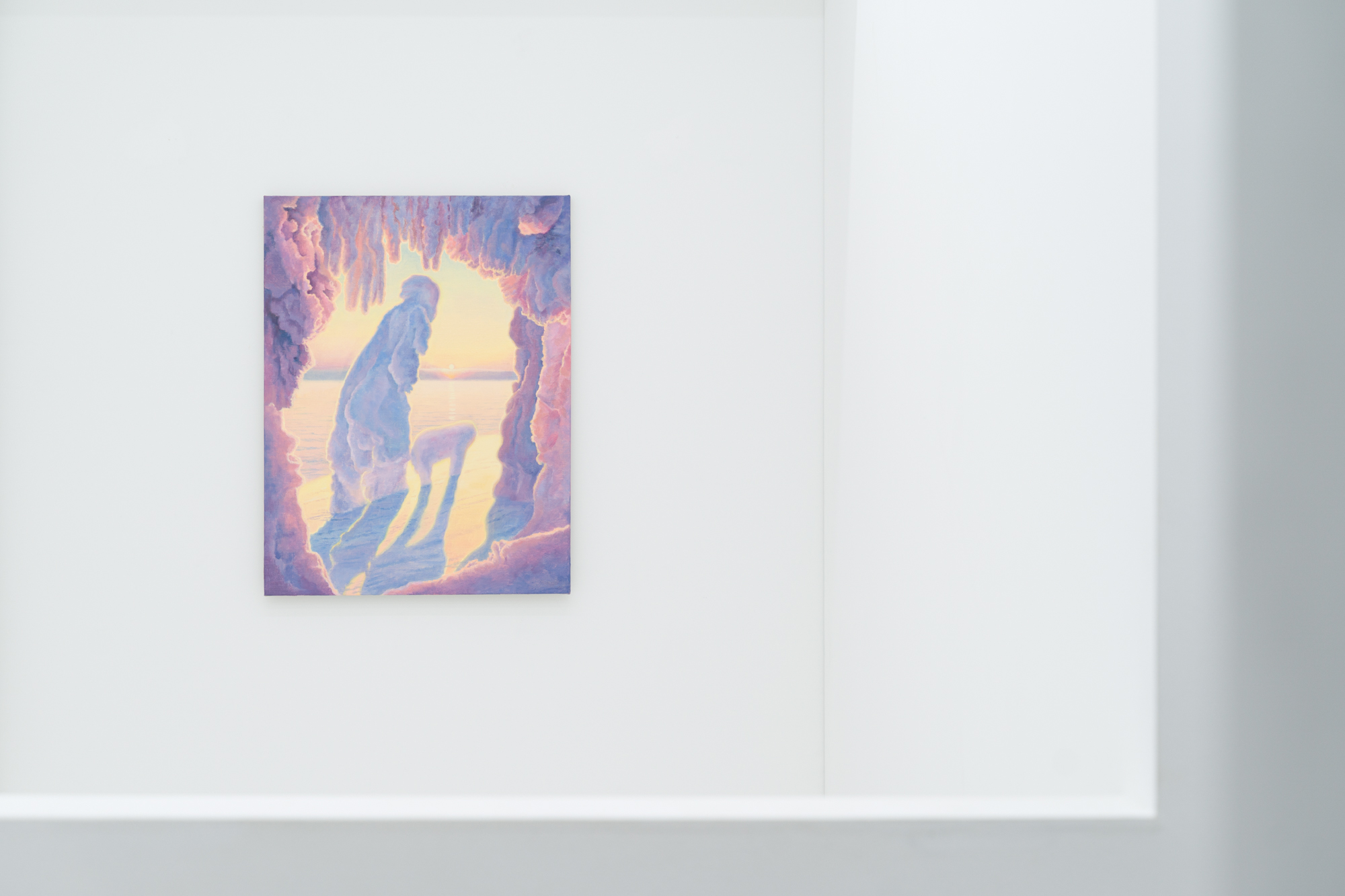
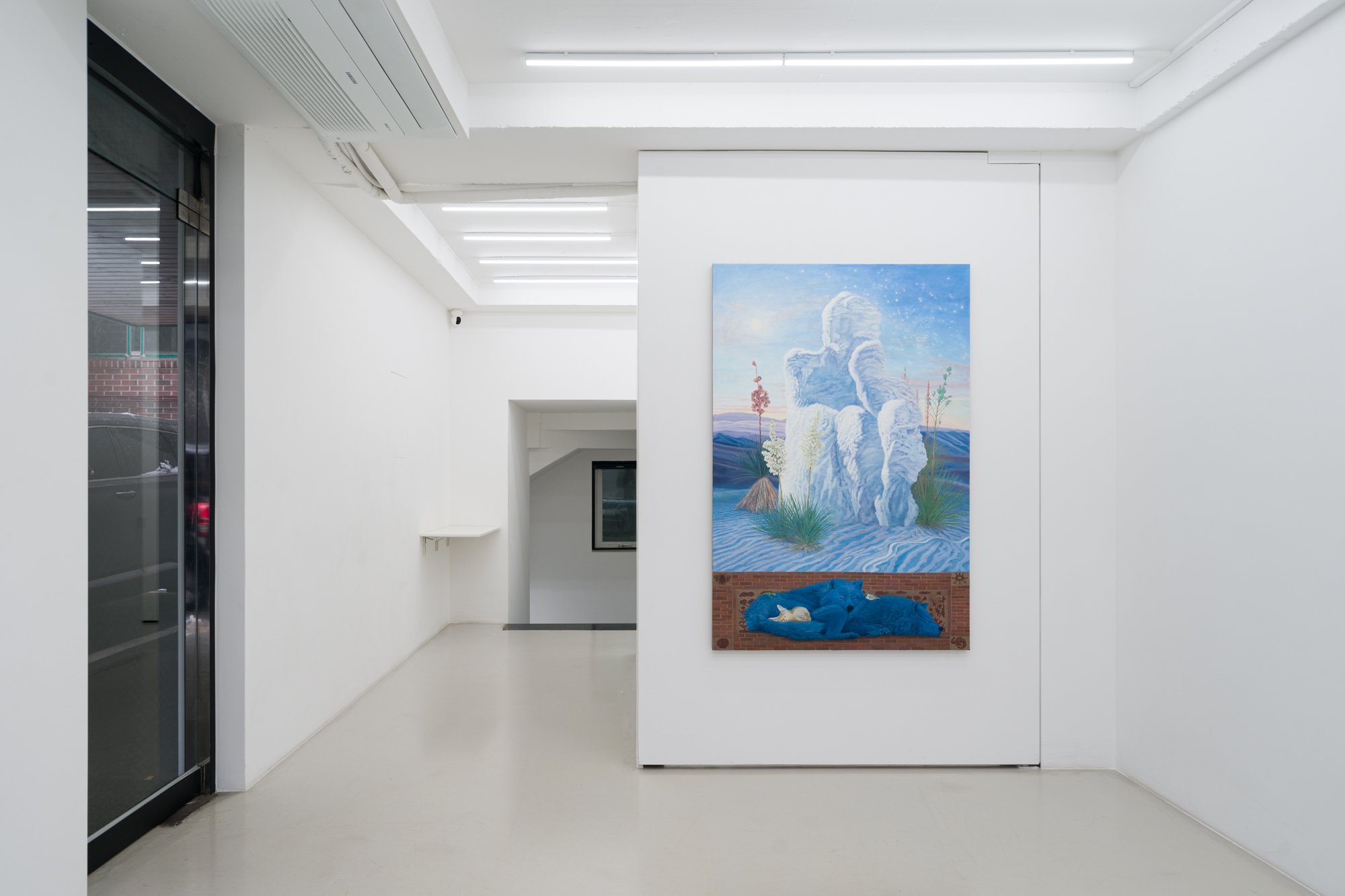
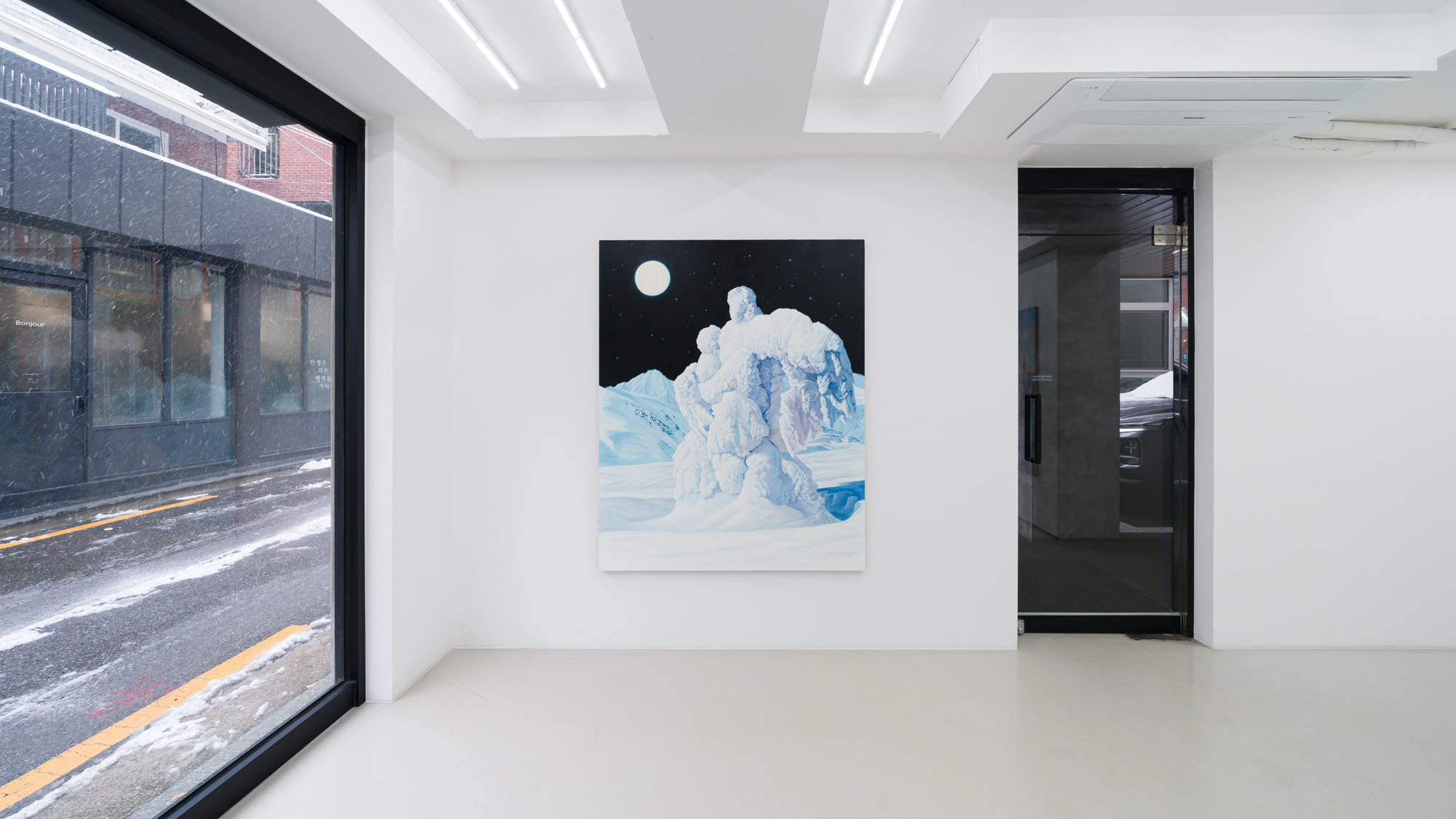
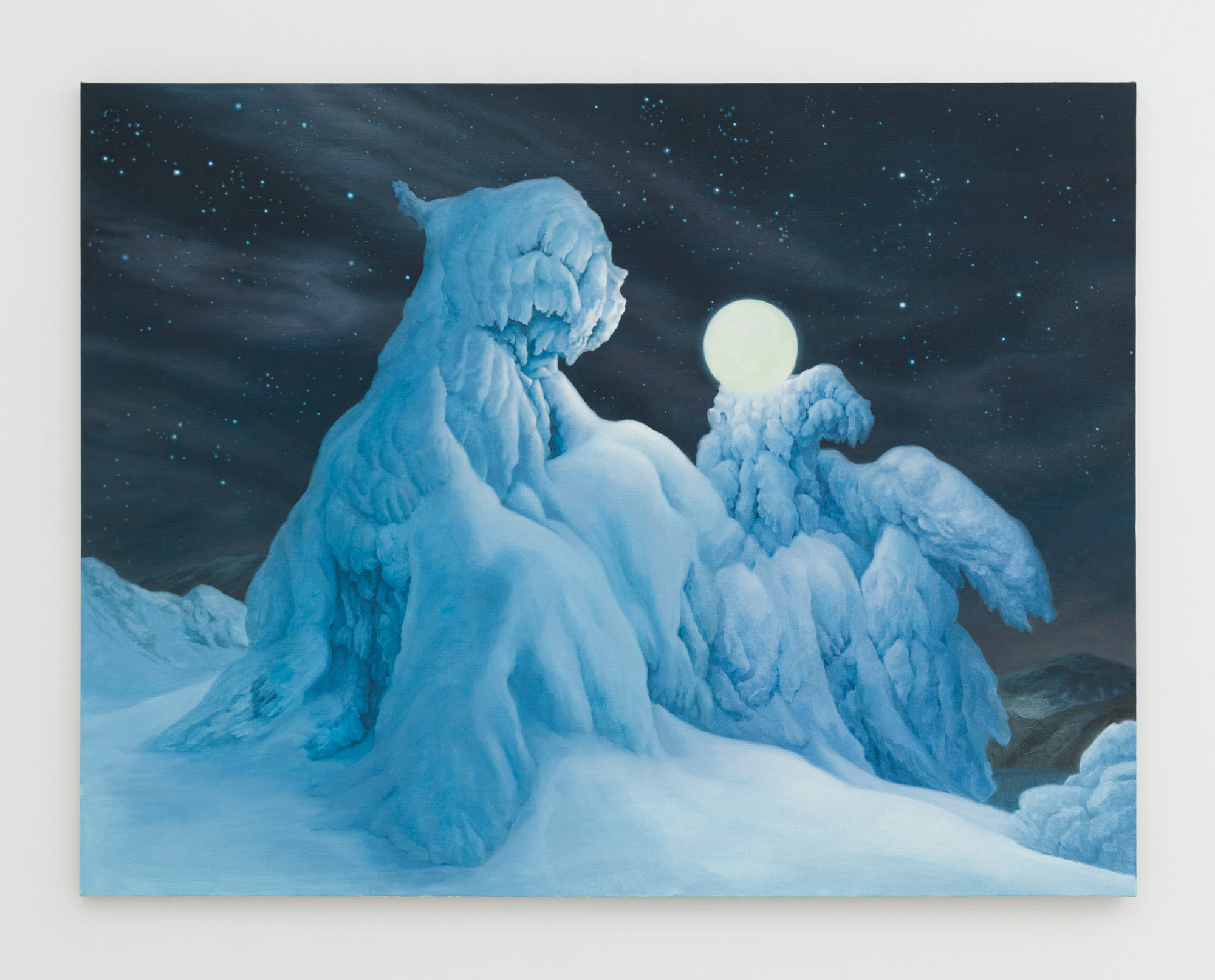
인간의 시야에서 벗어난 곳에 비밀스러운 개체들이 조용히 찾아든다. <별 헤는 나무> 속 날개를 고이 접고 엎드린 사자 위에는 앙상한 나무에 걸터앉은 하얀 몸이 영원히 만날 수 없을 것처럼 선명한 벽을 두고 각자의 시간을 마주한다. <고요의 바다>에 그려진 이들은 칠흑 같은 물속의 어둠을 헤치고 서로의 연약한 현존을 확인하며 머리를 맞대고, <겨울 밤의 얼굴>의 눈밭을 밝히는 옅은 노란 달은 남은 온기를 지키려는 듯 땅에 웅크린 이와 어깨를 나누며 앉아 있다. 별 무리를 향해 날개를 펼치거나 땅으로 고개를 숙인 형상은 끝없이 깊고 넓은 대자연의 바람과 햇살을 소리 없이 온몸으로 대할 뿐이다. 그 생김새나 움직임이 생소하여 이름을 부르기 어려운 이 낯선 유기체들은 어디로부터 온 것일까?
작가는 여러 필터를 통과한 이미지를 직간접적으로 경험하고 이로부터 회화의 근간을 마련한다. 직접 눈으로 관찰하기, 무의식에 침잠해 있던 기억의 조각을 문장으로 옮기거나 그리기, 온라인에서 편집된 가상의 풍경을 수집하기, 구글 어스에 포착된 지구 반대편의 모습을 눈으로 여행하기, 천체 관측 기구로 별자리를 찾아보기는 모두 그가 세상을 이해하는 방법이다. 말하자면 자연은 그의 신체와 상념이 유영하는 공간이면서 미래로 이어질 열린 서사의 중추이다. 여기서 작가가 세상을 단순히 아름다움과 무한한 가능성으로만 읽어내지는 않는다는 점이 중요하다. 도리어 그는 인류가 폭력적으로 남용하고 파괴했던 크고 작은 실체들을 걱정어린 시선으로 바라본다. 작가의 목소리는 미래를 속단하거나 예언하기보다 현실에 만연한 기성의 인식을 신중하게 비틀고 와해시켜, 그 틈으로 가능성의 빛을 비추어본다.
따라서 동화적 상상력을 자극하는 화면 너머에 감추어진 위태로운 세계의 상태를 인식할 필요가 있다. 실로 인류 역사 전체는 자연과 그것의 일부인 동식물의 상징적이고 실질적인 소외와 희생을 거쳐 만들어졌다. 그 자리에 머무르려 했던 것들은 오롯이 그곳에 남을 수 없었다. 고도화된 현대 문명과 신자유주의의 가속화는 인간과 비인간의 지대 사이의 연결고리를 더욱 유약하게 했다. 그러나 거꾸로 생각해 보면 타자로 분류되는 무수한 그들은 사람을 ‘위해’ 실재한 적이 없다. 우주는 애초에 누구도 고려하지 않은 채 구조화되어 왔고, 그 어느 것도 상대적으로 우월하거나 특별한 종으로 규정했을 리 만무하다. 우리는 팽창하는 시공의 총체에서 여전히 너무나 미미한 객체 중 하나일 뿐이며, 인간종이 사라진 이후에도 자연계는 자신들의 시간을 이어갈 것이 자명하다. 이러한 인식 위에서 작가의 회화는 인간중심주의적 사고와 욕망에 의해 버려지고 상처 입은 존재들을 응시하고 위로하는 메시지로 다가선다.
그려진 것들이 사람의 모습을 어렴풋이 닮아서일까. 지구 곳곳에 난 생채기를 보듬는 작가의 마음이 어쩐지 내 마음을 보살피는 것 같기도 하다. 이 감상은 인간, 동물, 식물, 미생물, 심지어 무기물도 결국 동일한 지평 위에 있는 영혼의 조각이라는 자명한 사실과 공명한다. 그렇다면 외부를 향한 무감각한 판단과 관행적인 배제를 극복하고, 어딘가 남겨진 내면과 외면의 상처에 공감할 수 있는 태도 역시 더 넓은 범주에서 작동할 수 있지 않을까? 주변에 소거된 목소리에 귀를 기울일 것, 사라질 것들을 소중히 할 것, 이미 눈으로 볼 수 없게 된 이들을 기억할 것, 경험한 적 없는 저 너머의 것들을 존중할 것. 이제 이것이 이채원의 회화가 모두를 향해 요청하는 일관되고도 보편적인 메시지임을 조금은 이해할 수 있을 것 같다.
글ㅣ박지형 (디스위켄드룸 큐레이터)
Some things have been chlorotic and weathered in a misty lake, an ocean submerged beneath a veil of light, a snowy field under the sky sparkling with starbursts. These mysterious and bizarre landscapes, unlikely to be encountered even in a dream, represent Lee’s sense of contemplating the world. Since childhood, Lee has been interested in nature and its changes, and her paintings reflect her curiosity, comfort, and awe. The title of the exhibition, All That Breathes, evokes the life of the countless creatures she embraces with her body and mind. The words “breath,” “heart,” and “face” are frequently used in the titles of her works, indicating that she treats the beings she depicts as unique entities with their pulse, temperature, and emotions. In recent years, her perspective has expanded from private appreciation to public dialog, and this exhibition attempts to examine the human perspective of the cosmic ecosystem through her canvases.
Secretive entities are discreetly positioned, hidden from human view. In The Star-Gazing Tree, a prostrate lion with folded wings and pale figures perched on a delicate tree confront each other, separated by the unmistakable barrier of time, as if destined never to meet again. In Sea of Tranquility, ethereal beings emerge from the darkness of the water, putting their heads together to affirm their fragile existence. Meanwhile, in The Countenance of Winter Night, a pale yellow moon illuminates a snowy field, sitting shoulder to shoulder with a figure huddled on the ground, as if safeguarding the last remnants of warmth. Whether spreading their wings toward a cluster of stars or bowing their heads to the earth, these figures seem to fully immerse themselves in the wind and sunlight, embracing the vast, infinite expanse of nature. But where did these strange and nameless beings originate?
The artist experiences images both directly and indirectly, filtered through various lenses that shape the foundation of her work. She observes the world through her own eyes, transforms fragments of subconscious memories into sentences or drawings, collects virtual landscapes altered in digital spaces, travels to distant corners of the globe via Google Earth, and explores constellations using astronomical tools. These methods become her means of understanding the world. Nature becomes a realm in which her body and imagination stroll, and the backbone of an open narrative that will lead into the future. However, the artist does not simply perceive the world as a source of beauty or limitless potential. Instead, she views it with a critical eye, confronting the harm and destruction inflicted upon both large and small entities by humanity’s violence and exploitation. Rather than offering predictions or visions of the future, the artist’s voice subtly distorts and challenges dominant perceptions of reality. Through this disruption, she reveals cracks through which the light of new possibilities can emerge.
Therefore, it is essential to acknowledge the fragile state of the world that exists beyond the screens fueling our fairytale imaginations. Throughout human history, the symbolic and tangible alienation and sacrifice of nature—along with the flora and fauna it encompasses—have profoundly shaped our existence. What was meant to be there could not remain there. Advanced modern civilization and the acceleration of neoliberalism have further weakened the link between the human and non-human realms. However, looking back, the myriad of those classified as others have never existed “for” humans. The universe was initially structured without regard for any specific being, and no species could be deemed inherently superior or special. Humanity remains but one of countless insignificant entities within the ever-expanding fabric of space and time. It is self-evident that nature will persist in its own rhythm long after the human species has vanished. With this understanding, the artist’s paintings gaze at and console beings that have been abandoned and wounded by anthropocentric thinking and desires.
Perhaps it is because the depictions vaguely resemble human forms that the artist’s concern for the scars scattered across the Earth feels as though it extends to my own heart. This sentiment aligns with the profound truth that humans, animals, plants, microorganisms, and even inorganic matter are all fragments of a shared soul, existing on the same horizon. Couldn’t this attitude of empathy expand further, helping us transcend our insensitive judgments and habitual exclusions? Could it enable us to connect with the wounds—both internal and external—that have been left behind? Listening to the muted voices around us, cherishing the things that might disappear, remembering those who have already become invisible, honoring things beyond that we have never experienced; we can now see that those are consistent and universal messages that Lee’s paintings are asking us all to embrace.
TextㅣJihyung Park (Curator, ThisWeekendRoom)