박지나
Jina Park
9 Jun – 15 Jul 2023
ThisWeekendRoom
Artists
Jina Park →
Credit
참여작가ㅣ박지나
기획ㅣ디스위켄드룸
글ㅣ김경란
사진ㅣ이정우
ArtistsㅣJina Park
CurationㅣThisWeekendRoom
TextㅣKyoungran Kim
PhotographsㅣJungwoo Lee
Exhibition Text
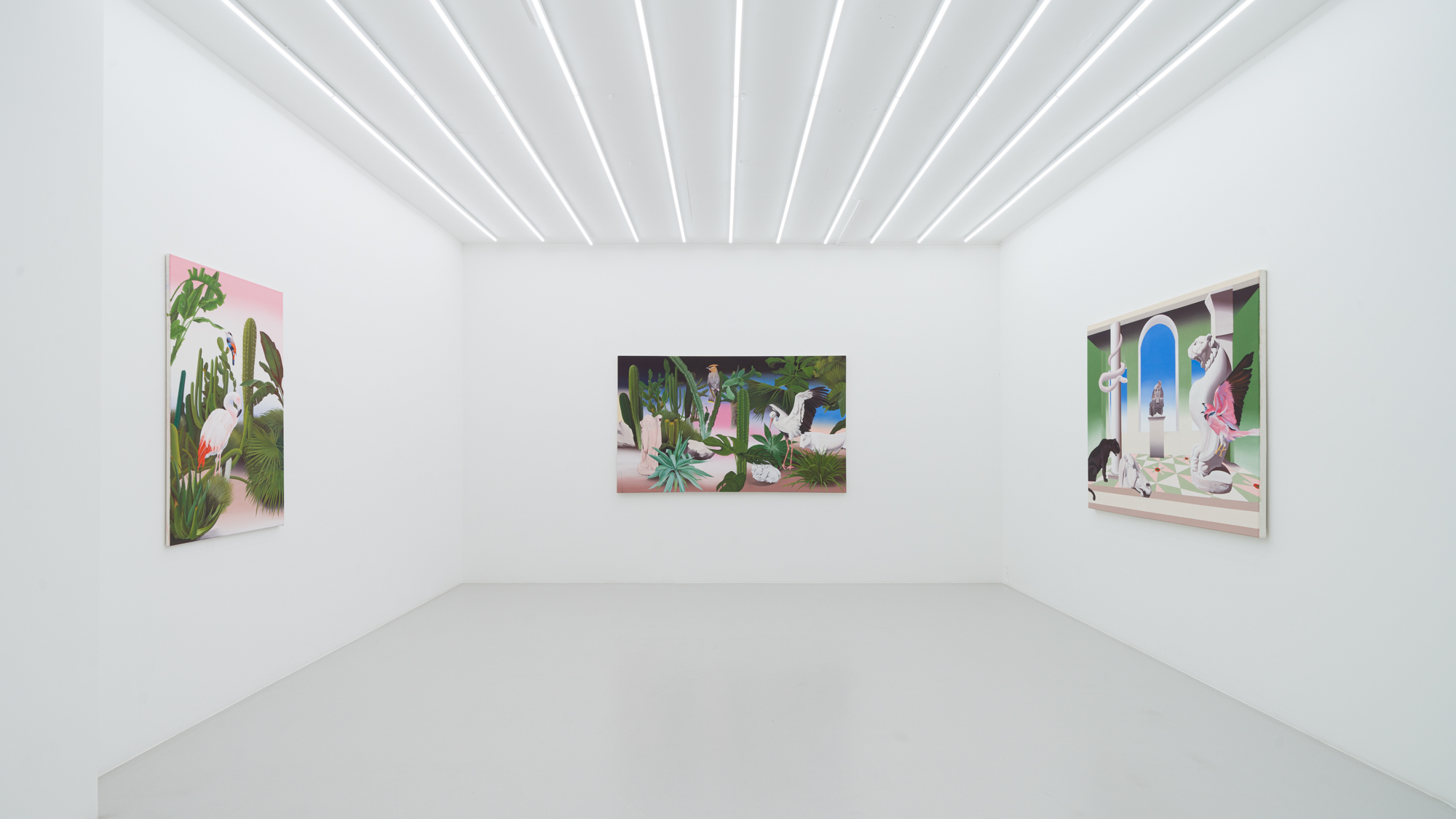
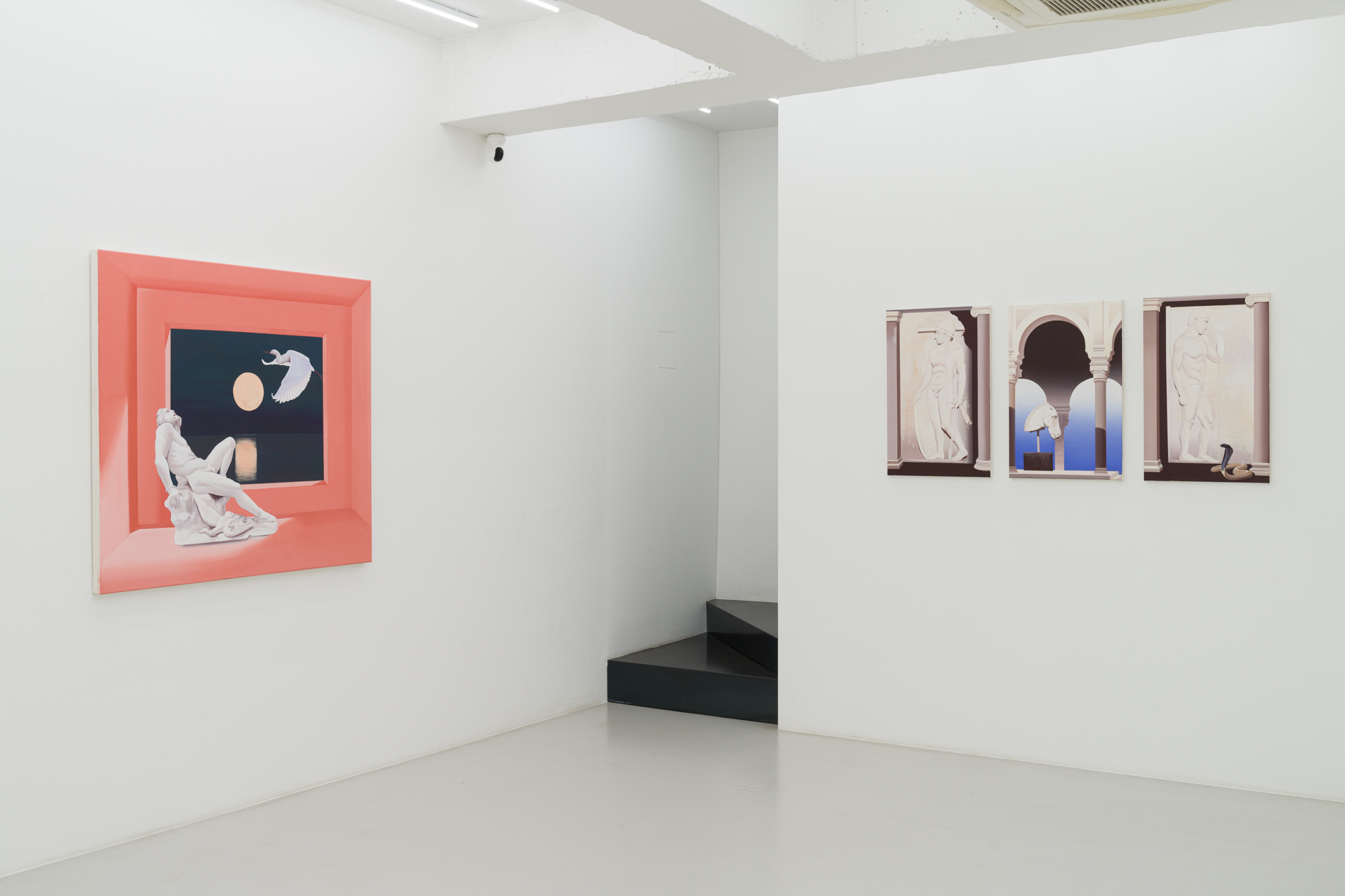
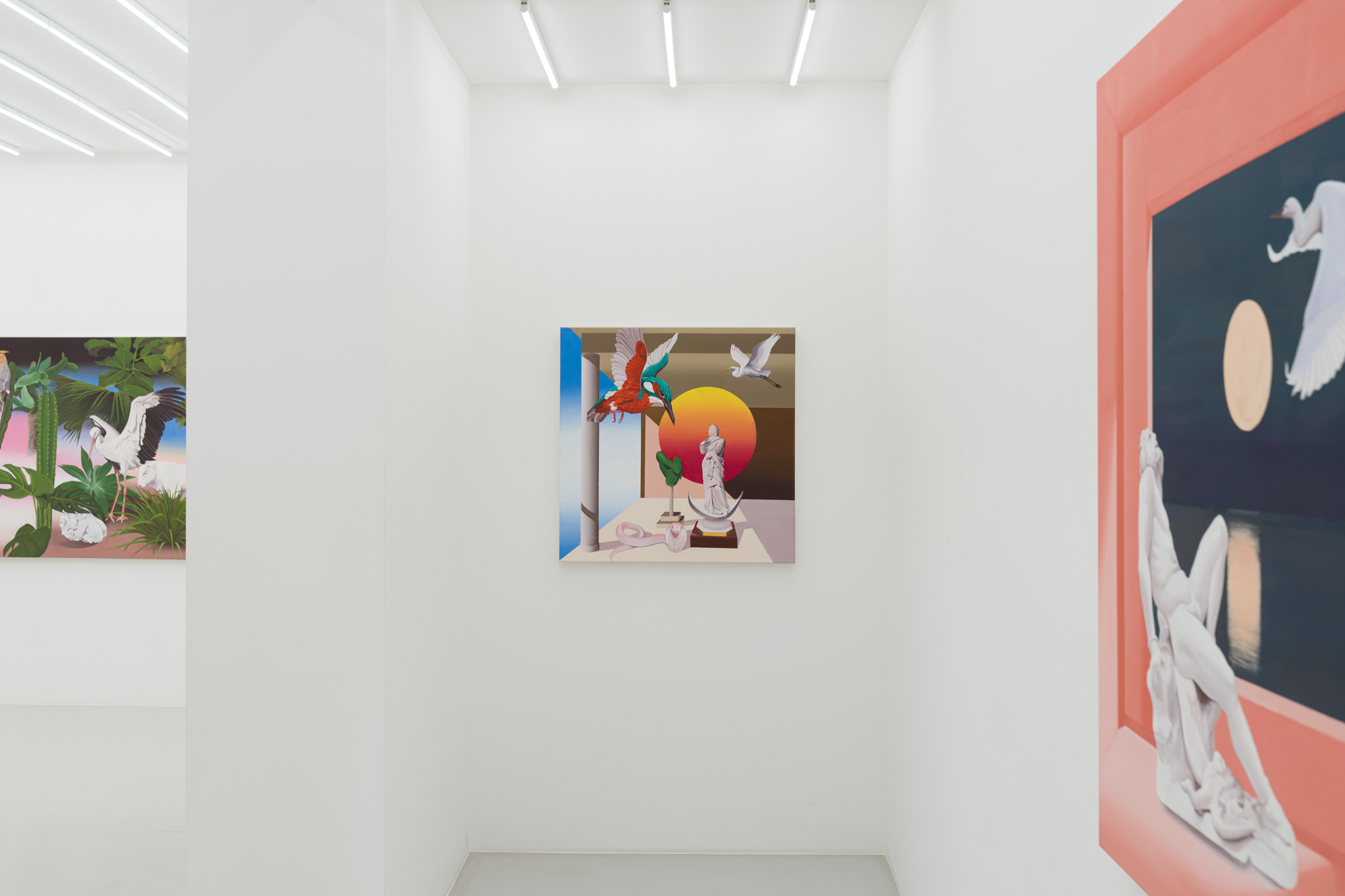
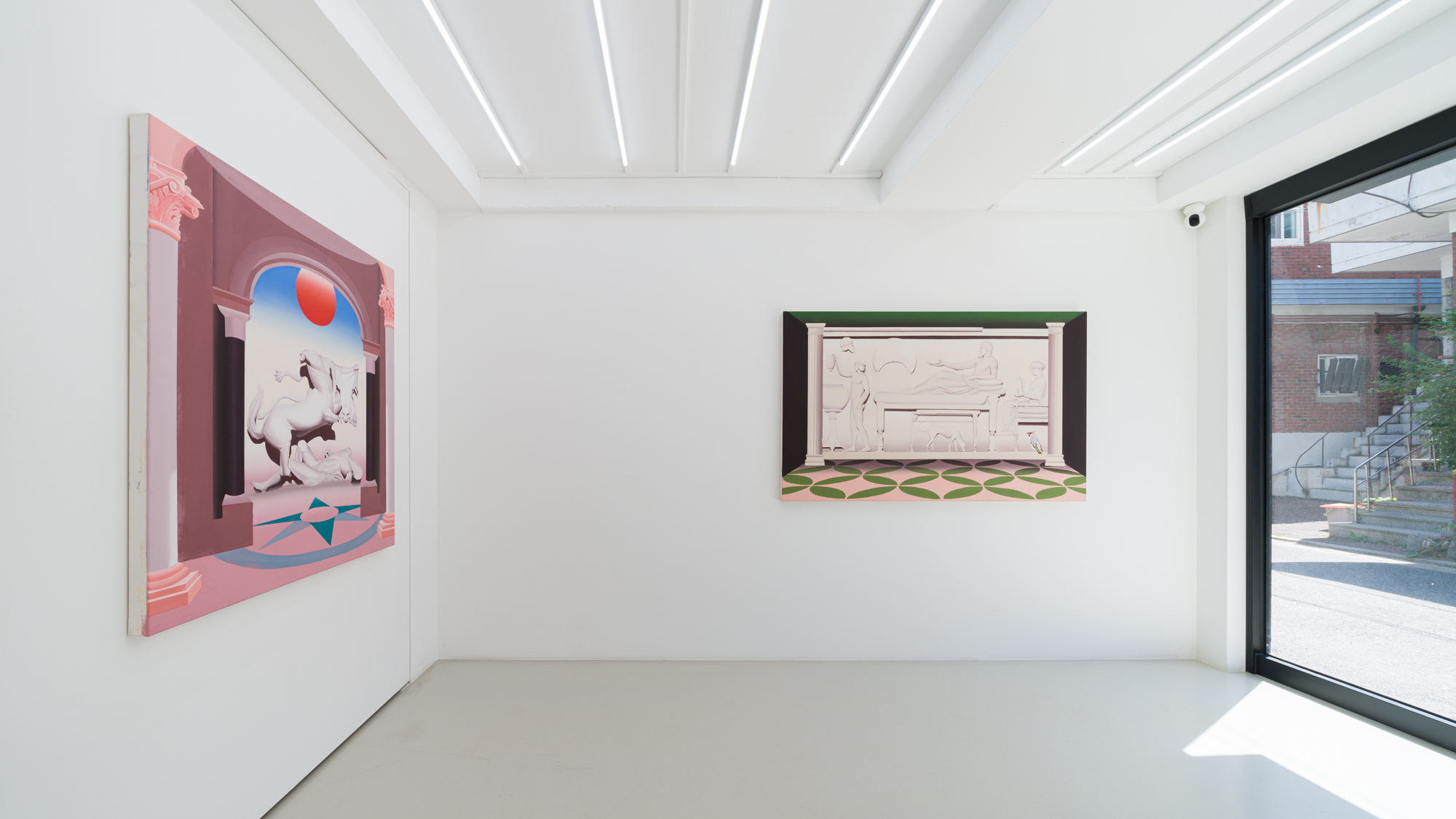
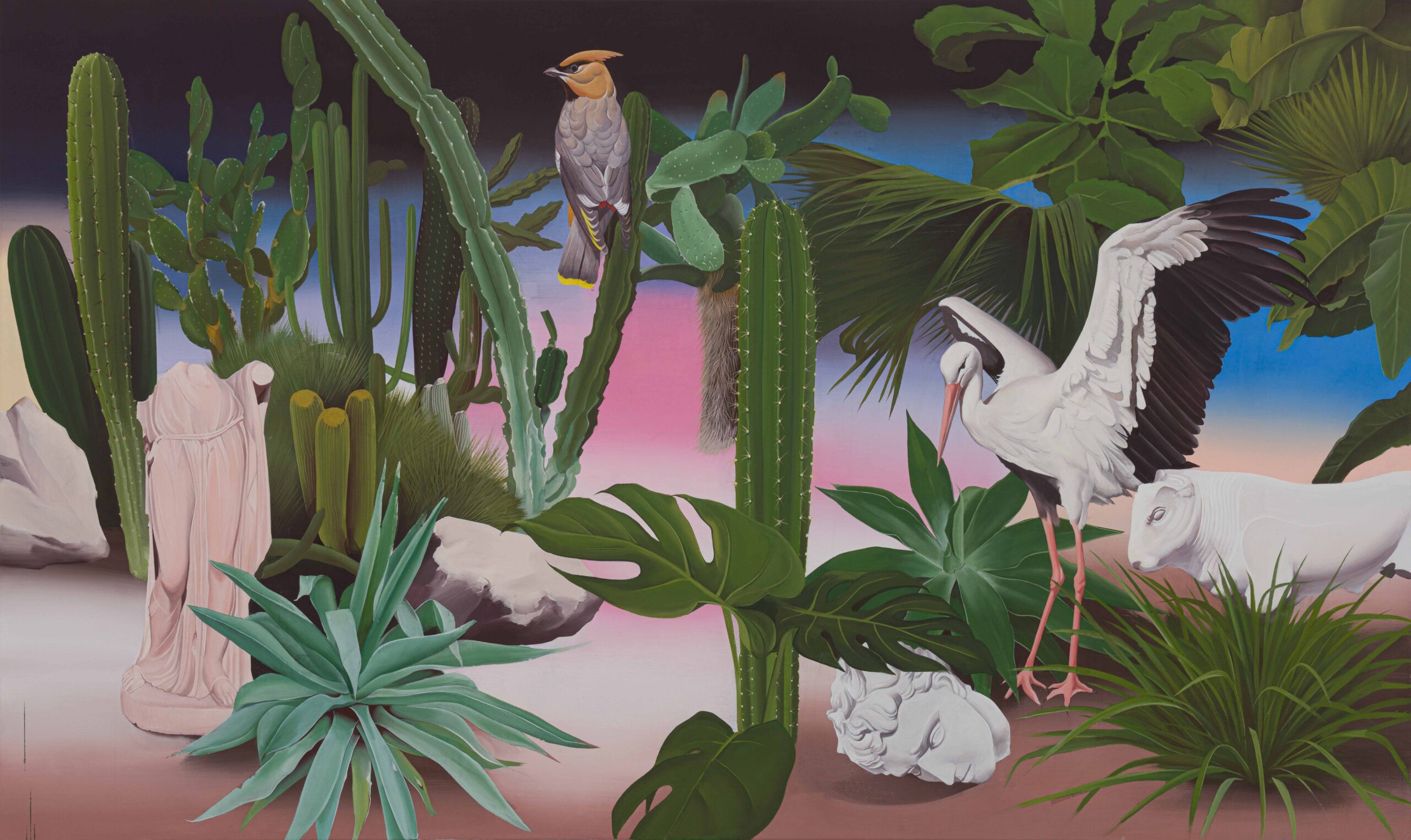
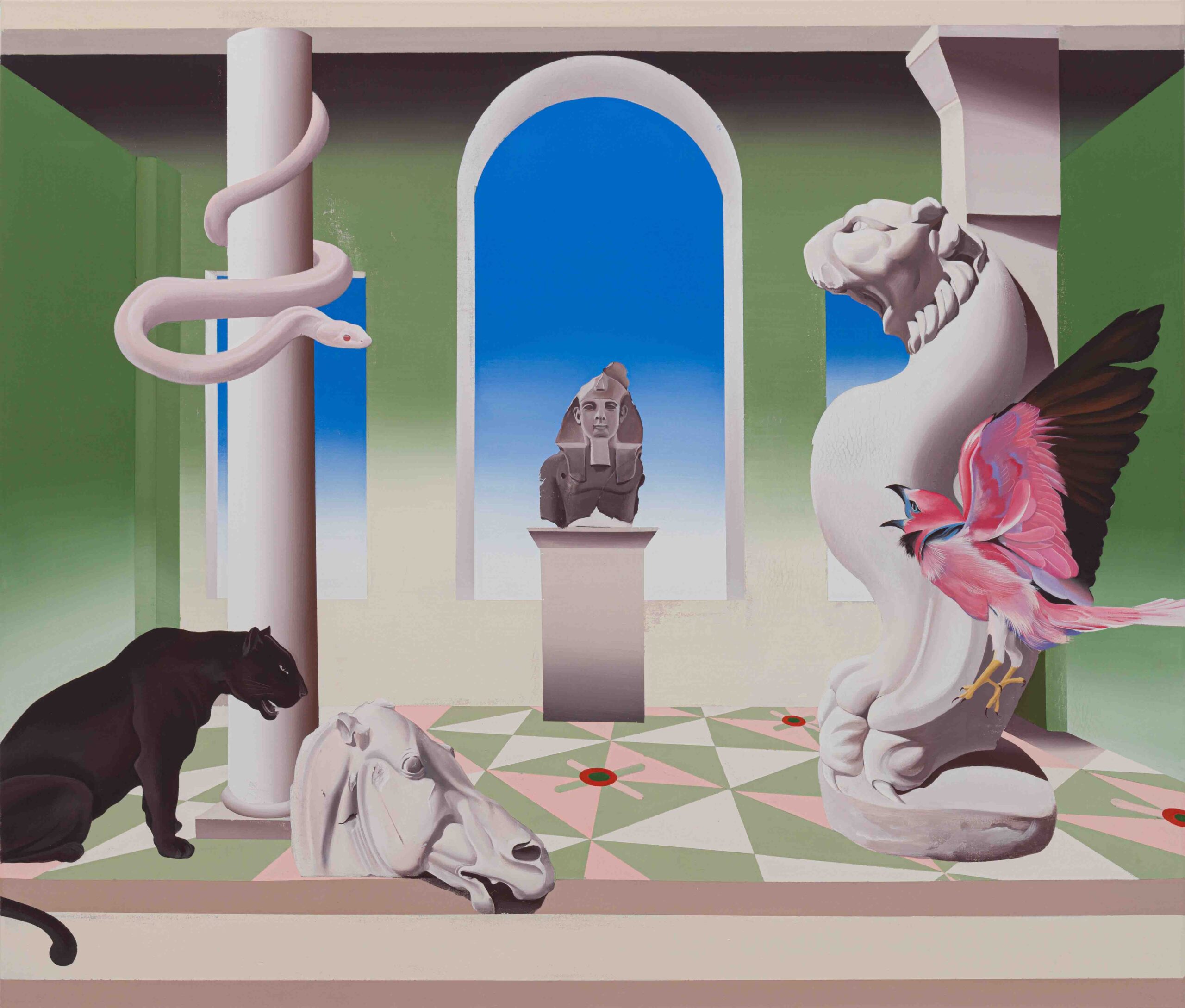
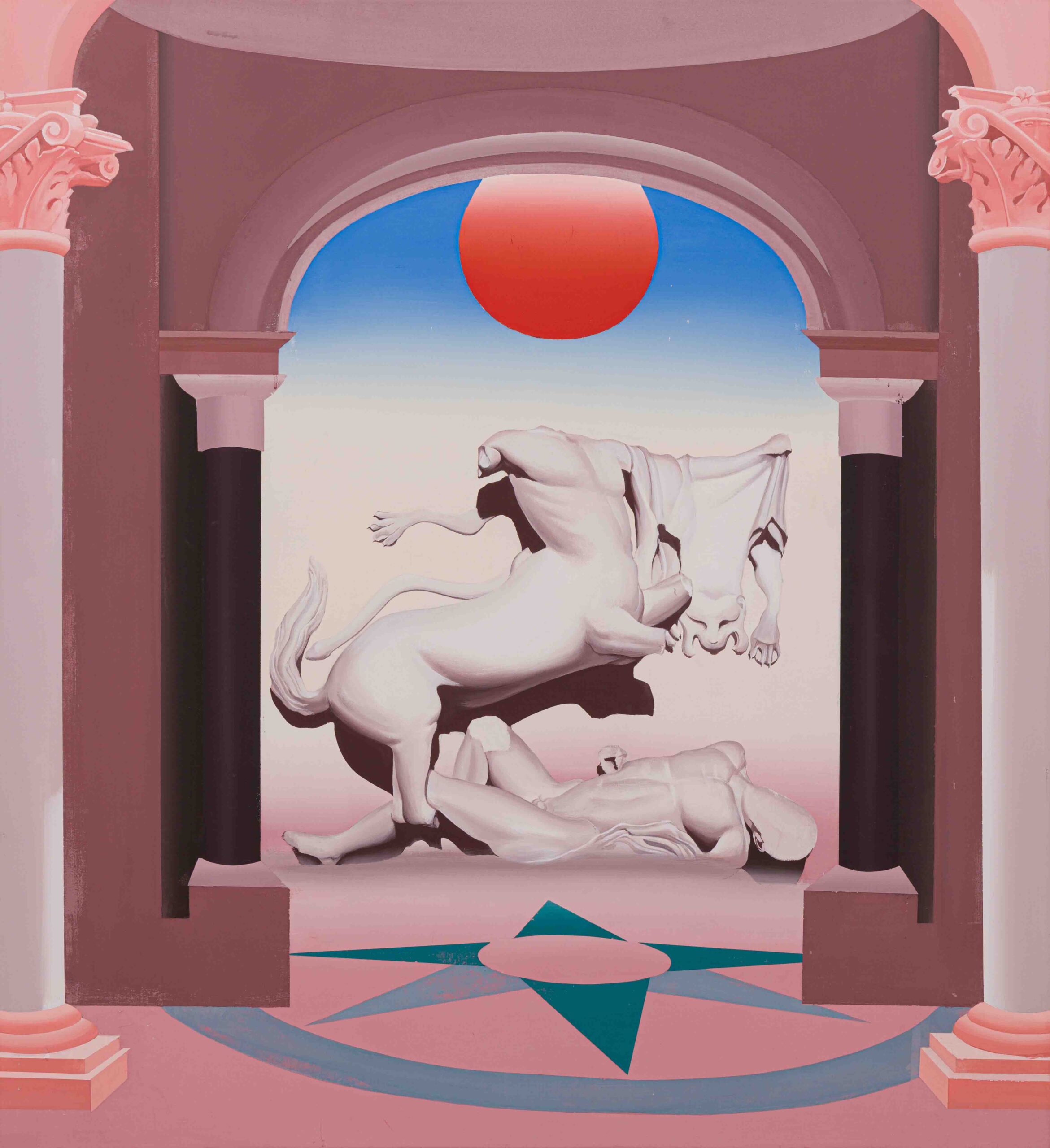
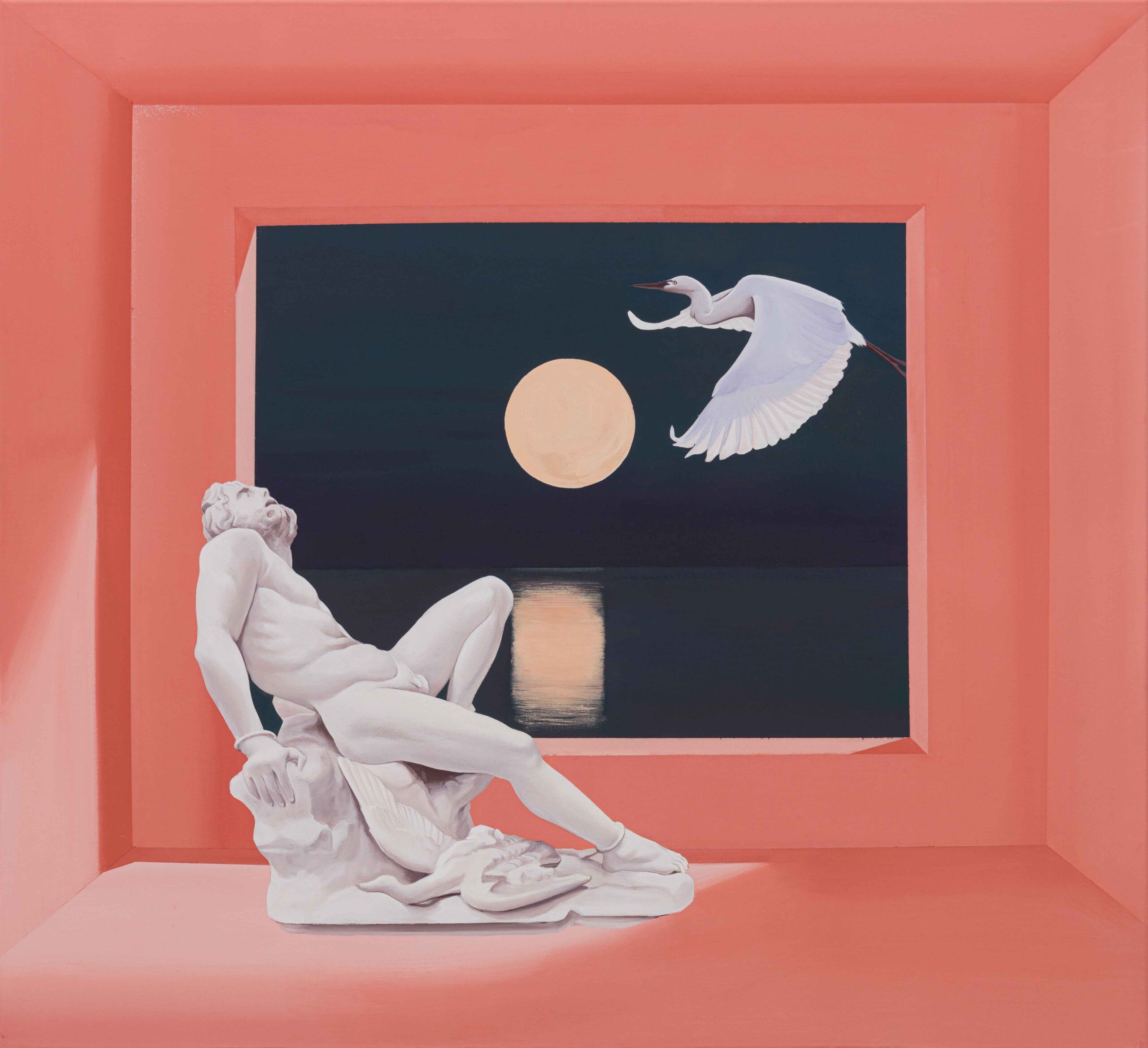
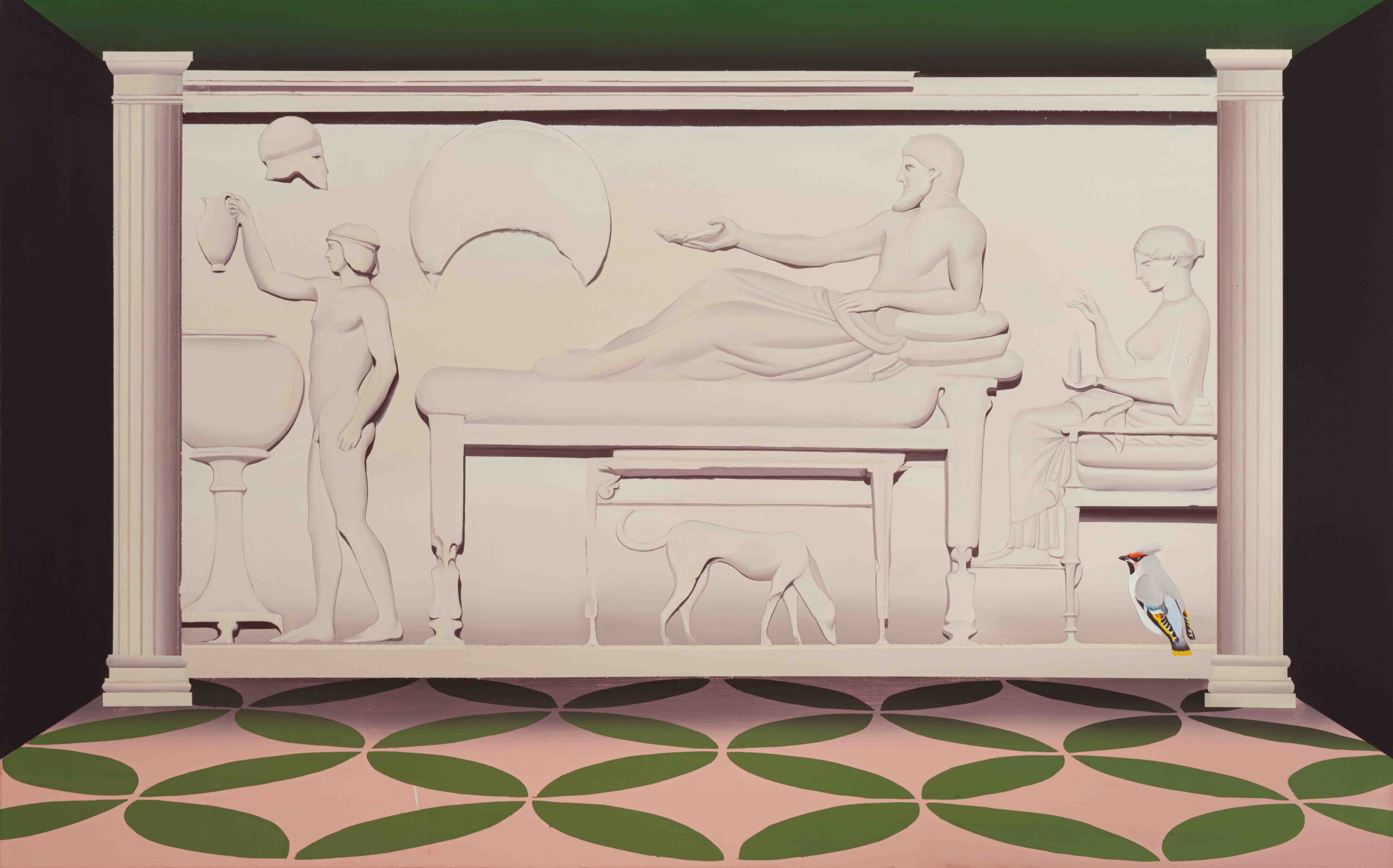
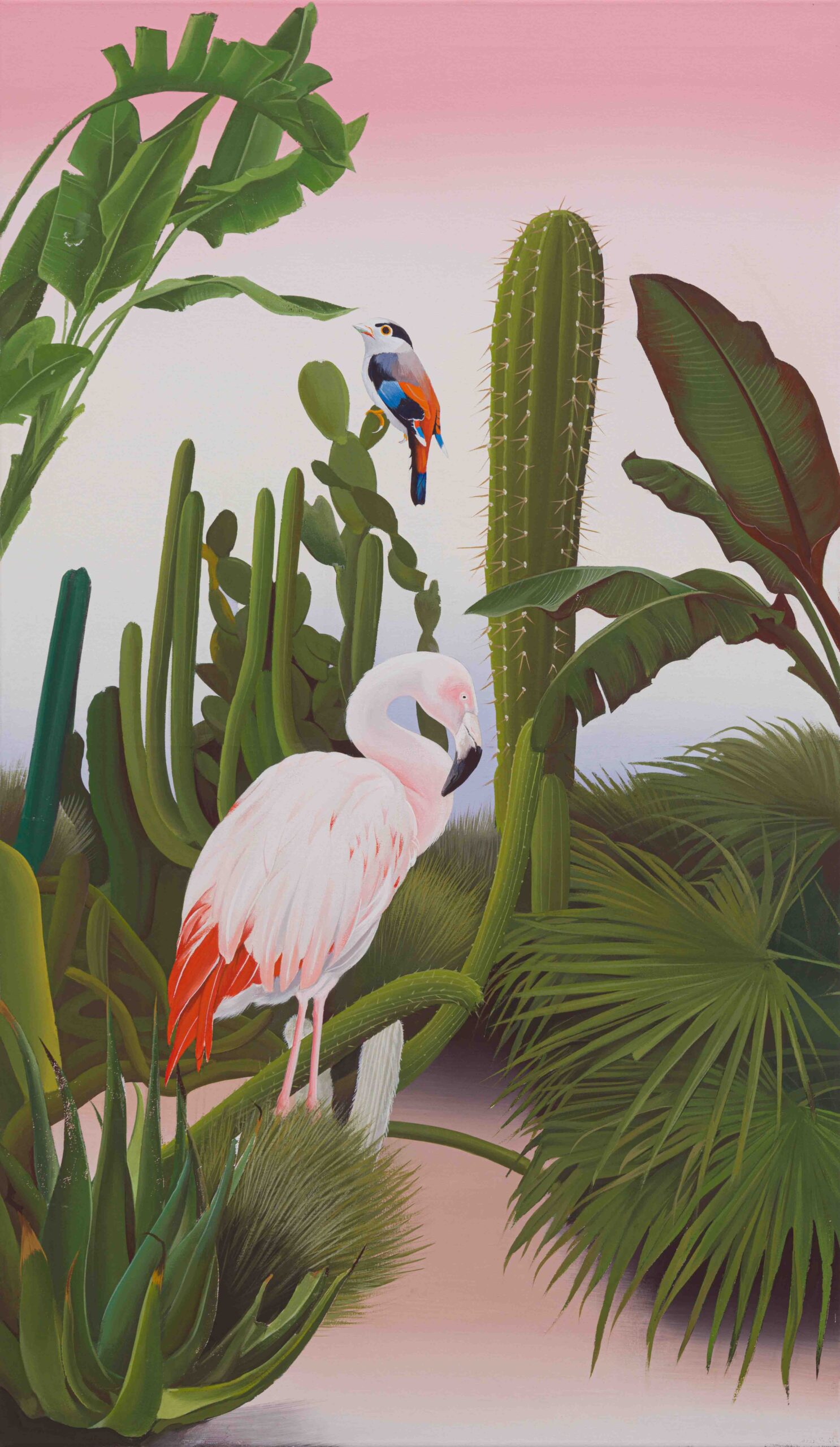
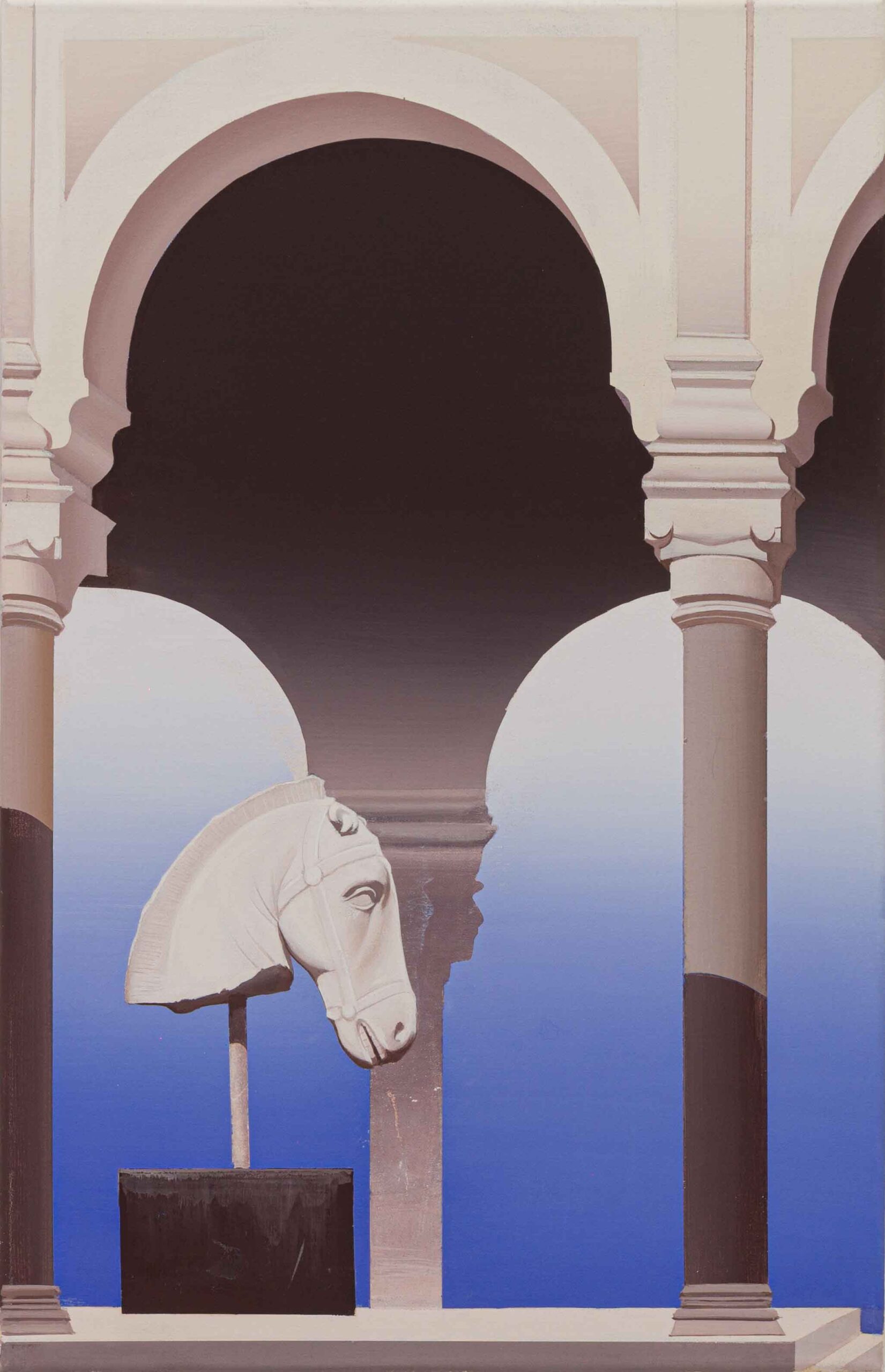
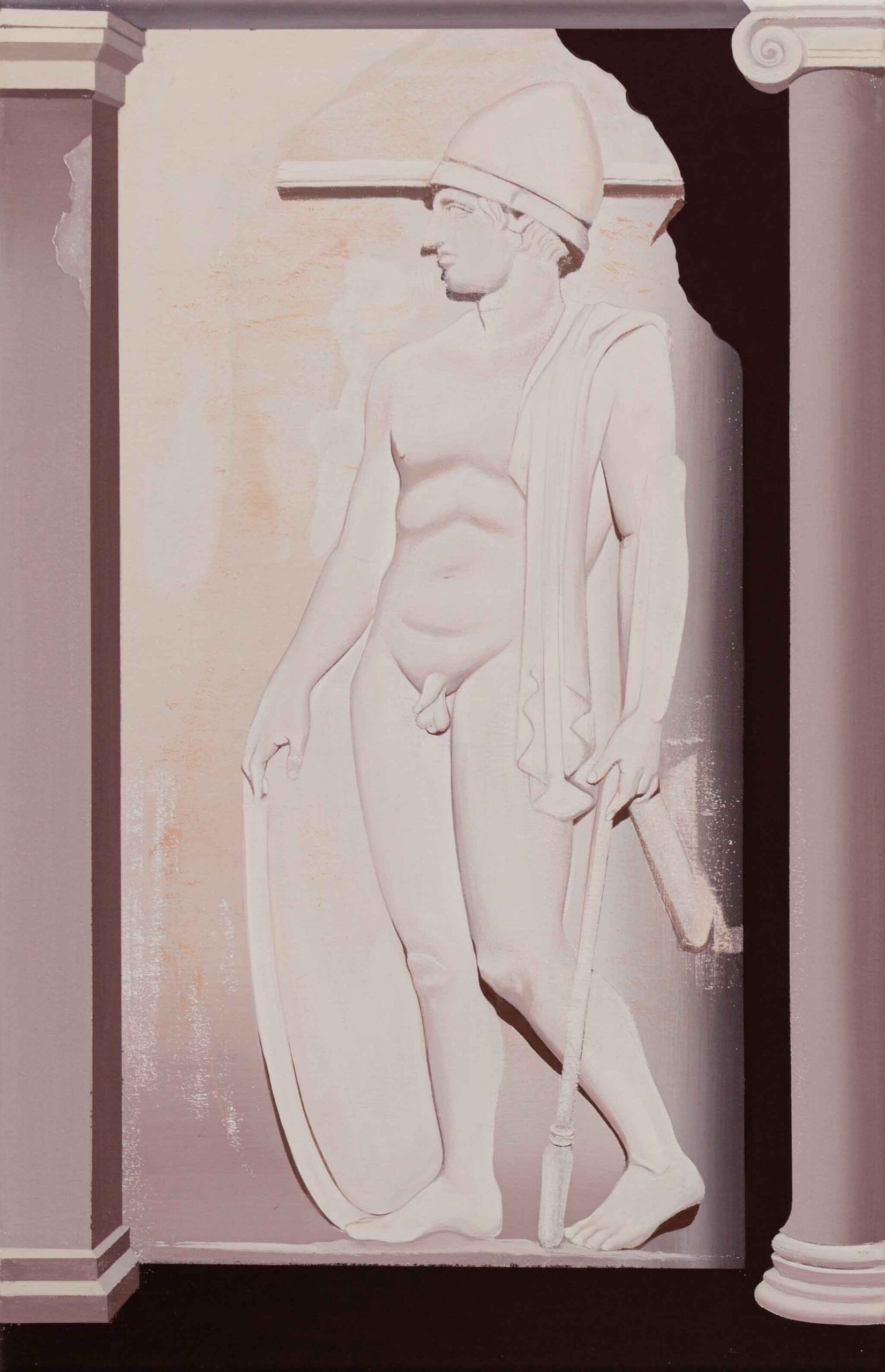
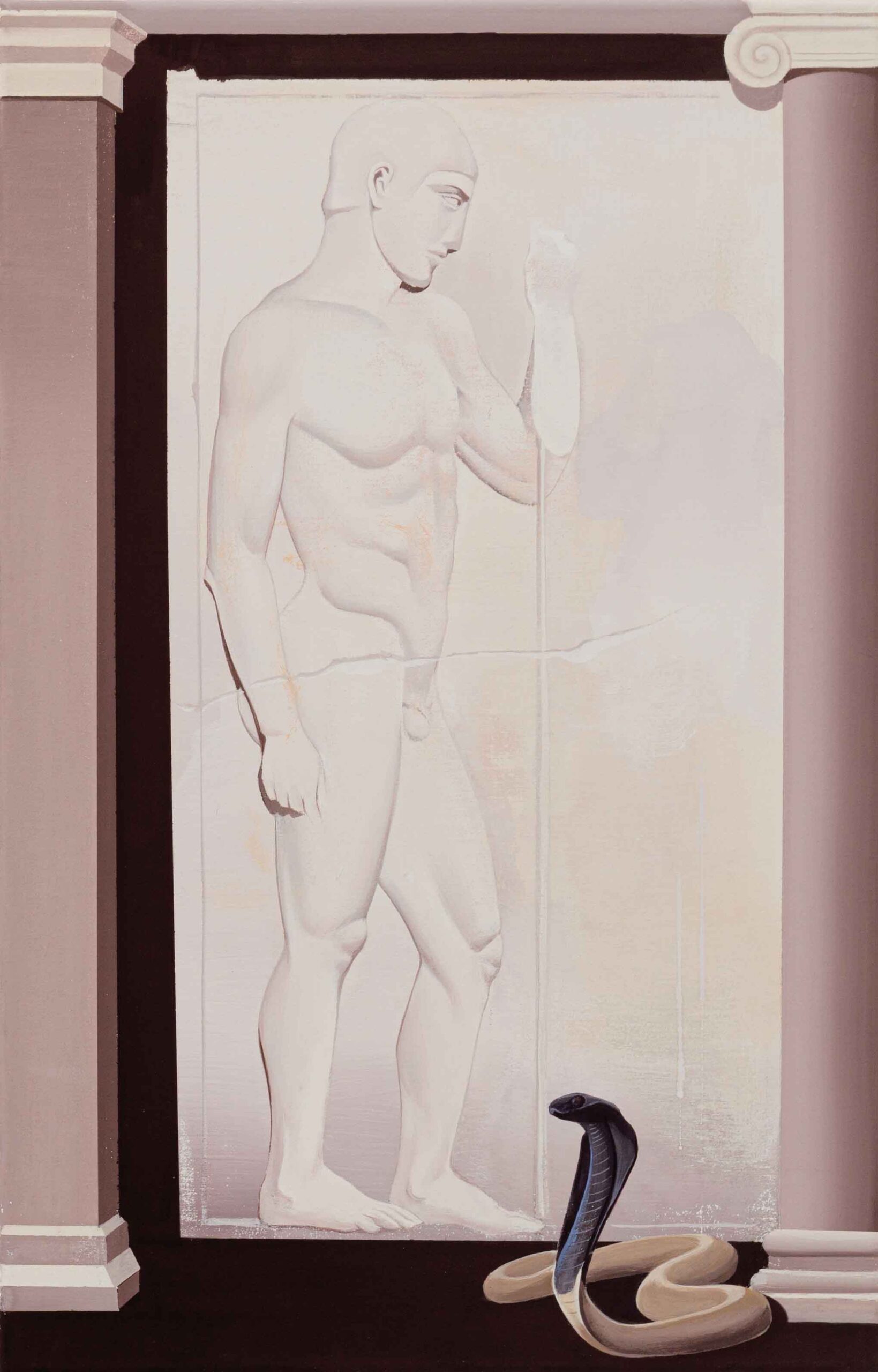
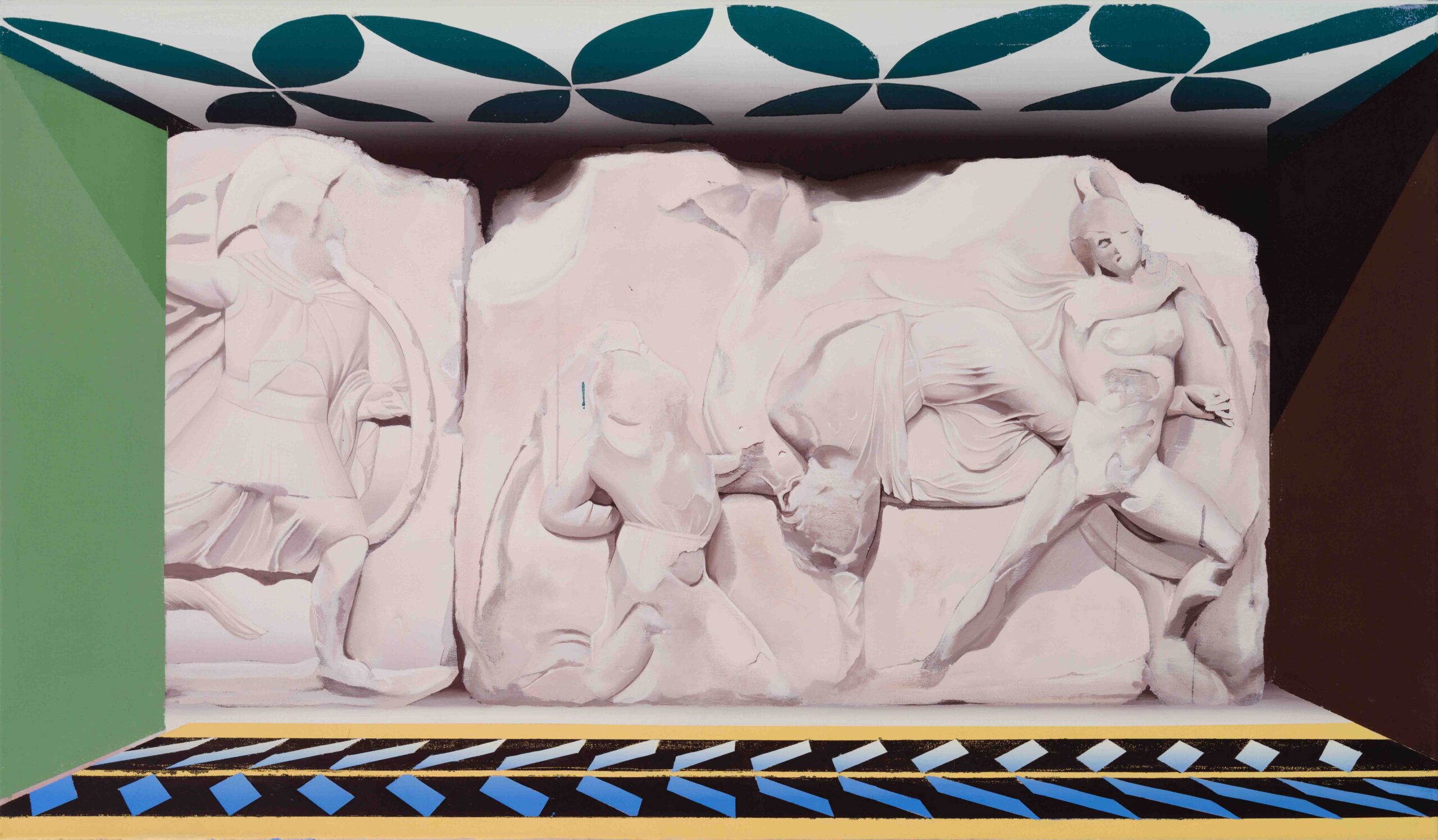
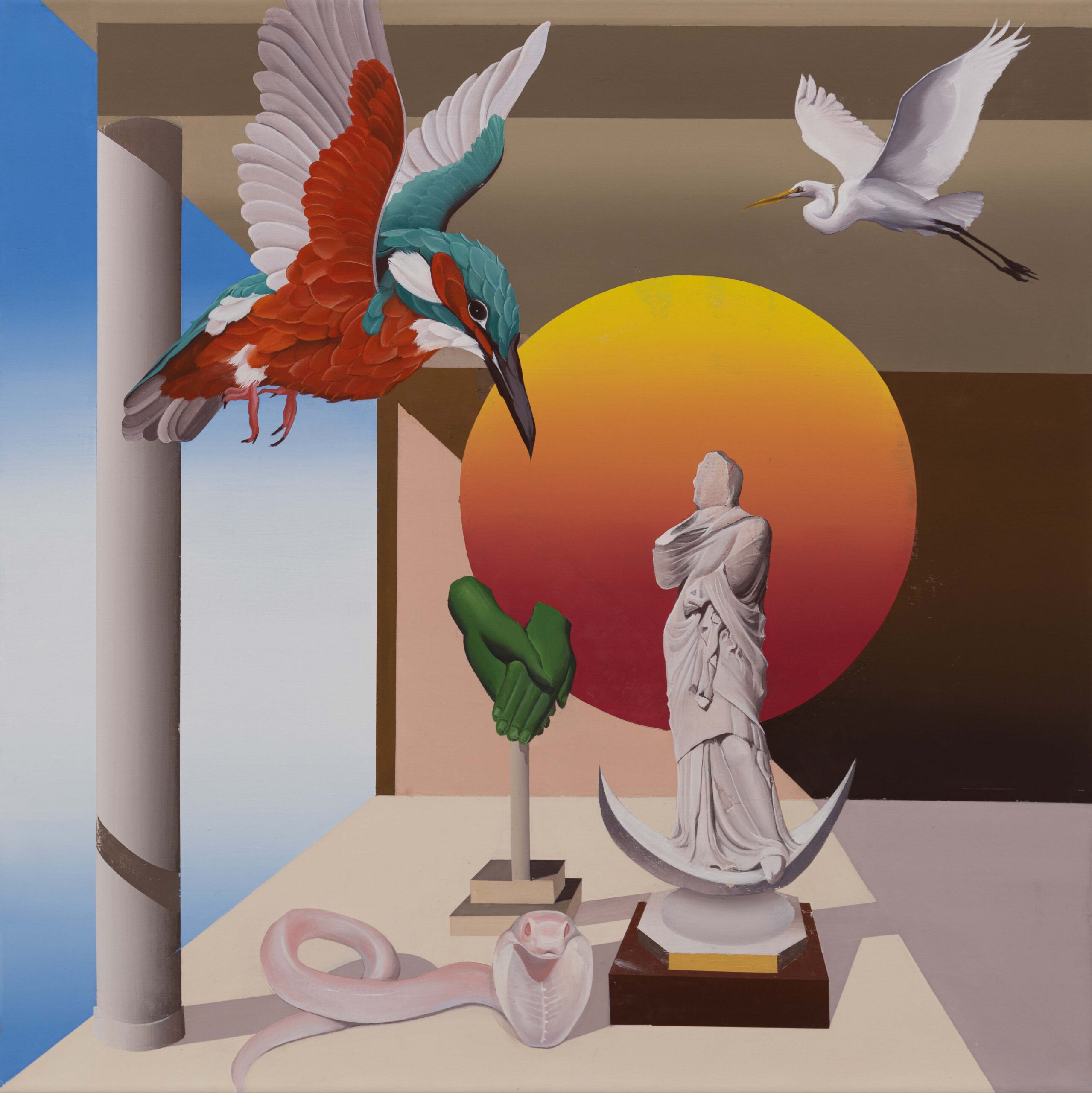
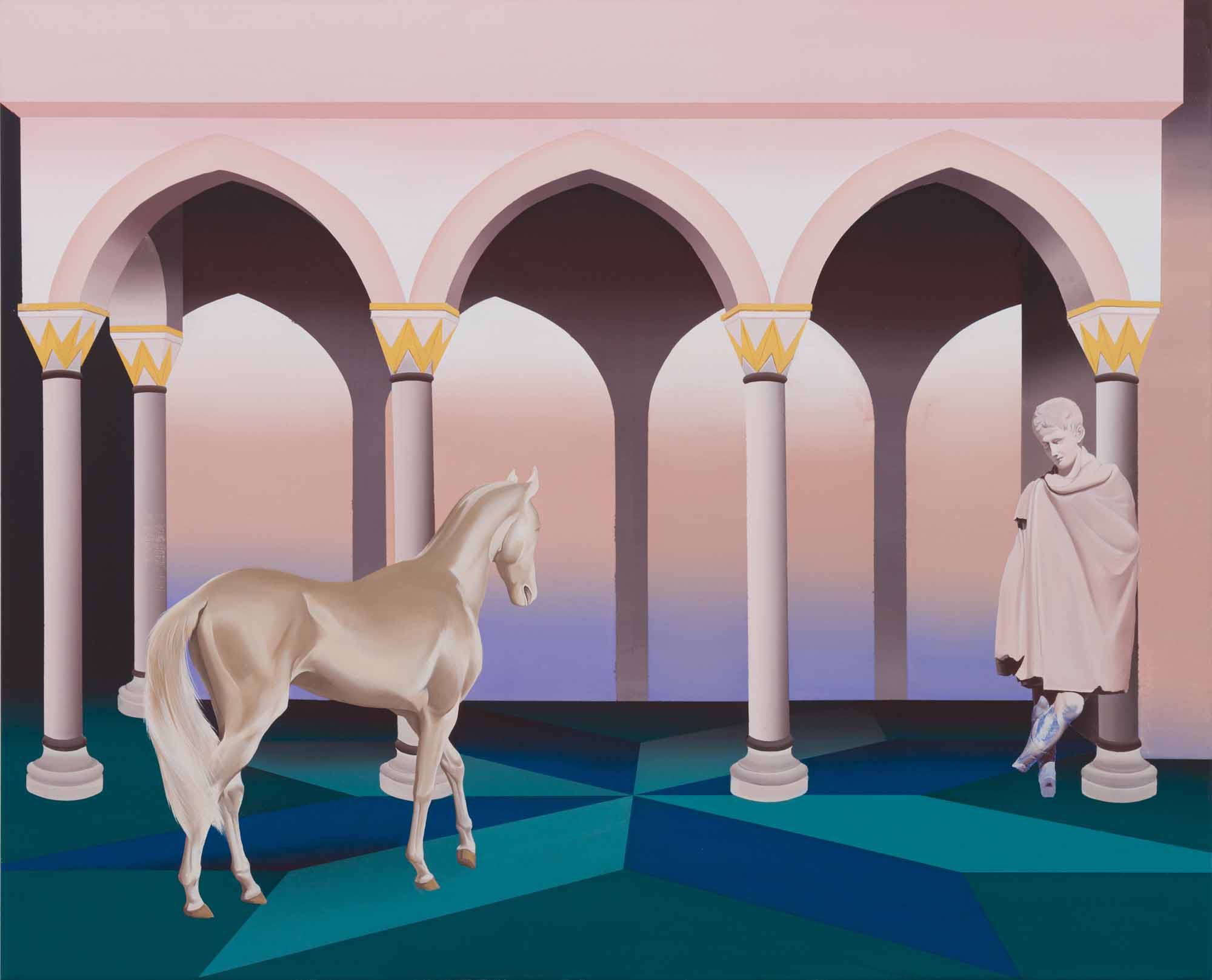
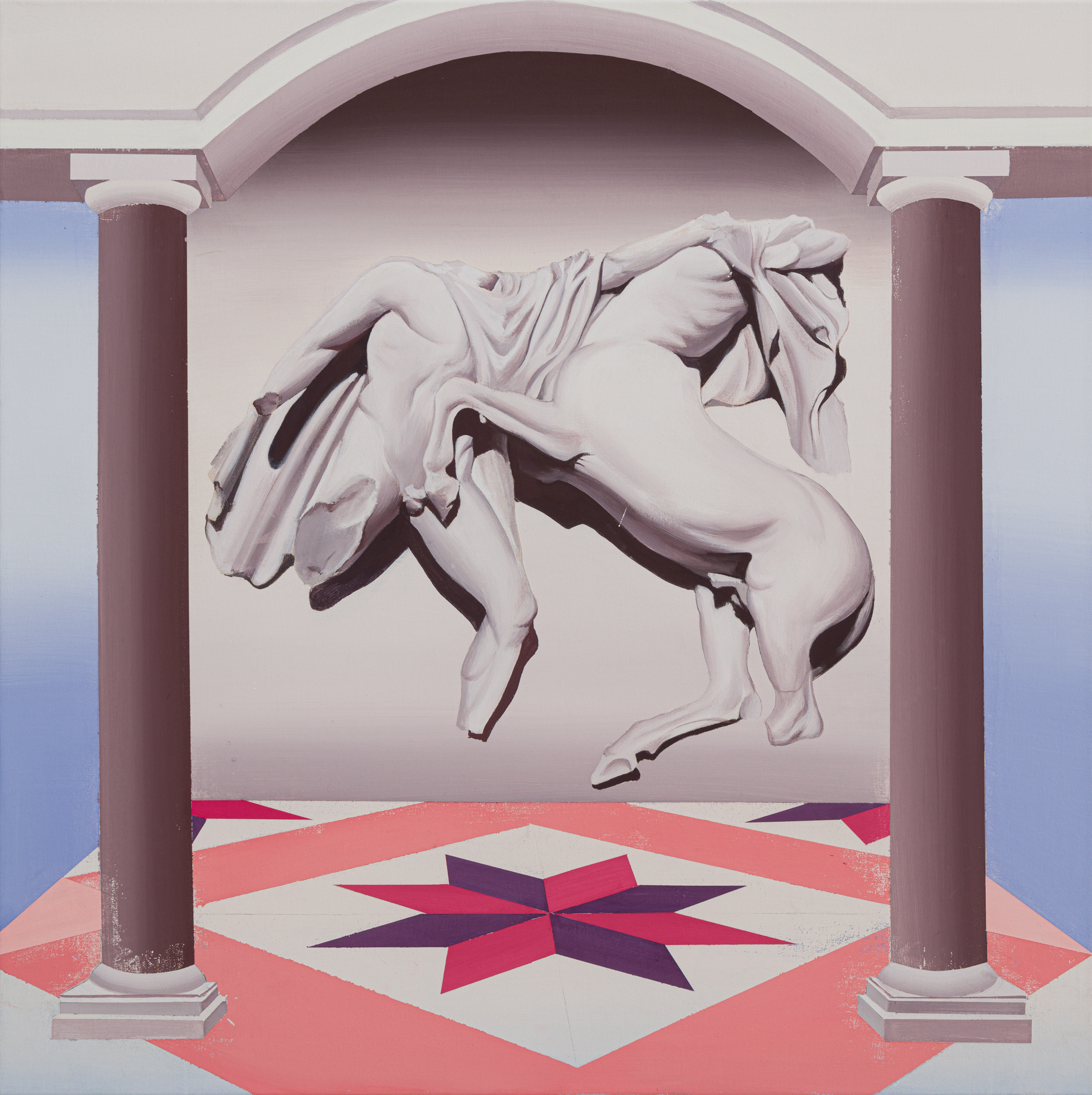
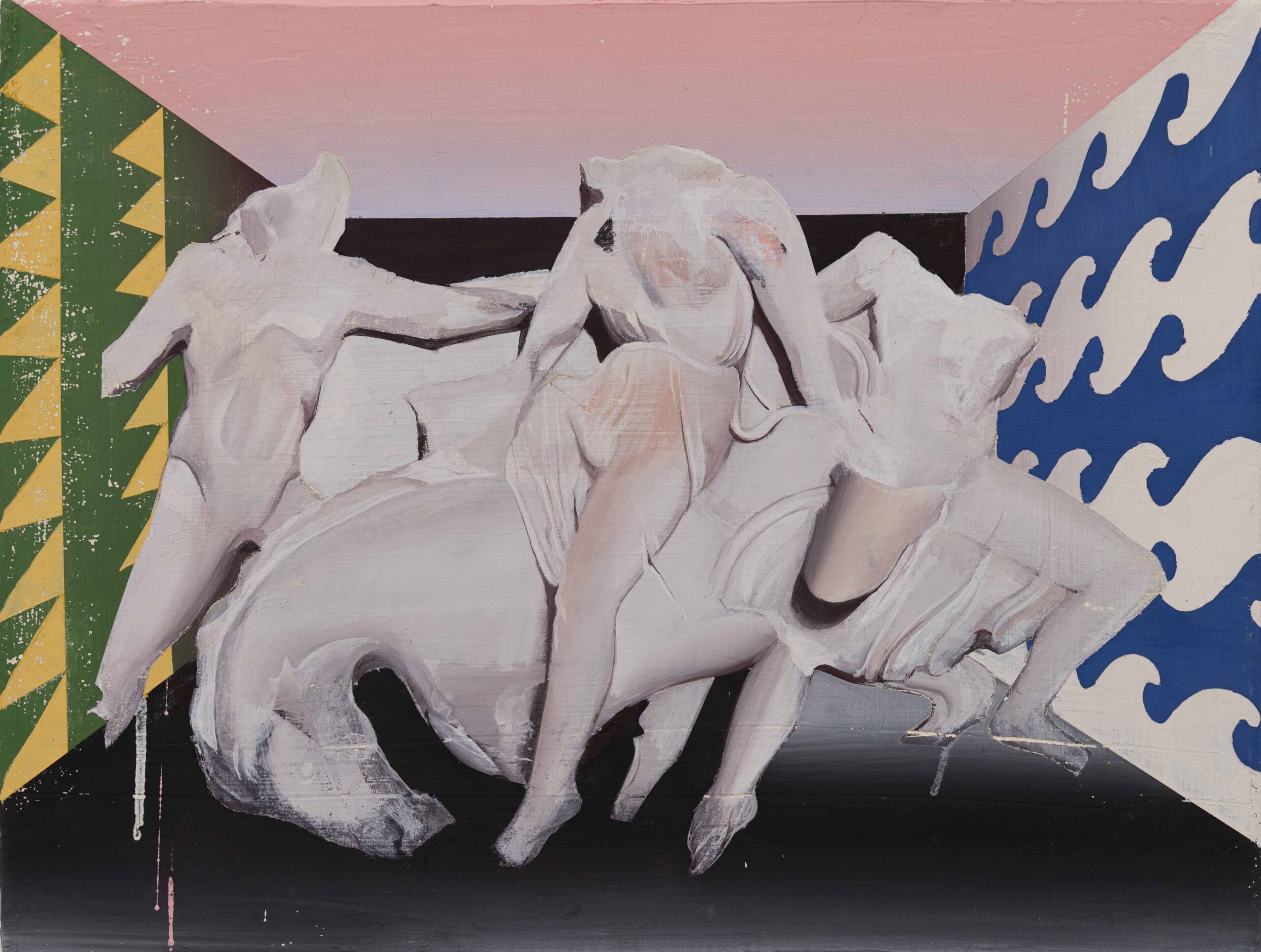
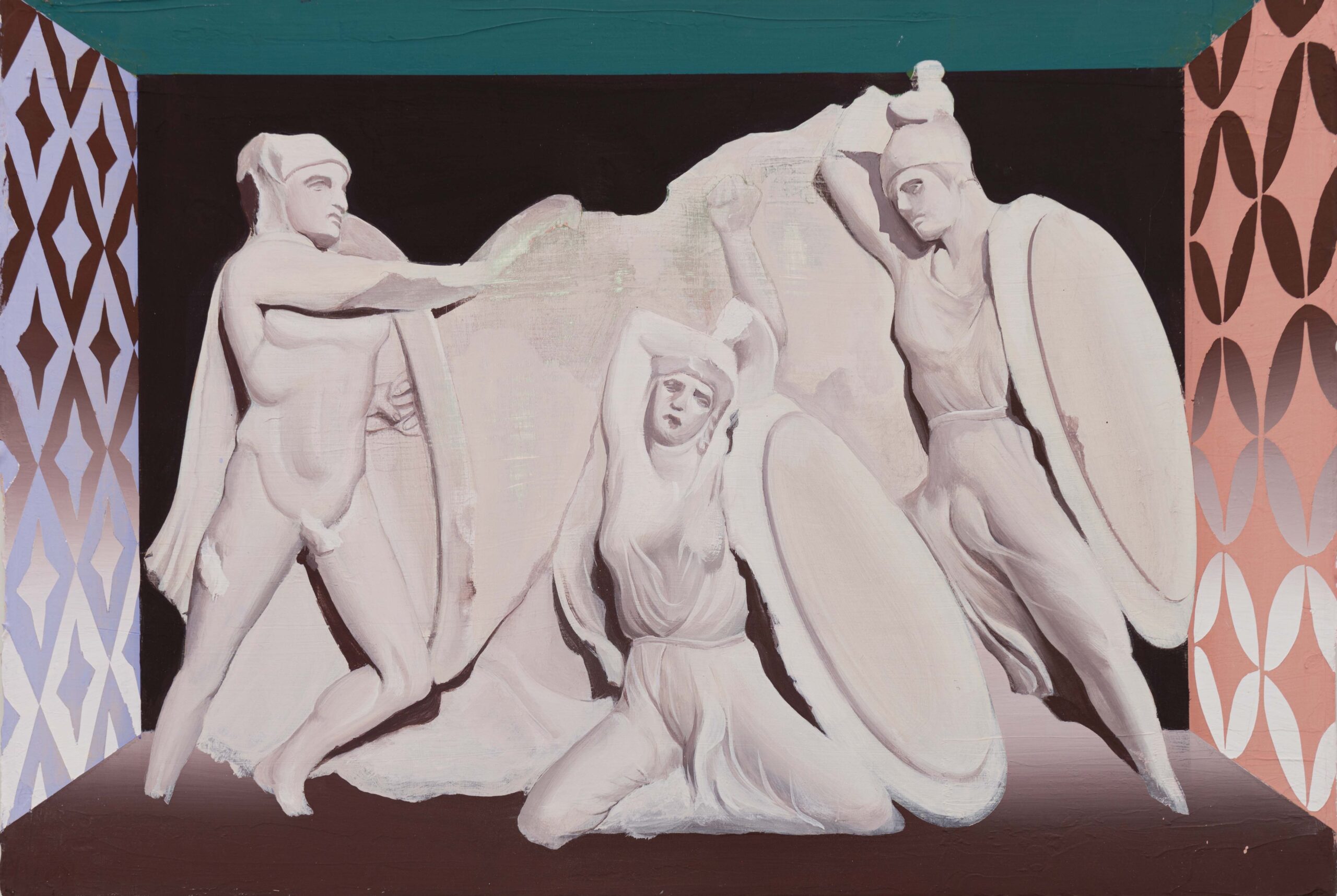
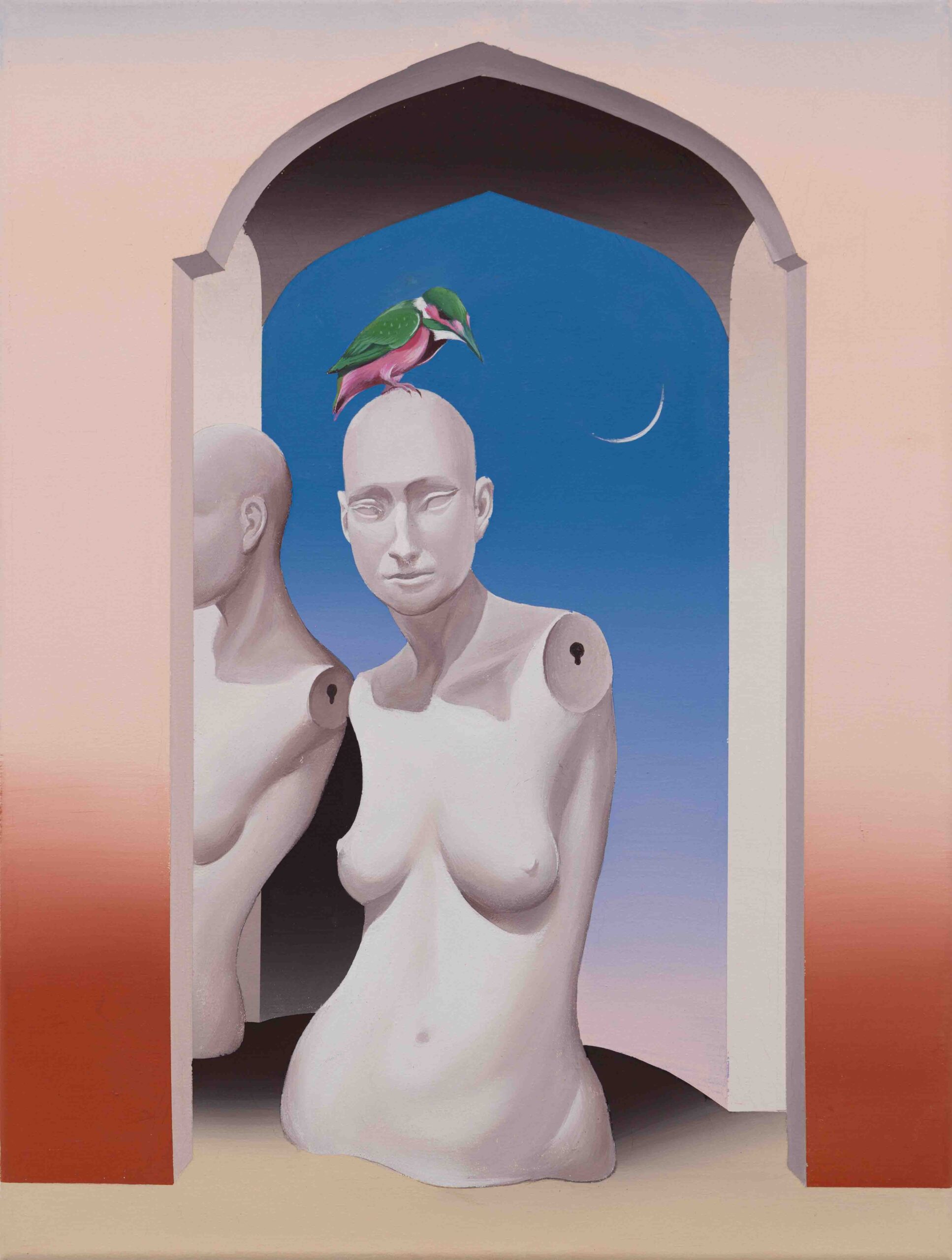
박지나 작품의 보드랍고 매혹적인 색감에 이끌려 그림을 살펴보면 고대 문명이나 고전 조각, 동식물 등의 모티프가 눈에 들어온다. 기둥이나 아치, 회랑이나 벽감 같은 고전 건축의 요소와 패턴화된 문양이 적용된 벽, 바닥, 파티션이 공간을 구축하는 듯하지만 실상 견고한 3차원의 공간은 없다. 새벽인지 해질녘인지 시간대도 특정하기 어렵다. 안과 밖, 낮과 밤, 문명과 자연이 깊이와 차원을 무시하고 공존하거나 부유한다. 우리는 작가의 마음속에 존재하는 풍경의 한 장면을 보는 것일까? 작가가 구축한 이미지의 도서관 혹은 가상 세계의 단면을 보는 것일까? 일단 확실한 점은, 평온하고 정적으로 다가오는 화면이 새로운 아름다움과 긴장감을 응축하고 있다는 사실이다.
말끔하게 정돈된 것 같은 그림에서 모호함을 불러일으키는 요소는 마땅히 그래야 한다는 상식과 우리가 배워왔던 기준의 부재에서 기인한다. 기둥과 아치형 건축 구조가 있는 공간은 깊이감이 있어 보이지만 납작하다. 바닥이나 천장을 구성하는 패턴은 소실점으로 이끄는 흡입력 대신 착시적 효과를 자아낸다. 식물이나 동물 등 그 어떤 모티프도 화면에서 가장 두드러지거나 밀려나지 않는다. 그렇다면 우리는 어떤 공간을 보고 있는 것인가? 당연하게 기대하는 것에서 어긋나는 그 지점에서 그림 속 조각, 동물, 식물, 태양 혹은 달과 같은 모티프의 관계를 다시 살펴본다. 통상의 서사에서는 주인공과 부수적 인물과의 상황이 예견되지만 이 또한 미끄러진다. 날개짓하며 나는 새나 맹수들, 그리고 무성한 풀에서는 생명력이나 운동감이 느껴지지 않고 함께 배치된 조각이나 부조와 동등하게 취급된다. 작가의 캔버스는 역사를 관통하며 기록되고 학습된 우세한 힘과 그 영향력으로부터 벗어나 무엇이라 정의 내릴 수 없는 애매한 경계의 지점에서 우리에게 질문을 던진다. 우월한 문화로, 미의 기준으로, 현존하는 소량의 원본과 고대 사본, 그리고 폐허를 소유한 것만으로도 권력이 되는 고전 이미지의 권위에 대해 우리는 왜 라는 질문을 한 적이 있을까? 서구에서 생겨난 박물관 미술관의 전통이 오늘날 미술계에서 어떤 작용을 하는지, 이 강력한 흐름에 가려지고 잊힌 존재는 없는지 생각해 보았는가? 우리는 우리만의 고유한 취향과 관점으로 세상을 바라볼 수 있는가? 우리는 무엇에 매혹되어 왔는가? 우리의 욕망은 어떻게 학습되어 왔는가?
사회의 대다수 분야처럼, 회화에는 꽤나 많은 규칙과 전례가 있다. 모사할 원본이나 상류층이 소유하고자 하는 진귀한 기물이 가까이 없는 경우, 그 대상을 가장 잘 그렸다고 알려진 그림을 보며 실력을 닦고 어느 정도 경지에 올라 자신만의 스타일을 구가했다. 동양에서 산수화나 인물화보다는 18세기부터 유행한 기명절지도나 책거리 그림은 비교적 주문자 혹은 그리는 사람의 자유도가 높은 영역이었다. 박고도 양식의 병풍에는 근본이 되는 고대 청동기 외에 주문자가 소유하고 있거나 소유하고 싶은 기물이 추가되기도 하였고, 백납도 양식의 병풍에서는 그림책 낱장을 원하는 순서나 주제로 붙일 수 있었다. 즉, 주문자의 취향이나 기획자 혹은 편집자의 역할이 더욱 중요해졌다. 도상의 전통에 해박한 인문주의자가 치밀하게 고안한 프로그램에 따라 제작된 르네상스 스투디올로 장식화와 그 이후 나타난 귀족의 커미션 작품과 달리 분더캄머는 보다 개인적이고 자유롭게 취향을 파고드는 특징이 있다. 강력한 사회문화적 주류의 흐름과 상관없이 오롯이 나만의 나 다운 세계를 구축하는 행위로써 분더캄머는 진정한 자아 성찰과 자아 구현의 목적지일 수 있다. 자신의 미감, 자신의 규칙, 자신이 정한 위계질서가 기준이 되는 나의 작은 세상이자, 진짜의 나로 사는 시공간이므로. 어쩌면 박지나의 캔버스는 동서의 구분, 자본주의의 폭력, 특정 집단과 계층의 원본 소유와 그 영향력이라는 무거운 중력에서 해방되어, 진정으로 자신이 원하는 이미지를 찾고 선별하고 배치하고 완성하는 과정에서 자신을 마주하는 즐거움일지 모른다. 경계가 없기에 경계를 정하는 것도, 사건의 중심도 자신의 일이 된다. ‘이래야 한다’는 것이 아니라 ‘이렇게 하고 싶다’가 이미지의 선택, 배치, 구현의 모든 과정을 지배한다.
박지나의 작업을, 그가 수집하고 진열한 이미지의 조각들을 찬찬히 따라가다 보면 모종의 해방감과 더불어 그림 속 모티프나 관계에 대한 질문이 어느새 우리 내면을 향하고 있는 것을 발견하게 된다: 나의 분더캄머는 어떤 이미지일지, 어떤 주제로 채워질지, 결국 내가 욕망하는 것은 무엇인지. 작가는 베를린 골목길 산책 중에 주택가 창가 장식에서 그 집에 거주하는 어떤 개인의 취향과 자신의 세계를 외부에 드러내는 행위에 대해 영감을 받아 2018년 콜렉터스룸을 시작하였다. 소박한 일상의 행위 같지만 온전히 나만의 취향과 호기심을 따라 무언가를 수집하고 그 수집된 대상을 보관하거나 진열하는 공간을 가지거나 외부에 드러내는 행위는 말처럼 쉽지 않다. 취미에 골몰할 시간이나 공간 마련을 위한 경제적, 정신적 여유가 전제되어야 한단 사실은 차치하고도 오랜 시간에 걸쳐 어떤 주제나 범주에 천착하면서 이미지나 오브제를 탐색하며 그 깊이와 넓이를 확장시키기 위해서는 정말 좋아하는 것, 진심으로 욕망하는 대상이 명확해야 하기 때문이다. 수많은 물건, 사람, 사건, 그리고 그 모든 사이를 가득 채우는 무수한 이미지들 속에서 우리는 무엇을 선택할 것인가? 무엇을 욕망할 것인가? 주입되거나 학습된 욕망이 아닌, 진짜 나를 나답게 하는 주제를 찾을 수 있을까?
작가의 수집/창작의 끝에는 무엇이 있을까? 작가가 고심하며 고르고 배치한 이 그림들을 모두 그러모아 언젠가 거대한 공간을 빼곡히 채우면 박지나의 분더캄머를 정확히 정의 내릴 수 있을까? 수집자의 입장에서는 공간의 완성이 목적일 수 있으나, 개인의 취향을 쫓으며 자기를 자기답게 완성하는 정신의 여정이 분더캄머의 본질이라면, <동쪽에서 뜨는 달>을 기점으로 앞으로 작가는 어떤 이미지와 글에 영감과 호기심을 느낄지, 그 변화와 확장에 대한 기대가 한층 커진다. 해가 뜨는 방향은 누구나 알고 있다. 자전하면서 태양을 중심으로 공전하는 지구에서는 그 방향이 정해져 있기 때문이다. 하지만 지구의 자전과 다른 주기로 공전하는 달이 뜨고 지는 방향은 지구의 위도나 계절에 따라서 조금씩 달라진다. 태양계의 중심인 태양과 우리의 터전인 지구가 아닌 달의 위치는 그렇게 달라진다. 항상 둥근 태양과 달리 계속해서 모습을 바꾸는 달은 생성과 변화의 세계이다. 고정된 가치관이 우세한 세상이 아니라 상대적이고 유연하며 주관적이고, 육체에 갇혀 있으나 무엇보다 자유로울 수 있는 영혼 또는 주체적 정신의 세계와 가깝다. 강렬한 빛으로 보고 싶지 않은 것도 보이게 하여 우리를 이끄는 것이 태양의 시간이라면, 해가 지고 어두운 밤하늘에 다양한 모습으로 은은한 빛을 자아내는 달은 우리가 보고 싶은 것을 볼 수 있게 하는, 내가 주인이 되는 시간이다. 그래서 수많은 시와 꿈과 창조가 일어나는 공간이 된다. <동쪽에서 뜨는 달>은 유연하고 변화무쌍하지만 단 하나밖에 없는 달과 같은 나의 세계를 발견하는 시간으로 기억되길 바란다.
글 | 김경란 (국립현대미술관 학예연구사)
The soft yet captivating color palette draws us closer to Jina Park’s paintings. Upon closer observation, we begin to notice motifs gleaned from ancient civilizations, classical sculptures, and botanical imagery. Classical architectural structures—such as columns, arches, corridors, and alcoves—and ornamental surfaces—such as patterned walls and floors—appear to create space; however, there is no recognizably rendered three-dimensional structure. More than that, the time of day, whether it is dawn or dusk, is unclear. Interior and exterior, day and night, civilization and nature coexist in the paintings, floating around, untethered to depth and dimension. Are we witnessing the artist’s inner landscape or an archive of images, a virtual world the artist constructed? Nevertheless, the serene and rather static compositions embody a new kind of beauty as well as a sense of tension.
The ambiguity in the seemingly meticulously organized paintings stems from the absence of common sensical conventions and educated standards. The areas with columns and arches appear to have depth but are flat. The patterns composing the floors and ceilings create illusory effects rather than suggesting a vanishing point. No motif, whether plants or animals, stands out prominently or recedes into the background. So, what kind of “space” are we beholding? The very point of deviation from our intuitive expectations leads us to reconsider the relationships among the motifs depicted in the painting, such as sculptures, animals, plants, the sun, and the moon. In this sense, the predictable dynamic between the protagonist and the supporting character in a typical narrative does not apply. Flying birds, beasts, and lush vegetation lack a sense of vitality and are treated as equals to the sculptures. Situated beyond the influence of dominant historical narratives, on the indefinite boundary of recorded and learned power, Park’s paintings pose important questions. Have we ever questioned the authority of classical images, upheld as culturally superior and aesthetically ideal, that gain power from the limited quantity of “originals,” ancient copies, or ruins? Have we ever questioned how the Western tradition of museums and galleries shapes the art scene today and how it overlooks and negates certain beings? Is it at all possible to view the world based on individual taste and perspective? What propels us? How is desire educated?
Like many other fields in society, painting has many rules and precedents. Where there was no original object to copy or rare replicas sought after by aristocrats, artists honed their skills by copying the next closest representation of the object, aiming to devise and master their own painting styles. Gimyeongjeoljido and Chaekgado, popular still-life painting styles in 18th-century Eastern art, allowed for more freedom from the patron or artist than landscapes and portraits. In Parkgodo-style folding screens, objects that the patron cherished or wished to possess were introduced into the image alongside the base motif of a bronze vessel. Whereas in Baeknabdo-style folding screens, pages of an illustration book were freely rearranged by image or theme at the artist or the patron’s will. In other words, the patron’s preferences or the painter’s role took precedence over other factors in these areas of painting. Unlike Renaissance studiolo decorative paintings, which were designed and produced under the elaborate iconographical invention of a court humanist, or aristocratic commissions that burgeoned in the following era, wunderkammers engaged individual tastes more intimately and freely. Uninfluenced by the powerful socio-cultural mainstream, wunderkammers, as modes of world-building, could be seen as results of genuine self-reflection and self-realization, a personal world in which one’s sense of beauty, rules, and hierarchy became the standard, a time and space in which one can be one’s authentic self. Perhaps the true pleasure in Jina Park’s paintings comes from the artist facing herself in selecting and placing the images purely based on desire, liberating herself from the division between East and West, the violence of capitalism, and the history of ownership and power of specific social groups or classes. Since there are no boundaries, the artist herself becomes the arbiter of rules and the center of events. Instead of the fixation, “this is how it should be,” the desire of “this is how I want it to be” governs every aspect of image selection, arrangement, and realization.
As we carefully follow the fragments of images collected and displayed by Park, we detect a sense of liberation and simultaneously discover that questions about the motifs and their dynamics are directed toward ourselves. Which images and themes compose my own wunderkammer? What do I desire? Park began the Collector’s Room project in 2018 after discovering that people displayed decorative items on their windowsills, exposing their aesthetics and tastes to the outside world, during her walk in an alleyway in Berlin. As mundane an activity as it may sound, collecting something according to one’s unique taste and curiosities and then storing or arranging them in a display space that is revealed to an audience is not easy. This is because—aside from the prerequisite of economic and mental availability for the maintenance of a hobby—one must know what they truly love and desire to be able to explore images and objects to expand, in depth and breadth, the subject of interest over a long time. On what basis will we make selections among countless objects, people, events, and images that exist between them? What will we desire? Can we find subjects that make us authentically ourselves independent of injected or learned desires?
What lies at the end of the artist’s collection/creation? Will we be able to define Park’s wunderkammer in the end, when her paintings, meticulous arrangements of objects and images, fill the majority of space? Filling up space may be the end goal of many collectors. However, suppose the essence of a wunderkammer lies in the journey of pursuing personal taste and self-completion. Then, Park’s trajectory after The Moon Rising in the East, the image and text she will take an interest in, and the development and expansion she will experience come with great anticipation. Everyone knows that the sun rises in the east. This is because the Earth revolves around the sun, while rotating on its own axis, in one set direction. However, the direction in which the moon rises and sets varies ever so slightly depending on the Earth’s latitude and the season, because the moon revolves around the Earth at a different cycle than the Earth’s rotation. Such explains the changes in the moon’s position, an entity other than the center of the solar system and our home planet. Contrary to the forever-round sun, the moon represents the world of creation and change. It is analogous to a world of subjective and flexible values free of any stereotypes, not unlike the soul or subjective spirit that is freer than anything else despite its bond to a body. Under the intense sunlight, we might witness what we do not want to see. But when the sun goes down, and the moon brings a subtle glow to the dark of the night, it allows us to focus on what we want to see. It becomes the time when I am in control. Hence, this is the time and space that give rise to boundless poetry, dreams, and creation. The Moon Rising in the East hopes to become a time and space in which viewers discover their unique worlds—flexible and ever-changing yet singular like the moon.
Kyoungran Kim (Curator of the National Museum of Modern and Contemporary Art, Korea)
← Our Dawns Are Not What They Seem