지희킴
Jihee Kim
19 Oct – 13 Nov 2022
ThisWeekendRoom
Artists
Jihee Kim →
Credit
참여작가ㅣ지희킴
기획ㅣ김나형
글ㅣ박지형
번역ㅣ양하빈
그래픽 디자인ㅣ보이어
사진ㅣCJY ART STUDIO (조준용), 이정우, 홍철기
영상ㅣ파이크 미디어
후원ㅣ수림문화재단
코디네이터ㅣ이유진
ArtistsㅣJihee Kim
CurationㅣNahyung Kim
TextㅣJihyung Park
TranslationㅣHabin Yang
Graphic DesignㅣBowyer
PhotographsㅣCJY ART STUDIO (Junyong Cho), Jungwoo Lee, Cheolki Hong
VideoㅣPyke Media Inc.
Supported by Soorim Cultural Foundation
CoordinatorㅣYoojin Lee


Exhibition Text
모든 세상이 정원이라면: 지희킴의 《Sundays》를 톺아보며
정원과 서재는 많은 점에서 닮았다. 두 공간은 인간이 인공적으로 구축한 곳으로, 사람들은 이곳을 가꾸고 관리하며 삶의 한 부분으로 수용해왔다. 흥미롭게도 이곳에는 언제나 지각의 범위를 넘어서는 맥락이 있다. 말하자면 서재는 단순히 책이라는 사물이 모여있는 장소가 아니며, 주인의 성격을 반영하는 은밀한 비밀이나 사적인 이야기가 숨겨져 있다. 마찬가지로 정원은 겉으로 보기에 꽃과 나무, 곤충과 새 등 자연의 일부가 머무르는 곳이지만 그 안에는 눈에 보이지 않는 무수한 태어남과 죽음, 충돌과 이접이 숨어있다. 이 두 공간은 지희킴에게 《Sundays》를 위한 개념적, 상징적 배경이 되며 작가가 보다 자유로운 위치에서 서사의 변주를 꾀할 수 있는 선제적 장치로 활용된다.
지희킴의 작업은 인간을 둘러싼 사회의 관습적 개념의 범위를 해제하고 그 사이에서 새로운 담화의 가능성을 모색하는 데에 그 초점이 맞추어져 있었다. 특히 오랜 시간 그의 세계는 개인의 사적인 경험으로부터 도출된 문제 인식들 — 젠더에 관한 사회적 통념, 불온한 신체성, 경계를 허무는 정체성 등— 을 다루는 미학적, 철학적 언어에 튼튼하게 이어져 있는 듯했다. 반면 최근 그의 작품은 나라는 유한한 공간과 자신의 영역 밖에 존재하는 다수의 관점들 사이의 통로를 적극적으로 마련하려는 시도를 보여준다. 이는 세상을 본인 시각으로 흡수하는 내적 사유의 과정과 실재하는 이미지를 구현하는 외현적 절차 모두에서 발견되는 변화이다. 이를 위해 작가는 무엇인가 그려내기에 앞서 실존할 수도 혹은 그가 오롯이 픽션으로 그려낸 것일지도 모르는 이들의 일상을 상상하고 문장으로 옮겨보았다. 이는 풀이 무성한 정원을 더듬으며 그 속에 감춰져 있을 보물을 찾아가는 은밀하고도 가슴 뛰는 경험과 비슷하다. 그는 불완전하게나마 그들의 내면으로 침투하는 시간을 통과하며 다양한 정서의 결을 길어올리고 화면을 가꾸어간다.
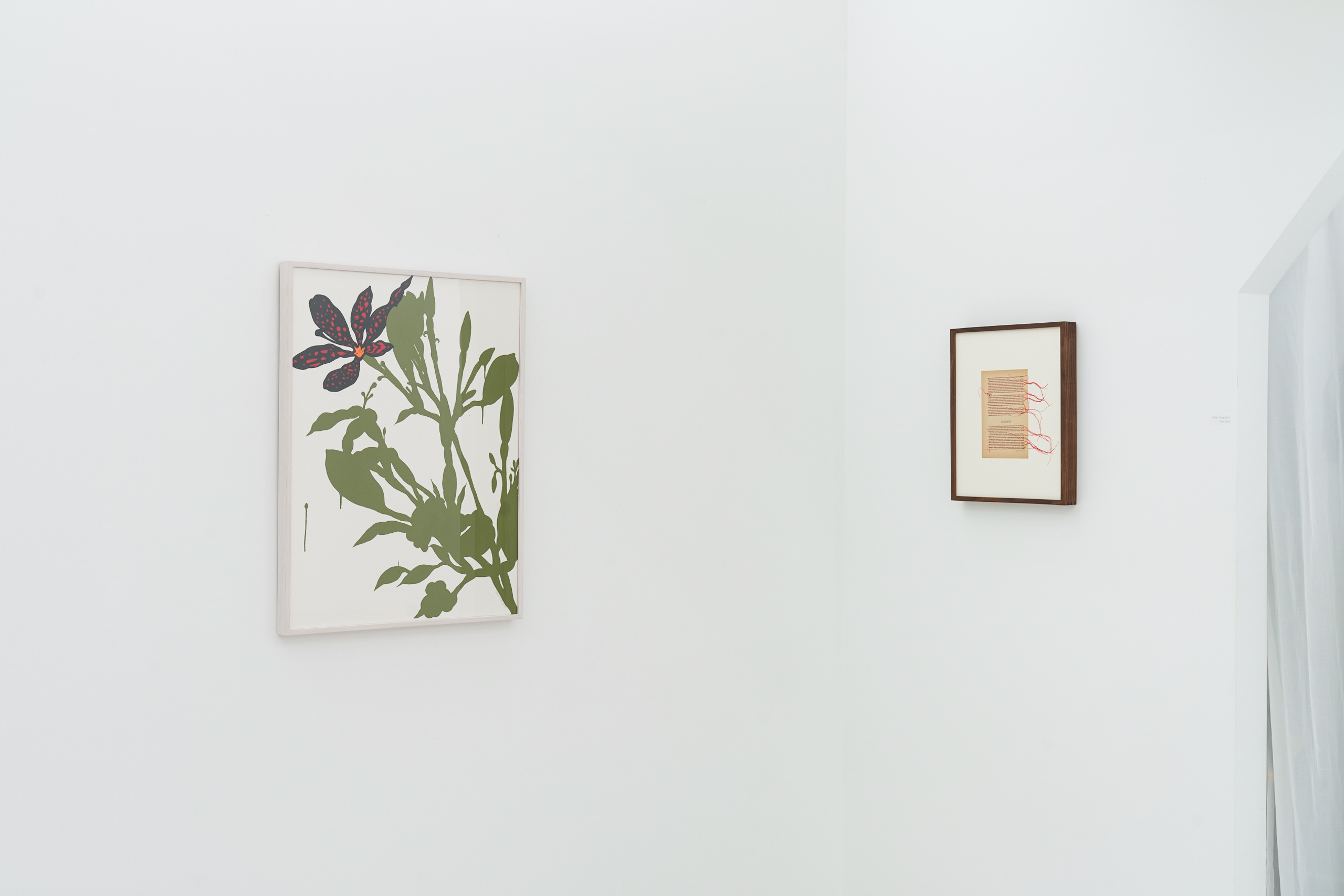
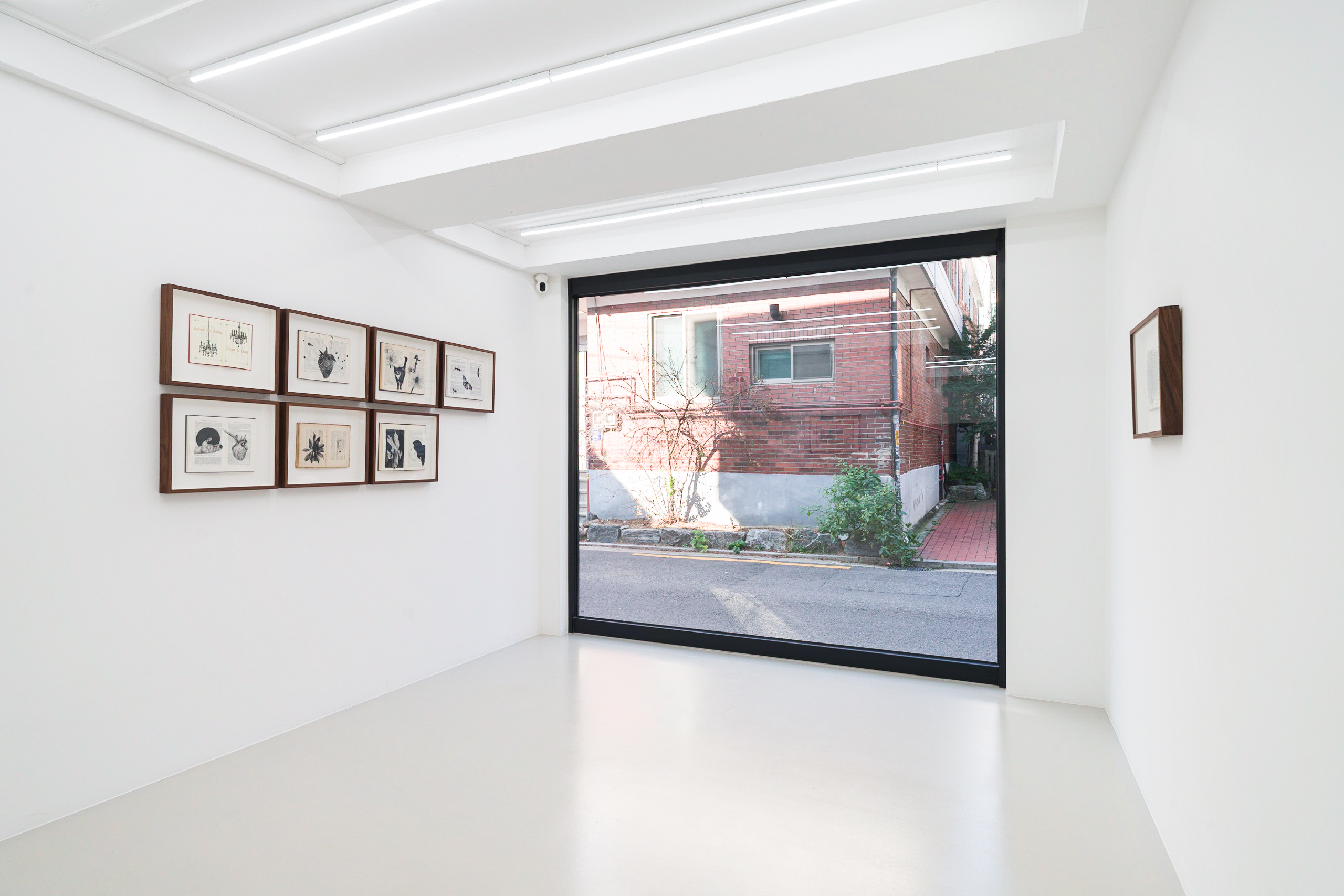
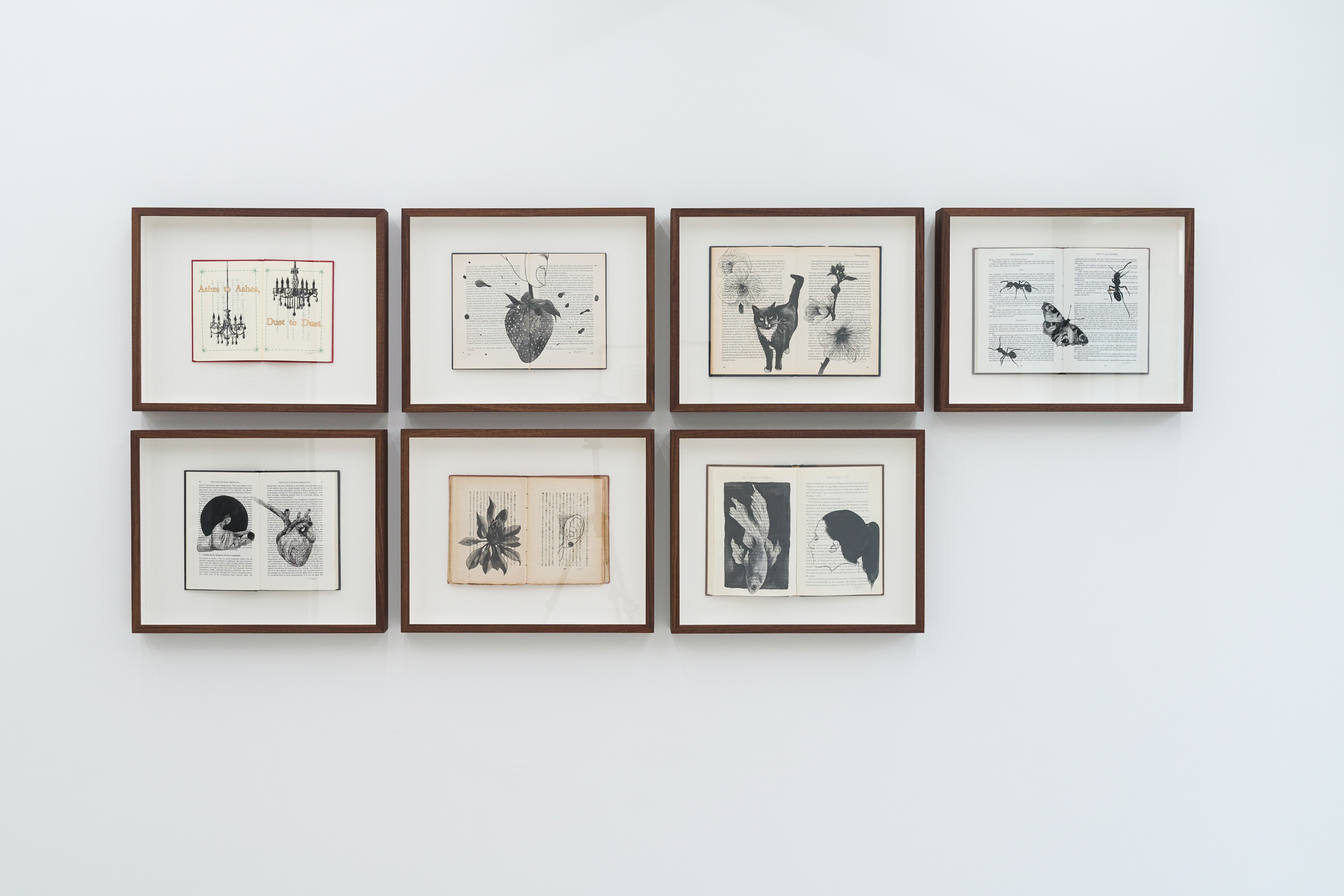
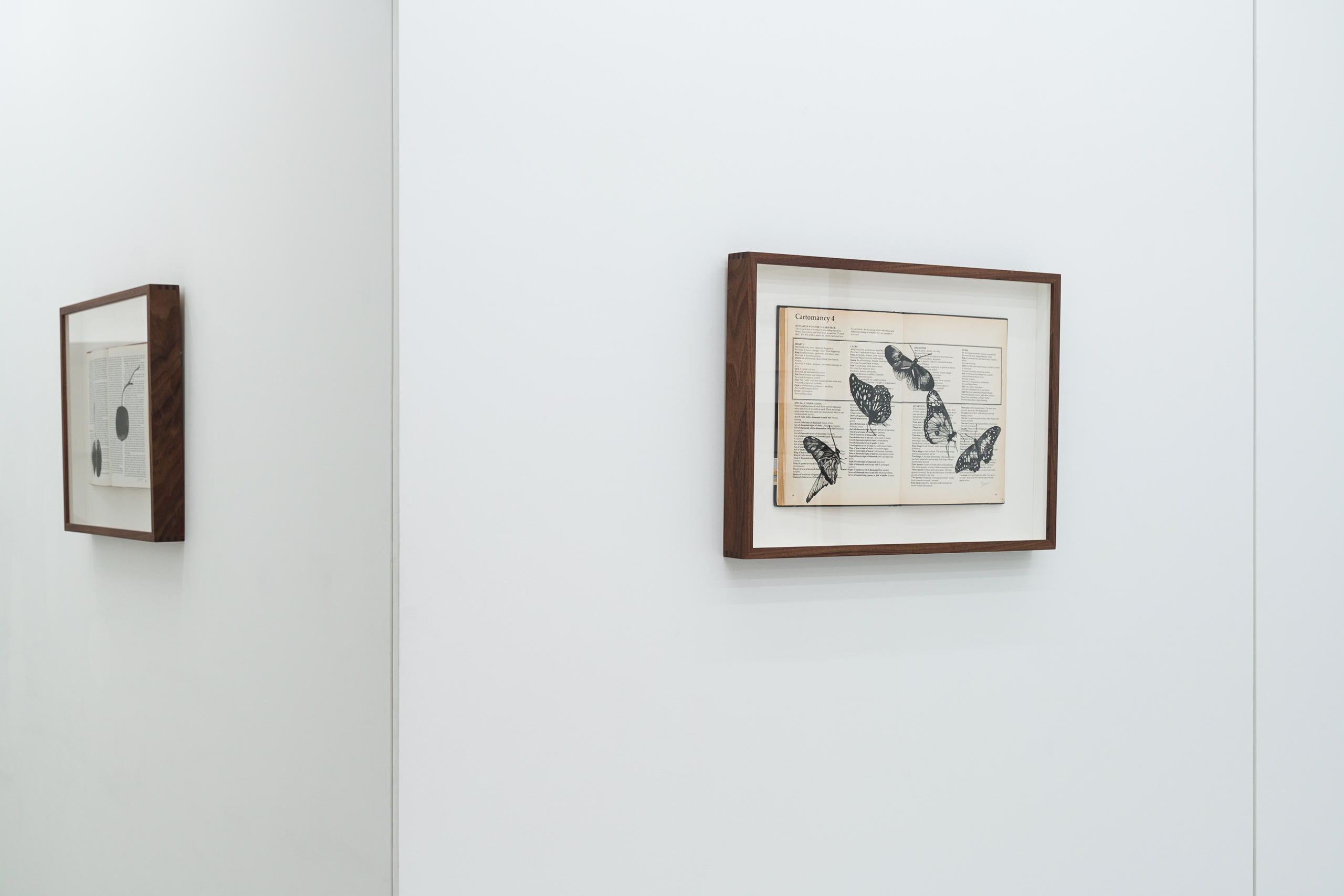
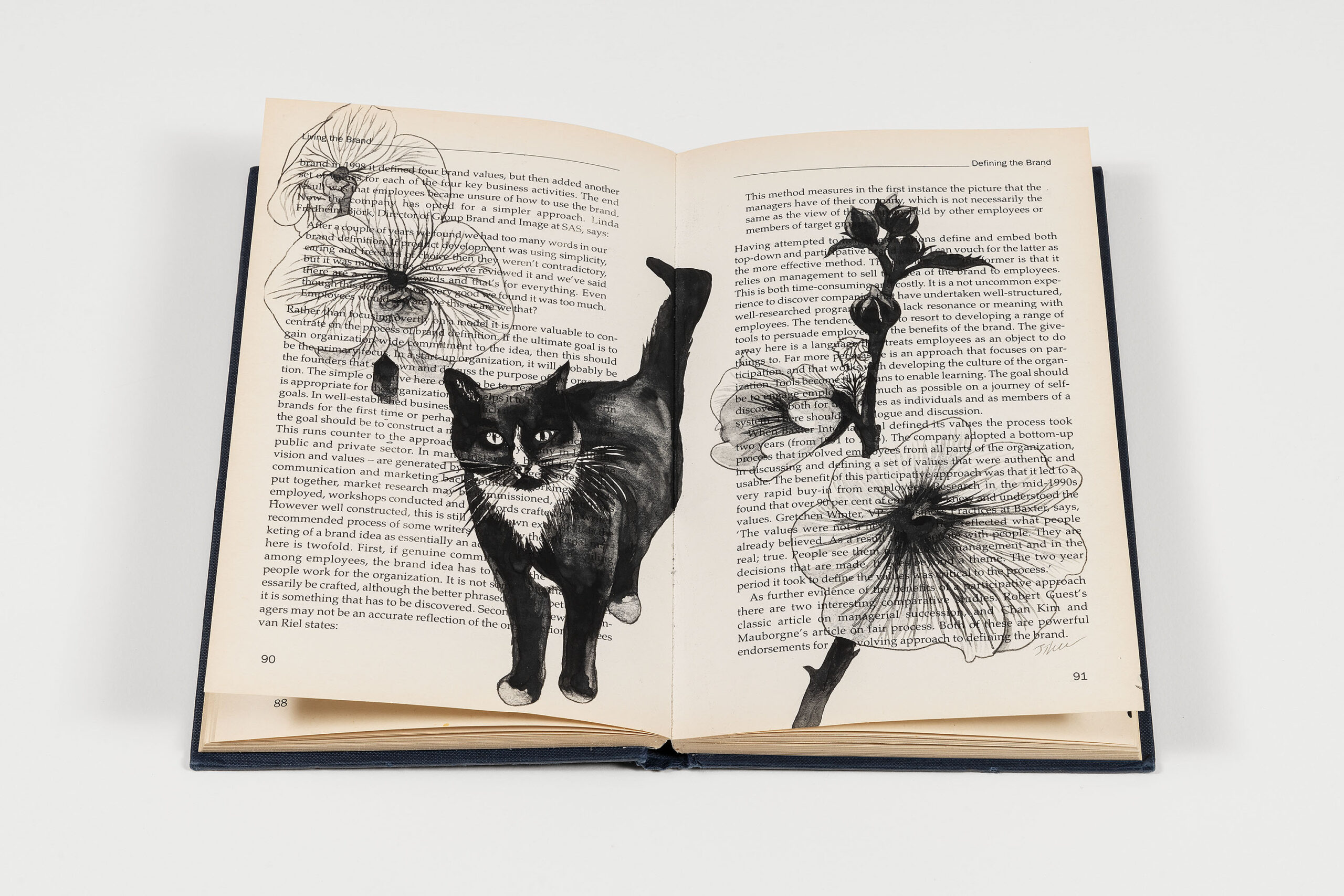
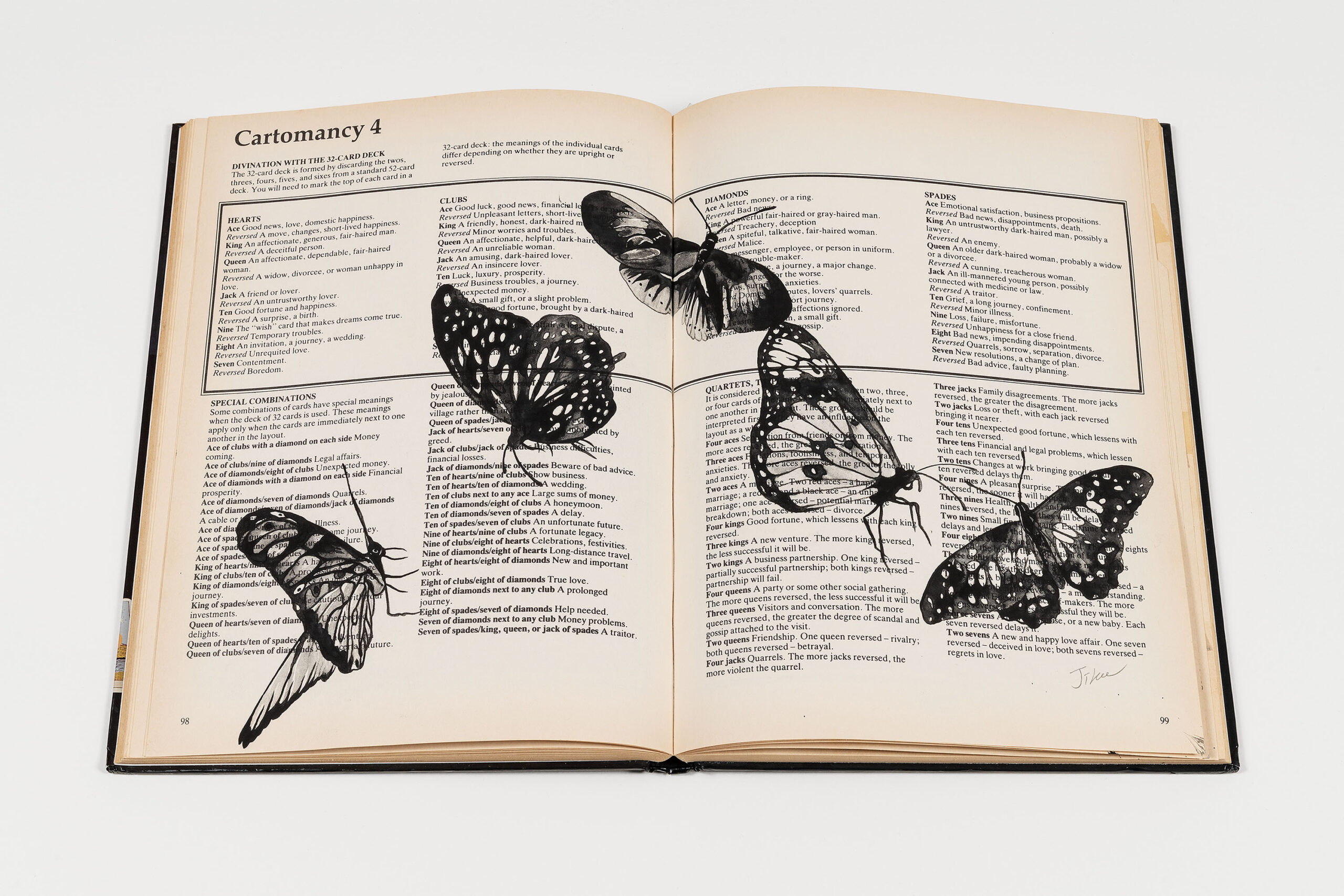
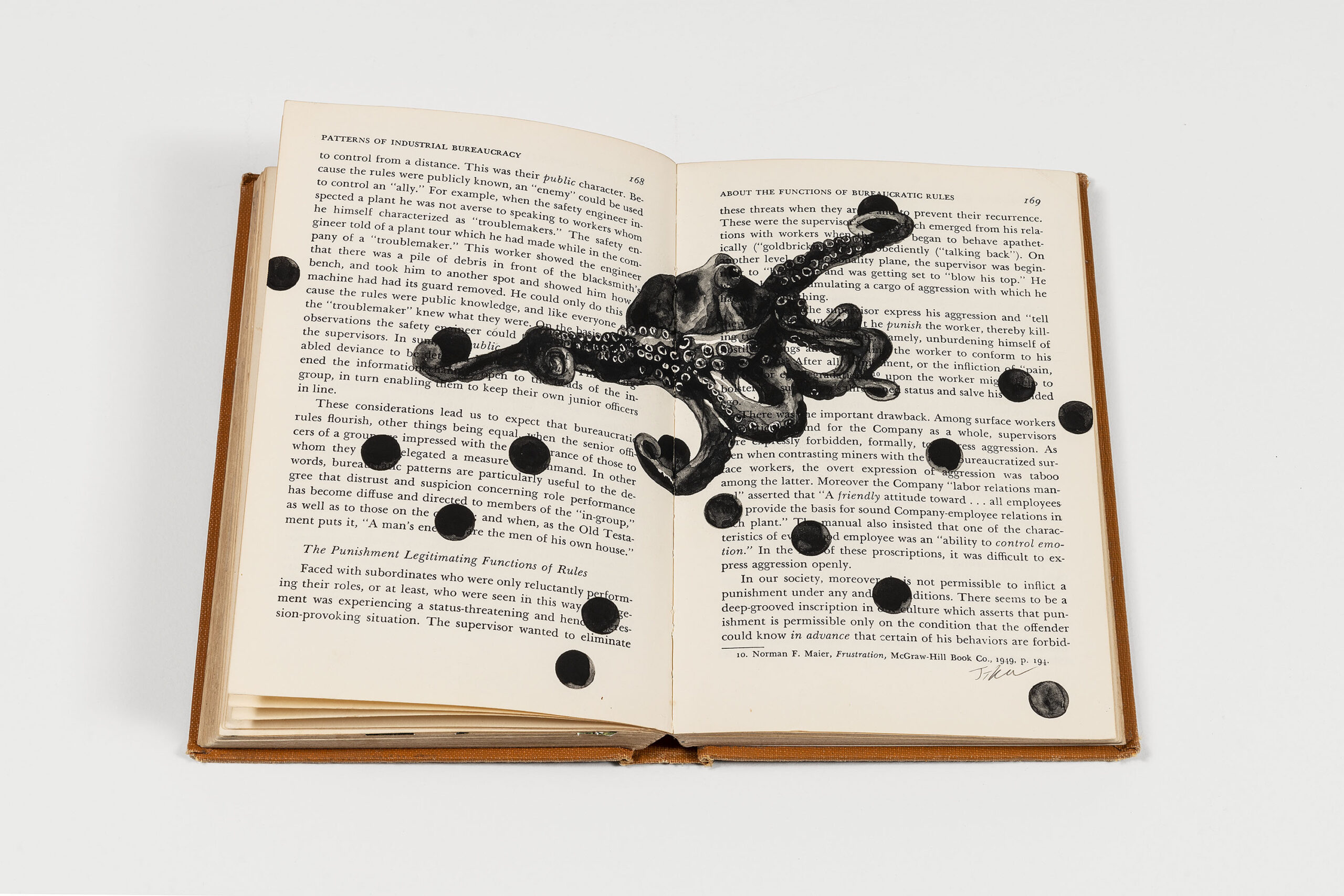
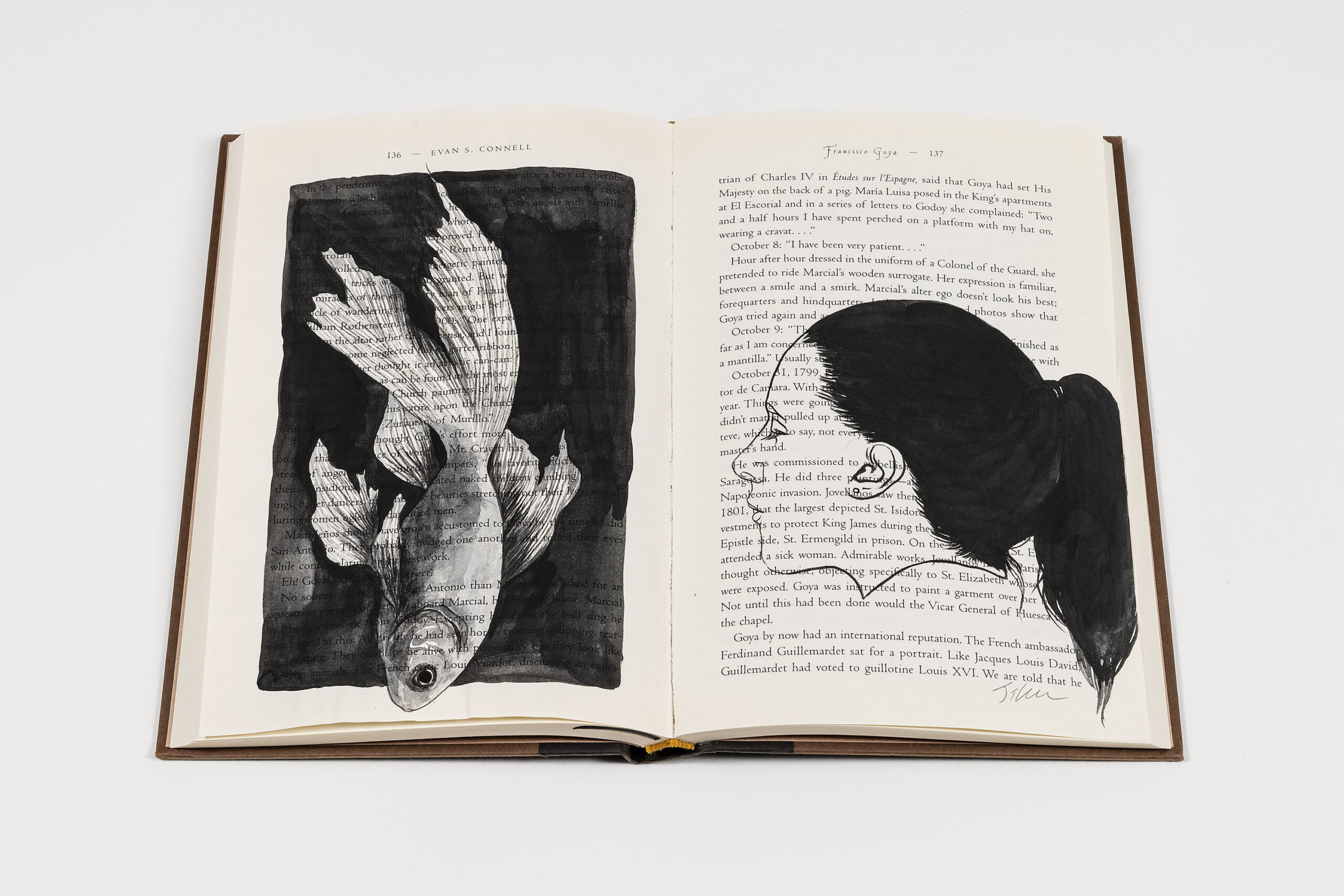
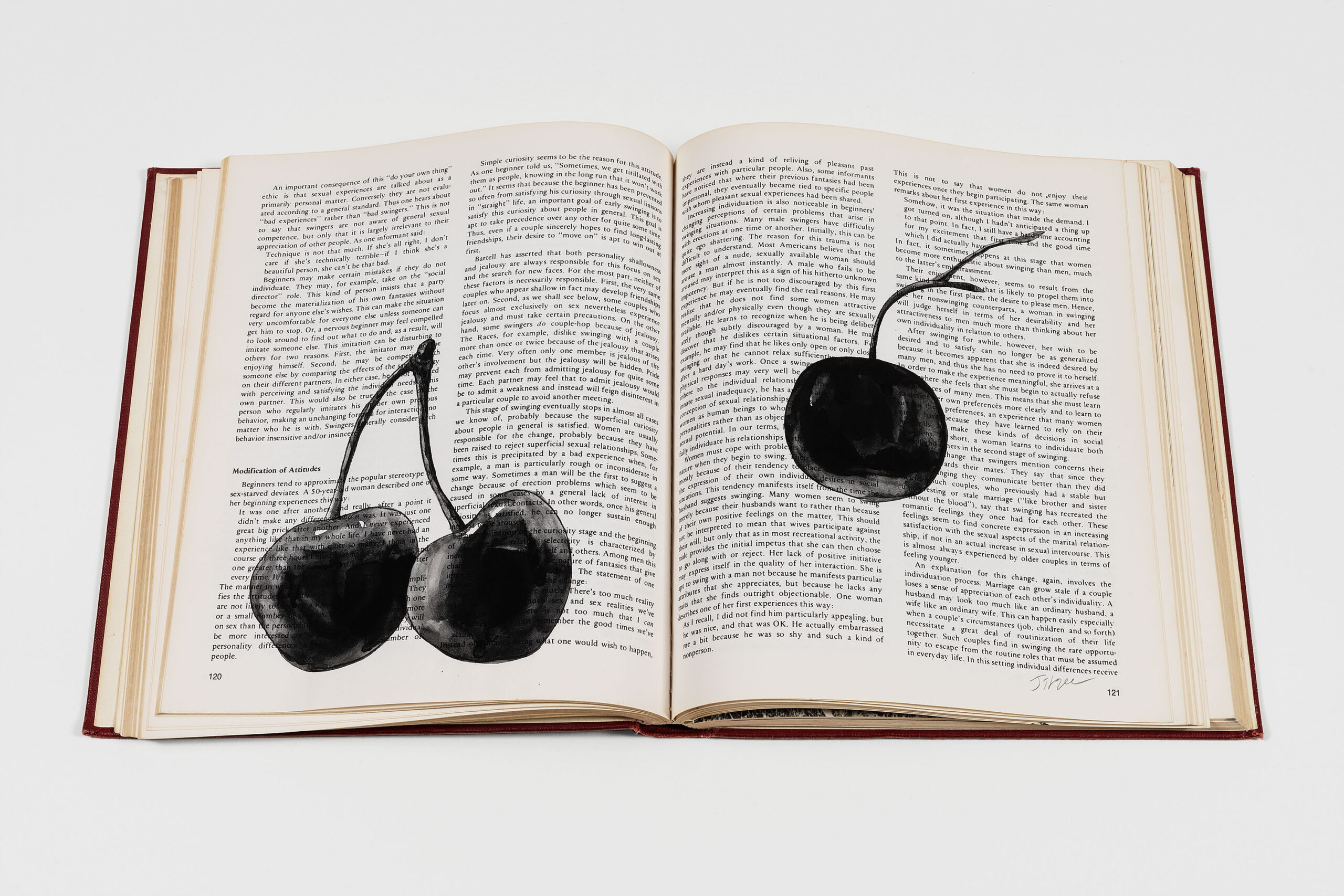
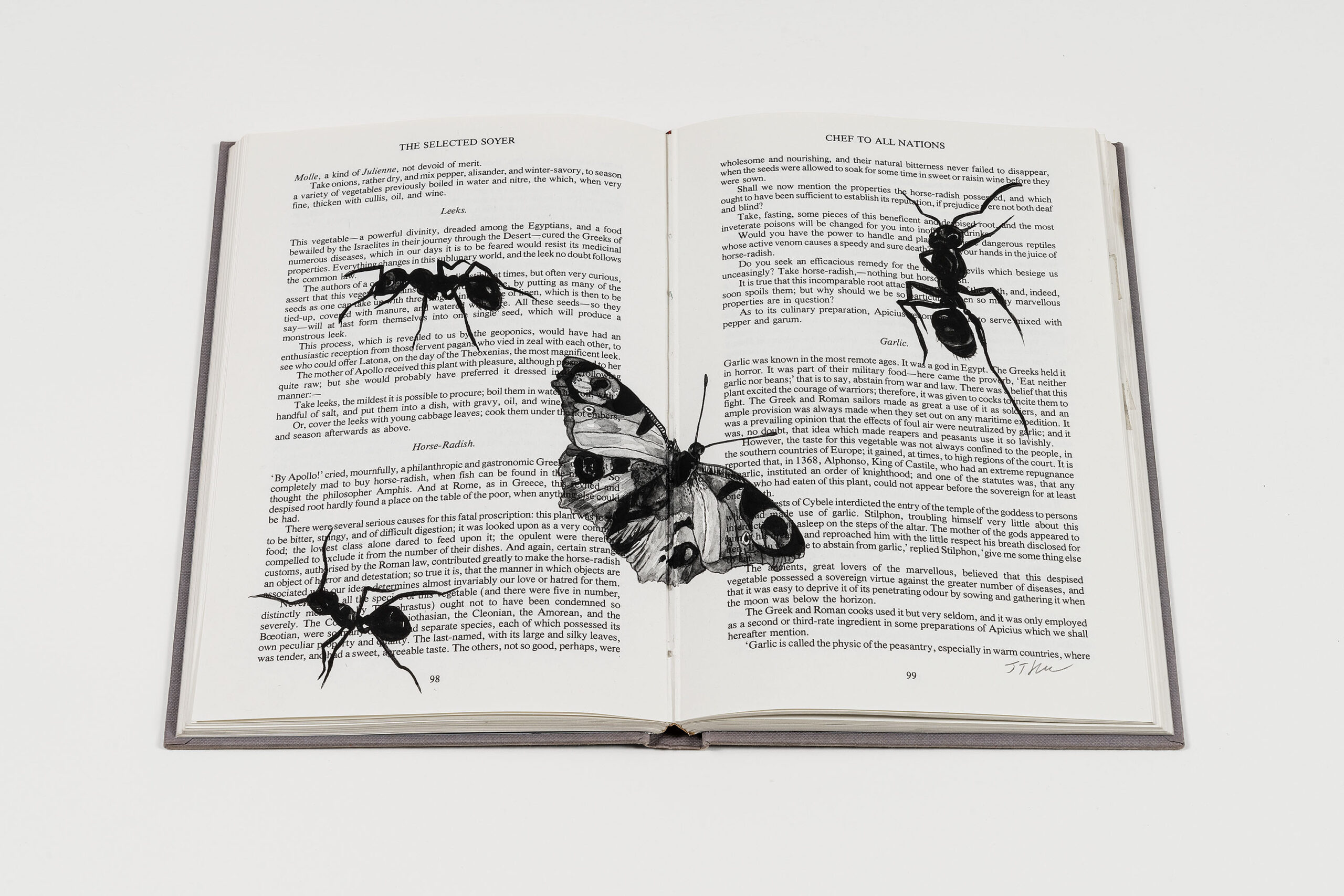
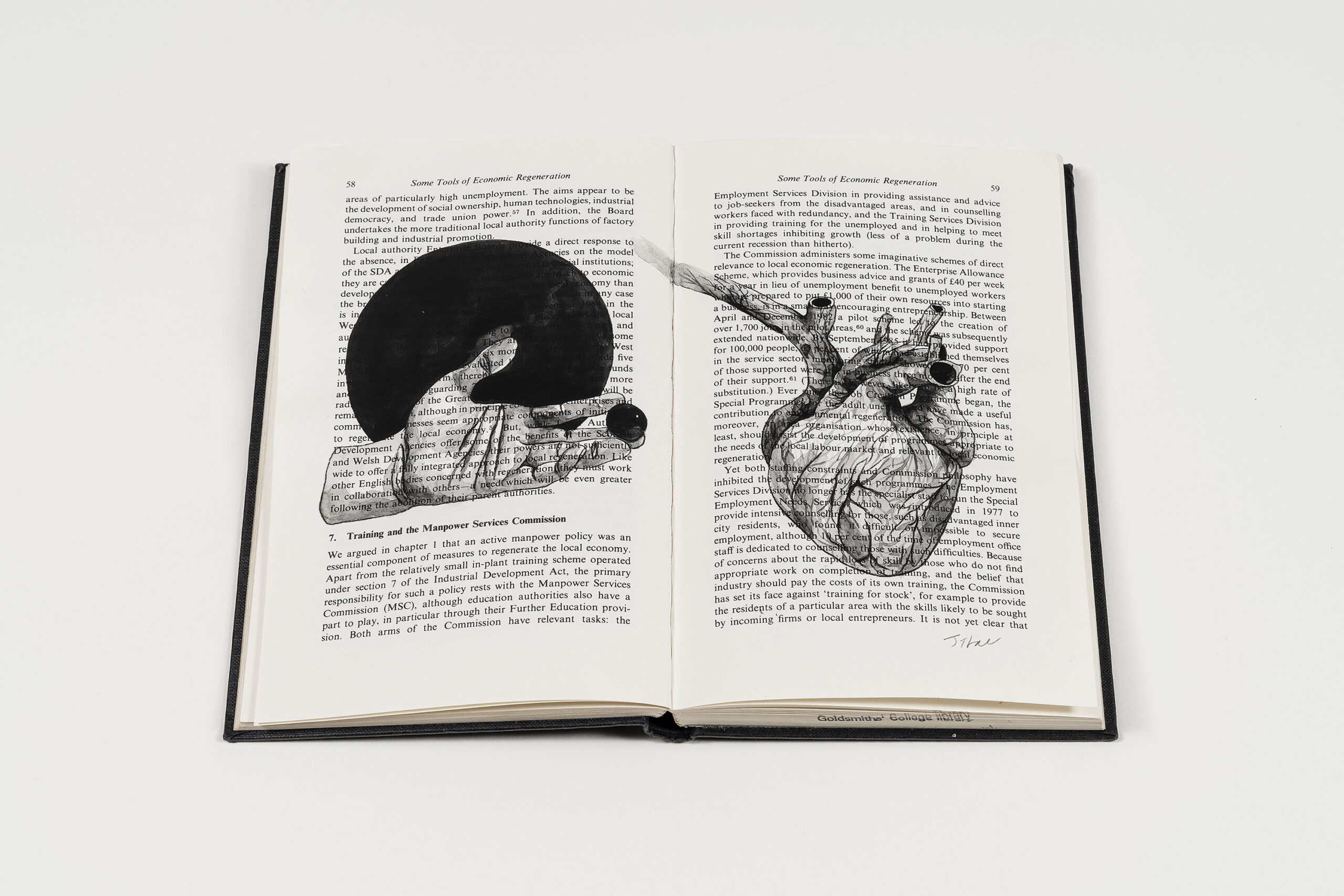
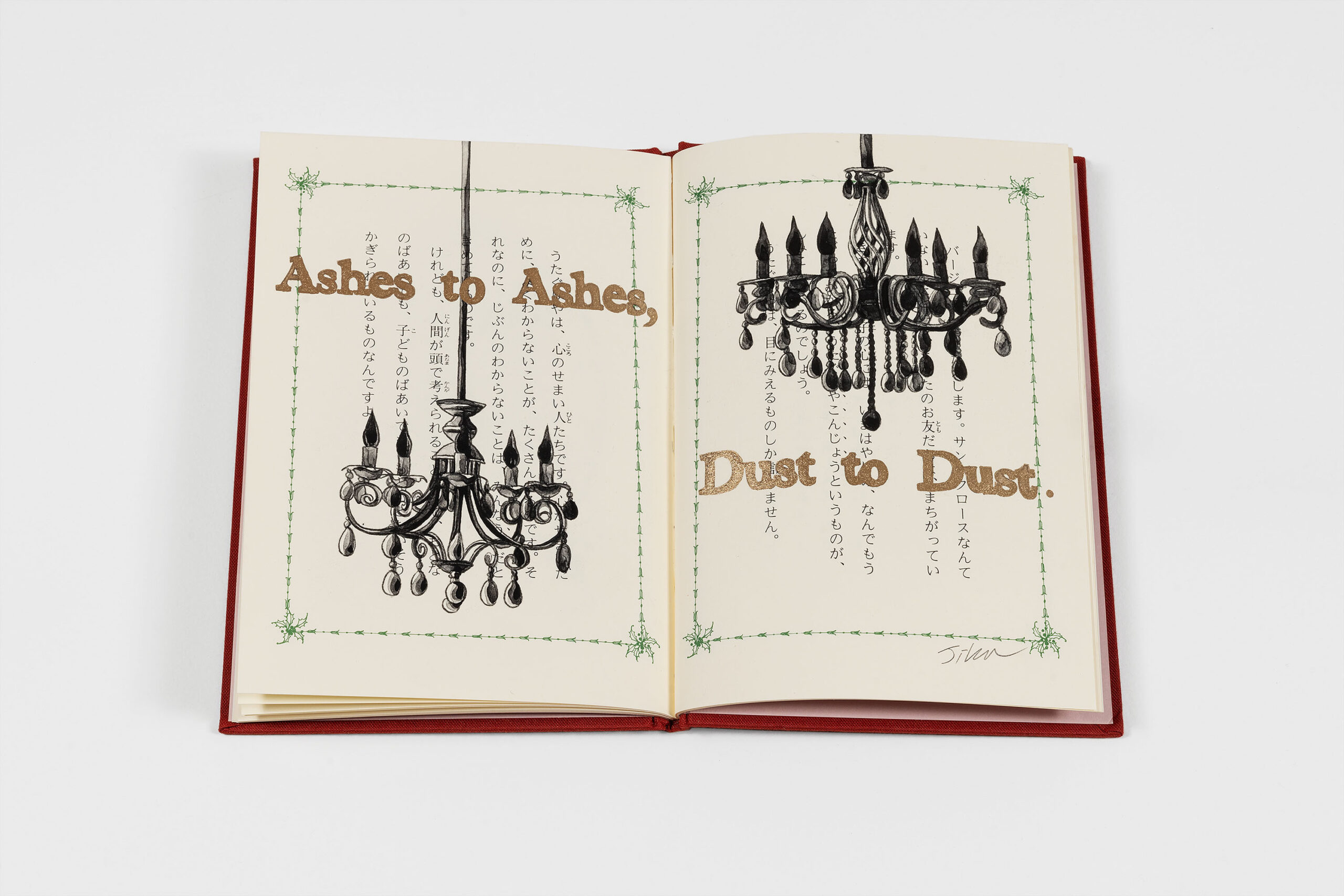
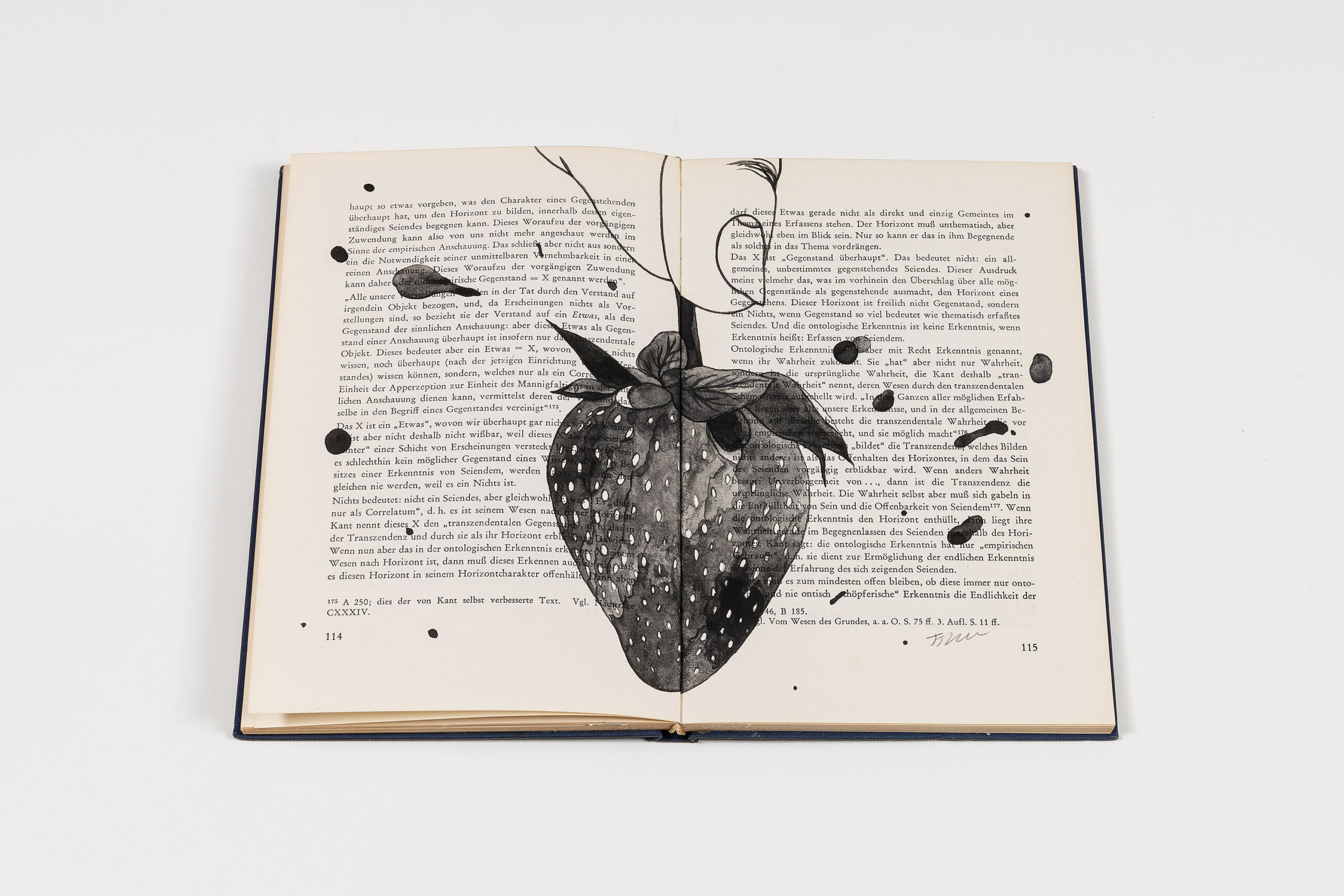
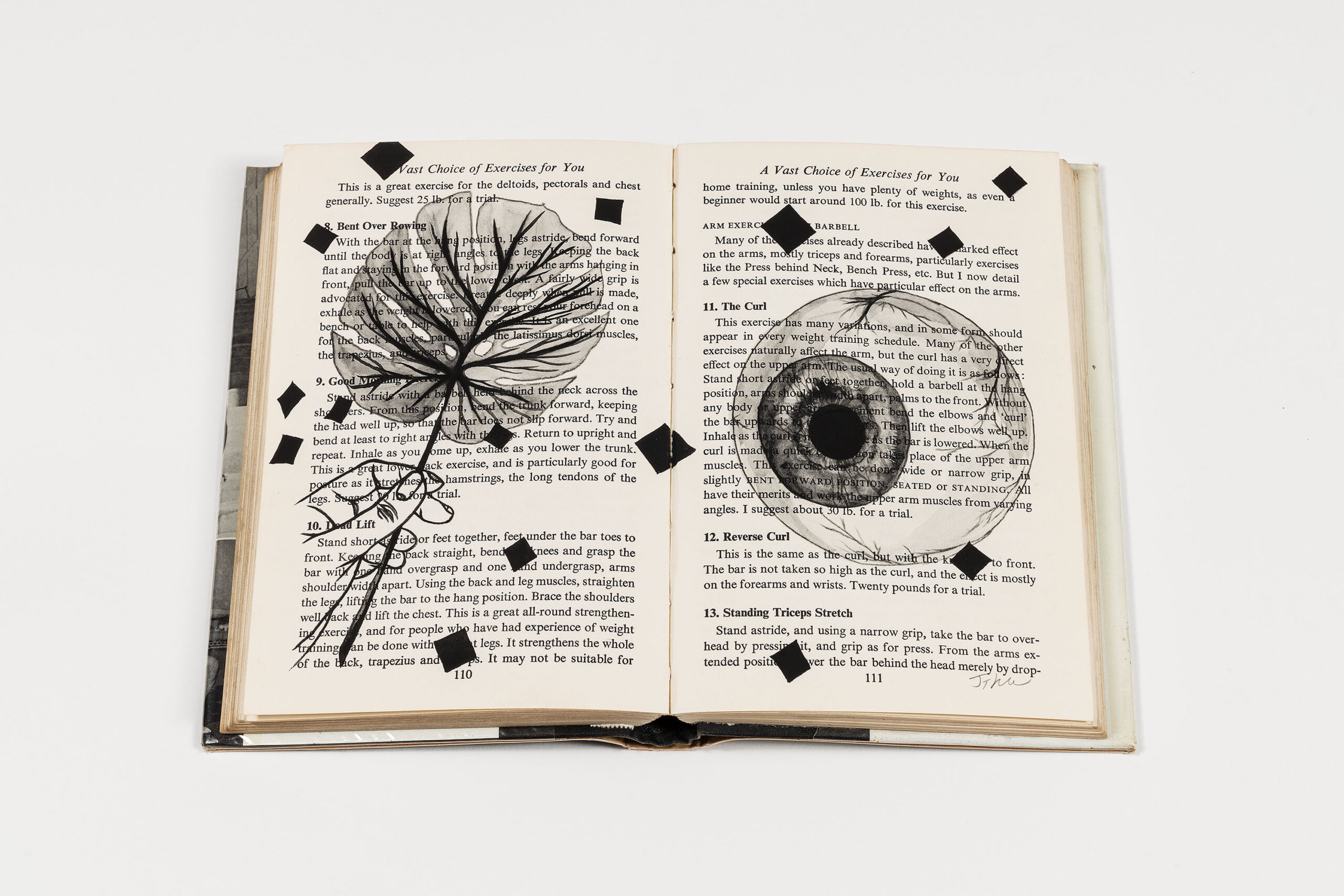
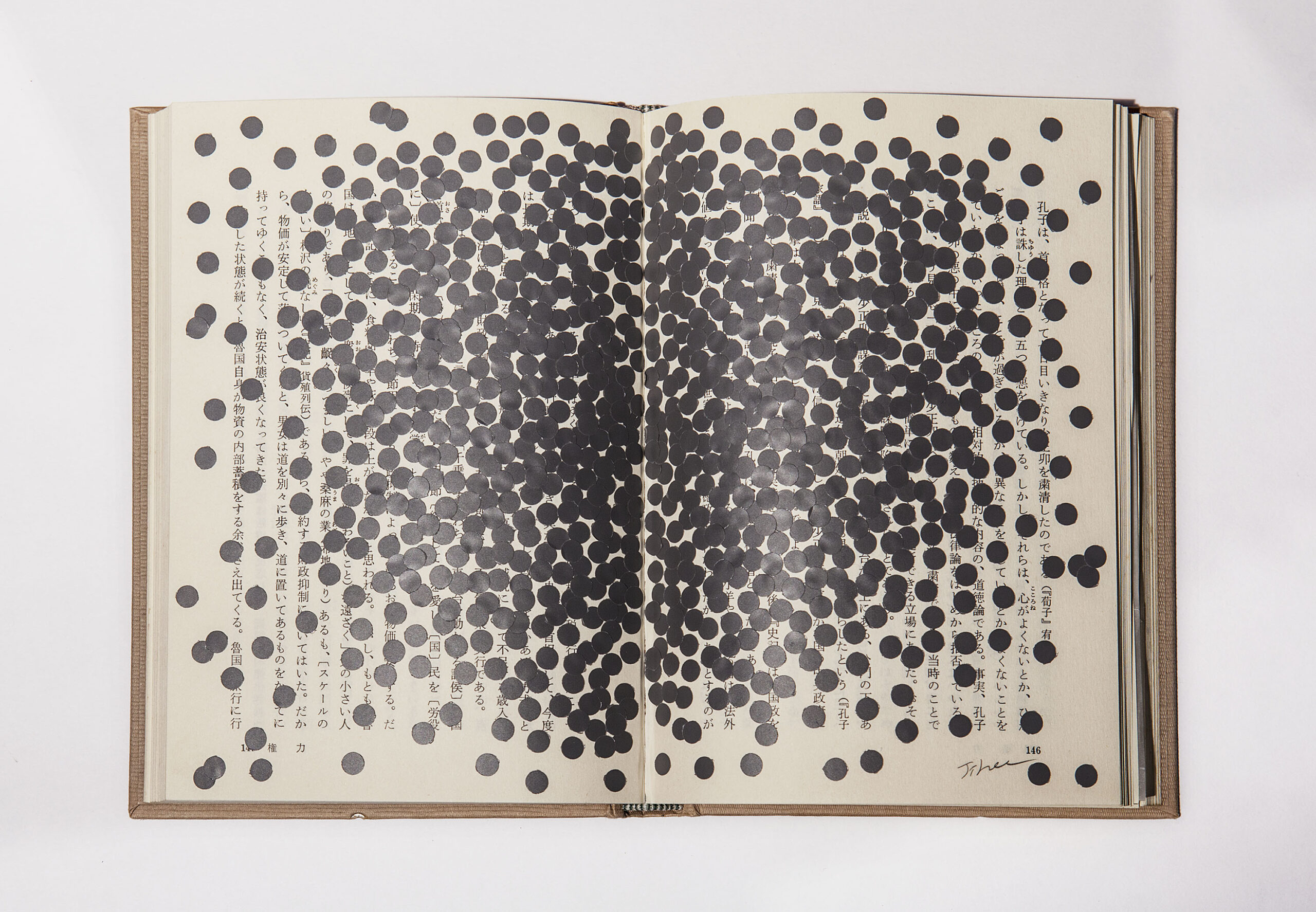
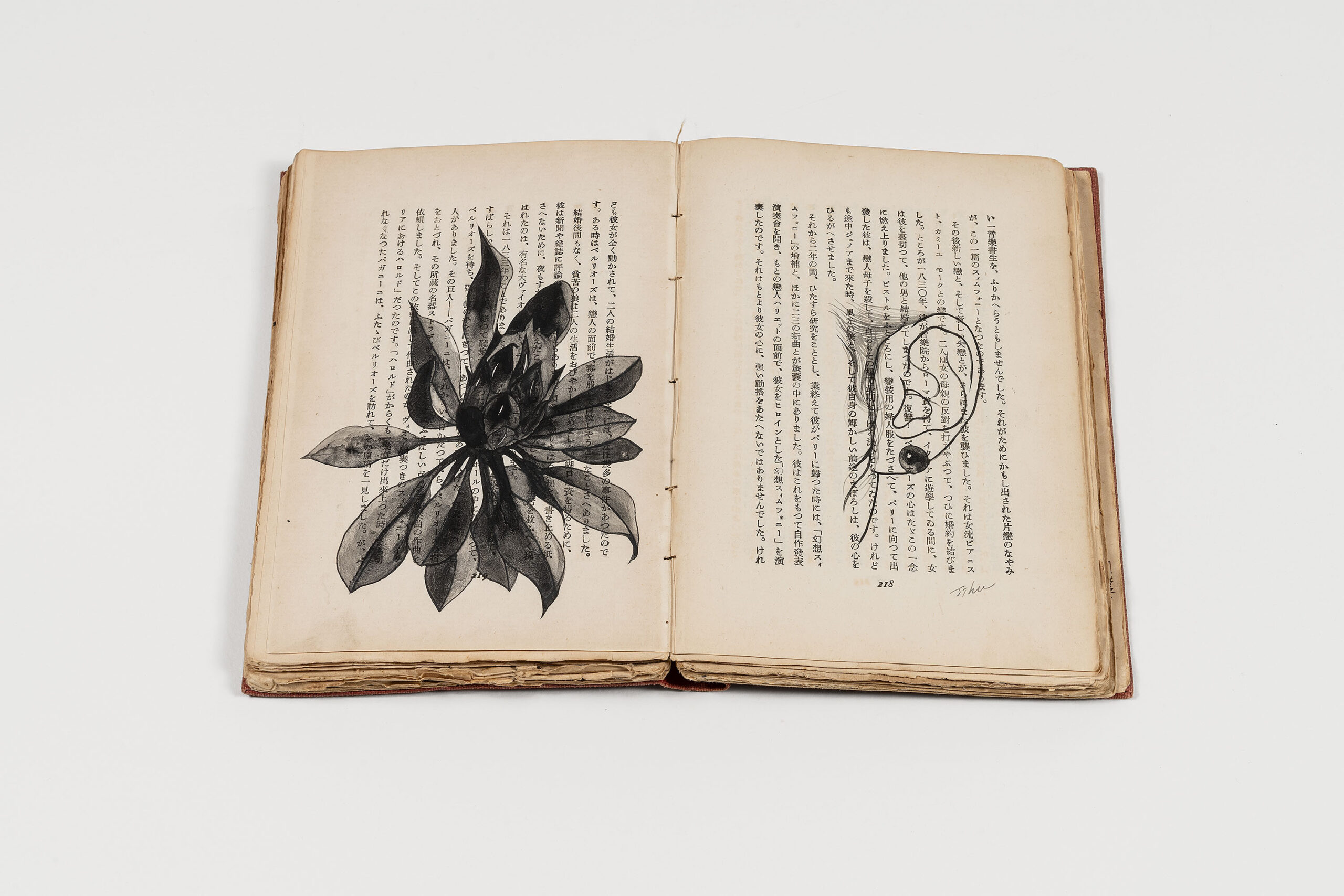
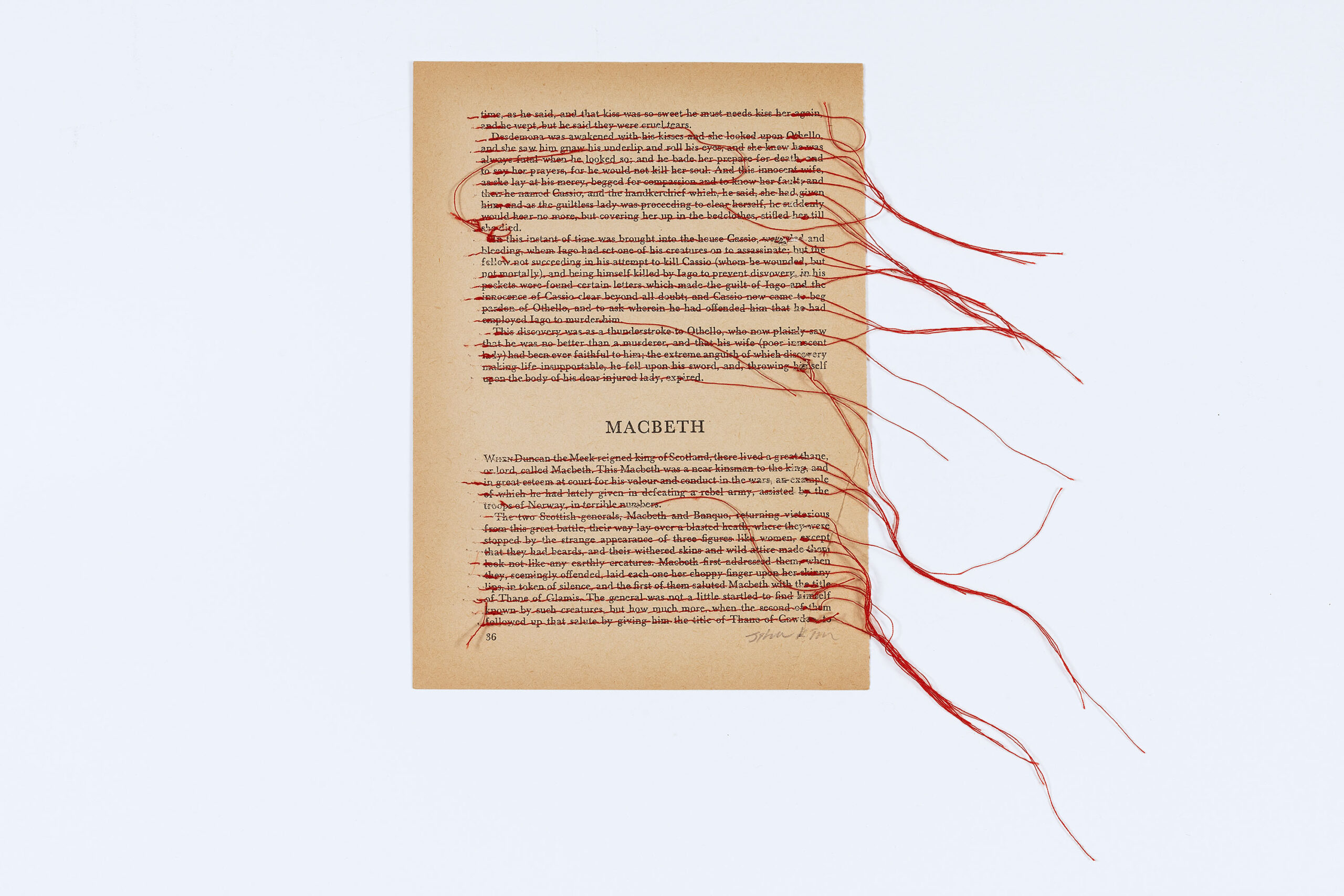
전시장의 초입에는 그림이 그려진 책들이 여러 권 펼쳐져 있다. 북드로잉 연작은 타인으로부터 무작위로 기증받은 책 위에 드로잉을 올려 완성하는 회화로, 애초에 나로부터 출발하는 작업이 아니다. 이는 반드시 타인의 참여와 관심을 전제로 발화할 수 있으며 예상치 못한 형태와 내용의 서적들로부터 시작되는 미지의 여행과도 같다. 작가는 이러한 모험을 기꺼이 받아들이고 한 자아가 격식에 얽매이지 않고 무수한 타자들과 접속하는 방식으로서 이 실험을 지속한다. 흥미로운 점은 임의로 선택된 책에 담긴 글들은 지희킴에게 의미론적 해석 혹은 소통의 필연적 조건으로 취급되지 않는다는 것이다. 도리어 주어진 기표는 기존의 의미로부터 충분히 해방되며 다음 사용자가 생성하는 서사가 침투할 수 있는 순수한 배경이다. 앞서 언급한 것처럼 사물, 인간, 자연의 형태 등 기존의 의미망에서 탈주한 대상에게 보다 열린 위치를 확보해 주는 일은 지희킴의 작업을 지탱해 온 구심점이었다. 요컨대 여러 도시들로부터 도착한 책은 작가에게 무작위로 주어진 타인의 세계이자 기억이면서도 주관적 사유의 레이어를 더할 수 있는 잠재된 가능성이 된다.
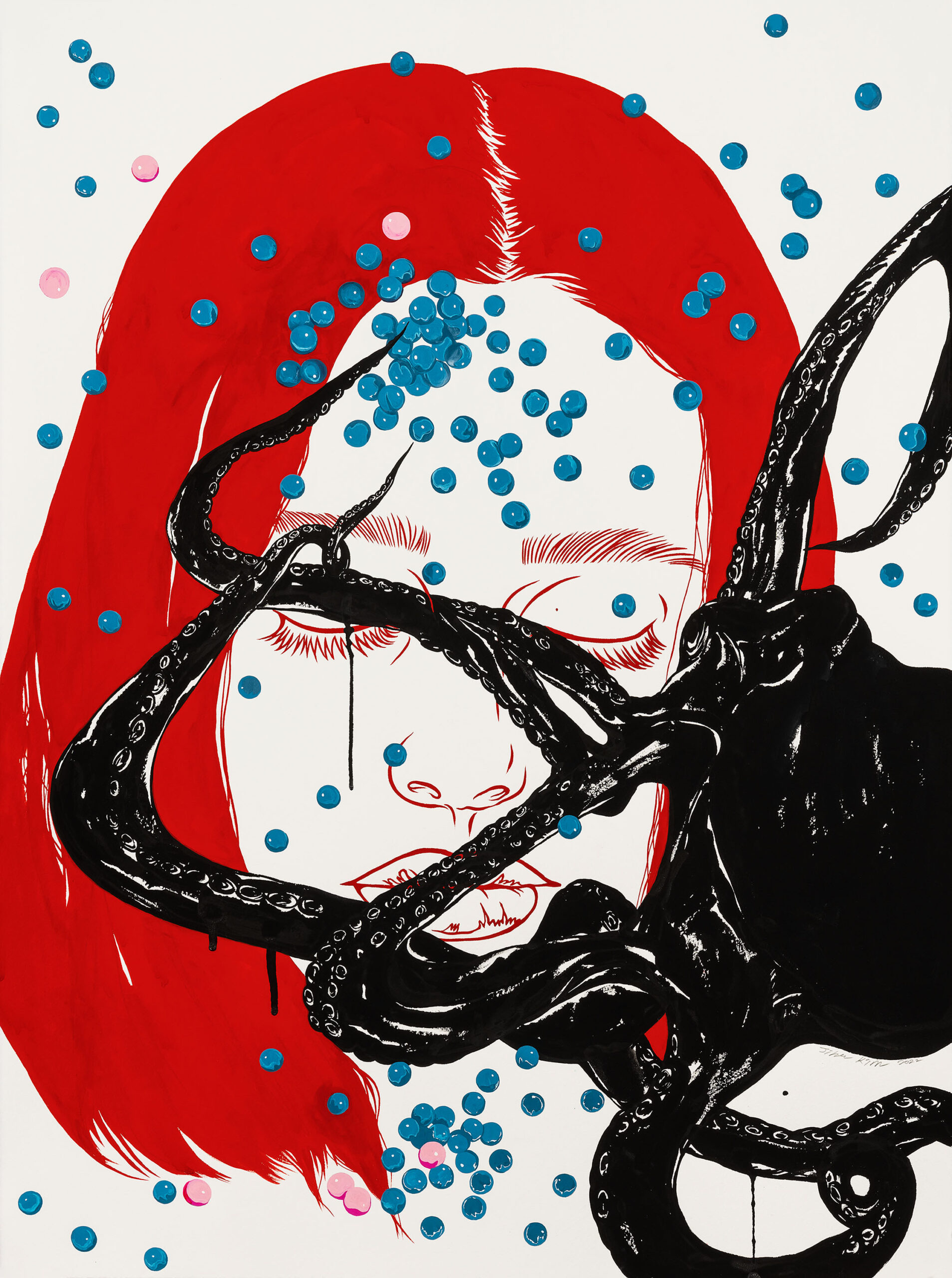
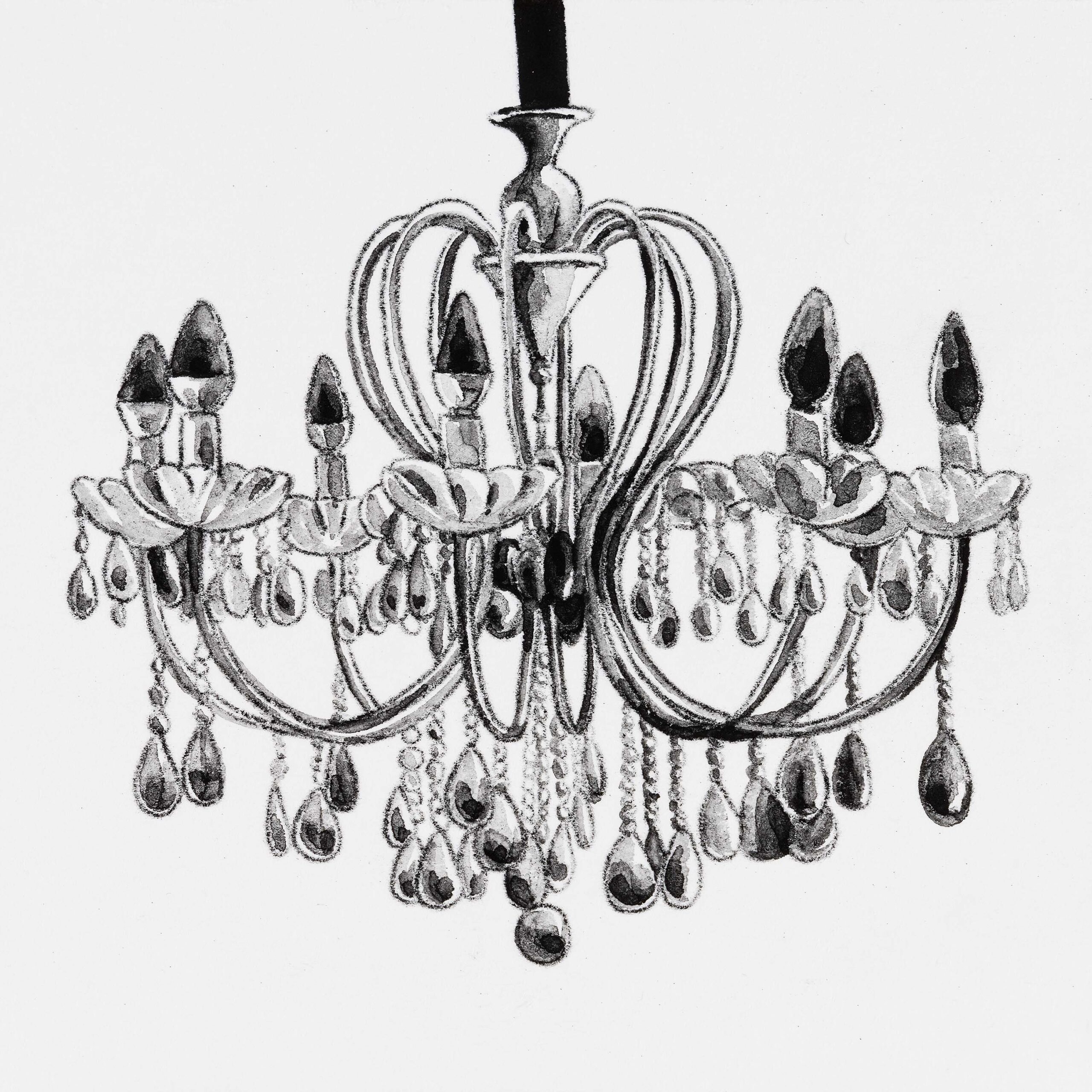
이미 쓰인 것들을 가리며 생겨나는 색과 농담은 그가 떠올린 인물들이 느꼈을 크고 작은 감정적 파장들을 반영한다. 그런데 어쩐지 고양이, 나비, 문어, 샹들리에, 체리 등 두서없이 흩어진 도상에는 색이 없다. 이는 내가 아닌 타자의 일상을 자신의 것과 나란히 놓아보면서도 그들의 영역을 단일한 목소리로 오독하거나 대상화하는 섣부른 오류를 범하지 않으려는 작가의 세심한 마음을 보여주는 듯하다. 대신 관객들은 역으로 작가가 제시하는 여러 사물의 도상과 또 다른 누군가가 쓴 텍스트 사이를 오가며 무궁무진한 시각적, 관념적 유영을 경험할 수 있다. 능동적인 기호 읽기는 주어진 정보를 그대로 받아들이기보다 접속하는 시공의 특수성과 과거를 연결하며 현재의 감각적인 경험을 생산하는 것이다. 그리고 북드로잉 연작은 독자로 하여금 텍스트와 이미지 사이에서 그 실천적 과정을 직접 수행하도록 격려한다.
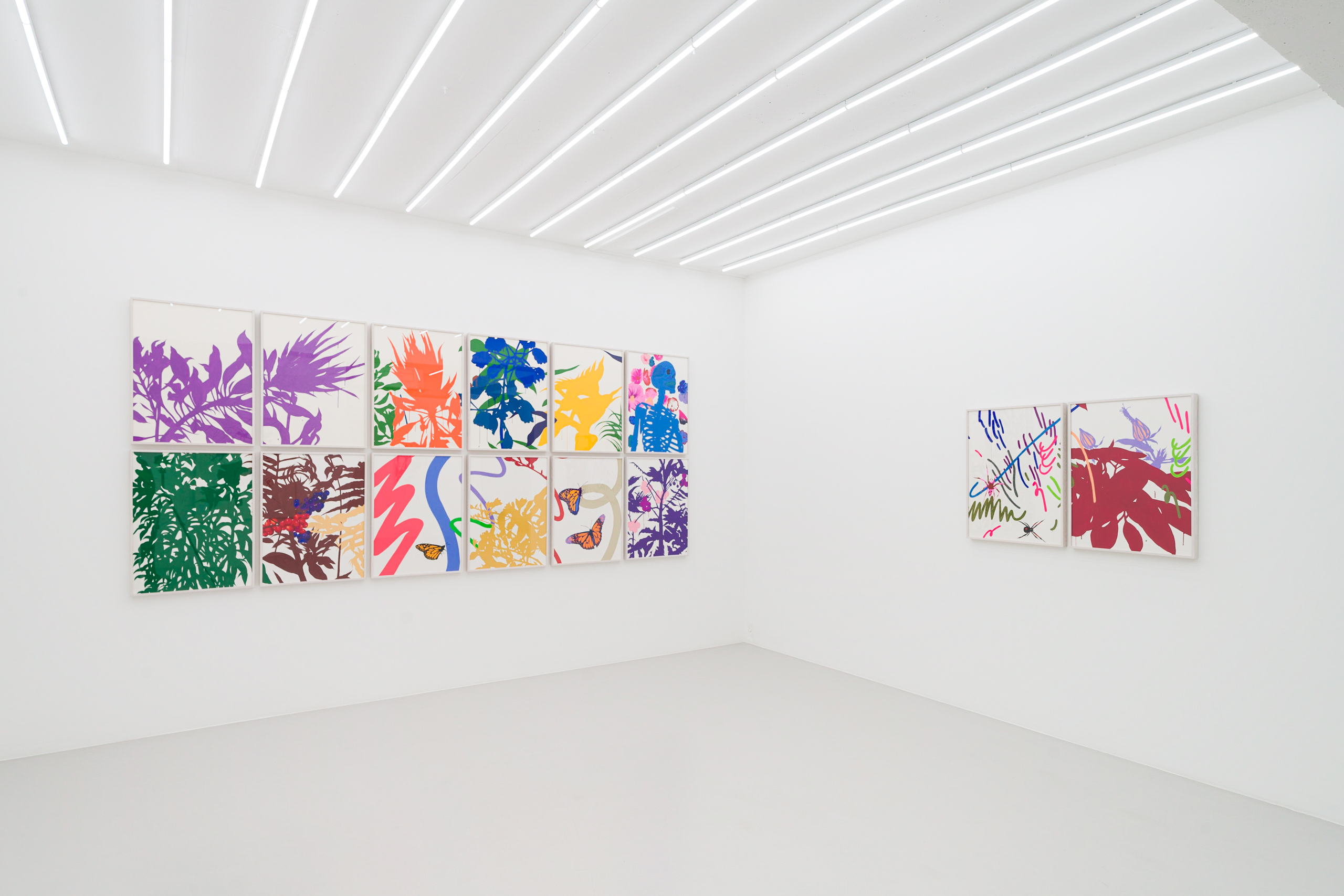
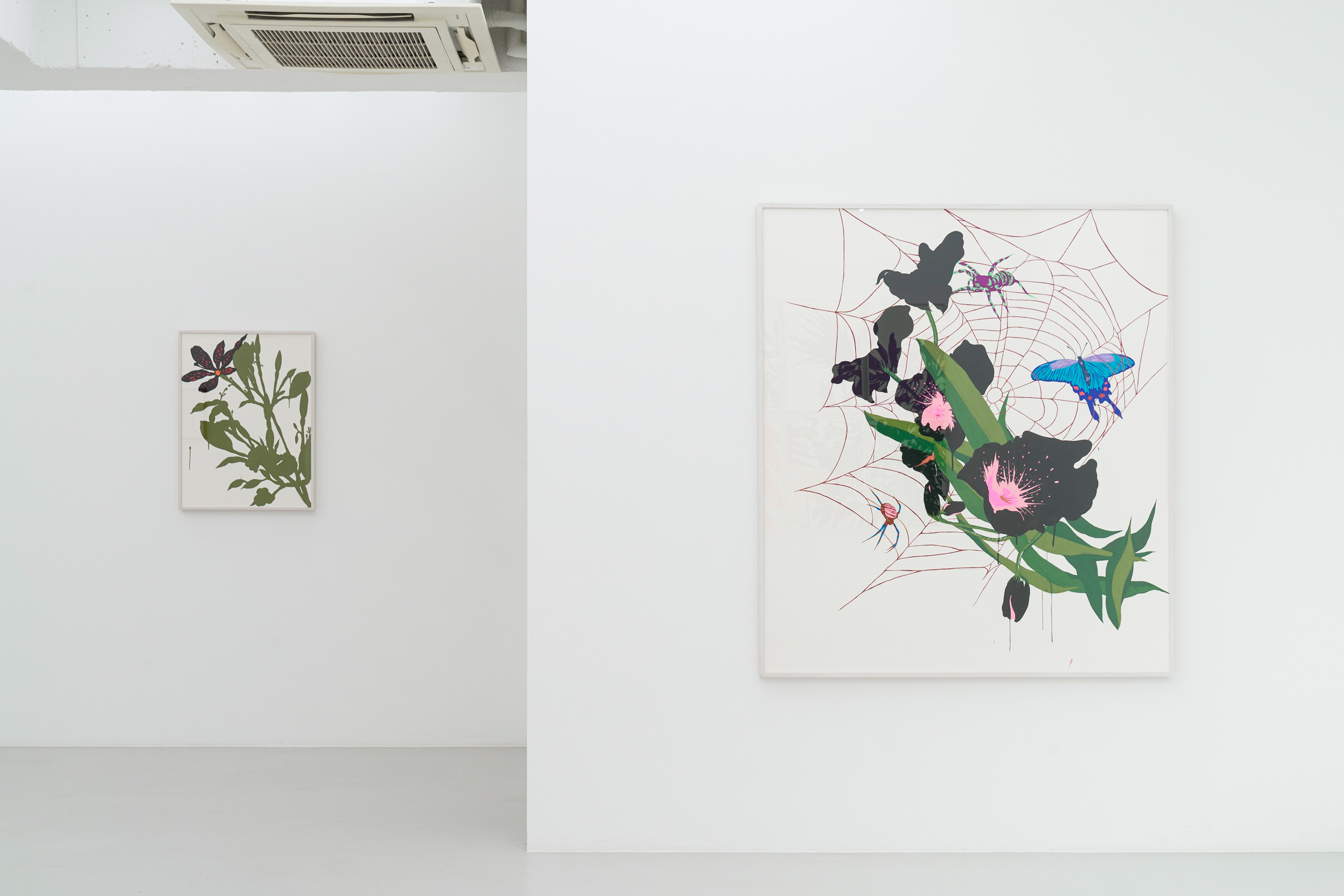
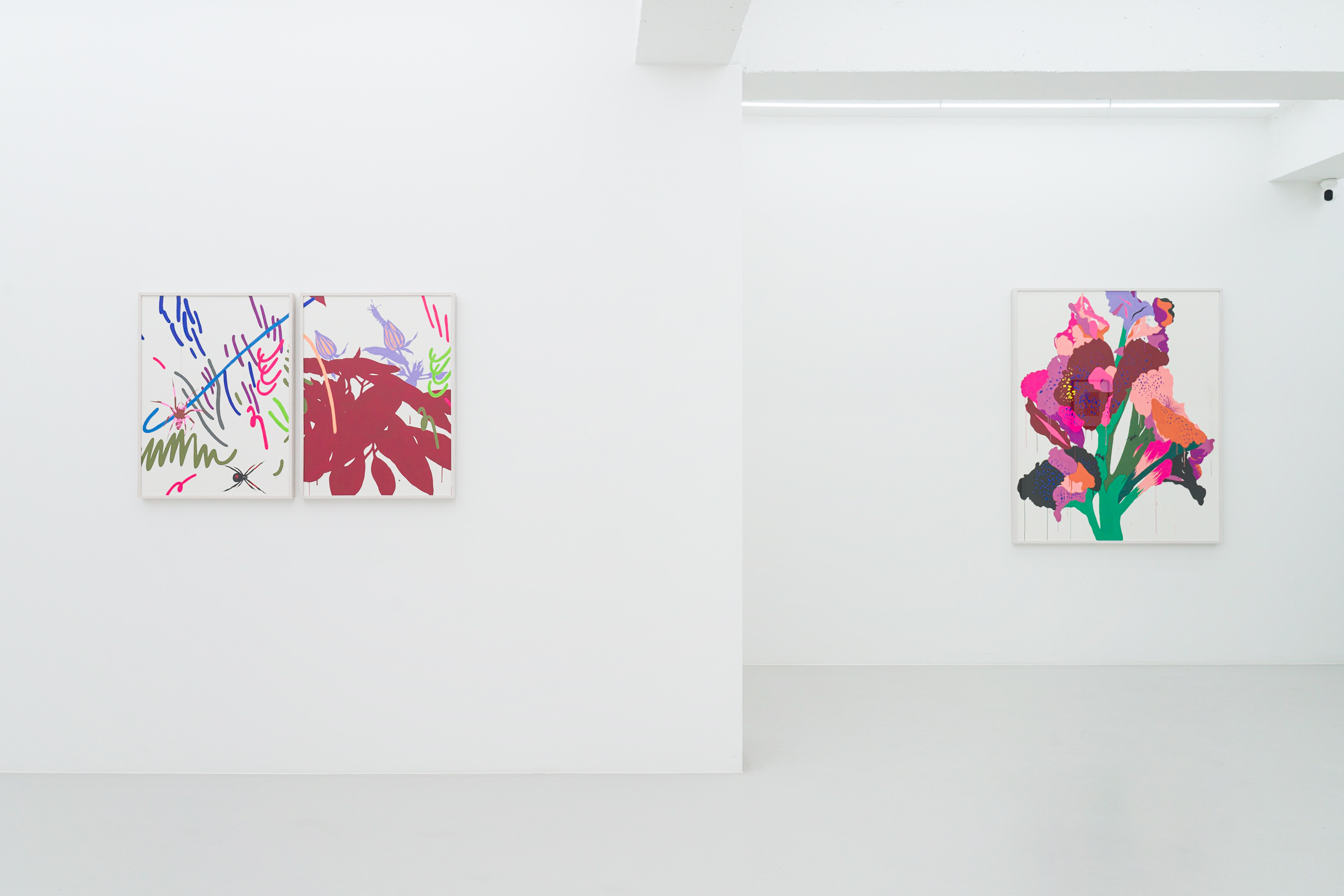
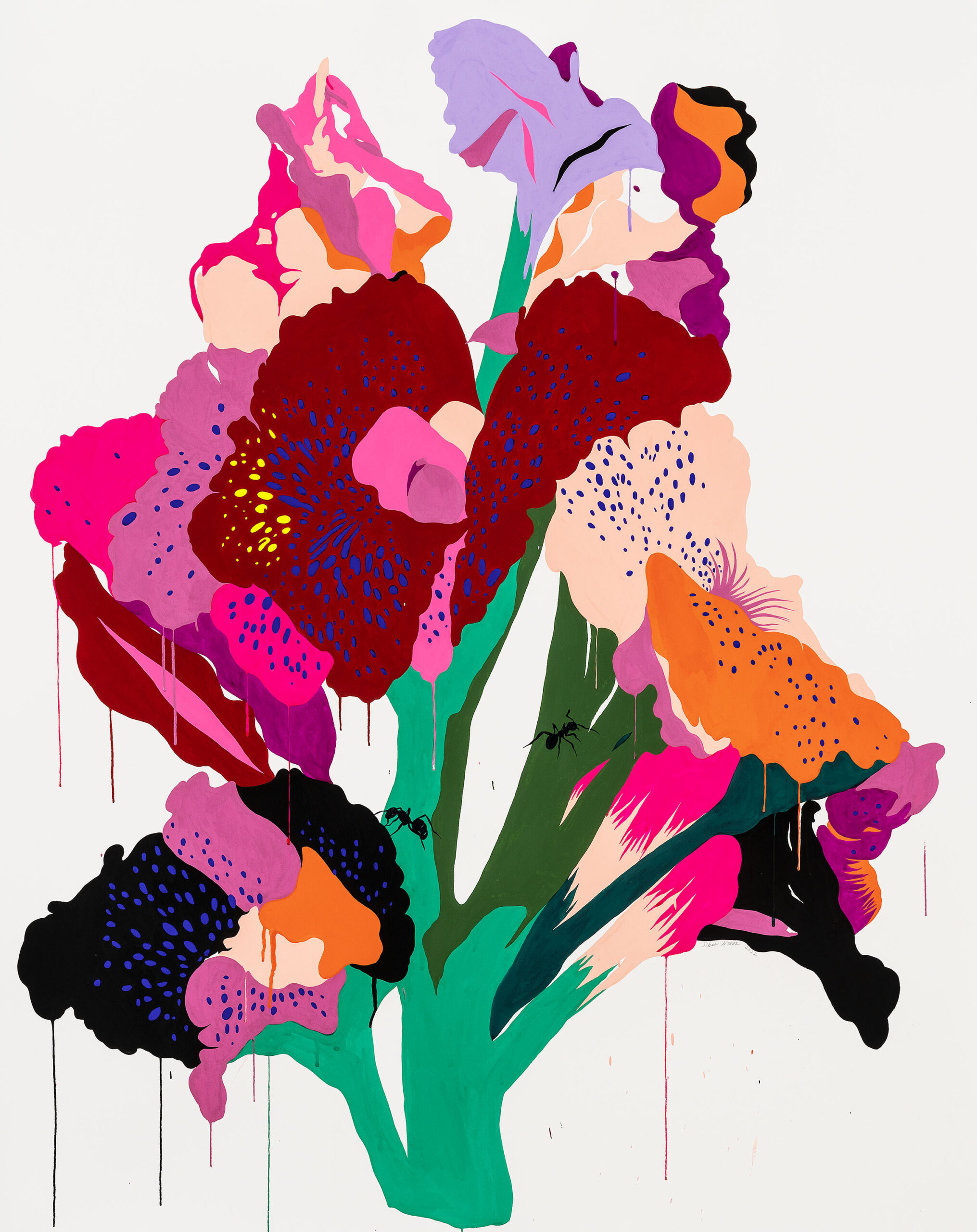
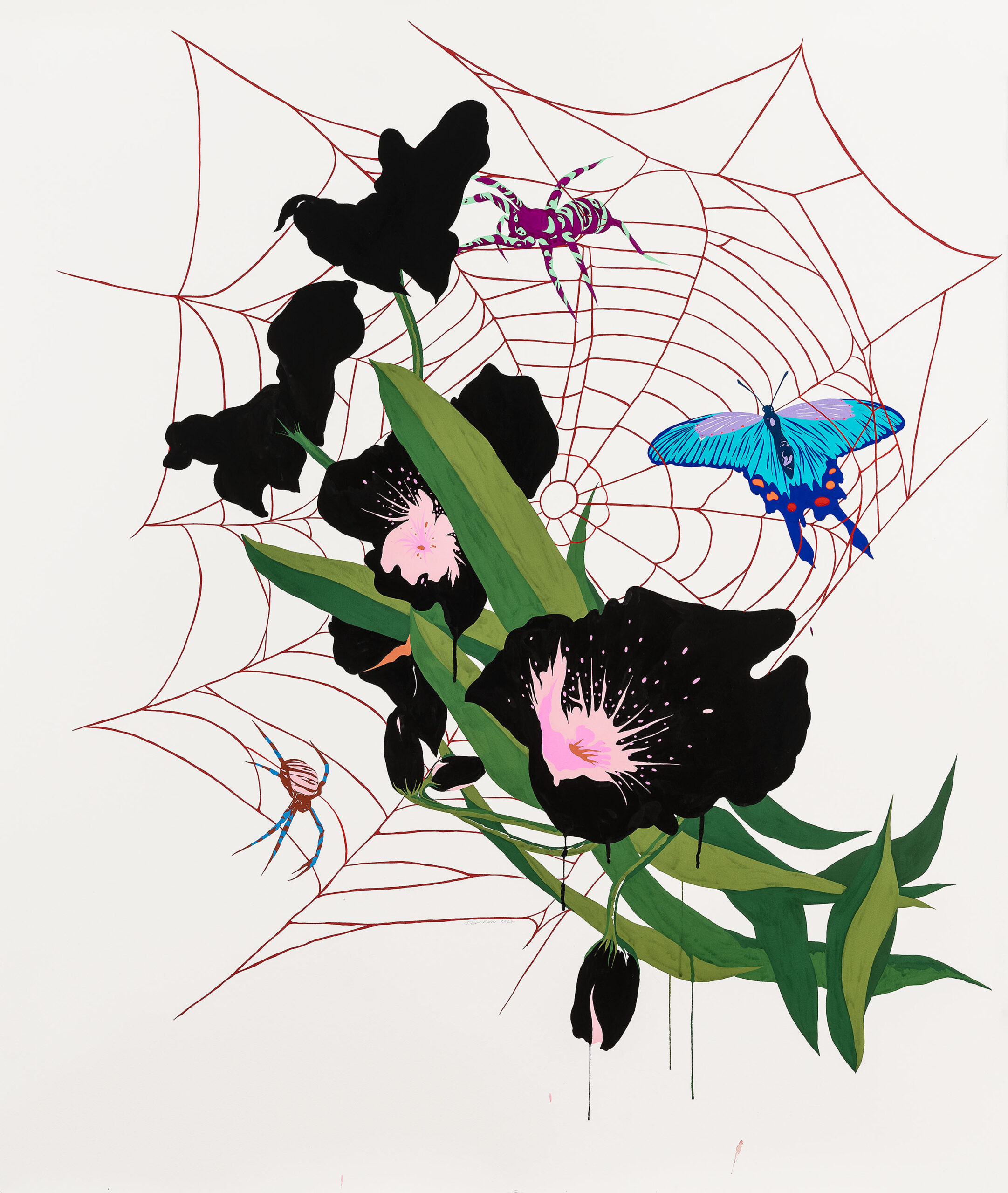
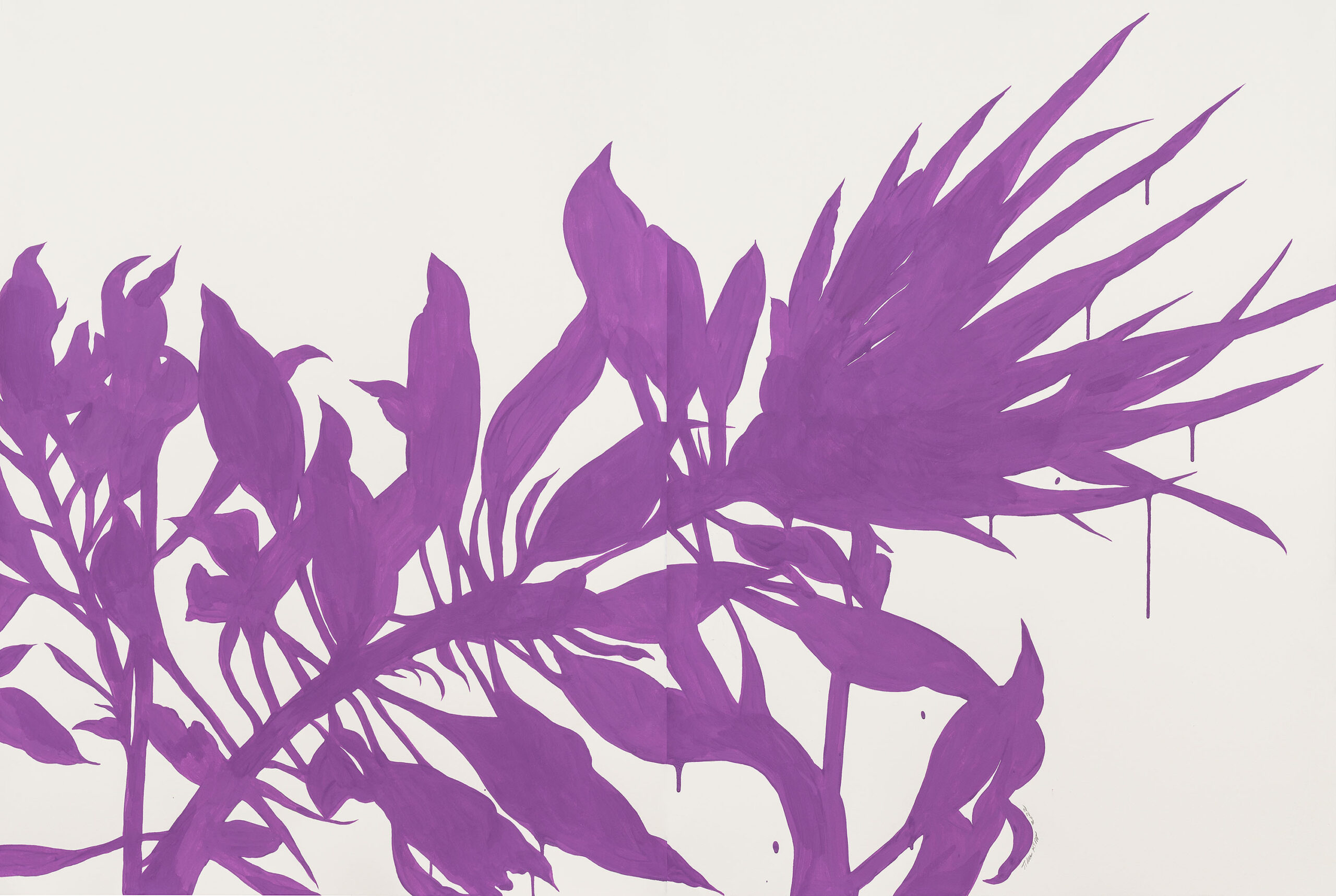
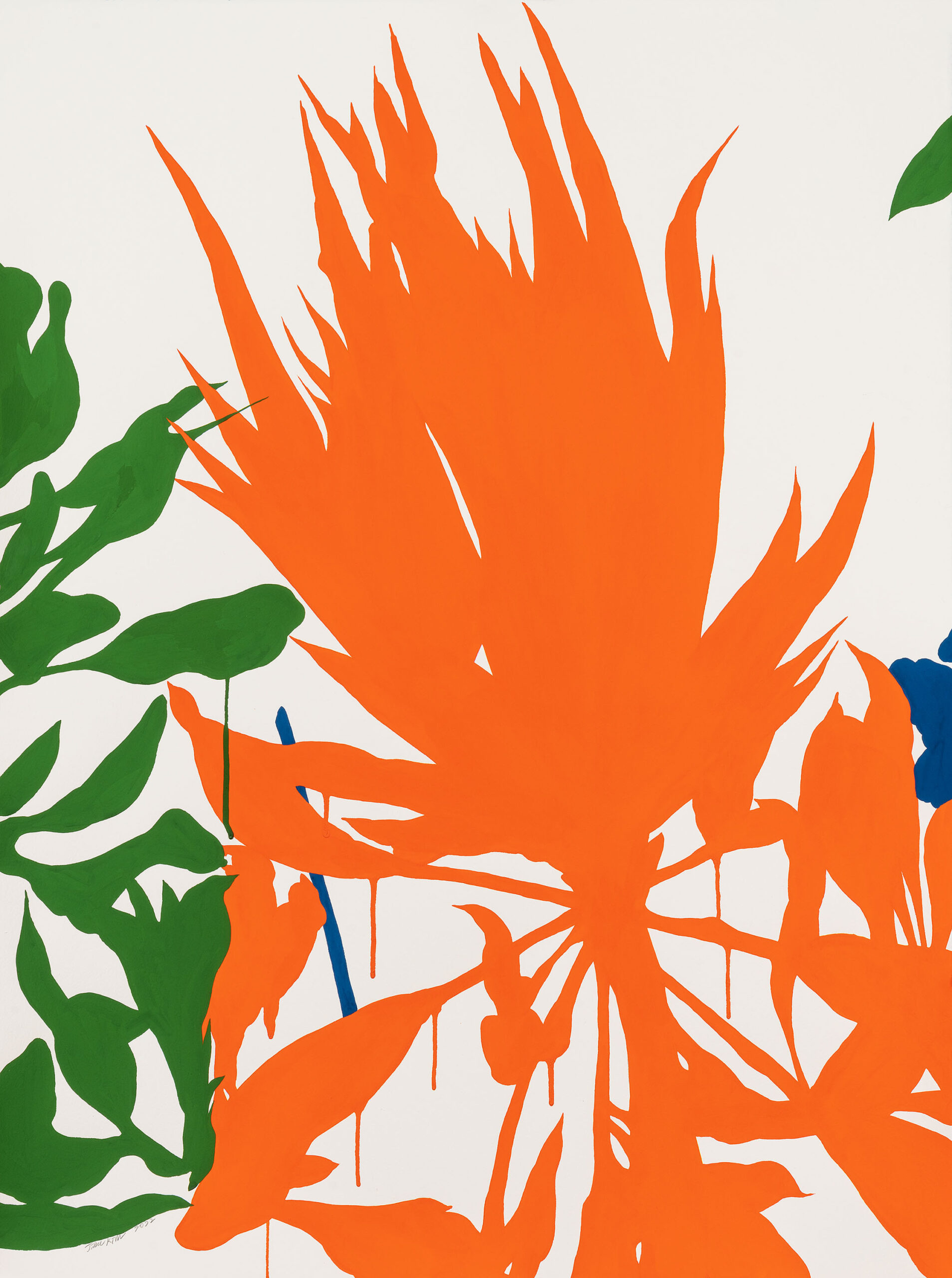
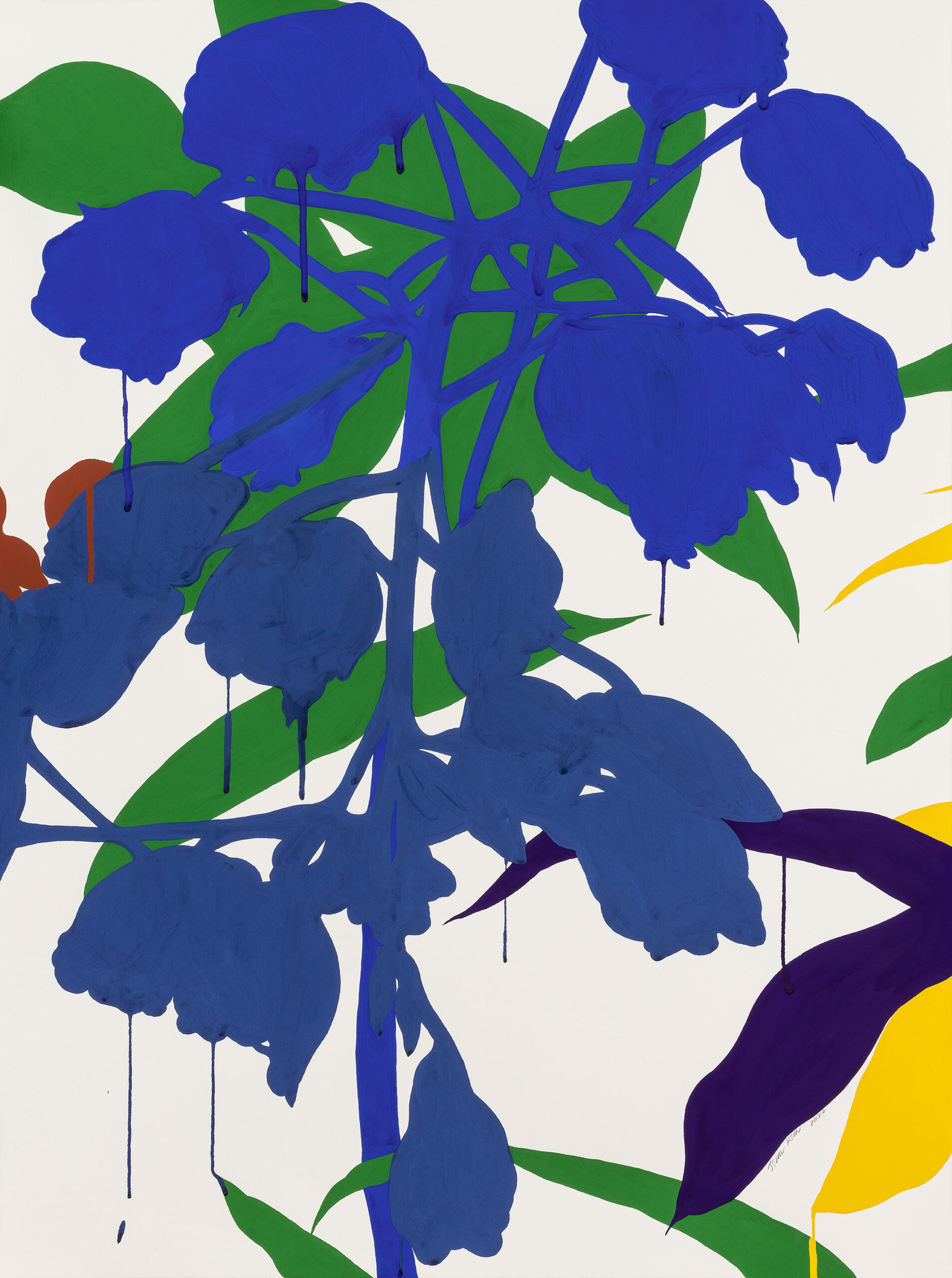
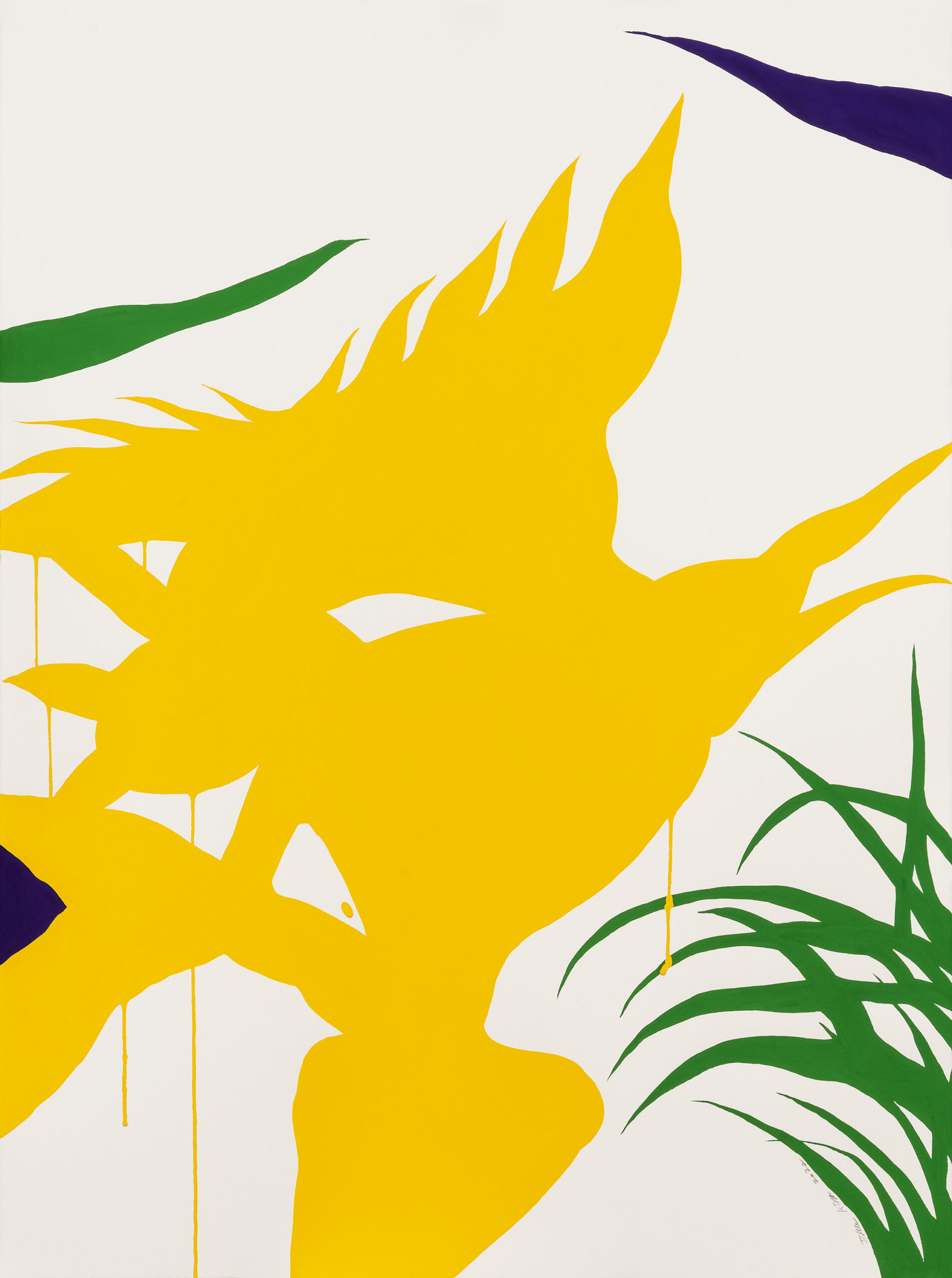
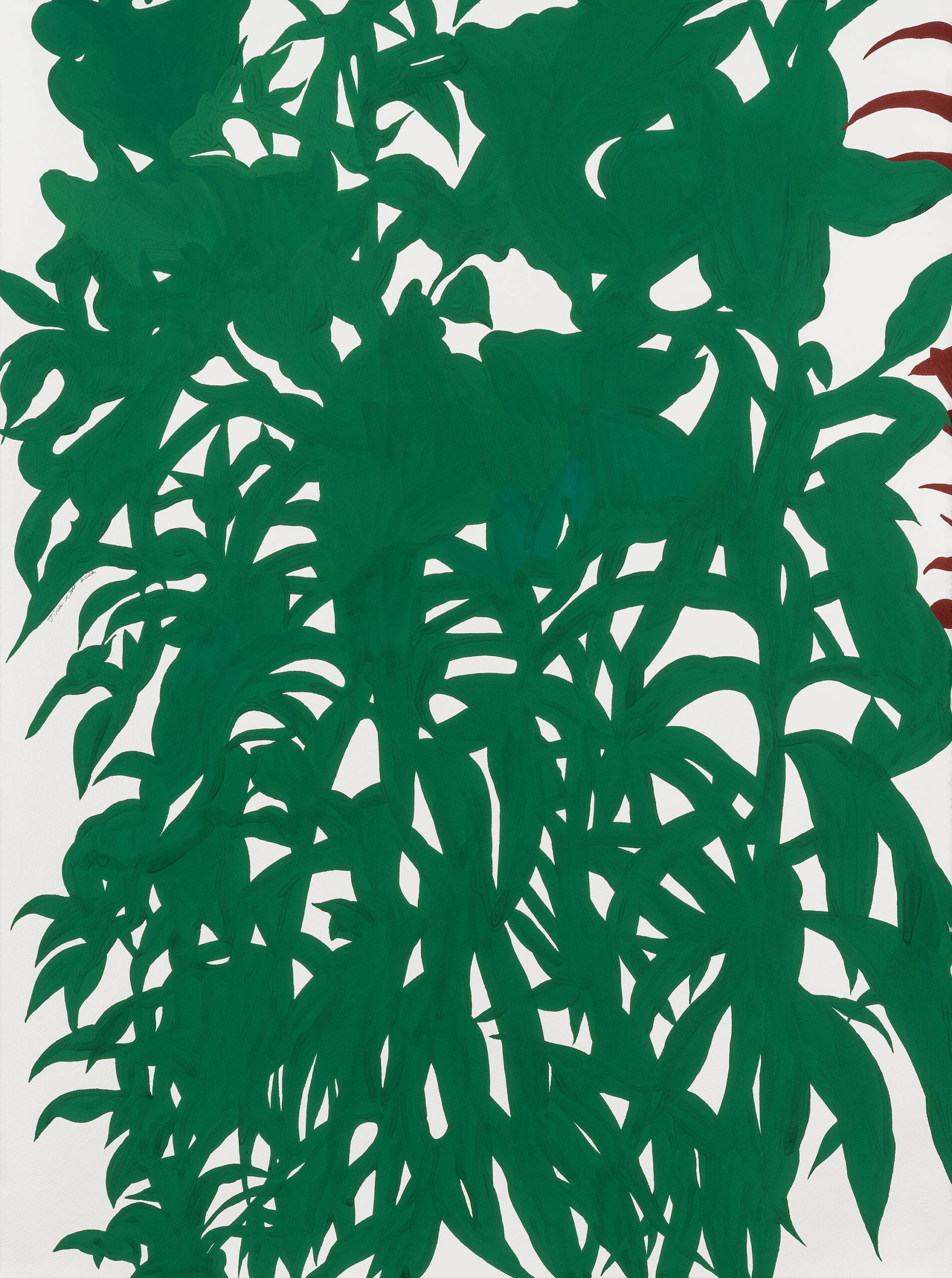
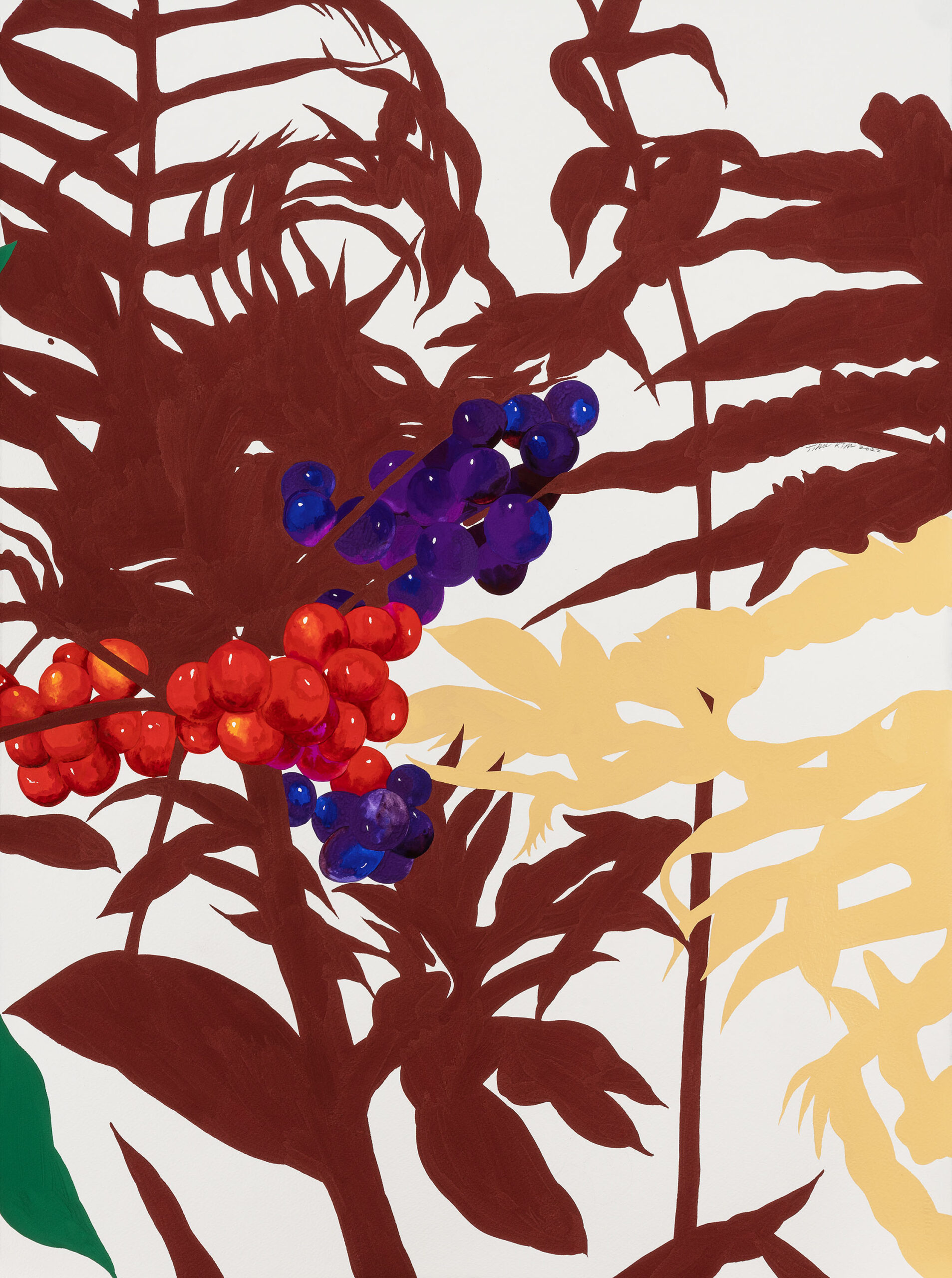
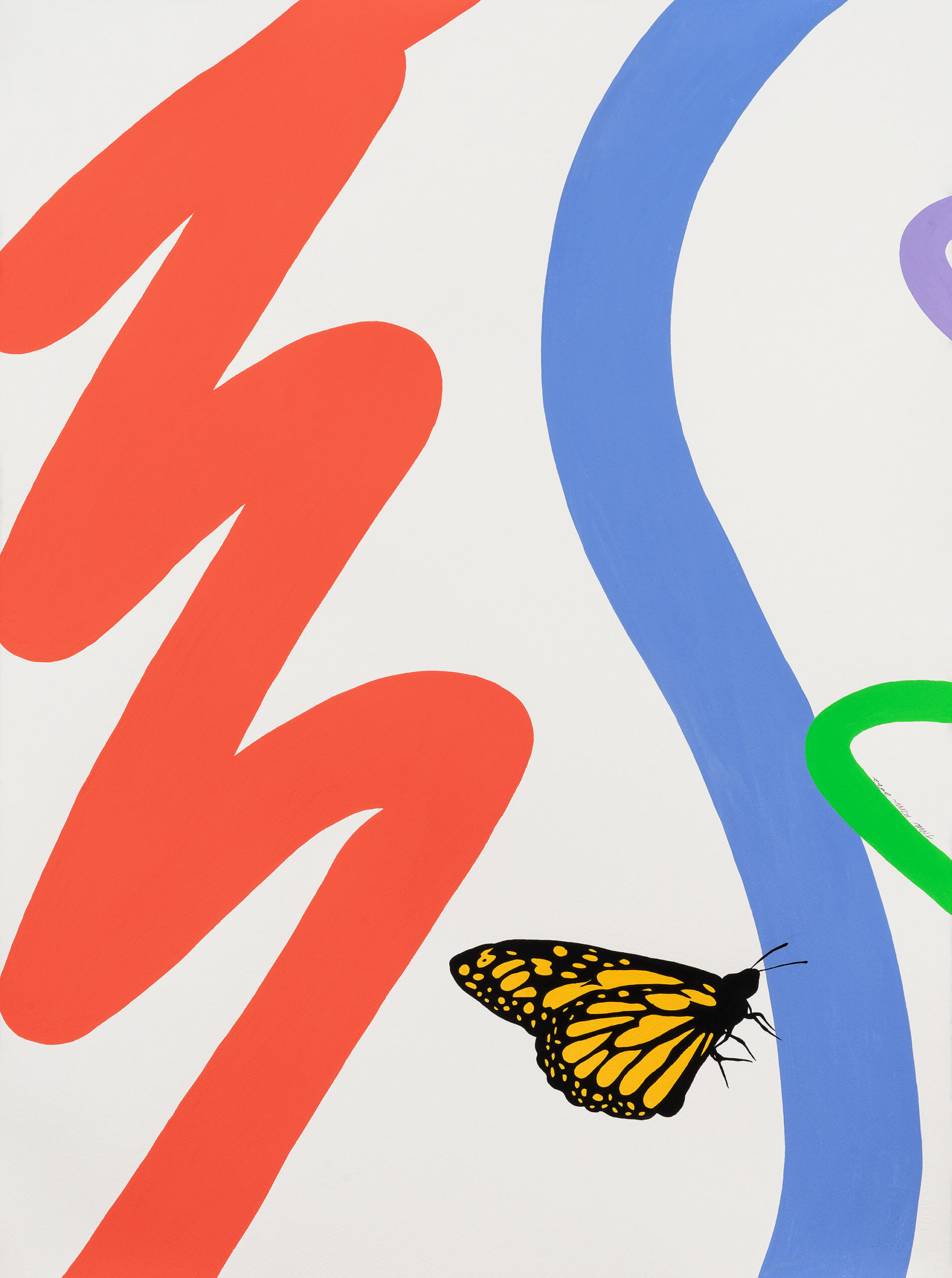
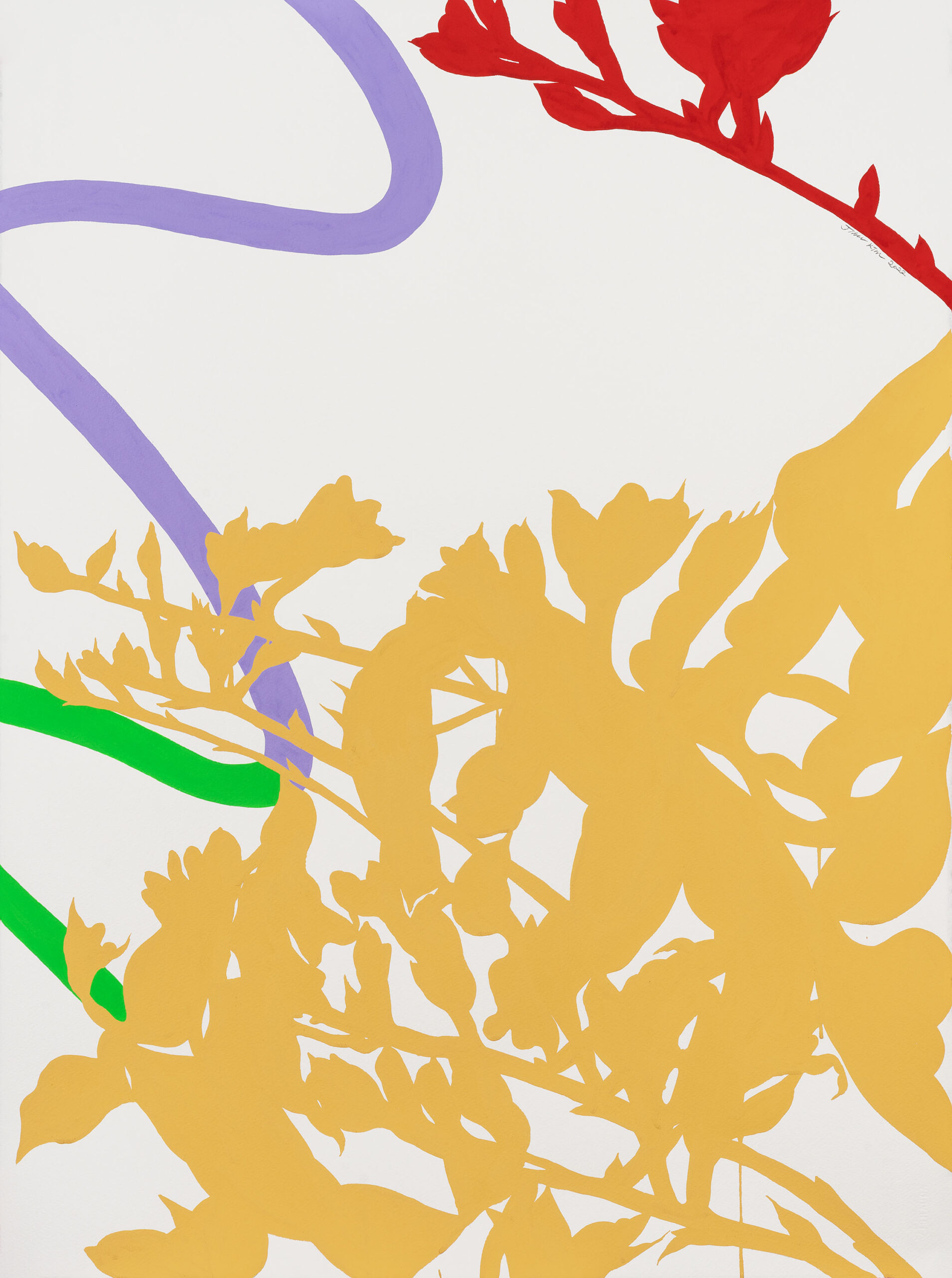
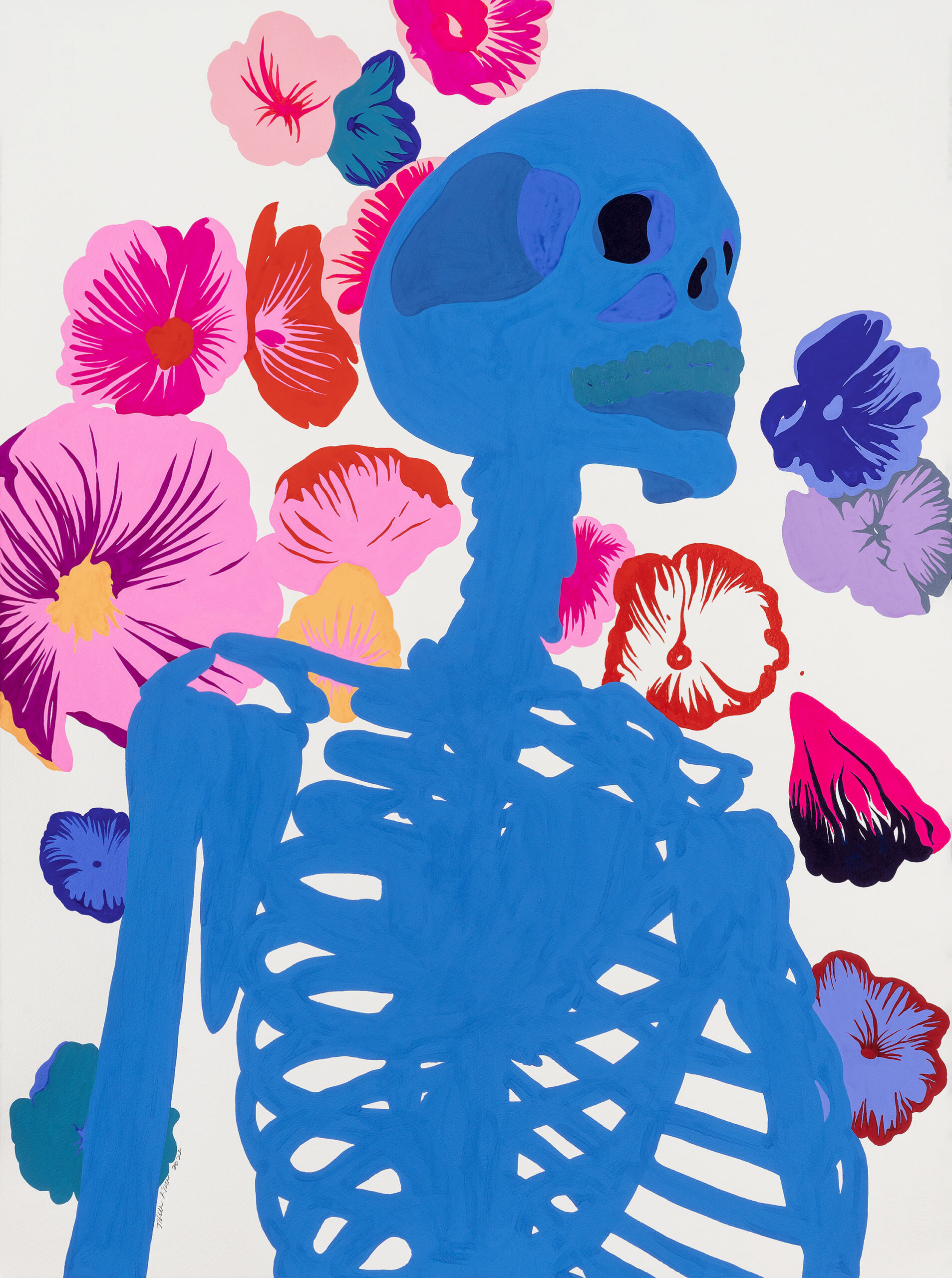
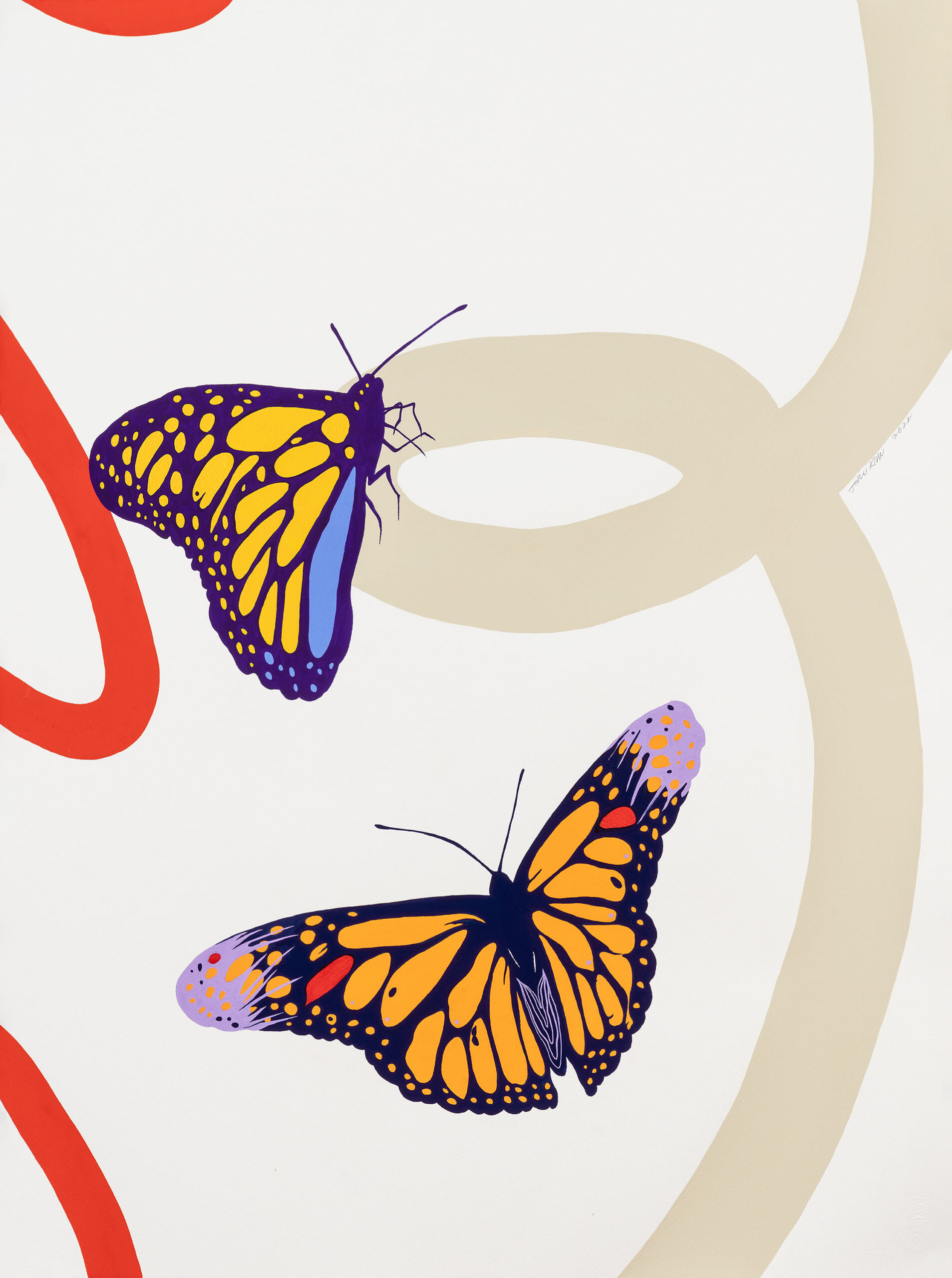
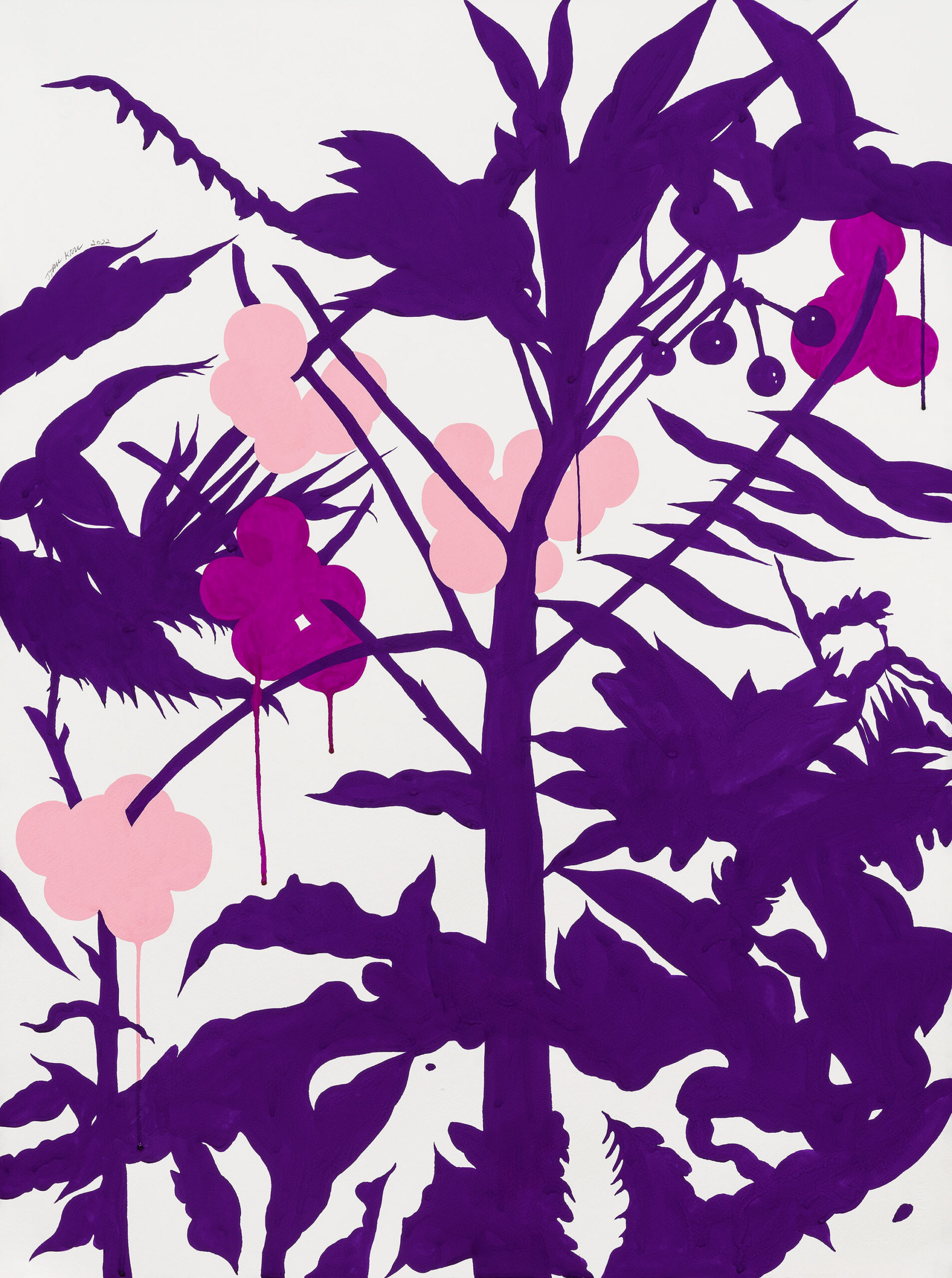
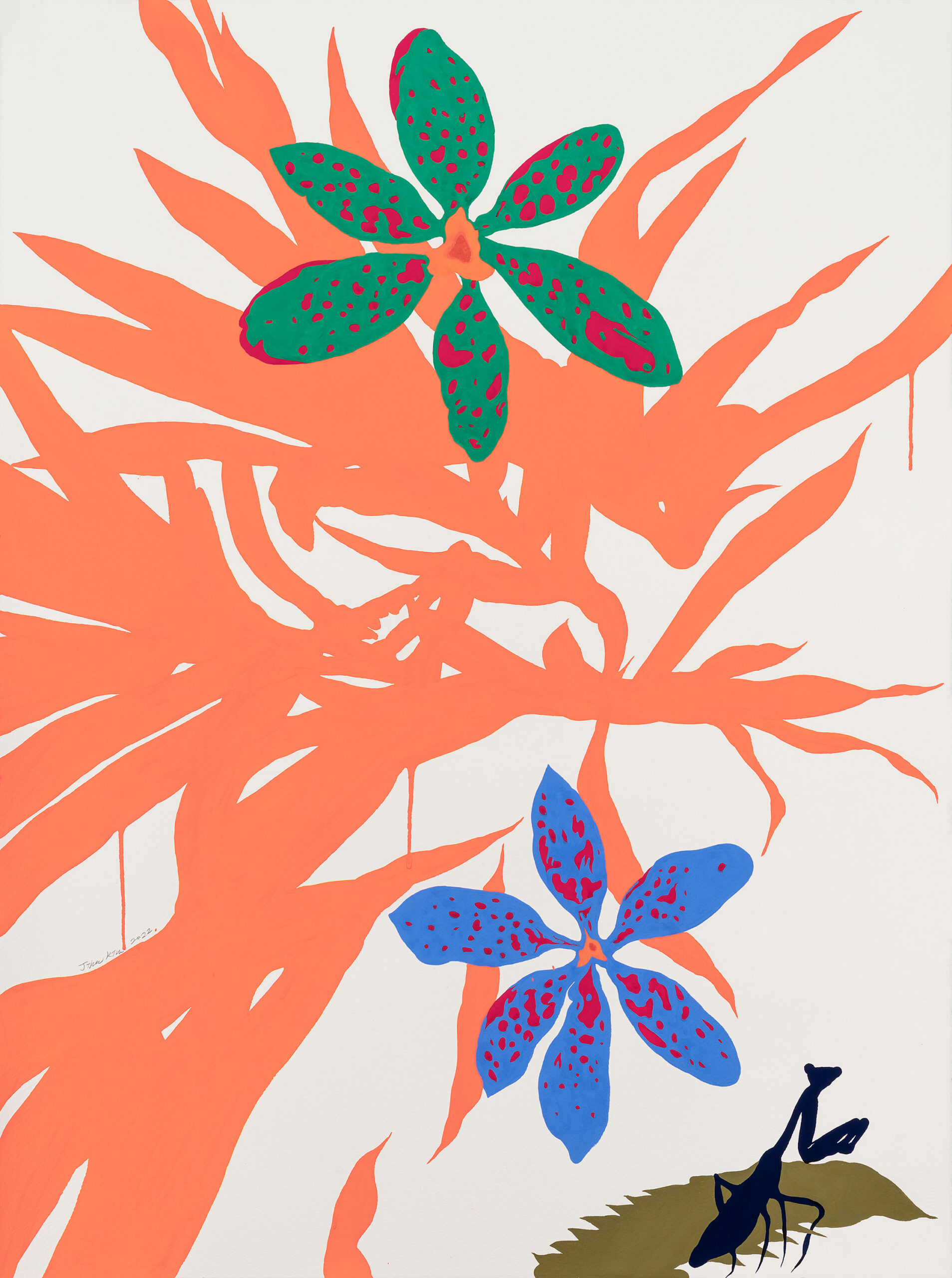
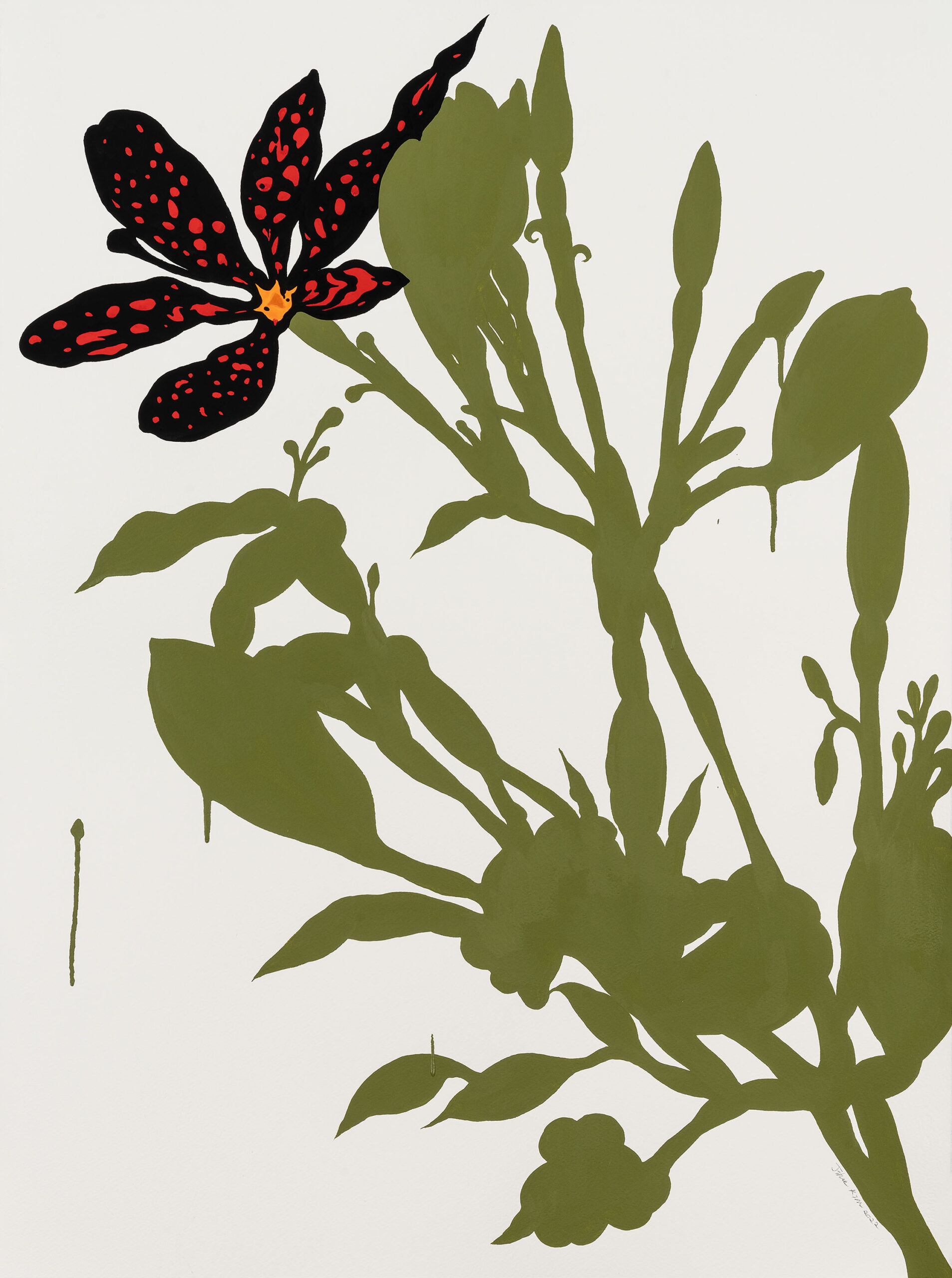
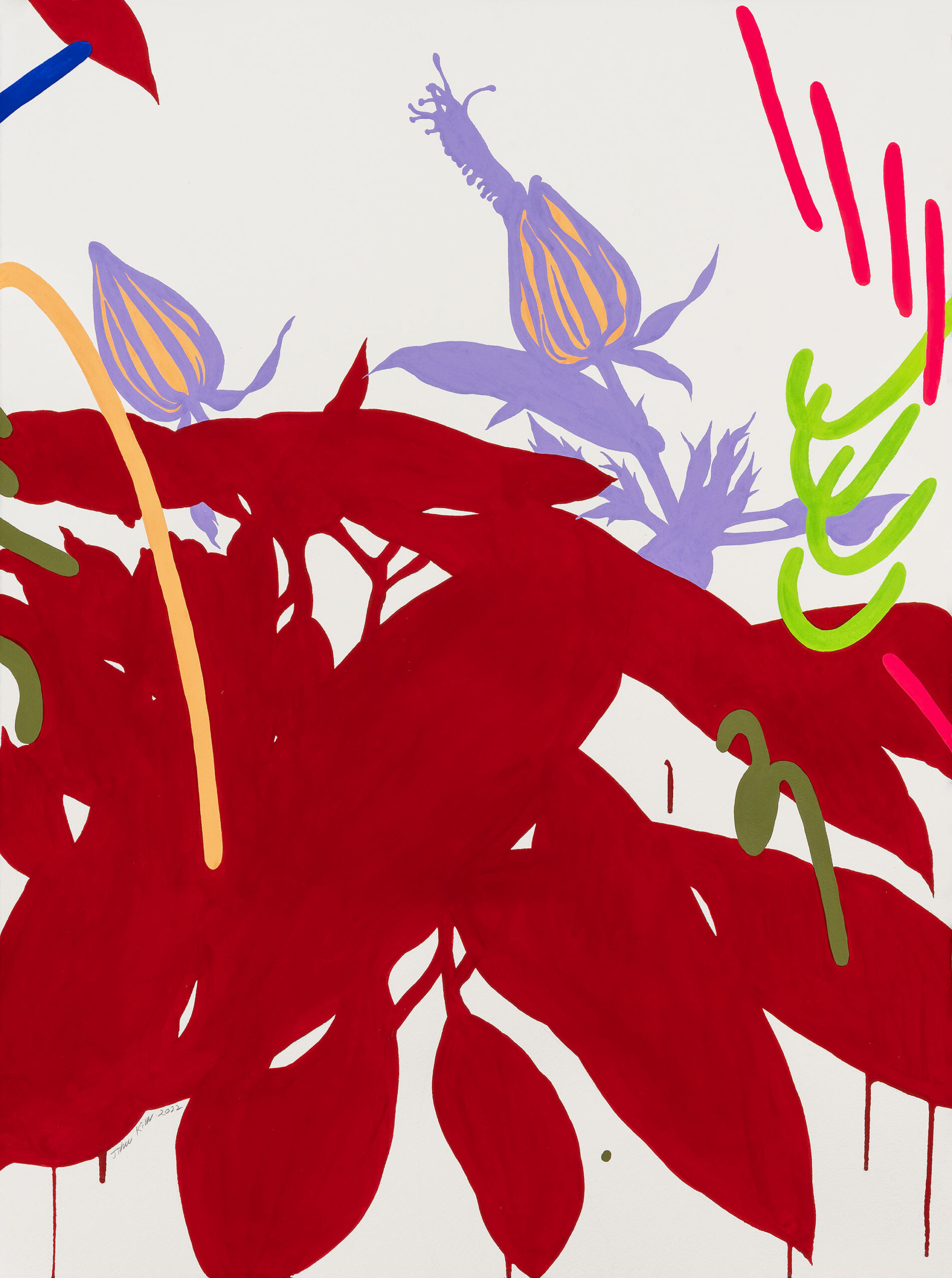
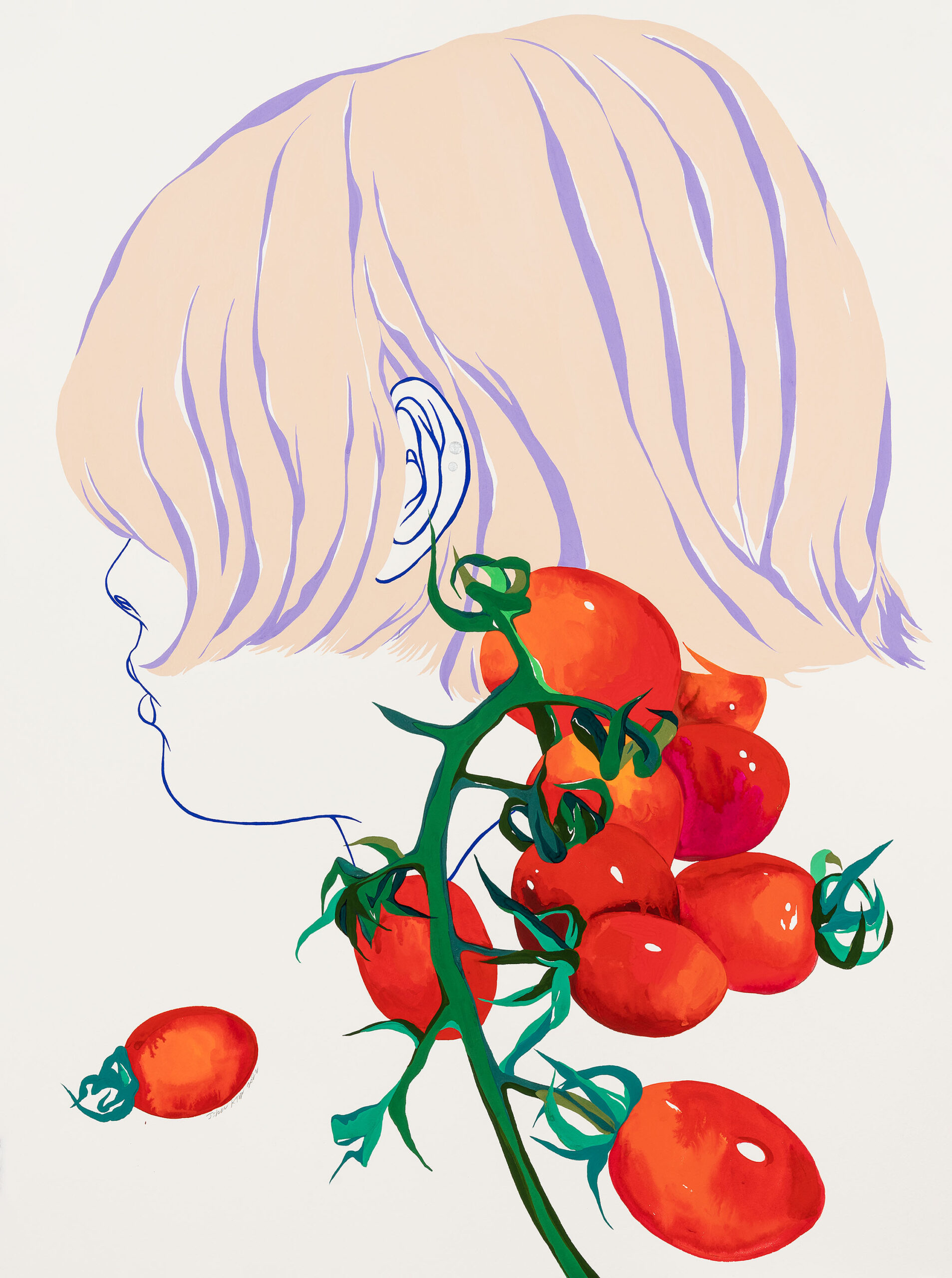
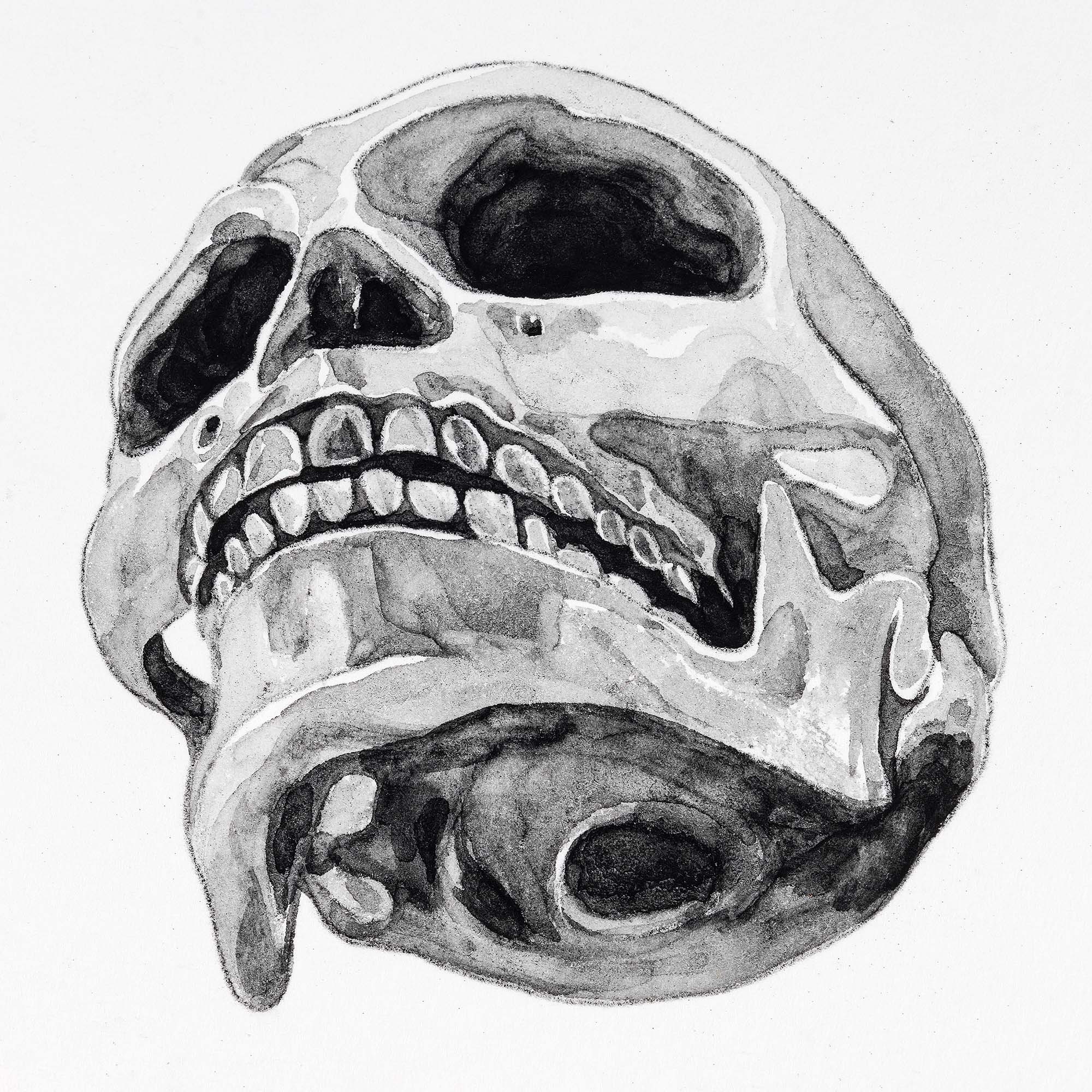
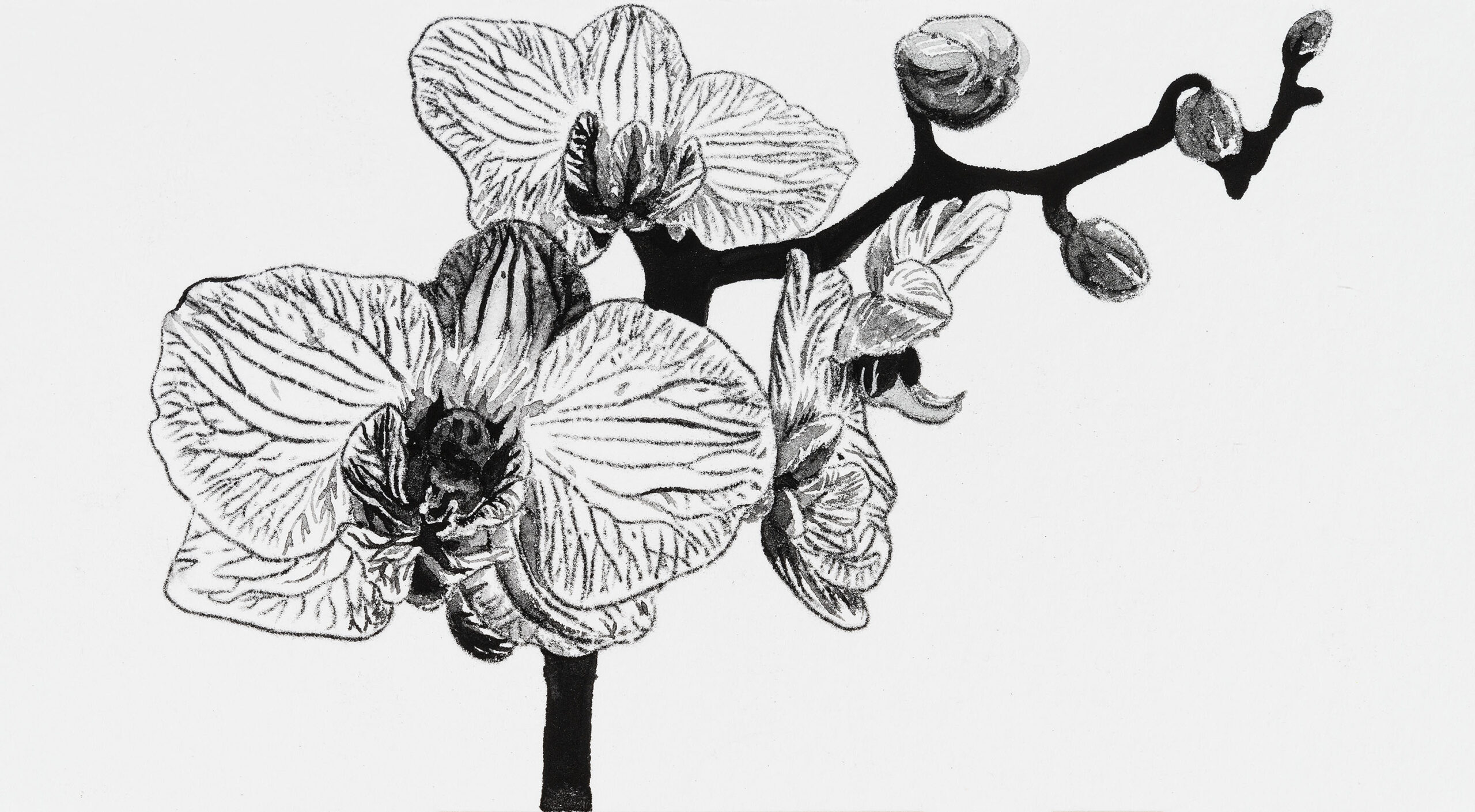
비교적 작은 크기의 흑백 드로잉이 걸린 서재를 지나 계단 아래의 숨겨진 방으로 내려오면, 분출되는 색으로 둘러싸인 정원과 맞닥뜨린다. 그중에서도 간결한 윤곽선과 대비가 강한 색 면들로 채색된 풀과 꽃들이 눈에 띈다. 이 형상들은 그가 작업실 근처의 식물원을 오가며 보았던 희귀한 식물들이 유희적 탐구의 대상으로 다시 태어난 것이다. 각각의 화면은 개별적으로 구성되면서도 주변의 다른 화폭과 연결되며 끊어진 시간들을 이어간다. 액자로 분할된 각 종이의 테두리는 전혀 상관없다는 듯, 생명력이 강한 꽃과 풀은 펼쳐진 화면들 안과 밖에서 줄기와 잎을 무성히 키워간다. 이름 모를 생명체들은 시시각각 변하는 그림자처럼 비정형의 기운을 선명하게 분출하고 있는 모습이다. 또한 곳곳에 식물과 함께 있는 나비, 잎으로부터 떨어지는 액체, 해골, 거미는 정원을 마냥 신비롭고 아름다운 공간에서 위험과 긴장이 공존하는 곳으로 변모시킨다.
조금 더 들여다보면 정원을 이루는 각 식물이 사람의 심적 상태를 설명하는 여러 형용사들을 이름으로 갖고 있음을 알 수 있다. 그는 정원에 존재하는 요소들의 성질을 각 개인의 내면을 대변하는 함축적인 매개물로 보여주고자 한다. 고독하고, 때로는 비참하고, 증오심에 불타면서도 때로는 두근거리고 환희에 차며 설레는 시간들은 모든 사람이 통과하는 감정의 편린들이다. 그는 카오스와 같은 삶 안에 뒤섞여 있는 상충하는 감각들의 지류를 감지하고 이를 인위적인 자연의 공간인 정원으로 이끌어온다. 미묘한 심리의 진동을 포착하고 공감하는 일은 마치 땅을 뚫고 나오는 새싹에 물을 주고 무성한 풀을 다듬으며 만개한 꽃의 향기를 만끽하는 일과 유사하다. 작가는 인간이 가진 원초적인 감각의 팔레트들이 중첩되며 만드는 낯선 풍경 안으로 관객들을 초대한다.
그의 작업을 대변하던 기존 수사를 걷어낸 뒤 그 아래에서 새롭게 건져올릴 수 있는 것은 보다 근원적이고 보편적인 감정의 스펙트럼이었다. 그는 몸이라는 껍데기 가장 밑바닥에 있는 비언어적 반응들을 조심스레 끄집어낸다. 인간은 언제나 불완전하고 변덕스러우며 연약하다. 몸은 턱없이 작은 충격에도 한계에 부딪히고 유한한 것으로써 금세 사그라든다. 정신 역시 외부의 힘에 의해 쉽게 변형되고 그 상태를 가늠하기가 매우 까다롭다. 그러나 이 존재가 느끼는 언어화, 가시화되지 않은 감응의 양태들은 곧 그들이 스스로의 삶을 긍정하고 욕망하는 힘이 되어준다. 이처럼 지희킴은 인간이 현실과 상호작용하며 획득하는 에너지의 흐름을 기민하게 살피고 형태를 가진 실체로 옮겨간다. 미처 만나보지 못한 사람들이 읽었던 책을 모으고, 언젠가 만날지도 모르는 A의 주말을 상상하며 비현실의 풍광을 끊임없이 펼쳐내보이는 시간은 애정 어린 마음으로 세상을 마주하는 그만의 방식일 것이다. 그가 꾸려가는 서재와 정원에 가득 찬 생기와 사랑, 활력을 느끼며 지금도 그가 어디선가 써 내려가고 있을 모두의 이야기가 또다시 궁금해진다.
글 | 박지형 (디스위켄드룸 큐레이터)
번역ㅣ양하빈
* 이 텍스트는 문화체육관광부와 (재)예술경영지원센터의 지원을 받아 번역되었습니다.
If the Whole World were to be a Garden: While closely looking in to <Sundays> by JiheeKim
A garden and a personal library have many things in common. The two are manmade and people have embraced them as part of life while decorating and maintaining the spaces. Interestingly, these spaces always bear contexts that go beyond our scope of perception. For example, a personal library is not a space where multiple books are simply gathered as a mere object. Rather, it hides personal secrets or stories that reflect characteristics of the owner. Also, a garden appears to be a place where part of nature such as flowers, trees, bugs, and birds simply stay. However, the truth is, countless birth and death as well as collision and connection that could not be detected with our bear eyes are concealed within the place. The two spaces offer a conceptual and symbolic background for <Sundays> by Jihee Kim and become a preemptive tool, so that Kim could pursue variations in narratives on a freer ground.
Her works focused mainly on lifting the boundaries of the customary concepts in the society that surround people and seeking a possibility of new discourses in-between. For a long time, her works had appeared to be firmly tied to esthetic and philosophical languages that cope with critical awareness on issues that were inferred from her personal experiences – such as a social stereotype on gender, rebellious corporality, and identities that blur boundaries. On the contrary, her recent works attempt to actively build a passage between a definite space of ‘oneself’ and multiple perspectives that reside outside of that space. This change can be seen both in an intrinsic thinking process of absorbing the world with her own perspectives and an extrinsic process of representing actual images. To do so, the artist has imagined daily lives of ‘someone’ who could exists, or she might have created, and then she put it in sentences. It is like a secretive and exciting experience of groping the overgrown garden to go on a treasure hunt, looking for gems that might be hidden in there. Kim puts out multiple variations of emotions and decorates her canvas while imperfectly passing the times which penetrate them.
At the entrance of the viewing room, multiple unfolded books with drawings that Kim painted on are displayed. Book drawing series is a painting that the artist draws on randomly donated books and, the beginning of this work, by its nature, must rely on others. It can be uttered only on the assumption of other’s participation and attention, and it is like a journey to an unknown place, beginning with unexpected forms and contents of the books. Kim willingly accepts these adventures and continues the experiment by connecting oneself with countless others without being bounded by formality. What’s interesting is that Kim does not consider these texts in randomly selected books as inevitable conditions for communication nor semantic interpretation. The given signifier has been sufficiently liberated from existing meanings and a pure background where narratives created by next users can penetrate. As mentioned earlier, making a place where it is more open to subjects escaped from the existing network of meanings such as objects, human, and a form of nature has been a focal point in sustaining her works. For example, the books from all over the world could be random worlds and memories of others and latent possibility to Kim where she can build up layers of subjective contemplation.
Hues and their shades that are generated when existing texts are covered reflect emotional waves various in size that ‘someone’ Kim thought of might have felt. However, interestingly enough, no hues were given to discursively scattered figures such as cats, butterflies, octopus, chandeliers and cherries. This seems to show Kim’s sensitive and caring attitude that while putting daily lives of others on the same level of that of hers, she tries to avoid misinterpreting or dismissing their territories them as a single voice and making hasty errors by objectifying them. In the meantime, viewers could experience a boundless visual and conceptual stroll while going back and forth between figures of objects suggested by the artist and texts that are written by someone else. Active reading of symbols produces sensory experience in the present by linking the past with uniqueness of the time and space they connect, instead of accepting given information as it is. Kim’s book drawing series encourages viewers to carry on this practical process between the text and image.
When viewers walk past the personal library where small-sized black-and-white drawings are hanging and go down the staircase toward the hidden room, they will encounter a garden surrounded with bursting colors. Grasses and flowers painted with strong colors that show a stark contrast against simple outlines will catch viewers’ eyes. Rare plants that Kim saw in a botanical garden near her studio were reborn as these figures which have become subjects for a playful exploration. Each canvas was formed individually, but at the same time, it connects with other canvases, thereby linking disconnected times. As if they completely disregard the edges of canvases that are separated by the frames, flowers, and grasses with vitality thickly stretch out their stems and leaves, in and out of the canvases. Unknown creatures appear to vividly spread atypical energy just like ever-changing shadows with time. Also, butterflies on the plants, fluids dropping from the leaves, skeletons and spiders transform the garden which appears to be a mystical and beautiful place into the one where threats and tension coexist.
If we take a closer look, we could recognize that each plant that forms the garden has various adjectives that explain states of our minds as its name. Kim attempts to show the characteristics of the elements in the garden through an implicit medium that represents the inner side of each individual. Solitude, bitterness, and times that bring you outburst of rage and exultation sometimes are pieces of emotions that are universal. Kim detects conflicting branches of senses that are mixed into our chaotic life and brings them to a garden, a space of nature that is artificially created. Sensing the vibration of subtle psychologies and sympathizing with them are like watering plants that are just sprouting, trimming full-grown grasses, and enjoying fragrant flowers in their full bloom. The artist invites viewers to an unacquainted scene created when a pallet of primal senses that human beings have overlap.
What we can newly find out after setting aside existing rhetoric, which is used to represent Kim’s works, was a spectrum of emotions that is more fundamental and universal. She carefully pulls out nonverbal reactions which are located at the very bottom of our body, an exterior shell. Humans are always imperfect, capricious, and fragile. A minor shock could push our body over to the edge of limit and the body, which is only ephemeral, could wither in no time. External forces could easily alter our mind as well, and it is very tricky to predict the state of the mind. However, nonverbal and unvisualized aspects of emotional reactions drive us to positively perceive and desire our own life. As such, Kim astutely observes the flow of energy that was obtained while people interact with reality and transforms her observation into substantial forms. Times that she collects books read by people she does not know and continuously unfolds unrealistic scenes while imagining ‘someone’ and their weekends that she could meet someday are her own way of affectionately embracing the world. While feeling vitality, love and energy that fill the library and the garden that Kim is tending, I am intrigued, once again, by the story about everyone that she is writing somewhere at this very moment.
Jihyung Park (Curator, ThisWeekendRoom)
Translated by Habin Yang
* Korean-English Translation of this book is supported by Ministry of Culture, Sports and Tourism and Korea Arts Management Service.