추미림, 홍승혜
Mirim Chu, Hong Seung-Hye
12 Apr-18 May 2024
ThisWeekendRoom
Artists
Mirim Chu
Hong Seung-Hye
Credit
참여작가ㅣ추미림, 홍승혜
기획ㅣ디스위켄드룸
제작 협력ㅣ메라톤, 스튜디오 가가구죽
글ㅣ박지형
사진ㅣCJY ART STUDIO (조준용)
ArtistsㅣMirim Chu, Hong Seung-Hye
Curated by ThisWeekendRoom
ProductionㅣMELATONE, STUDIO GAGAGUZOOK
TextㅣJihyung Park
PhotographsㅣCJY ART STUDIO


Exhibition Text
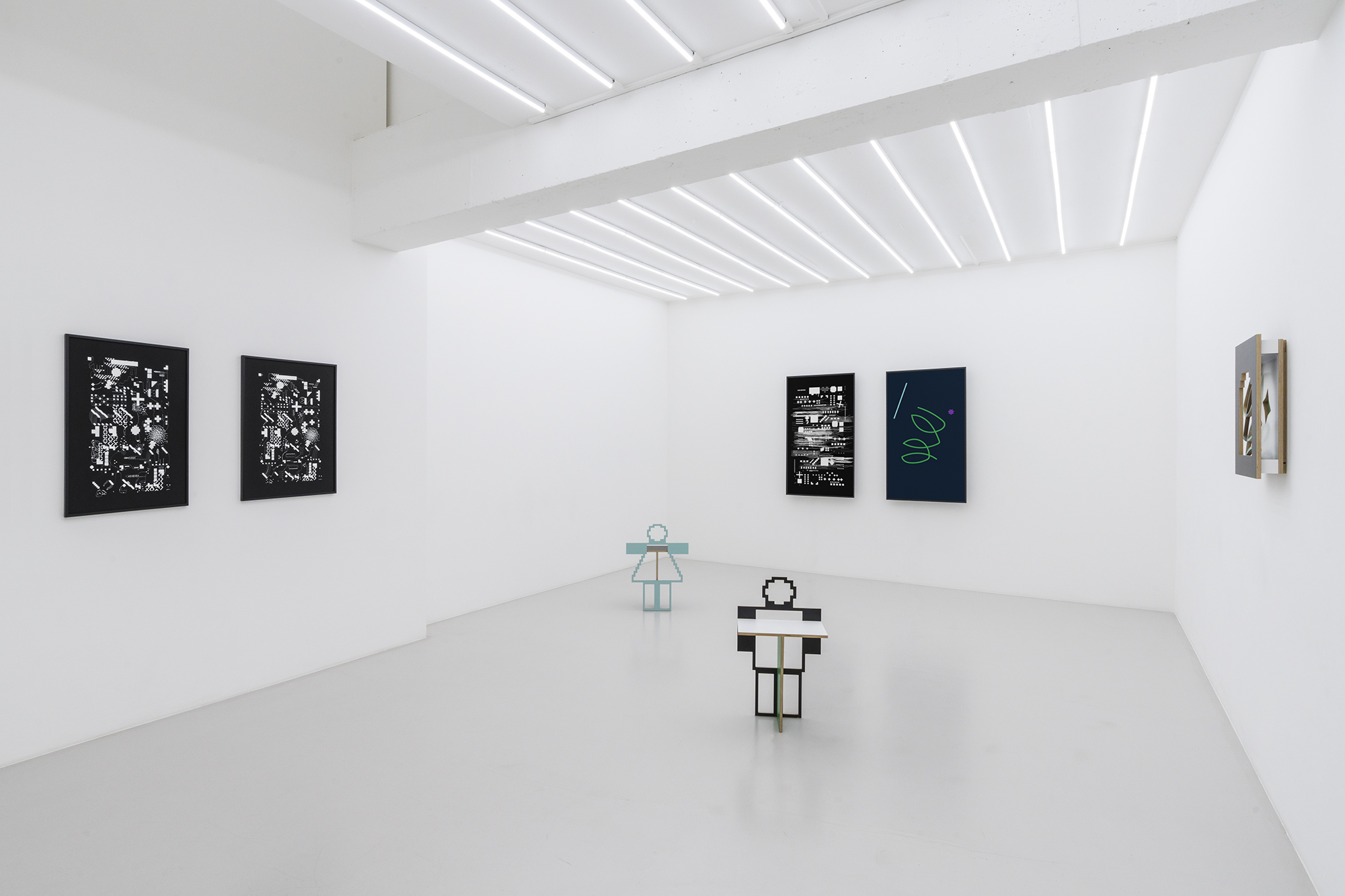
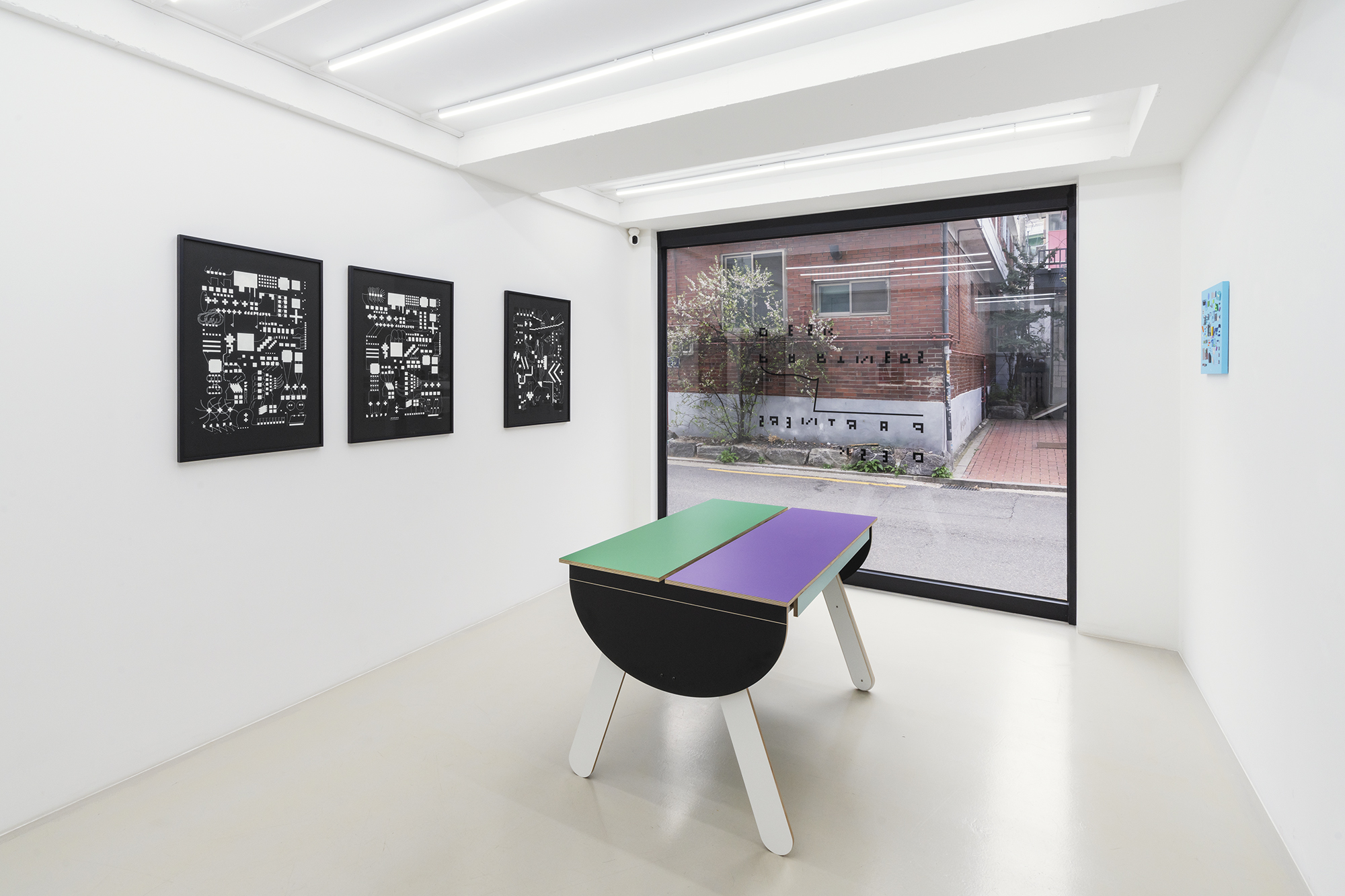
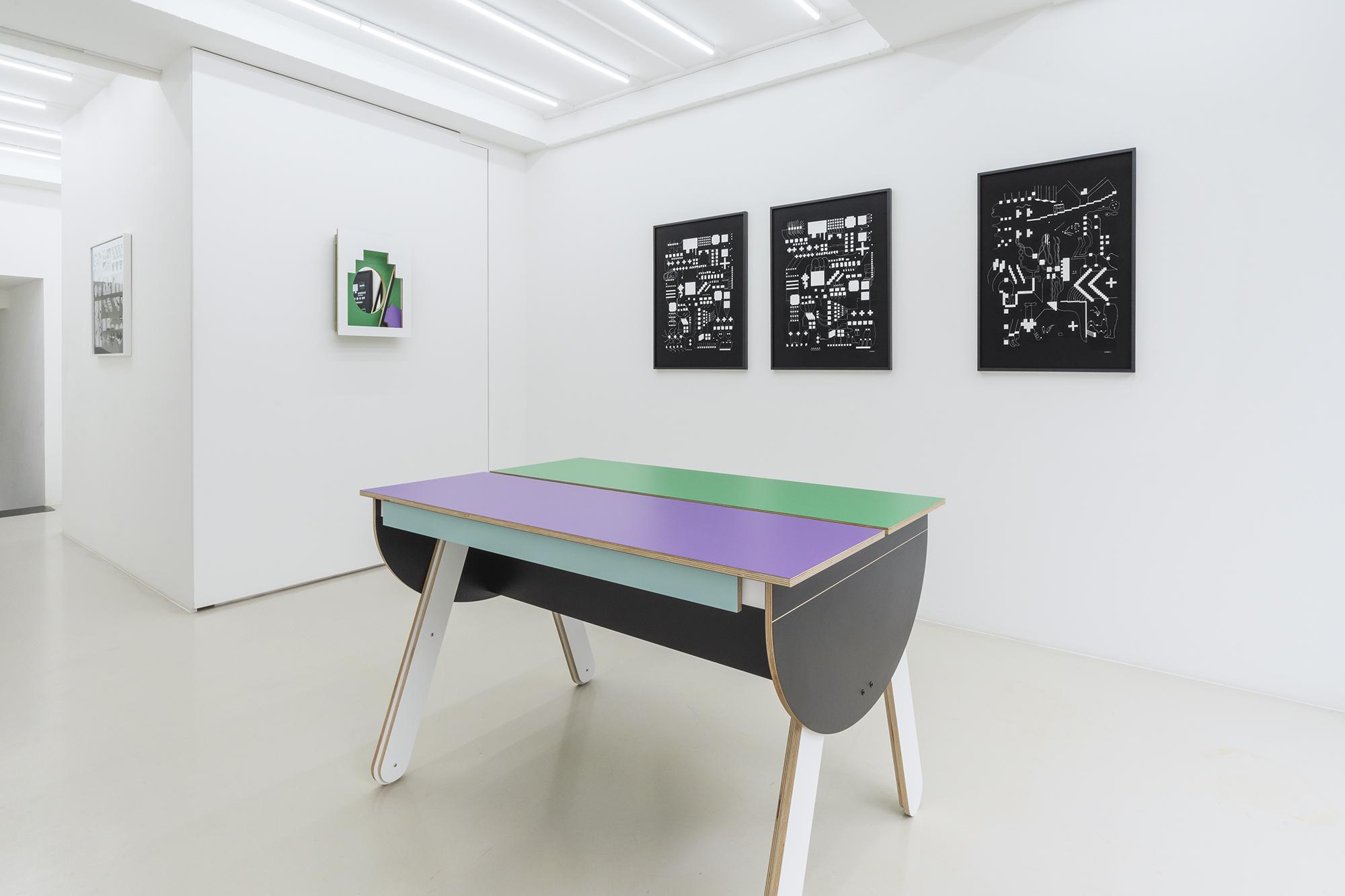
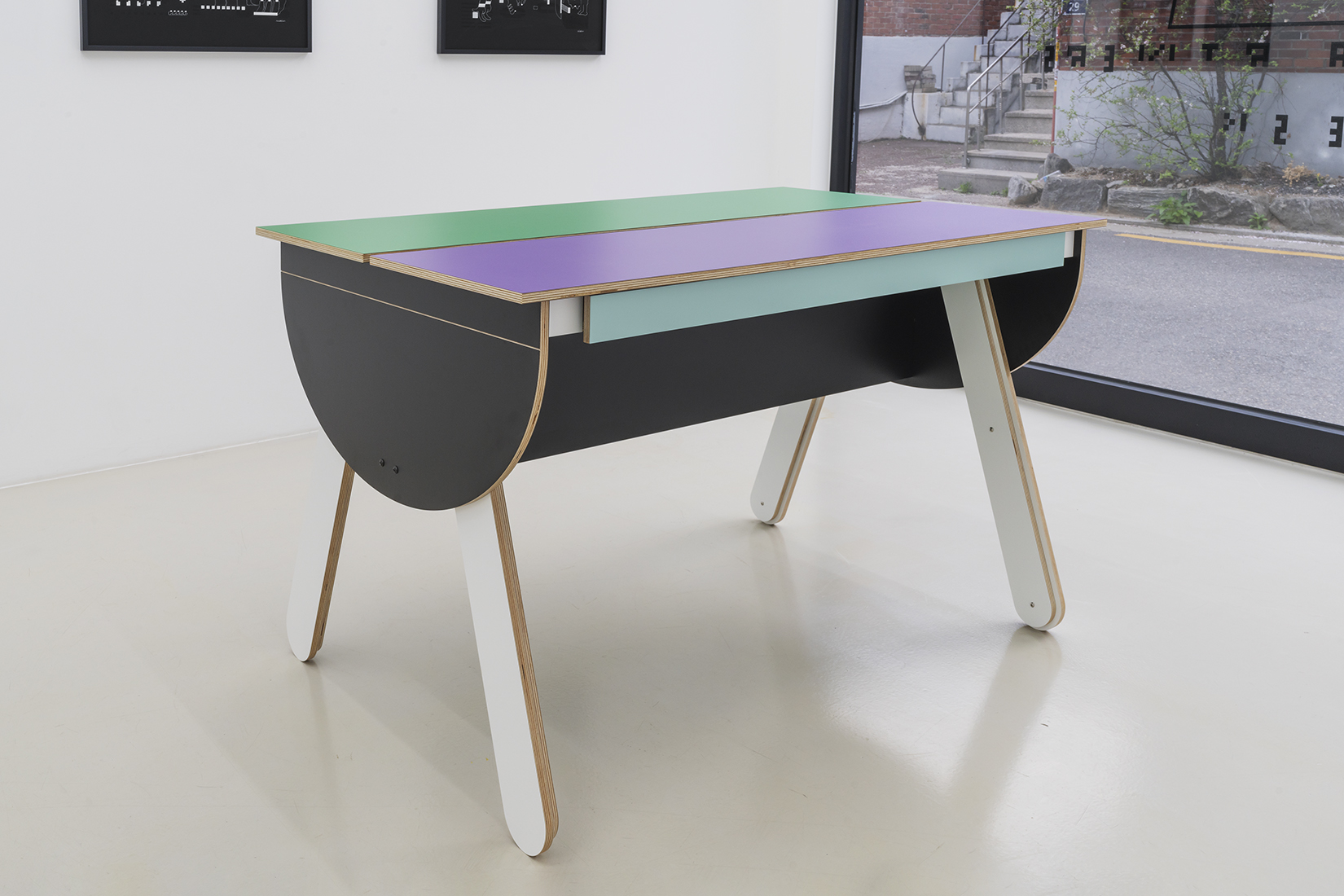
파트너스 데스크는 두 사람이 마주 앉는 대면용 책상을 말한다. 이 사물은 추미림과 홍승혜가 오랜 시간 만나 각자의 세계를 꺼내어 늘어놓고 정해진 답이 없는 퍼즐을 맞추어보는 장면을 상상하게끔 했다. 둘은 모두 도시적 환경에 매료되어 조형적 실험을 이어가고, 디지털 툴과 친숙한 방식으로 작업을 구현한다. 또한 하나의 매체에 묶이지 않고 주어진 공간과 상황에 따라 능수능란하게 최적화된 형식을 고안한다는 점 역시 이들이 공유하는 부분이다. 그러나 기획의 초점은 두 작가의 관심사가 비슷하면서도 작업 여정의 출발과 방향이 사뭇 다르다는 사실에 있고, 전시라는 장치로 성사될 일시적 만남을 통해 두 주체가 갖는 시각과 태도의 단차를 현재의 중심으로 끌어오는 데 있다. 따라서 이 책상의 의미는 몇몇 느슨한 전략을 중심으로 전개된다.
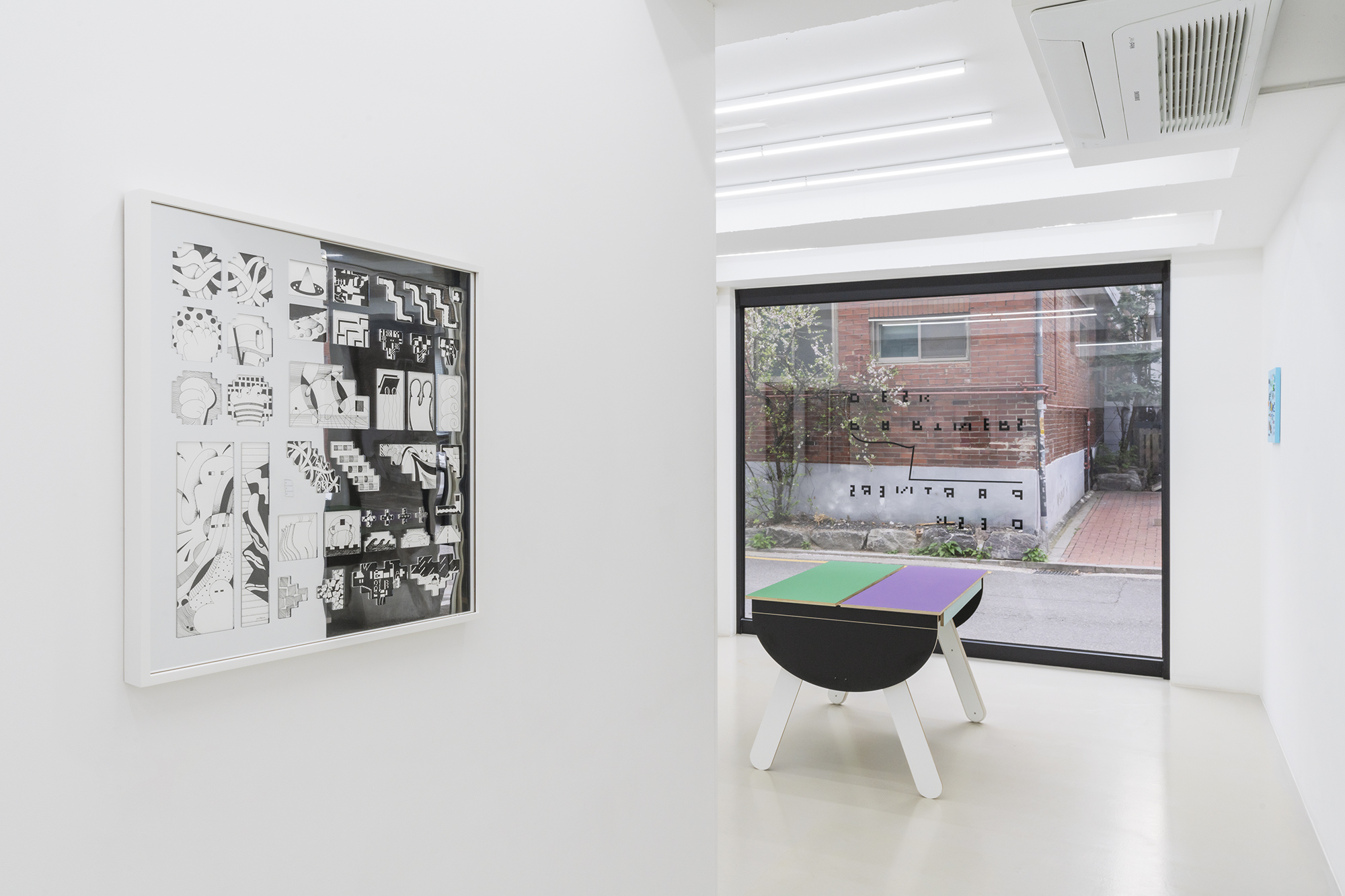
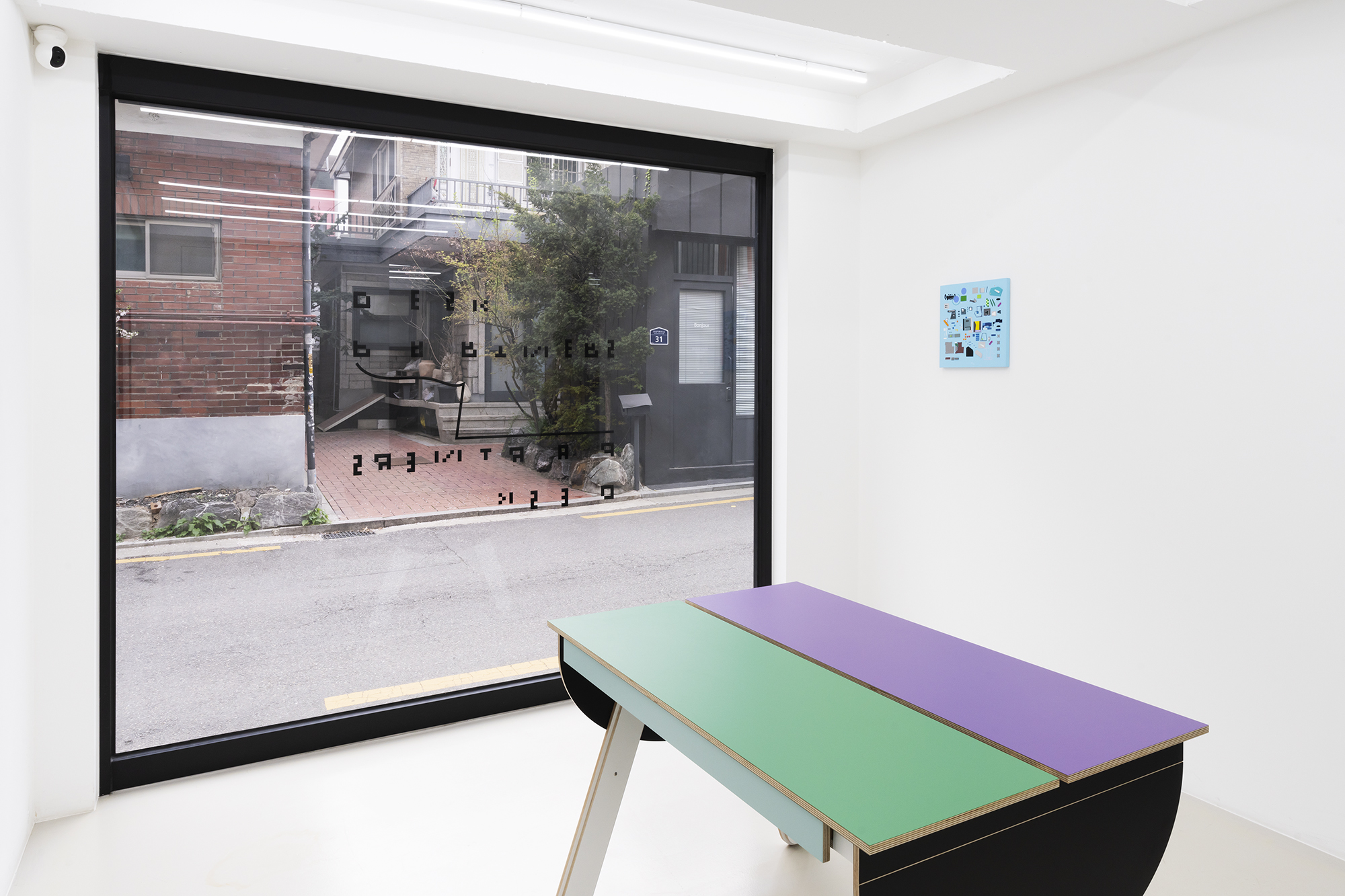
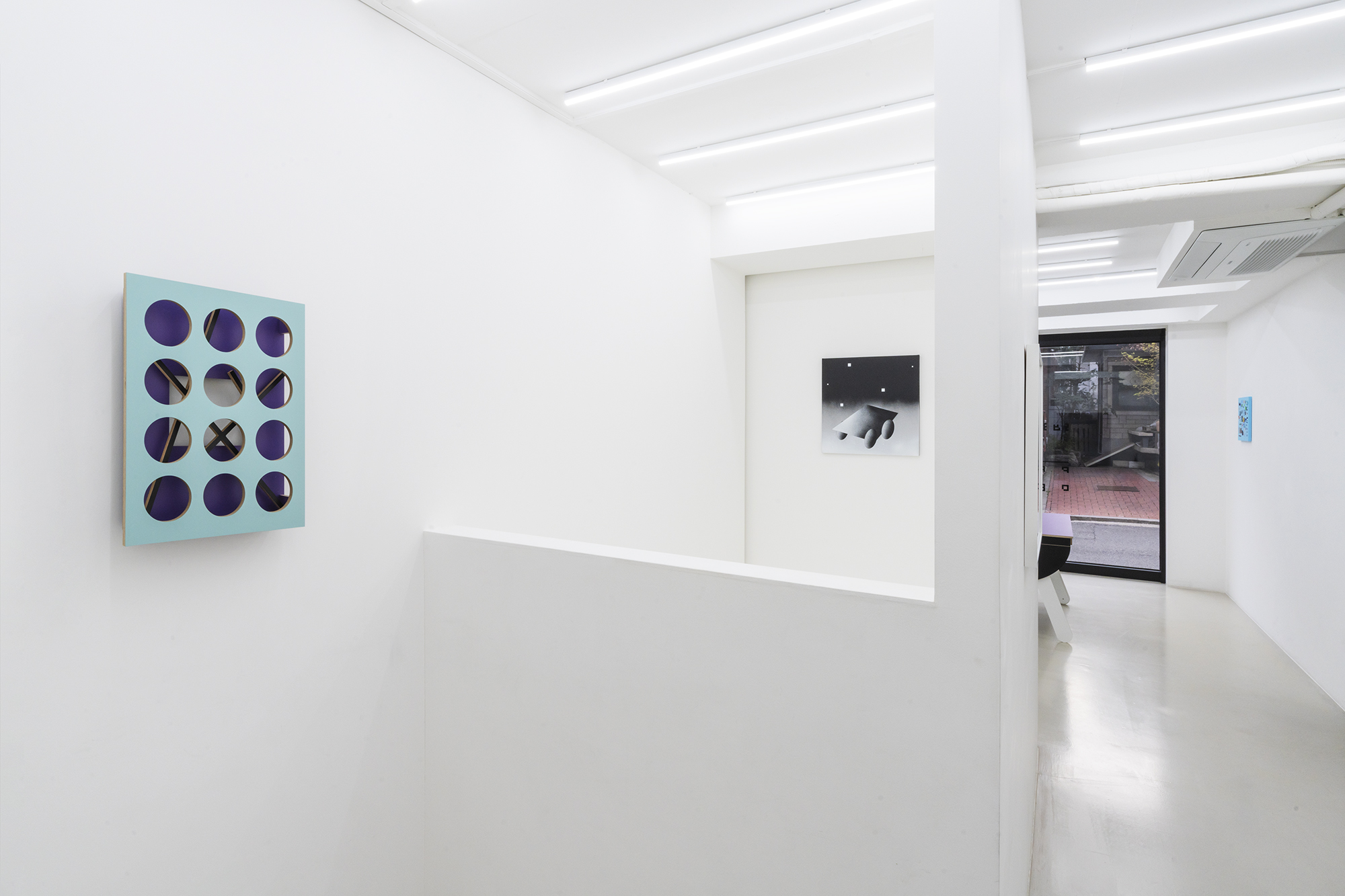
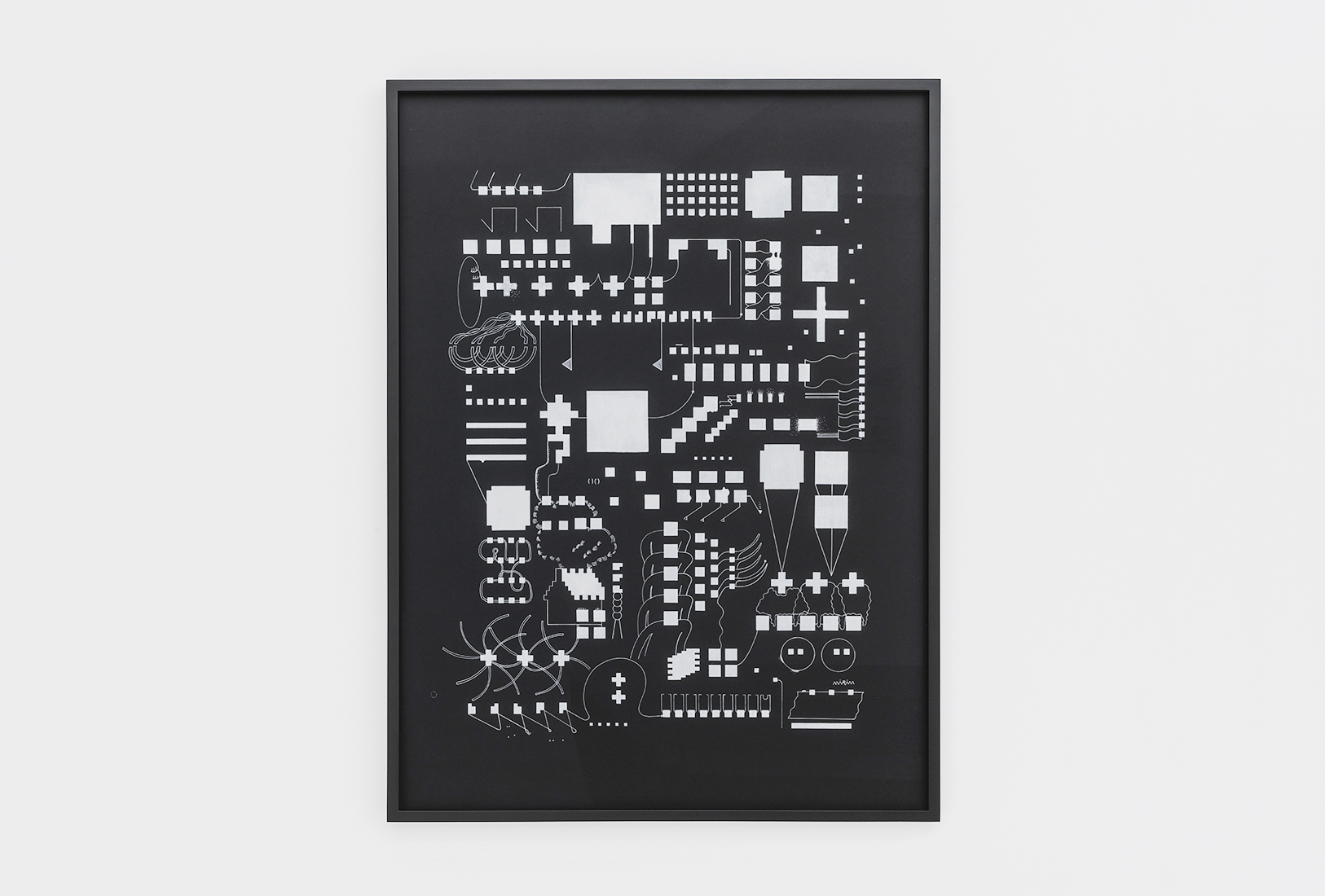
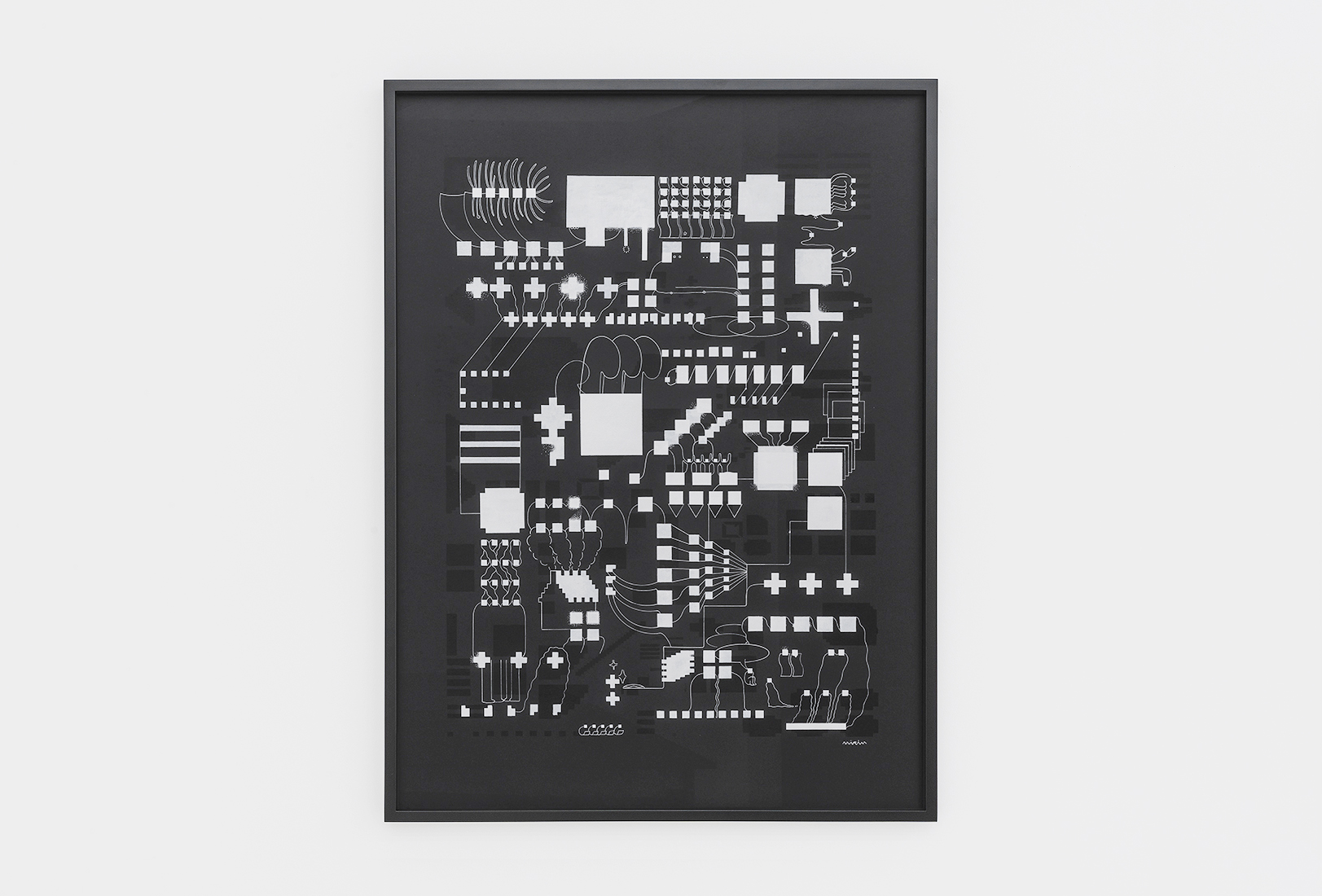
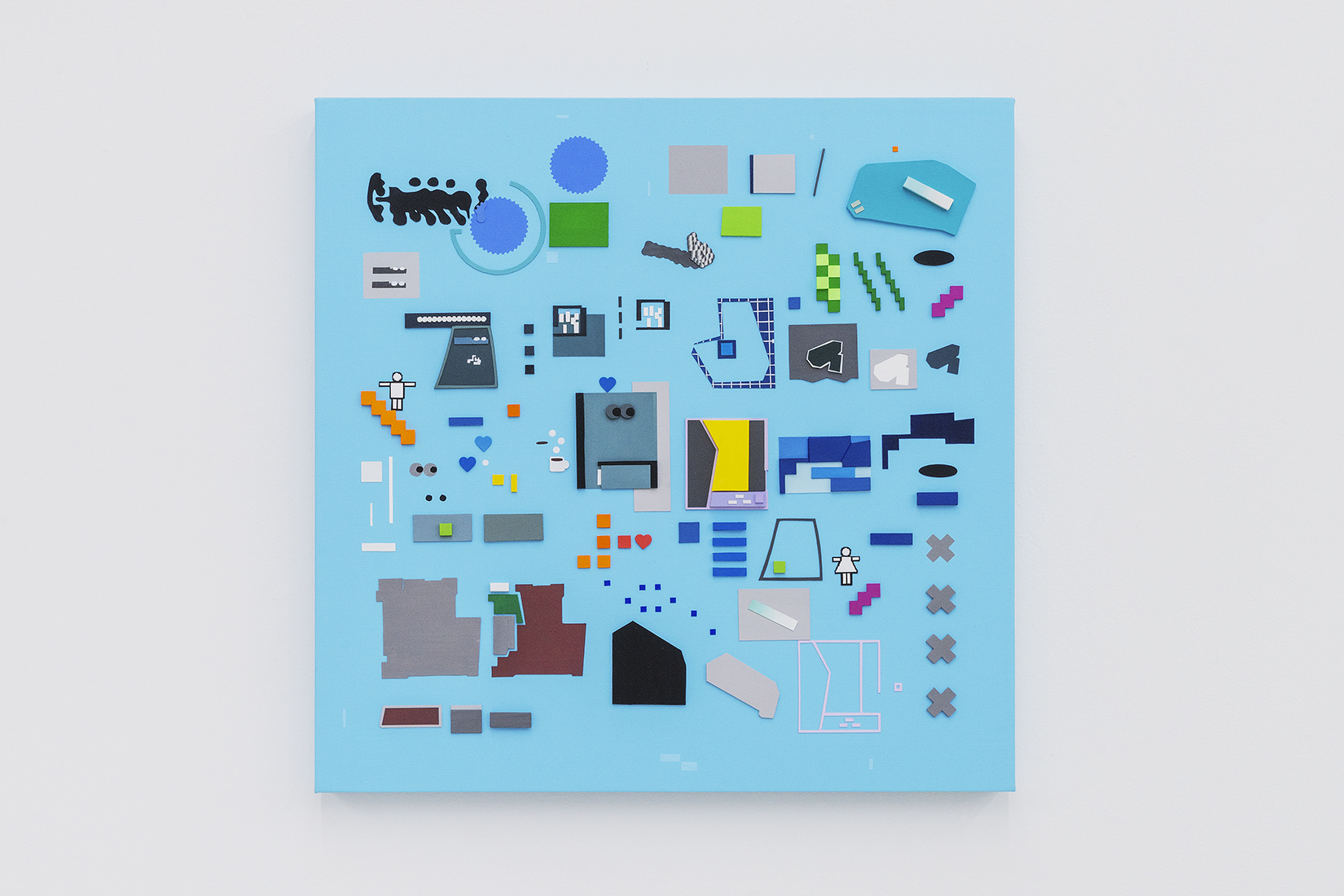
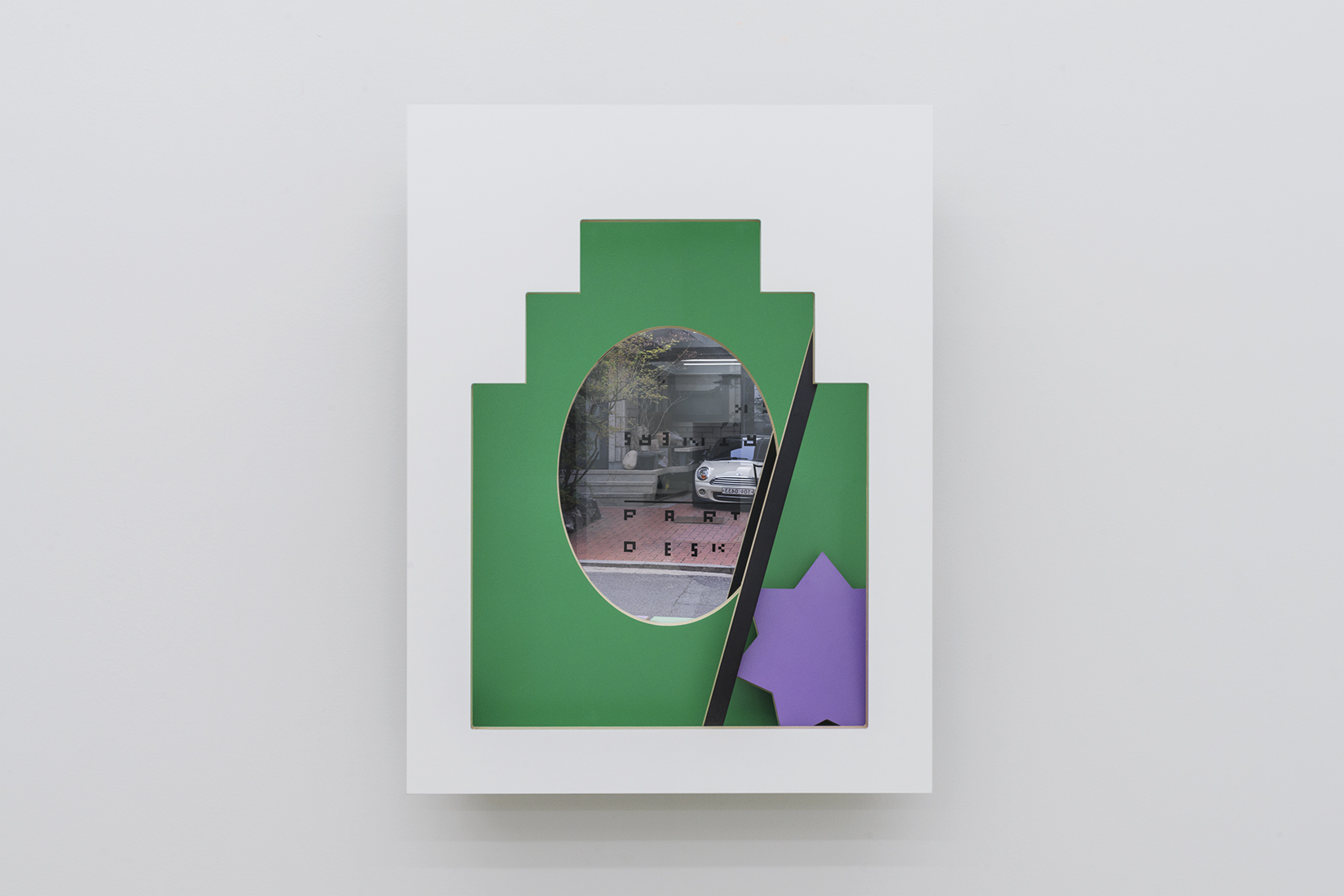
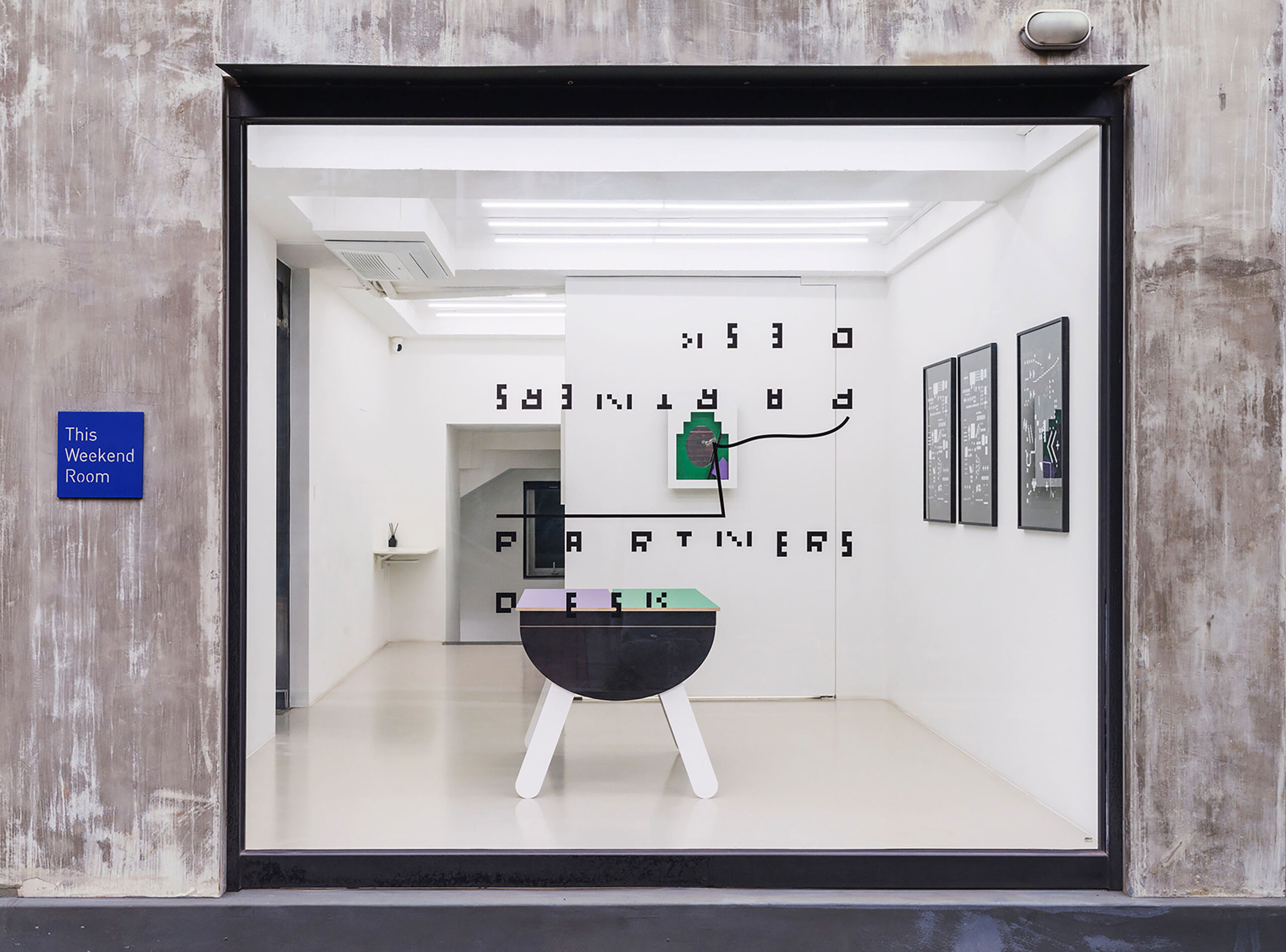
크게 두 작가의 사고는 전시장에서 반복, 레이어링, 미러링, 충돌의 규칙에 따라 만나며, 장소의 구조적 특징은 물리적 결합의 단서이자 개념적 맵핑의 기본 골조가 된다. 먼저 1층의 유리창은 반추상의 기호이자 함축적인 타이포그래피가 올라설 수 있는 투명한 지지대가 된다. 안과 밖 모두에서 볼 수 있는 흐트러진 드로잉은 좌우 반전된 텍스트의 양면을 보여주면서도 투명한 지지체 위를 느릿느릿 채우며 글자-그림 풍경을 만들어낸다. 그 너머 전시장 안을 따라 발길을 옮기면 두 작가의 행운의 색을 나란히 담은 대면용 책상이 자리하고, 그 주변 벽을 따라 주변의 형상을 흡수하는 거울 부조, 지난 협업의 시간에 관한 인상들을 지도화하여 작은 화면 위에 재구성한 추미림의 콜라주, 그리고 도시의 까만 밤 어딘가로부터 시작되었을 것 같은 촘촘한 드로잉이 들어선다.
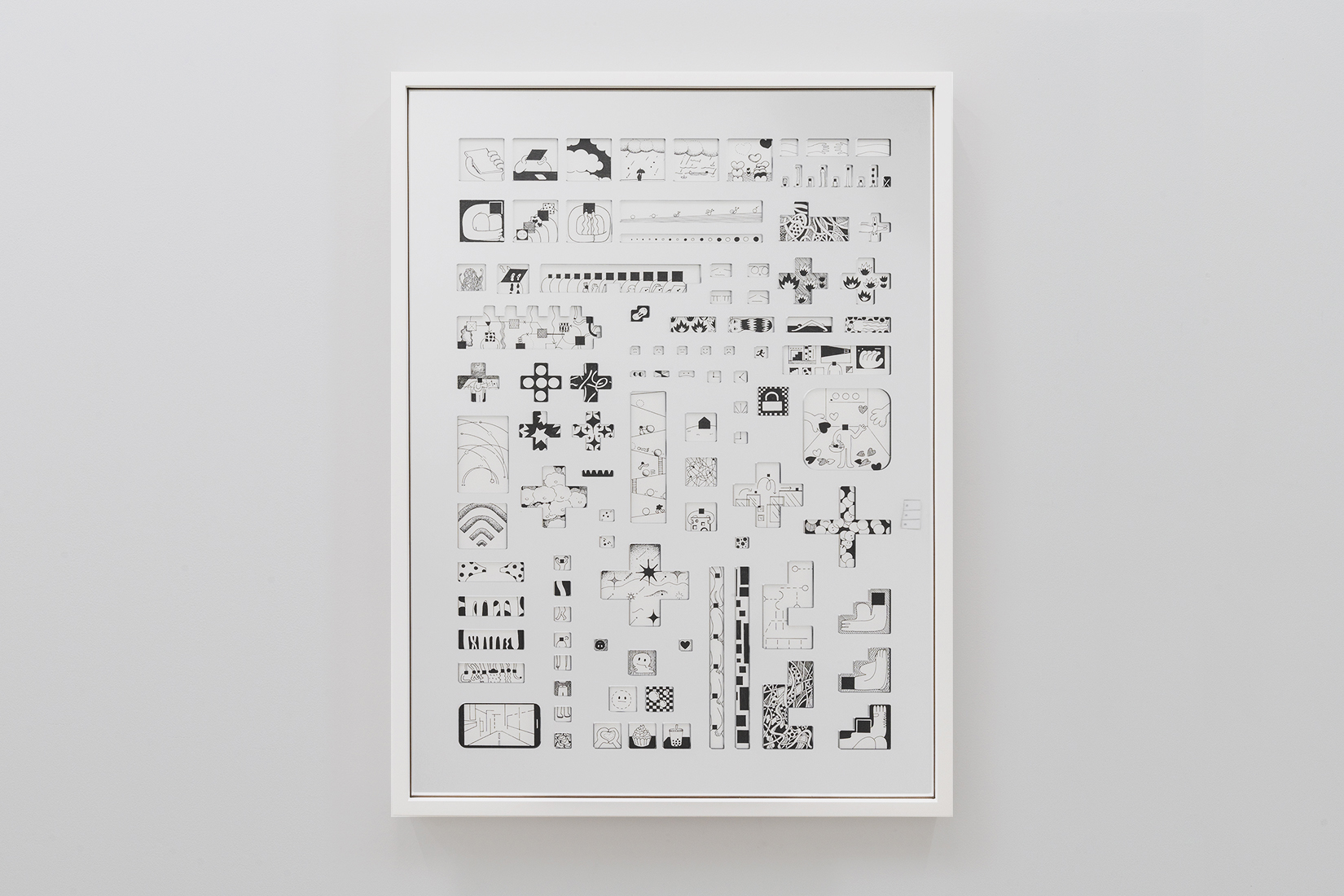
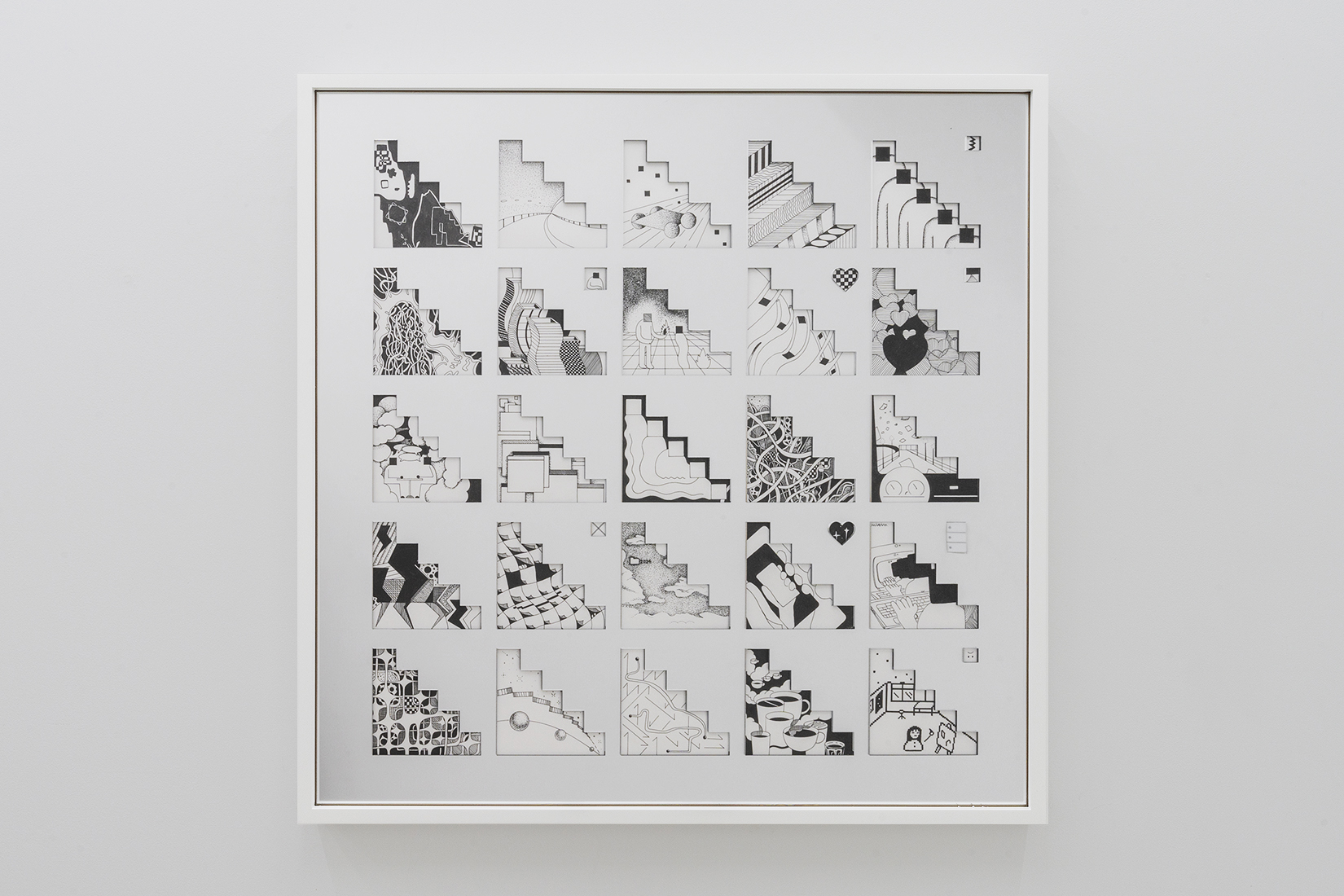
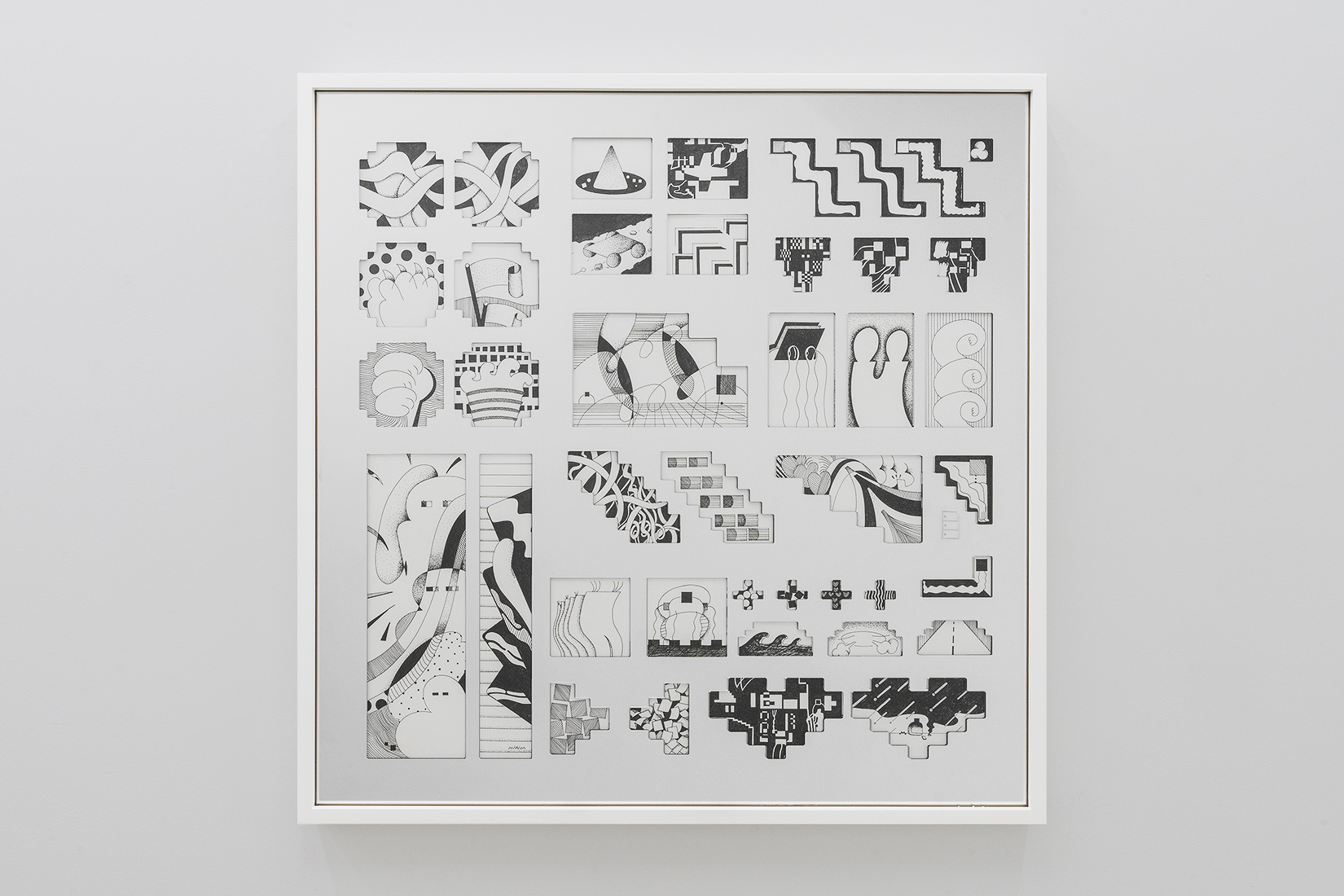
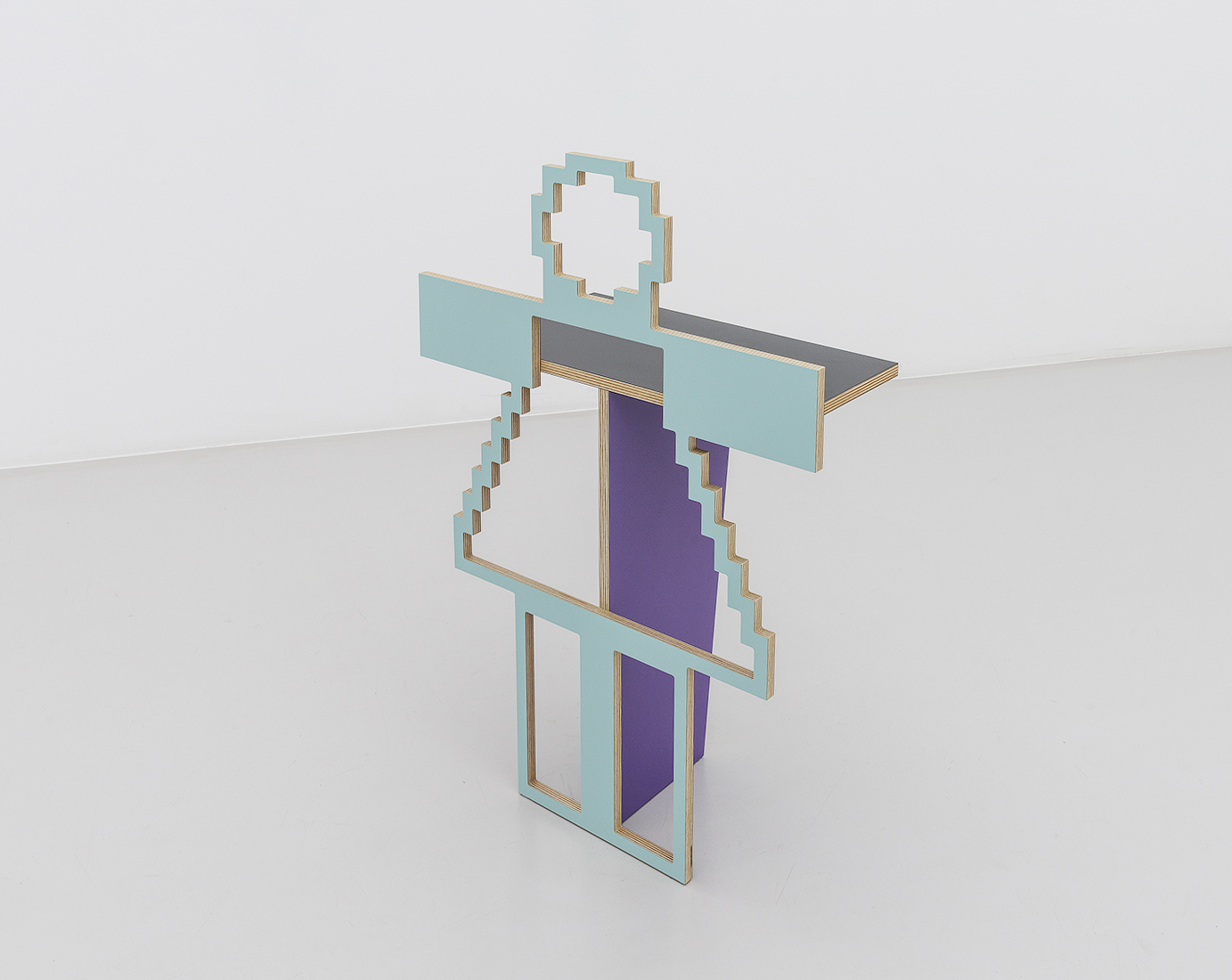
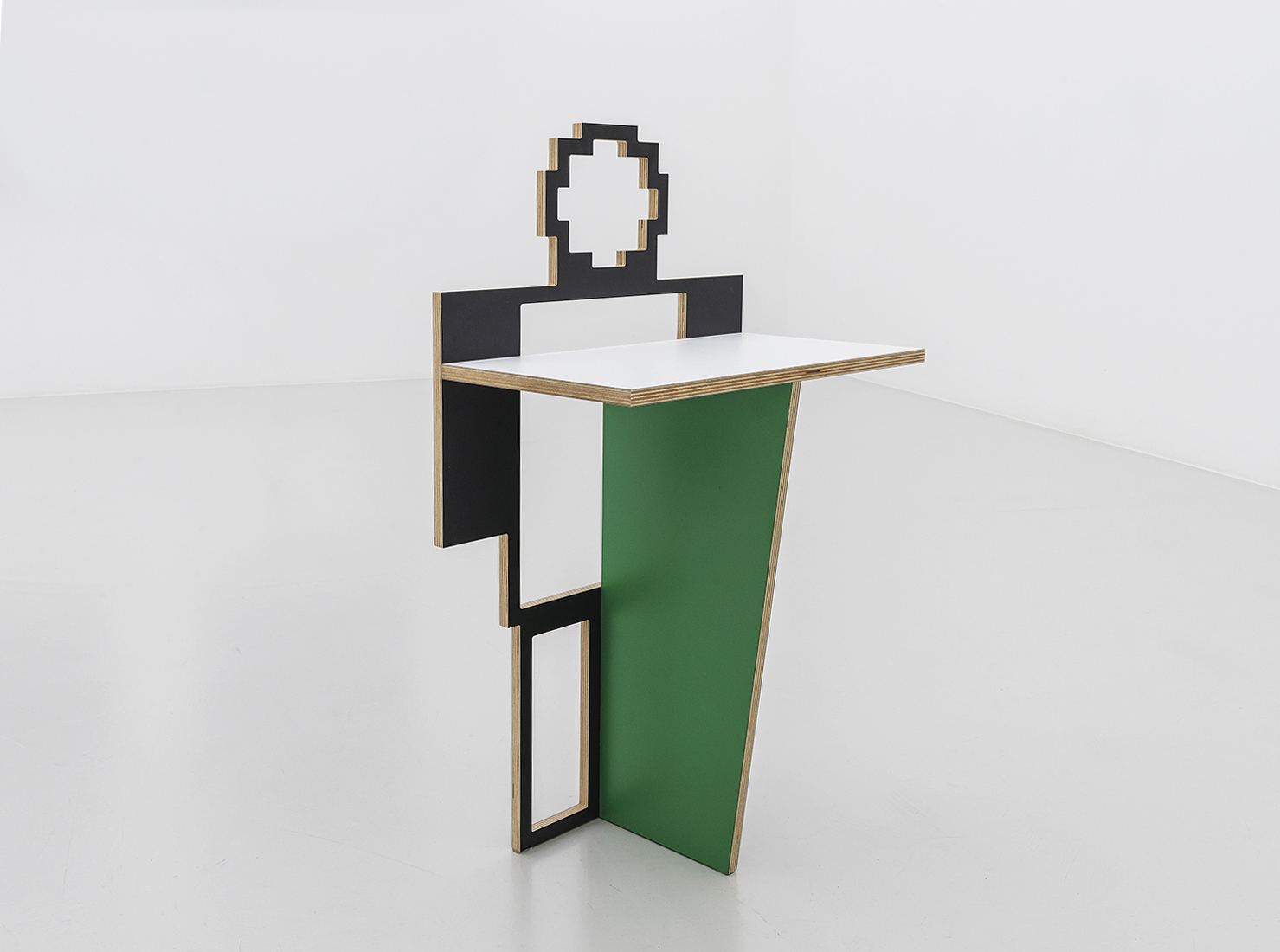
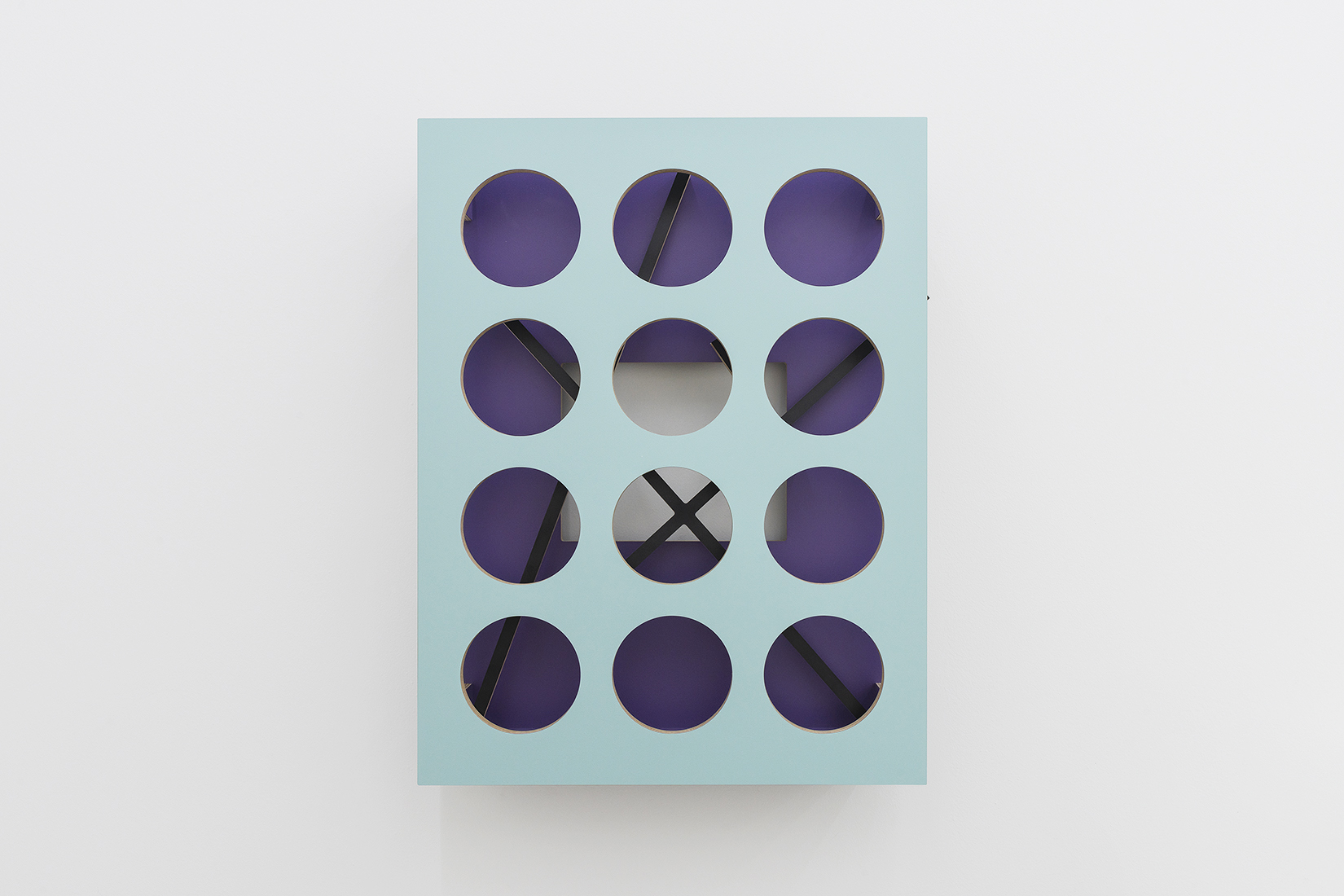
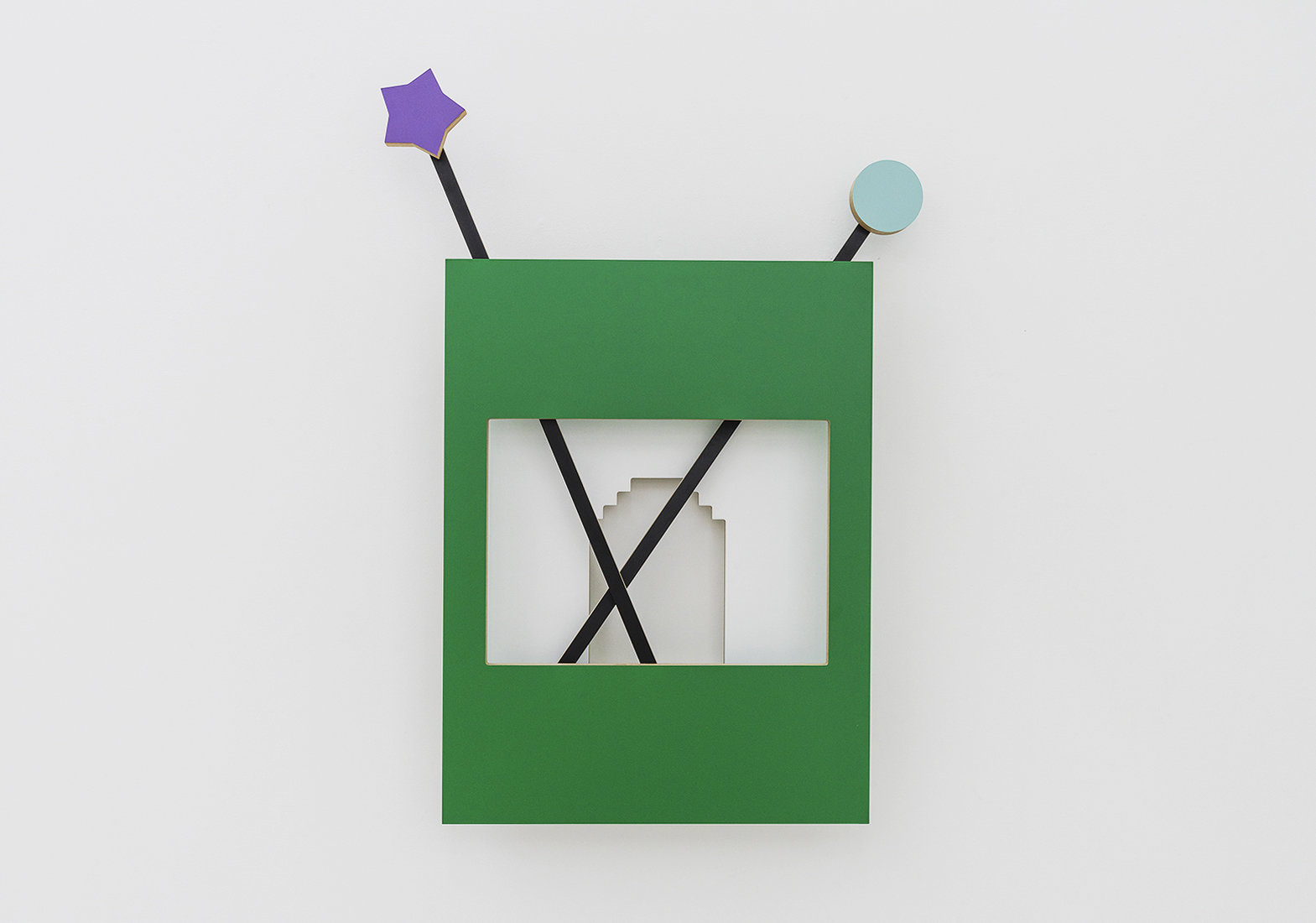
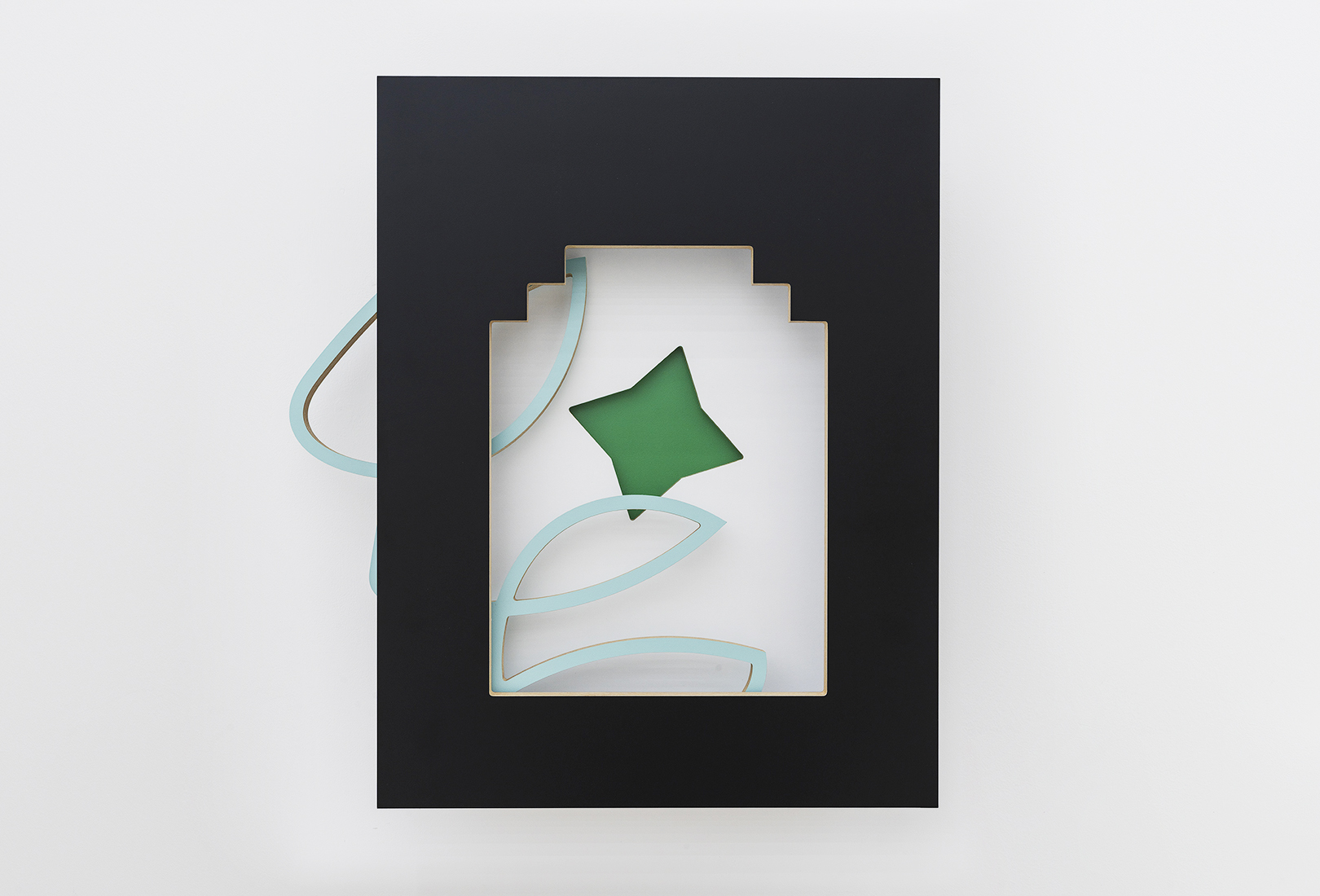
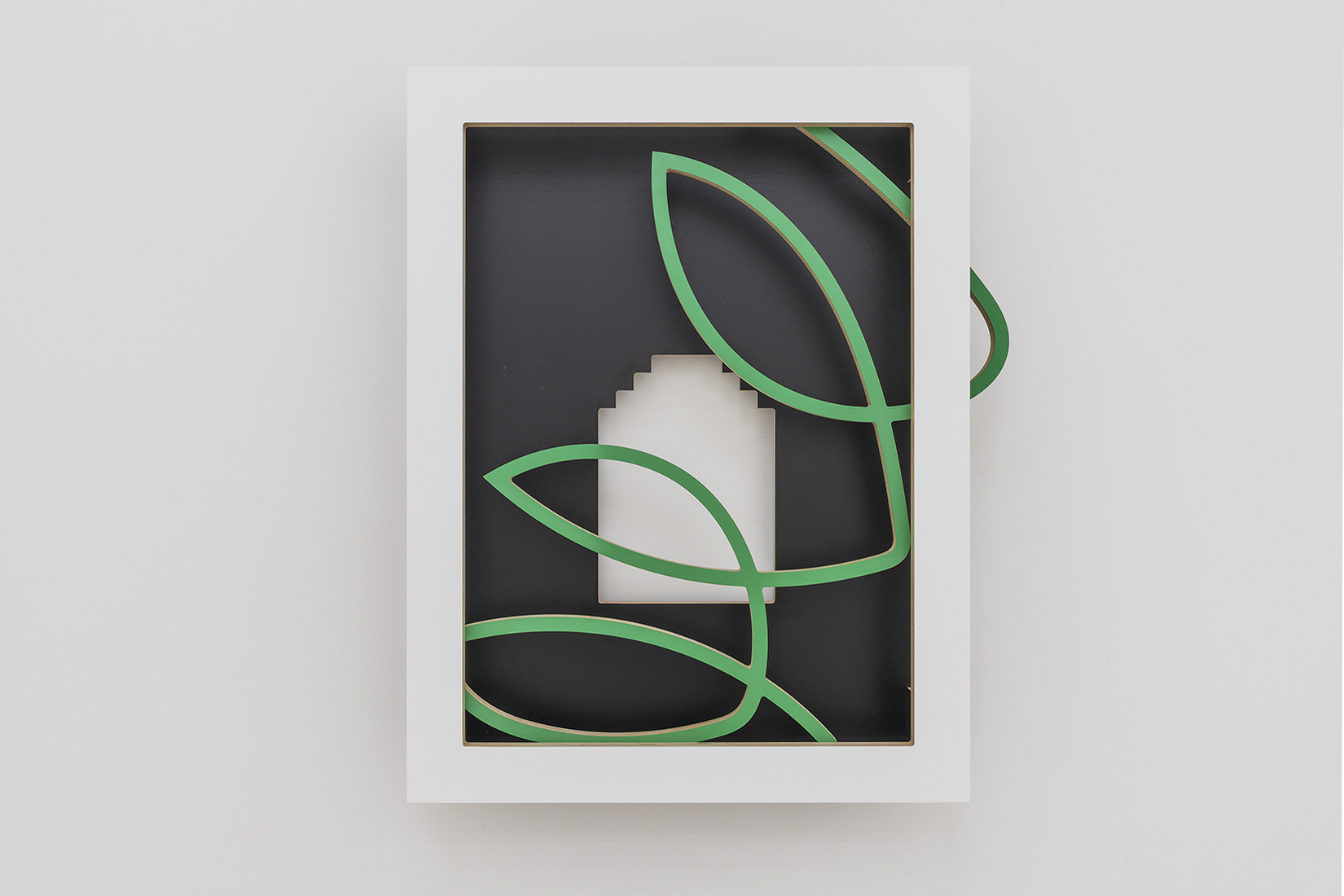
일상의 사물과 대화로부터 출발한 이야기는 서로의 자리를 조금씩 내어주며 그들이 품고 있던 조형 언어의 닮음과 다름을 드러내기 시작한다. 홍승혜의 신작에는 외부의 형상을 반사하는 요소, 의도적으로 곳곳에 구멍을 뚫어 그 너머의 형태들이 자유롭게 진입하도록 하는 여백, 놓는 위치나 조합 방식에 따라 완결된 모습이 가변적인 일종의 조립식 규칙이 도드라진다. 그 과정에서 픽셀과 벡터값은 우리가 여러 시점으로 몸을 옮기며 살펴볼 수 있는 입체적인 실체가 된다. 반면 추미림은 미디어 편집 환경에서의 특성을 더욱 적극적으로 시각 예술의 맥락과 교차시킨다. 여기에는 복사본으로 저장된 디지털 이미지를 불러오기하여 수작업으로 편집을 가하거나, 촘촘하게 그린 펜 드로잉 위에 각기 다른 모양의 마스크(mask) 기능을 적용해 테두리를 잘라내는 방식 등이 포함된다. 이렇게 사용자에 의해 만져진 이미지는 벽면(skin)의 일부를 덮고 고정되어 있지만, 언제든 그가 조성한 움직이는 환경 안으로 진입할 수 있는 접속 대기 상태로 볼 수 있다.
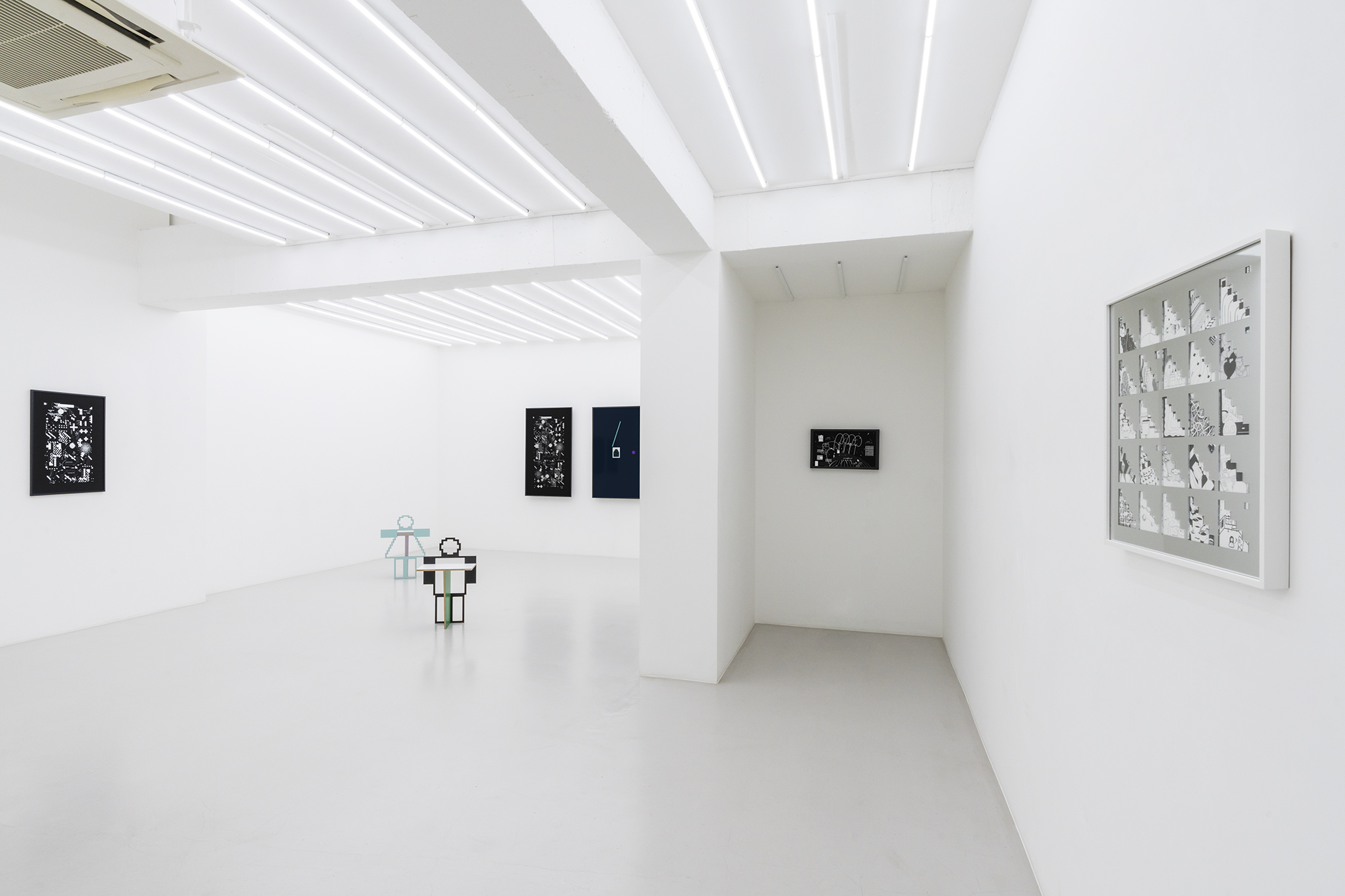
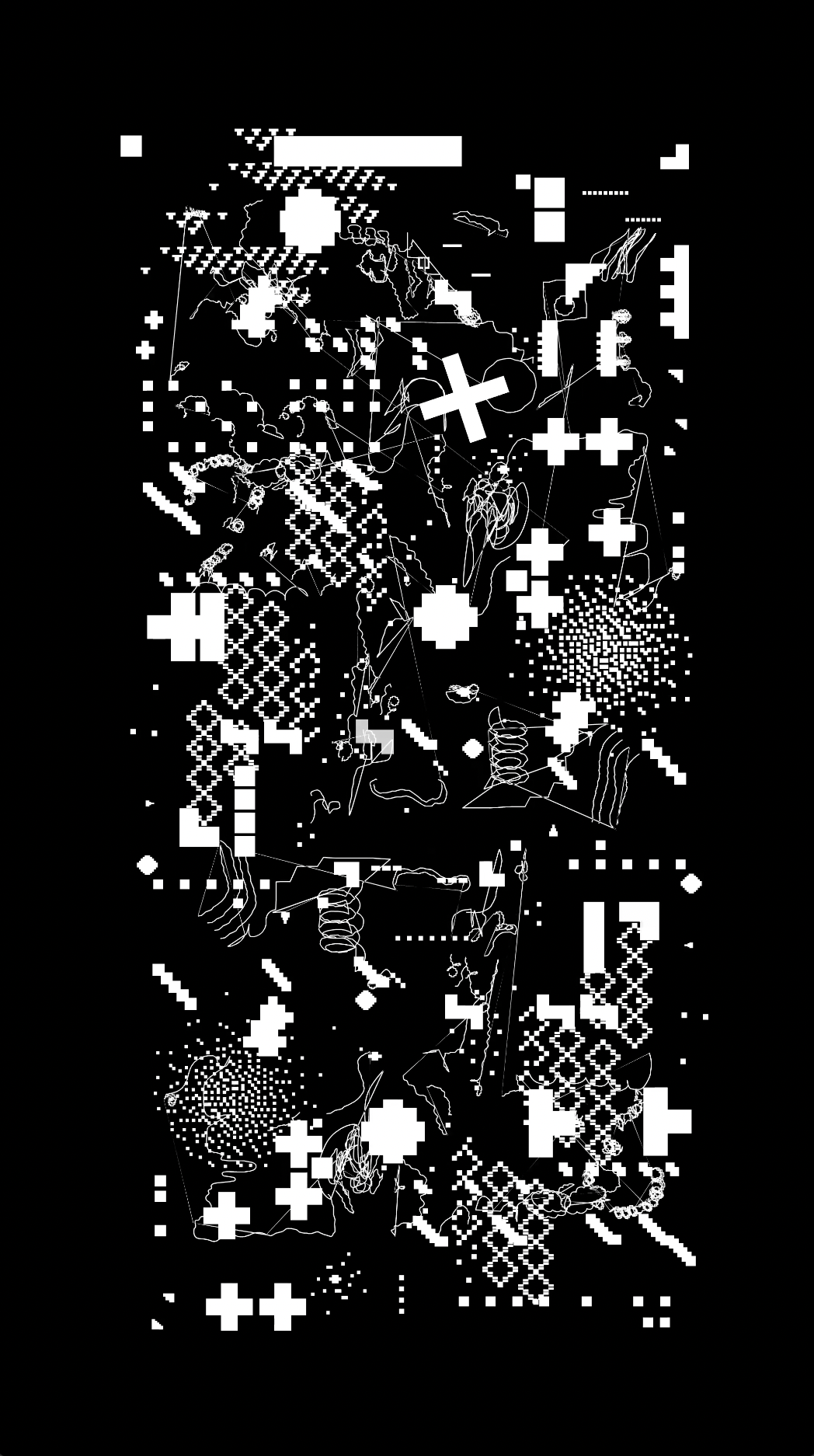
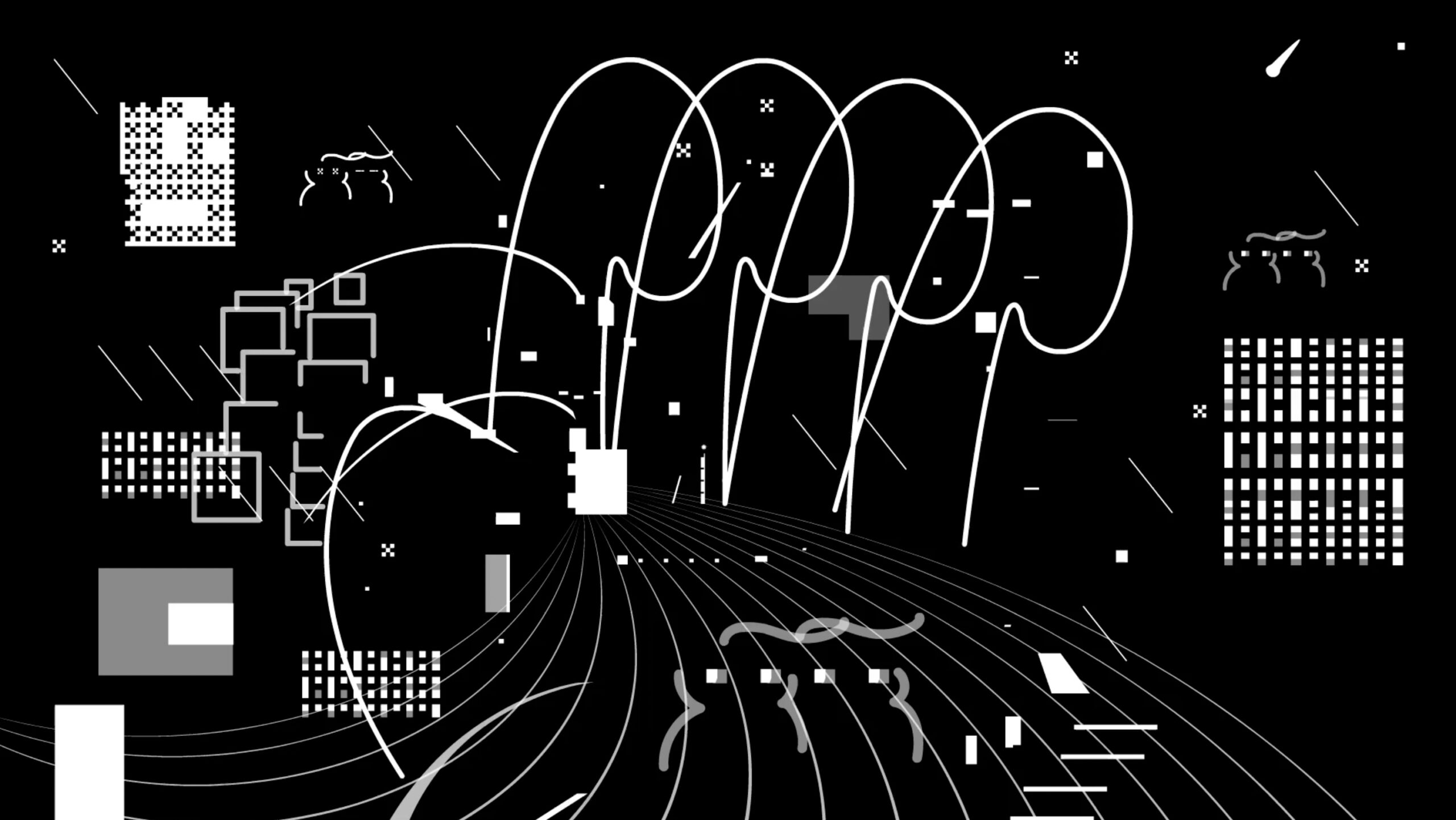
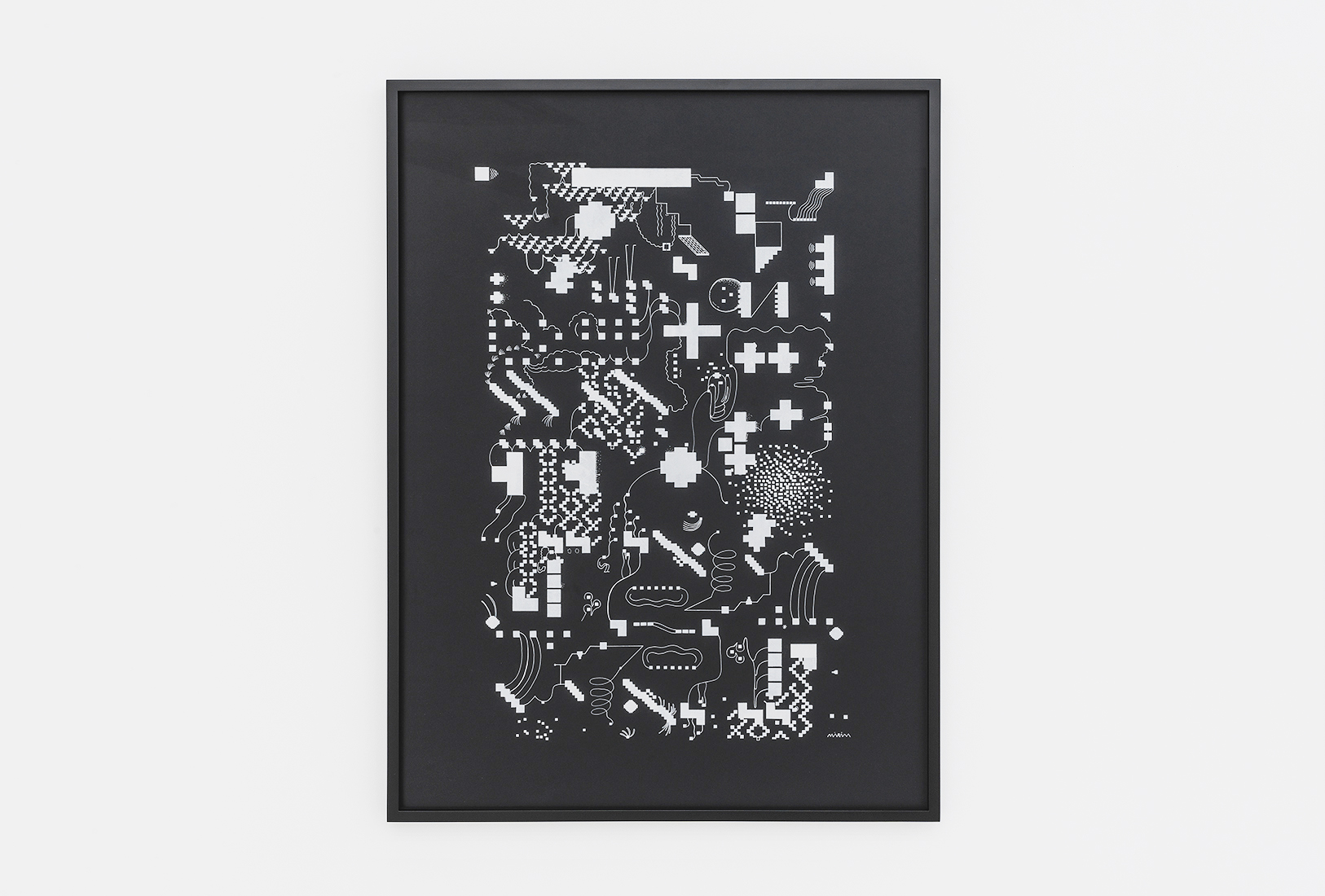
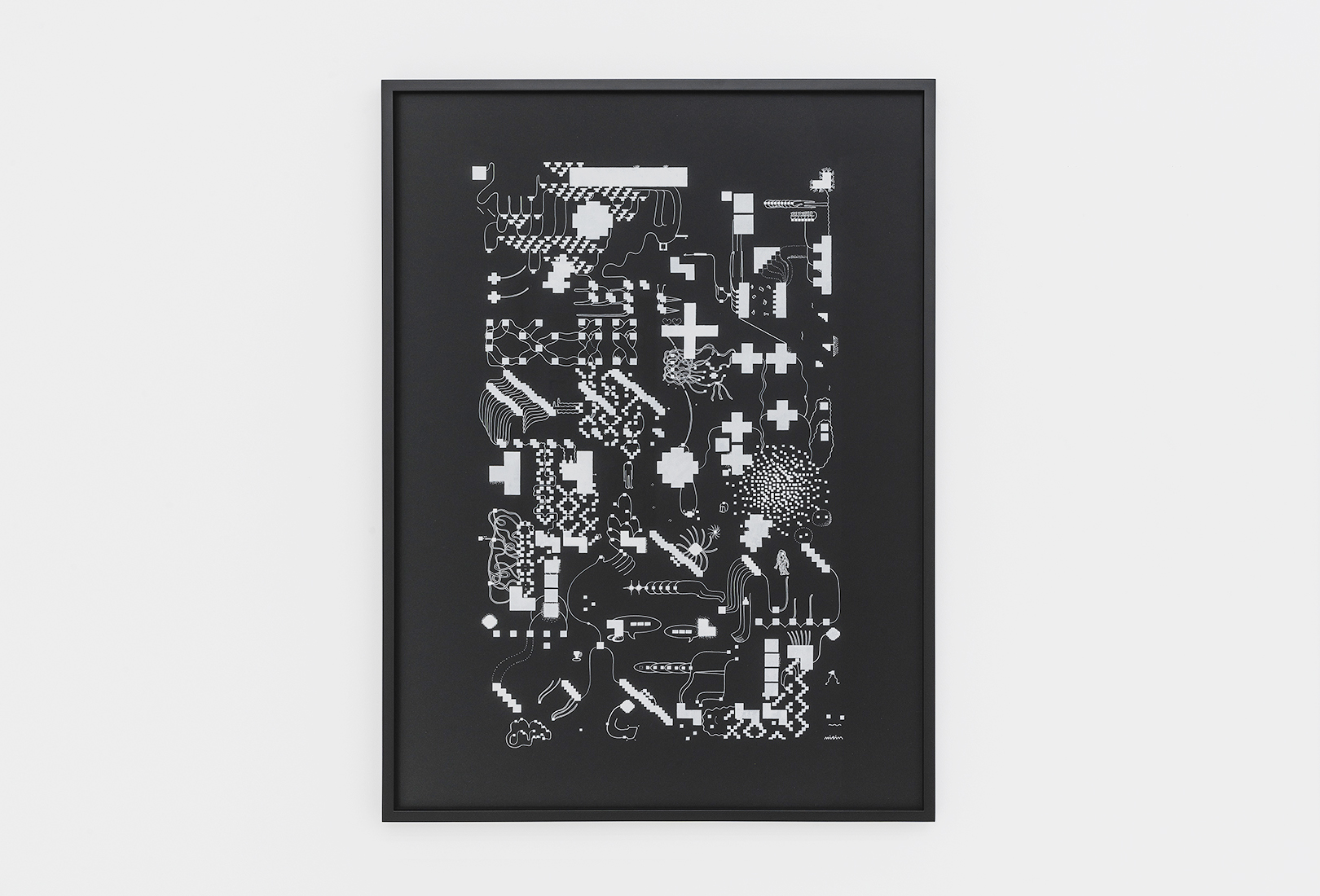
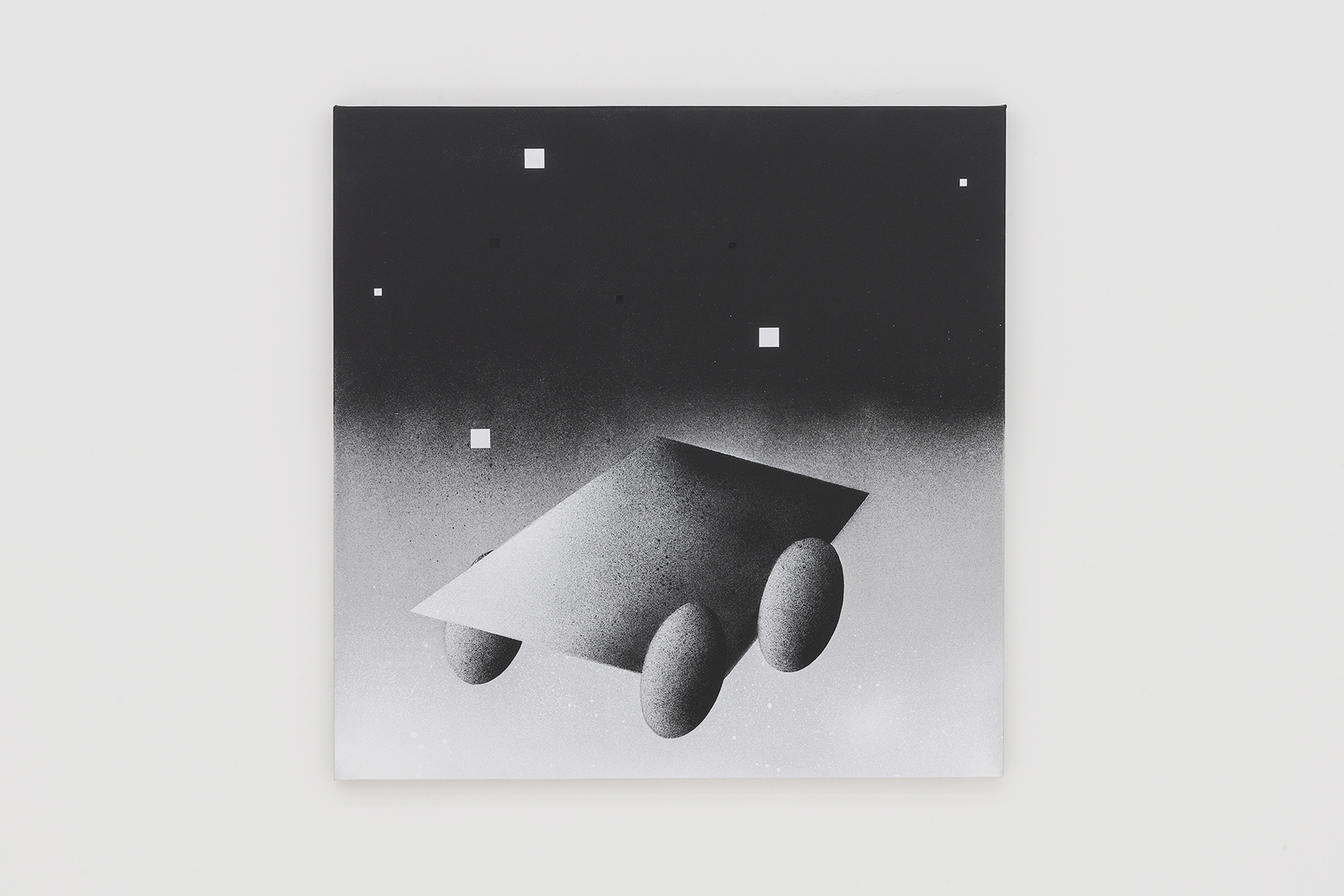
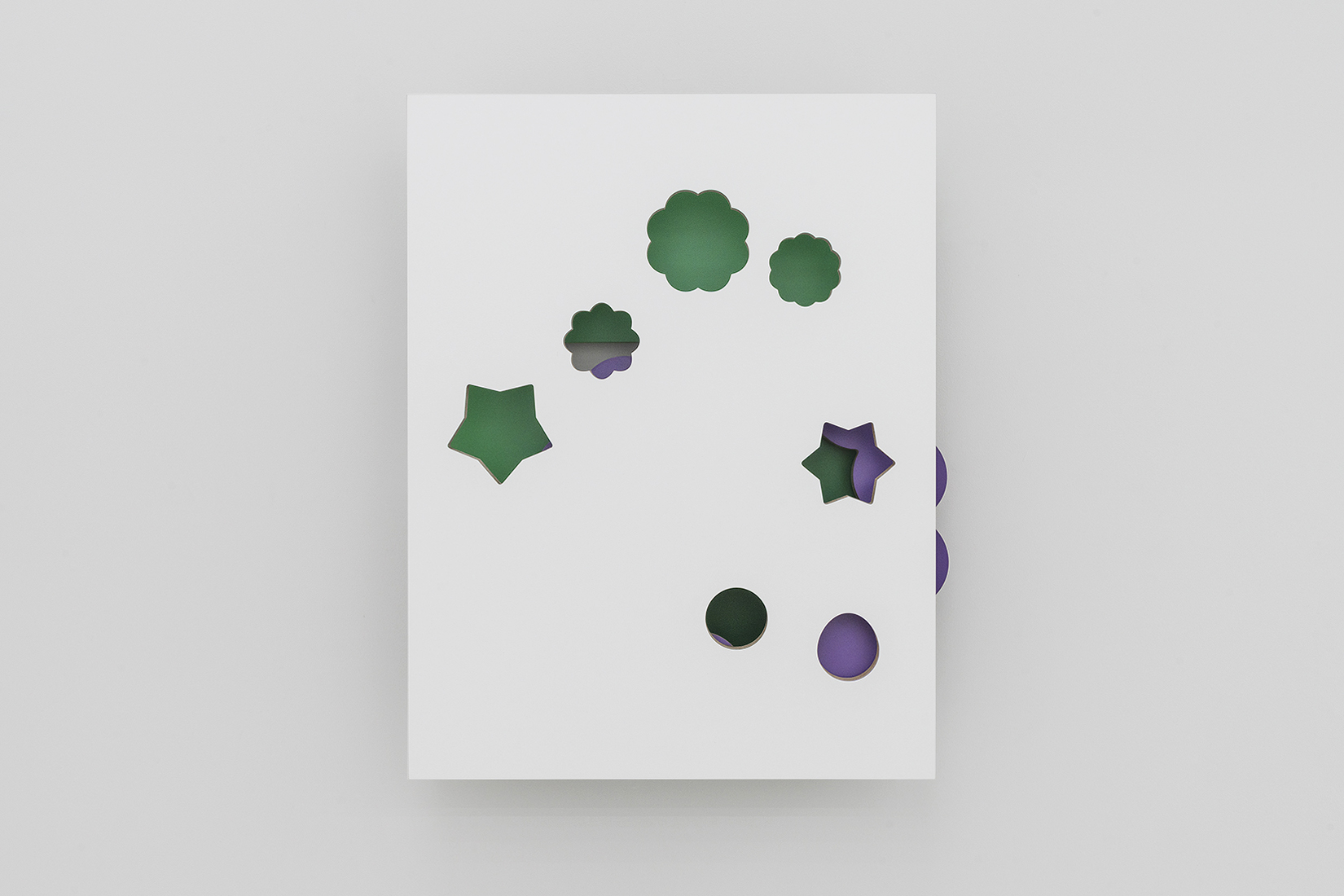
전시에서는 접근법의 차이만큼이나 두 행위자가 공통으로 취하고 있는 태도 역시 어렵지 않게 발견된다. 특히 하나의 작품에 사용되었던 이미지 파편을 여러 지지체에서 반복적으로 사용하되 각 환경에 맞는 역할과 관계를 재설정한다는 점을 들 수 있다. 이는 마치 한 파일을 여러 확장자로 변경하며 이미지의 효용을 변환시키는 것과 닮았다. 이 사실은 굽어져 내려오는 철제 계단 아래 또 다른 공간을 채우는 작품들에서 선명하게 파악된다. 가까운 위치에서 각각의 소리와 속도를 갖고 재생되는 두 영상은 세계관의 접속과 비접속의 지대를 가감 없이 보여준다는 점에서 본 전시의 중심에 있다. 그들은 필요와 취향에 따라 상대방의 작업 속에서 닮은꼴과 다른 지점을 찾아 자신의 우주로 편입시킨다. 이 복사와 내보내기, 수정의 과정은 외부를 향해 일어나기도 하지만 독립된 개인의 차원에서도 중층적으로 일어난다. 가령 홍승혜의 <무제>에서 떠다니고 충돌하는 여러 모양 중 어떤 것은 추미림의 영상에 삽입된 형태를 빼닮았지만, 동시에 각 도형들은 색색깔의 부조로도 여러 차례 추출된다. 추미림의 <무제>는 작가의 나란히 플레이되는 홍승혜의 영상과 유사한 러닝 타임과 화면 비율, 제한적인 기하 요소 등을 공유한다. 뿐만 아니라 그의 치밀한 설계와 코딩 명령어 간의 상호작용 속에서 태어난 화면 구성은 정지된 드로잉 이미지로 그 존재 방식을 다각화하기도 한다.
요컨대 둘의 작품은 한 전시장 안에서 서로를 끌어들이거나 밀어내는 방식으로 상호작용한다. 어떤 마디에서는 한쪽의 조형성이 한 발짝 더 앞으로 나오고, 다른 마디에서는 반대쪽이 다시 그 순서를 점유하면서 그들만의 박자를 맞춘다. 때로는 오롯이 내 영역에서부터 증식한 여러 개체의 모습을 상대의 것과 부딪히게끔 한다. 책상에서 마주한 어떤 두 사람을 떠올려보라. 그들은 열띤 토론을 벌일 수도, 말없이 각자의 업무를 처리하며 나만의 사고에 집중할 수도 있다. 결국 현재의 장면은 한 시점에 완결된 것으로써 설계되기보다, 모종의 합의와 명확한 결론을 도출하지 않고서도 핑퐁처럼 지속되고 멈추기를 계속했을 둘의 대화 어딘가로부터 점진적으로 세워져 지금의 모습을 갖추게 되었다. 그리고 이 작은 전시장은 그 소통이 이루어진 하나의 책상이며, 관객들은 책상 위에서 오갔을 무수한 의미의 교환을 각 작품 간의 연결고리를 통해 상상해 볼 수 있을 것이다.
글 | 박지형 (디스위켄드룸 큐레이터)
‘Partners Desk’ refers to a face-to-face desk where two people usually sit facing each other. The object lets one imagine Mirim Chu and Hong Seung-hye meeting for a long time, bringing out their respective worlds and putting puzzles together with no answers. Both artists are fascinated by urban environments, where they continue to experiment with formative characteristics and implement their work in a way that is familiar with digital tools. They also have things in common in that they are not tied to a single medium and skillfully devise optimized formats according to the given space and situation. However, the focus of this curatorial practice is on the fact that the two artists have similar interests but different starting points and directions in their work, and the temporary encounter through the exhibition will bring the gap between their perspectives and attitudes to the center of the present. Therefore, the meaning of this desk revolves around several loose strategies.
The exhibition intertwines the ideas of the two artists, employing repetition, layering, mirroring, and collision in accordance with the rules they’ve established. The structural elements of the space not only hint at their physical convergence but also serve as a framework for their conceptual exploration. Initially, the windows on the first floor act as transparent supports for semi-abstract symbols and suggestive typography. Visible from both inside and outside, the disheveled drawings showcase reversed text, gradually filling the transparent panes and forming a text-drawing. Beyond, a path through the exhibition hall leads to the face-to-face desk with the two artists’ lucky colors side by side, mirror reliefs along the surrounding walls that absorb the shapes of their surroundings, a collage by Mirim Chu that maps impressions of their past collaborations and reconstructs them on a small screen, and a dense drawing that seems to have originated somewhere in the blackness of the city night.
The narratives, originating from mundane objects and conversations, gradually intertwine, revealing both the similarities and differences in their formative language. Hong Seung-hye’s latest pieces are distinguished by elements that echo external shapes, intentionally leaving spaces open to allow for the entry of forms beyond them, and a kind of prefabricated logic in which the work is variable depending on where it is placed or how it is assembled. In the process, pixels and vector values become three-dimensional entities that we can examine from multiple perspectives. Conversely, Chu actively merges the characteristics of media editing environments with the context of visual art. This involves importing digital images stored as copies and manually editing them, or applying differently shaped masks to densely drawn pen illustrations to delineate their contours. The images manipulated by the artist then seamlessly integrate into the wall’s surface, fixed yet poised for interaction within the dynamic environment she constructs.
In this exhibition, one can readily discern both the shared inclinations and distinctive methodologies of the two artists. They frequently employ fragments of images from one work across various mediums, reassigning roles and relationships to suit each environment. This process mirrors the transformation of image utility through file extension alterations. This approach is prominently displayed in the works situated beneath the sweeping steel staircase. Two videos, each with its own distinct sound and tempo, play nearby, serving as a focal point of the exhibition. They starkly illustrate the zones of connectivity and disconnection within our perception of the world. The artists identify similarities and disparities in each other’s work, seamlessly integrating them into their own artistic realms based on their individual needs and tastes. This process of copying, exporting, and modifying extends not only outward but also operates on a layered, individual level. For instance, certain shapes in Hong’s bear resemblance to those inserted into Chu’s video, yet each shape is presented multiple times as vibrant reliefs. Similarly, Chu’s shares comparable running times, aspect ratios, and geometric elements with Hong’s adjacent video. Moreover, through a meticulous interplay of design and coding, Chu diversifies her screen composition with still images of drawings, enriching its mode of existence.
In essence, the works of the two artists coexist within the exhibition space, engaging in a dynamic interplay of influence. At times, one artist’s creative expression takes precedence, while at others, the other artist asserts their vision and rhythm. There are moments of collision, where multiple objects originating from their respective realms intersect. Imagine two individuals seated across from each other at a desk: they may engage in passionate discourse or silently pursue their thoughts. The current scene isn’t meant to reach a definitive conclusion; rather, it evolves gradually, akin to an ongoing conversation between the two, resembling a ping-pong match of ideas without a clear consensus. The exhibition serves as a metaphorical desk for this dialogue, inviting audiences to contemplate the myriad exchanges of meaning that have transpired within its space.
TextㅣJihyung Park (Curator, ThisWeekendRoom)
The Arabian mermaid will never stop singing →