루카스 카이저
Lucas Kaiser
25 Apr-24 May 2025
ThisWeekendRoom
Artist
Lucas Kaiser →
Credit
참여작가ㅣ루카스 카이저
기획ㅣ디스위켄드룸
글ㅣ박지형
사진ㅣ최철림
ArtistsㅣLucas Kaiser
Curated by ThisWeekendRoom
TextㅣJihyung Park
PhotographsㅣChoi Chul lim
Exhibition Text
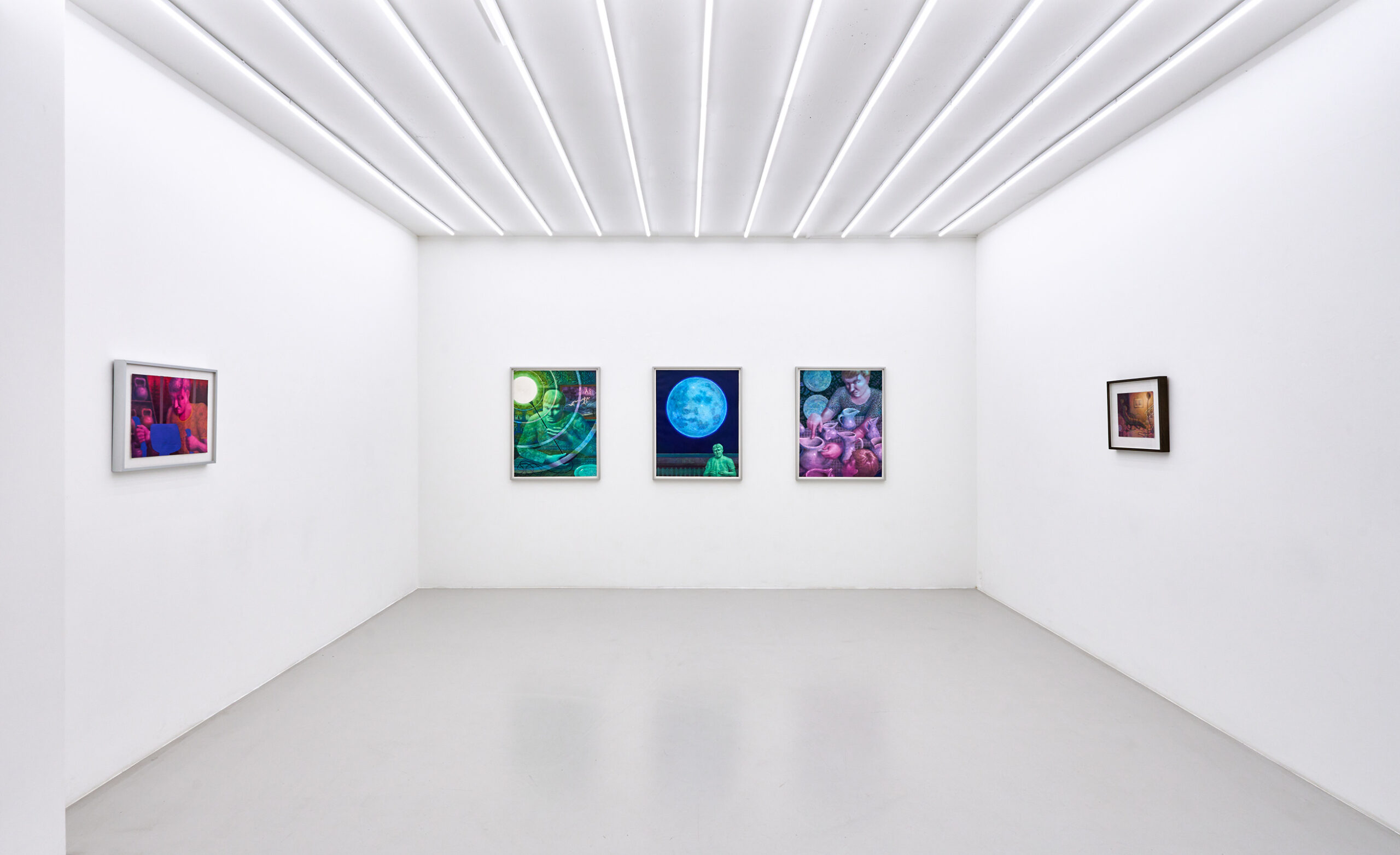
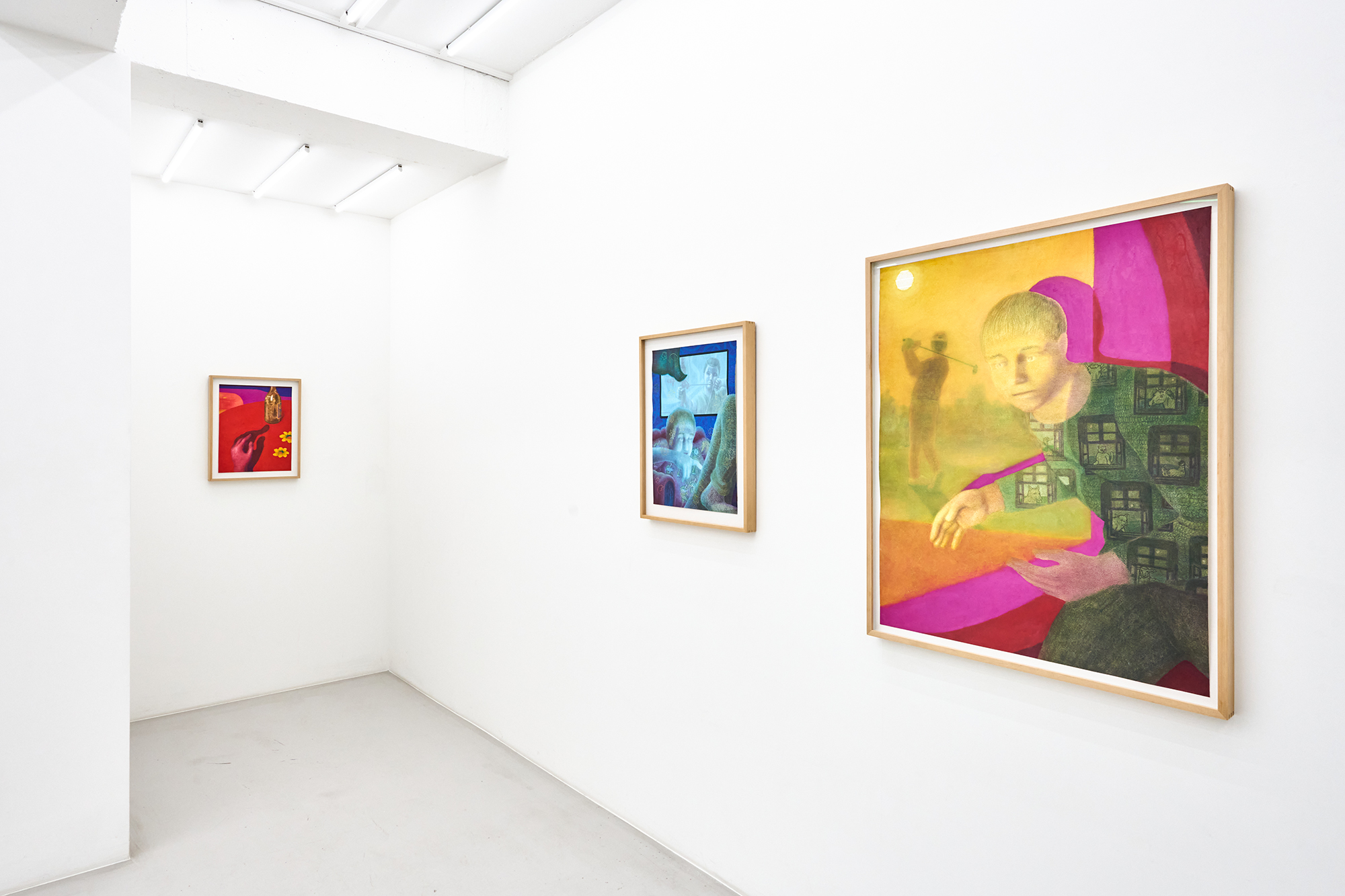
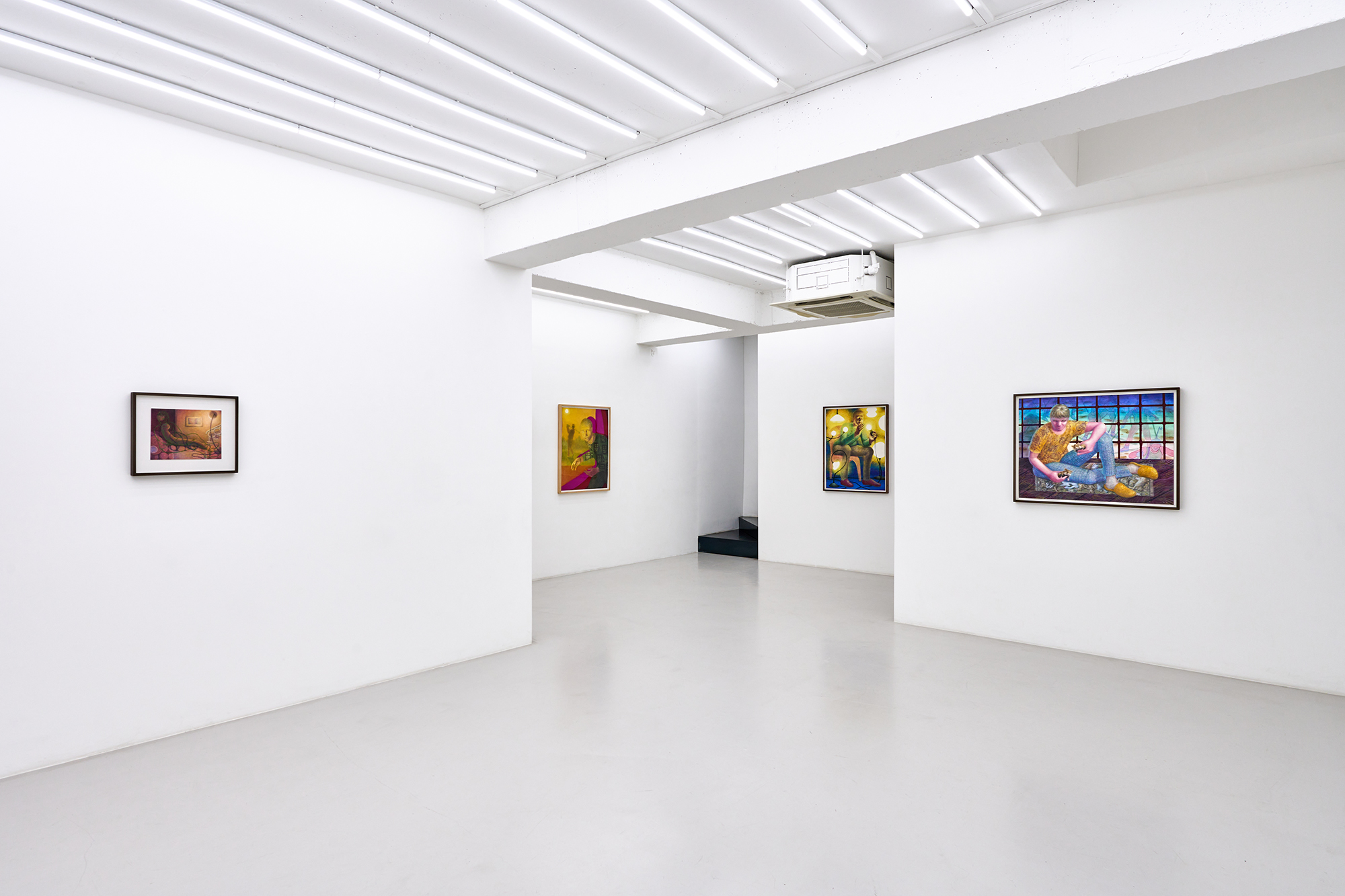
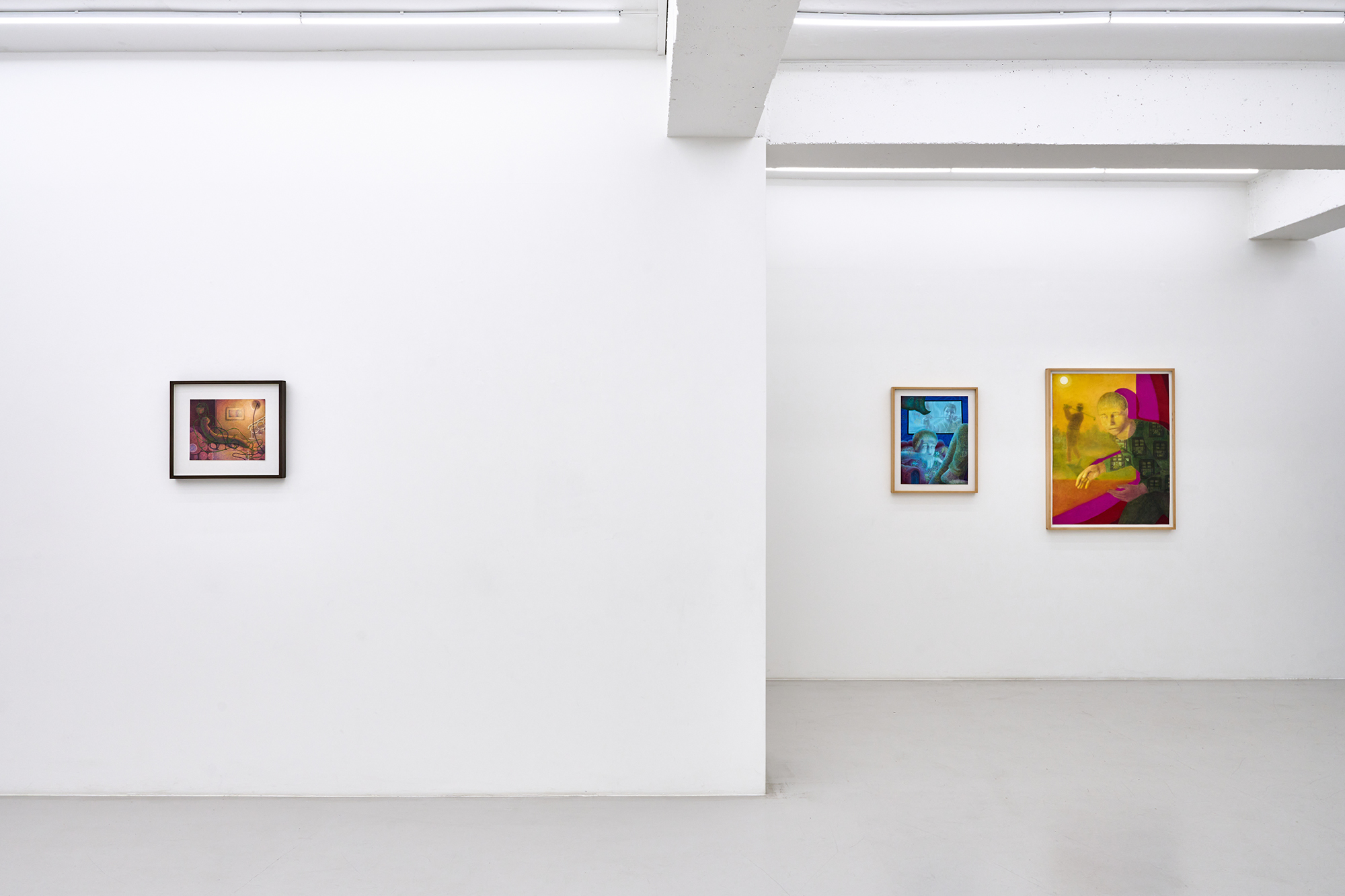
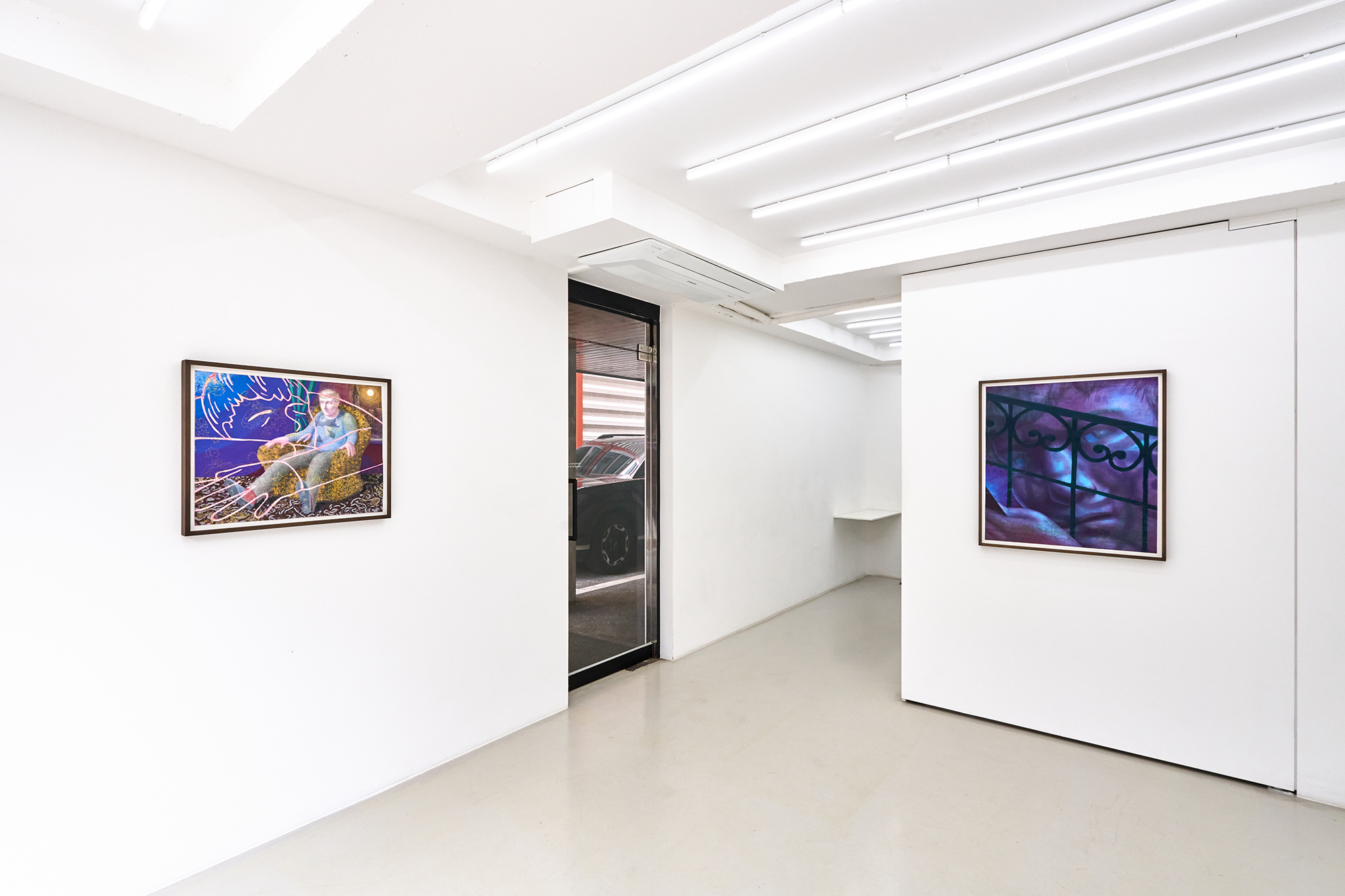
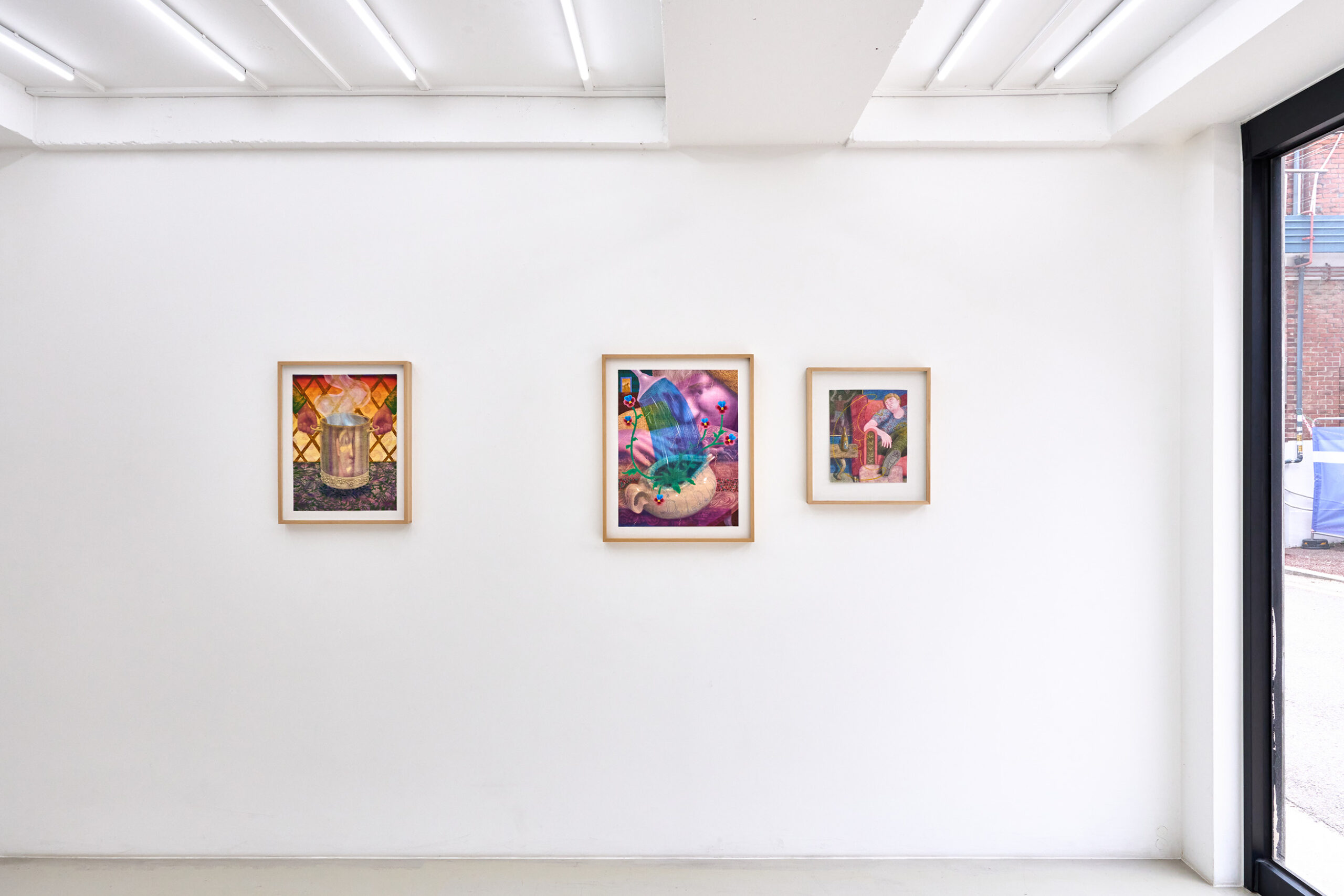
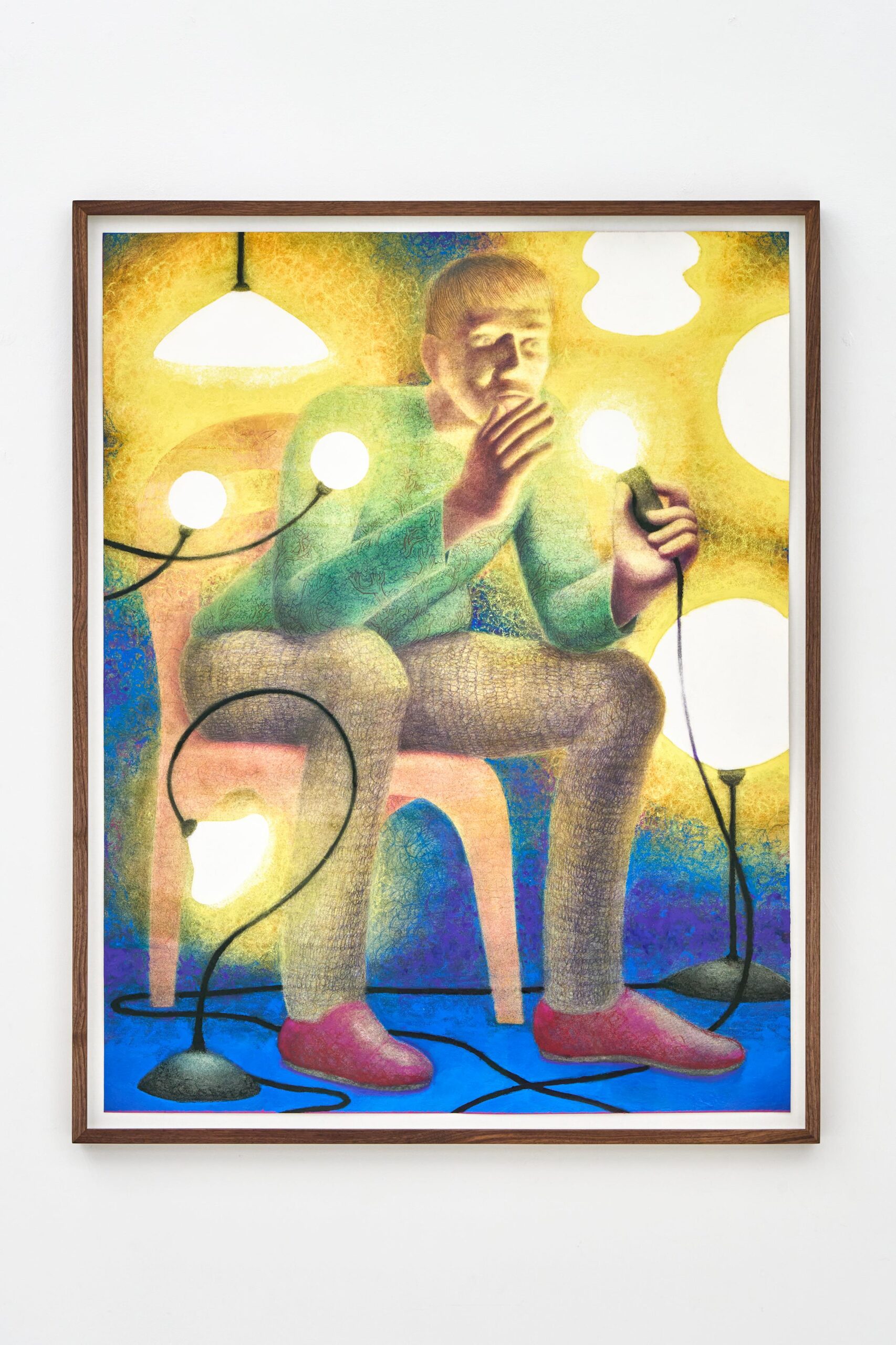
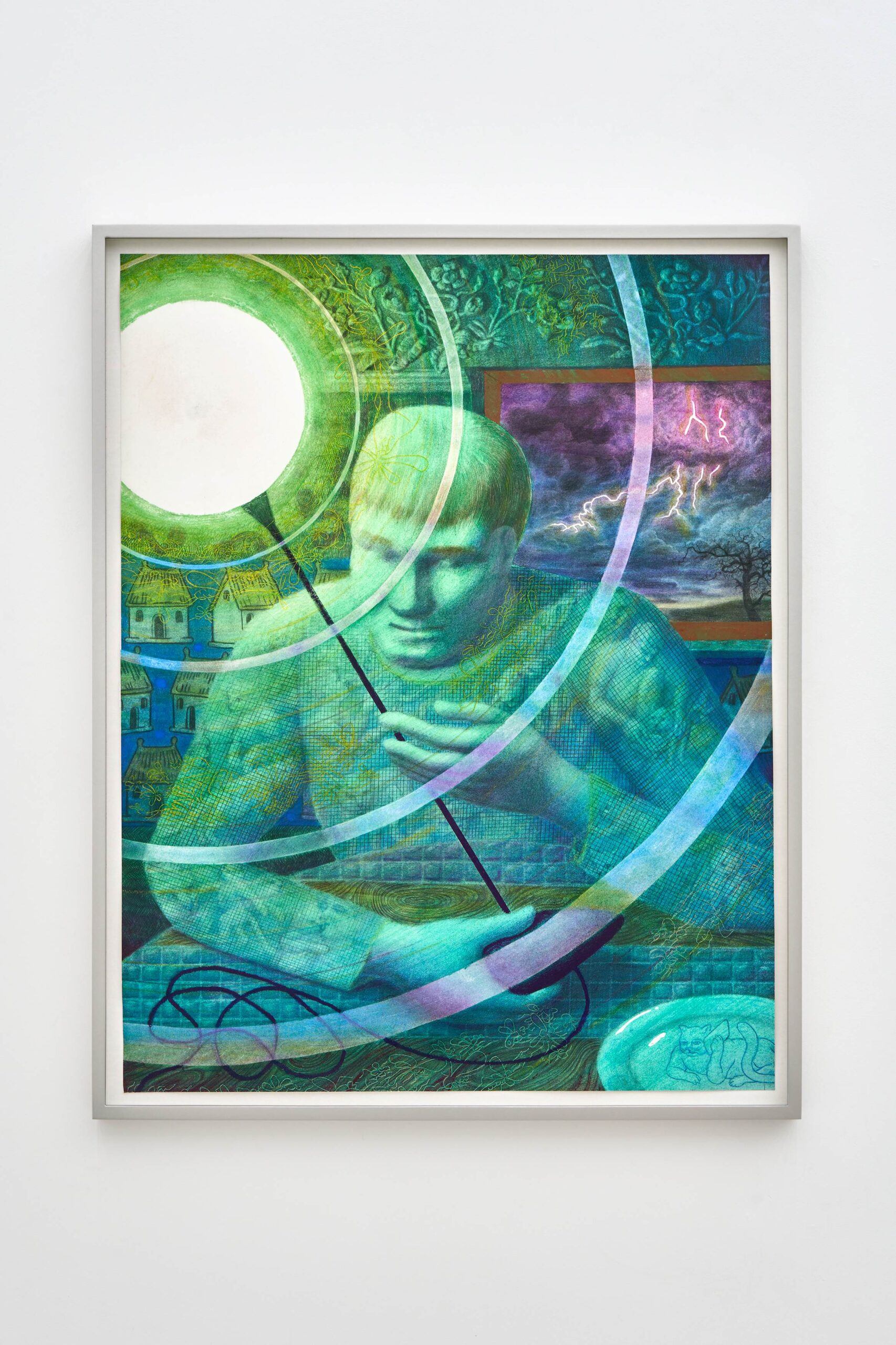
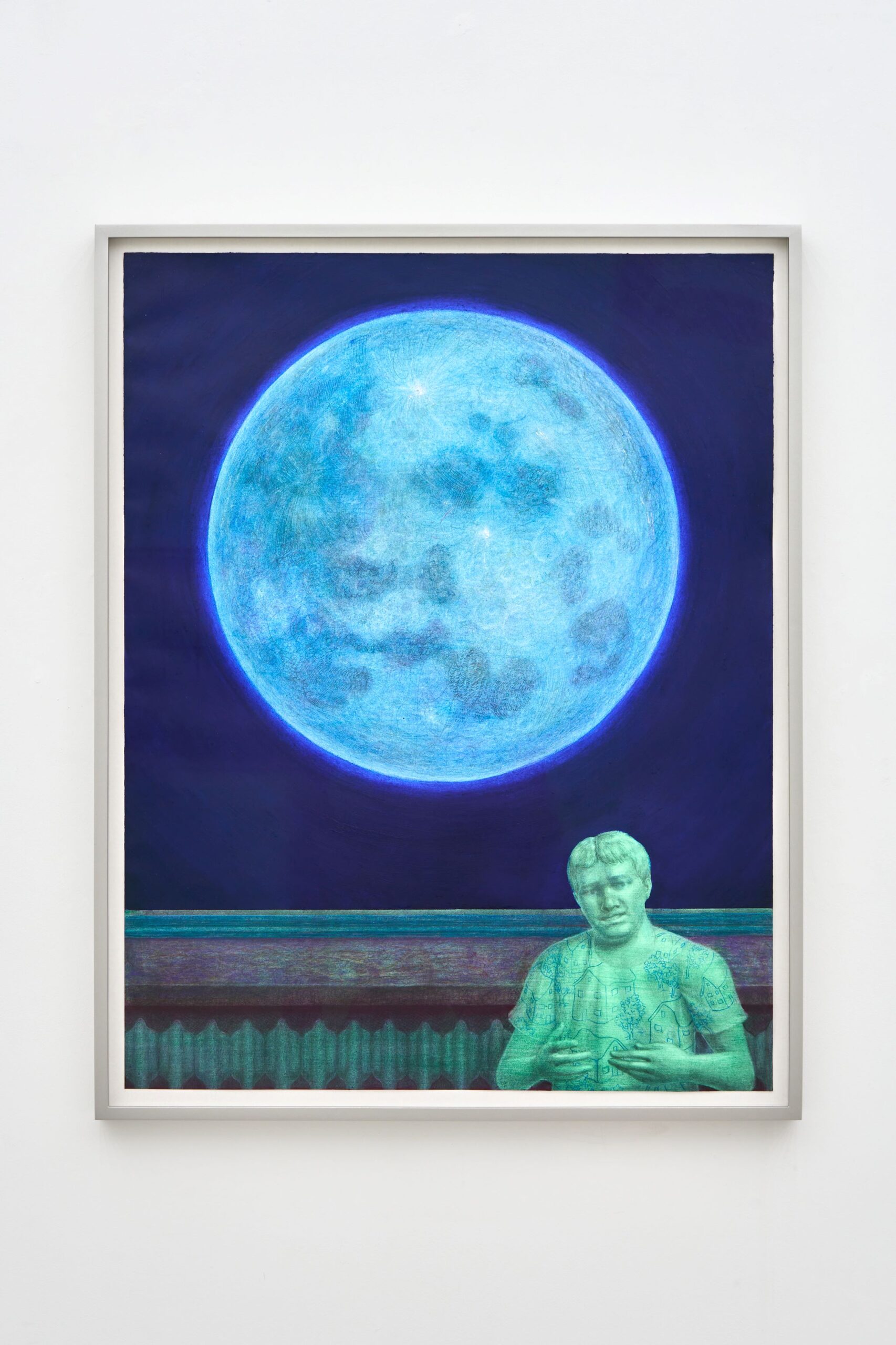
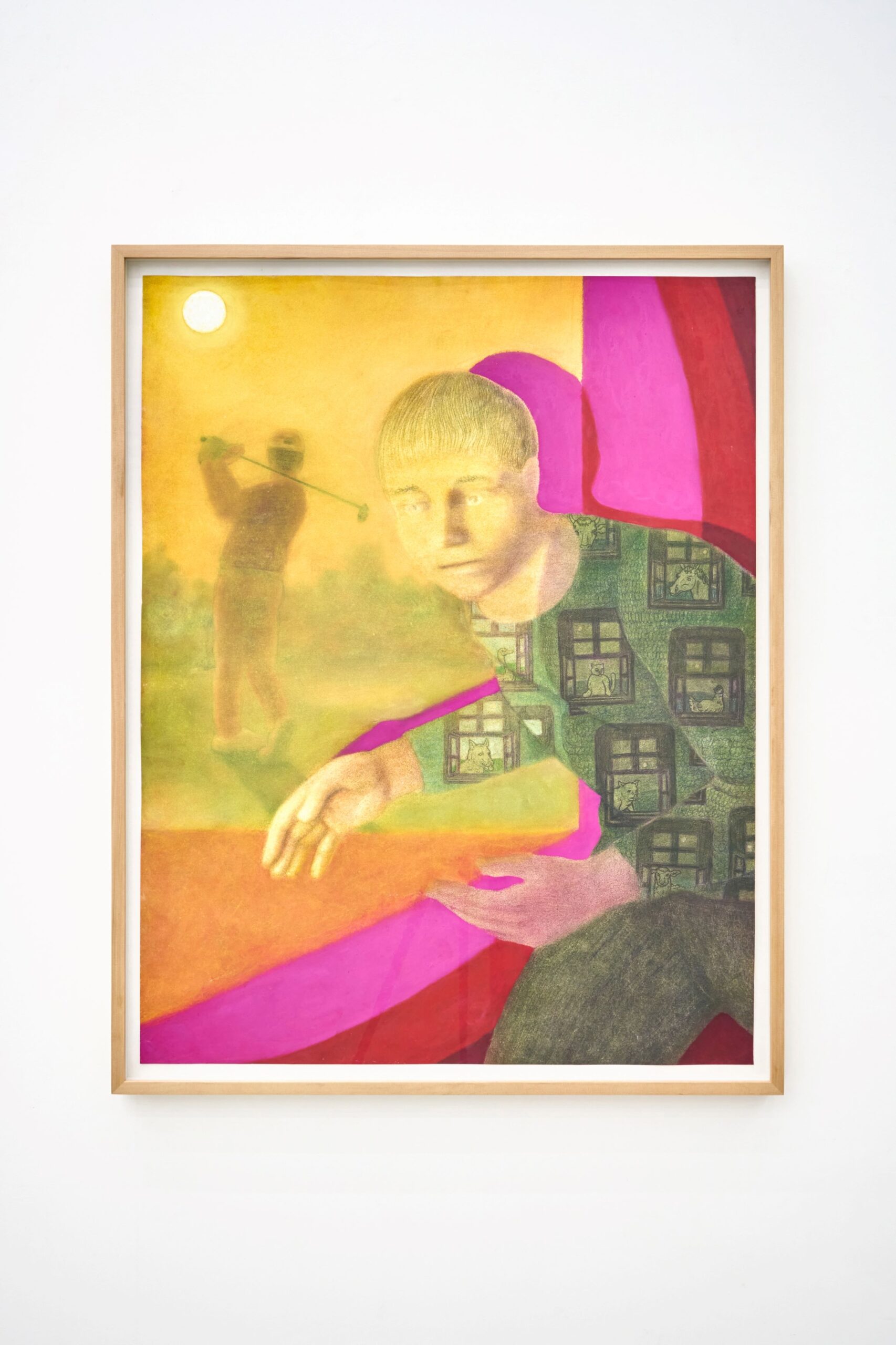
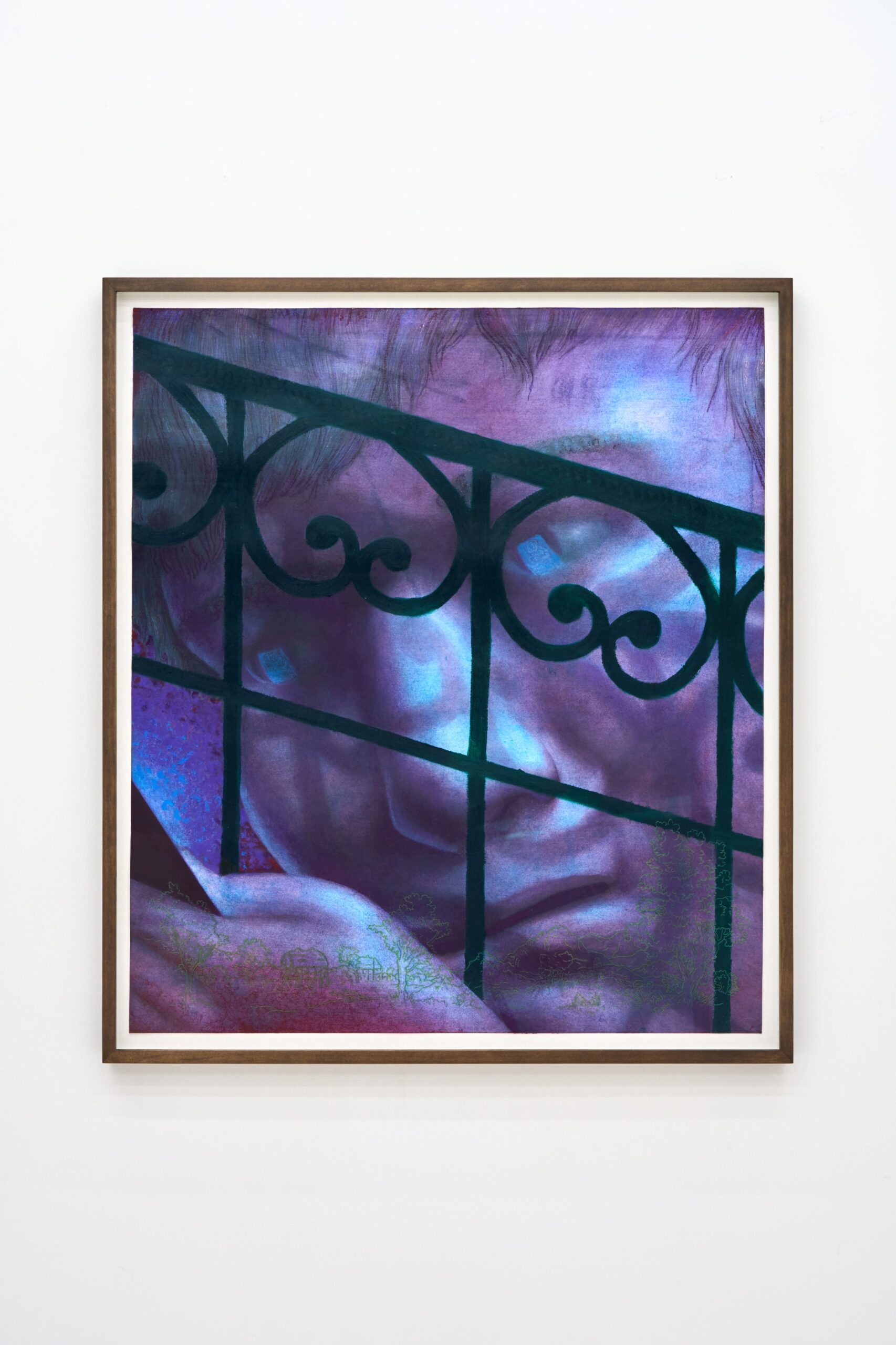
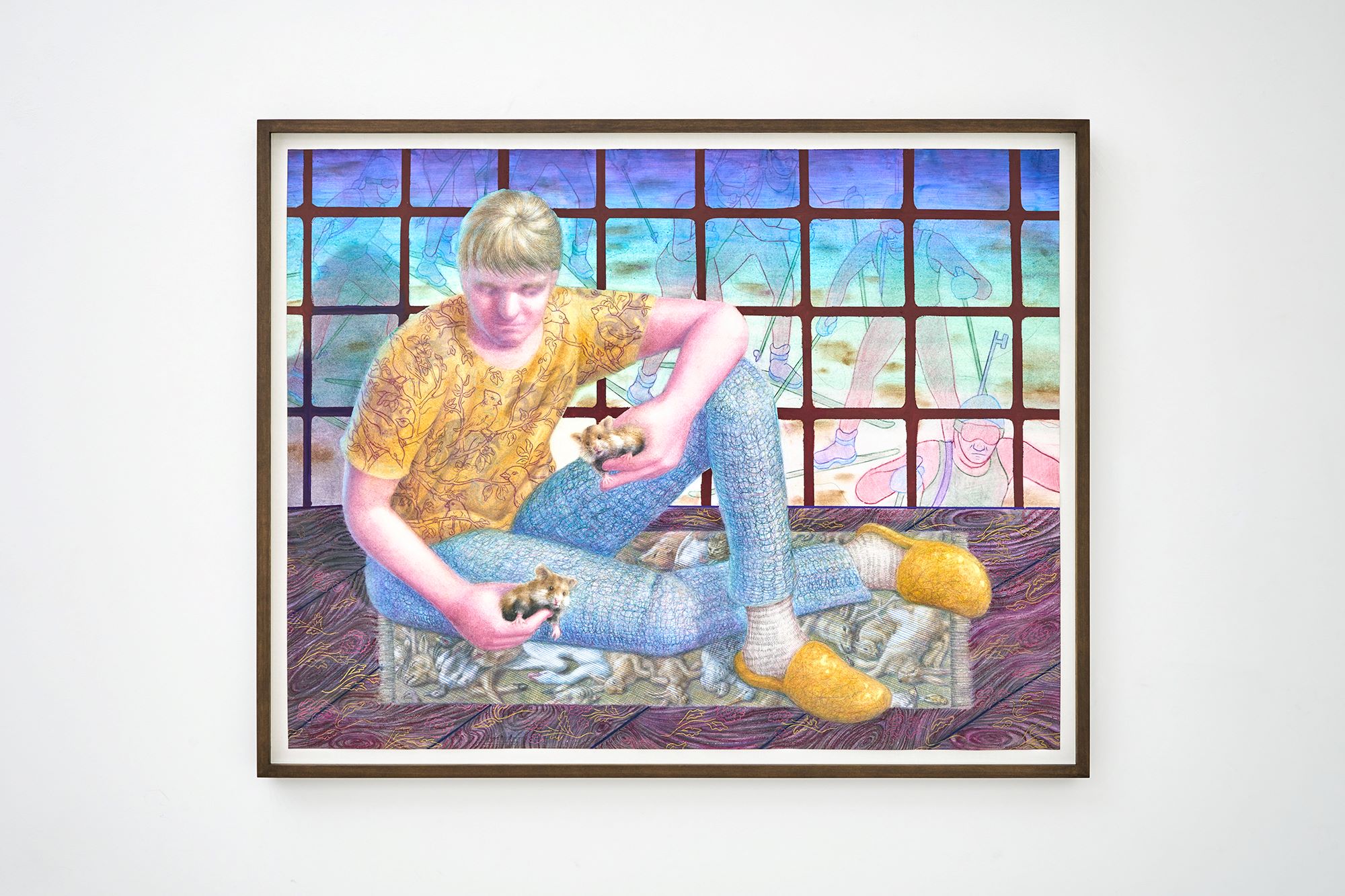
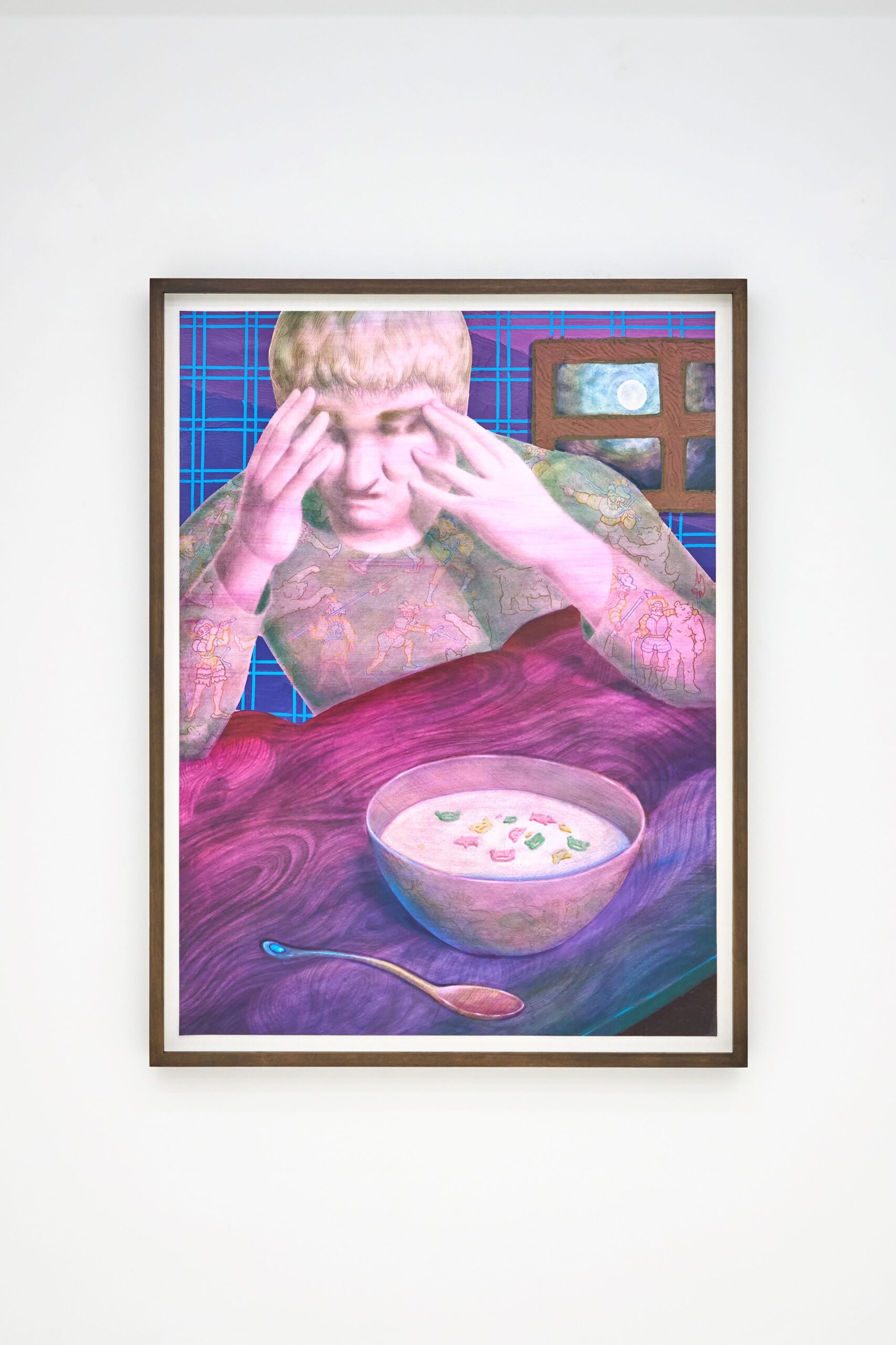
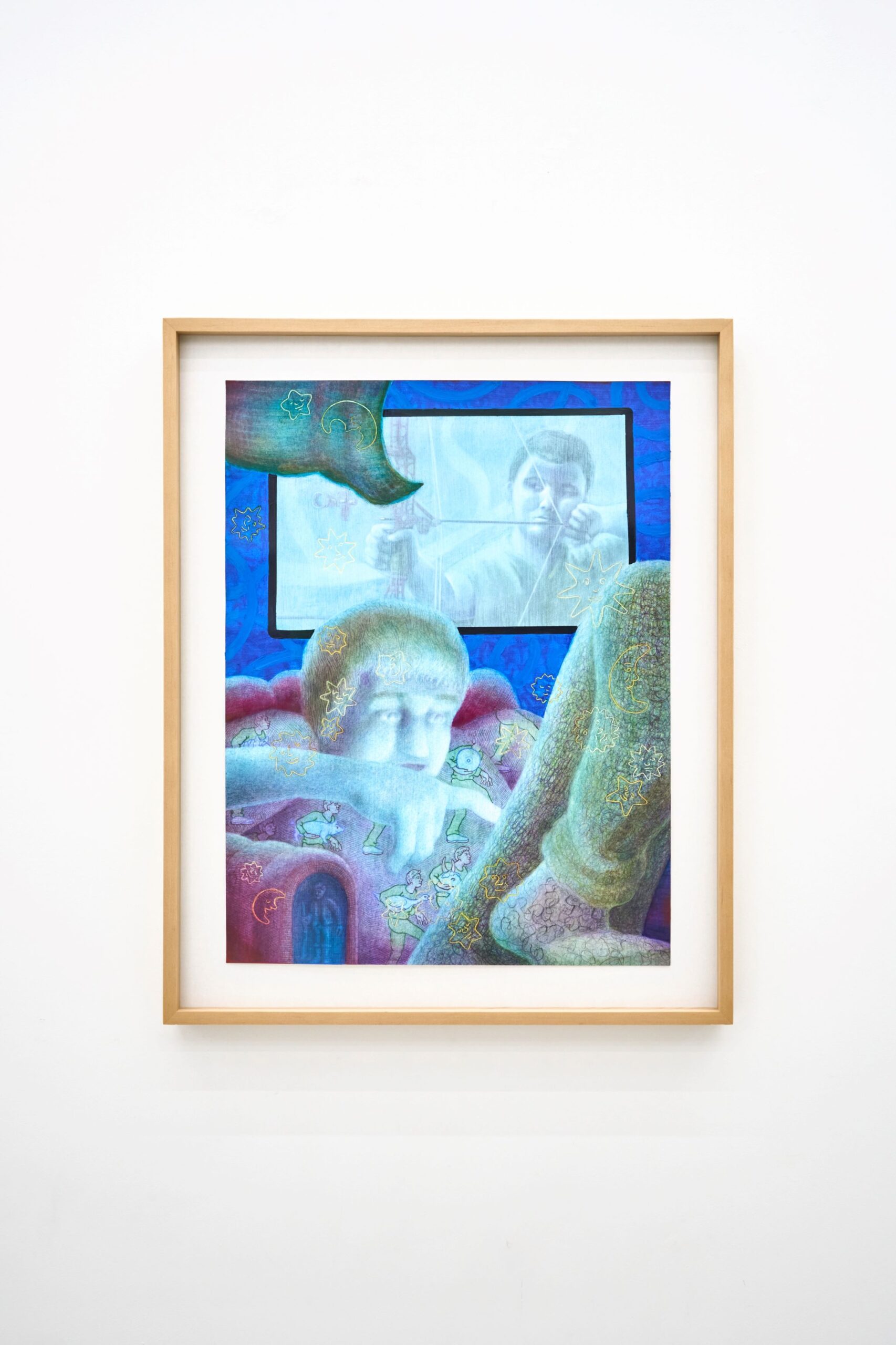
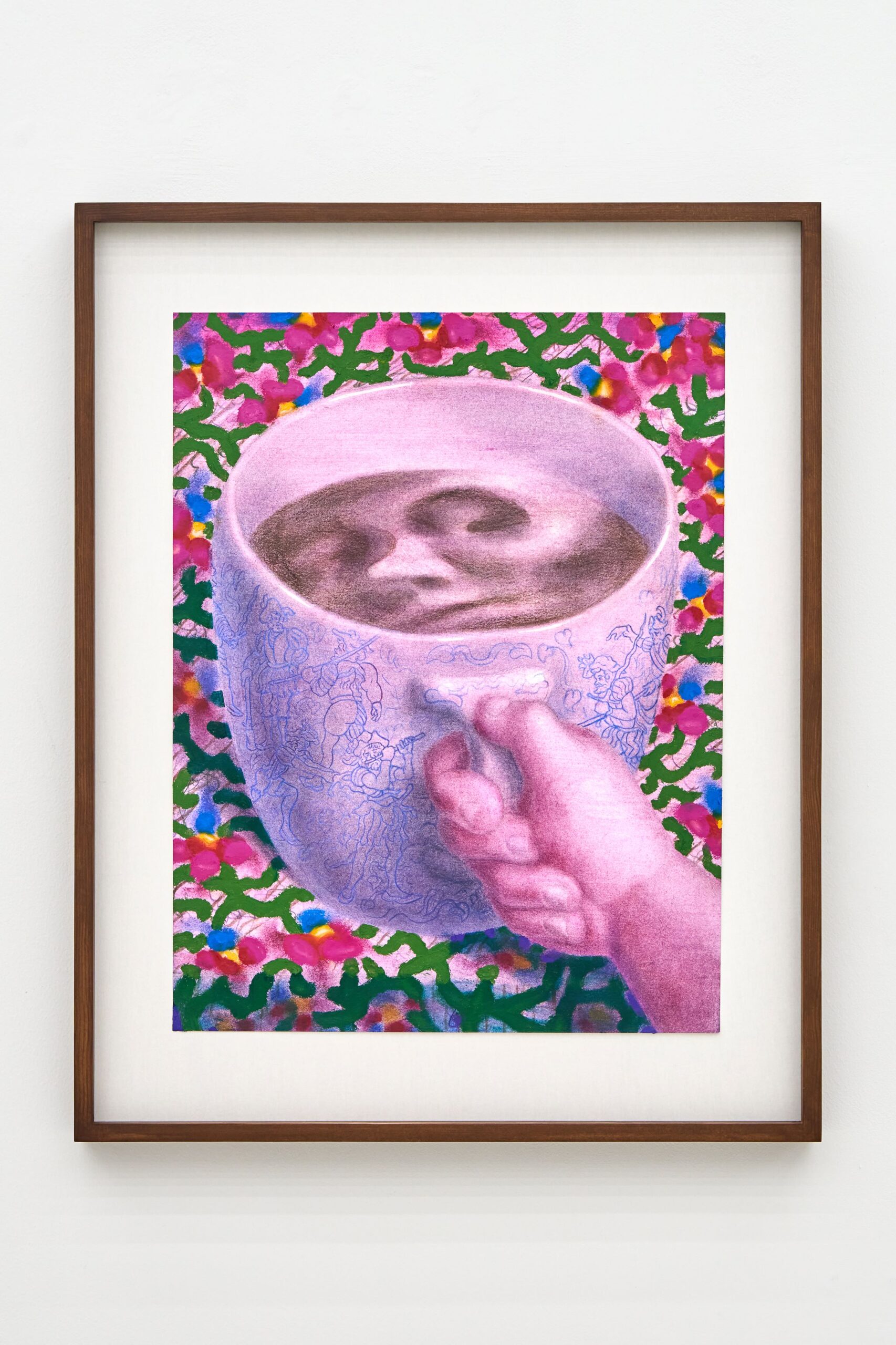
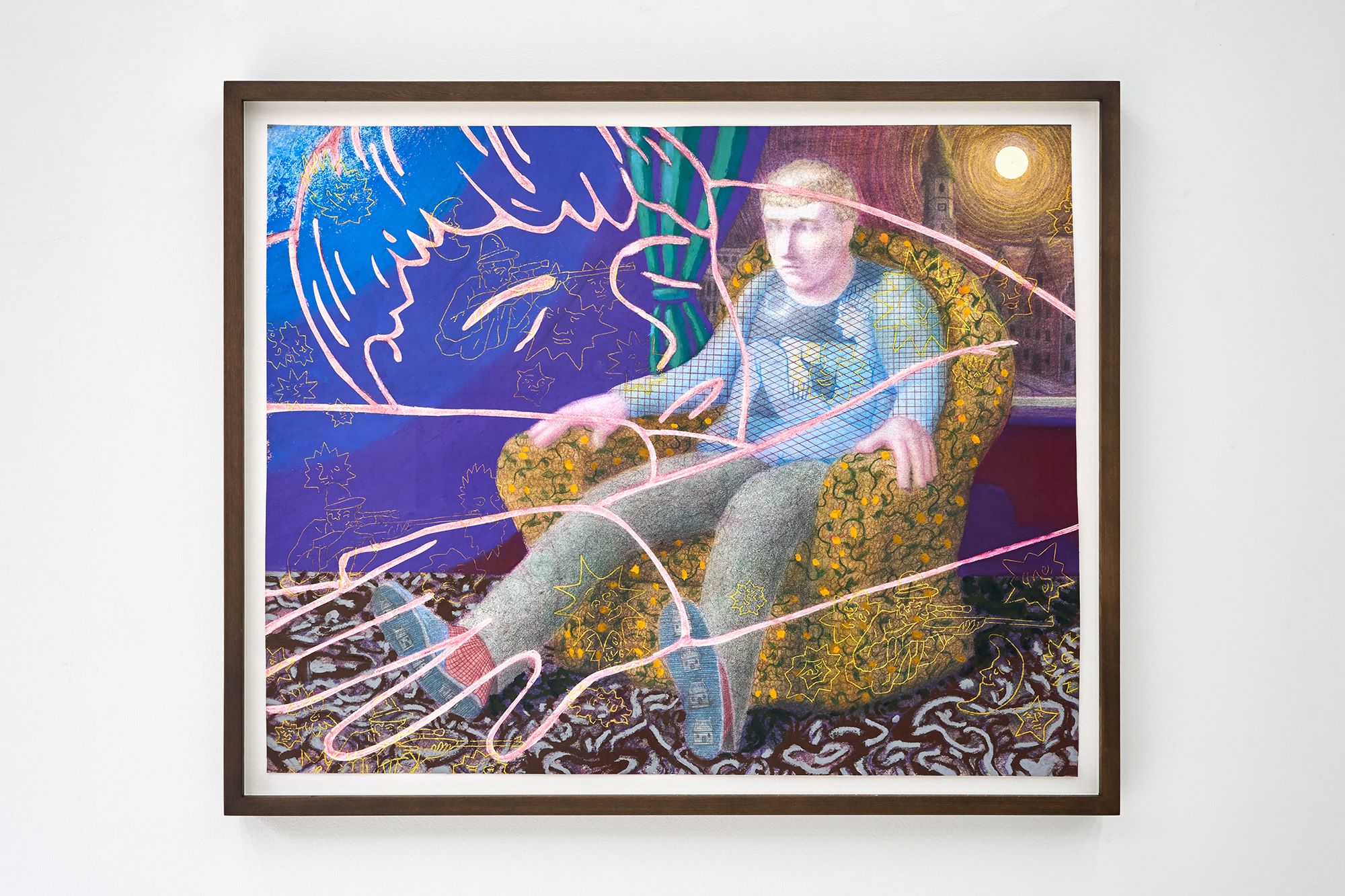
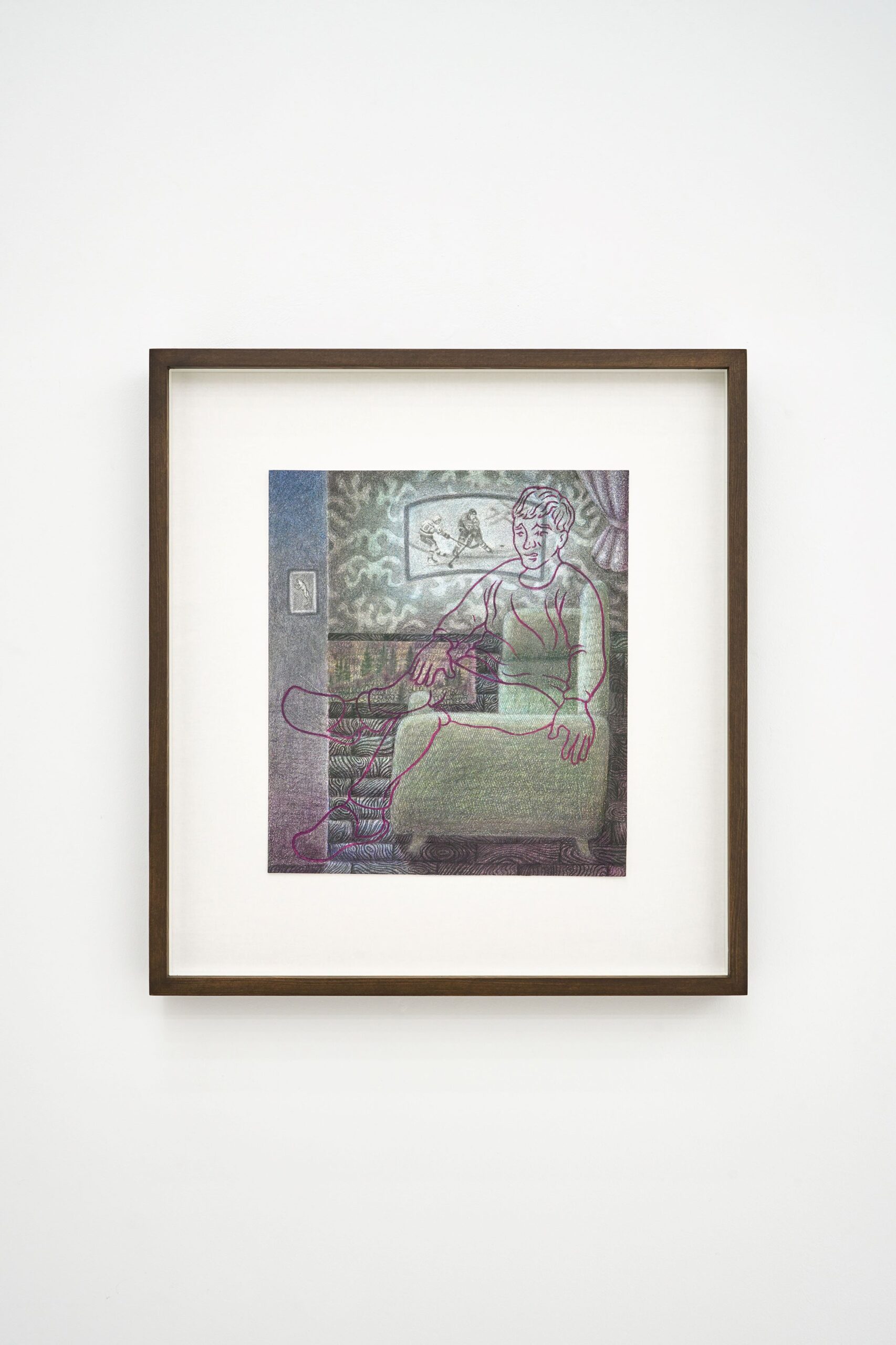
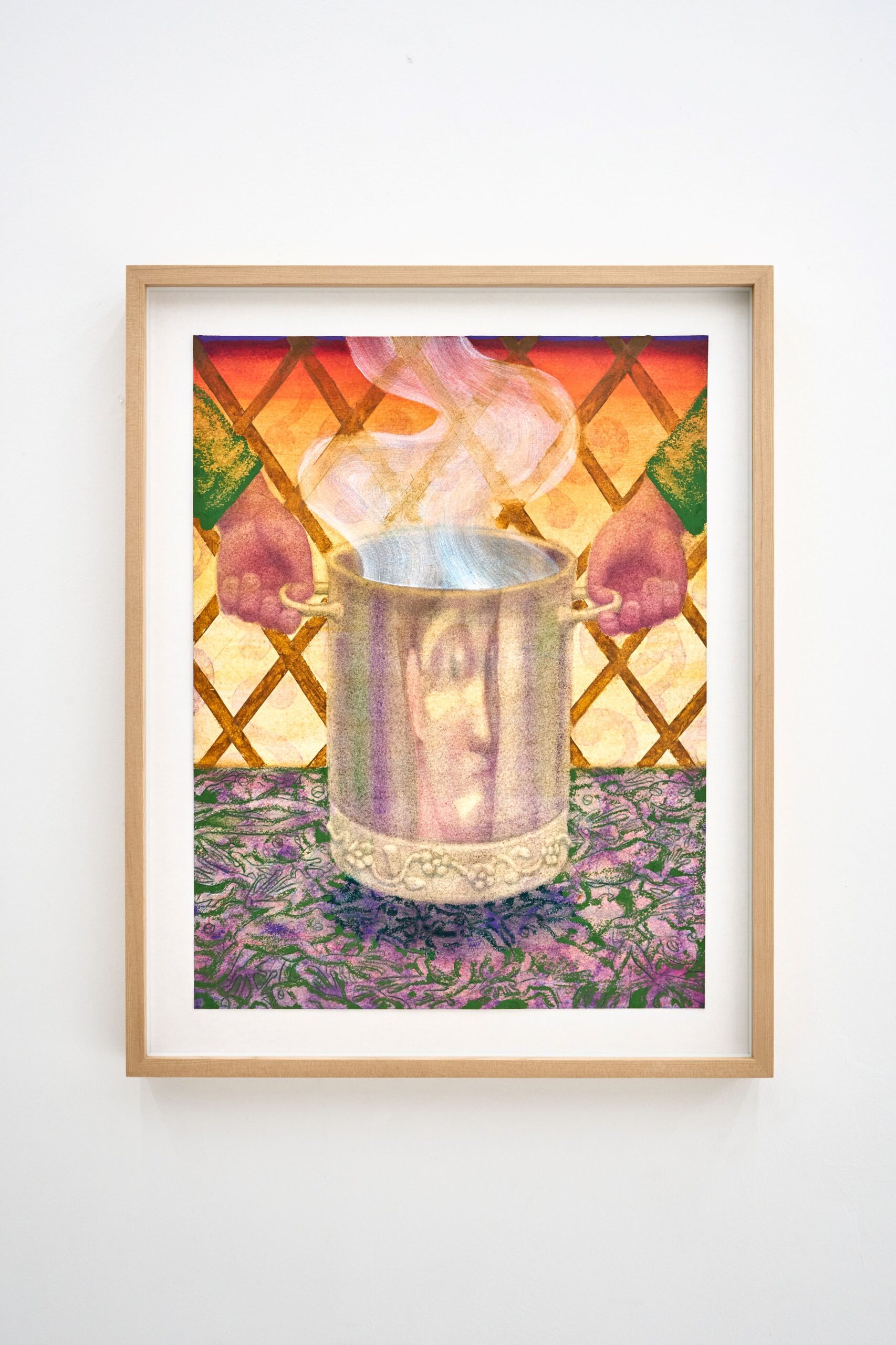
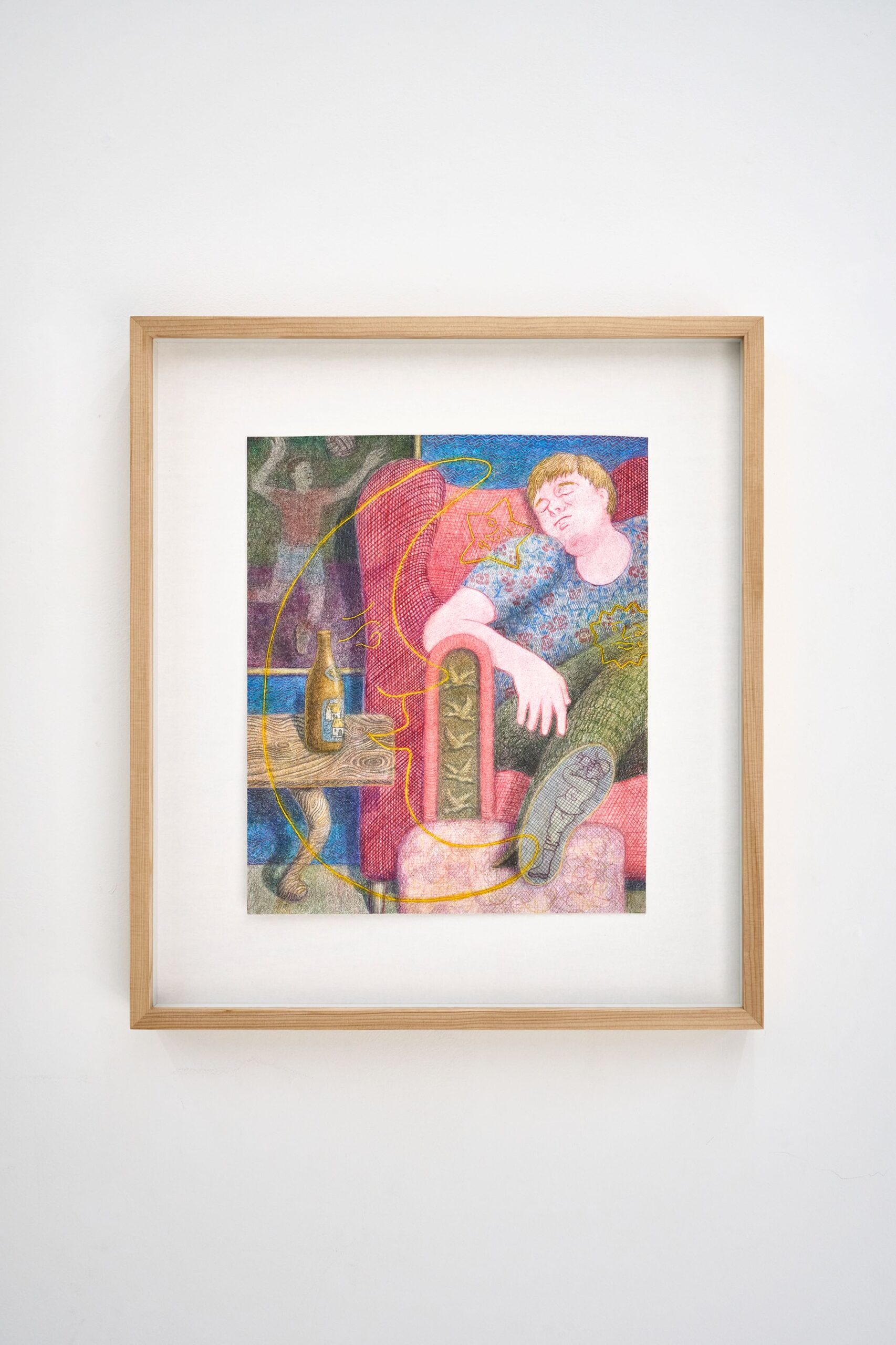
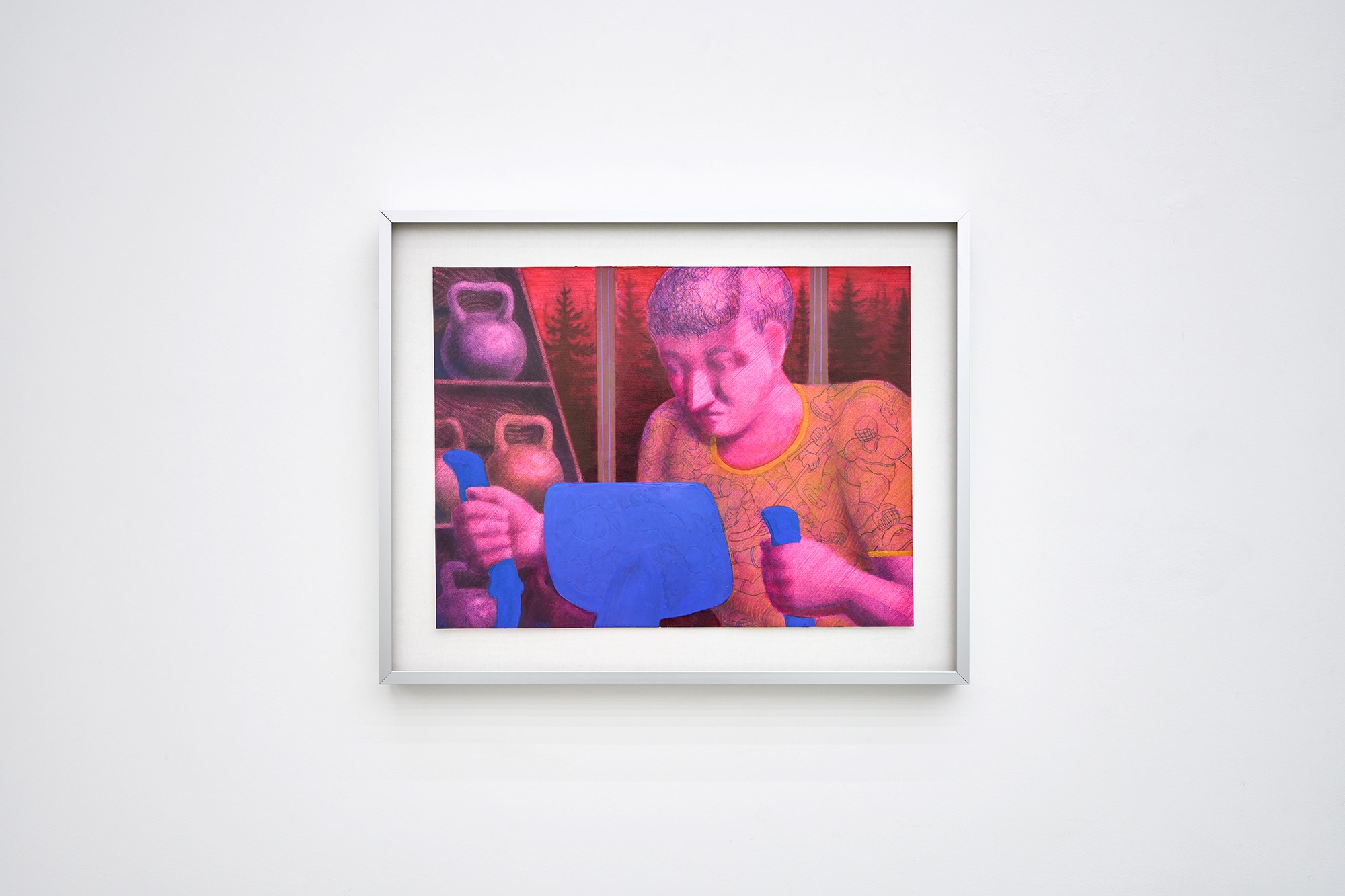
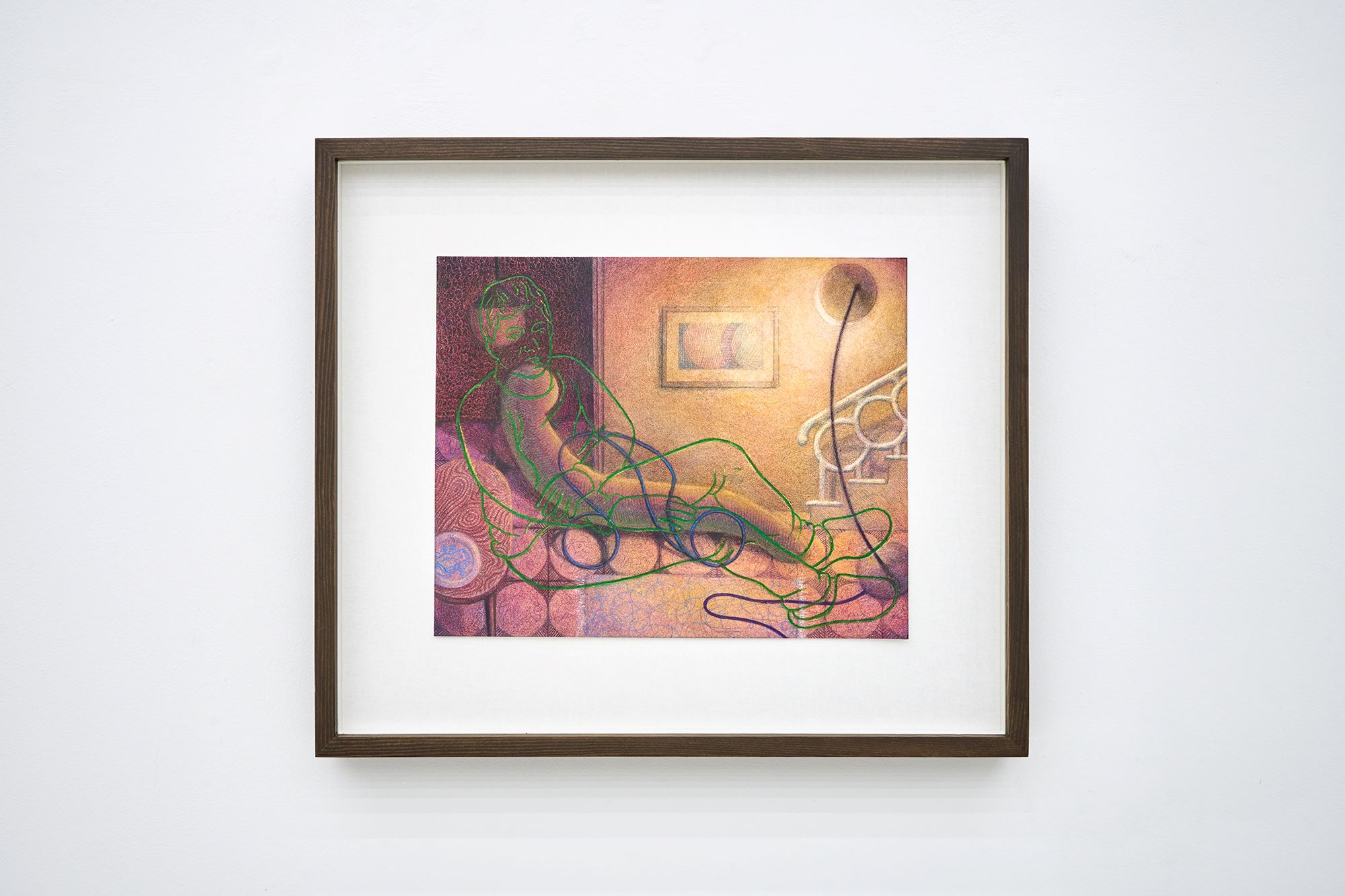
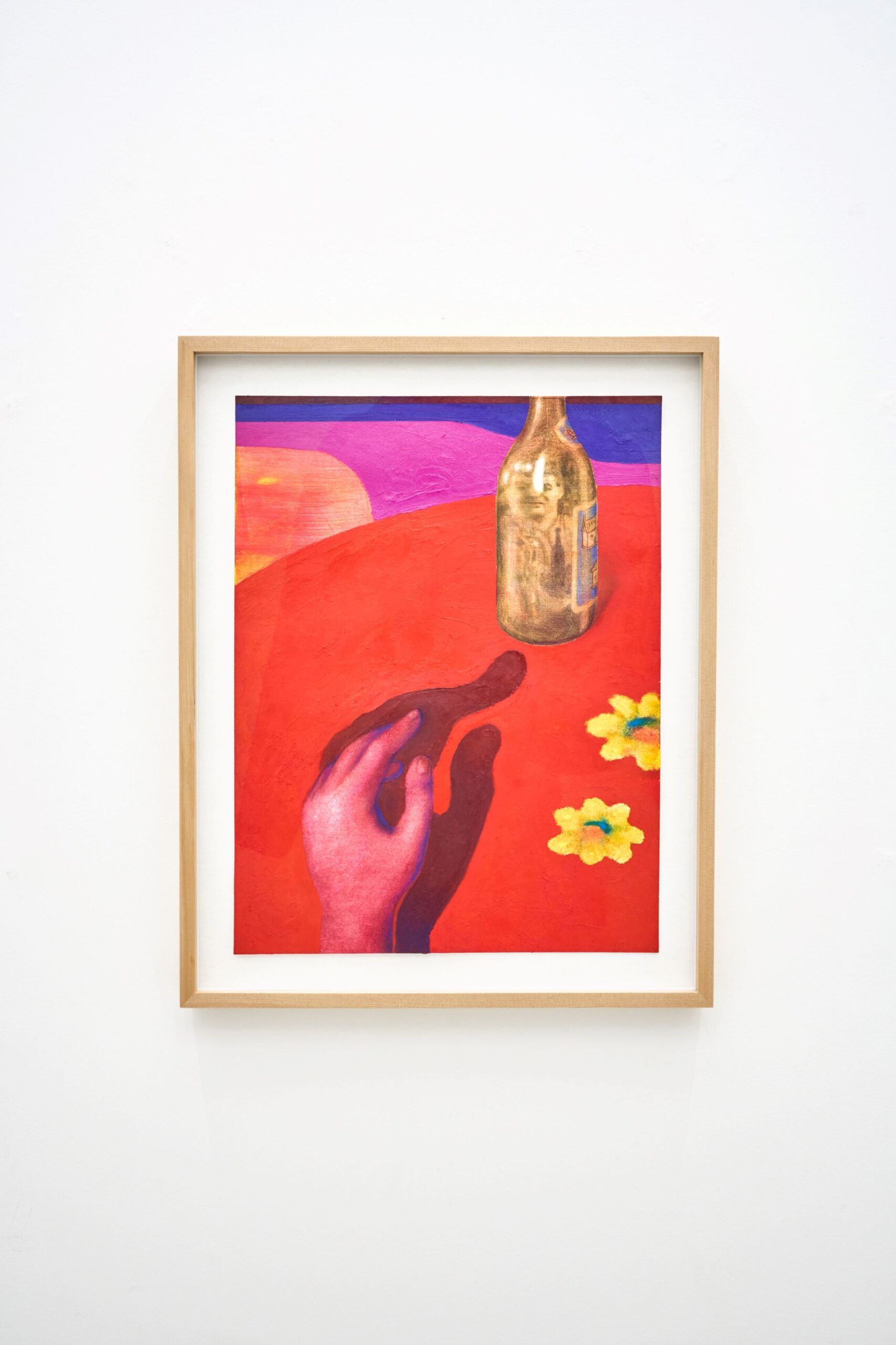
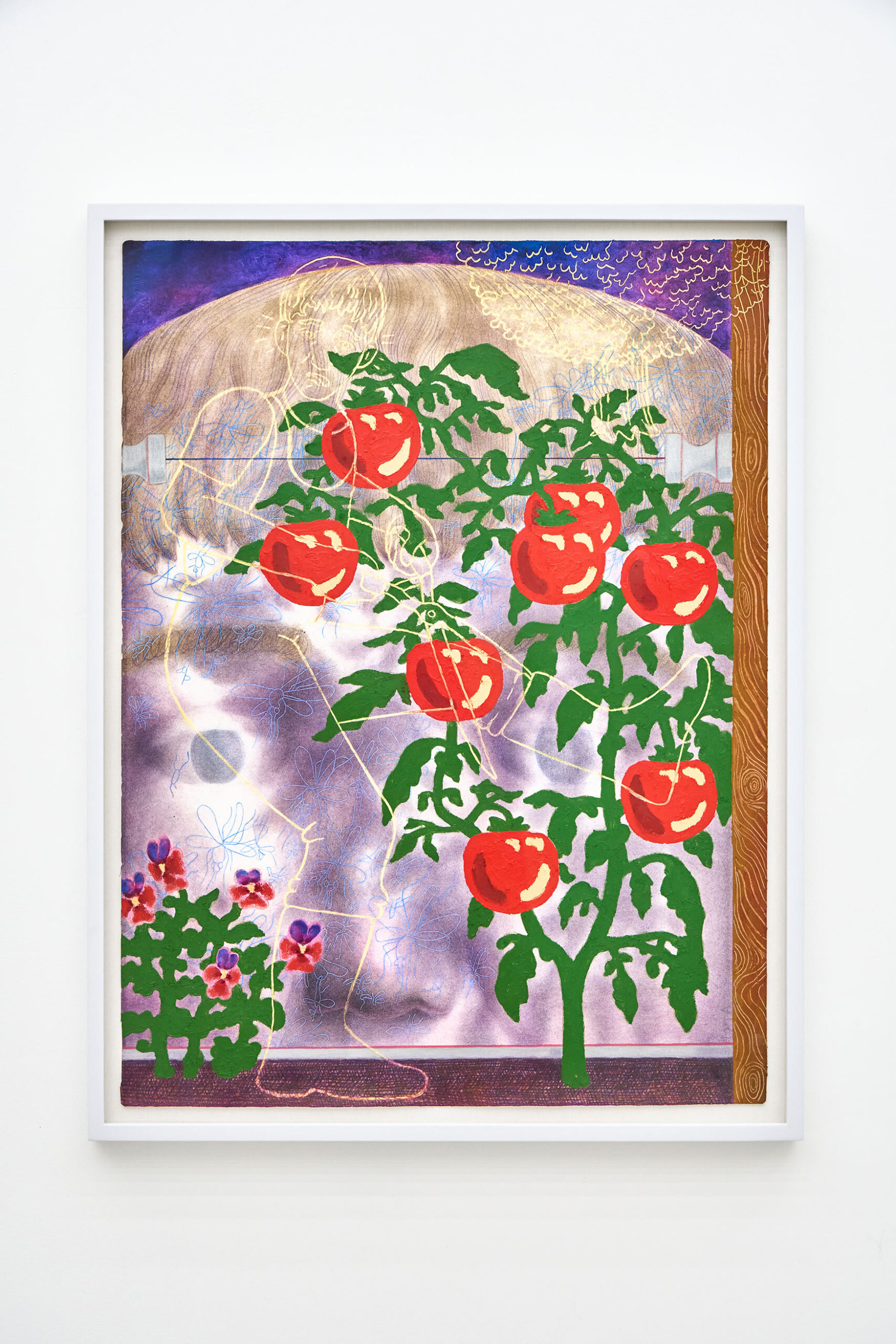
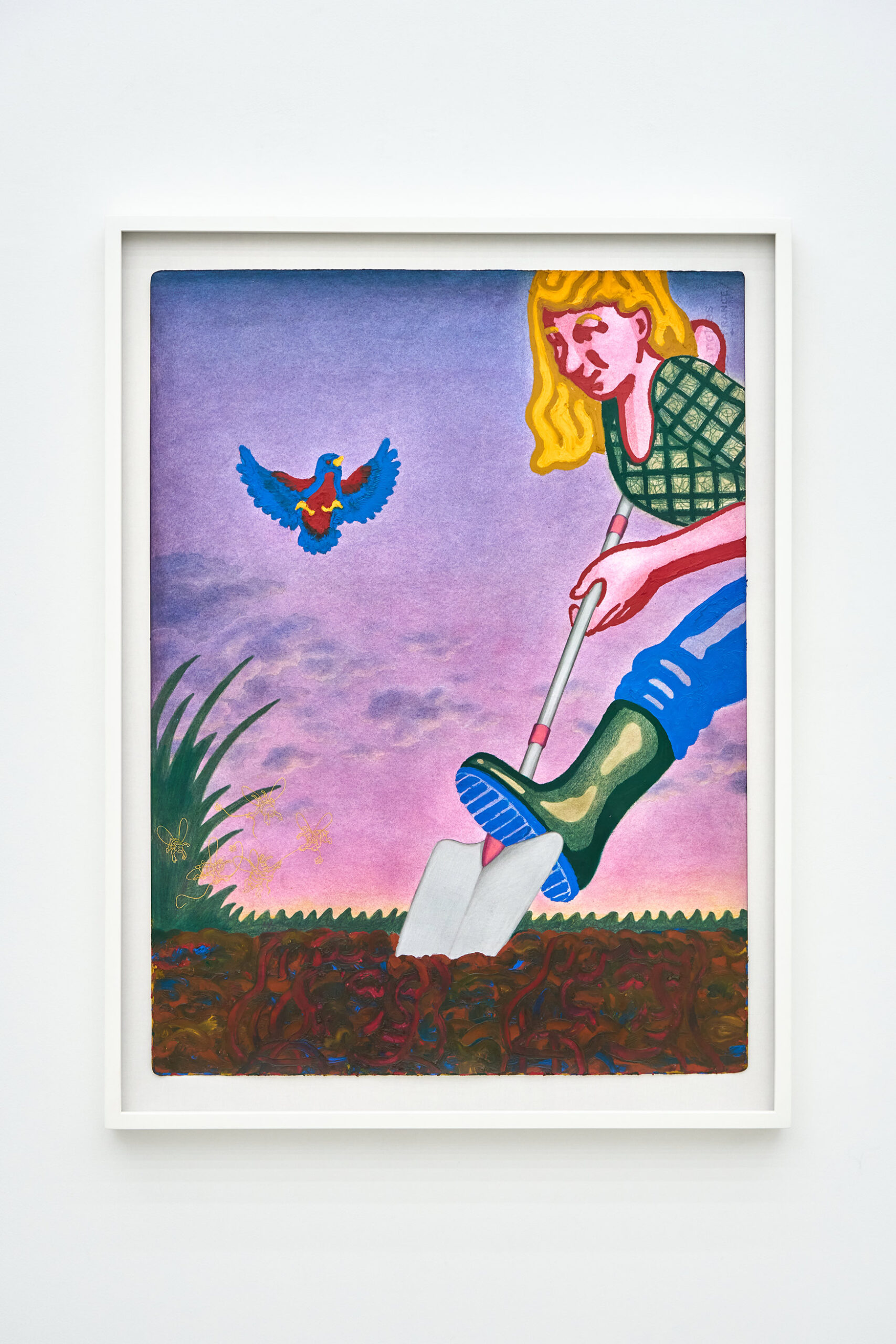
낮은 조도의 실내조명에 의존해 집안을 이리저리 오가는 손과 발. 익명의 인물은 외부 세계로부터 단절된 듯 사적인 공간에 머물며 영화를 보고, 우유에 탄 시리얼을 먹고, 운동을 하고, 커피를 마신다. 너무나 평범해서 지루해 보이기까지 하는 일상은 루카스 카이저가 설정한 독특한 빛의 스펙트럼과 인물의 실루엣, 표현 기법을 만나 생경한 광경이 된다. 지난 한국 개인전에서 선보인 작품들이 마당의 정원과 그곳에서 일어나는 소소한 사건들을 다루었다면, 최근 작가의 시선은 한 층 더 사적인 집 내부의 지형지물로 옮겨가고 있다. 머그잔, 벽지, 소파, 시리얼, 식탁보, 카페트 등 어느 집에나 있을 흔한 사물, 그것들과 관계를 맺는 신체의 움직임은 치밀한 조형 실험의 매개물이 된다. 전시 제목인 《Constant Glimmer》는 오늘날 이미지가 존재하는 불온한 상황을 반어법적으로 드러낸다. 개인이 습득하고 잊어버리는 무수히 많은 픽처는 영원한 반짝임과는 거리가 멀며 찰나의 순간에 생멸한다. 다만 그들은 완전히 소각되기보다 임시 휴지통과 같은 회색지대에 머물다 우연한 시점에 다른 장면의 부분으로 편입되거나 재조합되어 유령처럼 다시 등장한다.
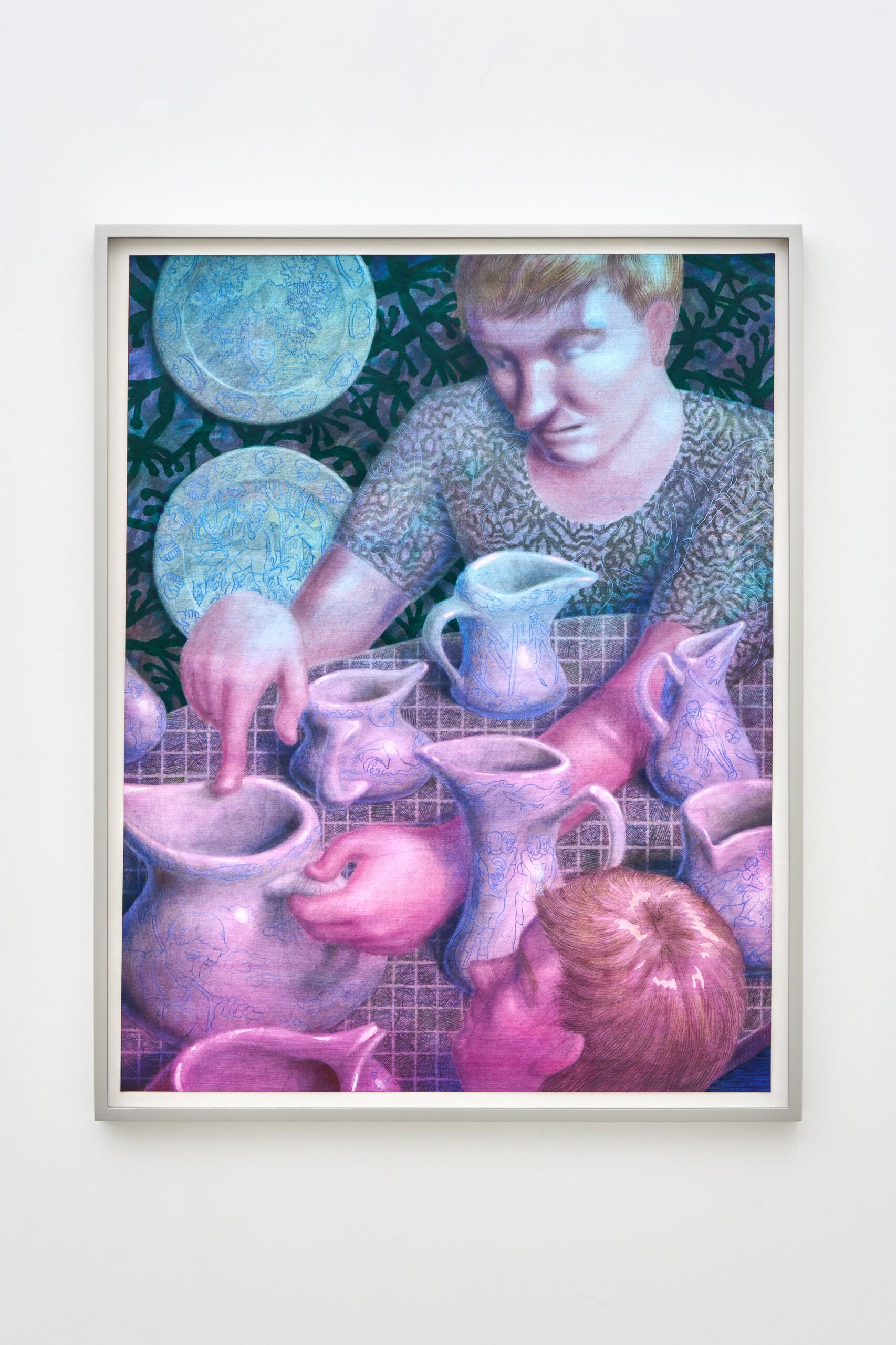
작가는 전래 동화나 대중문화의 유행, 특정한 시기에 도드라졌던 미적 양식에서 산발적으로 영감을 받는다. 근작들에는 19세기 초 독일의 비더마이어 시대(Biedermeier Style)*에 유행했던 실내 장식, 가구, 미술품으로부터의 영향이 드러난다. 당시 중산층 사이에서 향유했던 전원의 목가적인 삶, 화목과 평화, 낭만적인 사랑 따위의 상투적이고도 이상적인 감각은 온라인과 만화, 잡지 등을 통해 무작위로 취득한 밈들과 뒤엉키며 충돌한다. 컴퓨터 프로그램상에서 교차 편집한 듯한 복잡한 레이어는 그의 손에서 촘촘하게 연결된 것들로, 마치 숨은그림찾기나 끝말잇기처럼 교묘하게 이어지는 미로 같은 회화가 된다. 서로 다른 시기와 장소로부터 각출된 형상은 알록달록한 선드로잉과 부드러운 명암 묘사, 과감한 오일 스틱의 질감과 더해져 특유의 키치하고도 서정적인 분위기를 자아낸다.
완성된 회화는 전통적인 실내 풍경화라는 장르를 경유하고 있다. 작가는 이 익숙한 양식을 차용하여 이미지와 작가가 실제로 수행하는 여러 조형적 선택 사이의 관계에 질문을 던진다. 연관성이 없어 보이는 모양들은 환영적 틀 안에서 재현 이상의 역할을 수행하도록 배치된다. 복잡하게 얽힌 그림 파편들은 하나의 통합된 서사에 기여하기보다 화면에 혼란을 가중하거나 보이는 상황 이외의 맥락을 두서없이 끌어들이도록 유도한다. 말하자면 그림의 부분 부분은 단일한 풍경으로 통합되지 않고 이리저리 떠다니며 부가적인 장식이나 미사여구처럼 덧대어진다. 옷이나 카페트 원단에 새겨진 엉뚱한 동물 패턴, 눈동자 속에 숨겨진 또 다른 얼굴, 고요한 실내 풍경 위로 겹치는 별님 달님의 미소는 불쑥 서사의 바깥으로 튕겨 나오거나 화면 뒤편으로 도망치며 관람자가 하나의 서사로 몰입하는 것을 방해한다.
카이저의 작품을 동시대 이미지의 순환 역학을 기반으로 구성된 은유적인 지도로 볼 수 있을 것 같다. 그가 빈 종이에 그려내는 것들에는 어딘가 기록조차 되지 않을 사소하고 생활의 부수적인 장면을 정성스레 어루만지는 태도에서 전해지는 친밀함이 있다. 그리고 그 평범한 것들에 기발한 조형적 상상력을 탁월하게 적용하며 회화와 이미지의 관계에 관해 꾸준히 던지는 질문에서 오는 진실함이 공존한다. 인공지능과 디지털 편집 프로그램을 경유해 세상으로 쏟아져나오는 이미지는 현기증을 유발할 만큼 많고, 빠르며, 연쇄적으로 증식하거나 폐기된다. 그 사이에서 만난 그의 작품은 각자의 속도와 방식대로 이미지를 읽고 소화하며 간직할 충분한 공간을 제안한다. 그럼, 이제 우리는 그가 짜놓은 퍼즐과 같은 장면들을 통해 무엇을 볼 것인가?
글ㅣ박지형 (디스위켄드룸 큐레이터)
* 비더마이어에 속하는 작가들은 고전주의의 형식과 낭만주의의 소재를 계승하려고 노력하였을 뿐만 아니라 이상주의의 보존을 위해 노력하였다. 조창섭,『비더마이어의 생성 배경과 이 용어 사용에 관한 연구』, 한국독어독문학교육학회, 11권(1993), 362.
Hands and feet slip in and out of the house, guided by dim interior lighting. Anonymous figures remain within their private spaces, seemingly detached from the outside world—watching movies, eating burnt cereal in milk, exercising, and drinking coffee. These mundane, even tedious routines are transformed into unfamiliar sights through Lucas Kaiser’s distinctive use of light, silhouetted figures, and expressive techniques. While his previous solo exhibitions in Korea centered on gardens and minor happenings in the yard, the artist’s gaze has recently turned inward—to the more intimate realm of the home. Everyday objects such as mugs, wallpaper, sofas, cereal, tablecloths, and carpets, along with the body’s interactions with them, become vessels for meticulous sculptural experimentation. The exhibition’s title, Constant Glimmer, is an ironic reference to the uneasy situation in which images exist today. The myriad of pictures that individuals acquire and forget are far from eternal glimmers; they are fleeting. Yet, instead of being completely erased, they linger in a gray zone—like a temporary trash bin—ready to be reassembled into other scenes at chance moments, reappearing like ghosts.
The artist draws sporadic inspiration from traditional fairy tales, fleeting pop culture trends, and aesthetic styles tied to specific historical moments. In his recent works, the influence of the Biedermeier style*—an early 19th-century German tradition of interior design, furniture, and painting—is particularly evident. This clichéd, idealized vision of middle-class life in the countryside—marked by harmony, peace, and romantic love—collides with a stream of randomly sourced memes, comic imagery, and magazine clippings from contemporary visual culture. These complex visual layers, which appear as if they were digitally cross-edited, become tightly connected in his hands, creating a labyrinthine painting that cleverly resembles a “find the hidden picture” games or word puzzles. The motifs drawn from different times and places combine with colorful line drawings, soft light and shadow depictions, and bold oil stick textures to create a unique, kitschy, and lyrical atmosphere.
The finished paintings fall within the genre of traditional interior landscape painting. By adopting this familiar format, the artist interrogates the relationship between image and composition. Seemingly unrelated shapes are arranged within an illusory framework to perform a role beyond reproduction. Rather than contributing to a single, unified narrative, the intricately intertwined pictorial fragments add to the confusion on the screen or invite the viewer to engage with contexts other than the one they see. In other words, the parts of the painting are not integrated into a coherent landscape. Instead, they drift across the canvas like added embellishments or familiar clichés. A peculiar animal pattern on a piece of clothing or carpet, a hidden face within the pupil of an eye, the smiling star and moon overlaid on a tranquil interior landscape suddenly leap out of the narrative or retreat into the background, preventing the viewer from fully immersing themselves in a single narrative.
Kaiser’s work can be read as a metaphorical map built upon the cyclical dynamics of contemporary imagery. There is an intimacy in what he renders on blank paper, stemming from his attentive treatment of the trivial, incidental moments of life that might otherwise go unnoticed. His whimsical sculptural imagination, applied to these everyday scenes, reveals a sincerity rooted in his ongoing inquiry into the relationship between painting and image. In a world inundated with images—produced, multiplied, and discarded at dizzying speed by artificial intelligence and digital editing tools—his work creates space: space to read, reflect, and hold images at our own pace, in our way. So, what do we truly see in the puzzle-like scenes he assembles?
TextㅣJihyung Park (Curator, ThisWeekendRoom)
* Artists associated with Biedermeier not only sought to inherit the forms of Classicism and the themes of Romanticism but also strived to preserve Idealism. Chang-Sub Cho, A Study on the Background of the Emergence of Biedermeier and the Use of the Term, “Koreanische Gesellschaft für Didaktik der deutschen Sprache und Literatur” vol.11(1993), 362.