노혜리, 이동혁, 이진주
Hyeree Ro, Donghyuk Lee, Jinju Lee
19 Dec 2025-24 Jan 2026
ThisWeekendRoom
Artists
Hyeree Ro →
Donghyuk Lee
Jinju Lee
Credit
참여작가ㅣ노혜리, 이동혁, 이진주
기획ㅣ디스위켄드룸
글ㅣ이유진
사진ㅣ이정우
ArtistsㅣHyeree Ro, Donghyuk Lee, Jinju Lee
Curated by ThisWeekendRoom
TextㅣYoojin Lee
PhotographsㅣJungwoo Lee
Exhibition Text
눈앞의 현실은 하나의 시제로만 이루어지지 않는다. 이미 지나간 장면, 지금 감각되는 순간, 아직 오지 않은 미래의 기미가 서로의 결을 가로지름으로써 계속해서 흔들리고 변형된다. 물리적 시간의 선형성 너머 존재하는 이 복합적 지각의 층위는 때로는 형상을 이루지 못한 채 부유하고, 때로는 누군가 붙잡고자 하는 신념이나 기억, 혹은 언어의 파편을 통해 비로소 모습을 보인다. 우리는 무엇을 기다리며, 무엇을 기억하고, 무슨 언어로 세계를 붙잡는가? 모든 것이 확실히 고정되지 않은 상태에서 어떤 방식으로 현재를 살아내고 있는가? 노혜리, 이동혁, 이진주는 여기에 있으나 미처 완전히 온 것은 아니며, 설명될 수 있으나 결코 투명해지지 않는 도래의 지점들을 드러낸다.
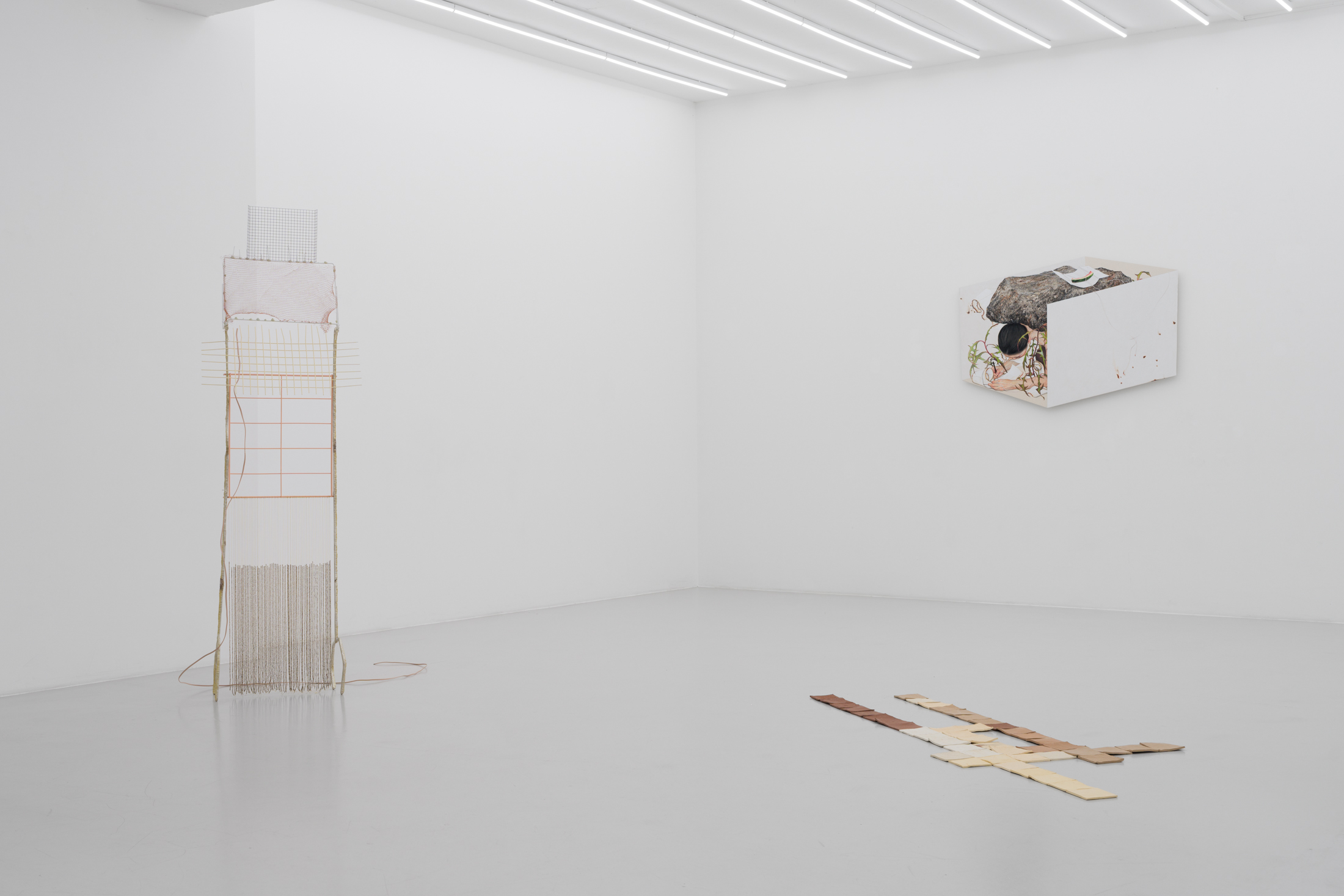
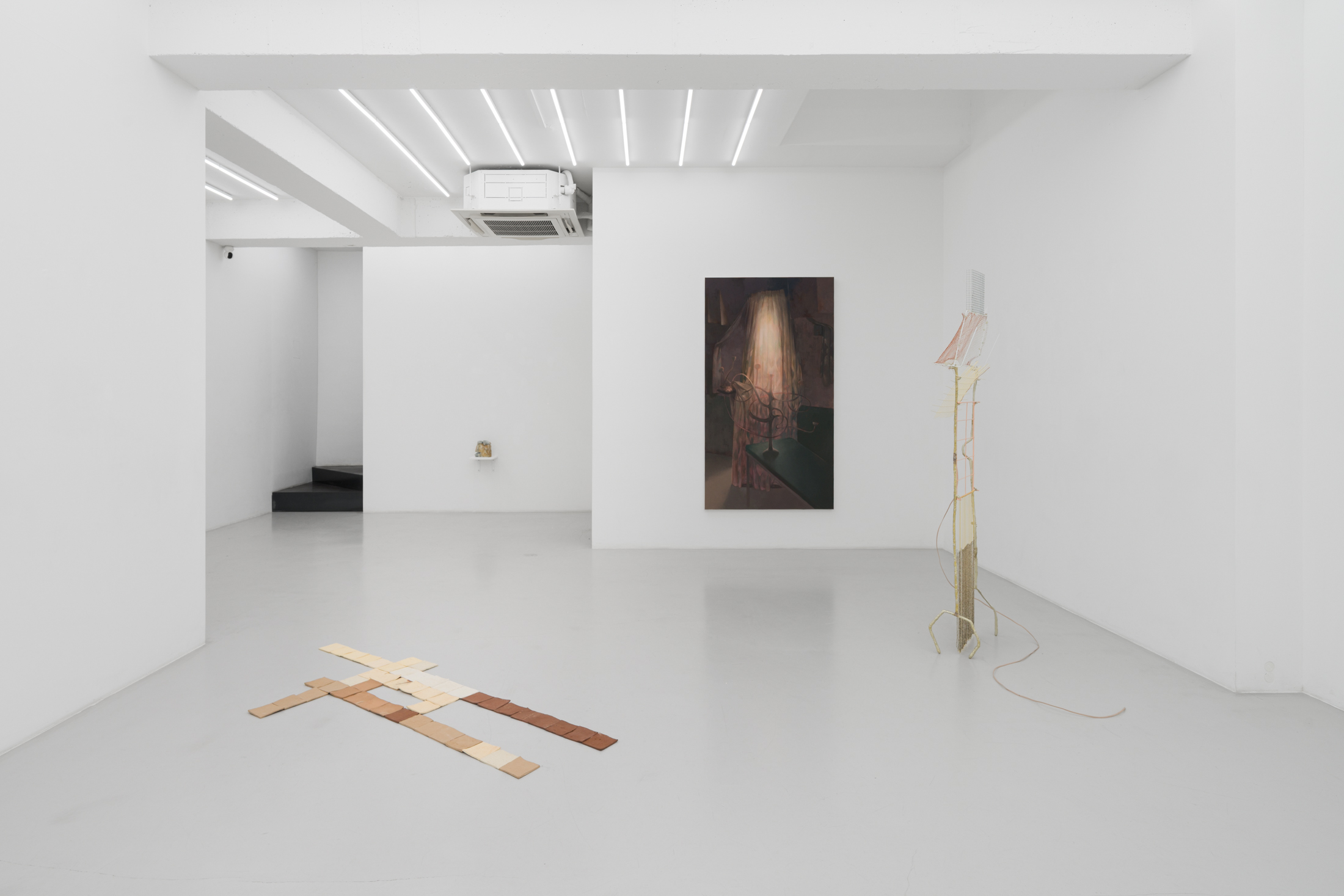
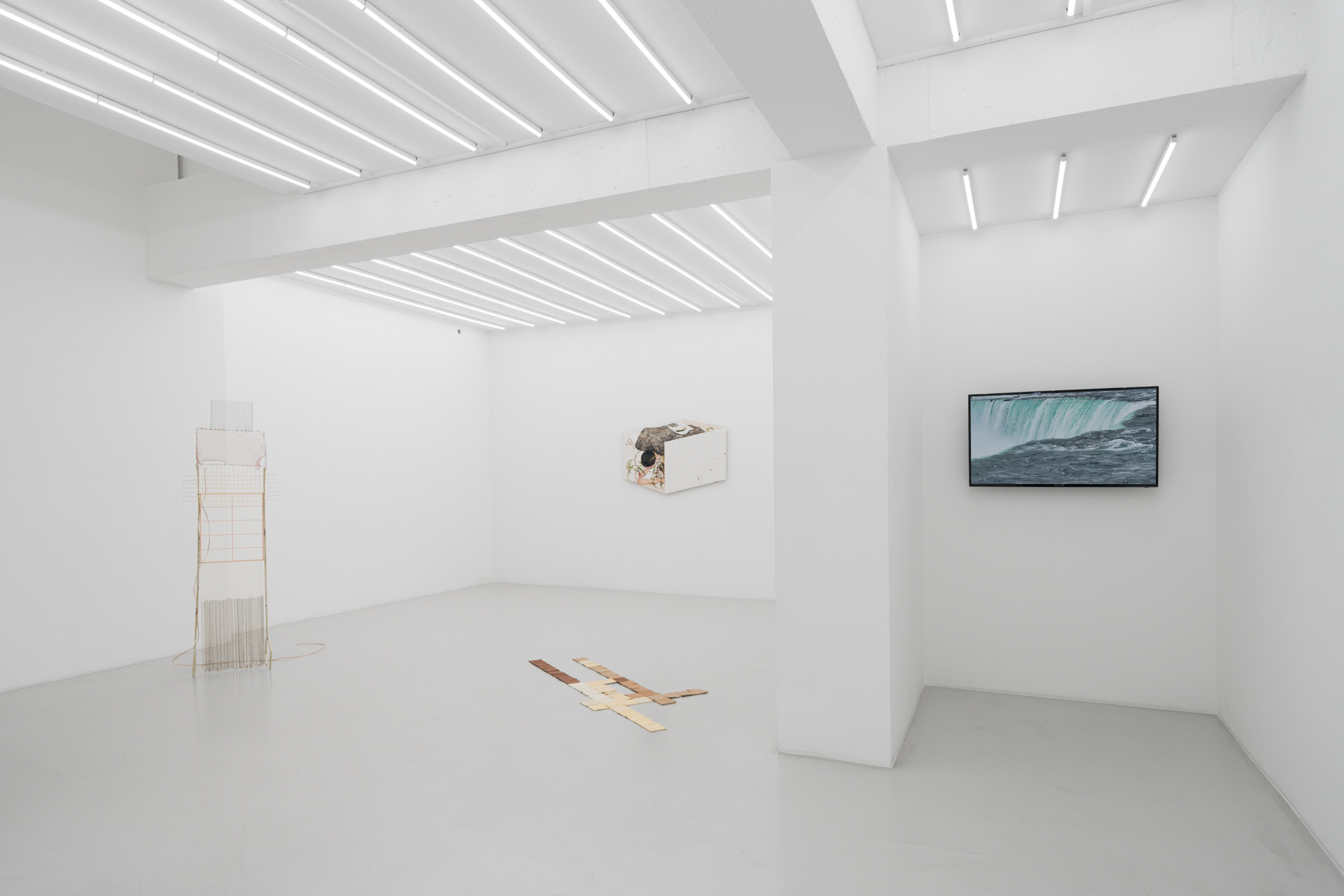
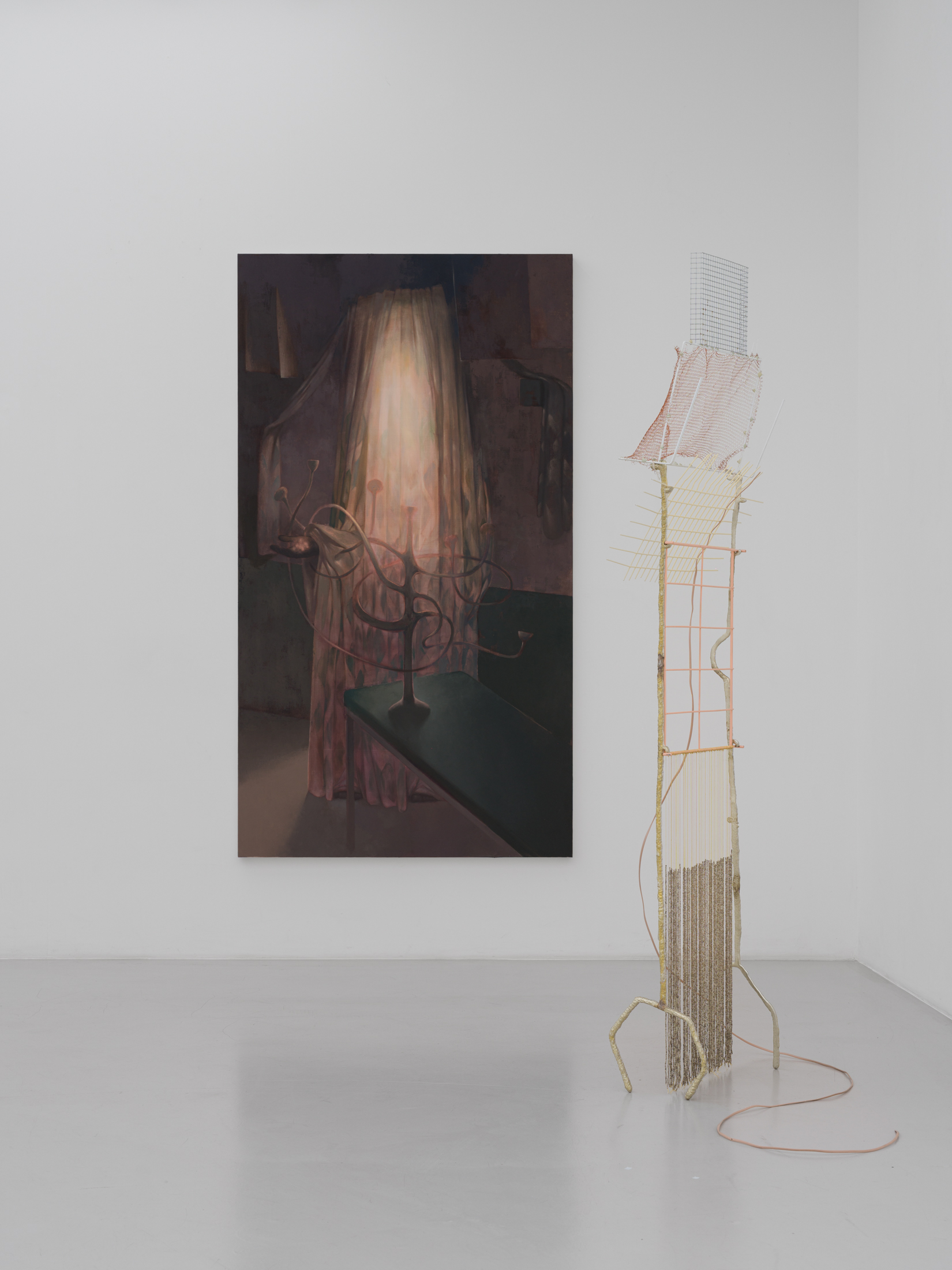
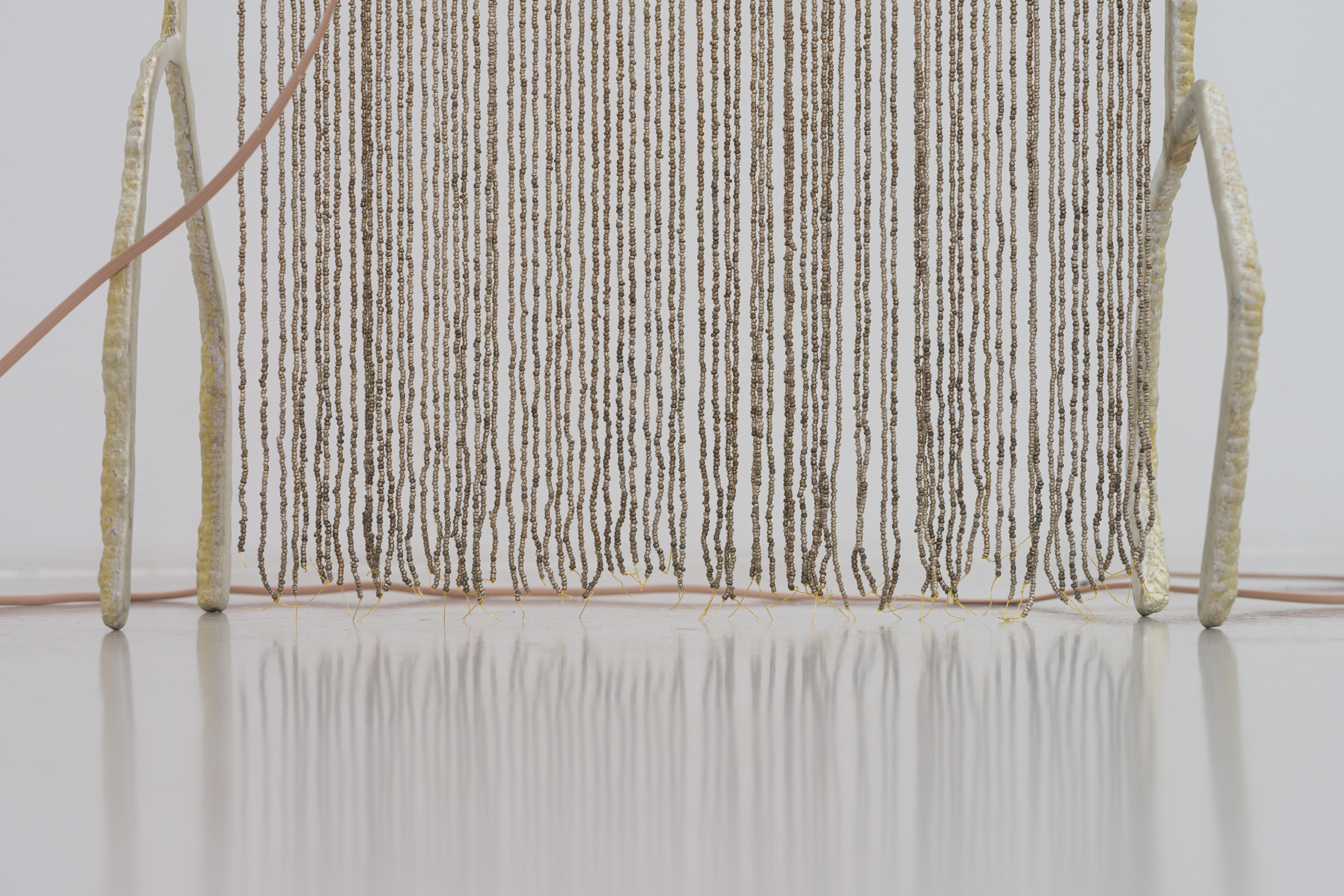
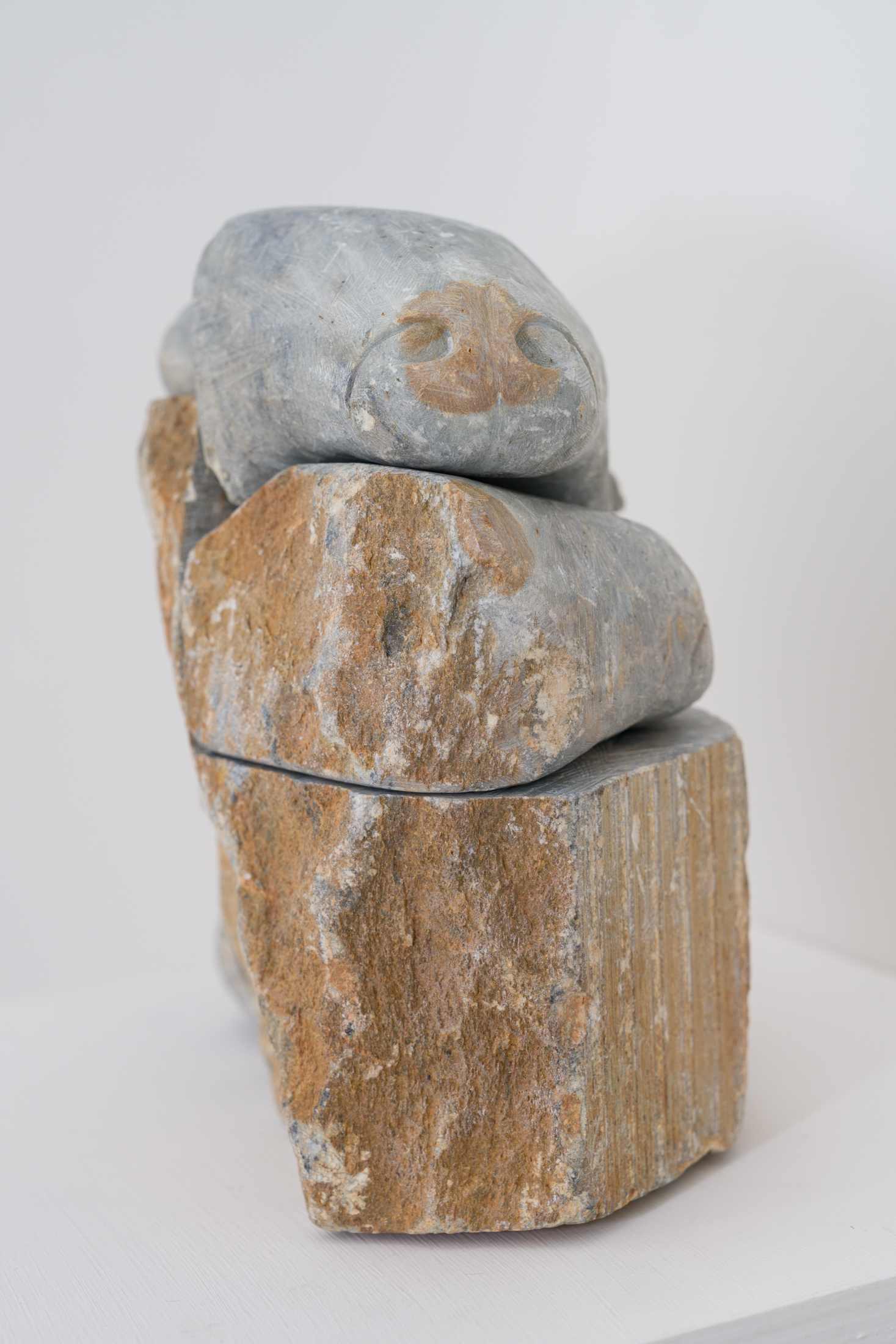
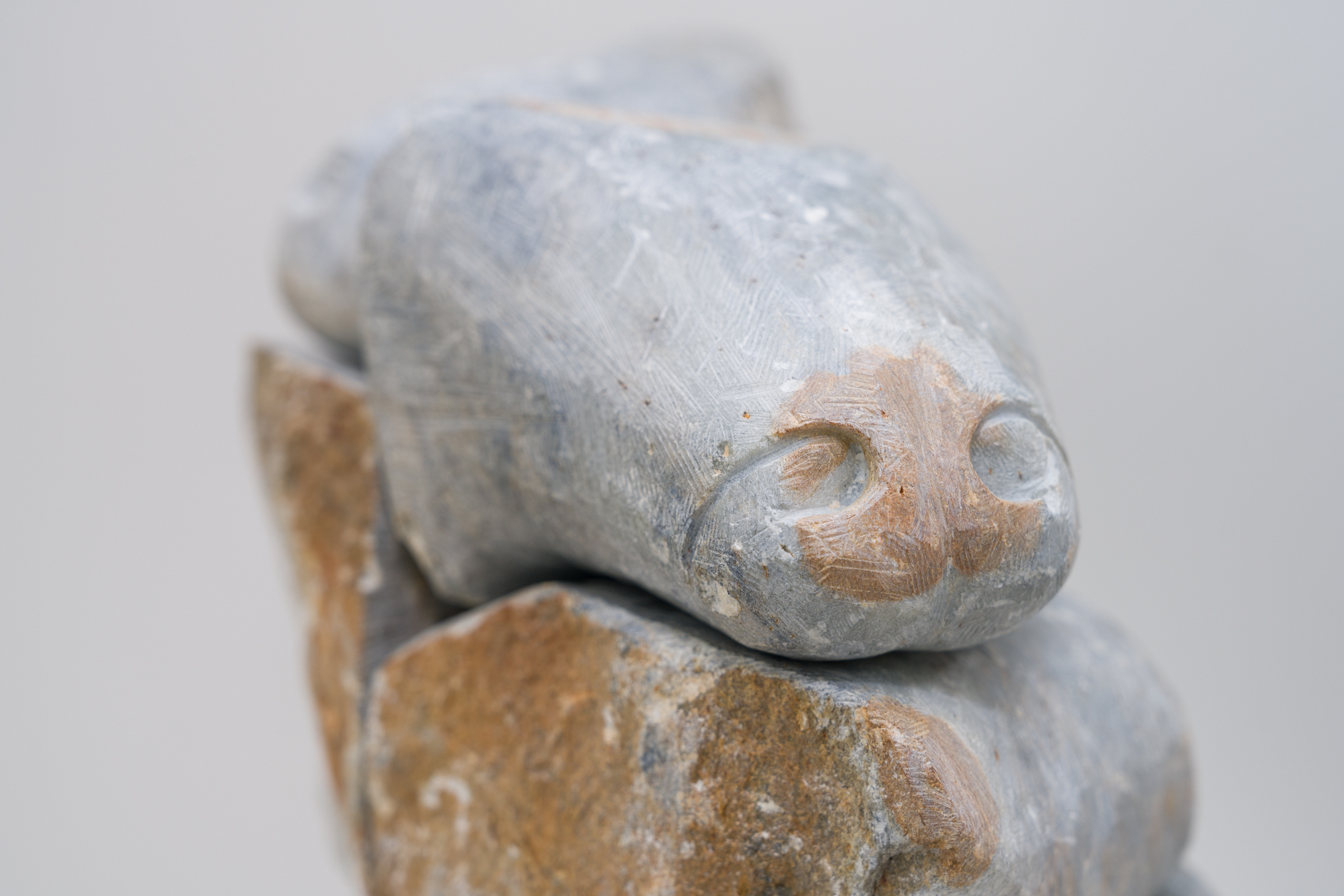
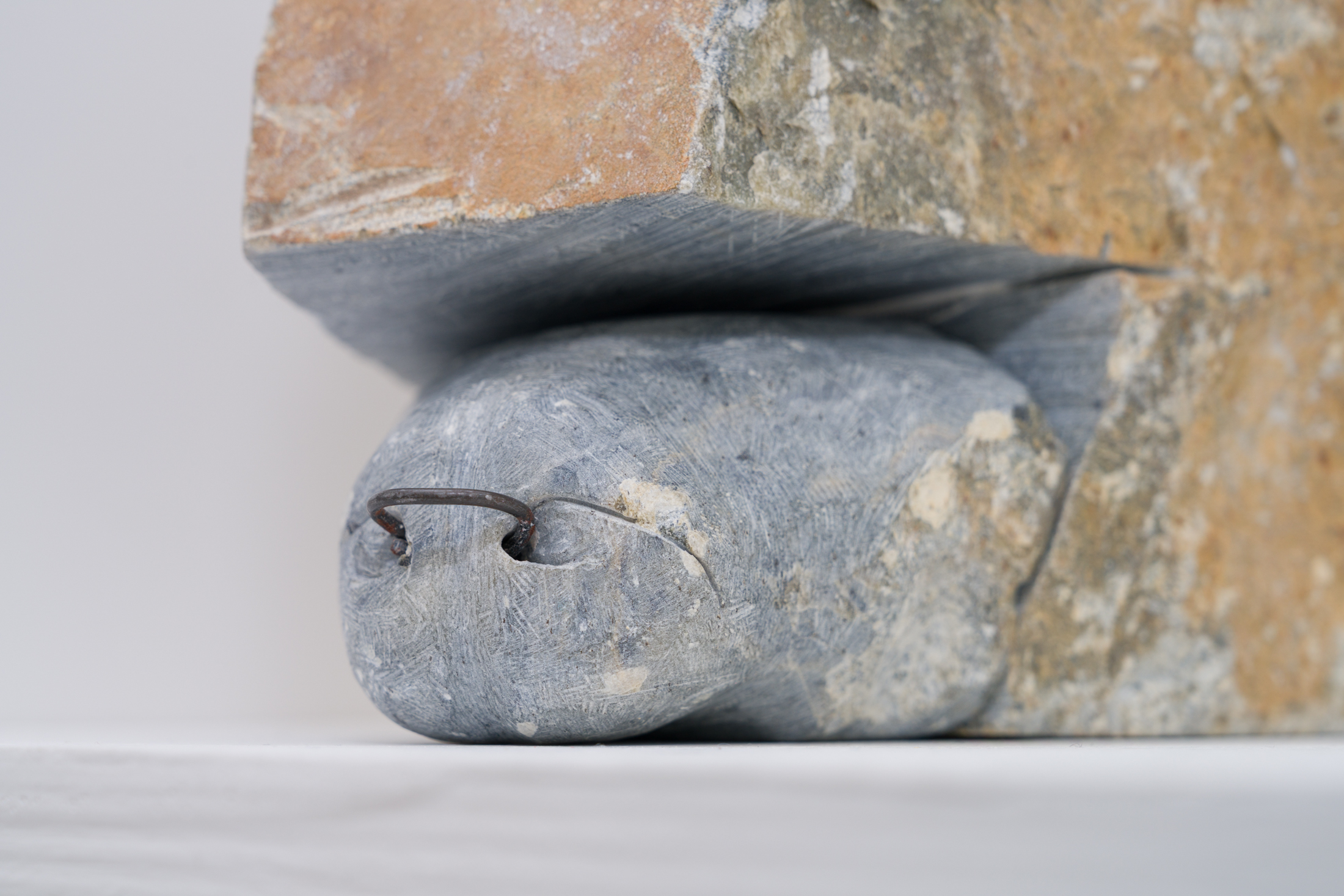
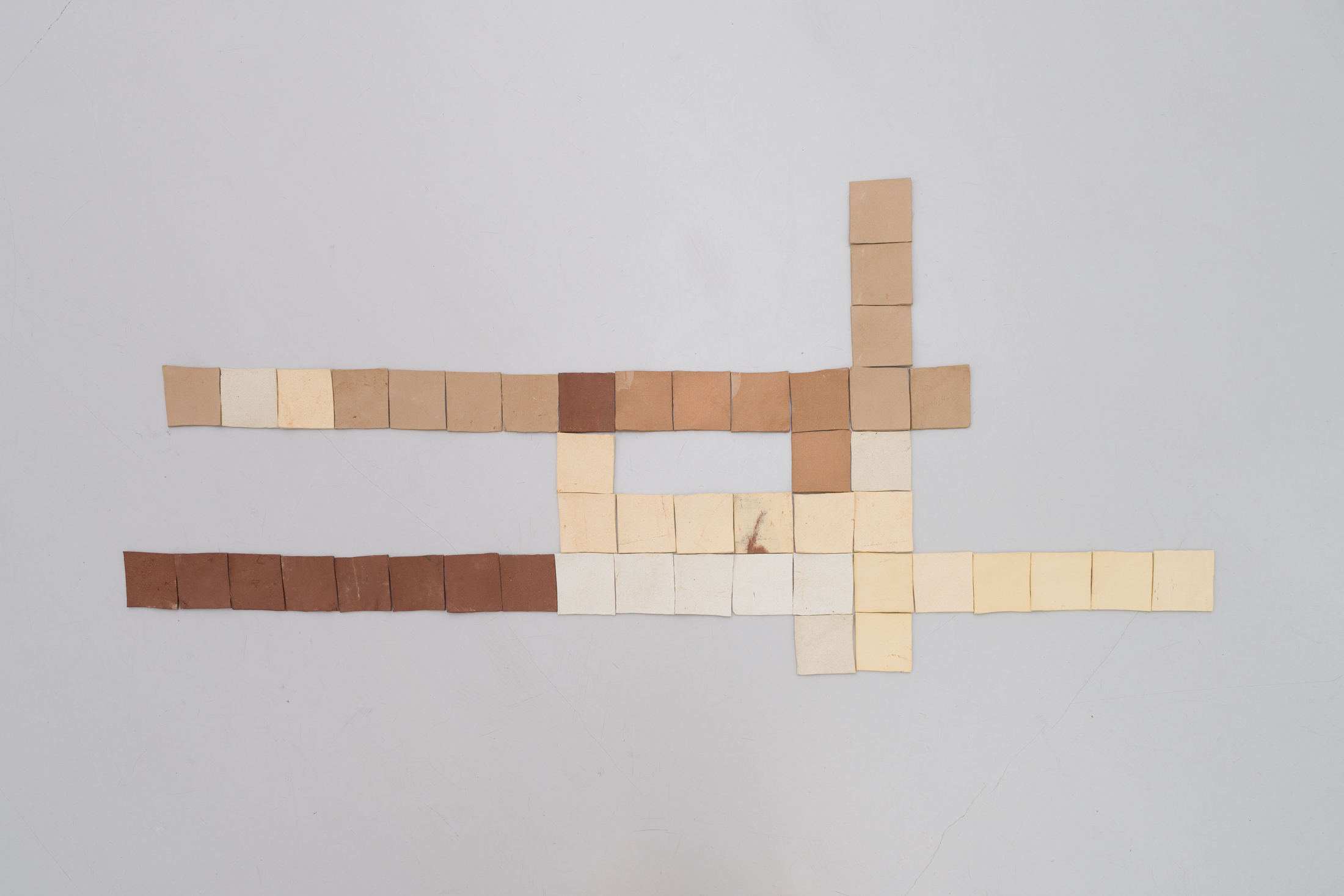
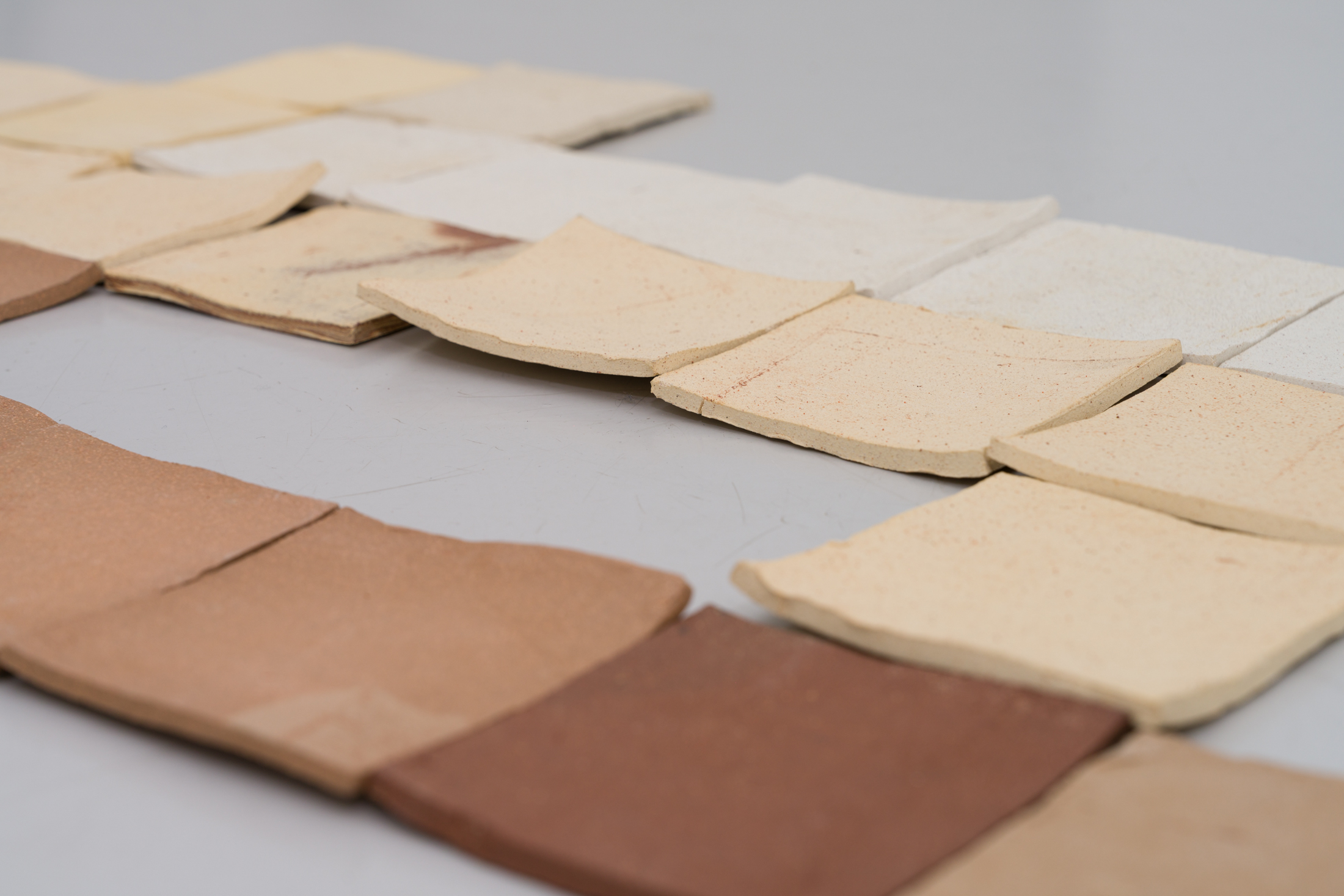
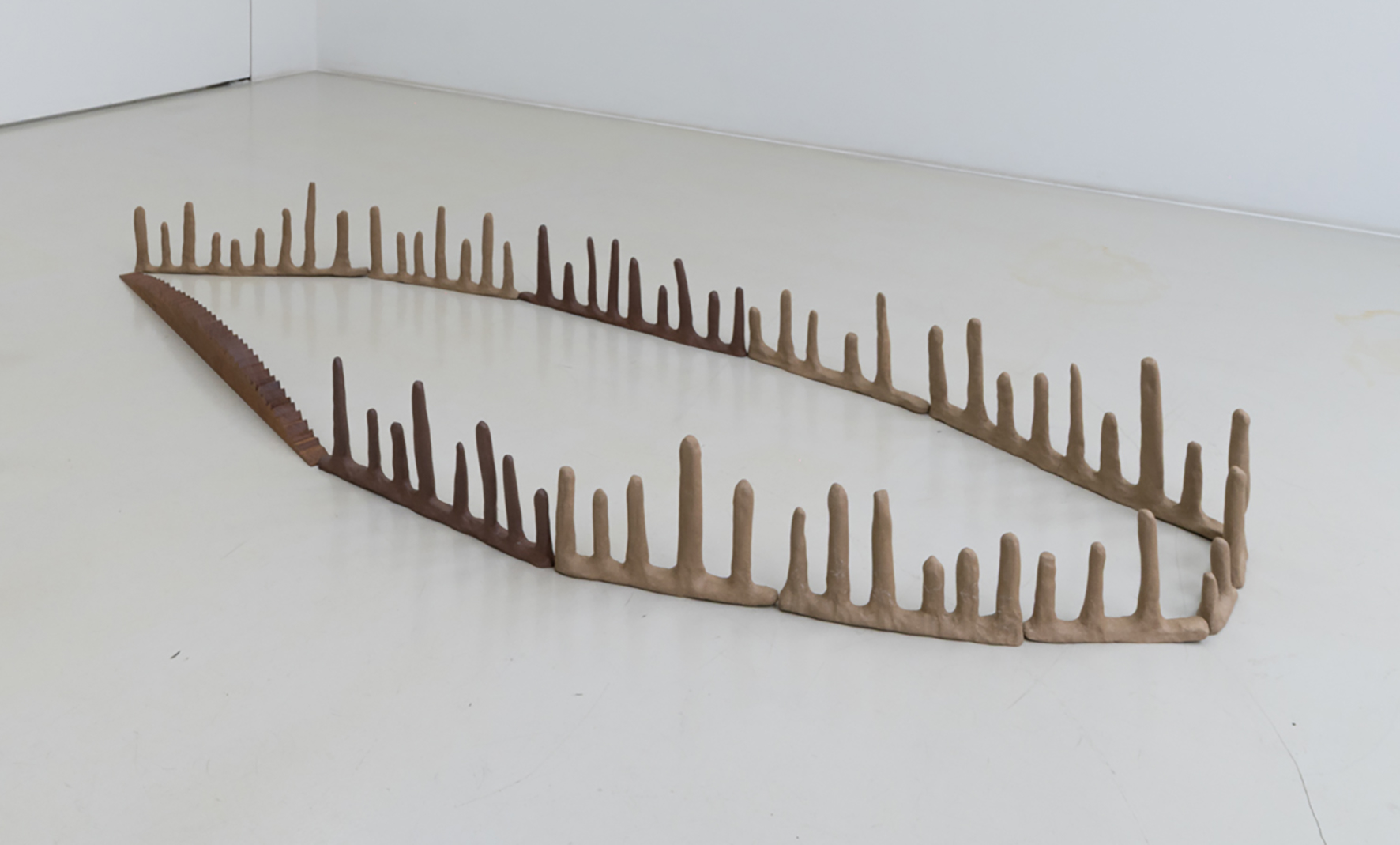
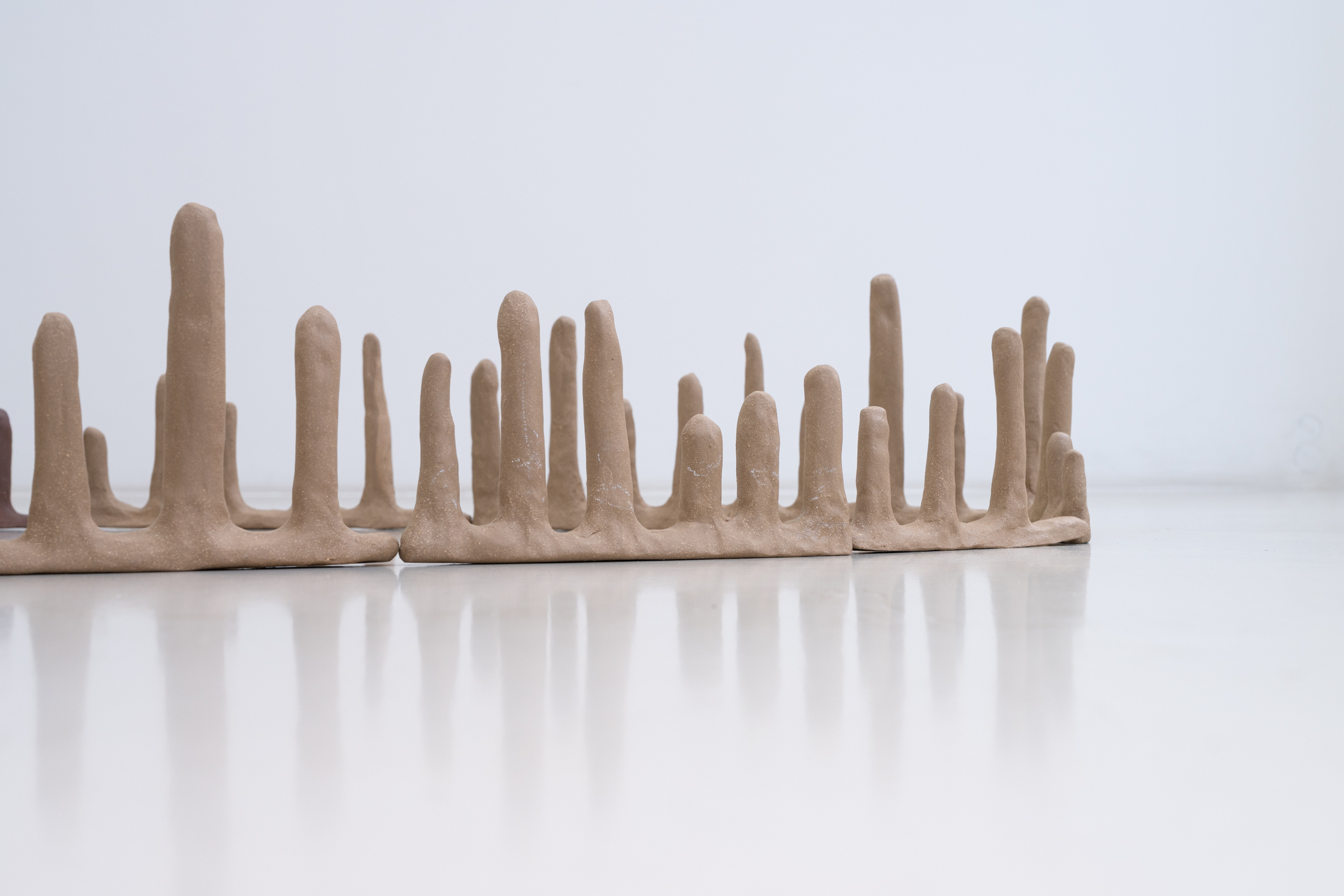
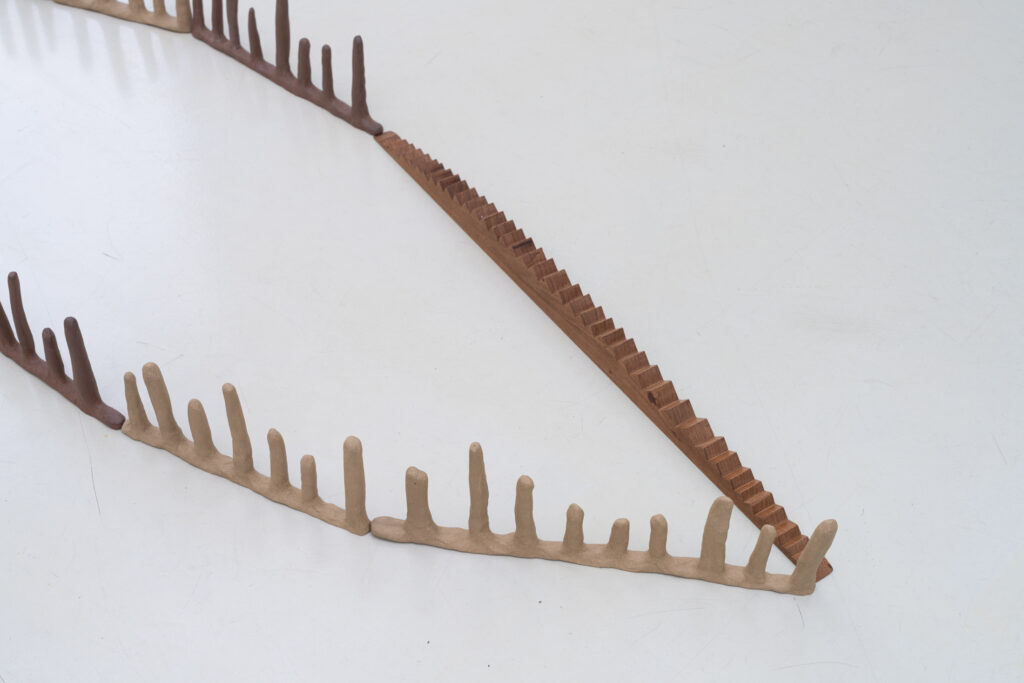
뉴욕과 서울을 기반으로 활동하는 노혜리는 설치, 퍼포먼스, 영상 작업을 통해 이동과 시차에 얽힌 개인의 정체성 및 신체적 감각을 기록한다. 작가는 사회적으로 통용되는 언어와 선험적 체계 너머의 영역과 유기적으로 관계 맺고, 자신을 비롯한 타자의 기억을 사물, 소리, 움직임 등으로 표현한다. 추상적이고 모호한 형태의 개체들은 대개 그의 주변 인물, 동물, 비인간 객체와 나눈 지역적, 신체적 연고에 기인하며, 현 사회에 고착된 인식을 재고하게 만드는 장치이자 도화선으로 작동한다. 한편, 본 전시에서는 사물과 퍼포먼스를 단일 주제로 연계하는 대신 서로 다른 프로젝트에 동원되었던 오브제들을 새롭게 조합해 보고자 했다. 가령 작가의 반려 유기견 ‘지니’에서 파생된 형체들과 낙엽이자 지폐를 연상케 하는 도자기 타일 등이 퍼포머의 수행 없이 그 자체로 하나의 서사가 되기를 기대하는 식이다. 이에 흩어진 조각들은 완결된 이야기로 봉합되기보다 언제든 다시 꿰어질 수 있는 느슨한 구조로 자리한다. 그밖에 두 층의 전시장을 매개하는 <캐리 서울>은 유년기부터 한국과 미국을 오갔던 작가가 서울을 떠나 작고한 아버지에게 보내는 일종의 편지로, 딛고 있는 땅과 장소적으로 반대되는 하늘을 비춤으로써 발신과 수신의 지점을 뒤얽는다. 더불어 어린 시절 미국으로 입양된 이를 포함해 저마다의 연유로 태평양을 건넌 이들의 구술 인터뷰는 반복해서 순환하는 거대 물줄기와 병치되어 정서적 시차의 배경을 소급하여 제시한다.
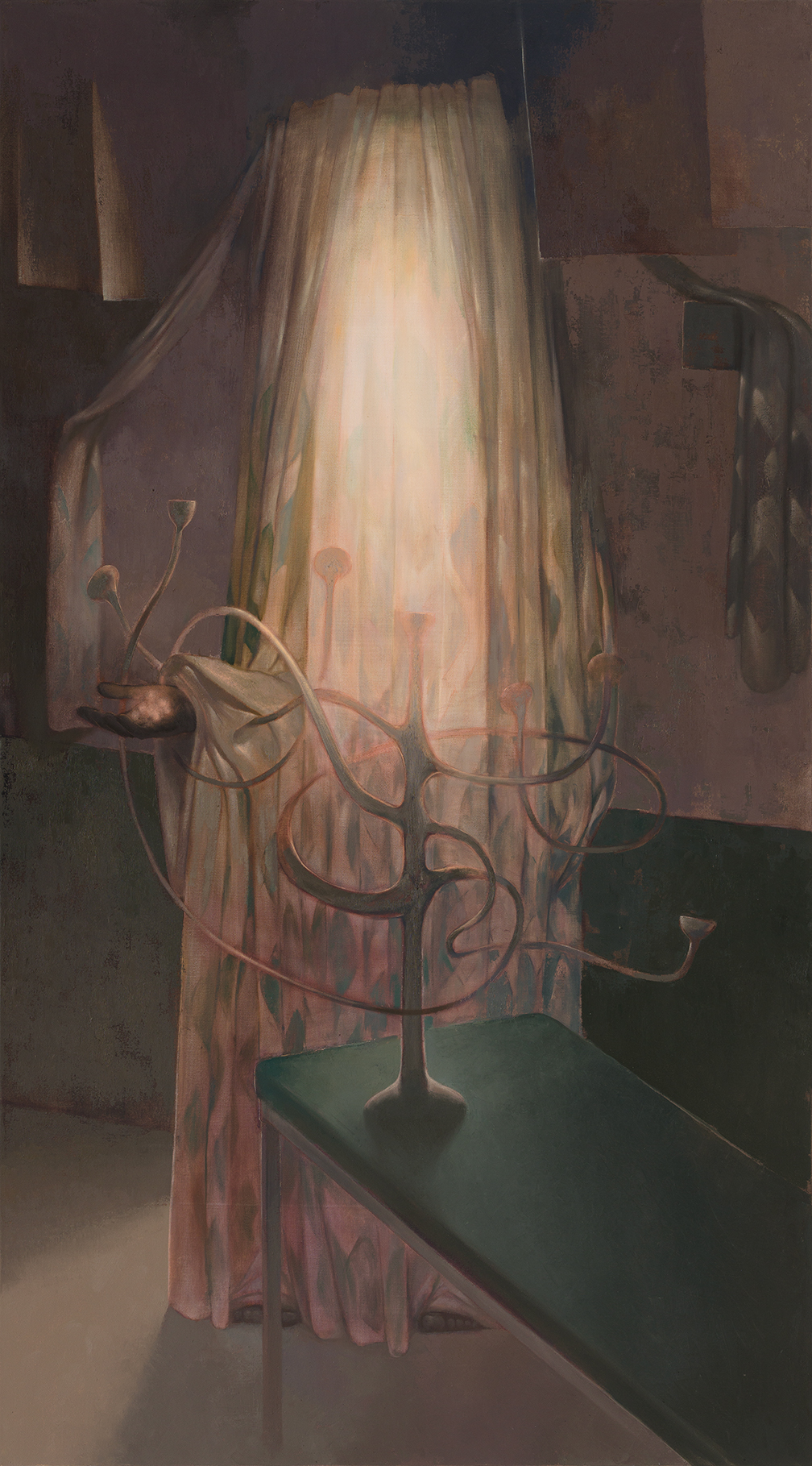
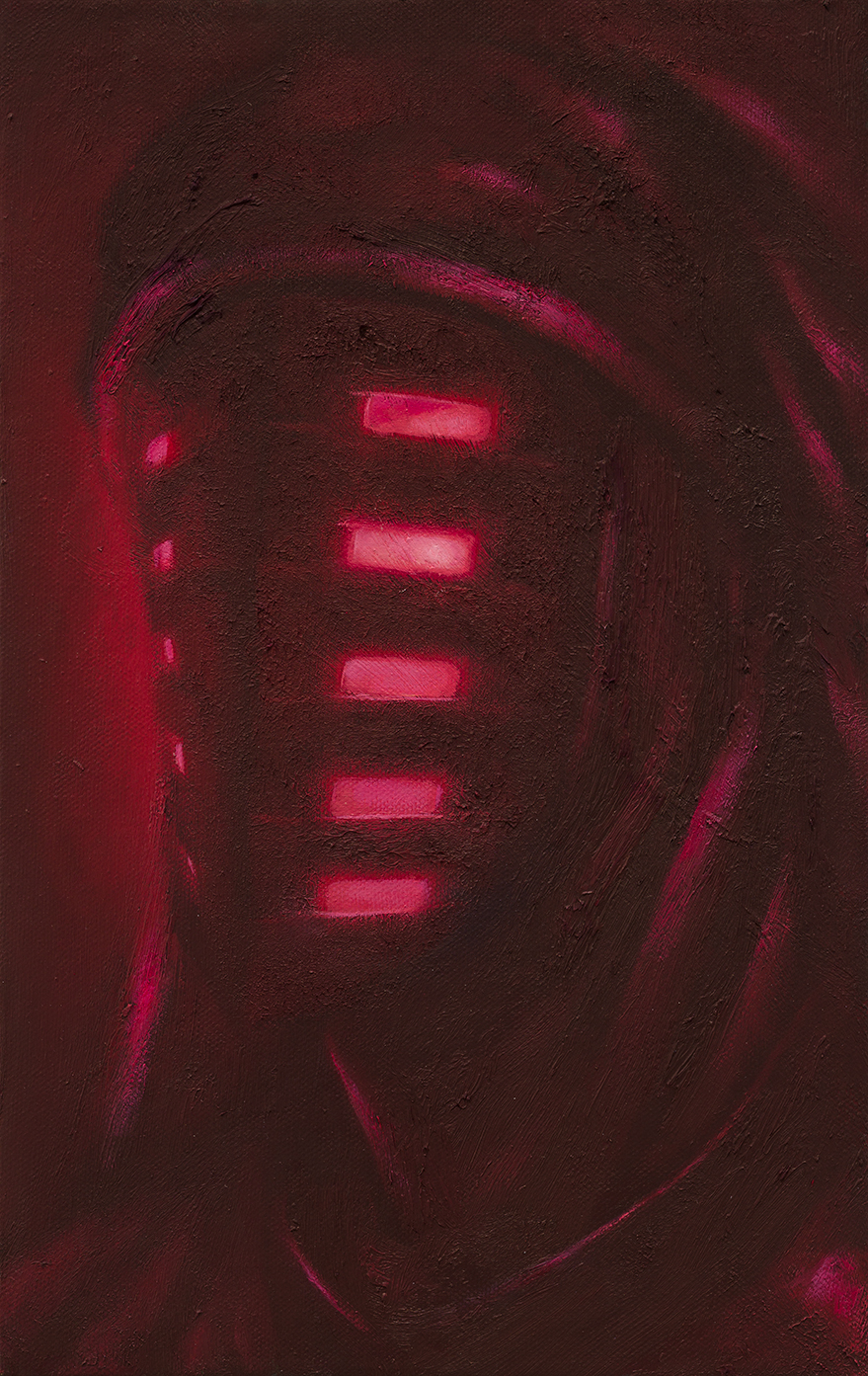
이동혁은 종교적 교리에서 차용한 이미지를 바탕으로 믿음 또는 신념과 같은 가치 체계를 탐구한다. 신자로서의 기억, 옛 교회당을 방문하여 수집한 장면은 상징적 모티프와 색채로 묘사되어 왔다. 근래 작가는 신약성경의 유일한 예언서인 요한계시록에 일곱 번 반복되어 나오는 “베니(veni)”라는 표현에 주목한다. 그는 이 되풀이되는 발화를 강요나 선언이라기보다 대상을 불러내기 위한 간절한 호출로 읽는다. 베니는 한국어로 ‘오너라’, ‘나오너라’, ‘와서 보아라’ 등으로 번역되는데, 작가의 화면은 ‘나오라’는 요구보다 ‘나와야만 한다’는 희망에 가까운 어휘가 남긴 자취와 닿아 있다. 이제 성서 속 기록된 존재들은 빛과 어둠을 덧입은 채 그의 오랜 작가적 비전—존재하지 않지만 존재해야만 하는 대상을 탐색하는 태도—을 품는다. 이러한 태도는 지난 3년간 지속해 온 <주어진 페이지> 연작의 연장선에 놓여 있다. 이를테면 믿음과 관련된 문장을 해체하고 앞뒤 맥락을 소거하여 반복적으로 곱씹는 과정에서 떠오른 이미지를 여러 화면에 걸쳐 그려 보는 것. 동일한 텍스트로부터 파생된 풍경들은 상이한 명암과 원근을 지니며, 이는 곧 진리가 명징한 확신보다 각자가 서 있는 지리적, 시대적 위치에 따라 재구성될 수 있는 것임을 내포한다. 결국 이동혁의 회화는 특정 존재 여부를 증명하기보다 여전히 도달하기 어려운 소망을 글에 의존해 더듬고, 그에 가까워질 수 있는 실존적 매개를 붙잡으려는 투지일 테다.
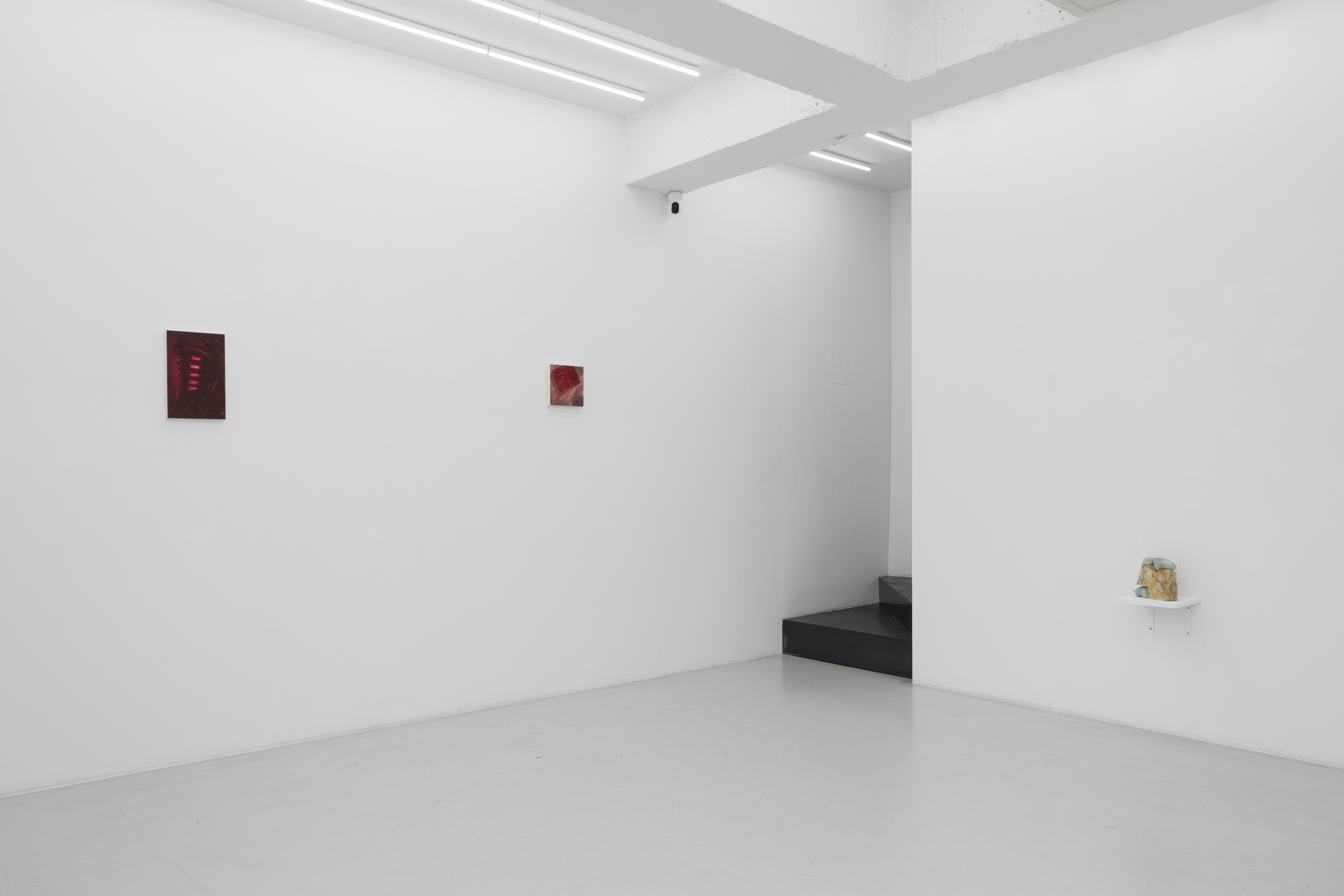
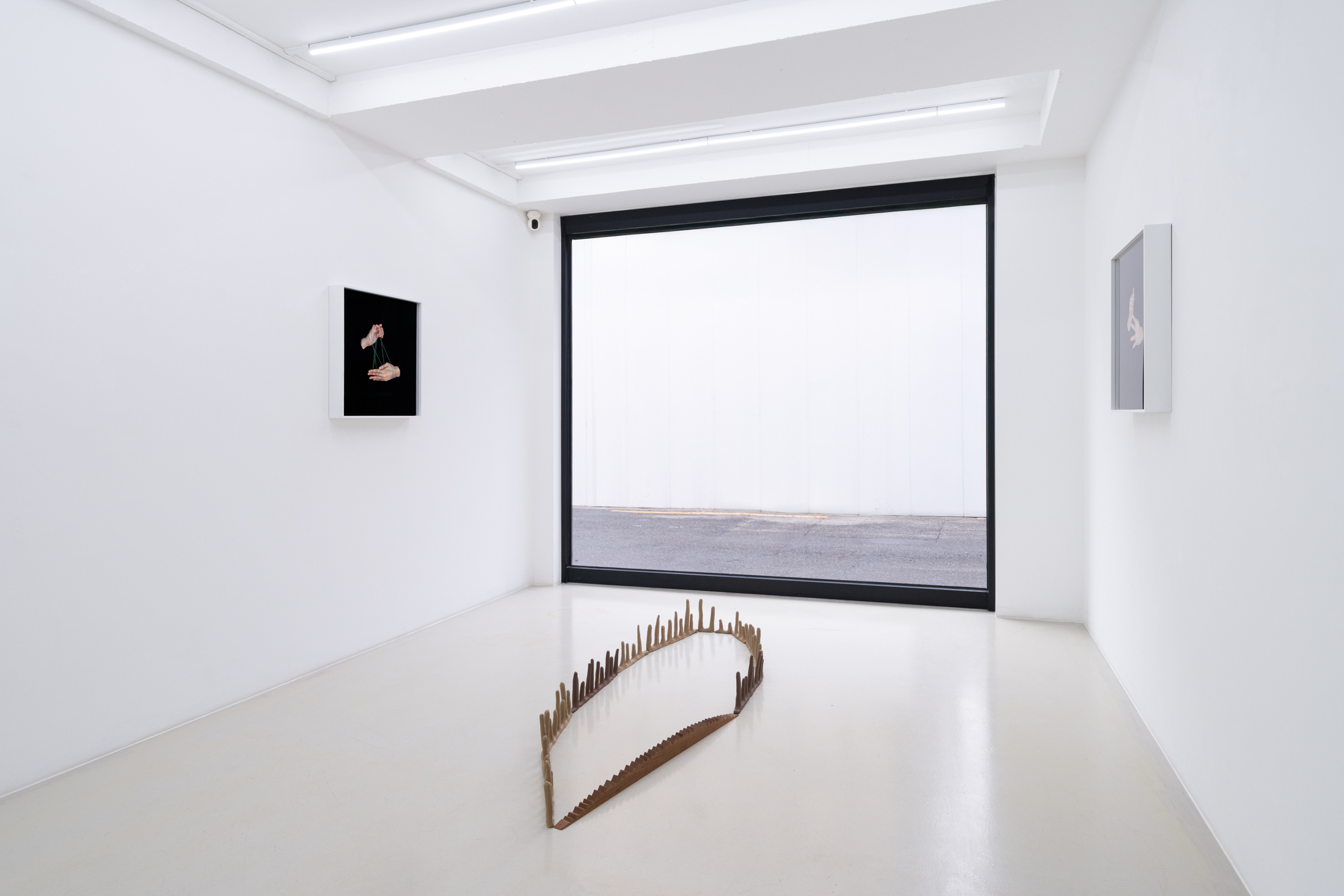
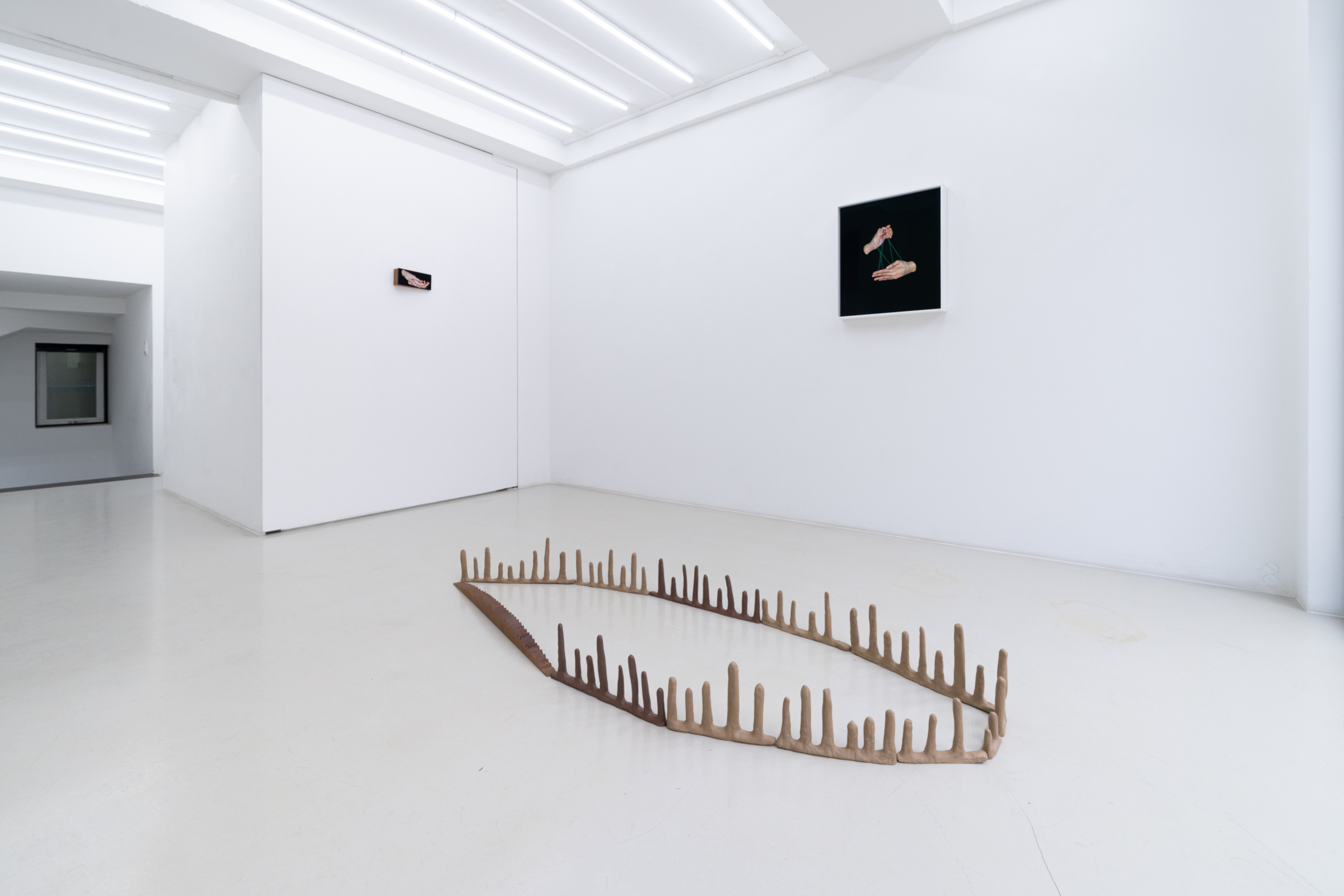
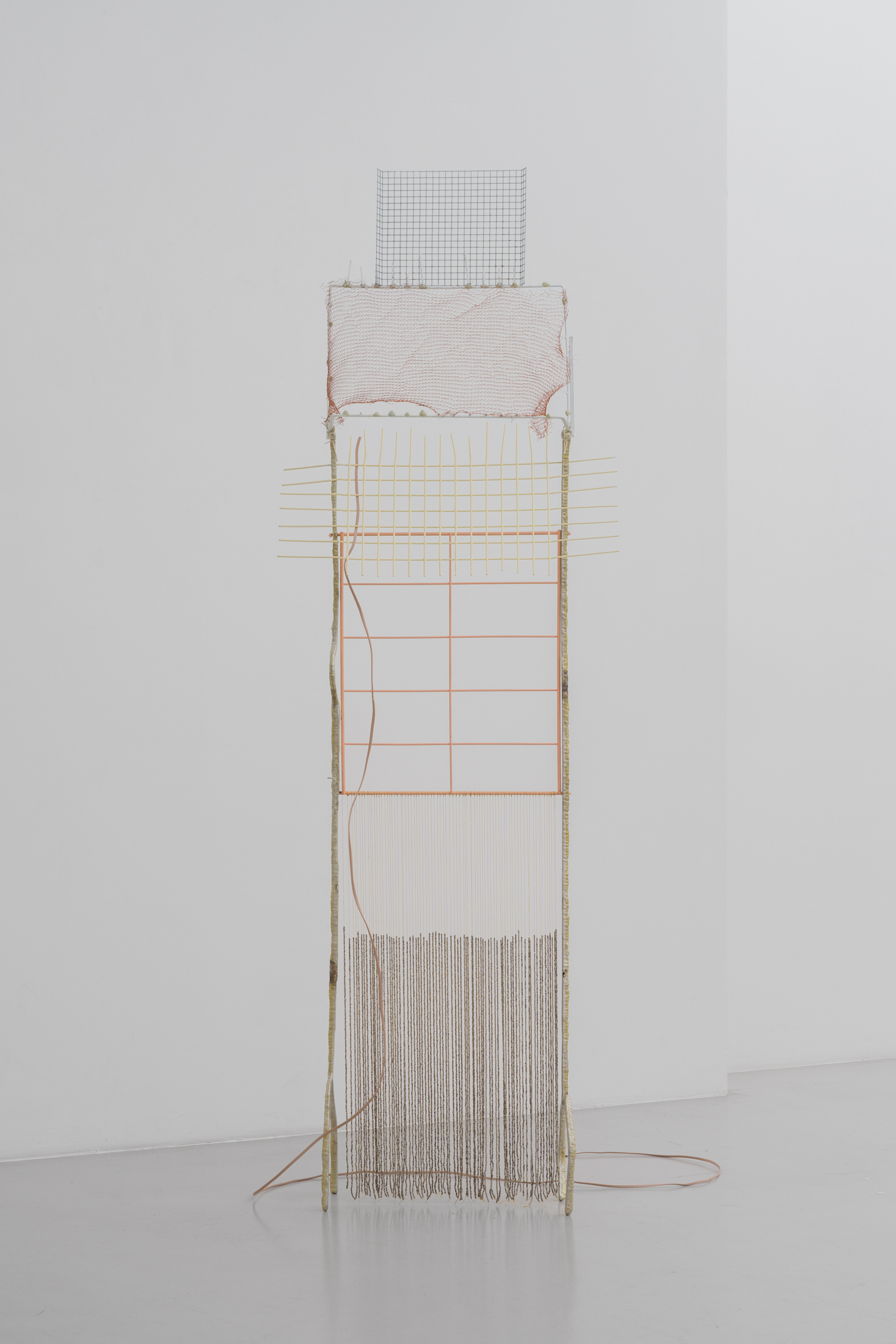
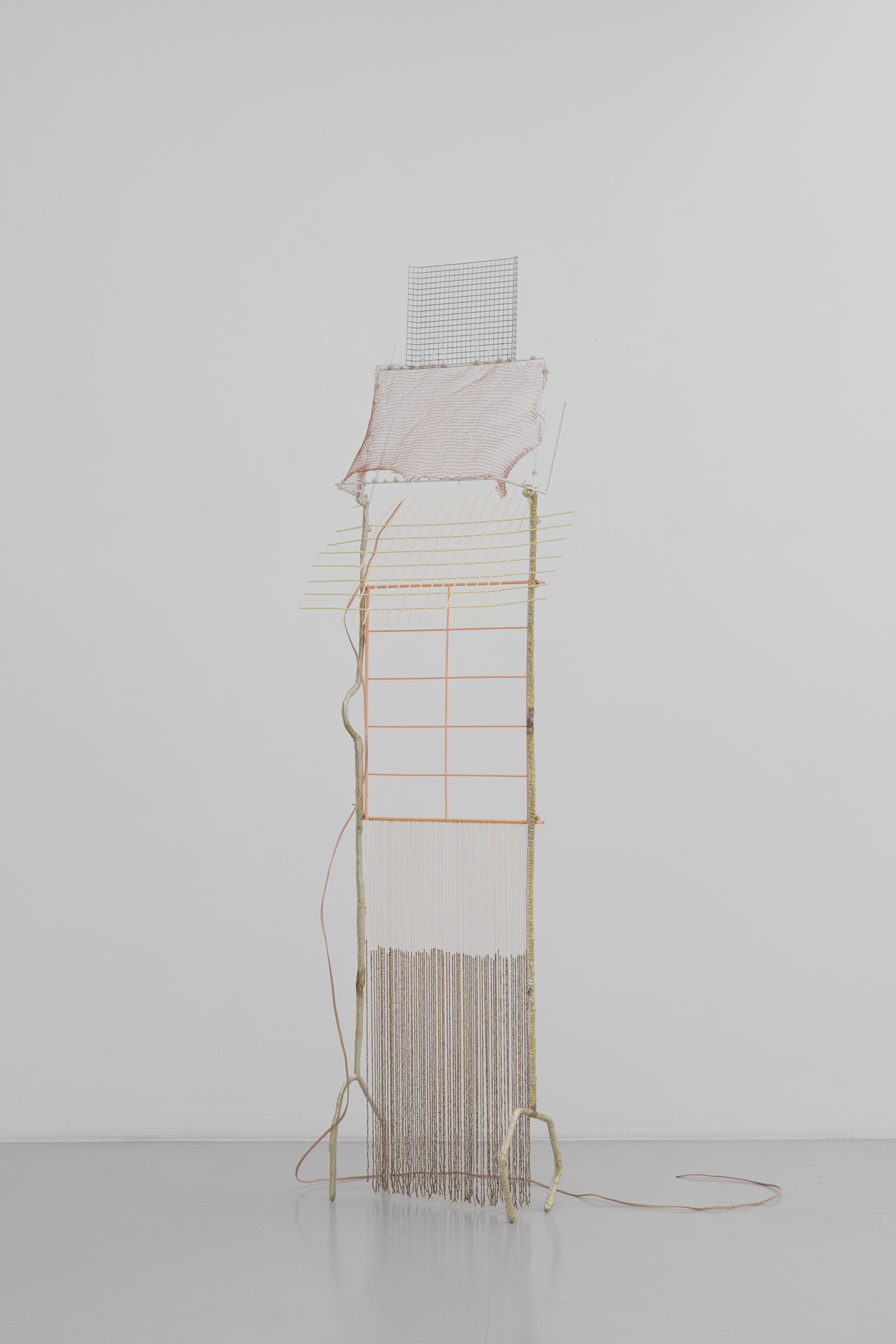
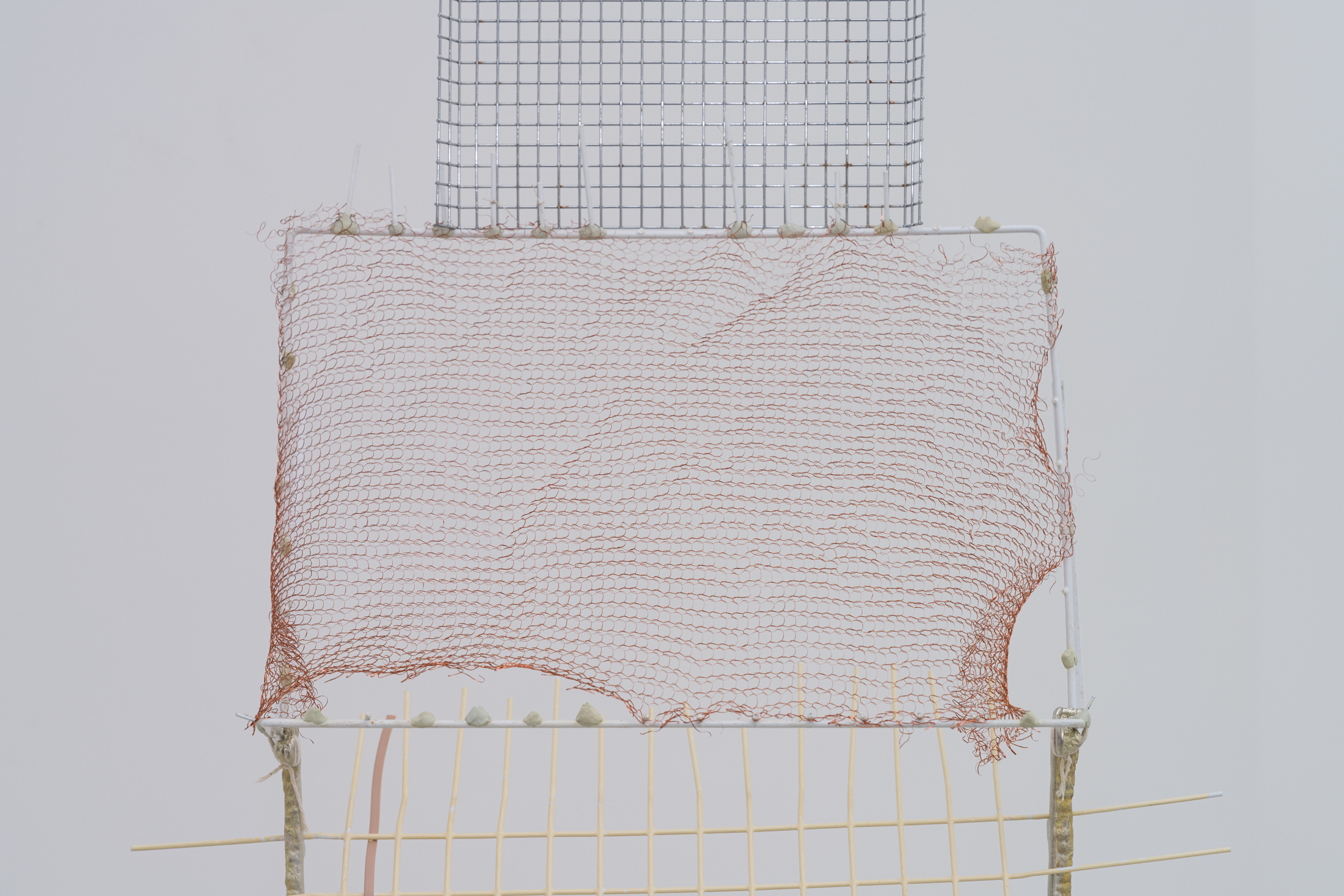
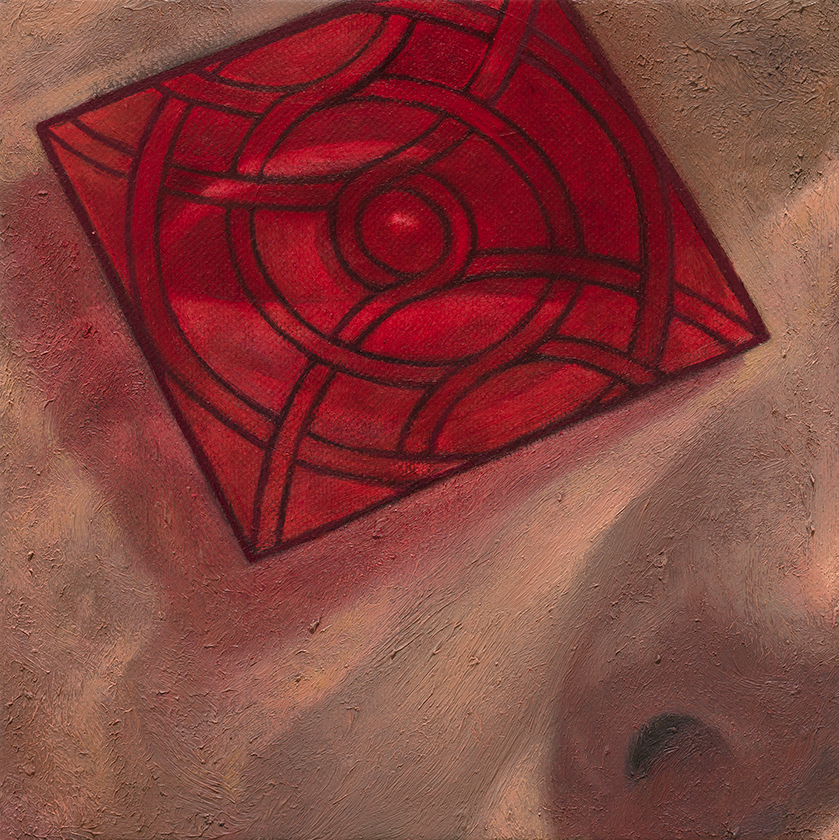
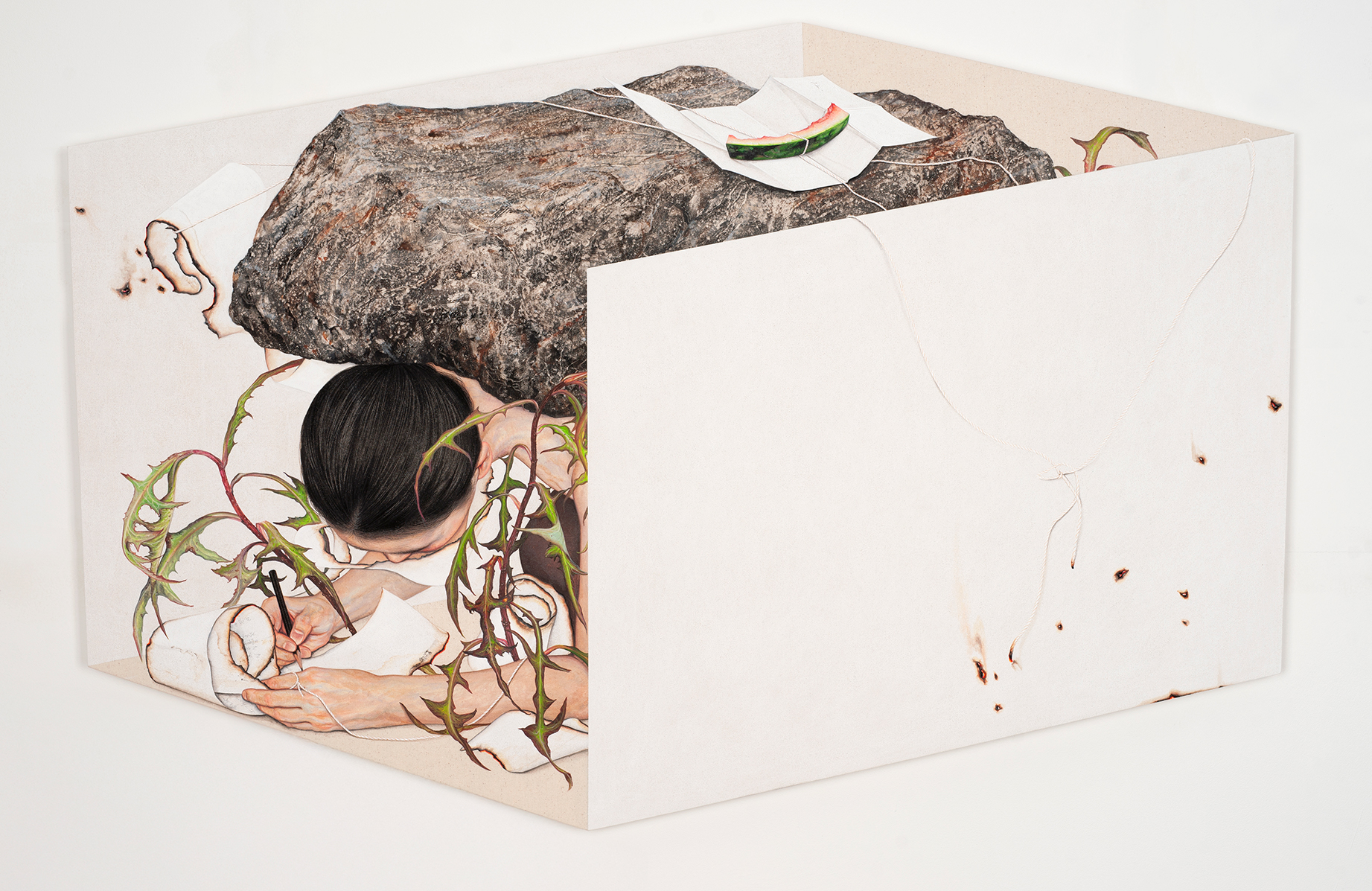
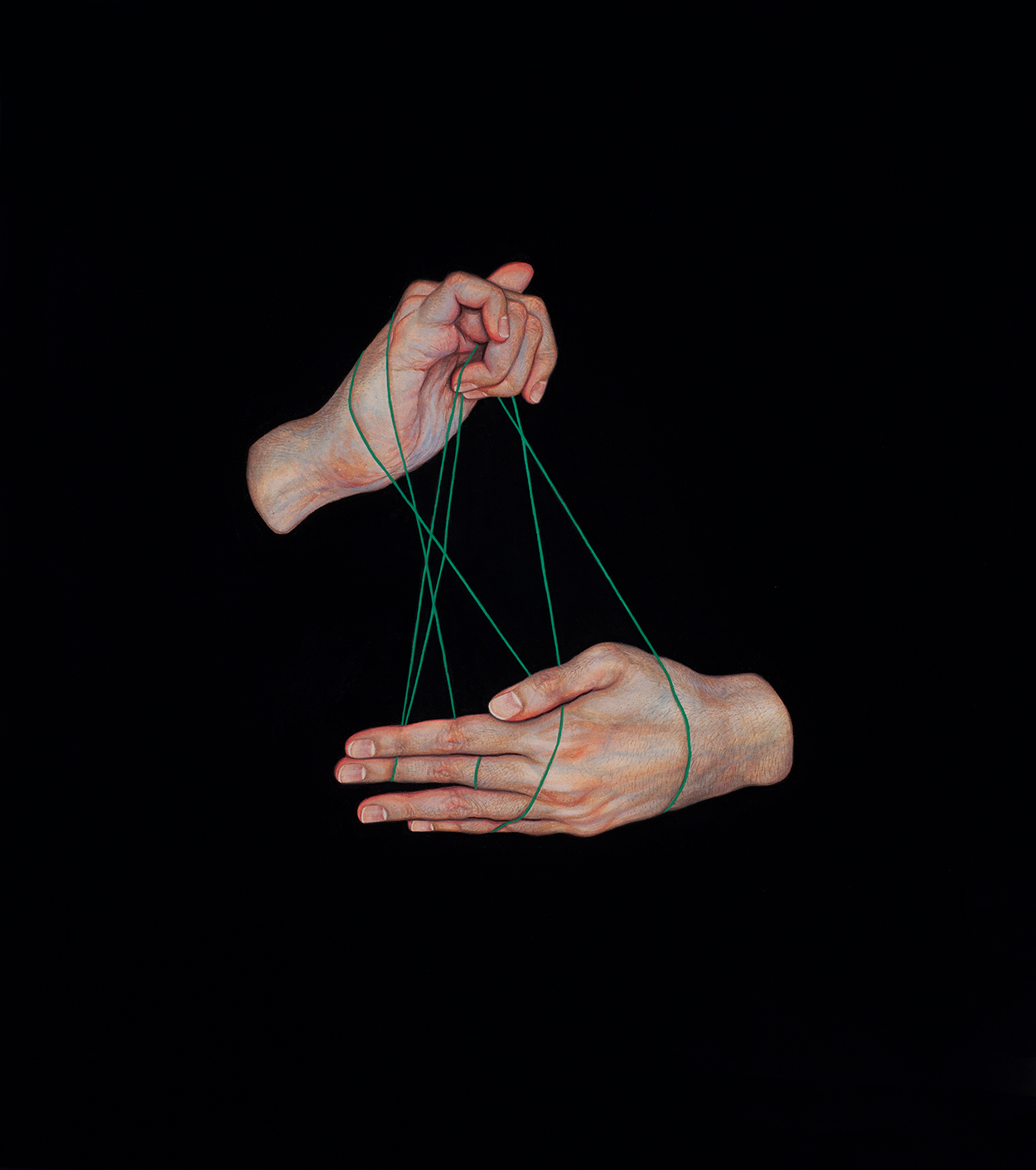
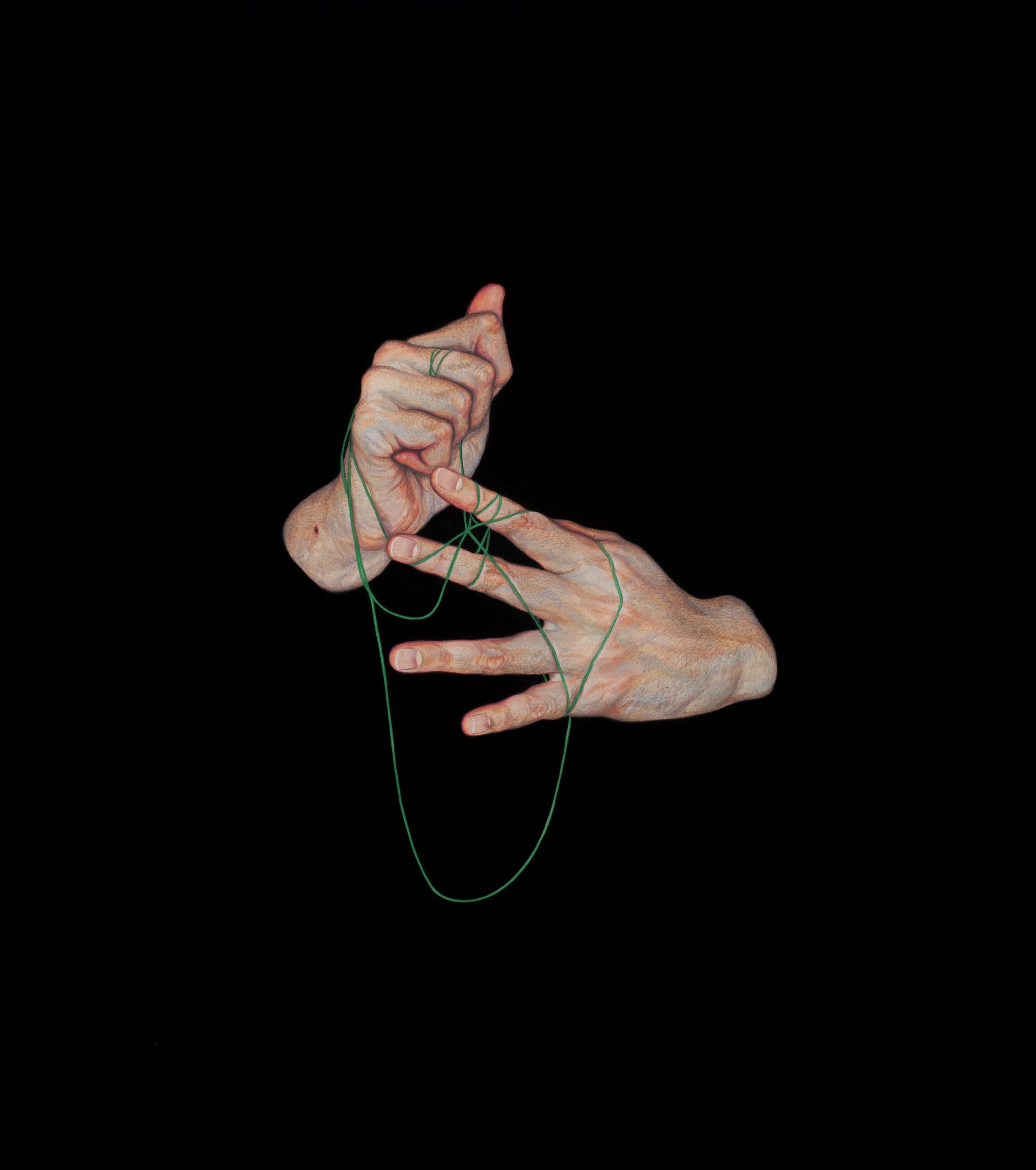
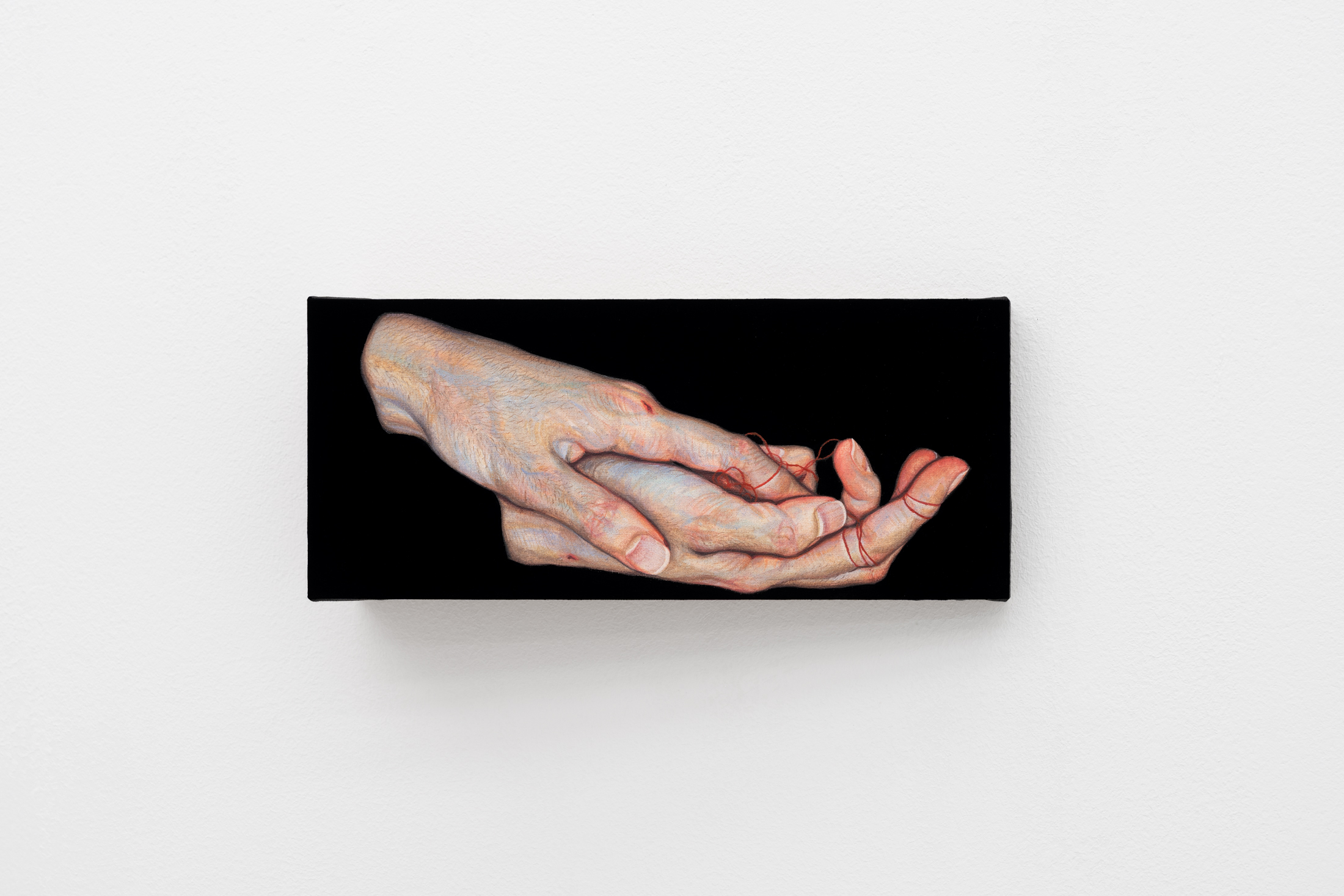
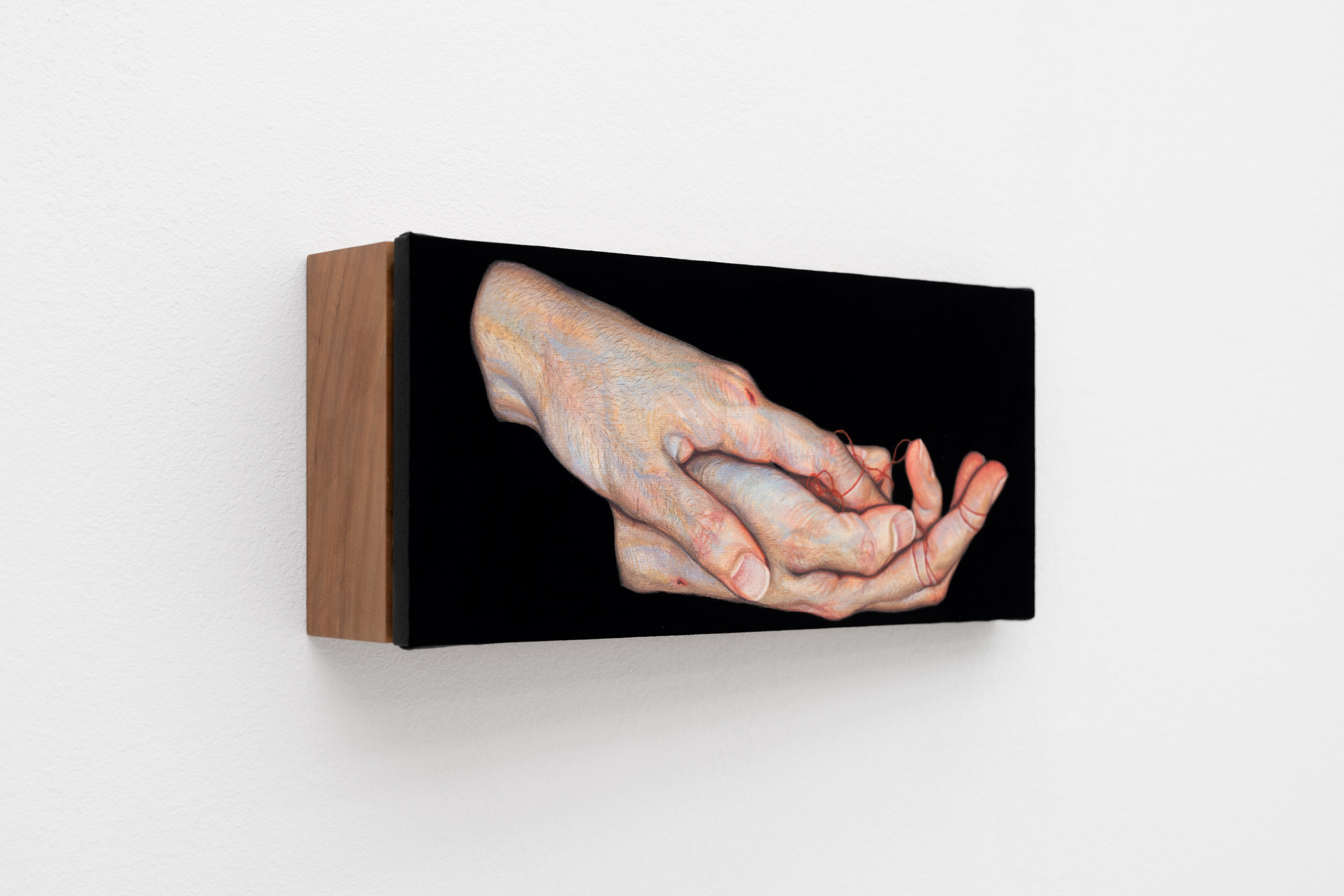
이진주의 회화는 과거와 현재, 그리고 미래의 시공으로부터 그러모은 일상적 존재의 기묘한 합으로 완성된다. 가려진 몸의 일부, 자연으로부터 떨어져 나온 식물, 가정에서 쉽게 볼 수 있는 갖가지 도구처럼 주위에 편재하는 요소들은 그가 마련한 비정형의 화면과 암흑의 끝처럼 짙은 검정 배경 위로 떠오르며 형언할 수 없는 정취에 기여한다. 작가는 회화가 정지된 이미지라는 전제를 의심한 채 그 안에 잠재된 비선형적 감각을 호출한다. 예컨대 <기록된 내일>은 육면체 캔버스와 기울어진 평면도를 통해 일반적으로 구획되는 시각의 축을 비튼다. 그 안에 묘사된 불에 타들어 가는 종이에 기록을 남기는 인물, 무거운 돌을 버티며 웅크린 몸짓, 작업실 주변에서 마주한 잡초와 먹다 남은 수박은 모두 불안정한 조건 속에서 모종의 것을 남기려는 누군가의 의지를 암시한다. 또한 작가에게 시간은 외부 환경과 신체적 감각에 의해 끊임없이 압박받고 분기되는 인지 작용과도 같다. 이러한 인식은 작품의 구조 자체에서도 드러나는데, 예로 벽면에 비스듬히 기대어 있는 <얽힘과 풀림>은 정면에서 조망되는 시선을 비틀어 관람자의 위치를 미묘하게 분절시킨다. 나아가 양옆의 팽팽하게 당겨진 실과 느슨하게 늘어진 실의 대비는 다양한 관계 속에서 발생하는 저항과 포용, 그리고 탄성의 상태를 가시화한다. 그 잔향은 피부 위 선명한 자욱으로 남아 유예된 마음을 전해주는 듯도 하다.
우리는 종종 어제와 비슷한 오늘, 오늘과 크게 다르지 않을 내일에 머문다. 다중의 세계가 감지되는 우주에서 실상 한 세계가 존재할 수 있는 모든 방식은 다른 어떤 세계가 작동하는 모습이기도 하다.* 역사와 지정학이 뒷받침하는 차원의 경계에서 발견되는 또 다른 나, 혹은 무언가와 호응하는 과정으로부터 비로소 가늠되는 지금을 다시 생각한다. 많은 것이 분열적으로 치환되는 환경 속에서 상상과 현실, 믿음과 바람을 꾸준히 기록하고, 호출하고, 엮어낸 지금의 자리가 있다. 그러므로 굴절되는 대로 되울리는 미세한 파동이 잠깐 멈추어 가는 찰나에 조우한 이들의 작업을 가만히 들여다보기로 한다.
글ㅣ이유진 (디스위켄드룸 큐레이터)
* 데이비드 루이스 (1986), 『세계의 다수성에 대하여(On the Plurality of Worlds)』, 옥스퍼드: 블랙웰, p. 2. (번역은 필자)
The reality before our eyes is not composed of a single tense. Scenes that have already passed, moments sensed in the present, and signs of a future yet to come intersect and cross one another, continually wavering and transforming. This layered field of perception, existing beyond the linearity of physical time, sometimes drifts without assuming form, and at other times comes into view only through fragments of belief, memory, or language that someone attempts to hold onto. What are we waiting for, what do we remember, and through what language do we grasp the world? In a condition where nothing is ever fully fixed, how do we inhabit the present? Hyeree Ro, Donghyuk Lee, and Jinju Lee bring into focus points of arrival that are here, yet not entirely here. They are moments that can be articulated, but never rendered transparent.
Based in New York and Seoul, Hyeree Ro works across installation, performance, and video to document personal identity and bodily sensation in relation to movement and temporal displacement. Engaging organically with realms beyond social language and a priori systems, she translates her own memories and those of others into objects, sounds, and gestures. The abstract and ambiguous forms that populate her work often arise from regional and bodily affinities shared with people, animals, and non-human entities in her surroundings, functioning as catalysts that prompt a reconsideration of perceptions firmly fixed within contemporary society. In this exhibition, rather than binding objects and performances under a single theme, the artist explores new constellations by recombining objects that were previously mobilized across different projects. For instance, forms derived from the artist’s adopted rescue dog Jinny, along with ceramic tiles that evoke both fallen leaves and banknotes, are presented as narratives within the exhibition space, existing independently of any live performance. These dispersed elements do not coalesce into a closed story but instead occupy a loose structure that remains open to being rethreaded at any moment. Carry Seoul, which connects the two floors of the exhibition space, functions as a kind of letter sent by the artist, who has moved between Korea and the United States since childhood, to her late father after leaving Seoul. By filming a sky that is geographically opposite to the ground she stands on, the work entangles sites of sending and receiving. In addition, oral interviews with individuals who crossed the Pacific for various reasons including those adopted into the United States during childhood are juxtaposed with the image of a vast, endlessly circulating body of water, retrospectively evoking the emotional lag produced by temporal and spatial displacement.
Donghyuk Lee explores systems of value such as belief and faith through imagery drawn from religious doctrine. Memories from his life as a believer and scenes drawn from visits to former church buildings have been rendered as symbolic motifs and color. In his recent work, the artist turns his attention to the word “veni,” which appears seven times in the Book of Revelation, the only prophetic book of the New Testament. Rather than reading this repeated utterance as an act of coercion or proclamation, Lee understands it as an earnest invocation, a call made in longing. In Korean, veni may be translated as “come,” “come forth,” or “come and see.” His paintings resonate less with a demand that insists on appearance than with the traces left by a language closer to hope, one that suggests something must come into being. In this way, figures recorded in scripture, now cloaked in light and shadow, come to embody the artist’s longstanding vision: a commitment to searching for entities that do not exist, yet must exist. This attitude extends the Given Page series, which Lee has continued over the past three years. By dismantling sentences related to belief, removing their surrounding context, and repeatedly contemplating what remains, he translates the images that surface from this process across multiple canvases. Although derived from the same text, these landscapes unfold with differing intensities of light and depth. They suggest that truth is not a matter of fixed certainty but something that can be reconfigured according to one’s geographical and historical position. Ultimately, Lee’s paintings do not attempt to verify the existence of any particular being. Rather, they trace a persistent effort to feel one’s way toward a longing that remains difficult to reach, relying on language as a guide and grasping for an existential mediator that might draw one closer to it.
Jinju Lee’s paintings are formed through uncanny assemblages of everyday presences drawn from the temporal dimensions of past, present, and future. Elements that permeate her surroundings such as obscured parts of the body, plants and animals detached from nature, and familiar domestic tools float across irregular pictorial fields and deep black grounds resembling the edge of darkness, contributing to an ineffable landscape. At the same time, the artist questions the assumption of painting as a static image and activates the nonlinear sensibilities latent within the medium. For instance, Recorded Tomorrow unsettles conventionally organized axes of vision through a cubic canvas and tilted planar constructions. Within the work, a figure leaving a record on burning paper, a crouched body bearing the weight of a heavy stone, weeds encountered around the studio, and the remnants of a partially eaten watermelon all suggest a will to leave something behind under unstable conditions. For the artist, time functions as a cognitive process that is continuously pressured and refracted by external environments and bodily perception. This awareness is also embedded in the structural logic of the works themselves. In Tangled and Disentangled, which leans diagonally against the wall, the frontal gaze is subtly twisted, gently fragmenting the viewer’s position. Furthermore, the contrast between tautly stretched threads and loosely slackened ones on either side renders visible states of resistance, accommodation, and elasticity that arise within relationships. Their afterimage seems to linger on the skin as a vivid trace, conveying emotions held in suspension.
We often remain within a today that resembles yesterday, and a tomorrow that will not differ greatly from today. There are so many other worlds, in fact, that absolutely every way that a world could possibly be is a way that some world is.* From the boundaries of dimensions shaped by history and geopolitics, we reconsider the present as something that can only be gauged through processes of resonance, with another self, or with something else entirely. Within environments where many things are fragmentarily replaced, there emerges a present shaped by the sustained acts of recording, summoning, and weaving imagination and reality, belief and desire. It is at this moment, where subtle waves of refraction briefly pause in their echo, that we turn our attention to the works of those we encounter here.
TextㅣYoojin Lee (Curator, ThisWeekendRoom)
* David Lewis (1986), On the Plurality of Worlds, Oxford: Blackwell, p. 2.