김진희
Jinhee Kim
10 Sep-25 Oct 2025
FeldbuschWiesnerRudolph, Berlin, GER
Credit
주최|펠드부시와이즈너루돌프
협력|디스위켄드룸
사진|이미지
후원|문화체육관광부, (재)예술경영지원센터
Host|FeldbuschWiesnerRudolph
Cooperation|ThisWeekendRoom
Photo|Miji Lee
Supported by the Ministry of Culture, Sports and Tourism, Korea Arts Management Service




Artist Interview
Q. 이번 전시의 제목은 《No one is watching but everyone is on stage》 입니다. 이 제목은 어떤 메시지를 담고 있나요?
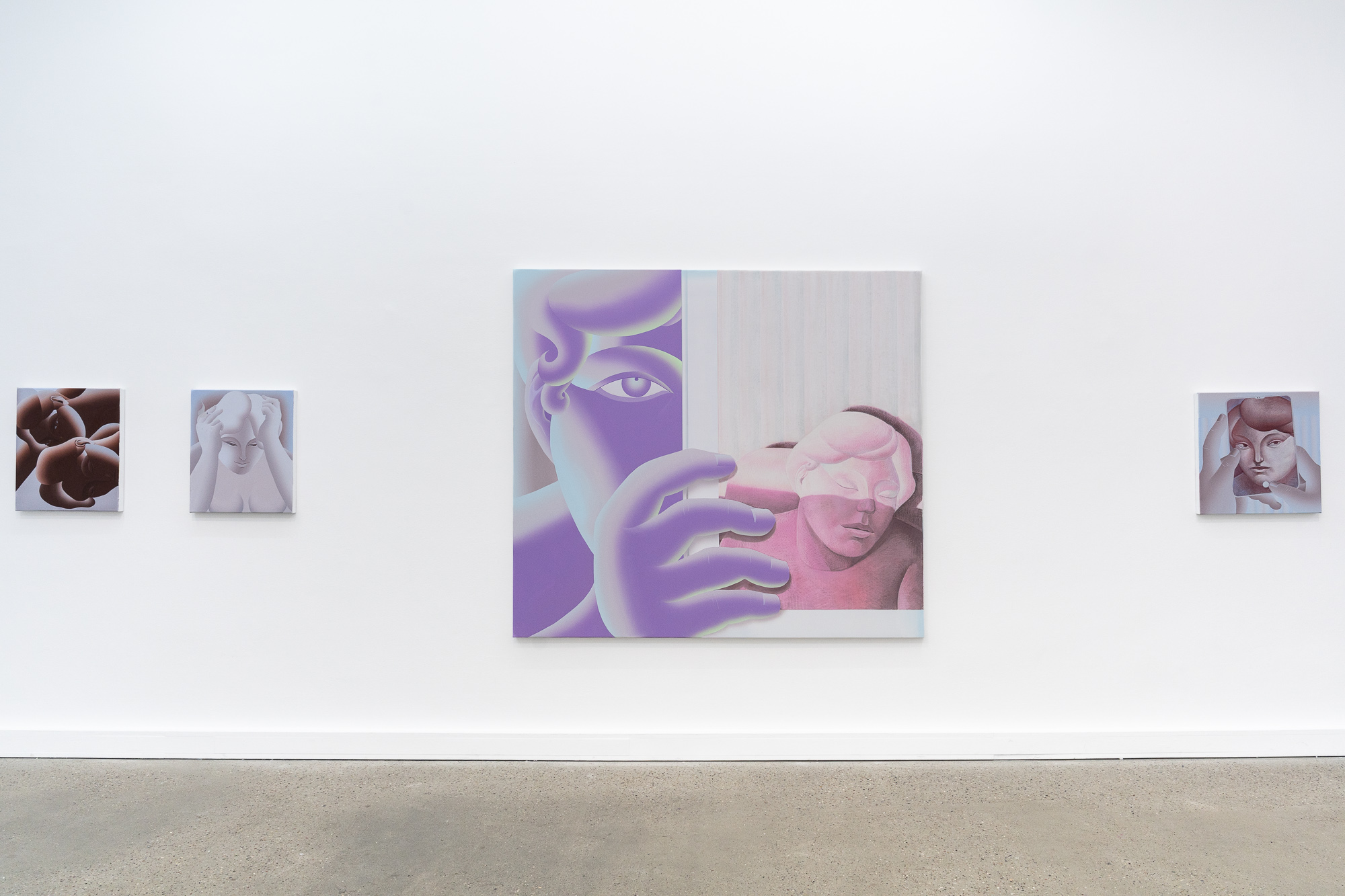
A. 이번 전시 제목 《No One Is Watching but Everyone Is on Stage》는 일상의 행위들이 때로는 연출된 몸짓처럼 보일 수 있다는 생각에서 출발합니다. 내가 무심코 하는 행동이 누군가에게는 낯설고 이질적인 장면으로 다가갈 수 있어요. 길에 떨어진 물건을 주워드는 평범한 몸짓조차 불현듯 무대의 한 장면처럼 보일 수 있고, 실내에서 무심히 담배를 물고 있는 모습은 어떤 맥락에서는 연출된 이미지처럼 읽히기도 합니다. 동시에 아무도 보지 않는 순간에도 우리는 이미 무대 위에 있는 것처럼 스스로를 의식합니다. ‘내’가 어떻게 보일지를 고민하는 그 순간, 타인의 시선이 부재하더라도 하나의 무대가 만들어진다고 생각해요. 이전 작업들에서는 개인의 일상 속 장면을 포착해 보편성의 기준과 의미에 관해 질문했다면, 이번 전시에서는 개인이 타자에게 보이는 방식에 주목합니다. 어떤 장면이 초상으로 선택되고, 그 선택이 과연 개인을 충분히 설명할 수 있는지를 질문해요. 제가 만든 작은 무대는 누군가에게는 연출된 공연처럼 보일 수도 있고, 동시에 아무런 주목도 받지 못한 일상으로 남을 수도 있죠.
Q. 새로운 연작은 초상화에 집중하고 있습니다. 인물들은 화면을 가득 채우며 거의 기념비적으로 보입니다. 그들의 신체와 얼굴은 형식화되어 묘사되거나, 때로는 책이나 사진, 다른 프레임들로 일부 가려지기도 합니다. 이러한 맥락에서 ‘자화상’의 개념을 어떻게 생각하시나요? 그리고 오늘날 작가님에게 초상화란 어떤 의미를 가지나요?
A. 이번 전시에서 제가 다루고자 한 것은 ‘초상 자체’를 그리는 일이 아니라, 무엇이 초상을 초상으로 만드는가라는 질문입니다. 초상은 단순히 얼굴을 재현하는 것이 아니라, 무엇이 ‘나’를 설명할 수 있는가를 묻는 과정이라 할 수 있어요. 제가 초상을 다루는 방식은 크게 세 가지로 나눌 수 있는데요. 첫 번째로는 휴대폰 액정, 사진, 잡지, 책 등의 프레임을 사용하는 것입니다. 인물의 얼굴은 종종 그러한 프레임에 가려져 ‘나’ 자신을 직접 드러내기 보다는, ‘내’가 보고 있는 것 도는 보여주고 싶어하는 것을 비추는 시각적 매개물로 기능합니다. 두 번째는 삶의 이면을 구태여 드러내는 것입니다. 예컨대 시야 밖으로 담배를 내미는 손, 혹은 개인적인 고통 속에서 반쯤 드러난 인물처럼, 보통 초상화와는 어울리지 않을 법한 순간들이 화면에 등장합니다. 이런 장면들은 개인이 쉽게 드러내지 않는 내밀한 이야기를 담아내며, 안정된 단일 이미지로서의 초상을 비틀어요. 그리고 또 다른 장면은 시선을 보내는 인물들을 통해 만들어지는데요. 그들의 응시는 관람자를 향하면서 장면을 흔들고, 결국 보는 자와 보여지는 자의 관계를 열어둡니다. 저는 그 안에서 ‘No One’의 시선을 떠올렸습니다. 그 시선은 누군가의 눈길일 수도 있고, 아무도 아닌 시선일 수도 있어요. 연출되고 꾸며진 순간, 혹은 전혀 의도되지 않은 순간, 그리고 그것을 바라보는 시선까지 초상의 요소라 생각합니다.
Q. 작가님의 회화에는 여성 인물이 자주 등장합니다. 인물들은 단독 혹은 이인 초상으로 나타나지만, 서로 직접적으로 소통하지는 않는 듯합니다. 이러한 인물들은 작가님의 작업에서 어떤 역할을 하며, 개인적 관찰이나 경험에서 비롯된 것인지 궁금합니다.
A. 제 작업의 서사는 개인적인 관찰에서 비롯되지만, 특정 사건을 재현하거나 구체적인 이야기를 전달하지 않아요. 화면 속 인물들 또한 종종 여성으로 보이지만 단순히 ‘여성’으로만 읽히도록 의도되지 않았습니다. 인종이나 나이와 마찬가지로, 성별 또한 외부적 특징으로 간주하여 제거했기 때문입니다. 이는 피부색 사용을 피하거나, 특정 인종·문화적 정체성과 연결된 얼굴 묘사를 의도적으로 배제하는 방식으로 구현돼요. 서구 중심 문화에서 ‘보편적 인간’의 전형은 오랫동안 남성으로만 재현되어 왔고, 이는 전통적인 보편성 개념을 고착시켰습니다. 저는 이러한 관습을 따르기보다 정체성을 드러내지 않는 방식을 택해, 더 편재적인 인간의 이미지를 탐구하고자 했어요. 그 결과, 제 회화 속 인물들은 외부적 지표가 제거된 존재로 묘사되며, 기존의 전형을 대체하는 새로운 보편성을 형성합니다. 인물들은 서로를 바라보기보다 때로는 관람자를 응시하며, 보는 자와 보여지는 자의 관계를 다시 묻습니다. 결국 이 인물들은 ‘특정한 누군가’라기보다, 개인과 보편, 주체와 타자의 경계에서 생겨나는 긴장 자체를 드러내는 장치라고 할 수 있어요. 저는 그 틈을 열어두어 관객이 각자의 경험을 그 위에 투사할 수 있기를 바랍니다.
Q. 새로운 회화에서는 책, 사진, 스마트폰 화면 등 인물과 관람자 사이에 또 하나의 이미지 평면이 등장하곤 합니다. 또한 아크릴 위에 파스텔을 덧입히는 방식으로 물질적인 대비도 만들어내시지요. 이러한 겹쳐진 화면과 재질은 작가님의 초상화에서 어떤 역할을 하나요?
A. 이번 전시에서 저는 초상을 단일한 표면으로 고정하기보다, 여러 겹의 층위와 재질을 통해 불안정한 상태로 두고 싶었어요. 화면에 단단히 매여있는 아크릴과 달리 파스텔은 가볍게 얹혀있어요. 이 대비는 초상이 언제든 벗겨지고 다시 덧씌워질 수 있는, 안정적이지 않은 층위들로 이해되기도 합니다. 저는 그 덧없음과 불안정 속에서 오히려 솔직한 초상의 가능성이 생겨난다고 생각합니다.
Q. 작가님의 회화 속 인물들은 종종 멀리 떨어진 듯하거나 빗겨간 시선을 하고 있어, 일종의 정지된 순간이나 긴장감을 만들어냅니다. 이러한 ‘거리감’은 작가님의 작업에서 어떤 의미를 가지며, 오늘날의 어떤 경험을 반영한다고 생각하시나요?
A. 제 작업 속 인물들은 종종 멀리 떨어진 듯하거나, 빗겨간 시선을 하고 있다. 이 ‘거리감’은 단절이 아니라, 보는 자와 보여지는 자 사이의 관계를 다시 묻는 장치로 사용되는데요. 인물들이 서로를 바라보지 않는 대신, 때로는 화면 밖의 우리를 응시합니다. 그 순간 관람자는 장면 안으로 끌려 들어오고, 초상은 단순한 재현을 넘어 관계의 구조로 확장됩니다. 이는 전시 제목 《No One Is Watching but Everyone Is on Stage》와도 연결됩니다. 우리는 아무도 보지 않는 순간에도 이미 무대 위에 올라와 있는 것처럼 스스로를 의식하며 살아갑니다. 보여주고 싶은 ‘나’, 사회가 규정하는 ‘나’, 또 다른 ‘나’가 동시에 존재합니다. 여러 공간에서 우리는 각기 다른 모습으로 표현되지만, 그 모든 모습은 결국 서로 다르면서도 닮아 있기도 합니다.
Q. The show is titled 《No One Is Watching but Everyone Is on Stage》 What message does it convey?
A. Our embodied actions in the daily life can often appear staged – my exhibition《No One Is Watching but Everyone Is on Stage》 begins with my personal observation of an unconscious act of mine that seems strange or unfamiliar to someone else. Even one of the most trivial movements such as picking up an object from the street may suddenly appear to be a staged moment. My casual act of smoking indoors, which I am used to, may, in another context, be perceived as an assembled image. At the same time, even in moments when no one is watching, we become conscious of ourselves as if already standing on stage. The moment I mediate on how ‘I’ might appear, a stage is created—even in the absence of an another’s gaze. Unlike my previous works, which interrogated the standards and meanings of universality throughout scenes of daily life, this exhibition, however, focuses on how individuals appear to others. Which scenes are chosen as portraits, and are those choices ever enough to describe a person? The small stage I construct may be seen as a staged performance by some, while to others it may remain an usual moment delivered without notice.
Q. Your new series focuses on portraiture. The figures fill the picture plane and appear almost monumental. Their bodies and faces are rendered in a stylized way, sometimes partly obscured by books, photographs, or other frames. How do you think about the idea of self-portrait in this context, and what does “portrait” mean to you today?
A. The focus of this exhibition is not to paint “the portrait itself”, but on exploring what constitutes a painting portrait. A portrait is not merely a replication of a face, but a process of exploring what can truly convey “me”.
I approach portraiture from three angles. In my paintings, faces are often obscured by frames such as a phone screen, a photograph, or a book. Rather than directly revealing faces, these objects serve as visual mediators reflecting what ‘I’ am looking at, or how ‘I’ want to be seen. Secondly, I deliberately divulge the “reversed side” of life e.g. a hand passing a cigarette out of the frame, or a fragmented figure in an intimate struggle. Such moments are rarely considered suitable for portraiture, yet they enable the image to capture the hidden and uneasy sides of a person. These scenes reveal intimate yet often invisible aspects subverting the realm of the portrait as a stable, unified image. Comparing to previously mentioned portraits, the third variety of portrait is formed through the gaze of the figures. Their gaze towards the viewer unsettles the scene, ultimately opening up the relationship between the viewer and the seen. Through this gaze, I was reminded of the concept of “No one.” It could belong to someone, or no one at all. I consider both staged and intentional gestures, as well as entirely unplanned moments—and even the gaze itself—to be elements of portraiture.
Q. Your paintings often feature female figures. Sometimes they appear alone, sometimes in pairs, but without direct interaction. What role do these figures play in your work, and do they originate from personal observations or experiences?
A. My artistic narrative stems from personal observation, but it doesn’t depict specific events or tell particular stories. The figures in my work often appear as women, but they aren’t necessarily read simply “female.” Like ethnicity or age, gender is also an external feature that I’ve taken out. This includes avoiding the use of skin color, or refraining from depicting faces tied to a certain ethnicity or cultural identity. In western-centric culture, the universal archetype of humankind has exclusively been the male, reproducing the notion of conventional universality. Rather than following these exclusive doctrines, I have avoided revealing an identity; in order to explore the image of a more omnipresent human. Consequently, the previous archetype has been replaced by a newborn universality based on desymbolised figures in my paintings. Rather than looking at each other, the figures sometimes confront the viewer, raising questions about the relationship between the roles of observer and the observed. Ultimately, these figures are less “particular individuals” than they are an exposition of the tension between the personal and the universal, and between the subject and the other. By keeping this gap unclosed, viewers can project their own experiences onto it.
Q. In your new paintings, an additional image plane often appears between the figure and the viewer—for example, a book, a photograph, or a smartphone screen. You also layer pastel over acrylic, which creates a striking contrast of materials. How do you think about these layered surfaces and the role they play in your portraits?
A. In this exhibition, rather than presenting the portrait as a single surface, I have left it in an unstable state by using multiple layers and materials. Unlike acrylic, which is firmly fixed to the canvas, pastel rests precariously on the surface. This material contrast creates the perception of unfastened layers, suggesting that a portrait can always be erased, covered, or rewritten at any time. These fragile surfaces invite us to unlearn the concept of a portrait as something formed across layers marked by incompleteness and instability, rather than as a solid definition of identity. In this fragility, I see the possibility of a more honest portrait.
Q. In your paintings, the figures often appear with a distant or detached gaze, creating a sense of pause or tension. How do you see this condition of distance in your work, and what kind of contemporary experience does it reflect for you?
A. The figures in my paintings often gaze distantly or obliquely, creating a sense of pause and tension. Rather than representing disconnection, I see this distance as a way of reconstructing the relationship between the viewer and the seen. Sometimes, instead of looking at each other, the figures turn their gaze outward—toward us. In this fleeting moment, the viewer is invited into the scene, and the portrait transcends mere representation to become a structure of relationships. This gaze also connects with the exhibition title, 《No One Is Watching but Everyone Is on Stage》. Even when no one is watching, we self-consciously play a certain role on a stage, where the self ‘I’ eager to show, the self defined by society, and yet another self all coexist. Across different spaces, we are described in different ways, but ultimately, these selves are both different, and uncannily alike.