김진희
Jinhee Kim
5-21 Sep 2024
Frieze No.9 Cork Street, London, UK
Credit
기획|디스위켄드룸
후원 |문화체육관광부, 예술경영지원센터
협력 | 4482 SASAPARI
사진|Studio Adamson
Curated by ThisWeekendRoom
Supported by the Ministry of Culture, Sports and Tourism, Korea Arts Management Service
Cooperation | 4482 SASAPARI
Photo|Studio Adamson

Introduction
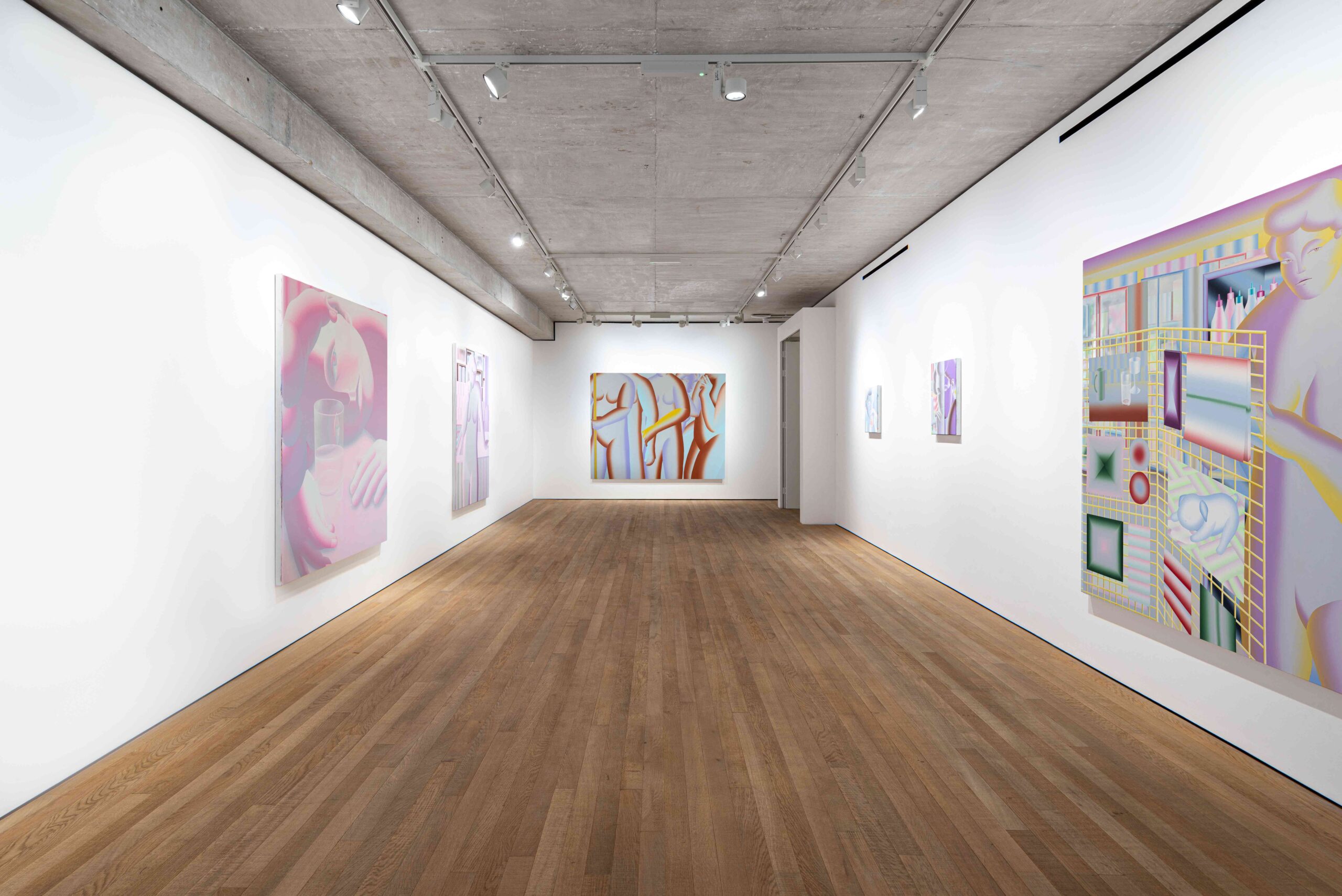
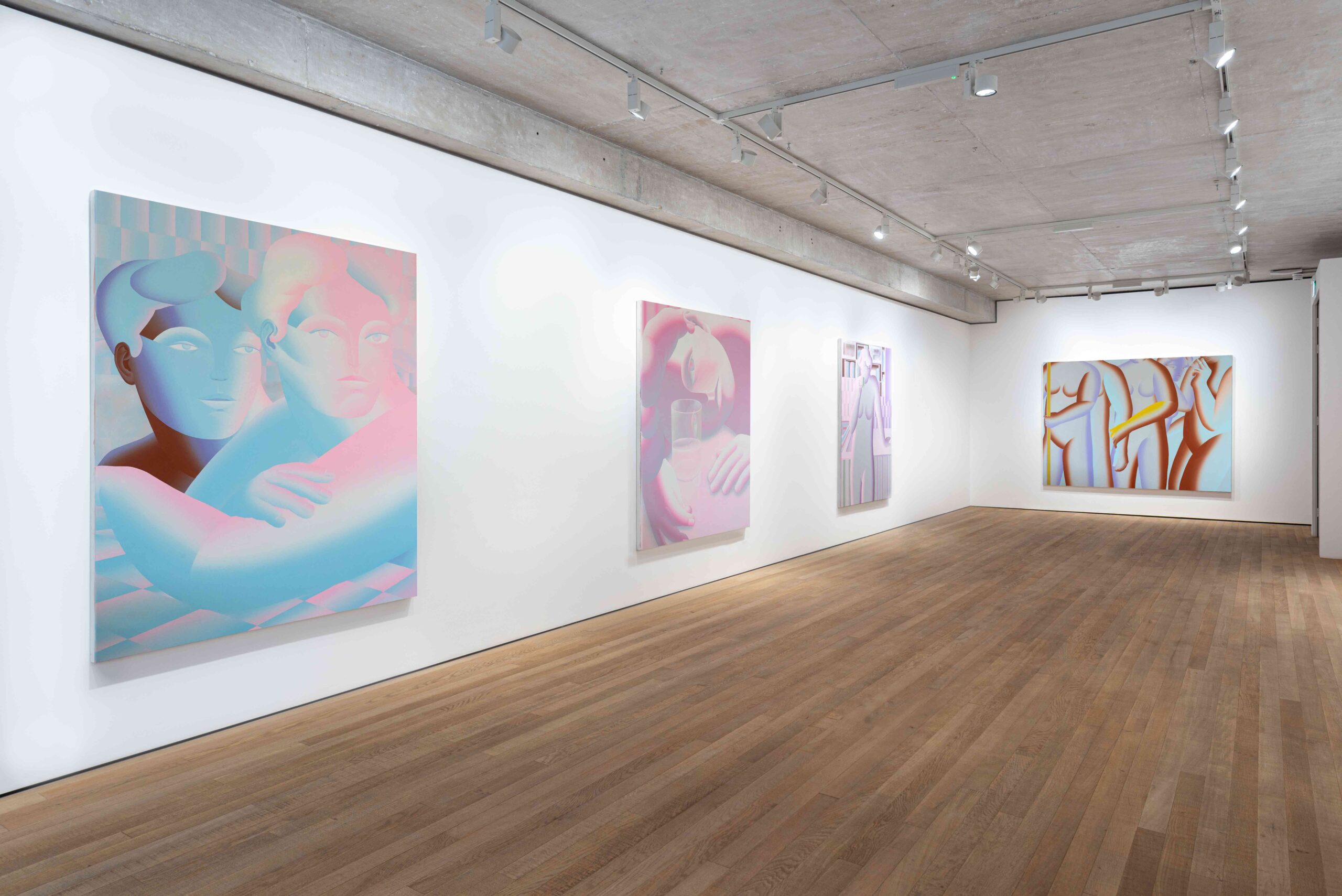
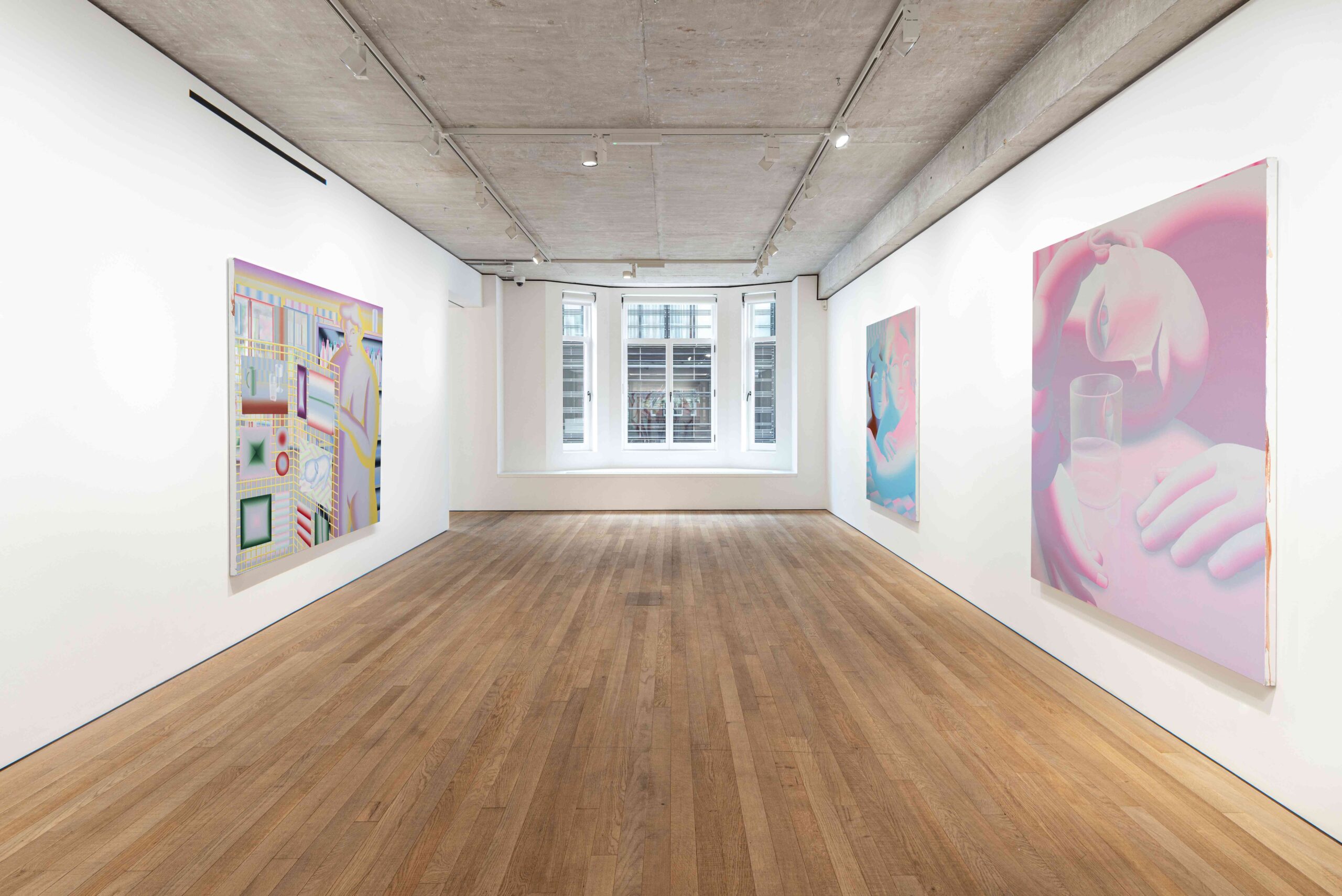
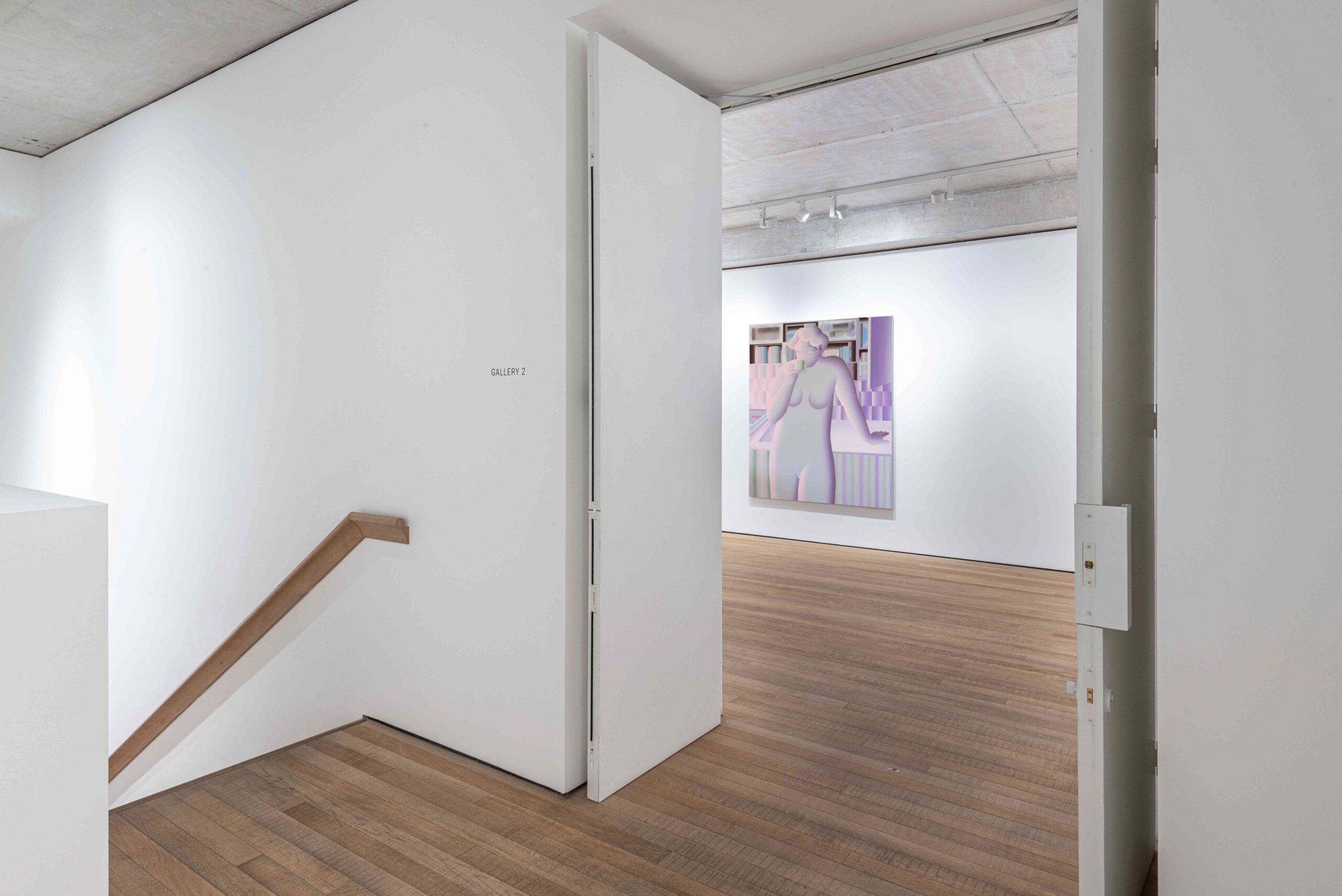
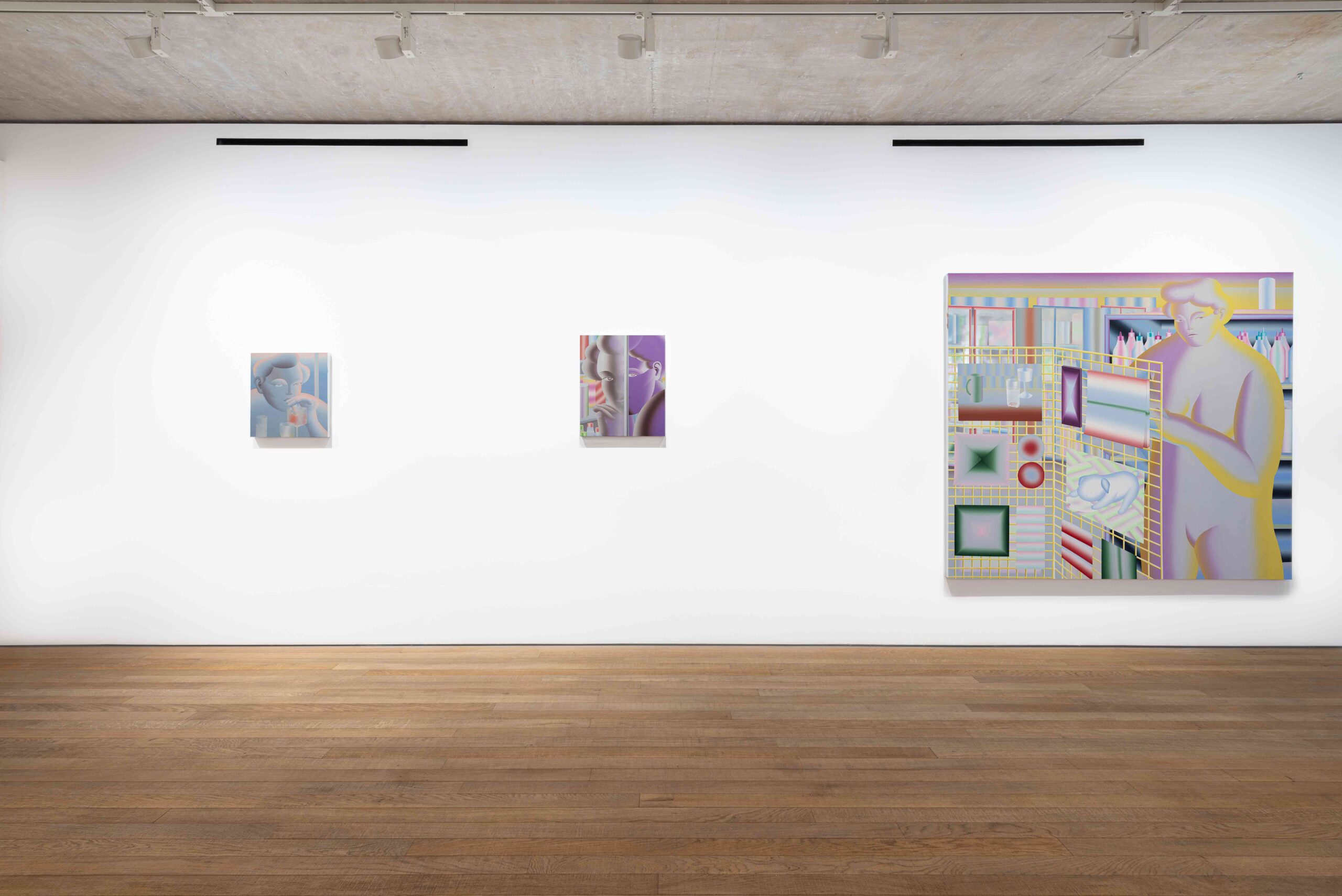
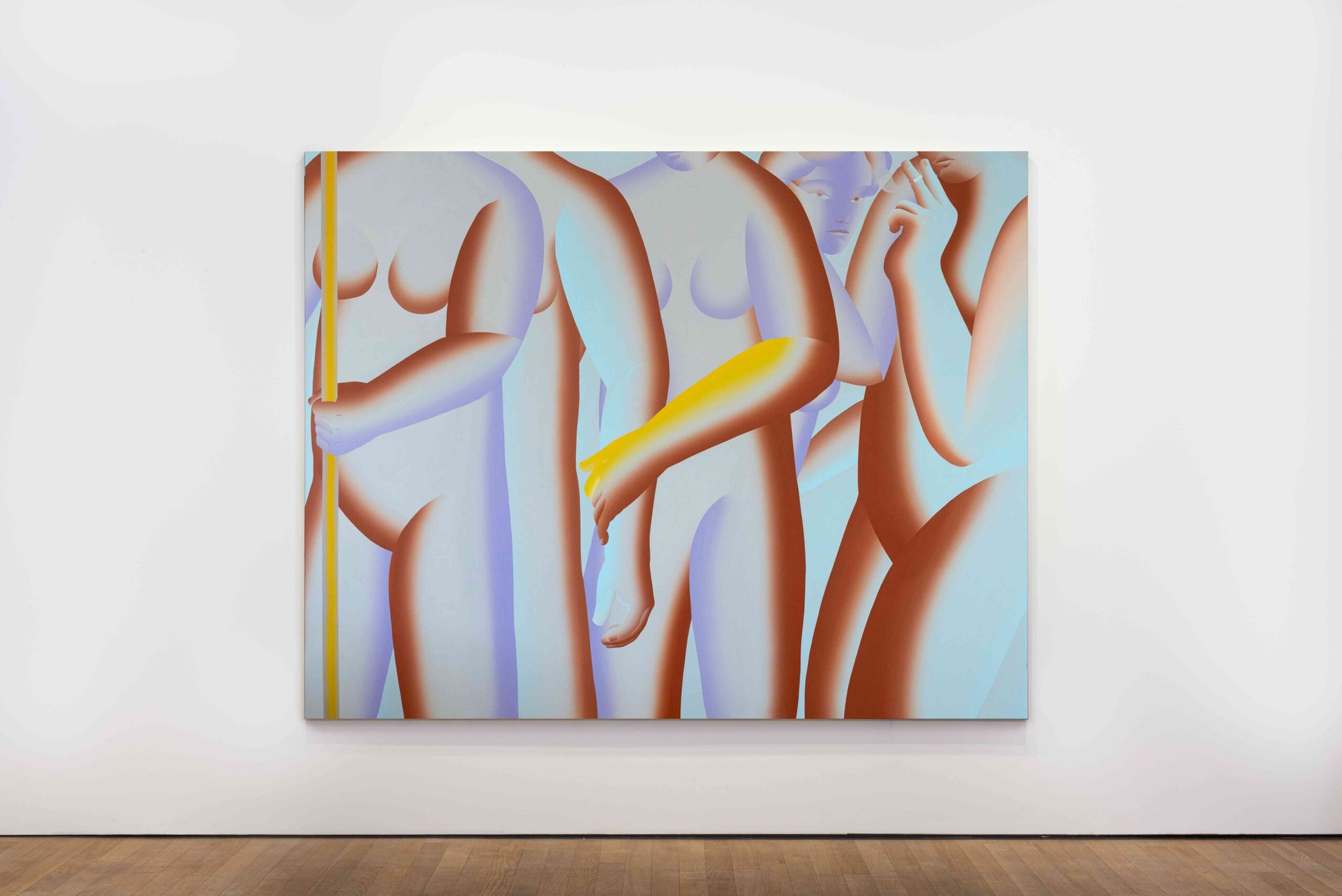
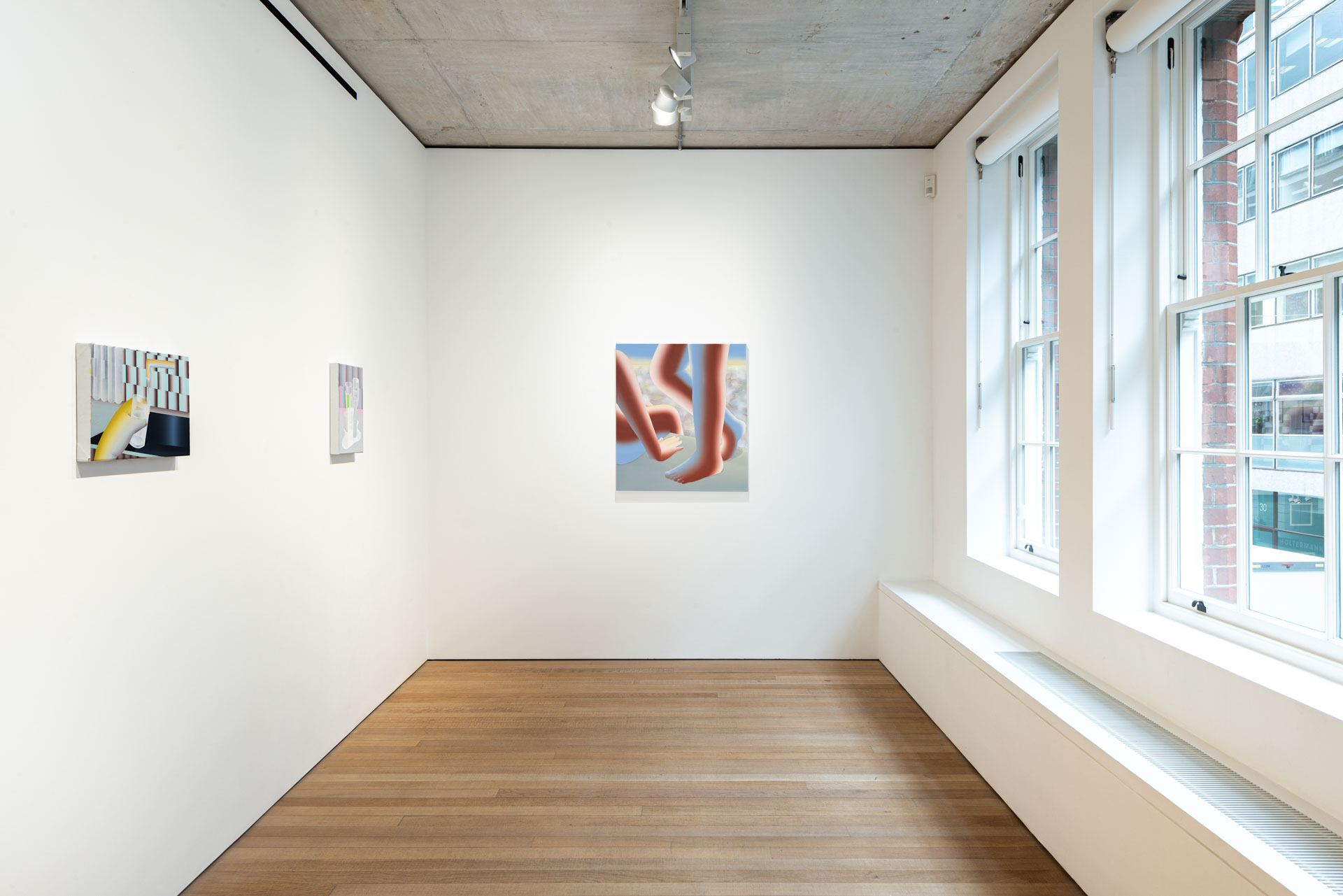
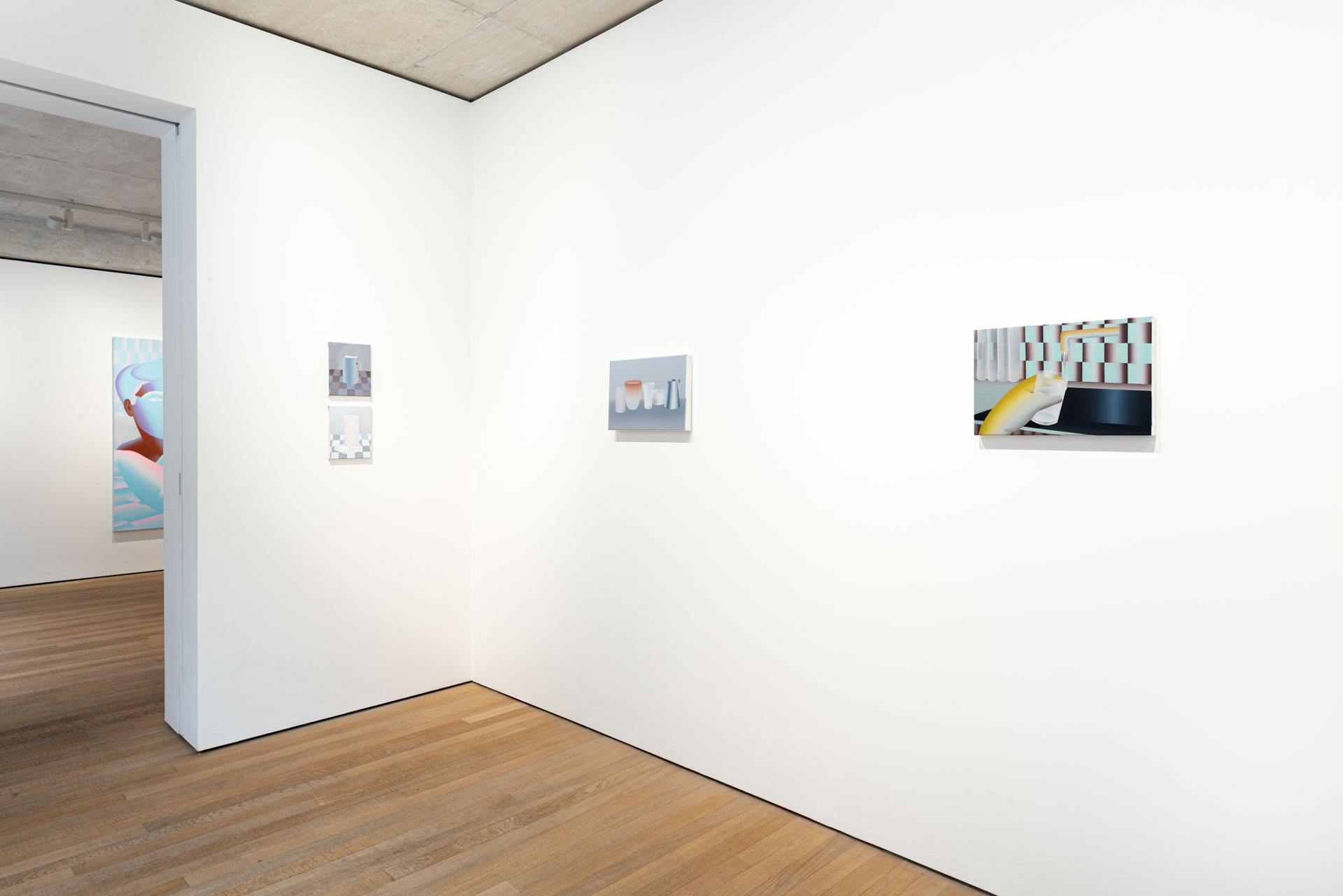
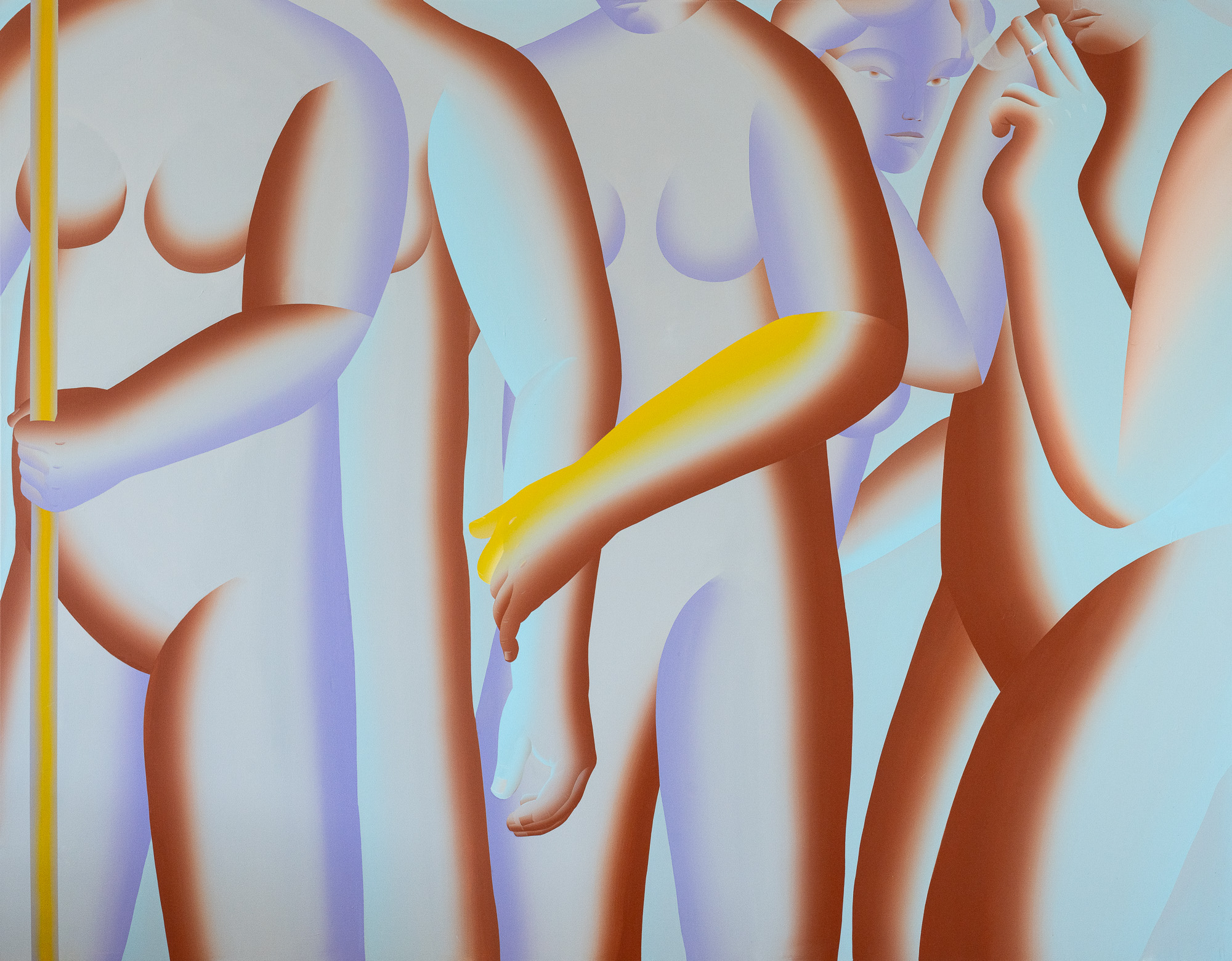
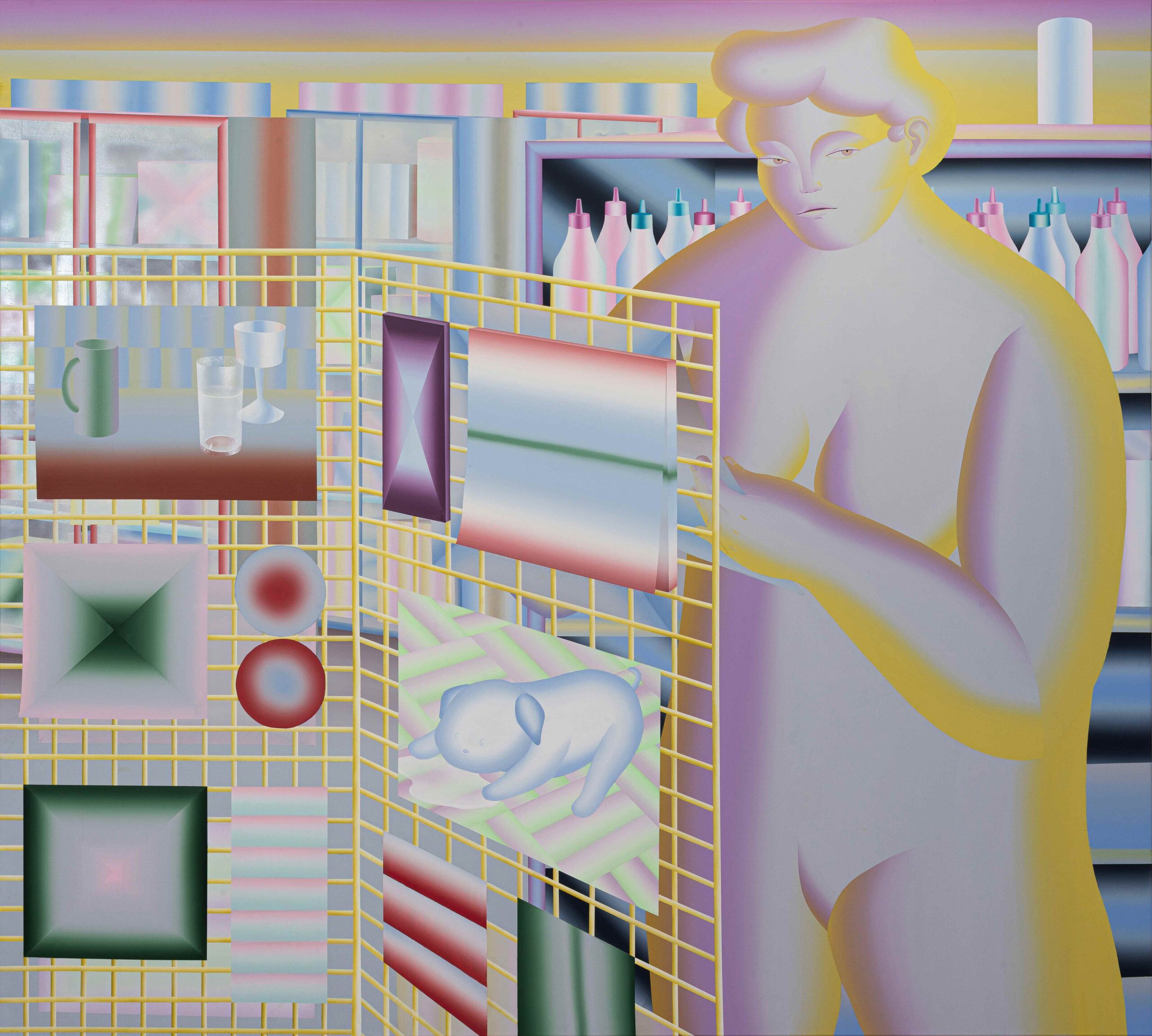
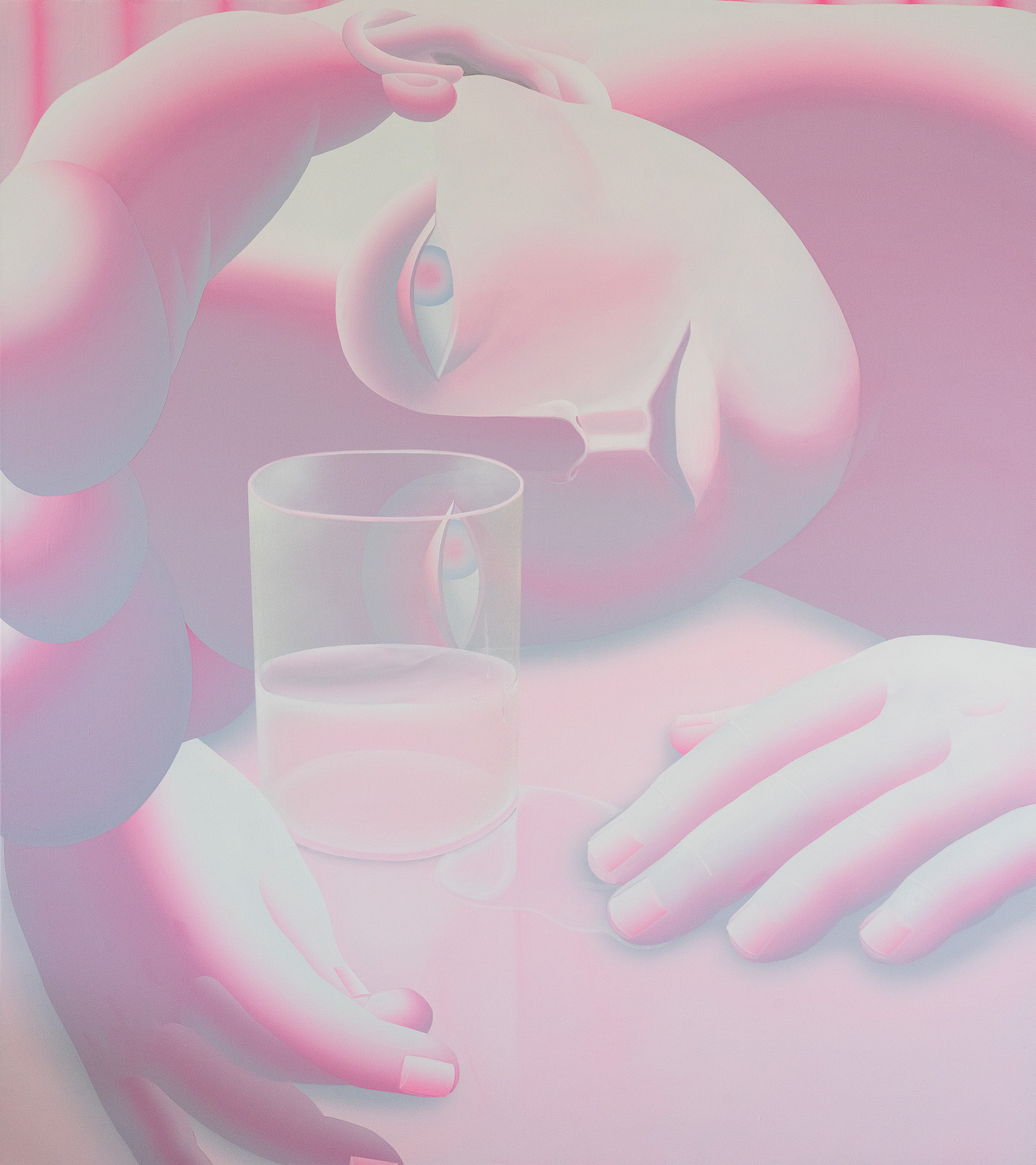
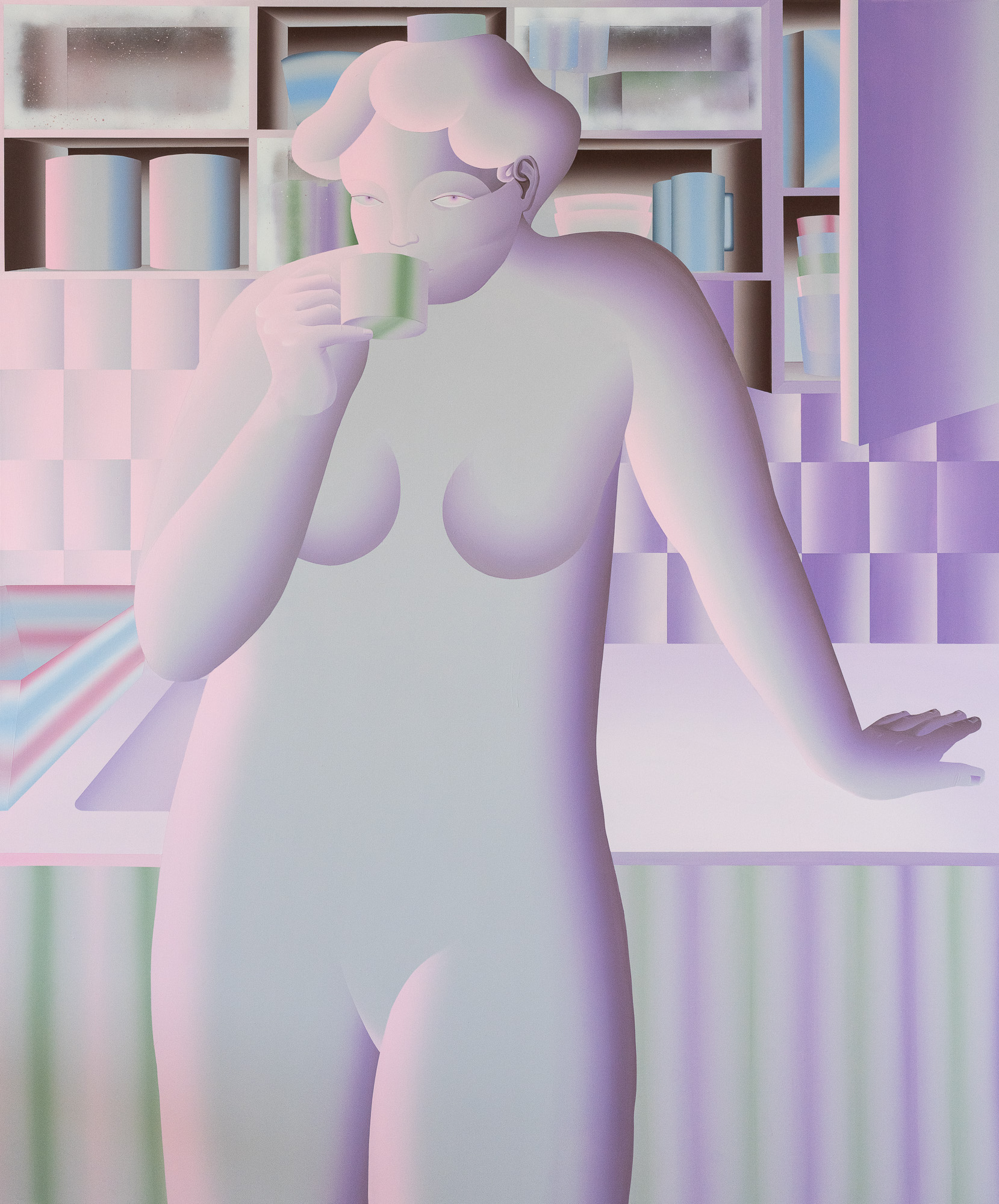
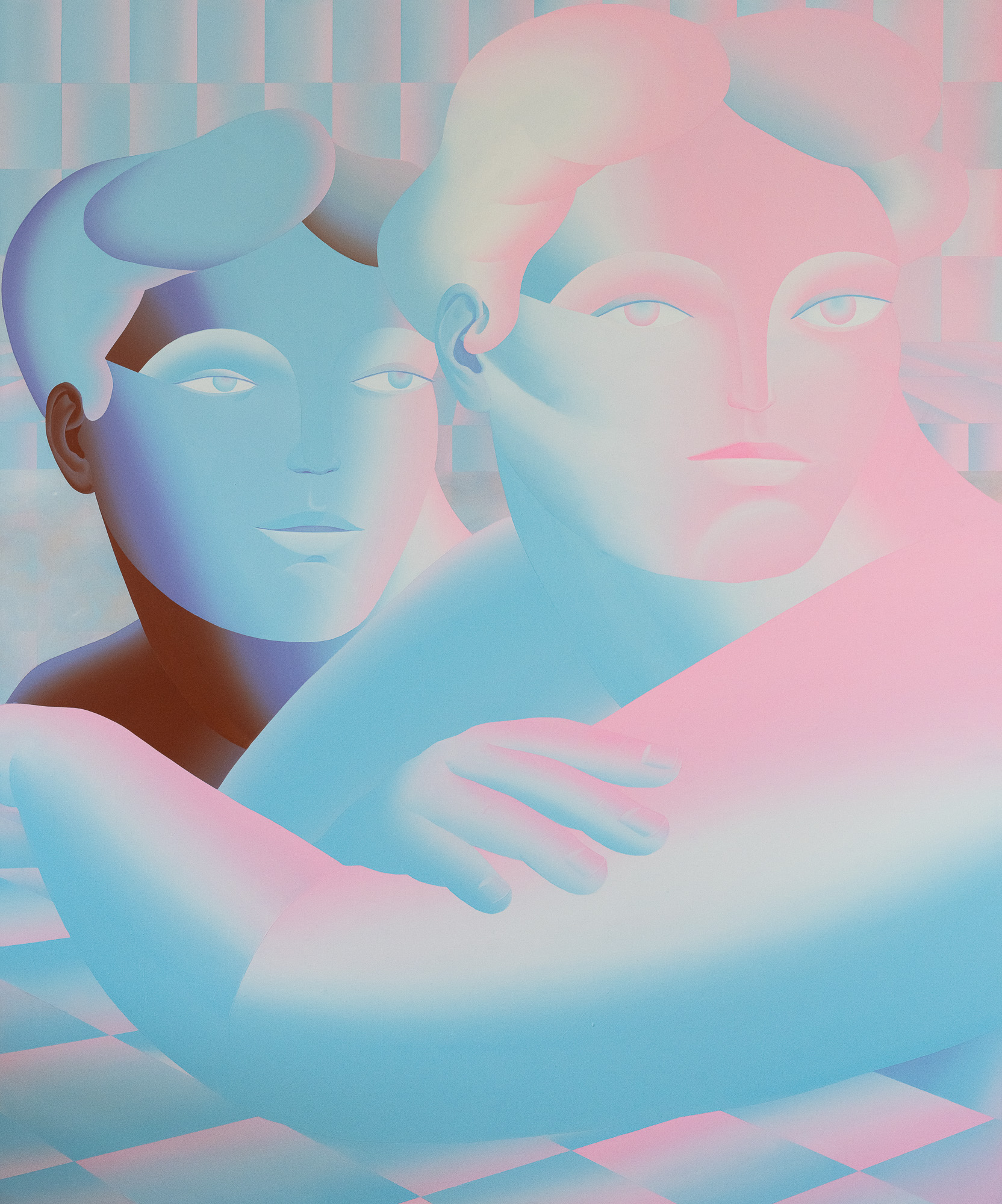
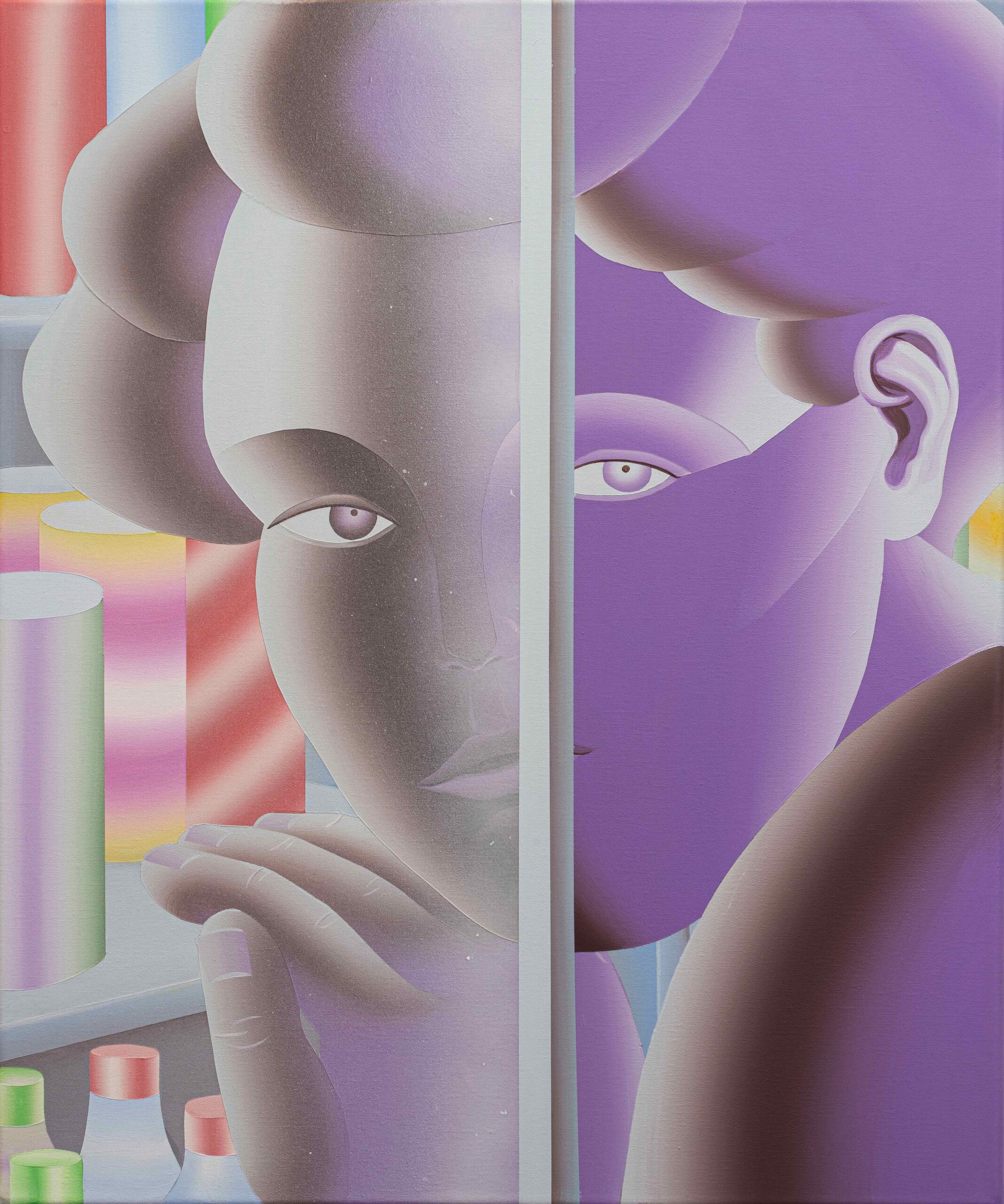
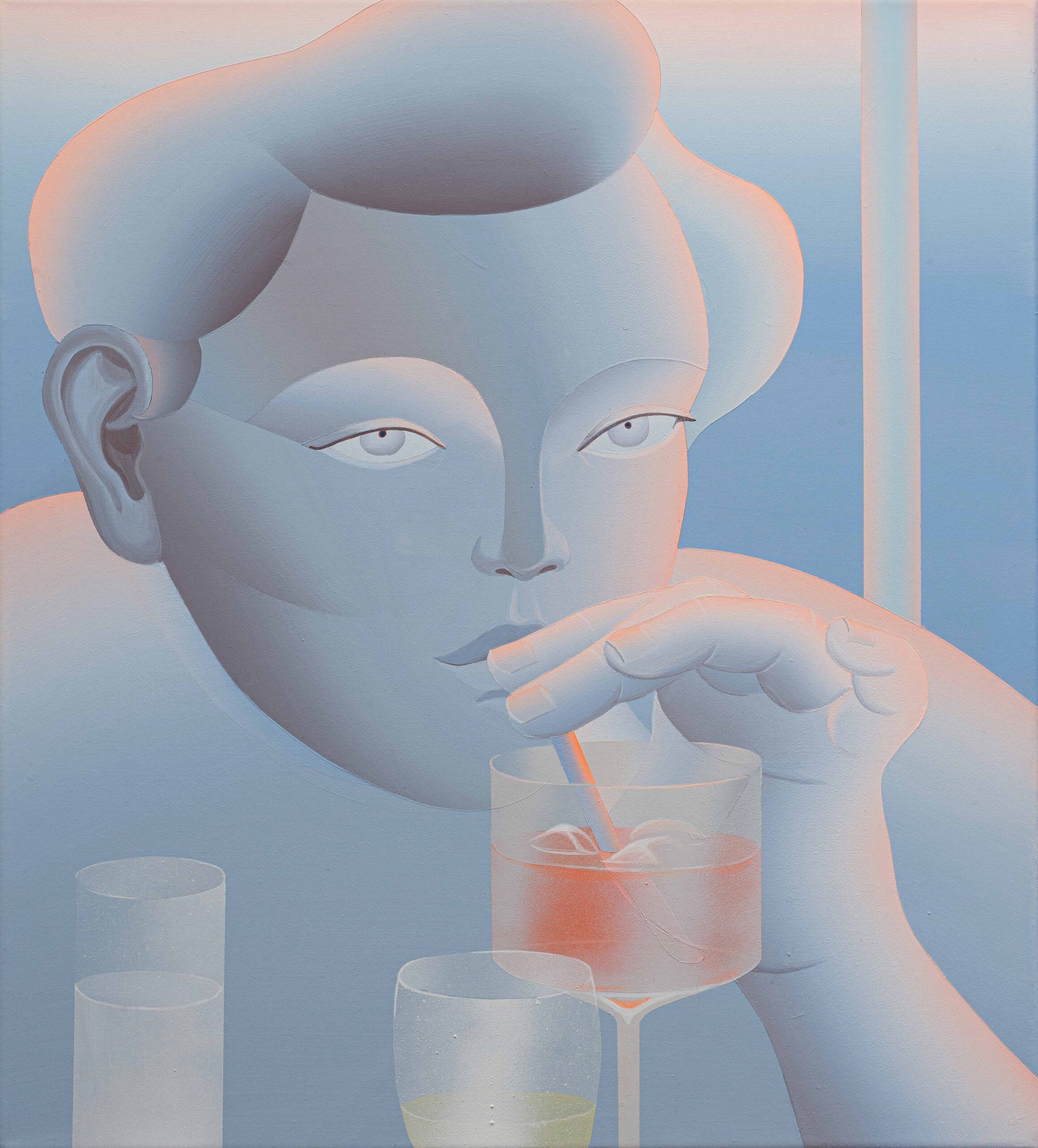
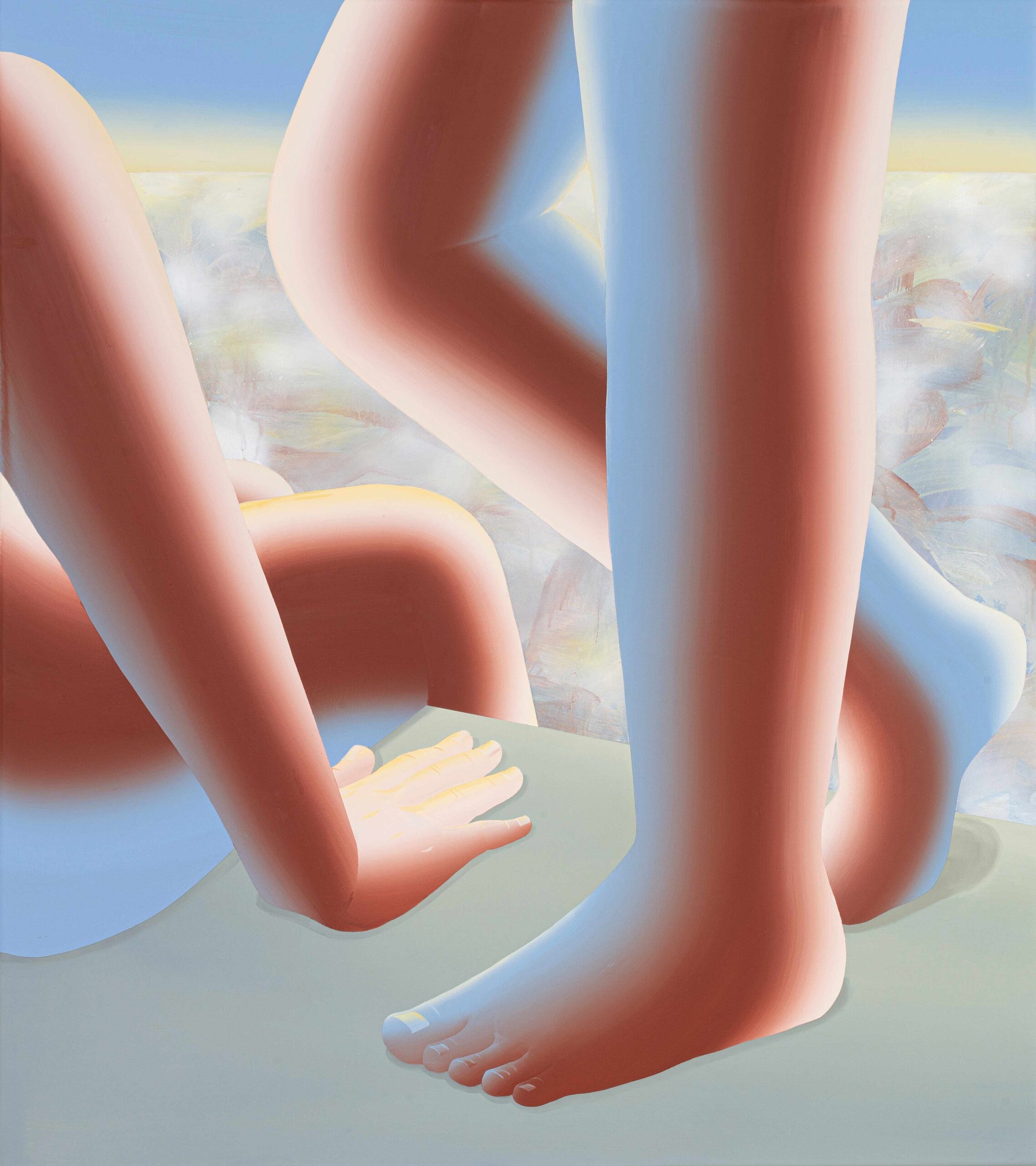
베를린과 서울을 중심으로 활동하는 작가 김진희의 개인전 《Drink Water》가 런던 No.9 Cork St. 에서 개최된다. 작가는 물을 마신다는 가장 원초적인 인간의 행위를 하나의 알레고리로 활용하며, 인종과 문화, 성별과 언어의 구분을 넘어서는 정체성의 의미에 관해 고민한다. 그의 회화에 등장하는 인물들은 인파 속에 얼굴을 내비치고, 물잔을 비우곤 테이블에 엎드려 쉬고, 카페에 앉아 창밖을 바라보는 반복적이고 평범한 모습을 보여준다. 하지만 조금만 들여다보면 이는 모두에게 동일하게 일어나는 상황이기보다 각 개인이 처한 지리적, 정치적, 사회적 조건에 따라 상이하게 적용될 수 있는 문제이다. 누군가는 큰 의미를 부여하지 않을 이 사소한 행동은 어떤 다른 이에게 투쟁하거나 되찾아야 하는 꿈일 수 있다. 이처럼 타자와 나 사이에 거리와 차이를 발생시키고 그것을 표면화하는 때는 생각보다 작고 반복적인 순간에 있는 것이다.
실제로 작가는 한국이 아닌 타지에서 살아가면서 인식의 차이나 물리적 다름을 느끼게 했던 계기들이 특별한 사건의 중심에 있지 않음을 자각한다. 도리어 아침밥을 차려 먹거나, 슈퍼에서 물을 사고, 친구와 커피를 마실 때, 동네를 산책할 때와 같은 일상에서 그들과 나는 같을 수 없고, 아주 오래전부터 형성된 상이한 가치관을 따르고 있음을 느낀다. 다수와 다른 한 개인의 특성과 소수성은 편재한 시간과 공간 전반에서 끝없이 작동하며 현실을 구성한다. 그는 삶의 배경이 한국과 서울이라는 당연한 장소로부터 이탈해 새로운 곳으로 도달했을 때, 자연스럽게 여기던 기준과 선택들로부터 자신이 한참 벗어난 변두리의 존재가 됨을 직시한다. 이 차이는 비단 서구와 비서구적 문화의 맥락만을 짚는 것이 아니라, 지금 여기와 그곳 사이의 거리감과 물리적 부재에 따른 소외의 감정을 아우르는 것이기도 하다. 내가 있어야 할 곳에 없거나 일반적인 것으로 간주하는 공동체에 소속되지 못하는 경험은 배제와 부재의 감각을 증폭시키며 나를 규정하는 언어에 대해 더욱 집요하게 질문하도록 한다.
따라서 그의 회화는 이러한 다름을 지각하는 작가의 매 순간을 담아낸 것이면서 동시에 그 차이를 무마시키는 보편성의 기준에 관한 물음을 반영하는 이미지이기도 하다. 작품 속 여성은 사회가 부여한 여러 대전제를 기준으로 개별의 정체성이 규격화될 수 없음을 대변한다. 오히려 각 주체는 특정한 시공의 층위가 교차하는 지점에서 일시적으로 현전하며, 시시각각 그 모습을 바꾸어간다. 따라서 보는 이는 등장인물의 국적과 나이, 성별과 직업에 관해 명확한 단서를 찾을 수 없는 대신, 넓은 스펙트럼의 색채와 유려한 조형성 사이로 각 인물이 처한 작은 상황에 집중하도록 요청받는다. 어쩌면 각 장면은 적확한 기호의 영역에서 비껴서 있으면서도 여전히 하나의 몸이 발 딛고 서는 현재가 나를 구성함을 매일 자각하는 작가의 자화상일지도 모른다. 그러므로 본 전시는 전시장을 방문하는 관객들이 스스로 인식하지 못할 만큼 짧은 찰나에 형성되고 변화하고 있을 자신의 현존을 김진희의 다채로운 회화 앞에서 마주하는 기회가 되기를 소망한다.
글ㅣ박지형 (디스위켄드룸 큐레이터)
Drink Water, the solo exhibition by Berlin and Seoul-based artist Jinhee Kim is opening at No.9 Cork Street, London. Kim uses the everyday act of drinking water as a metaphor to contemplate the meaning of identity beyond distinctions of race, culture, gender, and language. Her paintings depict figures caught in seemingly repetitive and mundane routines: a face peering out from a crowd, a resting figure leaning over a table next to an empty glass, and a seated figure gazing out a café window. However, a closer look reveals that these actions are not universally experienced in the same way. Instead, they are shaped by geographical, political, and social contexts unique to each individual. What may appear trivial to some could mean a great deal to others—a dream they have to fight for or reclaim. It is in these small, monotonous moments where the difference between the other and the self emerges and surfaces.
Kim’s experience living abroad has shown her that these moments of perceived differences are rarely rooted in some memorable event. It is in the ordinary aspects of daily life—having breakfast, buying water at the supermarket, drinking coffee with a friend, or walking around in the neighbourhood—that she senses the differences between herself and her surroundings. These daily routines reflect the deeply ingrained values of each individual and, in turn, highlight the diverse ways people live their lives. The unique characteristics and singularity of individuals who diverge from the majority persist across time and space and shape realities. When Kim finds herself in a place so distant from her familiar environment of Seoul and Korea, she keenly feels on the periphery, far removed from the norms and choices she once took for granted. Such contrast is not merely about Western versus non-Western cultures but a feeling of alienation stemming from the physical distance and absence between places. The experience of not being where she should be or not belonging to a community that she regards as a norm amplifies the sense of exclusion and absence and forces her to question deeply the language that defines who she is.
Therefore, Kim’s paintings not only capture each moment of her observation of these differences but also reflect how she questions the universal standards that neutralize such differences. The female figures in her works represent the fact that individual identities cannot be standardized based on the various assumptions imposed by society. Instead, each subject is temporally present at the intersection of specific layers of time and space, their appearances changing from moment to moment. The audience is not given any clear clues as to the nationality, age, or occupation of the characters but is instead asked to focus on the trivial circumstances of each person amidst a broad spectrum of colours and refined compositions. Each scene might be seen as a self-portrait of the artist who constantly realizes that the present, and the body that takes up space in it, however off-kilter it may be from the realm of conventional language, constitutes oneself. We hope that this exhibition will offer viewers an opportunity to stand before Kim’s colourful paintings as they encounter their presence in the world, forming and evolving with each splitting moment.
TextㅣJihyung Park (Curator, ThisWeekendRoom)